Quick answer: Tree cabling and bracing uses steel cables and rods to support weak branches or stems so a structurally sound tree is less likely to split or fail. It can extend the life of a healthy tree with a weak fork, but it cannot save a tree that is decayed, hollow or badly leaning. A certified arborist should assess the tree first to tell you which situation you have.
Key takeaways
- Cabling and bracing reduces the risk of a split. It does not eliminate it.
- It works best on healthy trees with co-dominant stems or heavy limbs over a house, driveway or play area.
- It is not a fix for decay, major root damage or a tree already failing.
- Systems need inspection about once a year and hardware adjustments as the tree grows.
- Estimated cost for a typical residential job runs from a few hundred dollars to over $1,000 depending on size and height.
If you have a large oak, maple or pecan in Fayetteville, Hope Mills or Spring Lake with a deep V-shaped fork, you have probably wondered whether it can be supported rather than cut down. This guide explains how tree cabling and bracing works, when it makes sense and when removal is the safer call.
If you want a professional opinion on a specific tree, you can request a free consultation with a local tree service using the form on this page.
What Tree Cabling and Bracing Actually Does
Cabling and bracing are two related techniques. Both add artificial support to a tree’s structure, but they do different jobs.
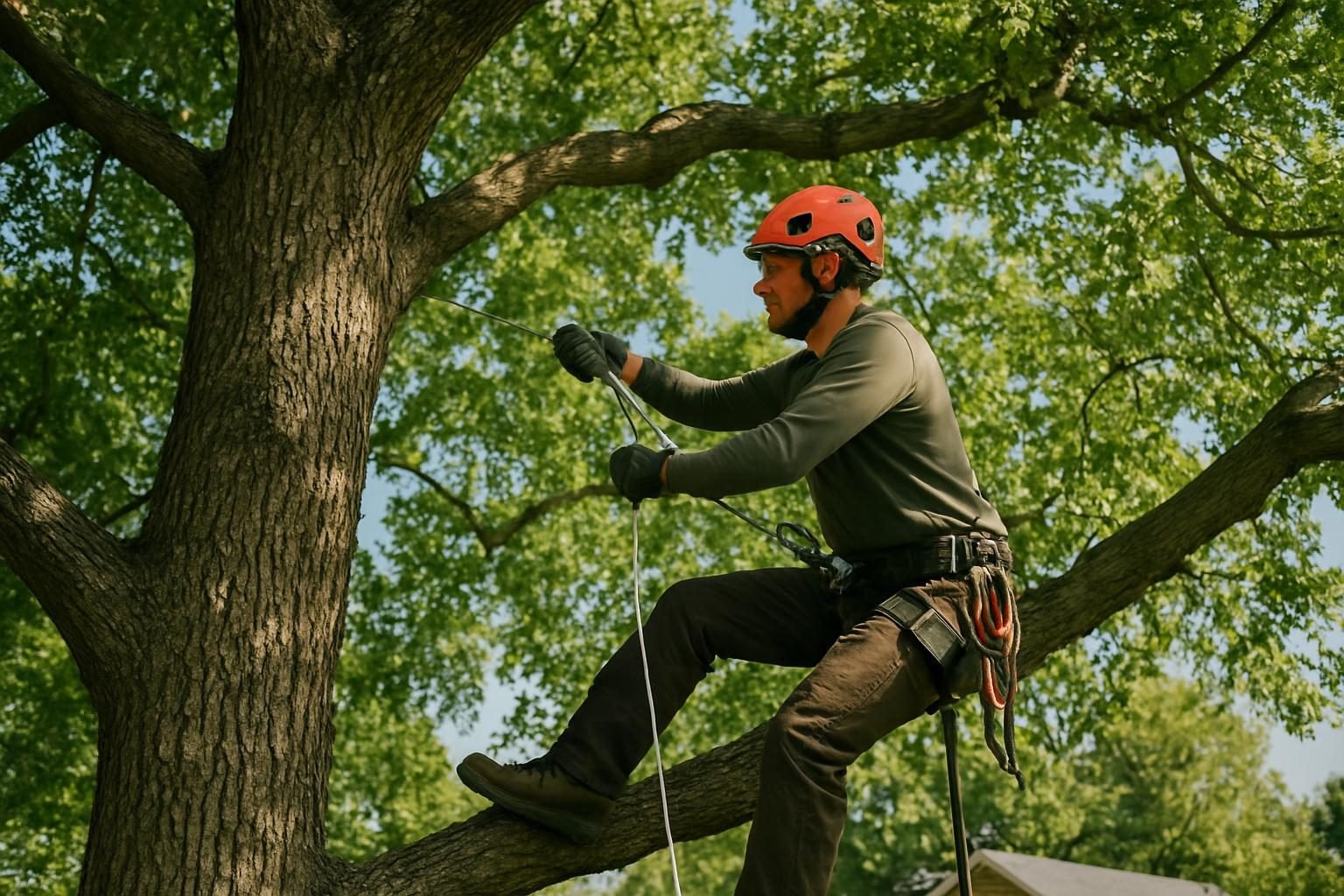
- Cabling: flexible steel cables are installed high in the canopy, usually about two-thirds of the way up the stems, to limit how far weak limbs can move or spread apart in wind and storms.
- Bracing: threaded steel rods are drilled through a trunk or limb to hold a split, crack or tight fork together.
- Combined systems: many forked trees get both, with a brace lower down and a cable higher up.
The goal is not to hold the tree rigid. A properly installed system lets the tree flex naturally while preventing the sudden, extreme movement that tears a weak union apart.
Cables and braces also do not fix the underlying weakness. They act as a safety net while the tree continues to grow, which is why ongoing inspection matters.
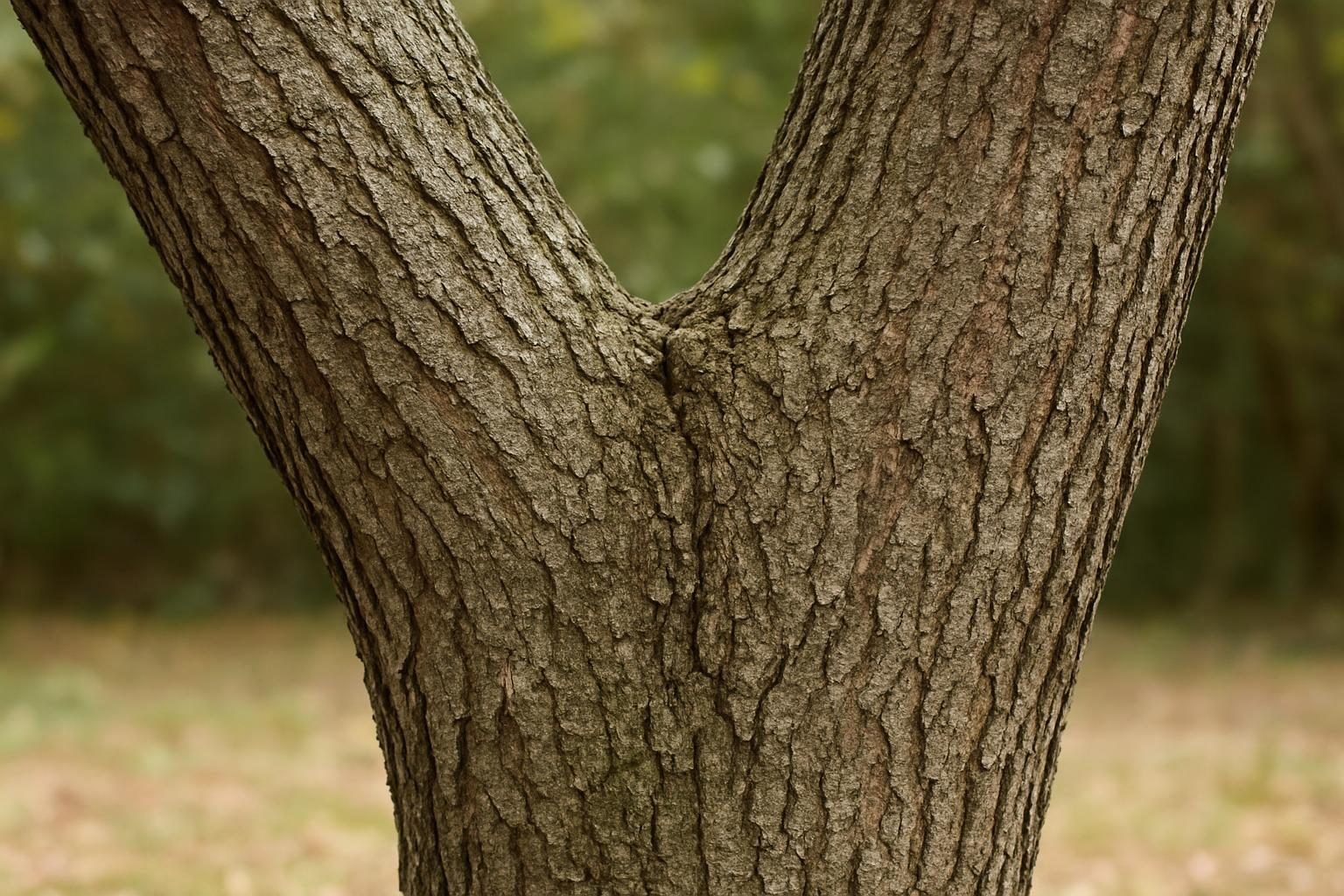
Co-Dominant Stems: The Main Reason Trees Get Cabled
Co-dominant stems are two or more trunks of similar size that grow from the same point. They are common in trees that were never structurally pruned when young.
The problem is the union where they meet. As both stems thicken, bark can get trapped between them, forming what arborists call included bark. That bark does not form a true wood connection, so the joint is much weaker than it looks.
Warning signs on a forked tree
- A tight, narrow V-shaped crotch instead of a rounded U
- Bark pinched into the fork, sometimes with a visible seam
- A crack, oozing sap or a ridge running along the union
- One stem noticeably heavier or leaning away from the other
- Previous branch or stem failure on the same tree
Species that often develop weak forks in our area include Bradford pears, red maples, water oaks and sweetgums. Bradford pears are especially prone, and many homeowners choose removal instead; see our guide on why Bradford pears split and why NC homeowners remove them.
A fork with included bark can look solid for decades and still split in one strong gust.
When Cabling and Bracing Makes Sense
Support systems are worth considering when the tree is fundamentally healthy and worth keeping. Good candidates usually share most of these traits:
- Sound wood: no significant decay, hollow areas or fungal fruiting bodies at the base or union
- Good vigor: full leaf cover, normal growth and no major dieback
- High value: a mature shade tree, a tree with sentimental value or one that is costly to replace
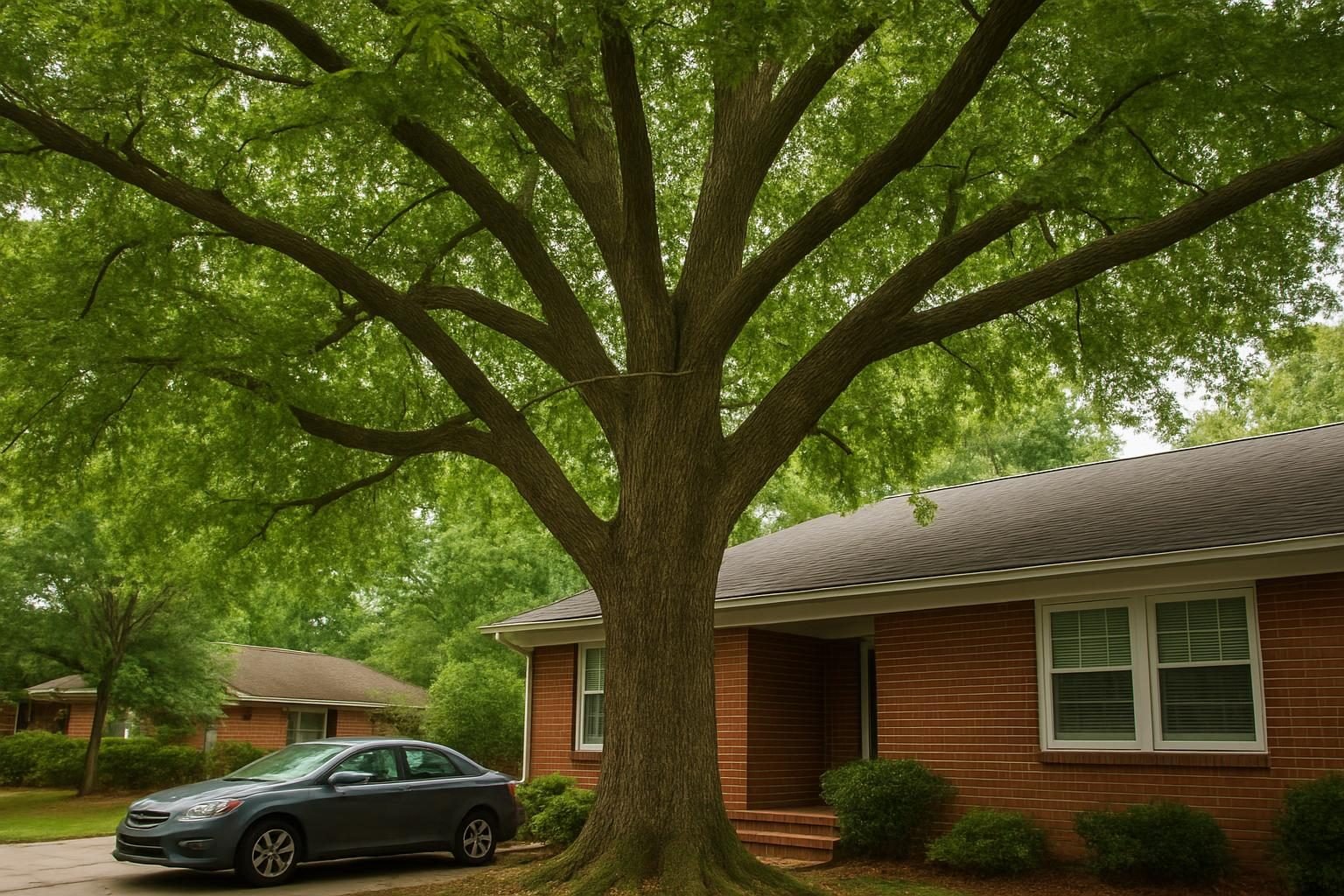
- Meaningful target: a house, driveway, patio or play area underneath
- A specific structural weakness: a tight fork, a long heavy limb or a cracked union that has not yet failed
In Cumberland County, where hurricanes, tropical storms and summer thunderstorms bring strong winds, supporting a weak union on a valuable tree can be a reasonable investment. It often pairs with other work such as tree trimming and pruning to reduce the weight on the weak point.
Pro tip: Ask whether pruning alone could solve the problem. Reducing the length of a heavy limb is sometimes cheaper and more effective than adding hardware.
The Limits: When Cabling Won’t Save a Tree
Cabling and bracing are often misunderstood as a cure-all. They are not, and a responsible arborist will tell you when a tree is past the point of support.
Situations where hardware is the wrong answer
- Decayed or hollow trunks: hardware cannot hold in rotten wood, and drilling into it can make things worse.
- Major root damage or lifting soil: support in the canopy does nothing for a failing root plate.
- A tree already leaning or recently shifted: see our guide on leaning trees and hazardous tree signs.
- Severe storm damage: some trees can recover, but many cannot. Read how to decide if a storm-damaged tree can be saved.
- Trees in steady decline: extensive dieback, fungal conks or advanced disease usually mean removal is the safer path.
If an assessment shows the tree is too far gone, professional tree removal is usually the responsible choice, especially when the tree is near a home.
Hardware can support a sound tree, but it cannot rebuild wood that has already rotted away.
Tree Cabling and Bracing Cost Estimates in Fayetteville
Pricing varies by company, tree size, access and how many connections need support. The figures below are rough estimates only, not quotes.
- Single cable on a small to mid-size tree: roughly $250 to $600
- Multiple cables or a larger canopy: roughly $600 to $1,500 or more
- Brace rods through a split or crack: often an additional $150 to $500 per rod, depending on the work
- Annual or periodic inspection: sometimes bundled with other tree care, sometimes billed separately
What drives the price
- Height of the installation point and whether climbing or a lift is needed
- Trunk and stem diameter, which affects hardware size
- Number of unions and limbs being supported
- Access around fences, structures and power lines
- Whether pruning or an assessment is included
For a broader picture of local pricing, see our overview of tree service cost in Fayetteville. Compare cabling costs with the price of removal and replacement before deciding; for a large tree, support often costs less over time, but only if the tree is sound.
Inspection Schedule and Getting an Arborist Assessment
A cable system is not a one-time install. Trees keep growing, and hardware can loosen, corrode or become embedded in expanding wood.
A practical inspection routine
- Right after installation: confirm the arborist documents where each cable and brace is placed.
- Once a year: have the system checked for loose or damaged hardware, bark overgrowth and changes in the union.
- After major storms: look for sagging cables, new cracks or shifted limbs. Hurricane season in Cumberland County is a good reminder; our hurricane tree prep checklist covers what to check beforehand.
- Every few years: expect some hardware to need adjustment or replacement as the tree grows.
Start with an assessment
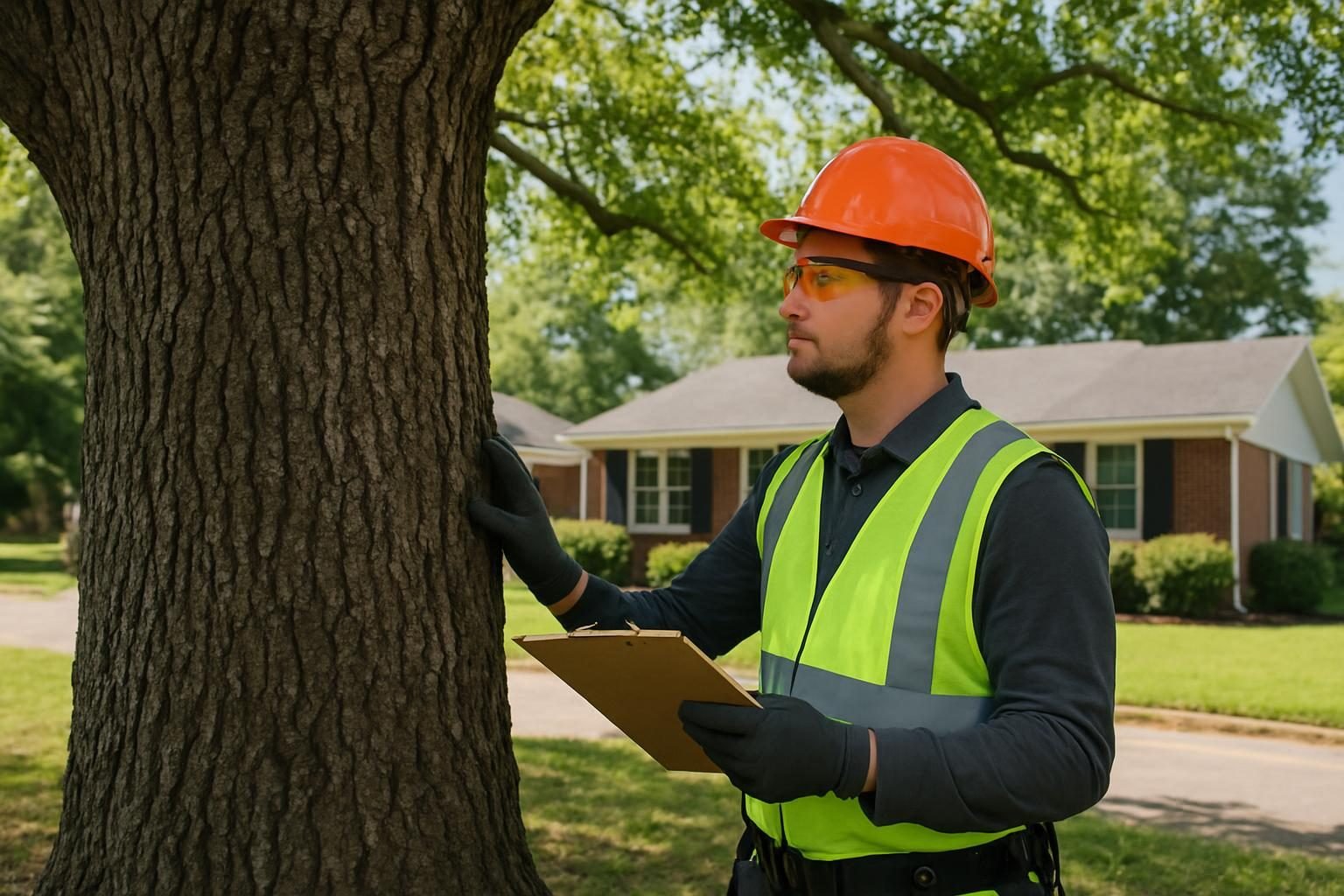
Before any hardware goes in, the tree should be evaluated for decay, root condition and overall health. An arborist tree assessment can tell you whether cabling is appropriate, whether pruning is enough or whether removal is the safer option. If you are unsure who to call, our comparison of a certified arborist vs. a tree service can help, and what an arborist costs in Fayetteville explains typical assessment fees.
Industry practice for installing support systems is outlined in the ANSI A300 standards for tree care, which professional arborists follow. The International Society of Arboriculture also offers general information on tree support systems.
Ready to find out whether your tree can be supported? Request a free quote from a local tree service using the form on this page.
Frequently Asked Questions
Does tree cabling hurt the tree?
Properly installed cables are designed to avoid girdling or wounding the tree. Cables are attached with hardware that allows for growth, and the tree should be checked regularly. Poor installation or neglected hardware can cause damage.
How long does a cabling system last?
Many systems last for years, but there is no fixed lifespan. Hardware needs periodic inspection and sometimes replacement, and the tree itself keeps changing. Treat it as ongoing care rather than a permanent fix.
Can cabling prevent a tree from falling in a hurricane?
No. Cabling can reduce the chance of a weak union splitting apart, but it does not protect against uprooting, trunk failure or severe storm winds. It lowers risk; it does not remove it.
Is cabling better than removing the tree?
It depends on the tree. For a healthy, valuable tree with a structural weakness, cabling can be a sound choice. For a decayed or declining tree near a house, removal is usually safer. An arborist assessment is the best way to decide.
Get a free tree cabling and bracing quote
A local Cumberland County tree service will contact you with a free, no-obligation quote.