Fayetteville & Cumberland County, NC
Tree Trimming & Pruning in Fayetteville, NC
Overhanging limbs, storm-weakened oaks or overgrown crepe myrtles? Tell us about your trees and we’ll connect you with local tree pros for free quotes.
- Free, no-obligation quotes
- Local Cumberland County pros
- Takes about a minute
Get Free Tree Trimming Quotes in Fayetteville
Tell us about your trees and local tree pros will reach out to schedule a look and give you a quote.
Good tree trimming and pruning keeps limbs off your roof, lowers the chance of storm damage and helps trees live longer. Cumberland Tree Pros is a free referral service. We don’t do the work ourselves. We connect Fayetteville and Cumberland County homeowners with independent, locally owned tree companies so you can compare quotes and pick the crew that fits your job.
What Tree Trimming and Pruning Includes
“Trimming” and “pruning” are often used to mean the same thing. In practice, a pruning job from the local tree pros we work with can include one or more of these:
- Deadwood removal: cutting out dead, dying or broken limbs before they fall.
- Clearance pruning: lifting or shortening limbs over roofs, gutters, driveways, sidewalks and fences.
- Crown raising: removing lower limbs so you can mow, park or walk under the tree.
- Crown thinning: selectively removing interior branches so wind passes through and more light reaches the lawn.
- Structural pruning: shaping young trees so they grow a strong main trunk and well-spaced limbs.
- Ornamental pruning: shaping crepe myrtles, dogwoods and other small trees without butchering them.
What good pruning should not include is topping, which means cutting the main stems back to stubs. Topping leads to weak, fast-growing sprouts that break easily and often shortens a tree’s life. If a quote calls for topping a large tree, get another opinion.
Signs your trees need trimming
- Limbs touching or hanging over your roof, chimney or gutters
- Dead branches with no leaves in summer, or bark peeling off a limb
- Hanging or cracked limbs left over from a storm
- Branches blocking the driveway, street view or a security light
- A dense canopy that kills grass underneath or keeps the roof damp and mossy
- Crossing or rubbing branches, or a narrow V-shaped split between two main stems
- A young tree that has never been shaped and is leaning heavily to one side
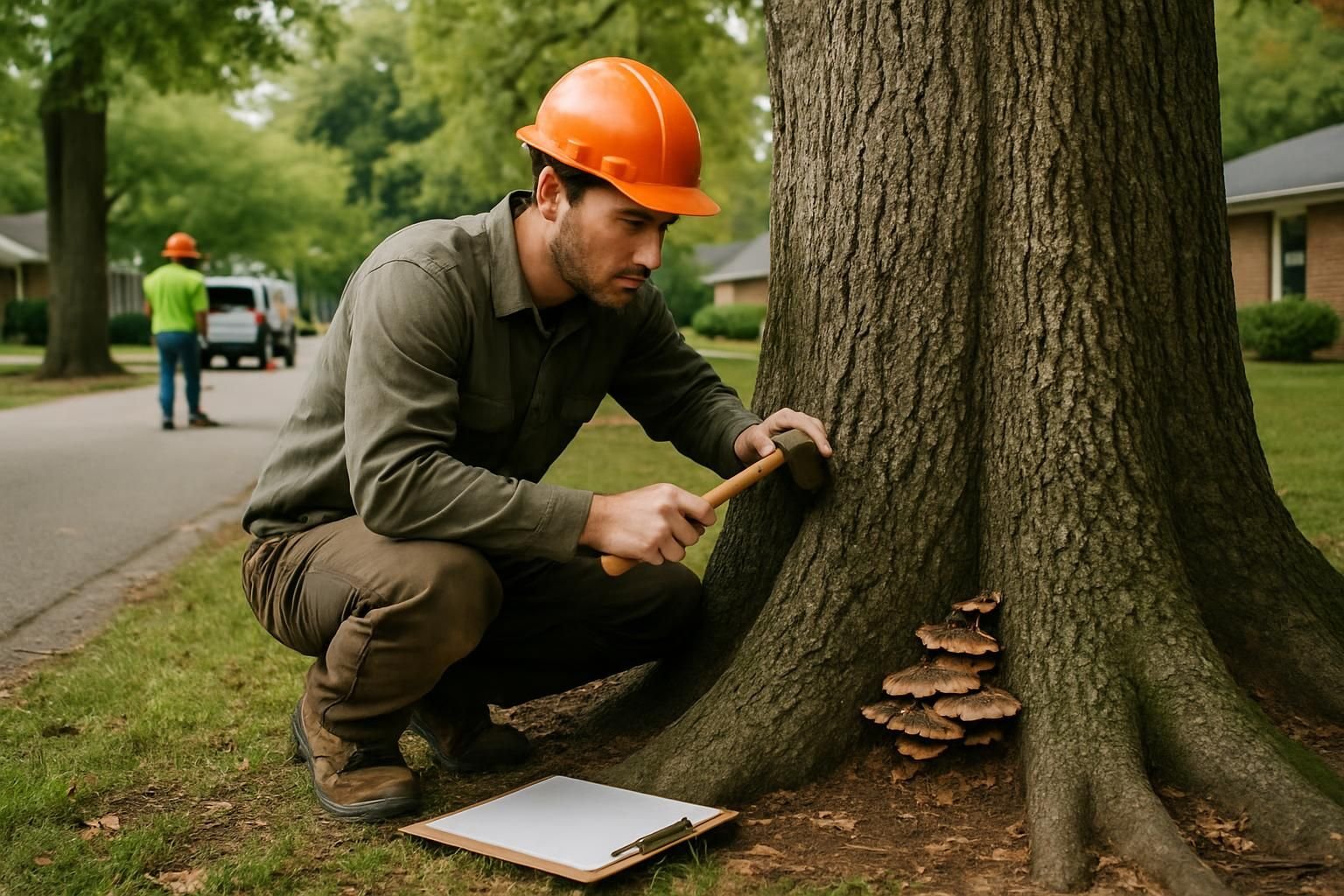
If you see mushrooms at the base, large cavities, or a trunk that sounds hollow, ask for an arborist tree assessment before deciding between pruning and removal.
How a Professional Crew Handles the Job
Every company runs its jobs a little differently, but a careful crew generally follows the same steps.
- Walk the site. The crew lead looks at the tree, the cut list, what’s underneath (roof, cars, fence, garden) and where power lines run.
- Set up the work zone. Cones or tape go up, vehicles get moved, and a drop zone is picked for limbs.
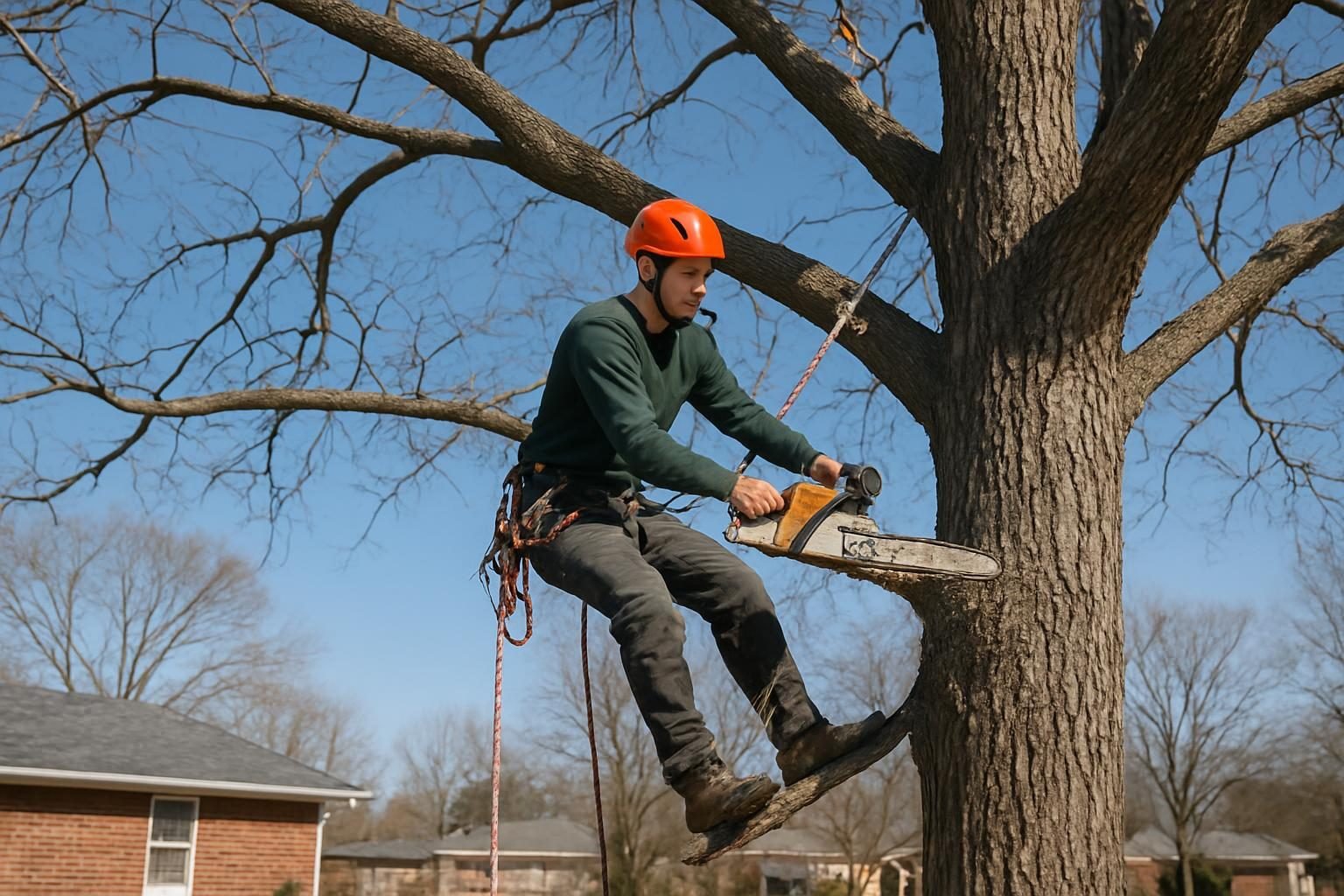
- Get into the tree. Depending on access, a climber goes up on ropes and a harness, or the crew uses a bucket truck or lift. Climbers should not use spikes on trees being pruned, since spikes wound healthy trees.
- Make proper cuts. Good cuts are made just outside the branch collar, the slightly swollen area where a limb meets the trunk. Heavy limbs are taken down in sections, and over roofs they are often lowered on ropes (rigging) instead of dropped.
- Don’t overdo it. A common rule of thumb is to remove no more than about a quarter of the live canopy at one time. Removing too much stresses the tree.
- Clean up. Brush gets chipped, wood is cut and hauled or stacked, and the yard is raked and blown off.
Typical equipment includes climbing gear, handsaws and pole saws, chainsaws, rigging ropes and blocks, a chipper, and sometimes a bucket truck or compact lift. Crews should wear helmets, eye and hearing protection and chainsaw chaps.
Fayetteville Factors That Affect Pruning
The trees we have
Cumberland County yards are full of loblolly and longleaf pine, water oak, willow oak, southern red oak, sweetgum, red maple, tulip poplar, pecan, dogwood, crepe myrtle and Bradford pear. A few local notes:
- Water oaks grow fast and often go hollow as they age. Pruning can reduce weight on long limbs, but a hollow trunk may need a closer look.
- Bradford pears split easily because of their tight branch angles. Thinning helps for a while, but many homeowners eventually choose tree removal instead.
- Pines usually only need dead or hazard limbs removed. Heavy pruning, especially in warm months, can stress them, and fresh wounds can attract southern pine beetles and Ips engraver beetles.
- Pecans drop limbs in summer storms and benefit from regular deadwood removal.
- Crepe myrtles look and flower better with light thinning than with the hard “chop everything back” approach common around town.
Sandy soil vs. clay
The west side of the county, toward Fort Bragg, Spring Lake and Raeford, sits on the edge of the Sandhills with deep sandy soil. Toward the Cape Fear River, soils get heavier with more loam and clay. Sandy soil drains fast, so trees there can be drought-stressed by late summer, which is a poor time for heavy pruning. Clay holds water, and saturated clay after big rains can loosen roots. Either way, a crew should factor soil and root health into how much it cuts.
Storm season
Hurricanes and tropical storms like Matthew in 2016 and Florence in 2018 soaked the ground and toppled shallow-rooted pines and water oaks. Summer thunderstorms and the occasional ice storm also bring down limbs. Pruning before storm season, by removing deadwood, thinning dense crowns and shortening heavy limbs over the house, is one of the most practical ways to reduce damage. If a storm has already done the damage, see our page on emergency storm tree removal.
Tight lots, HOAs and power lines
Older neighborhoods like Haymount have large, mature trees on smaller lots, often close to houses and neighbors. Newer subdivisions around Lake Rim and Hope Mills tend to have tighter spacing between homes and fences. Tight access can mean more climbing and rigging and less use of trucks, which affects price.
If you live in an HOA, check the rules before pruning trees in common areas or along the street. For trees in the public right-of-way or a historic district, check with the City of Fayetteville or your town or county.
For limbs near power lines, call the utility first. PWC serves much of Fayetteville, while Duke Energy and co-ops such as Lumbee River EMC and South River EMC serve other areas. Homeowners and general tree crews should not work near energized lines.
Tree Trimming Costs in Fayetteville
These are rough estimates for the Fayetteville area. Prices vary by tree size, access, hazards and cleanup, and only a real quote after someone sees your trees sets the price.
| Job | Typical estimate | Notes |
|---|---|---|
| Trimming/pruning, typical yard tree | $250 – $900 per tree | Smaller ornamentals at the low end, tall or hard-to-reach trees higher |
| Large mature oak pruning | $800 – $1,800+ | Big canopies over houses often need climbing and rigging |
| Emergency or storm-related trimming | 1.5x – 3x normal rates | After-hours work, hanging limbs, damaged trees |
| Arborist assessment | $100 – $350 | Useful if you suspect rot, hollowing or a leaning trunk |
What drives the price
- Tree size and canopy spread: more height and more limbs mean more time.
- Access: backyard trees behind fences, slopes or narrow side yards may rule out a bucket truck.
- Targets underneath: limbs over a roof, pool or shed need careful rigging.
- Tree condition: dead or decayed wood is less predictable and slower to work.
- Number of trees: doing several trees in one visit often lowers the per-tree cost.
- Cleanup and hauling: full haul-away costs more than leaving wood cut and stacked.
For removal, stump grinding and land clearing prices, see the full Fayetteville tree service cost guide.
How to Choose a Tree Pro and What to Ask
North Carolina has no statewide license for tree service companies, so it’s up to you to check. Get two or three quotes and ask each company:
- Can I see proof of general liability and workers’ compensation insurance? Ask for certificates, not just a yes.
- Is anyone on the crew an ISA Certified Arborist? It’s a voluntary credential, but it shows training in proper pruning.
- Exactly what will you cut? Ask them to note which limbs and roughly how much canopy will come off.
- Will you top the tree or use climbing spikes? For pruning, the answer to both should be no.
- What cleanup is included? Chipping, hauling, raking and wood removal should be spelled out.
- Can I get the estimate in writing? Always get a written estimate with price, scope and timing.
Be cautious with anyone who knocks on your door after a storm, asks for full payment upfront, or pushes you to decide on the spot. When you’re ready to compare, request free quotes from local tree pros through the form on this page.
What Happens on Job Day
Most residential pruning jobs take a few hours to a full day, depending on how many trees are involved. To get ready:
- Move cars, grills, patio furniture and potted plants away from the work area.
- Keep kids and pets inside while the crew is cutting.
- Unlock gates and point out sprinkler heads, septic lids or anything fragile in the yard.
- Give neighbors a heads-up if limbs hang over their property or trucks will block the street.
Before work starts, walk the yard with the crew lead and confirm the cut list. Once cutting is done, crews typically chip the brush, cut larger wood into rounds, and rake and blow off the lawn, driveway and roof. If you want to keep firewood or wood chips for mulch, say so upfront, since it can lower the price.
Before the crew leaves, walk the yard again. Check that the agreed limbs were removed, no stubs were left, gutters are clear and the lawn is cleaned up.
Serving Fayetteville and Nearby Communities
We connect homeowners across Cumberland County and nearby areas with tree companies that do pruning work, including Hope Mills, Spring Lake, Gray’s Creek, Eastover and off-post homes in the Fort Bragg area. If you live in on-post family housing, tree issues go through the installation housing office instead.
Ready to get your trees in shape before the next storm? Get free trimming quotes and compare your options. It costs nothing, and you choose who to hire.
Latest tree trimming and pruning guides
-
Best Time to Trim Trees in North Carolina (Month by Month)
Wondering about the best time to trim trees in North Carolina? Our month-by-month Fayetteville guide covers dormant pruning, crepe myrtles,…
More services
Other tree services in Fayetteville
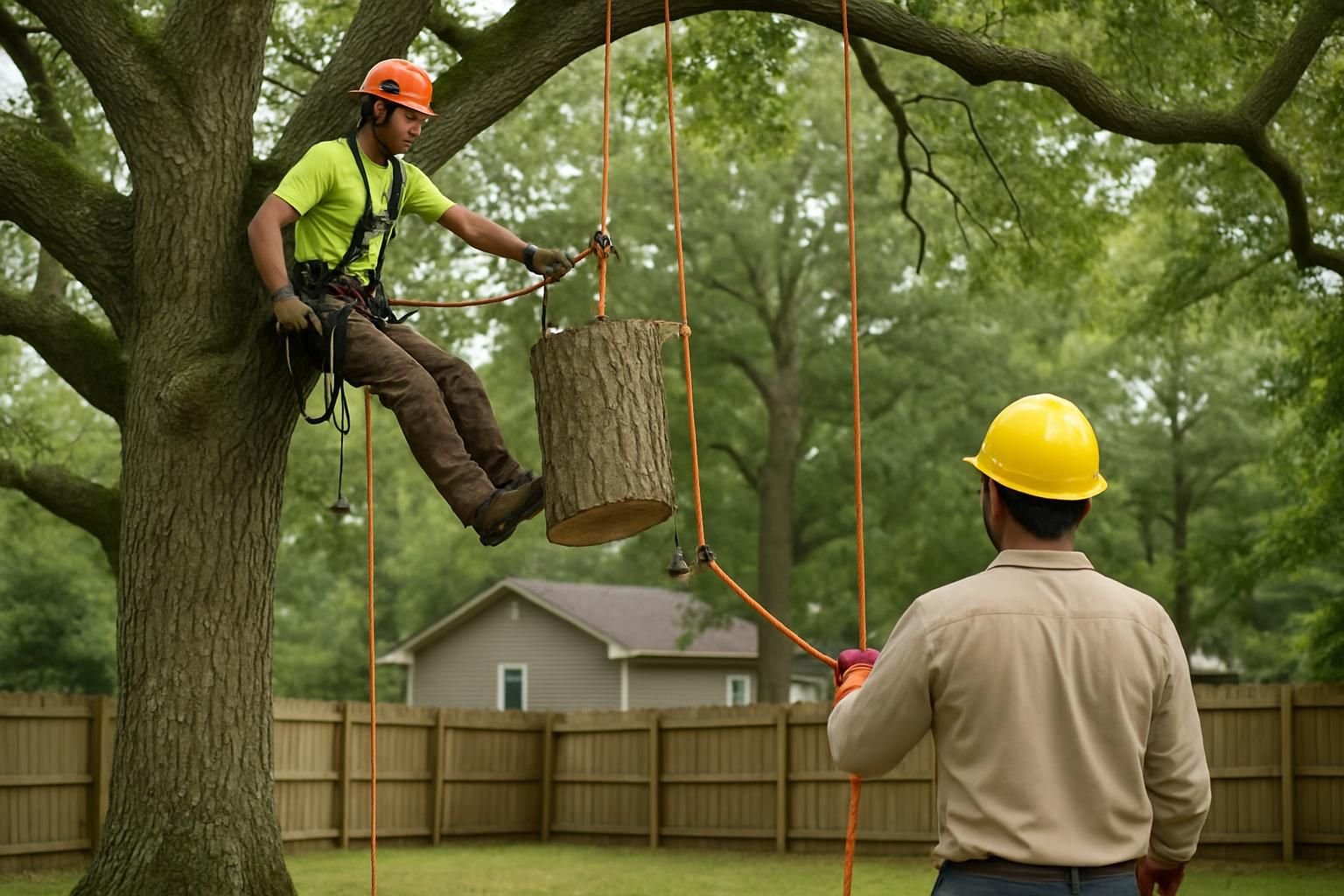
Tree Removal
Safe removal of dead, leaning or unwanted trees, including tight spots near homes and power lines.
Learn more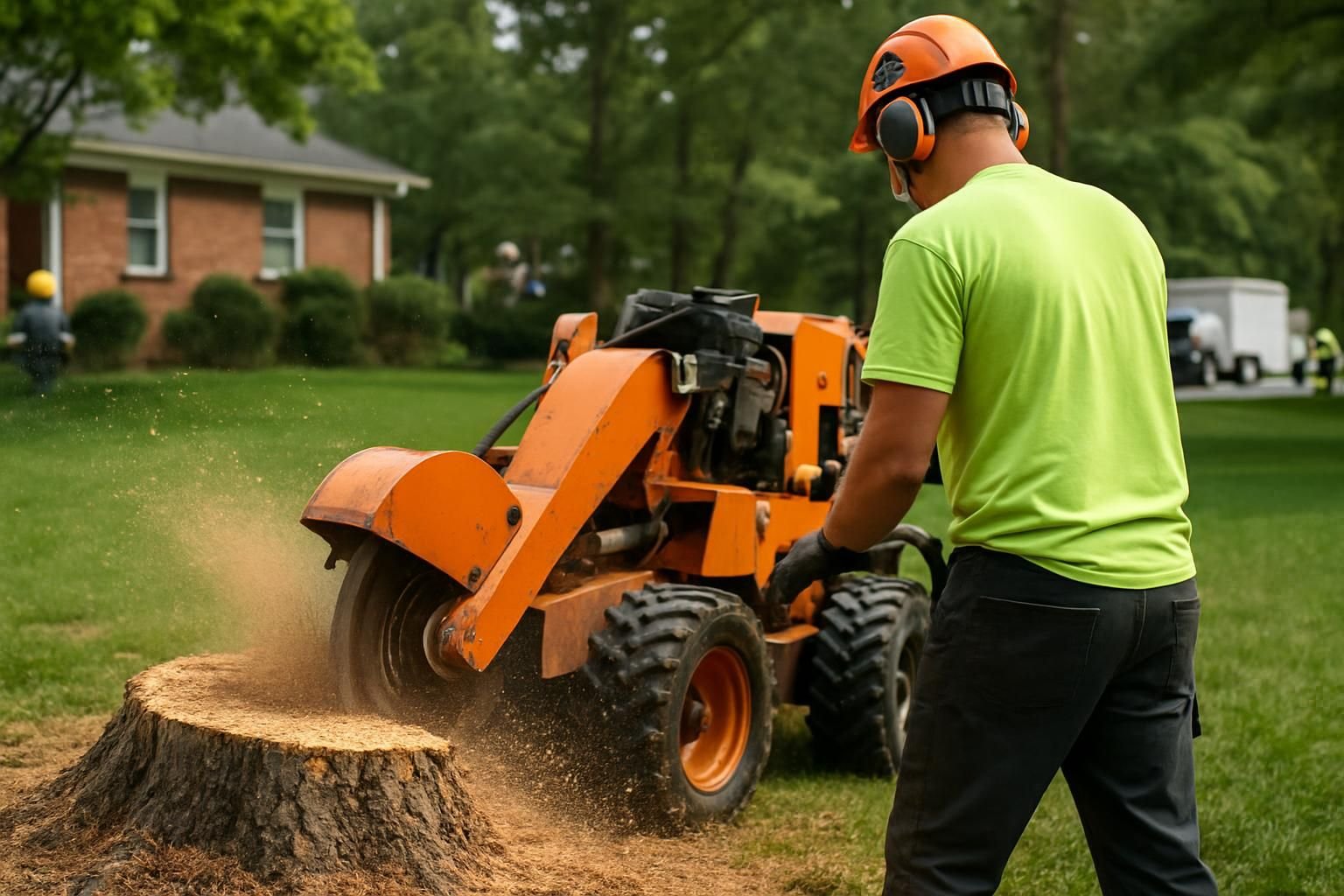
Stump Grinding
Grind stumps below grade so you can replant, reseed, pave or build.
Learn more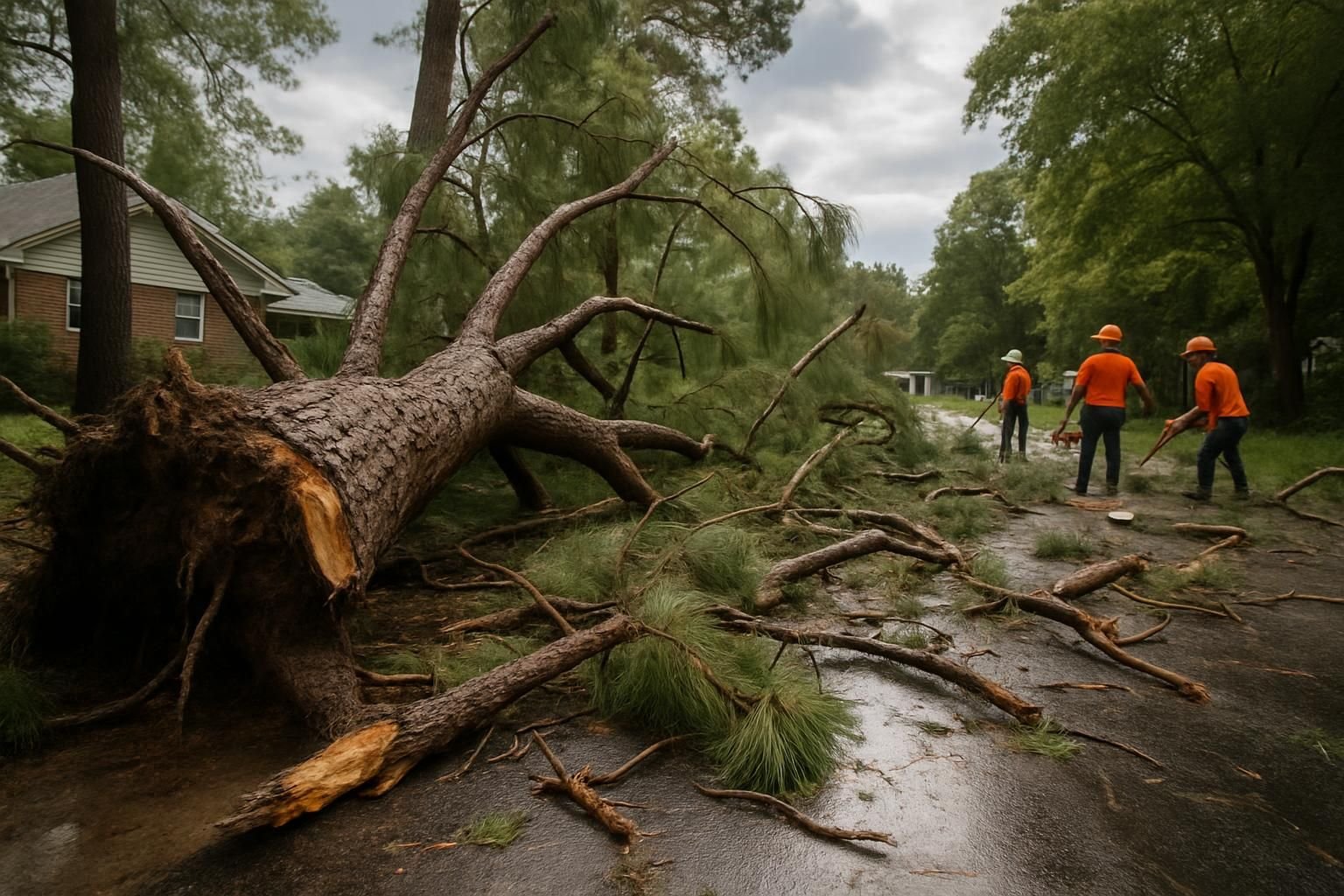
Emergency Storm Tree Removal
Fast help when a storm drops a tree on your roof, car, driveway or fence.
Learn more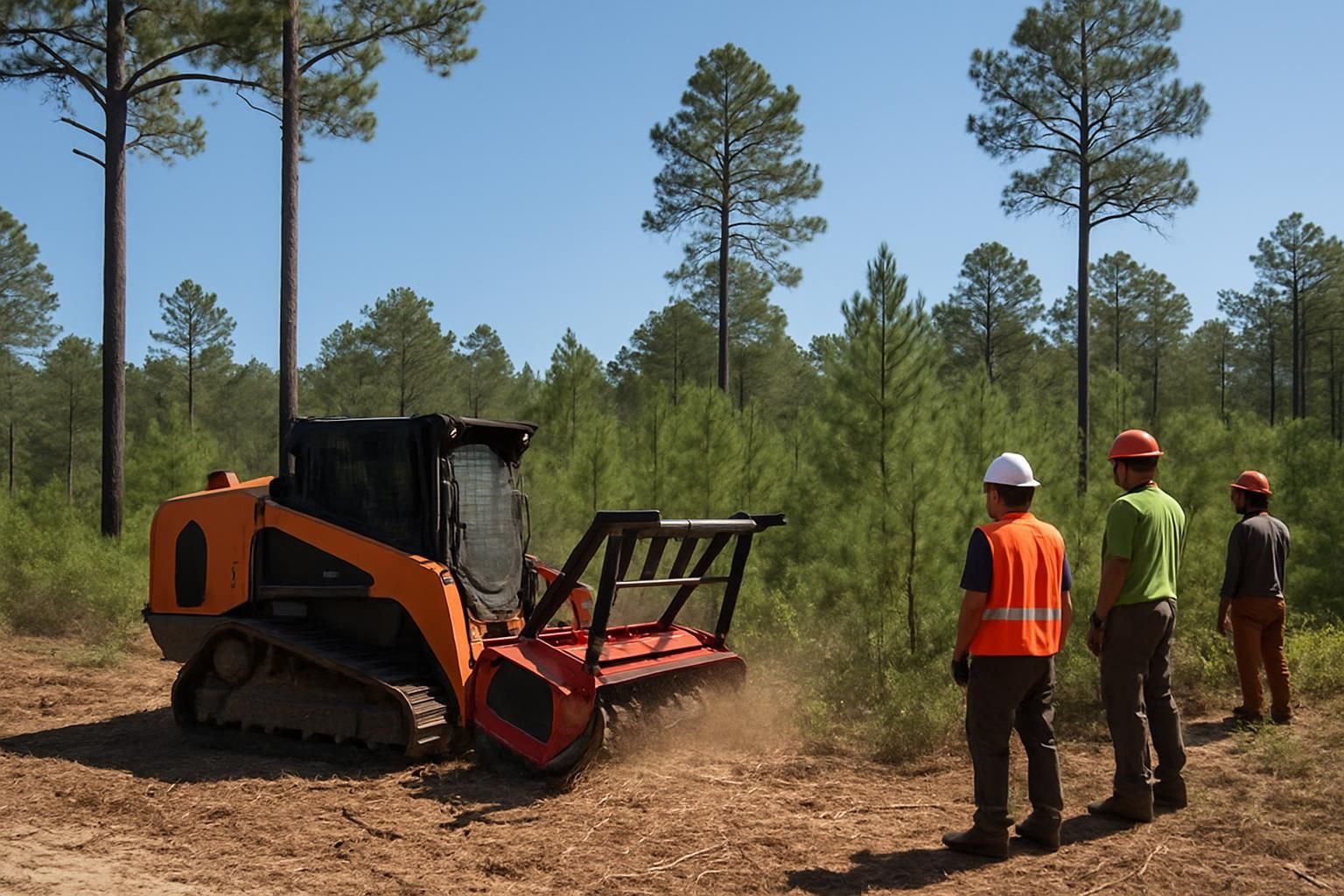
Land & Lot Clearing
Lot and brush clearing for new builds, fence lines, pastures and overgrown acreage.
Learn moreArborist Tree Assessment
Get a tree’s health and risk checked before you decide to prune, treat or remove it.
Learn moreWhere we connect homeowners with pros
Serving all of Cumberland County
FAQ
Tree Trimming & Pruning FAQ
How much does tree trimming cost in Fayetteville, NC?
Estimates for the Fayetteville area usually run about $250 to $900 per tree, and large mature oaks often run $800 to $1,800 or more. Price depends on tree size, access, nearby hazards like roofs or power lines, and how much cleanup you want. Emergency storm work commonly costs 1.5 to 3 times normal rates. Only a written quote after someone sees the tree tells you the real price.
When is the best time to prune trees in Fayetteville?
For most shade trees, late winter while they are dormant is a good time because the branch structure is easy to see and the tree recovers quickly in spring. Dead, broken or hanging limbs should come down whenever you notice them. Avoid heavy pruning on pines in warm months, since fresh wounds can attract bark beetles. Crepe myrtles are usually pruned lightly in late winter.
Can a tree company trim limbs near power lines?
General tree crews and homeowners should not work near energized lines. The utility handles line clearance, whether that is PWC in much of Fayetteville, Duke Energy, or an electric co-op such as Lumbee River EMC or South River EMC. Call your utility first if limbs touch or hang over a line to your house or along the street.
Do I need permission to trim trees in my yard?
Trees fully on your own property usually do not need a permit, but rules can differ for trees in the public right-of-way, in historic districts or on newer developments. Many HOAs also have their own rules. Check with the City of Fayetteville or your town or county, and your HOA if you have one, before major work.
Is Cumberland Tree Pros a tree company?
No. We are a free referral service that connects homeowners in Fayetteville and Cumberland County with independent, locally owned tree service companies. The pros we connect you with give their own quotes and do the work. You decide who to hire.
Ready to compare tree trimming and pruning quotes?
Fill out the short form at the top of this page and local pros will reach out with free, no-obligation quotes.