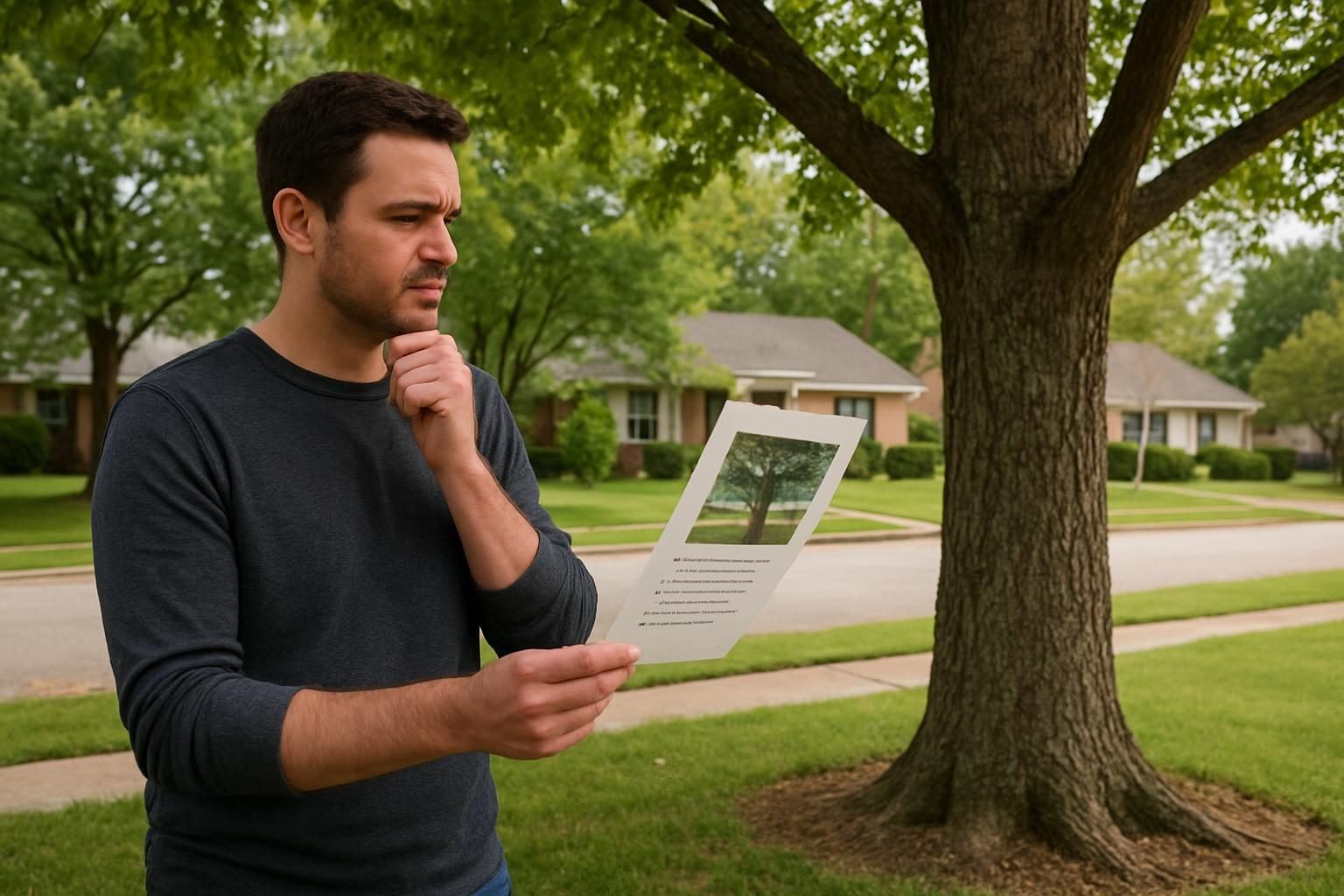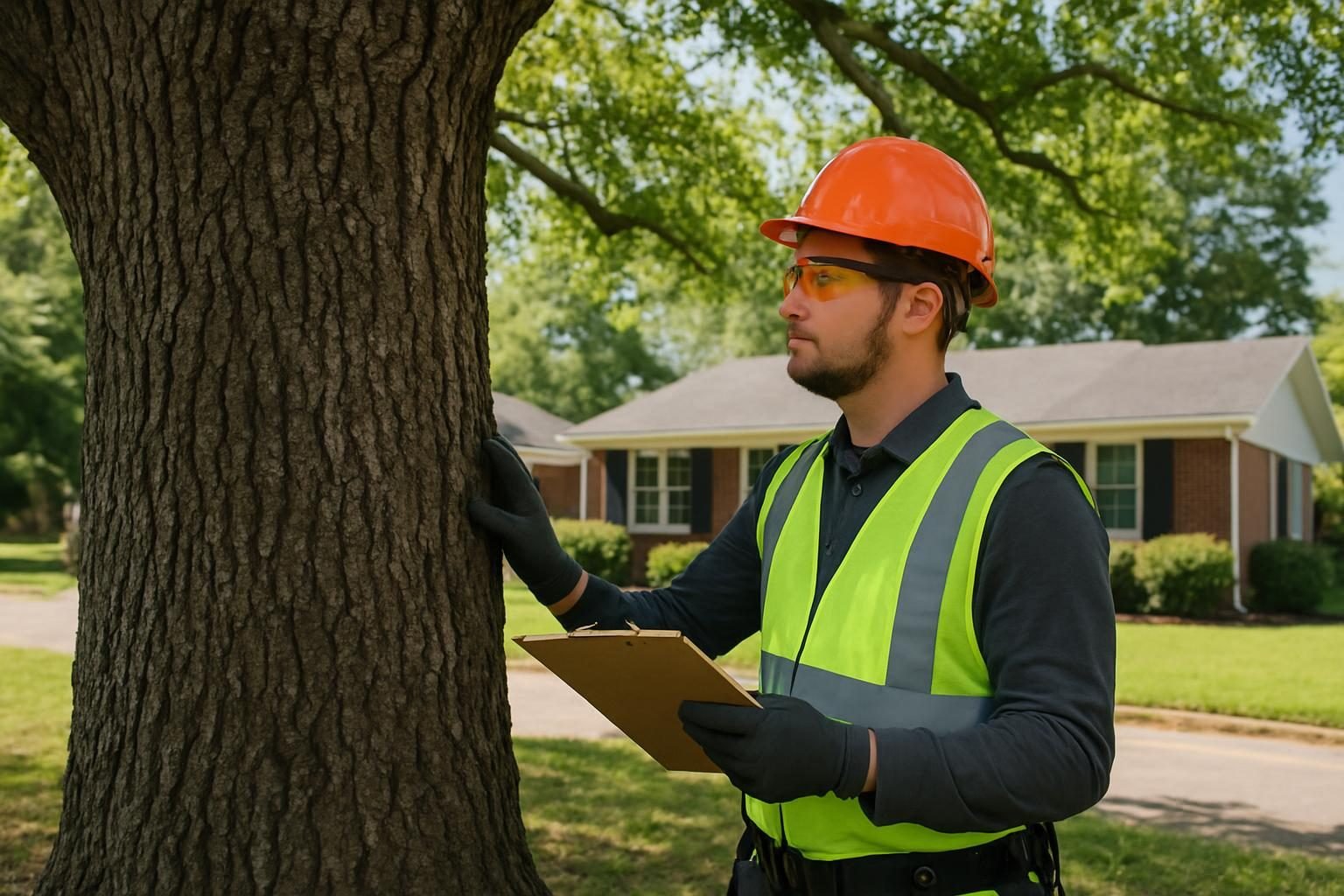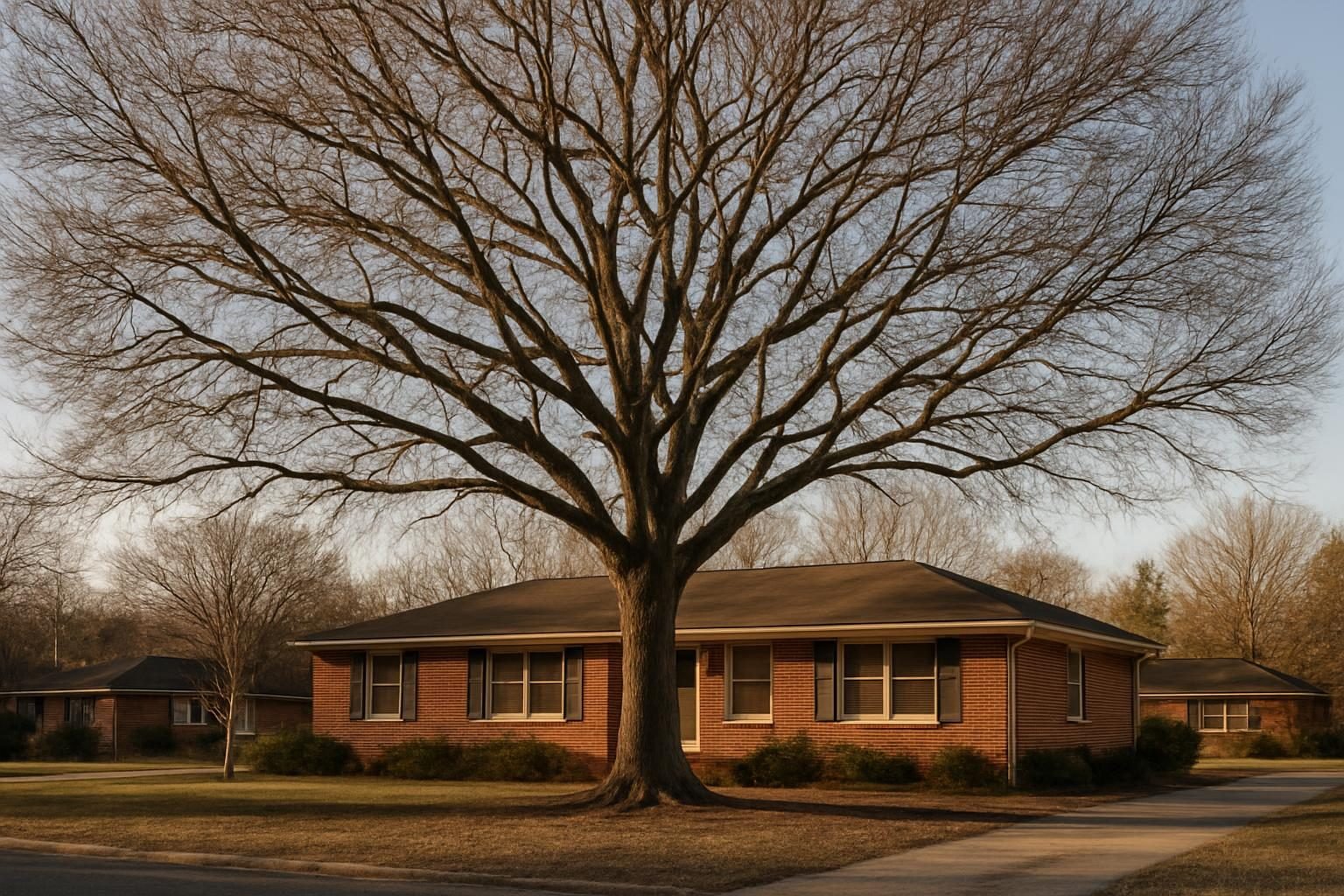
Quick answer: The best time for pecan tree pruning in Fayetteville is the dormant season, roughly late November through February, before buds swell. Young pecans can be shaped by a patient homeowner, but large mature pecans with heavy limbs over a roof, driveway or power line should be pruned by an insured arborist. Remove dead, broken and crossing wood first, and never take more than about a quarter of the canopy in one year.
Key takeaways
- Prune pecans in winter dormancy; avoid heavy cuts in spring and summer.
- Pecans are brittle, so heavy limbs and tight V-shaped crotches are the usual failure points in storms.
- Big limbs over structures are a job for a trained, insured crew, not a pole saw and a ladder.
- Nut drop, leaf drop and some branch dieback are normal, but sudden thinning or fungus at the base is worth an expert look.
Pecans are a fixture in older Fayetteville yards, from Haymount to the established lots around Hope Mills and Stedman. They give wonderful shade, but they are fast-growing, heavy and prone to dropping wood. This guide covers how to prune them, how to handle storm damage, and when it is time to call a professional.
If you have a large pecan that worries you, you can request a free consultation using the form on this page and compare quotes from local tree companies.
When to Do Pecan Tree Pruning in Fayetteville
Timing matters more than most homeowners realize. Pecans pruned in the dormant season heal cleanly, and bare branches make it easy to see structure.
- Best window: late November through February, once leaves have dropped and before spring bud swell.
- Acceptable: removal of dead or hazardous limbs any time of year, since safety comes first.
- Avoid: heavy pruning in spring and early summer, when the tree is pushing growth and spending stored energy.
- Avoid: late-season cuts right before a hurricane forecast; focus on storm prep instead (see the checklist below).
Our mild coastal plain winters make February a popular pruning month, and it is also when tree crews book up. Scheduling in December or January often gets you more flexibility.

How to Prune a Young or Mid-Sized Pecan
Good structure early prevents most of the heavy-limb problems later. For trees you can still reach safely from the ground, work in this order:
- Remove the three D’s: dead, damaged and diseased wood, cutting back to healthy tissue.
- Pick a central leader: keep one dominant trunk and remove competing upright stems.
- Space your scaffold limbs: aim for strong branches spread around the trunk and staggered up it, rather than several limbs from one point.
- Remove tight V-crotches: narrow attachments with bark pinched between them are weak and tend to split.
- Clear low limbs gradually: raise the canopy over a few years for mowing and walking clearance.
- Make proper cuts: cut just outside the branch collar, never flush to the trunk, and skip wound paint.
Pro tip: Never top a pecan by chopping the main leader or big limbs to stubs. Topping triggers weak, fast regrowth that breaks easily and shortens the tree’s life.
For more on cutting techniques and what trimming typically costs locally, see our overview of tree trimming and pruning and our guide to tree trimming cost in Fayetteville.
A pecan’s strength is its shade, but its weakness is brittle wood that fails under its own weight.
Heavy Limbs and Storm Breakage on Pecans
Pecan wood is relatively brittle, and mature trees carry enormous crowns. During tropical storms and summer thunderstorms, the combination of leaf load, wet wind and heavy nut crops can snap limbs or split a trunk at a weak union.
Warning signs of a limb or tree at risk
- Cracks or splits where a large limb meets the trunk
- Long, horizontal limbs extending over a roof, pool or driveway
- Dead branches in the upper canopy (often called widow makers)
- Included bark in a V-shaped crotch
- Sudden new lean, heaving soil or exposed roots after a storm
If your tree is already leaning, read when a lean is dangerous. For a general walkthrough before hurricane season, use our hurricane tree prep checklist.
After a storm
Stay clear of hanging limbs and anything touching a power line. Call the utility first for wires, then a licensed crew for the wood. Our guide to storm damage tree cleanup walks through safe steps, and emergency storm tree removal covers urgent situations.

Nut Drop, Leaf Drop and Everyday Care
Pecans create their own seasonal mess. Knowing what is normal helps you avoid unnecessary worry or unnecessary pruning.
- Nut drop: pecans typically drop nuts from early fall into winter. Heavy crops often alternate with light ones from year to year, which is normal for the species.
- Shuck and twig litter: expect husks, small twigs and sometimes early-summer fruit drop. Rake or mow to keep walkways and lawns clear.
- Leaf drop: pecans shed leaves in fall, and stress from drought can bring it on early.
- Watering: established trees appreciate deep watering during dry Carolina summers, especially in sandy soils common in parts of Cumberland County.
- Mulch: a wide ring of mulch, kept off the trunk, helps retain moisture. Avoid mounding it against the bark.
Harvesting nuts is a separate task from pruning. If you want a crop, tell any crew so they can balance your goals when thinning the canopy.
If a branch is bigger than your arm and hangs over your house, it is not a weekend project.
Common Pecan Disease and Pest Notes
Our warm, humid climate suits fungi, so pecans in Fayetteville, Raeford and Spring Lake see their share of issues. This is general information, not a diagnosis; a certified arborist or your county extension office can confirm what is affecting a particular tree.
- Pecan scab: a fungal disease causing dark lesions on leaves and nut shucks, worse in wet years.
- Leaf spots and powdery mildew: usually cosmetic on healthy mature trees.
- Insect pests: aphids, webworms and nut-feeding insects can appear in some seasons. Fall webworm tents are unsightly but often tolerable.
- Root and trunk decay: mushrooms or conks at the base, hollow sounds, or soft wood can signal structural decline.
- Dieback: thinning crowns and dead twigs from drought, root disturbance or construction damage.
Good pruning, deep watering and proper mulching reduce stress and improve disease resistance. For a trusted reference, the NC State Extension publishes regional guidance on pecan culture and pest management.
When a Big Pecan Needs an Arborist
Mature pecans can reach 70 feet or more and hold tons of wood. Climbing, rigging and cutting at height is dangerous, and a bad cut or a falling limb can damage property or cause serious injury.
Hire a professional when:
- Limbs overhang a house, garage, fence or power line
- You need to remove large-diameter branches or reduce the crown
- The tree shows decay, cracks, cavities or heavy deadwood
- You are unsure whether the tree is stable enough to keep
- You are preparing a property for sale or a PCS move
An arborist tree assessment can tell you whether to prune, cable or remove. Fees vary, so see how much an arborist costs in Fayetteville.
Estimated costs (planning ranges only)
- Pruning a mid-sized pecan: often several hundred dollars, depending on height and access.
- Large mature pecan crown work: commonly higher, sometimes well over a thousand dollars when climbing and rigging are involved.
- Full removal of a large pecan: can run from the low thousands upward, especially with crane or tight access.
These are estimates only; real prices depend on size, condition, access and debris haul-off. Our tree removal cost by size guide gives more detail. If removal is the answer, check tree removal in Fayetteville, and consider stump grinding afterward.
Hiring safely
- Ask for proof of liability and workers’ comp insurance.
- Get at least two written quotes.
- Be wary of crews that suggest topping.
- Confirm cleanup and haul-off are included.
Our 10-point hiring checklist and the page on verifying insurance explain what to look for. Planning more reading? Our upcoming guide to pecan tree trimming in North Carolina and a piece on tree trimming vs tree pruning will go deeper.
Ready to compare local options? Request free pecan tree pruning quotes with the form on this page.
FAQ
When should I prune my pecan tree in North Carolina?
Late fall through winter, while the tree is dormant, is the preferred window. Dead or dangerous limbs can be removed any time.
How much can I cut off a pecan tree at once?
A common rule of thumb is no more than about 25 percent of the live canopy in one season. Heavier cuts stress the tree and encourage weak regrowth.
Is it normal for a pecan tree to drop so many limbs?
Some twig and small branch drop is normal, but frequent large limb failure points to structural problems, heavy crop loads or decay. Have an arborist inspect it.
Do I need a permit to remove a pecan tree in Fayetteville?
Rules depend on location and circumstances, so verify with the city or county before removal. See our guide on tree removal permits in Cumberland County.
Get a free pecan tree pruning quote
A local Fayetteville-area tree service will contact you with a free, no-obligation quote.