Quick answer: For most single-family homeowners, removing a tree from your own residential yard does not require a permit in Fayetteville or Cumberland County. The exceptions are real, though: city or county ordinances, HOA covenants, protected buffers, and sites under development can all add rules. Always confirm with the planning office for your address before the saw comes out.
Key takeaways
- An ordinary yard tree on an ordinary residential lot is usually unrestricted, but “usually” is not “always.”
- Development sites, buffers, and zoning conditions are where tree rules most often show up.
- HOA and neighborhood covenants can restrict removal even when the city doesn’t.
- A five-minute call to the planning office is cheaper than a stop-work order or a fine.
- Your tree service should be willing to tell you what they’ve seen, but the permit decision belongs to the city or county.
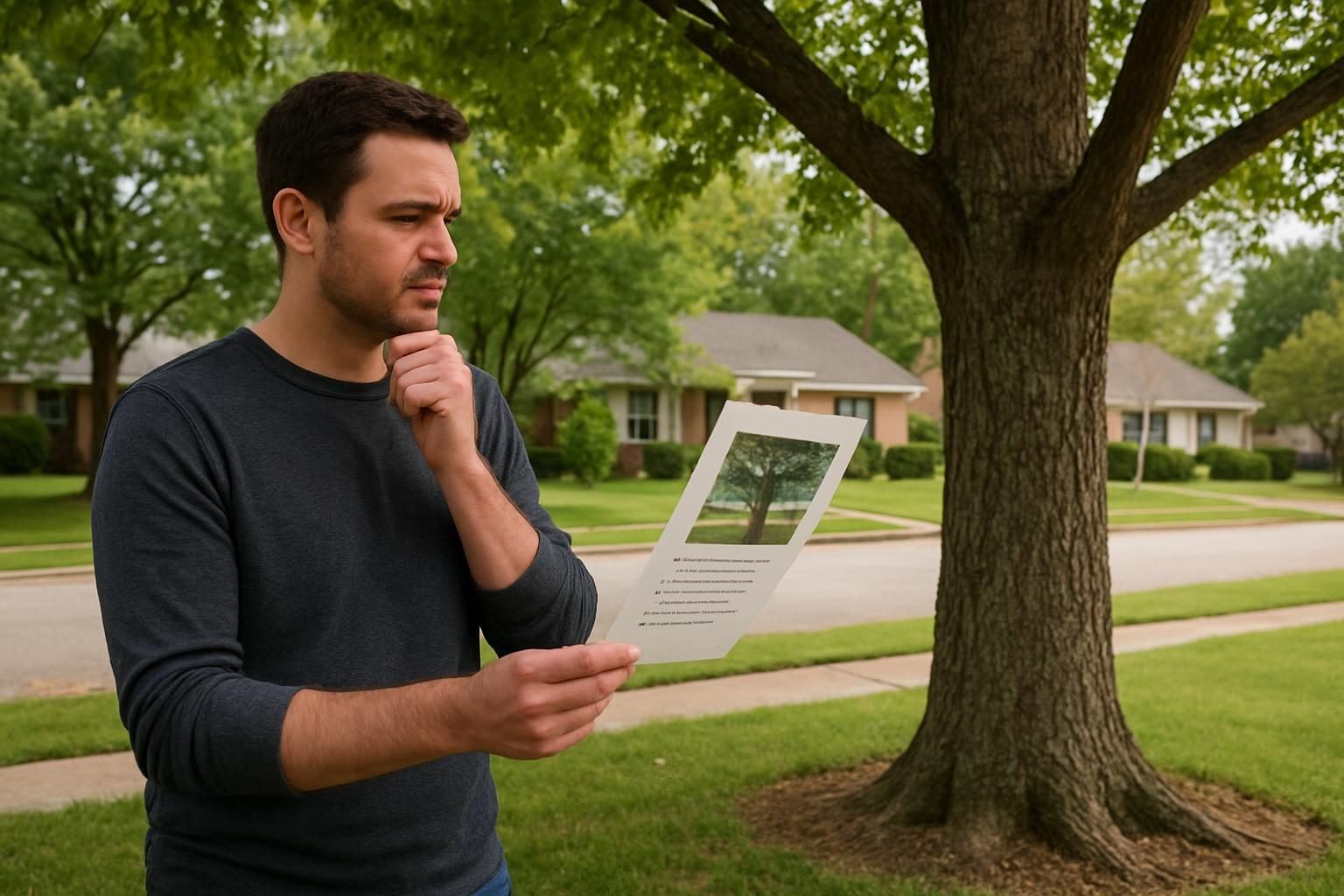
If you’re searching for a tree removal permit in Cumberland County, NC, you’re probably standing in your yard looking at a leaning pine, a split Bradford pear, or an oak that’s too close to the roof. This guide explains who actually regulates tree removal here, which situations tend to trigger a permit or approval, and how to verify before you hire anyone. It’s educational, not legal advice, because local ordinances change and your exact parcel matters.
Ready to compare prices once you know where you stand? You can request free quotes from local tree service companies using the form on this page.
Is a tree removal permit required in Cumberland County, NC?
In general, North Carolina does not have a statewide law requiring homeowners to get a permit to cut down a tree on their own residential property. Regulation happens at the local level, and local rules tend to focus on development, not on a homeowner removing a hazardous or unwanted tree from a normal yard.
That means the answer depends on three things:
- Where the property sits: inside Fayetteville city limits, inside another municipality like Hope Mills or Spring Lake, or in unincorporated county territory.
- What the property is doing: an established home versus a lot being subdivided, built on, or cleared.
- What private rules apply: HOA covenants, deed restrictions, or rental lease terms.
Each municipality in the county has its own ordinances and its own planning staff. Fayetteville’s rules are not automatically Hope Mills’ rules, and neither is identical to what applies in the unincorporated county. For a general picture of how this works in the city, see our companion piece, Do You Need a Permit to Remove a Tree in Fayetteville, NC?

When a tree removal permit or approval may apply
Think of the following as red flags that mean “check first.” None of them applies to every property, but each is a common reason a tree removal turns out to be regulated.
Development and construction sites
If you’re building a new home, adding a large addition, subdividing, or putting in a driveway or commercial improvement, tree preservation and landscaping requirements can come attached to the site plan or building permit. Trees may be designated to be saved, or you may owe replacement plantings. This is the situation where clearing first and asking questions later gets expensive.
Required buffers and protected areas
Some parcels carry buffer requirements, such as a vegetated strip along a property line, a watercourse, a wetland, or a roadway. Trees inside a buffer may be restricted or require approval to remove. Properties near creeks, ponds, and low-lying ground around the county are the ones most likely to have these constraints.
Zoning conditions and commercial property
Commercial lots, multifamily properties, and parcels with special zoning conditions often have landscaping or tree requirements tied to their original approval. Property managers should read our overview of commercial tree removal in Fayetteville before scheduling work.
Trees in the public right-of-way
A tree that looks like it’s in your front yard may actually sit within the city or state right-of-way, especially near the road. Removing or heavily cutting those trees is generally not your decision to make alone. Ask the city or NCDOT who owns the area before touching it.
Pro tip: Pull up your property survey or plat before you call. Knowing your lot lines, easements, and any recorded buffers makes the conversation with planning staff fast and specific.
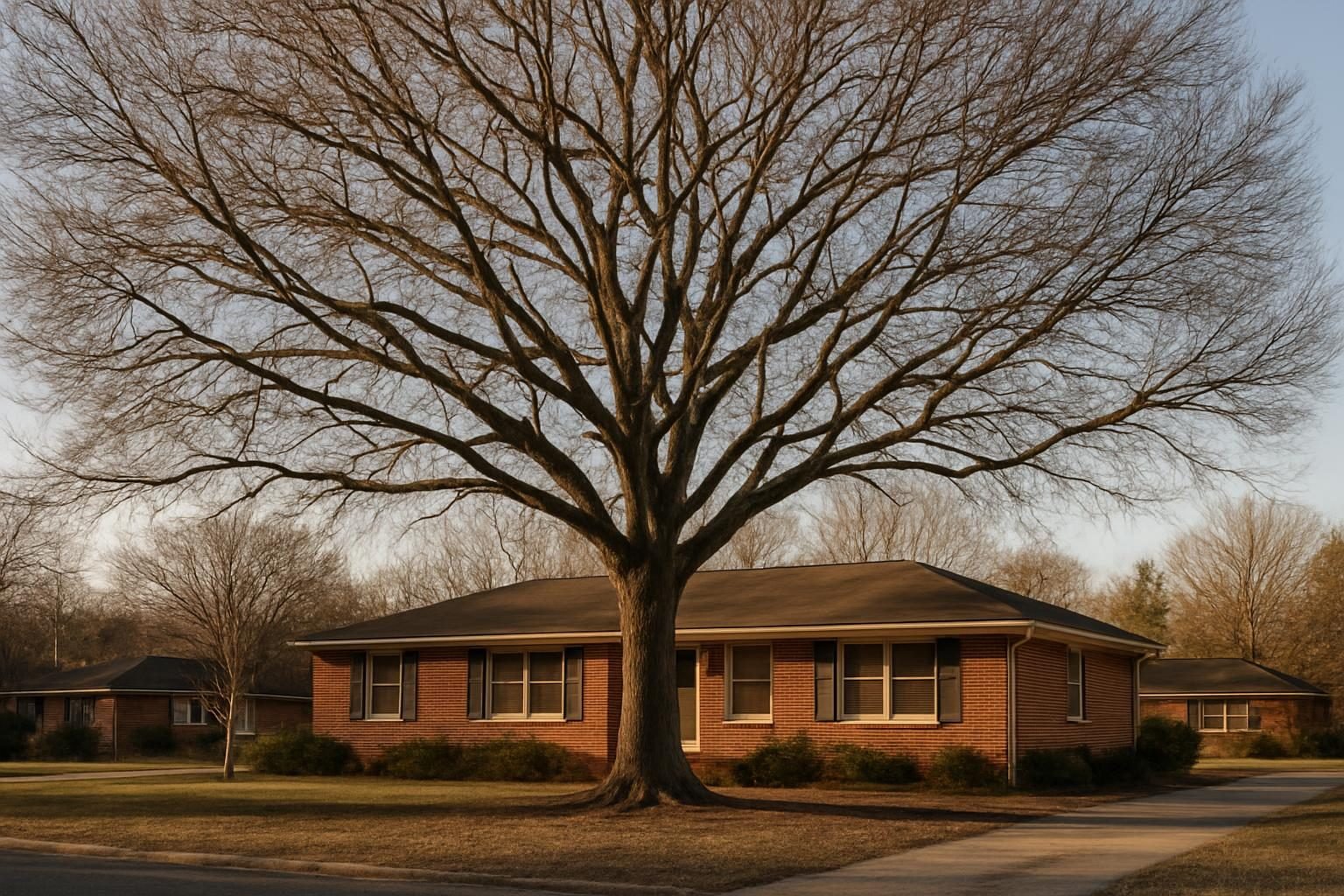
Residential yard trees are often unrestricted, but development sites, buffers, and right-of-way trees are where surprises hide.
HOA rules and private restrictions you can’t ignore
Even when the city or county doesn’t require a permit, your neighborhood might. Many subdivisions in Fayetteville, Hope Mills, and around Fort Bragg have covenants that require written approval from an architectural or landscape committee before you remove a mature tree.
Things to check:
- Your HOA covenants: look for sections on landscaping, “architectural control,” or tree preservation.
- Deed restrictions: older neighborhoods sometimes have recorded restrictions with no active HOA enforcing them.
- Your lease: renters generally need the landlord’s permission before any tree work, and on-post housing has its own process. Military families can find the basics in our guide to tree removal near Fort Bragg.
Violating HOA rules can mean fines or an order to replant, even if the removal was perfectly legal under city rules. Get approval in writing, and keep a copy for your tree service and your records.

How to verify before you cut: a step-by-step check
You don’t need to become an expert in local code. You just need to ask the right office the right question. Here’s a simple process.
- Confirm your jurisdiction. Use your county tax records or GIS parcel map to see whether your address is inside Fayetteville, Hope Mills, Spring Lake, Stedman, Raeford, or unincorporated Cumberland County.
- Contact the right planning or inspections office. Call or email the city or county planning department for that jurisdiction. Give them your address and say exactly what you plan to remove.
- Ask specific questions. Is a permit required? Are there buffers, easements, or zoning conditions on this parcel? Are there any tree preservation requirements tied to a prior approval?
- Check private rules. Read your HOA documents or ask the management company.
- Get the answer in writing when possible. An email reply from planning staff is useful documentation if questions come up later.
- Share it with your contractor. A reputable tree company will want to know about any restrictions before they quote.
For a broader look at vetting contractors once you’re ready, our 10-point checklist for hiring a tree service walks through insurance, estimates, and red flags.
Emergencies, hazardous trees, and utility lines
A tree that has fallen on your house or is actively dangerous is a different situation from planned removal. In an emergency, your first priorities are safety and stopping further damage, not paperwork. Many local codes recognize that hazardous conditions can’t wait, but you should still document the situation with photos and notify the city afterward if your jurisdiction requires it.
- Storm damage: see what to do first after a tree comes down and how homeowners insurance may treat fallen trees.
- Trees touching power lines: stay away and call the utility. Never cut near energized lines yourself. Our guide on what to do if a tree falls on a power line explains who to call.
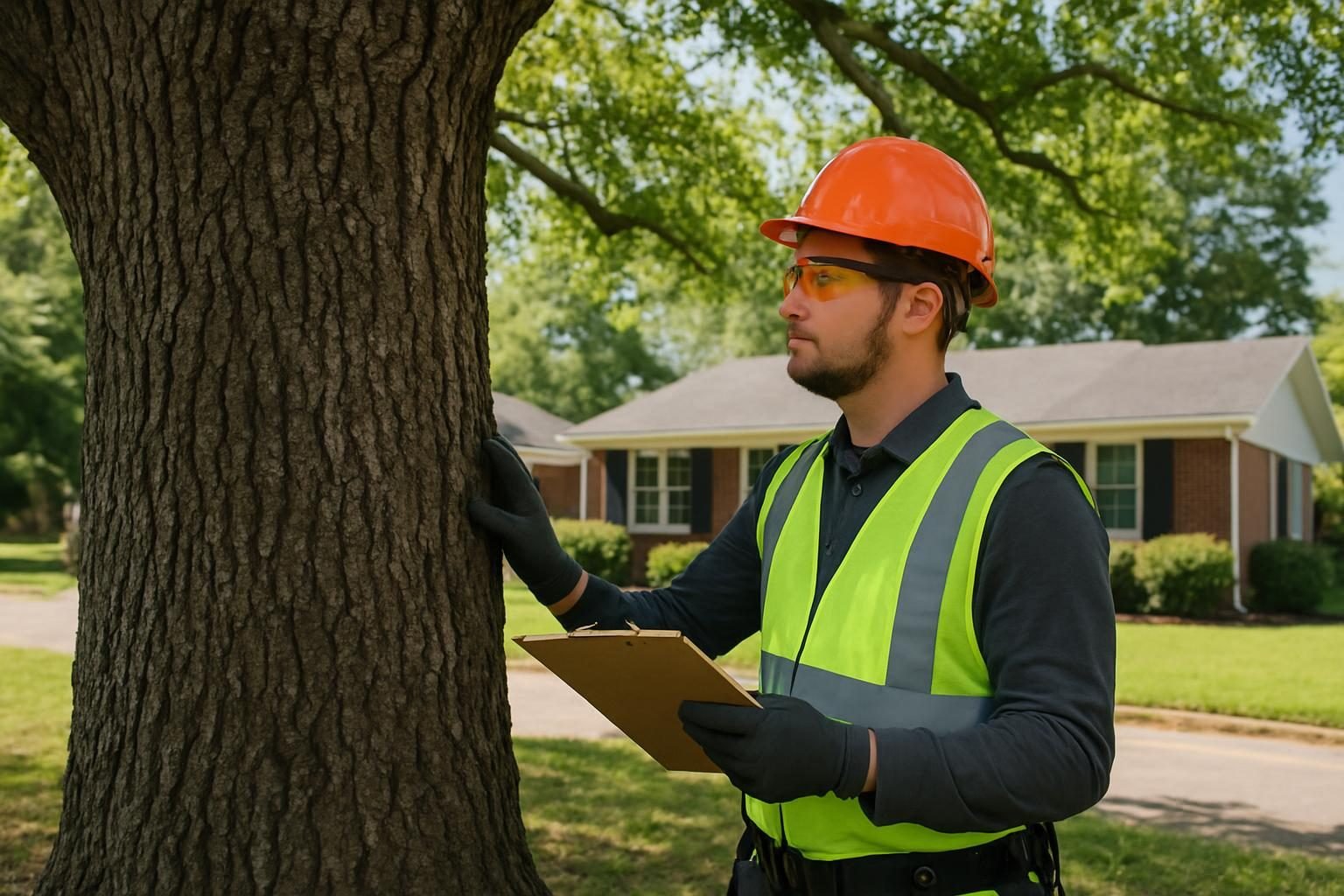
- Unsure whether a tree is dangerous? A certified arborist can inspect it. Learn more about arborist tree assessments, which can also support your case if a permit question comes up.
A five-minute call to the planning office costs nothing; an unpermitted removal can cost thousands in fines and replanting.
What this means for cost and timing
For a typical residential removal with no restrictions, you can schedule as soon as you have a quote and a date. When approval is needed, add time for the permit or HOA review before work begins. Tell any contractor up front so they can quote accurately and schedule around the approval.
Prices vary by tree size, access, and hazards, and rough estimates for small, medium, and large trees are in our breakdown of tree removal cost by tree size. If you’re clearing several trees or a whole lot, land clearing usually involves more regulatory checks than a single yard tree, so verify early. For standard jobs, our tree removal page explains what the process typically involves.
If you’d rather start by seeing real numbers, you can request your free tree removal quote and mention any permit or HOA questions in the form.
Frequently asked questions
Do I need a permit to cut down a tree in my own backyard in Fayetteville?
Often no, if it’s an ordinary residential lot and the tree isn’t in a buffer, easement, or part of a development approval. But rules vary by jurisdiction and parcel, so confirm with the city or county planning office, and check your HOA covenants.
Does the rule change if I live in Hope Mills, Spring Lake, or Raeford?
Yes, it can. Each municipality has its own ordinances, and unincorporated areas follow county rules. Raeford is in Hoke County, which has its own planning office. Contact the one that governs your address.
Can my HOA stop me from removing a tree if the city doesn’t require a permit?
Yes. HOA covenants are private contracts, and many require committee approval for mature tree removal. Get approval in writing before work starts.
Who is responsible for checking permits, me or the tree company?
Ultimately the property owner is responsible for the property. A good tree service will ask about restrictions and may know local requirements, but verify with the planning office yourself and keep the answer on file.
Get a free tree removal quote in Cumberland County
A local tree service company will contact you with a free, no-obligation quote and can answer permit questions for your job.