Quick answer: For a tree on your own residential lot, a permit is often not required, but that depends on where the tree is and what rules apply to your property. Street trees, historic districts, properties under development review and HOA neighborhoods are the situations where approval is most commonly needed. Rules differ between Fayetteville, Cumberland County and the smaller towns, so confirm with the right office before anyone starts cutting.
Key takeaways
- Many ordinary backyard removals need no permit, but never assume. Check first.
- Trees in the public right-of-way, historic districts and site-plan areas are the most common trouble spots.
- Your HOA can restrict removals even when the city does not.
- Which office to call depends on whether you live inside Fayetteville, another town, or unincorporated county.
- A reputable tree company can tell you what to verify, but the final answer comes from the local authority.
If you own a home in Fayetteville, Hope Mills, Spring Lake or Stedman, the question usually comes up when a tree is leaning, dying or just in the way. Getting it wrong can mean fines, stop-work orders or an HOA violation notice. This guide explains where rules tend to apply and how to check, without guessing at specific ordinance language, since local rules change.
Ready to move on a removal? You can request free tree removal quotes using the form on this page and ask each company about local approvals.
Do You Need a Permit to Remove a Tree in Fayetteville, NC?
There is no single answer for every property. Whether you need a permit depends on who controls the land the tree stands on and what overlays or agreements apply to your lot.
As a general pattern across North Carolina, a healthy or dead tree entirely on a private, single-family lot is the least regulated case. The more the situation involves public property, development approvals, historic designations or private covenants, the more likely you need permission first.
- Less likely to need approval: a tree fully on your own lot, in an established neighborhood, with no HOA or special district.
- More likely to need approval: trees near the street, in a historic area, on a lot with an approved site plan, or in an HOA community.
- Always worth a call: large trees, multiple trees, or removals tied to construction.
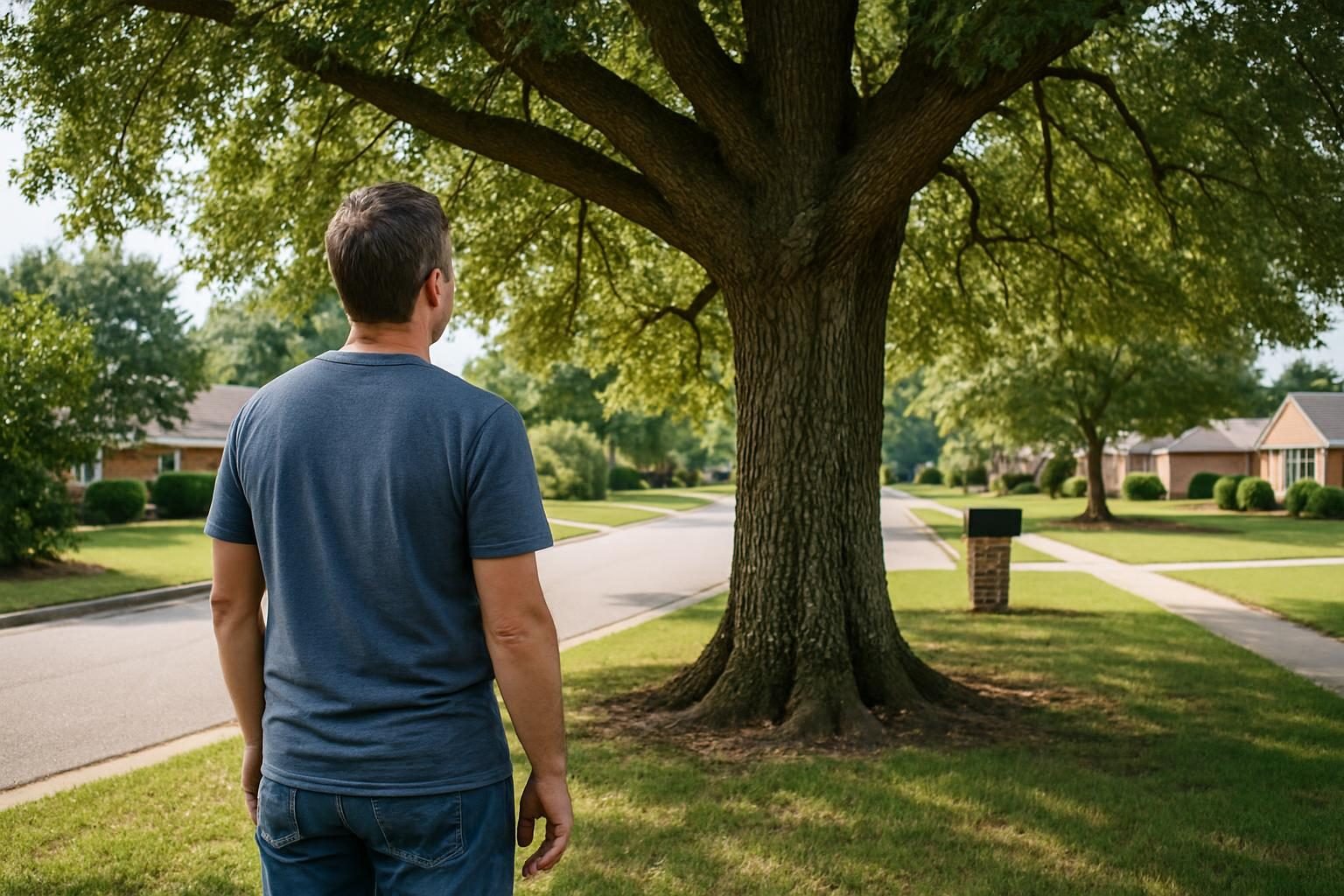
Situations Where Tree Rules Commonly Apply
These are the categories to screen your property against before scheduling work.
Street trees and the public right-of-way
The strip between the sidewalk and the curb, and often a few feet behind the sidewalk, may be public right-of-way even though it looks like your lawn. A tree there may belong to the city, the county or the state department of transportation, depending on the road. Removing or heavily cutting it without permission can cause problems.
Historic districts
Fayetteville has older neighborhoods, and areas with historic designation can have design review that touches exterior changes, sometimes including significant landscape features. If your home is in or near a historic district, ask whether tree removal needs review.
Development, site plans and new construction
Lots that went through subdivision or commercial site-plan approval may carry requirements about preserved trees, buffers or landscaping. This matters for new builds, additions, and land clearing on larger parcels.
HOA covenants and deed restrictions
Even if the city has no objection, your homeowners association may require written approval. Covenants can address tree size, species, front-yard trees or replacement planting. These are private rules, but they are enforceable through the HOA.
Other things to rule out
- Utility easements: power and other utilities usually control work near their lines and easements.
- Wetlands, streams and buffers: trees near water may fall under environmental protections.
- Military property: land on the installation near Fort Bragg is federal and handled differently from neighboring private lots.
- Rental properties: tenants generally need the owner’s approval.
The tree may be in your yard, but the rules affecting it may come from the city, the county or your HOA.
Who to Check With: City, County, Town or HOA
The office that matters depends on your address. Cumberland County includes several incorporated towns, and each can have its own rules and staff.
- Inside Fayetteville city limits: start with the City of Fayetteville’s planning or development services staff, and ask about street trees with the department that manages public rights-of-way.
- Hope Mills, Spring Lake, Stedman and other towns: contact your town hall or planning office. Town rules can differ from the city’s.
- Unincorporated Cumberland County: contact the county’s planning and inspections staff. Many rural properties in areas like Eastover or Gray’s Creek fall here.
- Raeford: Raeford is in Hoke County, so check with the Town of Raeford or Hoke County depending on your address.
- Road-side trees: if the road is state-maintained, the state transportation department may be the right contact.
- HOA: read your covenants and contact the board or management company.
Not sure whether your address is in the city or the county? City and county offices can usually confirm jurisdiction from your street address. If you are working with a company that serves your area, such as those listed on our tree service in Fayetteville page, they handle jurisdiction questions regularly and can point you in the right direction.
How to Check Before You Cut: A Simple Process
- Confirm the property line. Look at your plat or survey. A tree on the line can involve a neighbor’s consent, and our upcoming guide on who is responsible for a tree on the property line covers that in detail.
- Check for an HOA. Review your closing documents or ask the management company.
- Call the right government office. Give the street address, tree location (front, side, back, near the street) and approximate size. Ask: “Is a permit or approval needed to remove this tree?”
- Ask about overlays. Specifically ask about historic districts, buffers, site-plan conditions and replacement requirements.
- Get answers in writing. An email or a permit number protects you if questions come up later.
- Share it with your tree company. They should know what was approved before scheduling.
Pro tip: Take dated photos of the tree before any work, especially if it is damaged or leaning. They help with permit requests, HOA approvals and insurance claims.
A five-minute call before the chainsaw starts is far cheaper than fixing a violation afterward.
Dead, Dangerous and Storm-Damaged Trees
Hazardous trees raise a common question: do the rules still apply if the tree is a danger? Some localities handle dead or dangerous trees differently, and some require documentation, but you should confirm rather than assume an exemption.
- Active emergency: if a tree is on a house, blocking a road or tangled in power lines, safety comes first. Our guide on what to do when a tree falls on your house walks through the first 24 hours, and emergency storm tree removal crews can make the situation safe.
- Not sure if it is dying: check the signs a tree is dying, then consider an arborist tree assessment. A written assessment can support a permit or HOA request.
- Insurance: coverage often depends on what the tree did, not just that it is hazardous. See whether homeowners insurance covers tree removal in North Carolina.
In hurricane season, a city or county may relax or streamline certain debris rules after a major storm, but that varies by event. Check official announcements rather than relying on what a neighbor heard.
Hiring a Tree Service When Approval May Be Required
Responsibility for permits can be unclear, so settle it before work starts.
- Ask who pulls the permit. Some companies handle paperwork; others expect the homeowner to.
- Request proof of insurance. This includes liability and workers’ compensation coverage.
- Get itemized quotes. Note whether stump grinding and debris hauling are included.
- Be wary of pressure. Anyone who says “you never need a permit” without asking your address deserves a second look.
As a rough estimate, residential removals commonly run from a few hundred dollars for small trees to several thousand for large or hard-to-reach ones. Permit or application fees, where they apply, are separate. See our tree service cost in Fayetteville breakdown for typical ranges, and our overview of tree removal in Fayetteville for what the job involves.
Want to compare options? Request your free tree removal quote through the form on this page, and mention any HOA or historic-district questions up front.
Frequently Asked Questions
Can I remove a tree in my own backyard in Fayetteville without a permit?
Often yes for a typical private lot, but it is not guaranteed. HOA covenants, historic designation, buffers or site-plan conditions could still apply. Confirm with the City of Fayetteville, your town or Cumberland County first.
Who owns the tree between the sidewalk and the street?
It may be in the public right-of-way, which means the city, county or state could control it. Do not remove or heavily cut it until the responsible agency confirms.
Does my HOA need to approve tree removal?
Many HOAs require it. Check your covenants and ask the board in writing, since HOA approval is separate from any government permit.
What if a tree is dead or dangerous?
Rules may be handled differently for hazardous trees, but you should still verify. An arborist’s written assessment and photos can help. In a true emergency, make the situation safe first and document everything.
Get a free tree removal quote in Fayetteville
A local tree service company will contact you with a free, no-obligation quote and can answer questions about local approvals.