Quick answer: Remove a pine near your house when it is dead or dying, leaning noticeably (especially if the lean is new), has damaged or exposed roots, shows heavy beetle activity, or is tall enough to reach your home if it fell. A healthy, upright pine that stands well away from the structure often just needs monitoring or light thinning. If you are unsure, a professional assessment is the safest way to decide.
Key takeaways
- Not every pine near a house is a problem; the combination of height, distance, health and lean is what matters.
- A sudden lean, soil heaving or fading crowns are red flags that should not wait.
- Construction near the roots and saturated soil can quietly weaken a pine that looks fine from the street.
- You have three choices: remove, thin, or monitor. The right one depends on the tree, not on fear.
- Get a second set of eyes from a qualified arborist before committing to an expensive removal or ignoring a real hazard.
Across Fayetteville, Hope Mills and Spring Lake, tall loblolly and longleaf pines are part of what makes many neighborhoods feel like home. They also drop limbs, shed needles and, in a bad storm, sometimes fall. The question is not whether pines are risky in general; it is whether this pine, at this distance from your roof, is a risk worth removing.
If you want a professional opinion on a specific tree, you can request a free consultation using the form on this page.
Start With Distance vs. Height
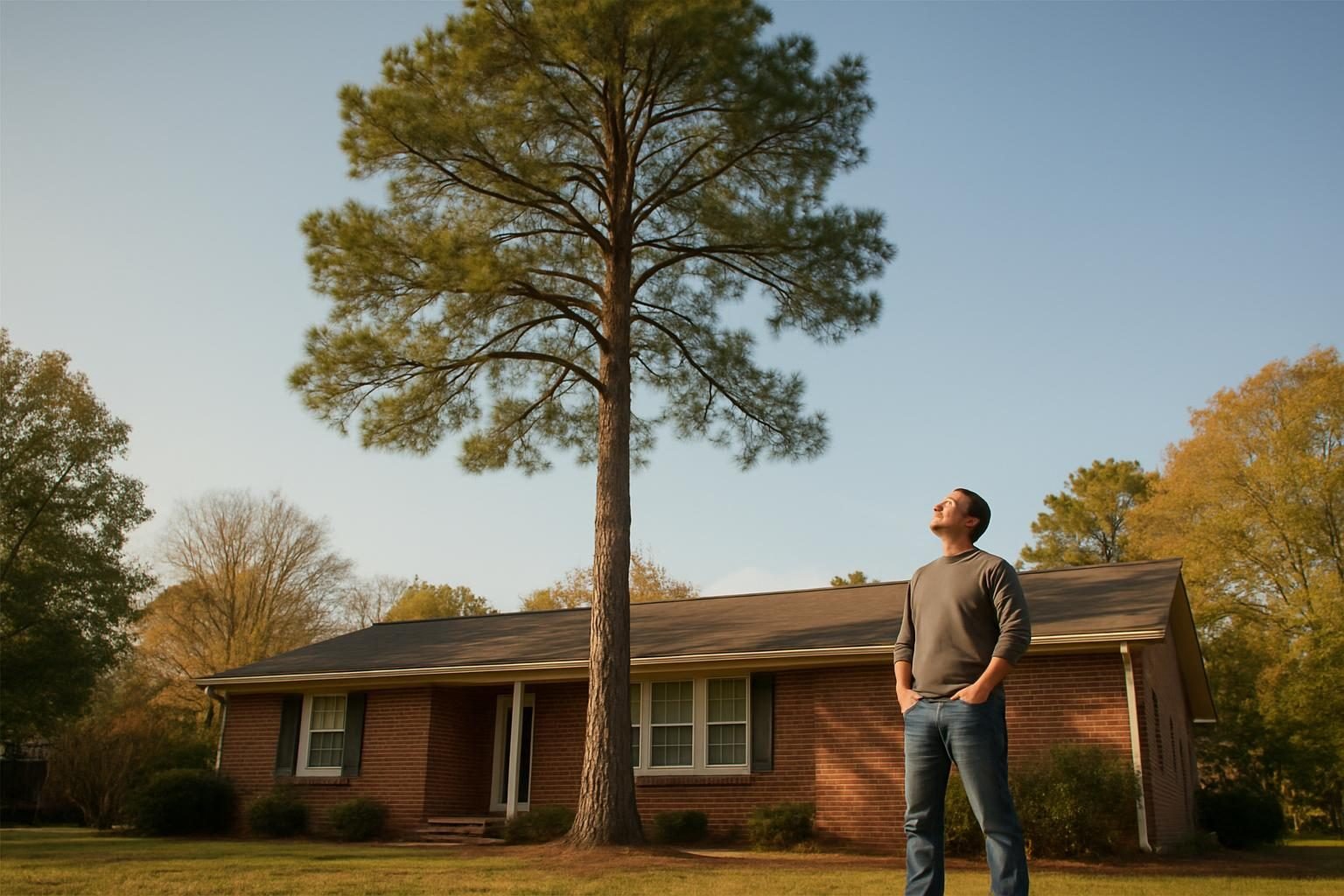
The simplest first check is geometry. A pine that is taller than its distance from your house could, in theory, reach the structure if it fell. Many Cumberland County pines run 60 to 100 feet tall, so a tree standing 40 feet from your roofline is within range.
Use this rule of thumb as a screening tool, not a verdict:
- Estimate the height. Stand back, hold a pencil at arm’s length and compare it to a person or object of known size, or simply ask a pro to measure.
- Measure the distance from the trunk base to the nearest part of the house, garage or other structure.
- If height exceeds distance, the tree is a potential target hazard and deserves a closer look at its health and lean.
- Consider what is under the fall zone: bedrooms, a carport, a driveway, a play area or a power line raise the stakes.
Being within range does not mean the tree must go. It means health, lean and roots matter more here than they would for a pine at the back of a large lot.
Warning Signs That a Pine Near Your House Should Come Down
These are the risk factors professionals look for. The more of them you see on one tree, the stronger the case for removal.
A new or worsening lean
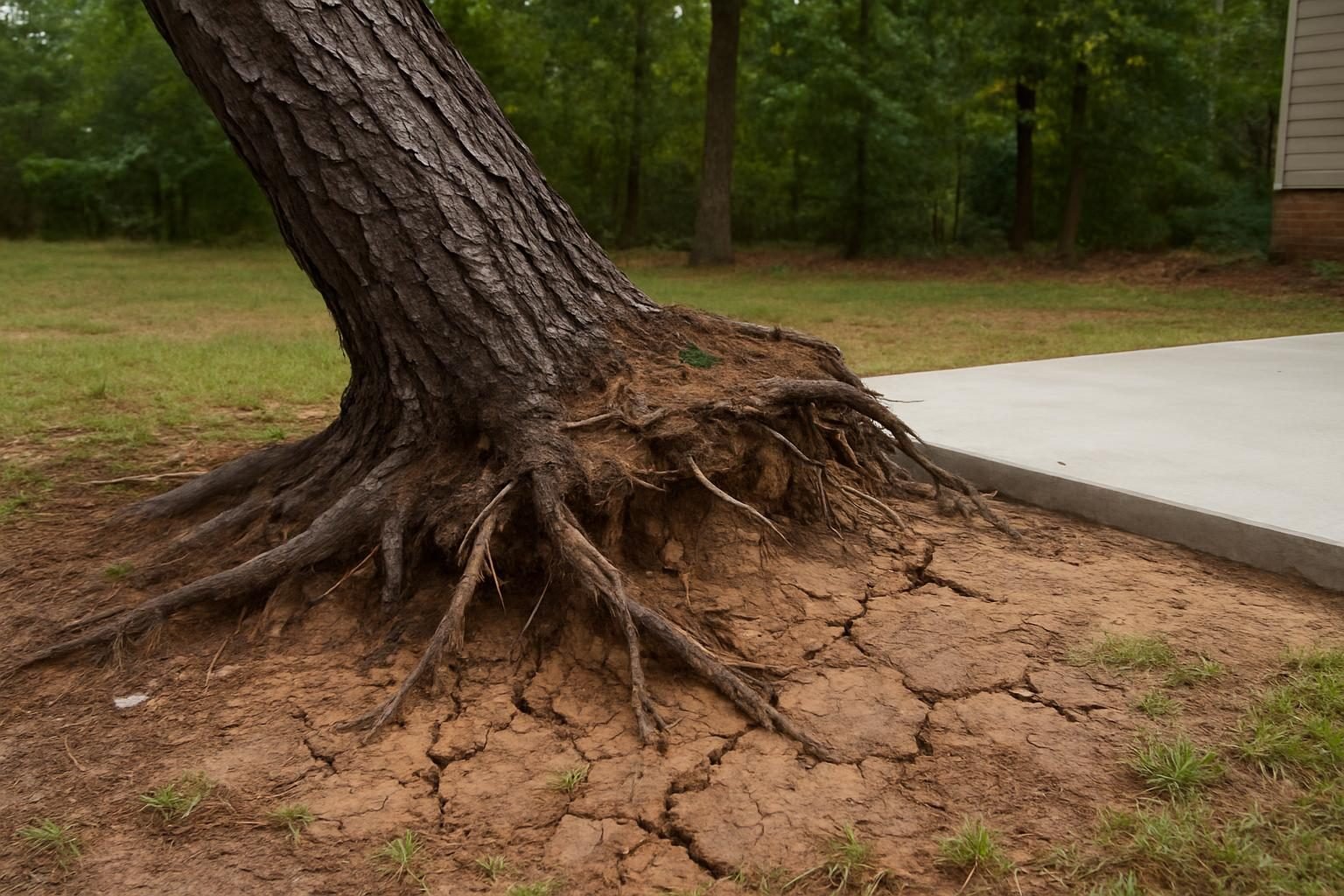
Many pines grow with a slight, long-standing curve and are perfectly stable. A tree that has started leaning recently, or one with soil cracking or mounding on the opposite side of the lean, is a different story. That pattern suggests the root plate is shifting.
Pine beetle damage
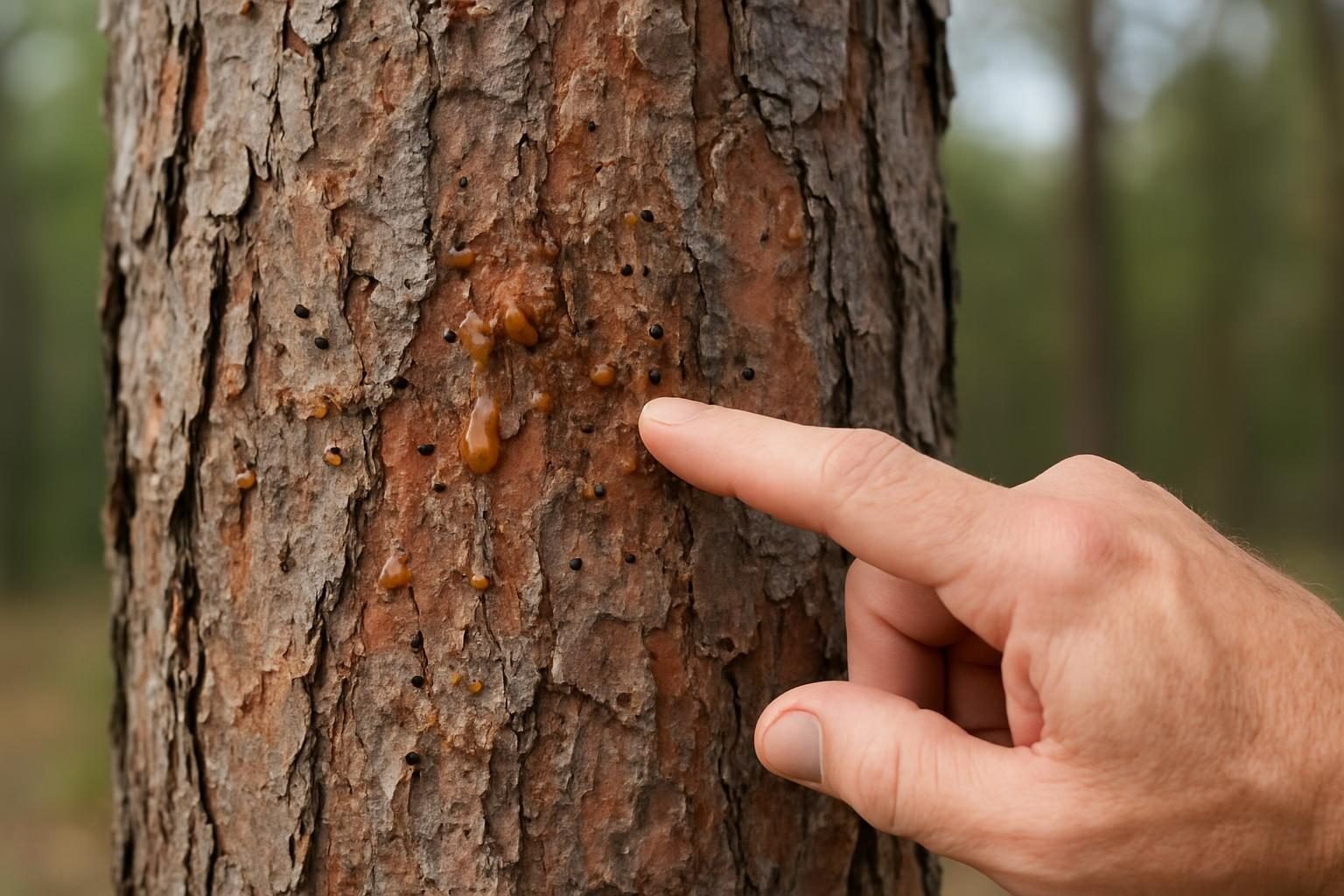
Bark beetles, including the southern pine beetle, attack stressed pines. Look for:
- Small pitch tubes (popcorn-sized blobs of resin) on the trunk
- Tiny round exit holes in the bark
- Crowns that fade from green to yellow, then red-brown, often fast
- Winding, S-shaped tracks under peeling bark
Once beetles have colonized a pine, it generally will not recover, and the dead tree becomes brittle. Our guide to signs a tree is dying walks through more of these symptoms.
Lightning strikes
A strike may leave a visible spiral scar down the trunk, blown-off bark or a split. Some pines survive a strike, but internal damage is common and may not show for months. A struck pine near the house is worth having checked rather than assumed to be fine.
Dead branches, hollow sections or fungus
Large dead limbs over a roof, conks or mushrooms at the base, and cavities in the trunk all point to decay. Pines are softwoods, so decay can reduce their strength more than you might expect.
A pine that has started leaning recently is a very different problem than one that has always grown crooked.
Root Damage, Construction and Wet Soil
Roots are the part of the tree you cannot see, which is why they cause so many surprises.
- Construction nearby. Trenching for utilities, a new driveway, a patio, a pool or an addition can sever or compact roots. Damage often shows up one to several years later as thinning needles or a sudden lean.
- Grade changes. Piling soil against the trunk or cutting the grade away from it stresses the tree.
- Shallow roots in wet soil. Pines on low or poorly drained ground tend to root shallowly. After days of heavy rain, especially during a tropical system, saturated soil lets shallow root plates tip over in wind.
- Exposed or heaving roots near the foundation or lifting pavement suggest the tree is already struggling for stability.
Pro tip: If you are planning any digging within a few feet of a mature pine, talk to an arborist first. Protecting the root zone before the work starts is far cheaper than removing a compromised tree afterward.
Roots are also a common concern for foundations and plumbing. Pines are generally less aggressive about this than some other species, but a severely stressed tree can still be a problem for hardscapes.
Your Options: Remove, Thin or Monitor
This is where honesty matters. Plenty of pines near houses are fine, and removing a healthy shade tree has a real cost in money, cooling shade and property value. Here is how the three choices compare.
Remove the tree when
- It is dead, dying or heavily infested with beetles
- It has a new lean or a lifting root plate
- It has major structural defects and could hit a structure
- Root damage from construction has left it unstable
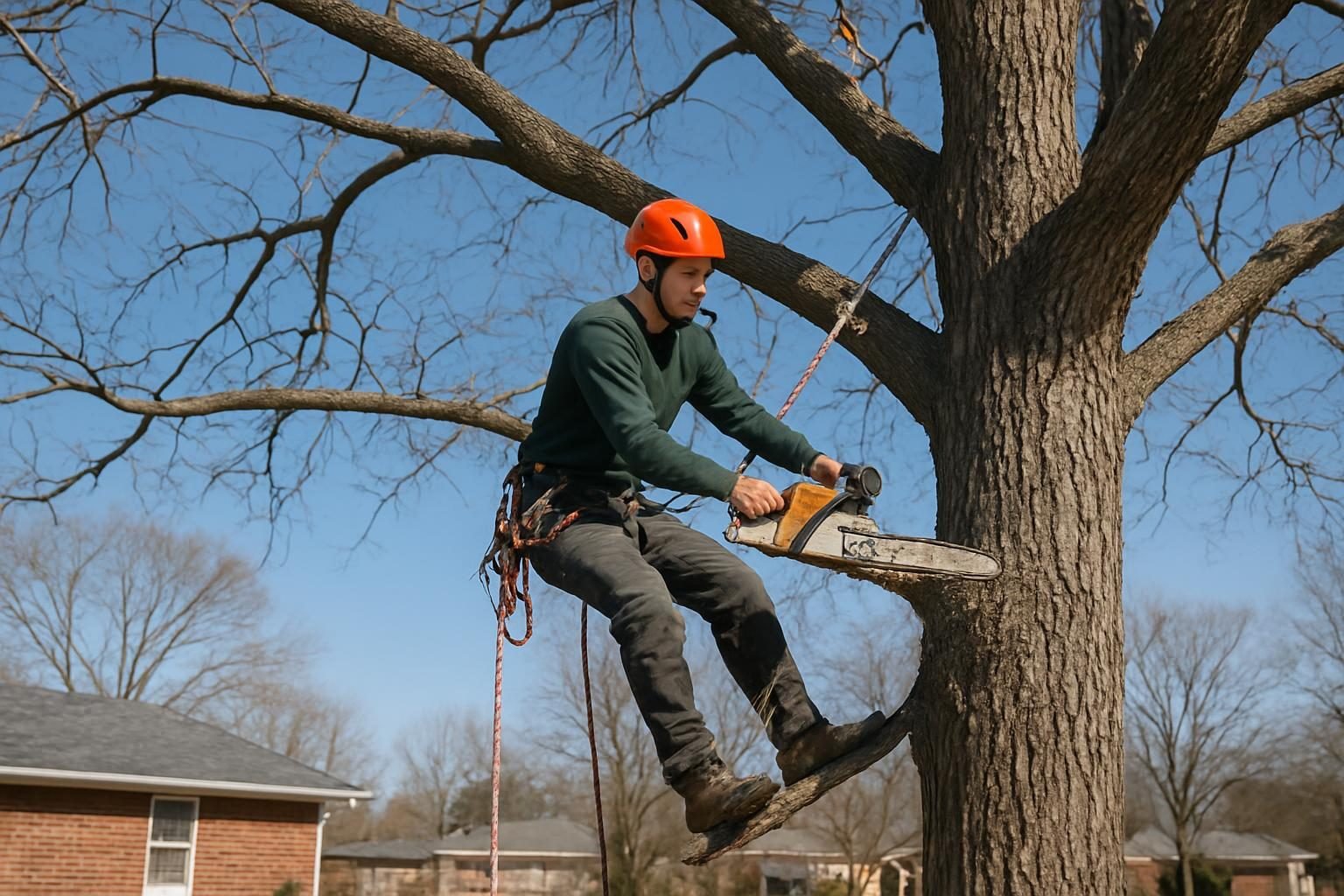
See our overview of tree removal in Fayetteville for how professional crews handle pines close to roofs and fences.
Thin or prune when
- The tree is healthy but has dead or weak limbs over the roof
- The crown is dense and catches wind heavily
- Branches are rubbing the house or hanging over a driveway
Removing deadwood and selectively thinning can reduce risk without losing the tree. Be cautious of anyone proposing to “top” a pine; it does not make the tree safer and often shortens its life. More on timing is in our month-by-month trimming guide, and the basics are covered on our tree trimming and pruning page.
Monitor when
- The pine is healthy, upright and has a full green crown
- It stands comfortably beyond its own height from the house
- You see no beetle sign, decay or root disturbance
Monitoring is not neglect. Walk around the tree after every major storm, look up for dead limbs and check the base for cracks or mounding. Consider an arborist tree assessment every few years for mature trees close to the home.
A healthy pine that is farther from your house than it is tall usually does not need to come down.
Cost, Permits and Timing Considerations
Large pines near structures cost more to remove than open-lot trees because crews often have to climb and lower the tree in sections rather than simply felling it. As a rough, estimate-only range, many Fayetteville-area pine removals fall somewhere from a few hundred dollars for a small tree to well over $1,500 for a tall pine in a tight spot, and prices vary by access, height and cleanup. Our pine tree removal cost guide and tree service cost overview break down what drives the price.
A few practical points:
- Check rules first. Whether you need a permit depends on your location and situation; see whether you need a permit to remove a tree in Fayetteville.
- Plan the stump. After removal you will decide between grinding and fuller removal; compare options in stump grinding vs stump removal.
- Act before storm season. Removing a compromised pine ahead of hurricane season costs far less than an emergency call. Use our hurricane tree prep checklist to prioritize.
- Ask about insurance. Coverage usually depends on whether a tree has already damaged a structure; read whether homeowners insurance covers tree removal and confirm details with your carrier.
How to Get a Reliable Second Opinion
Pine decisions are easy to get wrong in both directions: removing a perfectly healthy tree, or ignoring a failing one. When you collect opinions, look for people who explain why.
- Ask what they see. A good assessor points to specific defects: the lean, the beetle holes, the root damage.
- Ask about alternatives. If thinning or monitoring could work, an honest pro will say so.
- Get more than one quote for any large removal, and compare scope, not just price.
- Confirm insurance and ask for proof, since work near a house carries real liability.
- Be wary of pressure. After storms especially, door-to-door crews pushing same-day removal deserve caution.
Whether you live in Fayetteville proper or out in Raeford or Stedman, local companies know the soils, the common pine problems and the storm patterns in Cumberland County. Browse our pages on tree service in Fayetteville and tree service in Hope Mills to see what is available near you.
Ready to find out which category your pine falls into? Request a free, no-obligation quote with the form on this page and a local company can take a look.
Frequently Asked Questions
How close is too close for a pine tree to a house?
There is no single legal or technical number. A practical screen is whether the tree’s height exceeds its distance from the structure. If it does, the tree’s health, lean and root condition become the deciding factors, and a professional look is worthwhile.
Can a pine tree with beetles be saved?
Rarely, once the beetles have established themselves under the bark and the crown has begun to fade. Early protective measures may help nearby healthy pines, but infested trees are usually removed so they do not become brittle hazards and a source for further spread.
Is a leaning pine always dangerous?
No. Many pines grow with a stable, lifelong lean. The warning sign is a lean that is new or increasing, especially with cracked or heaving soil at the base. Those cases should be assessed promptly.
Should I remove a pine after nearby construction?
Not automatically, but have it checked. Root damage from trenching, grading or paving may take a year or more to show, so a pine that looks fine today could be weakened. An arborist can examine the root zone and advise whether to monitor, support or remove it.
Does a lightning-struck pine have to come down?
Not always, but it should be inspected. Internal damage can be extensive even when the outside looks only mildly scarred. If it stands near your house, err on the side of a professional evaluation.
Get a free quote on your pine tree near the house
A local tree service company will contact you with a free, no-obligation quote or assessment.