Quick answer: When a neighbor’s tree fell on my house, the usual rule of thumb is that your own homeowners policy pays for damage to your home and fence, regardless of whose tree it was. The neighbor may become responsible only if the tree was clearly dead, diseased, or ignored after a warning. Policies and circumstances vary, so confirm the details with your insurer.
Key takeaways
- Your insurance typically covers damage to your own house and fence first, even if the tree came from next door.
- A healthy tree toppled by a storm is generally treated as an “act of nature,” not the neighbor’s fault.
- Neglect (a visibly dead or leaning tree the owner knew about) can shift liability to the neighbor.
- Photos, dates, and written records you collect in the first day matter more than anything else.
- Removal of the tree itself is a separate question from repairing the damage, so sort out both.
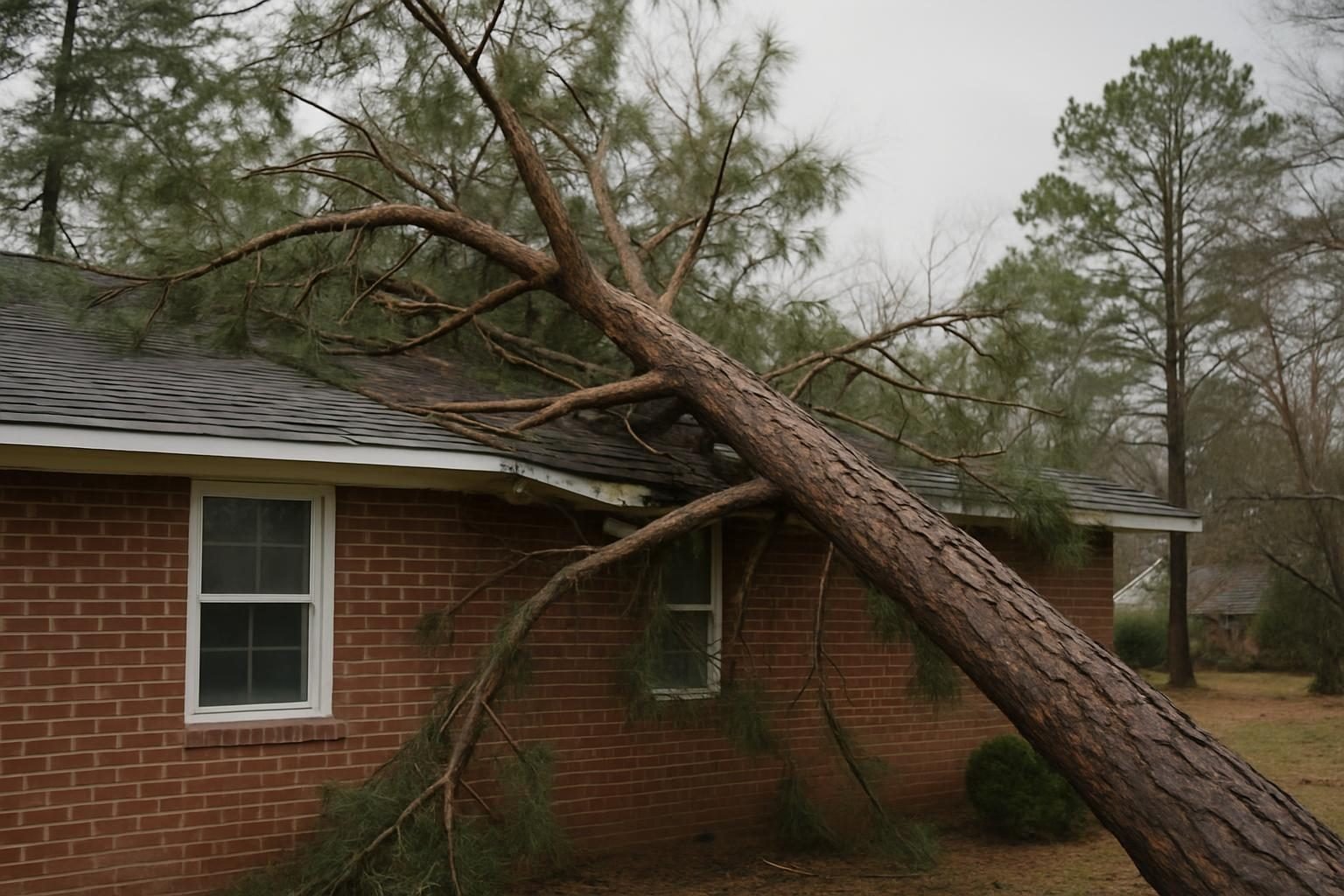
It is a stressful moment: a crash in the night, a limb through the roof, or a fence flattened in the morning, and the trunk is rooted in someone else’s yard. Across Fayetteville, Hope Mills, and Spring Lake, tall pines and old oaks make this a common scenario after thunderstorms and tropical systems. This guide walks through who typically pays, what to document, how to approach your neighbor, and how removal usually works.
If you need the tree cleared safely right now, you can request free quotes from local tree service companies using the form on this page.
Who Pays When a Neighbor’s Tree Falls on Your House?
The general norm in the insurance world is simple: your policy covers your property. If a neighbor’s tree damages your roof, siding, or fence, you typically file a claim with your own homeowners insurer, who pays according to your coverage and deductible. Your insurer may then decide whether to pursue the neighbor, a process called subrogation.
Liability usually comes down to one question: was the fall unavoidable, or was it foreseeable?
- Healthy tree, severe storm: Generally treated as an act of nature. The neighbor is not usually responsible, and your policy handles your damage.
- Dead, rotting, or leaning tree the owner ignored: If the owner knew, or reasonably should have known, the tree was hazardous, they may be held responsible for resulting damage.
- Tree the owner was formally warned about: A written notice sent before the failure strengthens a claim that the neighbor was negligent.
North Carolina law on tree liability turns on facts like these, so treat this as general education rather than legal advice. For the finer points of boundary trees, see our guide to property line and neighbor tree rules in North Carolina.
What to Do in the First 24 Hours
Safety comes first, paperwork second. If the tree is on the house or touching power lines, stay out of the affected area and call 911 or your utility if anyone is in danger or lines are down.
- Get everyone out of unsafe rooms. A tree resting on a roof can shift without warning.
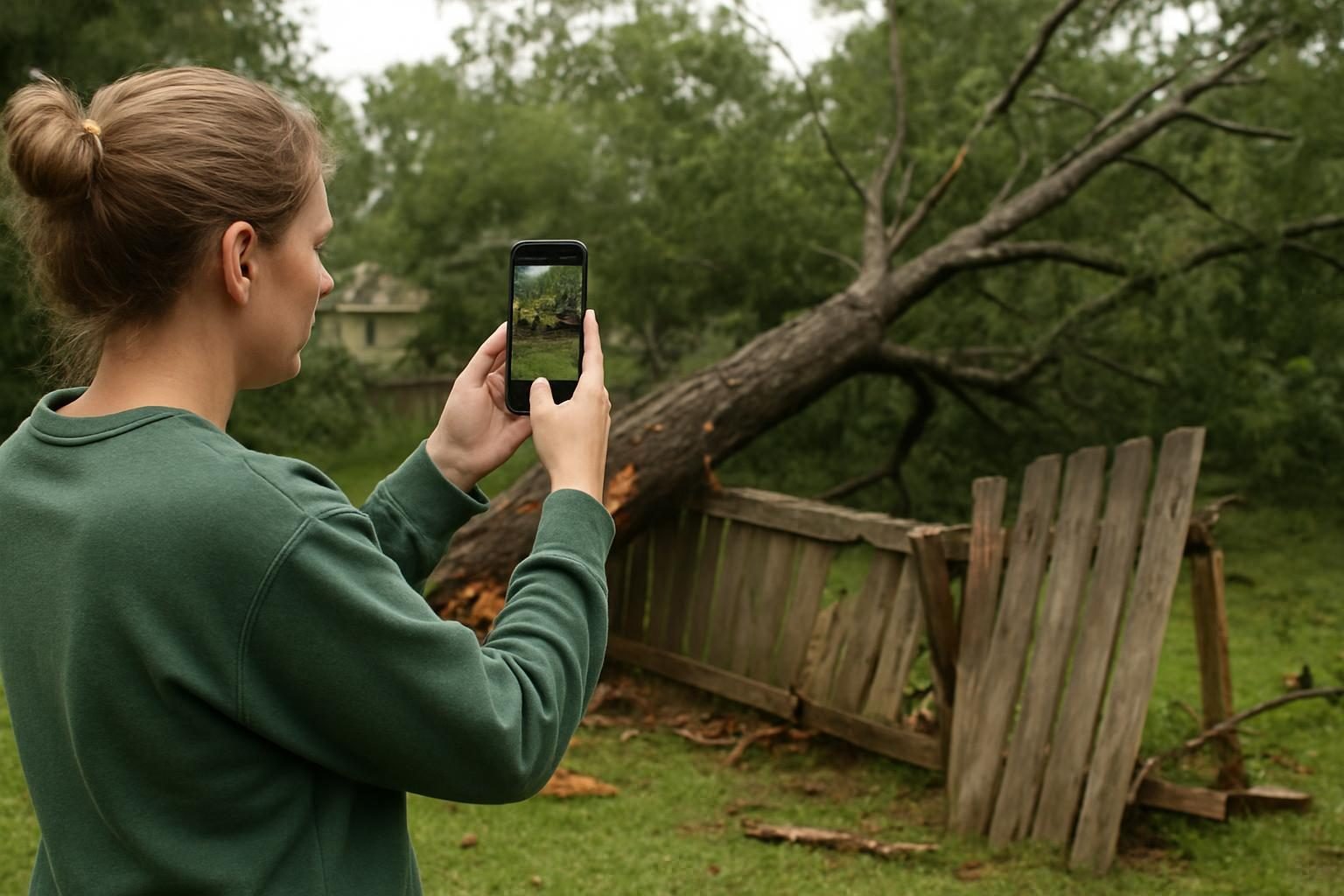
- Photograph everything before anything moves. Capture the whole tree, the point of impact, the base of the trunk, and the damage inside and outside.
- Note the date, time, and weather. Wind speeds and storm reports help show the fall was weather-driven.
- Make temporary protection. Tarping a damaged roof is typically expected so the damage does not get worse. Keep receipts.
- Call your insurance company promptly. Ask what your policy covers for fallen trees and what your deductible is.
For a deeper checklist, read what to do when a tree falls on your house in Fayetteville.
Pro tip: Photograph the stump or break point once it is visible. Dark, crumbly, hollow wood suggests decay that existed before the storm, which can matter if liability is ever disputed.
Photos taken before anyone touches the tree are often the most valuable evidence in a neighbor tree dispute.
How Documentation Protects You
Whether the claim goes smoothly or turns into a disagreement, a clear record helps. Build a simple folder, digital or paper, and keep adding to it.
- Photos and video: wide shots, close-ups, and a slow walk-around of the tree and damage.
- Prior tree condition: any older photos showing the tree dead, leaning, or shedding limbs.
- Past communication: texts, emails, or letters where you mentioned the tree to the neighbor.
- Estimates and invoices: repair quotes, tarping receipts, and tree removal bids.
- Claim records: your claim number, adjuster name, and dates of each conversation.
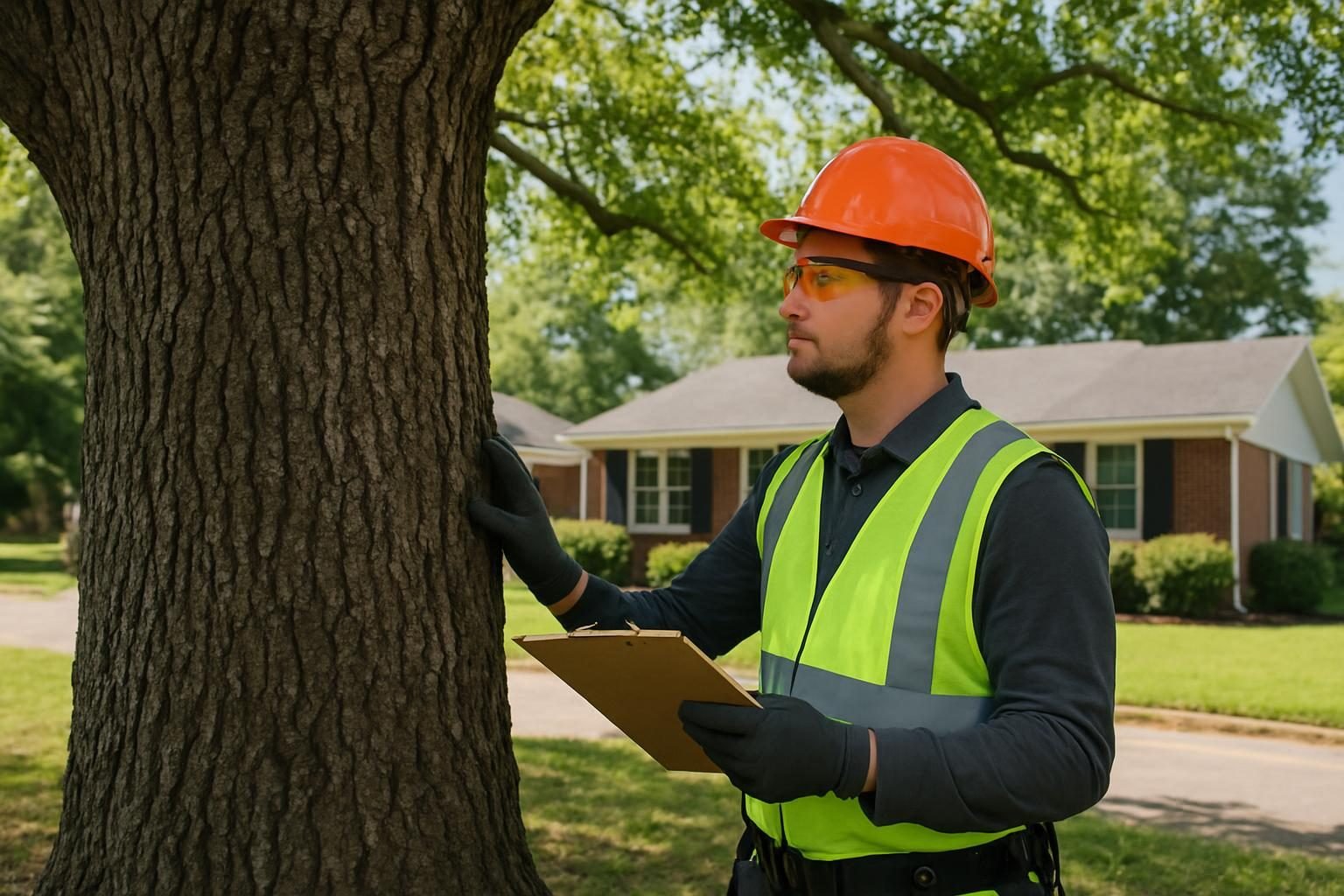
If you suspect the tree was already unhealthy, a professional opinion can help. An arborist tree assessment can identify decay, root failure, or disease and put it in writing.
Talking to Your Neighbor Without Starting a Feud
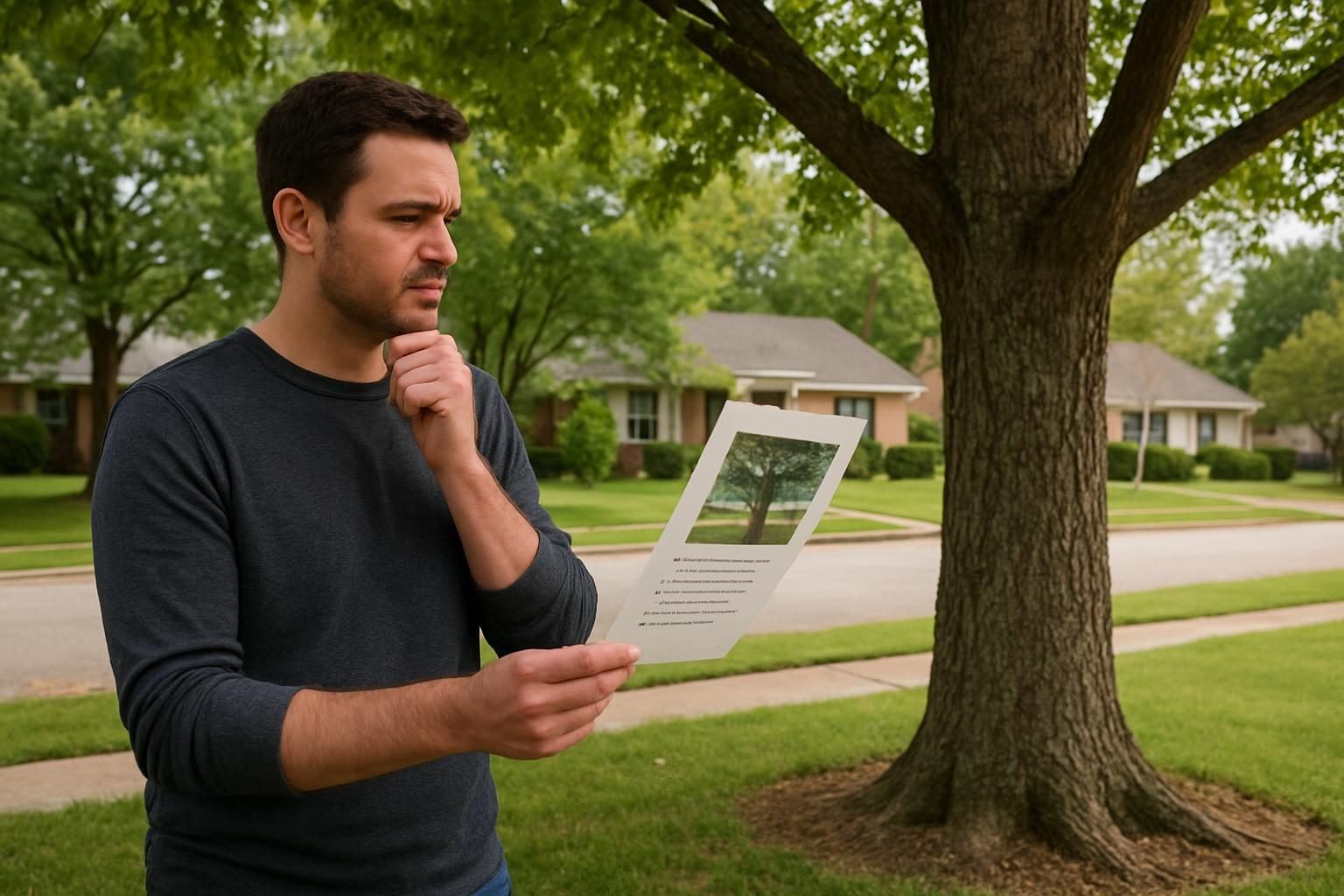
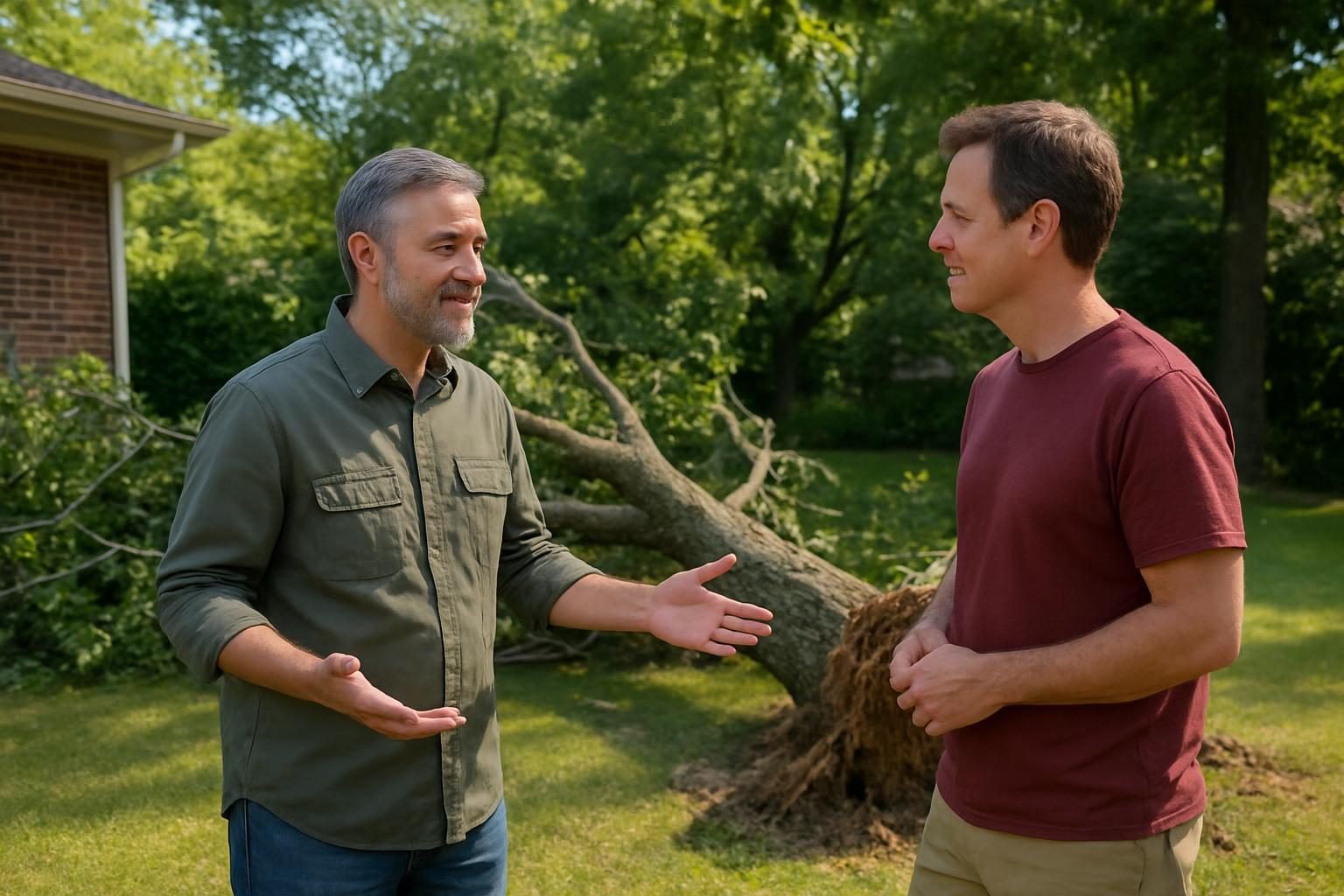
Most neighbors are as surprised as you are, and a calm conversation often resolves more than a lawyer’s letter. Lead with concern, not blame.
A simple approach
- Check in first. Ask if they are okay and if their property was damaged too.
- Share the facts. Show them the photos and explain you are filing with your own insurer.
- Ask about the tree. Did they know of any problems? Has anyone inspected it?
- Agree on removal logistics. Who will hire the crew, and how will access work?
- Follow up in writing. A short text or email summarizing what you agreed on protects both sides.
If the neighbor is renting, the property owner or landlord may be the one to contact. If conversations stall, your insurance adjuster can often communicate with the neighbor’s carrier directly.
Your insurer usually pays first and sorts out fault later, so you rarely have to win an argument to get your roof fixed.
Removing the Fallen Tree: Logistics and Costs
The tree itself is a separate matter from the repairs. Your policy may cover removal when the tree damaged a covered structure, but coverage for cleanup alone often has limits, so check with your insurer. Our article on whether homeowners insurance covers tree removal in North Carolina explains the common patterns.
- Whose tree is it? The tree owner is often responsible for removing it from their own land, but when it is on your house, the debris and the urgent work usually fall to you to arrange first.
- Access: crews may need to cross the neighbor’s yard. Get their permission up front.
- Equipment: a tree resting on a roof often calls for careful sectional cutting or a crane, which affects price.
- Stump: if the trunk remains standing, consider stump grinding once the tree is down.
Rough estimates, which vary widely by tree size, access, and urgency: a standard removal may run from a few hundred to a few thousand dollars, and emergency work on a damaged structure often costs more. See our breakdown of emergency tree removal costs in Fayetteville and the general tree service cost guide for ranges.
Fence damage is a frequent follow-up issue, and we plan to cover it in more detail in our guide to a fallen tree on a fence.
Preventing a Repeat: Warning Signs to Share With a Neighbor
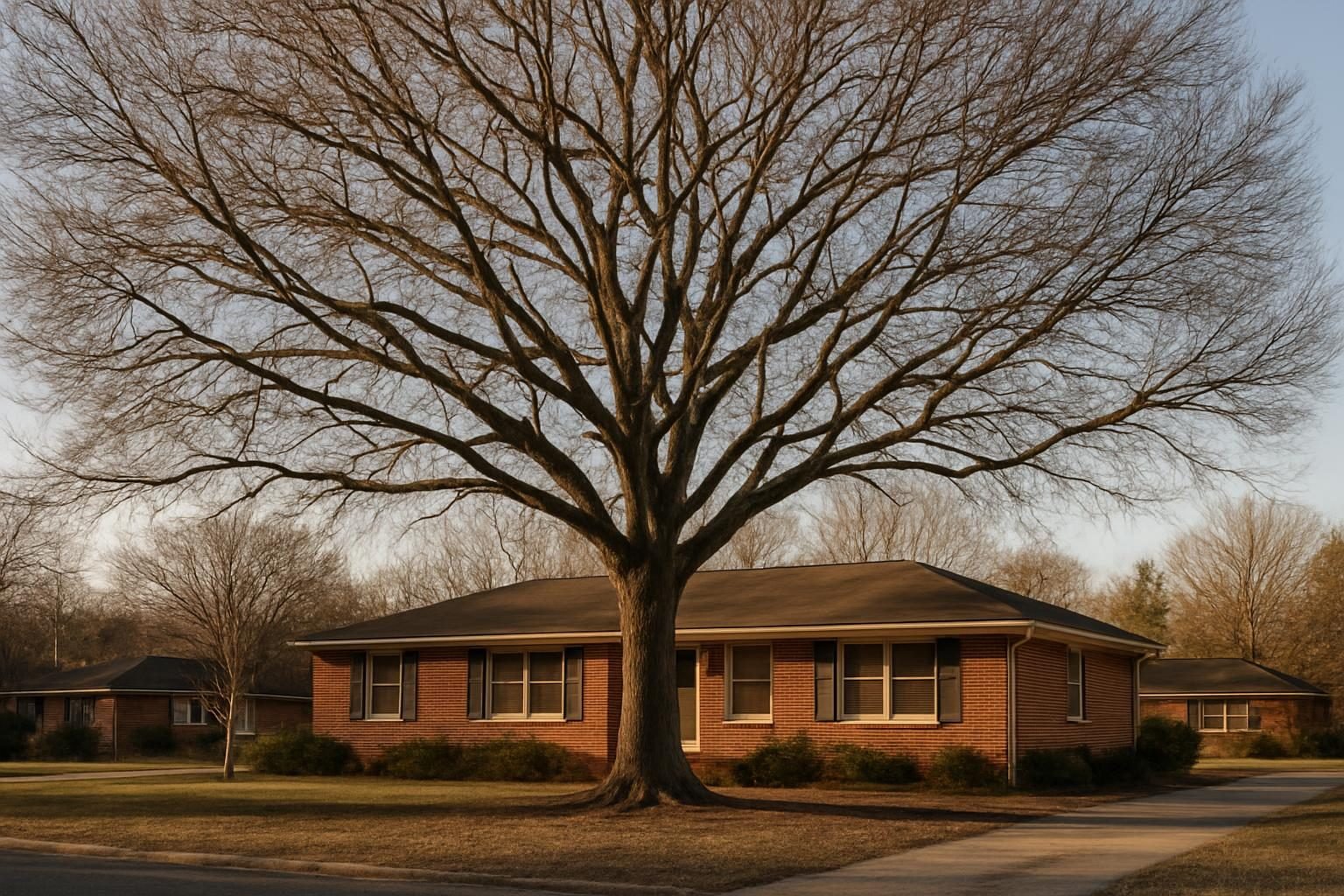
If other trees along the property line worry you, raise it politely and in writing. A documented notice can shift responsibility if the owner ignores a real hazard. Common red flags include:
- Bare, brittle, or dead branches in the canopy
- Mushrooms or fungus at the base
- A noticeable lean, especially if it has changed
- Cracked trunks, peeling bark, or hollow sections
- Heaving soil or exposed roots after rain
Our list of 9 signs a tree is dying helps you recognize these issues, and our hurricane tree prep checklist covers getting ready before storm season. Homeowners in Hope Mills, Stedman, and Raeford who live near mature pines often find regular pruning and inspection far cheaper than a roof repair.
Ready to get the tree handled? You can request your free tree removal quotes from local companies using the form on this page.
Frequently Asked Questions
If my neighbor’s tree fell on my house, do I file with my insurance or theirs?
Typically you start with your own homeowners insurer, since your policy covers your property. If the neighbor was negligent, your insurer may recover costs from theirs afterward. Policies differ, so ask your agent.
Is my neighbor responsible if the tree was dead?
Possibly. If the tree was visibly dead or hazardous and the owner knew or should have known, they may share liability. Evidence like old photos and written warnings supports that case.
Who pays to remove the tree from my yard?
It depends. If the tree damaged a covered part of your home, your policy may help with removal, often up to a limit. Otherwise you and the neighbor may need to agree on who covers it.
Can I cut down part of my neighbor’s tree myself?
In general, you can trim branches that overhang your property up to the boundary, but cutting a tree that stands on their land or harming it can create liability. Use a professional and review local rules before cutting.
Get free quotes to remove a fallen tree
A local tree service company will contact you with a free, no-obligation quote.