Quick answer: Emergency tree removal in Fayetteville typically costs about 1.5x to 3x what the same job would cost on a normal schedule, and a tree on a house or a job needing a crane can push totals into the thousands. As a rough estimate, simple emergency jobs often run from a few hundred dollars to $1,500, while complex or crane-assisted removals can reach $3,000 to $10,000 or more. Get a written scope and price before work starts, even in a rush.
Key takeaways
- Emergency rates usually run 1.5x-3x the standard price because of after-hours labor, urgency, and demand surges after storms.
- Crane jobs, trees on structures, and power-line complications drive the biggest price jumps.
- Your homeowners policy may cover removal when a tree damages a covered structure, so document everything first.
- Storm chasers go door to door after hurricanes; verify insurance and get a written quote before any saw starts.
When a limb comes through the roof or an oak blocks your driveway in Hope Mills at 2 a.m., price is not the first thing on your mind. That is exactly when homeowners get overcharged. This guide explains what emergency tree removal cost really looks like in Fayetteville and Cumberland County, why it runs high, and how to stay protected.
If you need help now, you can request free quotes for emergency tree removal from local companies using the form on this page.
Emergency Tree Removal Cost: What to Expect in Fayetteville
Every tree job is different, so treat these figures as estimates, not quotes. Actual prices depend on tree size, access, hazards, and how quickly crews can get to you.
- Small tree or large limb down in the yard, no damage: roughly $300-$900
- Medium tree blocking a driveway or road access: roughly $600-$1,800
- Large tree down in an open area, hand-cut and hauled: roughly $1,000-$3,000
- Tree on a roof, fence, or vehicle: roughly $1,500-$5,000+
- Crane-assisted removal near a structure: roughly $2,500-$10,000+
For comparison with non-emergency pricing, see our tree service cost guide for Fayetteville. Tall pines, which are everywhere in Cumberland County, have their own pricing pattern covered in our pine tree removal cost breakdown.
Why Emergency Rates Run 1.5x to 3x Higher
The premium is not always gouging. Real costs go up when a crew drops everything to respond. Here is what drives it:
- After-hours and weekend labor: Crews pay overtime, and many price nights, holidays, and weekends at a premium.
- Schedule disruption: Rolling a crew off planned jobs costs the company money elsewhere.
- Higher risk: Trees under tension, leaning on structures, or tangled in lines are dangerous to cut and require more skill and time.
- Demand surges: After a hurricane or severe thunderstorm, every reputable company in the region is booked. Prices climb with demand.
- Equipment mobilization: Cranes, bucket trucks, and grapple trucks cost a lot to move and run, especially on short notice.
A fair emergency price reflects those realities. A price that is five or six times normal, or that changes once the crew arrives, is a warning sign.
Pro tip: Ask whether the company can do an emergency stabilization now (tarping, cutting just enough to relieve the roof) and schedule the full cleanup at standard rates in a day or two. This can cut the bill significantly.
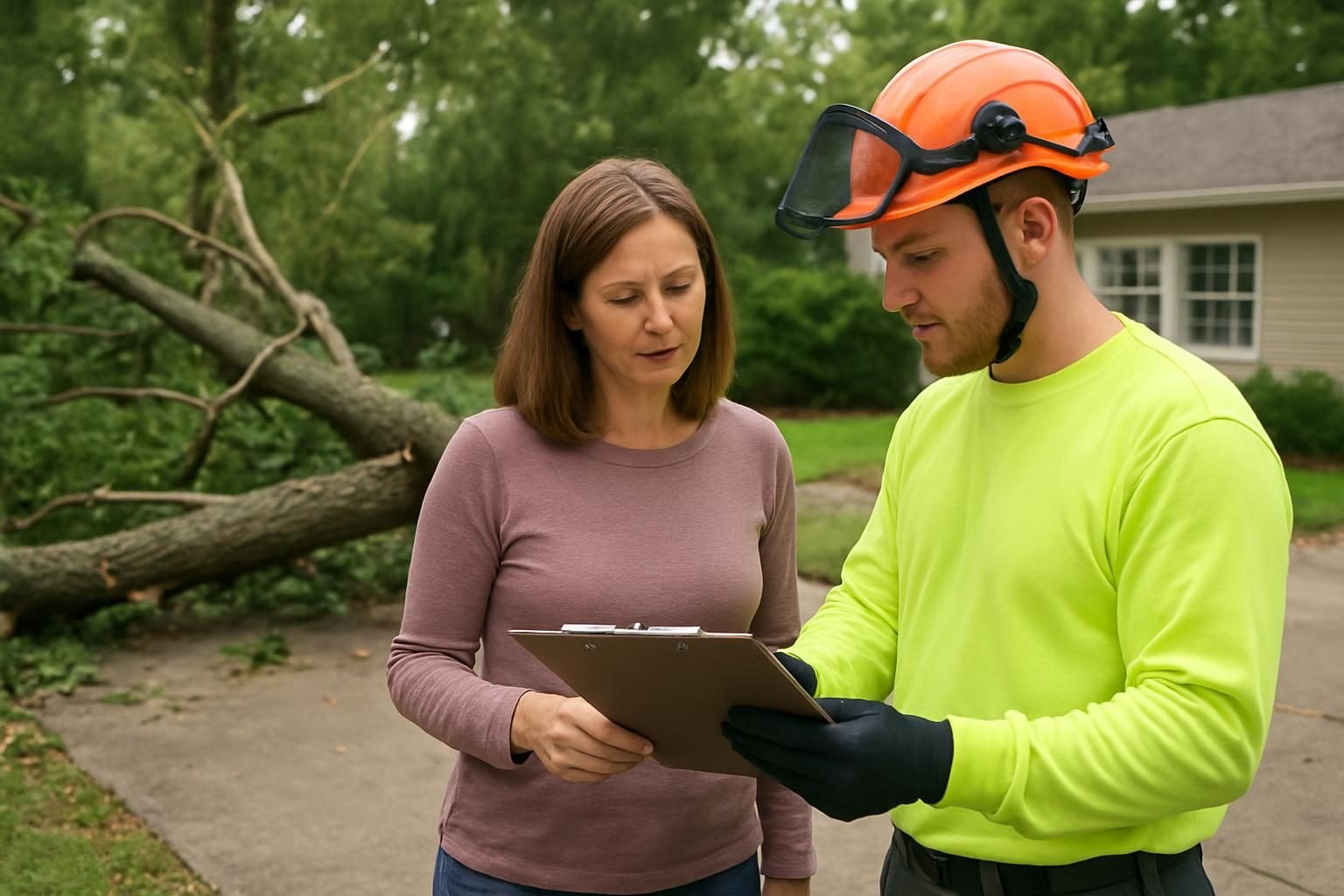
A fair emergency premium reflects real overtime and risk; a price that changes after the crew arrives is a red flag.
Crane Jobs, Roof Strikes, and Other Big-Ticket Factors
Some emergency jobs cost far more than others. These are the usual culprits:
Crane-assisted removal
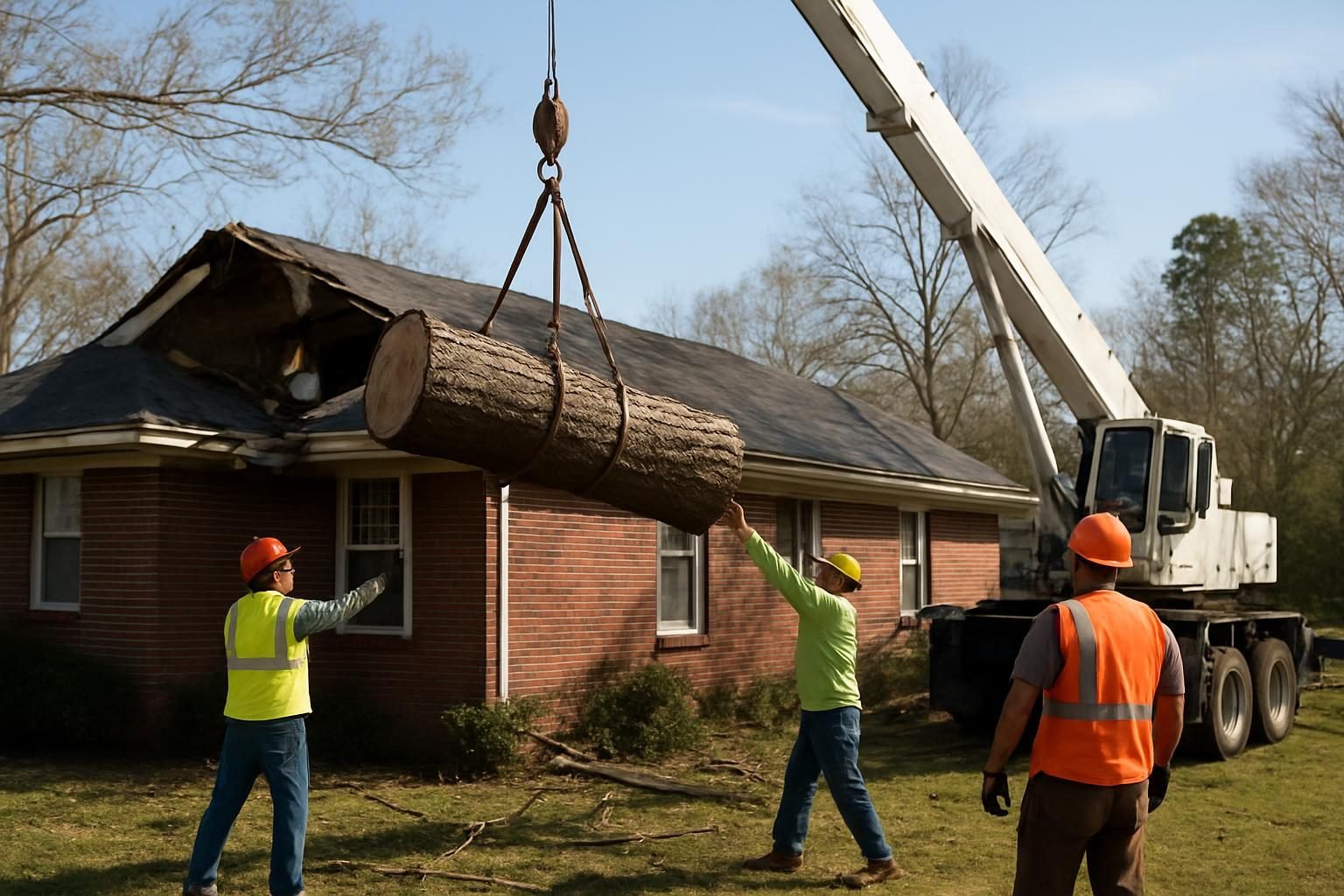
When a large tree is leaning on a house, or access is too tight for a bucket truck, a crane lifts sections away safely. Crane work is billed hourly with minimums, and the crane company may add travel and setup charges. Expect the crane alone to add well over a thousand dollars in many cases.
Tree on a house or structure
Crews must cut in controlled sections to avoid dropping weight onto already-damaged framing. That takes more time, more people, and more rigging. For a step-by-step on securing the situation first, read what to do when a tree falls on your house.
Power lines and utilities
If a tree is touching or tangled in a line, stay away and call the utility. Tree crews generally cannot work near energized lines until the utility makes the area safe, which can add delays.
Access and debris
- Backyard trees with no truck access often need extra labor to carry out wood
- Wet, saturated ground after hurricane rain can limit heavy equipment
- Debris hauling and chipping are sometimes quoted separately; ask what is included
You can read more about what these jobs involve on our emergency storm tree removal page.
Insurance Basics for Storm Tree Removal
Many homeowners are surprised to learn that insurance can help, but only in certain situations. General rules of thumb (your policy language controls):
- Tree damages a covered structure (house, garage, fence in some policies): removal is often covered, sometimes with a sublimit.
- Tree falls but hits nothing: removal is often not covered.
- Tree blocks a driveway or access: some policies cover removal; many have limits.
- Deductible matters: a $1,000 deductible may exceed the cost of a small cleanup.
Before work starts, take photos and video of the tree, the damage, and the surroundings. Keep every invoice. For a full walkthrough, see whether homeowners insurance covers tree removal in North Carolina, and confirm details with your insurance agent or adjuster.
Photograph the tree and the damage before anyone touches it; that evidence is what your adjuster will want.
How to Avoid Price Gouging and Storm Chasers
After major storms, out-of-area crews often roll into Fayetteville, Spring Lake, and Stedman knocking on doors. Some are legitimate; many are not, and the risks are real: unpaid damage to your property, no insurance, and cash-only demands.
Watch for these red flags:
- Pressure to decide on the spot or pay cash upfront
- No written estimate, or a vague one
- Unmarked trucks, out-of-state plates, no local address
- Reluctance to show proof of insurance
- A large deposit demanded before any work begins
A local company with a track record in Cumberland County is easier to hold accountable. Request quotes from several, even by phone or form, before committing when the situation is stable enough to wait an hour. We cover this topic in more depth in our upcoming guide on how to spot tree service storm chaser scams.
What to Ask Before Any Work Starts
Even at midnight, a two-minute conversation protects you. Ask:
- Can I see proof of liability insurance and workers’ compensation? Request a certificate, not just a verbal yes.
- What is the total price in writing? A text or email counts.
- What does it include? Cutting, hauling, chipping, cleanup, and stump work are often separate.
- Will you need a crane, and who pays for it?
- Is the price different if you find more damage? Get the answer before cutting.
- How will you protect my roof, lawn, and driveway?
- What payment methods do you accept, and when is payment due? Pay after the work is done, not before.
An ISA-certified arborist on staff is a plus, especially if the question is whether a damaged tree can be saved or needs to come out. Our arborist tree assessment page explains what a professional evaluation covers.
Get Ready Before the Next Storm
The cheapest emergency is the one that never happens. Removing a dead or leaning tree on a calm day costs a fraction of storm-time rates. Learn the early warning signs in 9 signs a tree is dying, and work through our hurricane tree prep checklist for Fayetteville homeowners before the season starts.
If a tree is already down, or you want a hazardous tree evaluated before the next storm, request a free, no-obligation quote using the form on this page and compare local options.
Frequently Asked Questions
How much does emergency tree removal cost in Fayetteville?
As an estimate, simple jobs often fall between $300 and $1,500, while large trees on structures or crane jobs can reach several thousand dollars or more. Emergency rates typically run 1.5x to 3x standard pricing.
Is it cheaper to wait until daylight or a weekday?
Often yes. If the tree is not endangering anyone or blocking an emergency exit, scheduling during regular hours can avoid after-hours premiums. A temporary tarp or partial cut can bridge the gap.
Will my homeowners insurance pay for emergency tree removal?
It may, particularly when a tree damages a covered structure. Trees that fall without hitting anything are frequently not covered. Check your policy and talk with your agent, and see our insurance coverage guide.
Do I need a permit to remove a fallen or damaged tree?
Rules vary by location and situation, and emergency removal of an already-fallen tree is generally treated differently than removing a standing healthy tree. Check our guide on tree removal permits in Fayetteville or contact your local municipality to confirm.
Get free emergency tree removal quotes in Fayetteville
A local tree service company will contact you with a free, no-obligation quote.