Quick answer: A storm chasers tree service scam in North Carolina usually looks like an unfamiliar crew knocking on your door after a storm, pushing a same-day deal, demanding cash upfront and offering no proof of insurance. Protect yourself by verifying insurance directly with the carrier, getting a written quote, and never paying in full before the work is done.
Key takeaways
- Door-to-door offers, pressure to decide today and big cash deposits are the classic warning signs.
- Always ask for a certificate of insurance and confirm it with the insurance company, not just the paper copy.
- Get a written quote that spells out scope, cleanup, haul-away and total price before any work starts.
- Real emergencies (a tree on your house or a power line) are handled differently from routine cleanup, so don’t let anyone rush a normal job.
After a hurricane, tropical storm or severe thunderstorm sweeps through Cumberland County, demand for tree work spikes overnight. Legitimate local companies get buried in calls, and that gap is exactly where out-of-area opportunists show up. Homeowners in Fayetteville, Hope Mills, Spring Lake and Stedman can lose real money to crews who take a deposit and vanish, damage a roof or fence, or leave without cleaning up.
This guide walks through the red flags, how to verify a crew in a few minutes, and what a solid written quote looks like. If you’d rather skip the guesswork, you can request free quotes from local tree service companies using the form on this page.
What a Storm Chaser Tree Service Scam Looks Like in North Carolina
“Storm chaser” is the common term for contractors who travel to wherever the latest disaster hit, work for a few weeks, and move on. Not every out-of-town crew is a scammer, but the pattern of problems is consistent. The trouble is that once they leave, you have no one to call when something goes wrong.
Typical warning signs include:
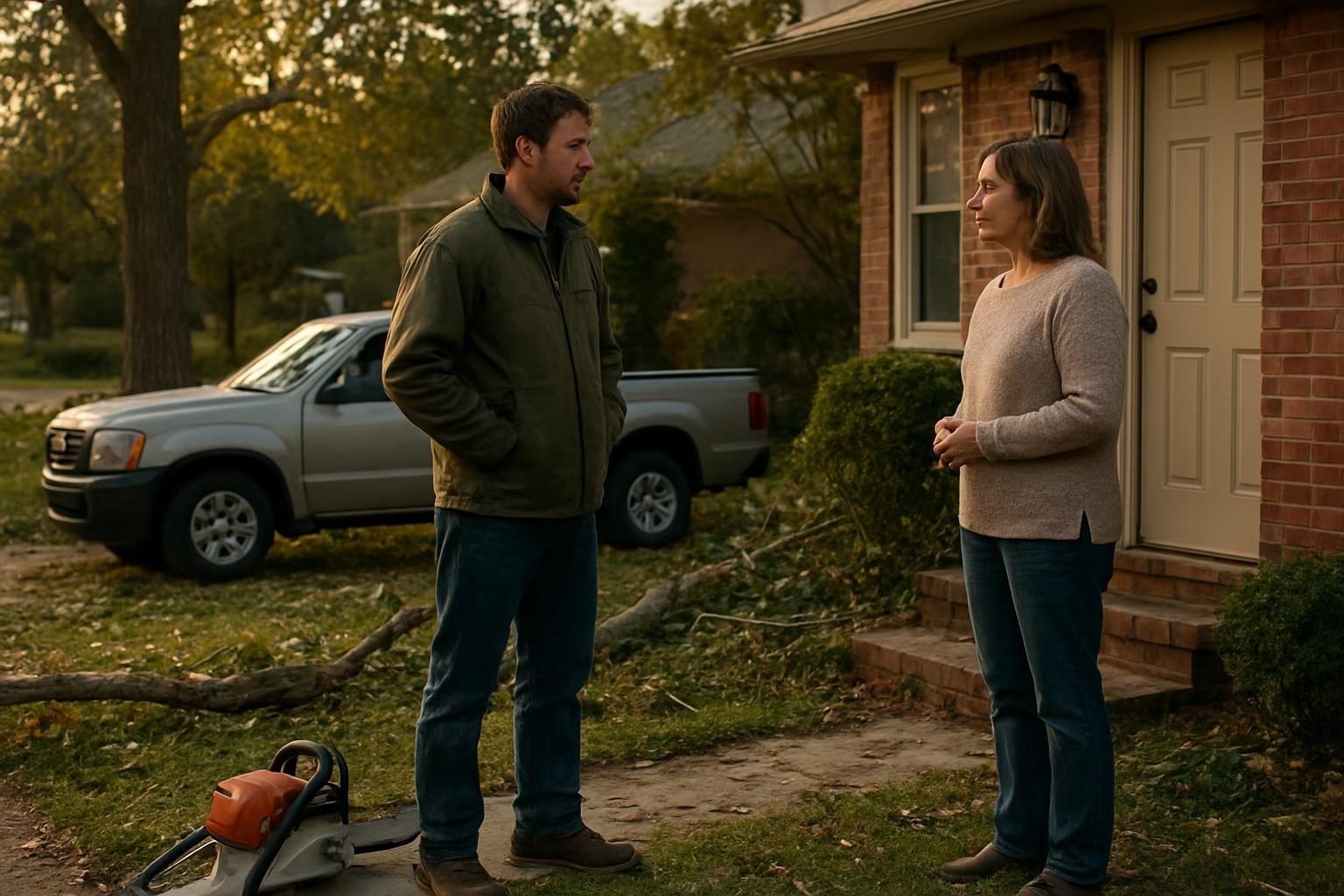
- Unsolicited door knocking. Established local companies are usually too busy after a storm to canvass neighborhoods.
- Out-of-state plates and no local address. A truck with no company name, or a business card with only a cell number, makes accountability hard.
- Pressure to decide now. “This price is only good today” is a sales tactic, not a fact about tree work.
- Large upfront payment, especially cash. Cash leaves no paper trail and no easy way to dispute a charge.
- Vague or verbal-only quotes. If it isn’t written down, the price can change once the chainsaws are running.
- No insurance paperwork. This is the biggest red flag of all, covered in detail below.
For a broader overview, see our companion piece on how to spot tree service storm chasers after a hurricane.
The Big Red Flags: Door-to-Door Offers, Cash Demands and No Insurance
Door-to-door offers
A friendly stranger saying “we’re already working down the street and can give you a deal” sounds convenient. In reality, you have no way to check who they are before you decide. Treat any unsolicited offer as a prompt to do your own research, not as a bargain you must grab.
Upfront cash demands
Some companies reasonably ask for a deposit on large jobs such as crane work. But a request for most or all of the payment before a single limb is cut, particularly in cash, should make you pause. A common, safer approach is to pay at completion, after you’ve walked the property and confirmed the work and cleanup.
No proof of insurance
Tree work is dangerous. If an uninsured worker is hurt on your property, or a falling limb crushes your roof, you could be pulled into a costly dispute. Ask for two things:
- General liability insurance, which covers damage to your home, fence or vehicles.
- Workers’ compensation coverage, which covers injuries to the crew.
We cover why this matters in more depth in our guide to tree service insurance and workers’ comp.
Pro tip: Don’t just accept a photocopy of a certificate. Call the insurance agency listed on it and confirm the policy is active and covers the dates of your job.
A crew that can’t prove insurance isn’t saving you money; it’s shifting the risk onto you.
How to Verify a Tree Crew Before You Pay Anyone
You don’t need hours to vet a company. A few focused checks, done before anyone touches a saw, filter out most bad actors.
- Ask for the business name, physical address and a landline or office number. A real company can give these without hesitation.
- Request a certificate of insurance showing general liability and workers’ comp, then verify it with the carrier.
- Search the business online. Look for a website, consistent reviews over time and a history that predates the storm.
- Check with the North Carolina Attorney General’s Consumer Protection Division for complaints or guidance. Their site at ncdoj.gov has storm-related scam information.
- Ask for local references in Cumberland County and actually call one or two.
- Look at the equipment. A marked truck, a chipper and proper safety gear suggest a working operation.
If you’re weighing whether a company’s credentials matter, our article on certified arborist vs tree service explains the difference. For a full vetting routine, use our 10-point checklist for hiring a tree service in Fayetteville.

How to Get a Written Quote That Protects You
A written quote is your single best defense. It turns a handshake into a record you can point to if the price or scope shifts. Insist on one for every job, even small ones.
A solid quote should include:
- The company’s legal name, address and contact information.
- A clear scope: which trees, which limbs, and whether stump grinding is included.
- Cleanup and haul-away. Does the price include removing logs and brush, or will they leave a pile?
- The total price and any deposit terms.
- Proof of insurance attached or referenced.
- A start date and expected timeline.
Get at least two or three quotes when the situation allows, so you can compare scope as well as price. Costs vary widely with tree size, access and hazards. As a rough estimate, routine removals in the Fayetteville area can run from a few hundred dollars for a small tree to well over a couple thousand for a large, hard-to-reach one, with emergency and crane work costing more. Our tree service cost guide for Fayetteville and the post on emergency tree removal cost after a storm break down what’s realistic.
If the price exists only in someone’s head, it can change the moment the work begins.
Real Emergencies vs. Pressure Sales
Some situations genuinely can’t wait: a tree resting on your roof, blocking your only driveway, or tangled in a power line. In those cases, safety comes first. If a line is involved, stay far away and call your utility; our guide on what to do when a tree falls on a power line covers the steps.
For most post-storm cleanup, though, there is no need to rush. Branches in the yard, a leaning pine or a downed fence are inconvenient, not instantly dangerous. Taking a day to verify a crew costs you little and can save you thousands.
- True emergency: structural damage, active hazards, trapped access. Call a reputable emergency service promptly. See emergency storm tree removal for what to expect.
- Non-urgent cleanup: take your time, collect quotes and verify insurance.
- Insurance claims: document damage with photos first. Our article on whether homeowners insurance covers tree removal in North Carolina explains common rules, and your agent can confirm what applies to your policy.
Protect Yourself Before the Next Storm
The easiest way to avoid a storm chaser is to already have a trusted local company in mind. Homeowners in Hope Mills, Spring Lake, Raeford and the Fort Bragg area who vet a crew during calm weather aren’t scrambling when the next hurricane arrives. A pre-season walk-through also catches weak limbs before they become emergencies, as covered in our pre-season hurricane tree prep checklist.
You can also read about the questions to ask a tree service before hiring so you’re ready when you make that call. If you already have a project in mind, you can request your free tree service quote and compare local options without anyone knocking on your door.
Frequently Asked Questions
Is it illegal for tree crews to go door to door after a storm?
Not necessarily. Door-to-door solicitation isn’t automatically illegal, and some local companies do it. The concern is that unfamiliar crews are harder to verify and hold accountable. Check any local solicitation rules with the city or county, and verify the company before agreeing to anything.
How much of a deposit is reasonable for tree work?
Many reputable companies take payment on completion. A modest deposit may be reasonable on large or equipment-heavy jobs, but demanding most or all of the cost upfront, especially in cash, is a warning sign. Get any deposit terms in writing.
What should I do if I already paid a storm chaser who disappeared?
Gather your paperwork, photos and any texts, then contact your local police department and the North Carolina Attorney General’s Consumer Protection Division. If you paid by card, call your card issuer about a dispute. For legal questions, consider consulting a qualified attorney.
Do I need a permit to remove a storm-damaged tree?
Rules vary depending on your property and location. Check our guide on whether you need a permit to remove a tree in Cumberland County, and confirm details with your local city or county office.
Get free quotes from vetted local tree services
A local Fayetteville-area tree service company will contact you with a free, no-obligation written quote.