Quick answer: Tree service insurance and workers’ comp matter because tree work is one of the most dangerous jobs a homeowner can hire out. If an uninsured crew member is hurt on your property, or a falling limb hits your roof, you may end up facing the bill. Before any work starts, ask for certificates of insurance showing both general liability and workers’ compensation, and confirm them with the insurer.
Key takeaways
- You need two coverages from a tree company: general liability (property damage) and workers’ compensation (crew injuries).
- An uninsured injury or damage claim can fall back on you or your own homeowners policy.
- A real certificate of insurance comes from the insurer or agent, not just a photo on a phone.
- Verify the policy dates, coverage types and your name as certificate holder before work begins.
- A rock-bottom quote often means no coverage, and that is a risk you cannot see.
If you live in Fayetteville, Hope Mills, Spring Lake or elsewhere in Cumberland County, you have probably seen flyers and door-knockers offering cheap tree work, especially after a storm. Some of those crews are properly insured. Many are not, and the difference only shows up when something goes wrong.
This FAQ-style guide explains what each type of coverage does, what your exposure looks like without it, and exactly how to ask for proof. When you are ready to compare insured local companies, you can request a free, no-obligation quote using the form on this page.
Why tree work carries so much risk
Tree removal and heavy trimming involve chainsaws, climbing gear, rigging ropes, bucket trucks and thousands of pounds of wood moving through the air. Even skilled crews can have a limb swing the wrong way or a rope fail. Homes, fences, cars, pools and power lines are often only a few feet from the work.
That is why insurance is not paperwork for its own sake. It is the financial safety net for two separate kinds of accidents:
- Property damage or injury to others: a trunk section crushes a shed, a limb breaks a window, or a neighbor’s car is hit.
- Injury to the crew itself: a climber falls, a groundsman is struck, or a chainsaw kickback causes a serious cut.
Each of those is covered by a different policy, and a company can carry one without the other. Both matter.
Tree service insurance: what liability coverage does
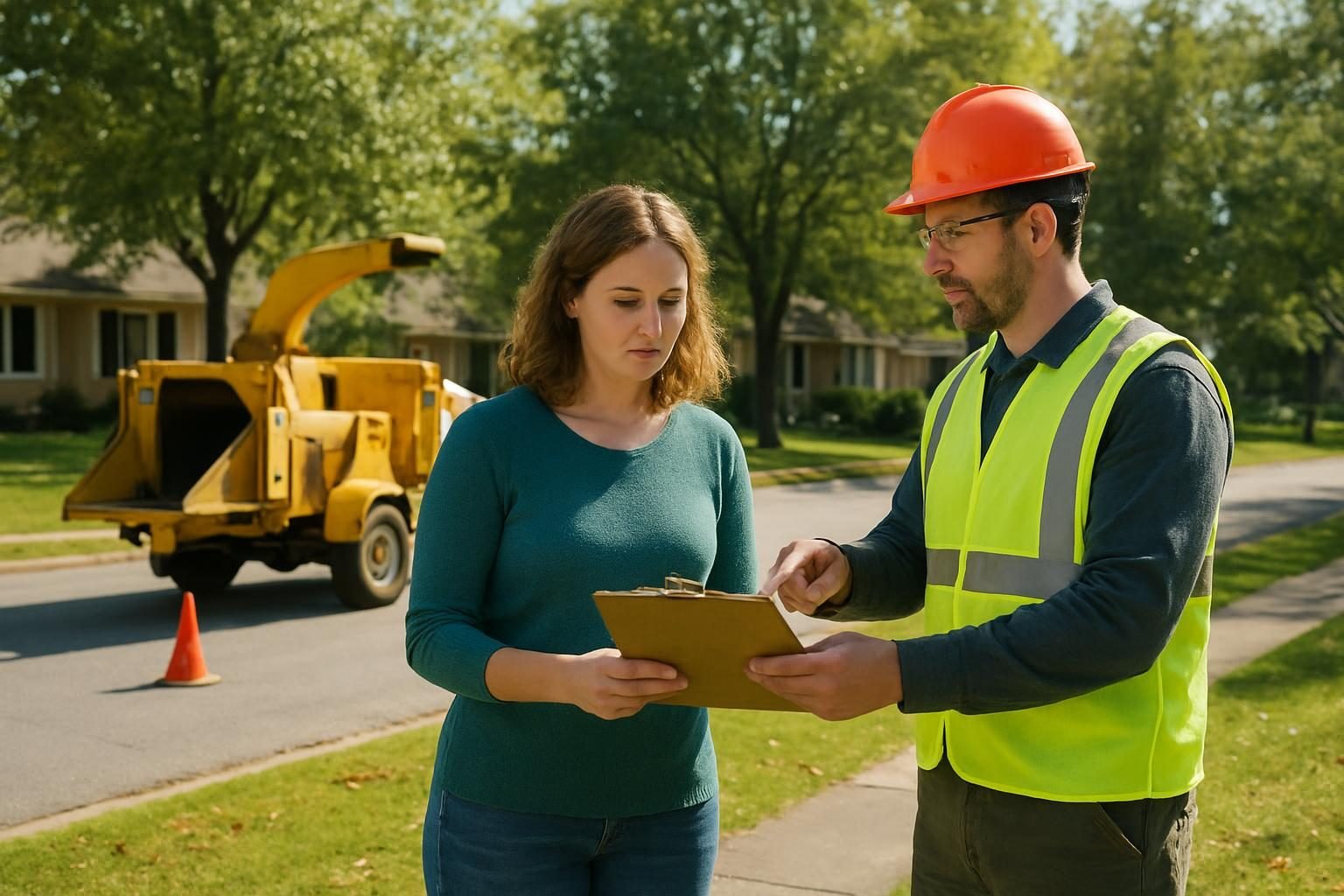
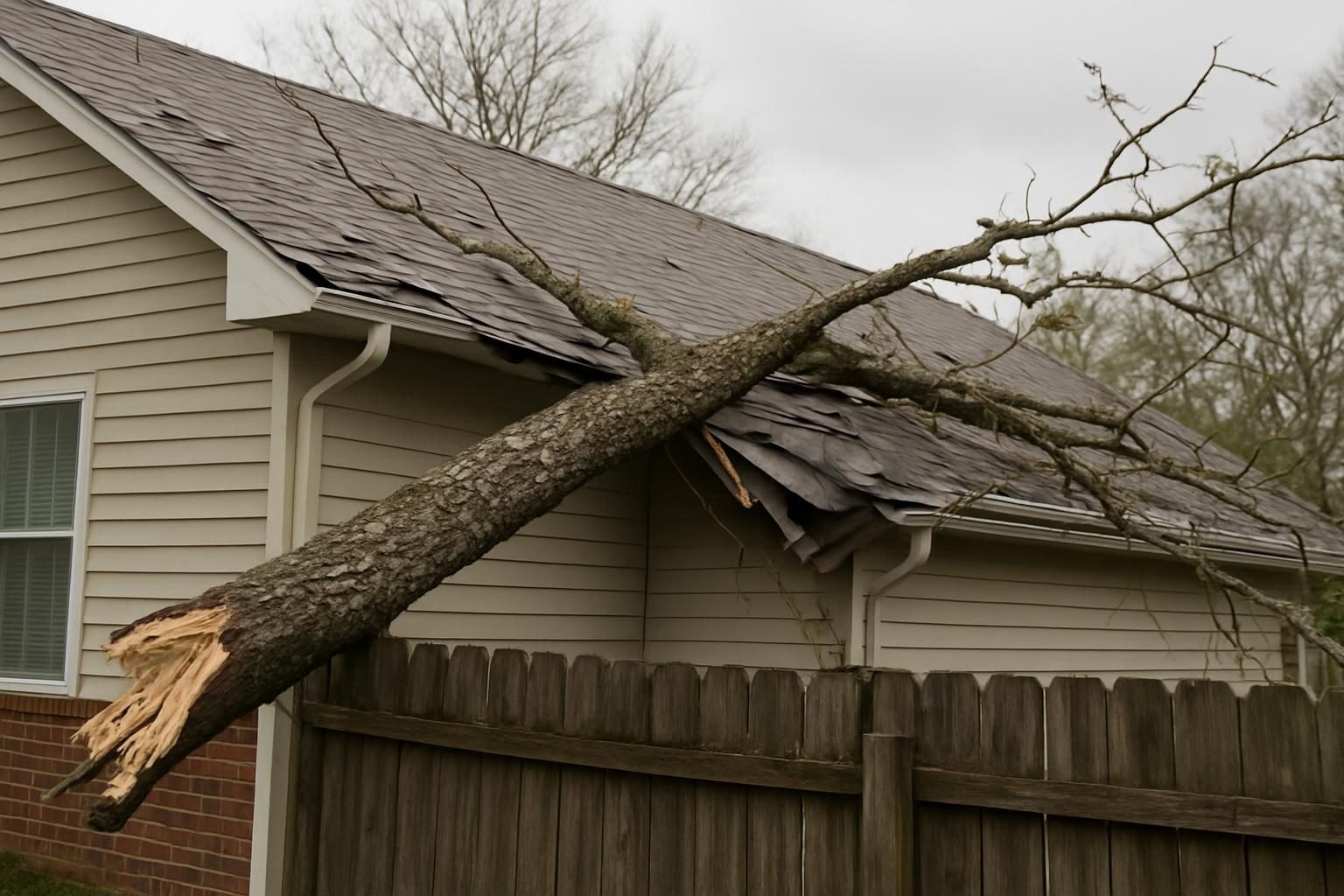
General liability insurance pays for damage the company causes to someone else’s property, or injuries to people who are not employees. If a crew drops a limb through your roof or scrapes a neighbor’s fence, this is the policy that should respond.
Without it, you may have to pursue the contractor personally, and a small uninsured operator often has no assets to collect from. You could also end up filing a claim on your own homeowners policy, which can mean paying a deductible and seeing your premium affected. For how those claims typically work, see our guide on whether homeowners insurance covers tree removal in North Carolina.
What to look for on a liability certificate
- Coverage type: it should say commercial general liability.
- Policy period: confirm the effective and expiration dates cover your job date.
- Coverage limit: higher limits give more protection. Ask what a typical residential tree job calls for with your home’s value in mind.
- Business name: it should match the company on your estimate and contract.
A tree company without liability insurance is not saving you money; it is shifting its risk onto your roof and your wallet.
Workers’ comp: why it matters if a crew member is hurt
Workers’ compensation covers medical bills and lost wages when an employee is injured on the job. In North Carolina, employers with three or more employees are generally required to carry it. You can confirm current requirements with the North Carolina Industrial Commission.
Here is why that affects you as the homeowner. If a worker is seriously injured on your property and the company has no workers’ comp, the injured person or their medical providers may look for other sources of payment. That can lead to a claim or lawsuit that names the property owner, and your homeowners policy may not respond the way you expect for contractor injuries.
This is a legal and insurance question, so if you are unsure about your own situation, talk with your insurance agent or an attorney. What you can control is simple: hire a company that carries workers’ comp and can prove it.
Watch for the “independent contractor” dodge
Some crews claim every worker is a subcontractor so they “don’t need” workers’ comp. Do not accept that at face value. Ask the company directly: Do you carry workers’ comp, and does it cover everyone who will be on my property? If the answer is vague, treat that as a red flag.
What you risk if you hire an uninsured crew
The savings from an uninsured quote can look appealing, particularly right after a storm when demand is high. Here is how the exposure can play out:
- Crew injury: medical claims and lost-wage disputes that may reach you as the property owner.
- Damage to your home: repairs you pay for yourself or file under your own policy, with a deductible.
- Damage to a neighbor’s property: a dispute that can involve you if the contractor cannot pay.
- Utility line contact: a limb on a service line can mean outages, repair charges and safety hazards.
- No recourse: an uninsured operator may disappear or have nothing to collect against.
After hurricanes and severe storms, out-of-area crews often move into Cumberland County. Not all are bad, but this is when uninsured operators are most common. Our guide to storm chaser tree crew red flags covers what to watch for, and our page on emergency storm tree removal explains how to get urgent help safely.
Pro tip: A quote that is far below every other bid is worth questioning. Insurance, equipment and trained labor cost money, and a very low price often reflects corners cut somewhere.
Ask for proof of both policies before work starts, not after something has already gone wrong.
How to request a certificate of insurance
A certificate of insurance (COI) is a one-page document that summarizes a company’s active policies. It is routine for legitimate contractors to provide one, usually within a day. Here is the process:
- Ask early. Request the COI when you ask for the estimate, not on the morning of the job.
- Request both policies. Specifically ask for general liability and workers’ compensation certificates.
- Ask to be named certificate holder. The company’s insurance agent can issue a certificate listing you, which means you are notified if the policy is canceled.
- Check the details. Confirm business name, policy numbers, effective dates and coverage types.
- Verify it. Call the insurance agent or carrier listed on the certificate and confirm the policy is active. A certificate alone can be outdated or altered.
- Keep a copy. Save it with your estimate and signed agreement.
A short message works well: “Before scheduling, please send certificates of insurance showing general liability and workers’ compensation, with the policy dates, directly from your insurance agent.” A professional company will not be offended. For a deeper checklist, read what to verify before you hire a Fayetteville tree service.
Other things to confirm before signing
Insurance is one piece of vetting a company. Pair it with these checks:
- Written estimate: it should itemize the work, cleanup and stump handling. See what a good tree removal estimate should include.
- Local presence: a real business name, not just a phone number on a flyer.
- References: ask for recent local jobs you can verify.
- Clear scope: who handles debris, wood and any permits or HOA approvals.
Our 15 questions to ask a tree service before you sign is a handy script to bring to every estimate. Costs vary by tree size, access and hazards, so use our tree service cost guide for Fayetteville to see what influences price, and remember that estimates are only a starting point until a company inspects your property.
Want insured local companies to compare? Use the form on this page to request your free tree service quotes and ask each company for its certificates when they respond.
Frequently asked questions
Is a business license the same as insurance?
No. A business license or registration does not prove insurance coverage. You still need current certificates for general liability and workers’ compensation.
Does my homeowners policy protect me if the tree company has no insurance?
It may cover damage to your own home, but you would likely pay a deductible, and coverage for injuries to a contractor’s workers can be limited. Policies differ, so confirm with your agent before hiring.
Can a company just show me a photo of its insurance card?
That is not enough. Ask for a certificate issued by the insurance agent, then verify it with the agent or carrier. Policies can lapse, and documents can be outdated.
Do I need to check insurance for small trimming jobs too?
Yes. Even modest trimming involves ladders, saws and falling limbs. Smaller jobs are not immune to accidents, so ask for proof of coverage whatever the job size. You can also review our tree trimming and pruning page to understand what the work involves.
Get free quotes from insured Fayetteville tree services
A local tree service company will contact you with a free, no-obligation quote and can provide certificates of insurance on request.