Quick answer: Tree service storm chasers are unlicensed or uninsured crews who show up right after a hurricane, knock on doors, demand cash or big deposits, and pressure you to say yes on the spot. To avoid them, get a written estimate, ask for proof of insurance directly from the insurer, and never pay a large amount up front. A legitimate local company will welcome those steps.
Key takeaways
- Unsolicited door knockers with a chainsaw and a “today only” price are the classic storm chaser pattern.
- Never pay cash-only or hand over a large deposit before any work is done.
- Insurance proof should come from the insurance company, not just a card or a photo on a phone.
- You are never required to decide the same day, even when a tree is on your house.
- A few minutes of verification can save you thousands in damage and liability.
After a hurricane or tropical storm moves through Cumberland County, the phones stop working well, the power goes out, and every street in Fayetteville, Hope Mills, and Spring Lake has limbs in the road. That is exactly when storm chasers arrive. This guide explains the red flags, how to verify a company quickly, and what to do if you have already been approached.
Need a vetted local crew instead of a stranger at your door? You can request a free tree service quote using the form on this page.
What Is a Tree Service Storm Chaser?
A storm chaser is a contractor who follows disasters from town to town rather than running a stable local business. Some are honest out-of-area crews who legitimately help during large events. Many others are not, and the scams cluster in the first days after a storm when homeowners are stressed and desperate.
The risks are real, not just a bad price:
- Uninsured damage: A dropped limb through your roof or a neighbor’s fence becomes your problem if the crew has no coverage.
- Injury liability: If a worker is hurt on your property and has no workers’ compensation, you may face a claim.
- Bad work: Topping trees, leaving hanging limbs, or abandoning a half-finished job.
- Disappearing contractors: You pay a deposit and the crew never returns.
Red Flags of Tree Service Storm Chaser Scams
No single sign proves a scam, but two or three together should make you stop. Watch for these:
- Door knocking: Reputable tree companies in Fayetteville are usually booked solid after a storm and do not need to canvass neighborhoods. An unsolicited knock is the biggest warning sign.
- Cash-only demands: A refusal to accept checks, cards, or any traceable payment means no paper trail if something goes wrong.
- Large upfront deposits: Asking for half or all of the payment before starting is a common setup for taking your money and leaving.
- No written estimate: A verbal price that changes once the saw starts is how a $600 job becomes a $2,400 bill.
- No proof of insurance: Vague answers like “we’re covered” or an expired card are not proof.
- Out-of-state plates and no local address: Not always a scam, but combined with other flags it means you cannot find them later.
- Pressure tactics: “This price is only good today” or “your tree could fall any minute” are designed to stop you from thinking.
- Vague business details: No company name on the truck, no website, no business address, only a first name.
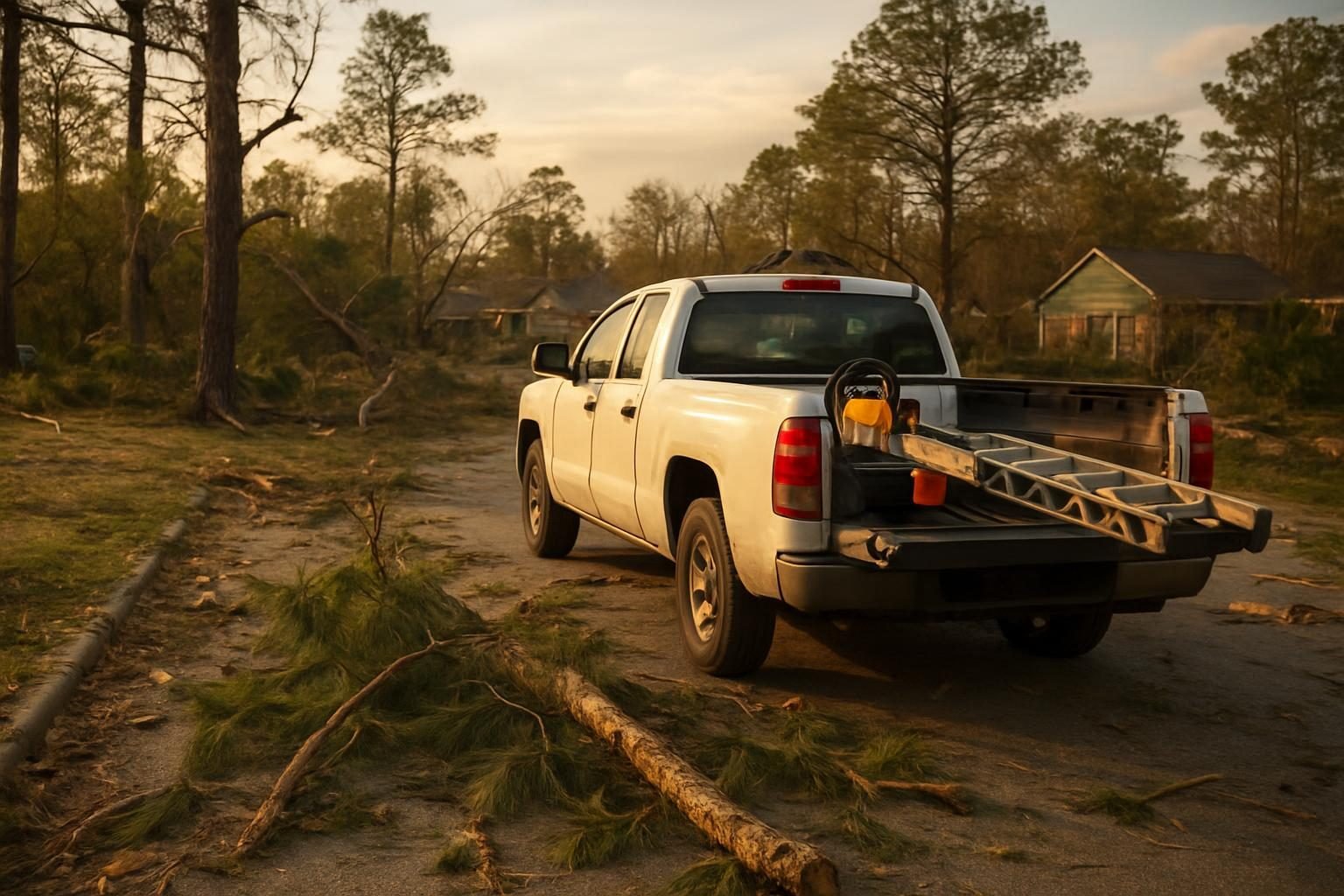
How Storm Chasers Work: Common Scam Patterns
Knowing the playbook makes it easier to spot. Here are patterns reported after storms around the country:
- The low opener: A cheap quote to get started, followed by surprise add-ons for “extra hazards” once the tree is partly down.
- The deposit and vanish: You pay a large deposit for “materials” or “equipment rental,” and the crew never comes back.
- The hostage tree: A limb is cut and left on your roof or a tree is half removed until you pay more.
- The fake urgency: Claims that a healthy tree is about to fall, to sell you removal you do not need.
- The insurance pitch: Offers to “work with your adjuster” or waive your deductible, which can be a sign of fraud.
Pro tip: If a stranger says a tree is an emergency, you can ask a different, established local company to assess it. A real emergency (a tree on the house, blocking your driveway, or on a power line) still leaves time for a phone call and a written estimate.
A legitimate tree company will never object to you taking an hour to verify them.
How to Verify a Tree Company Before You Hire
Verification takes 15 to 30 minutes and is the single best protection you have. Work through these steps:
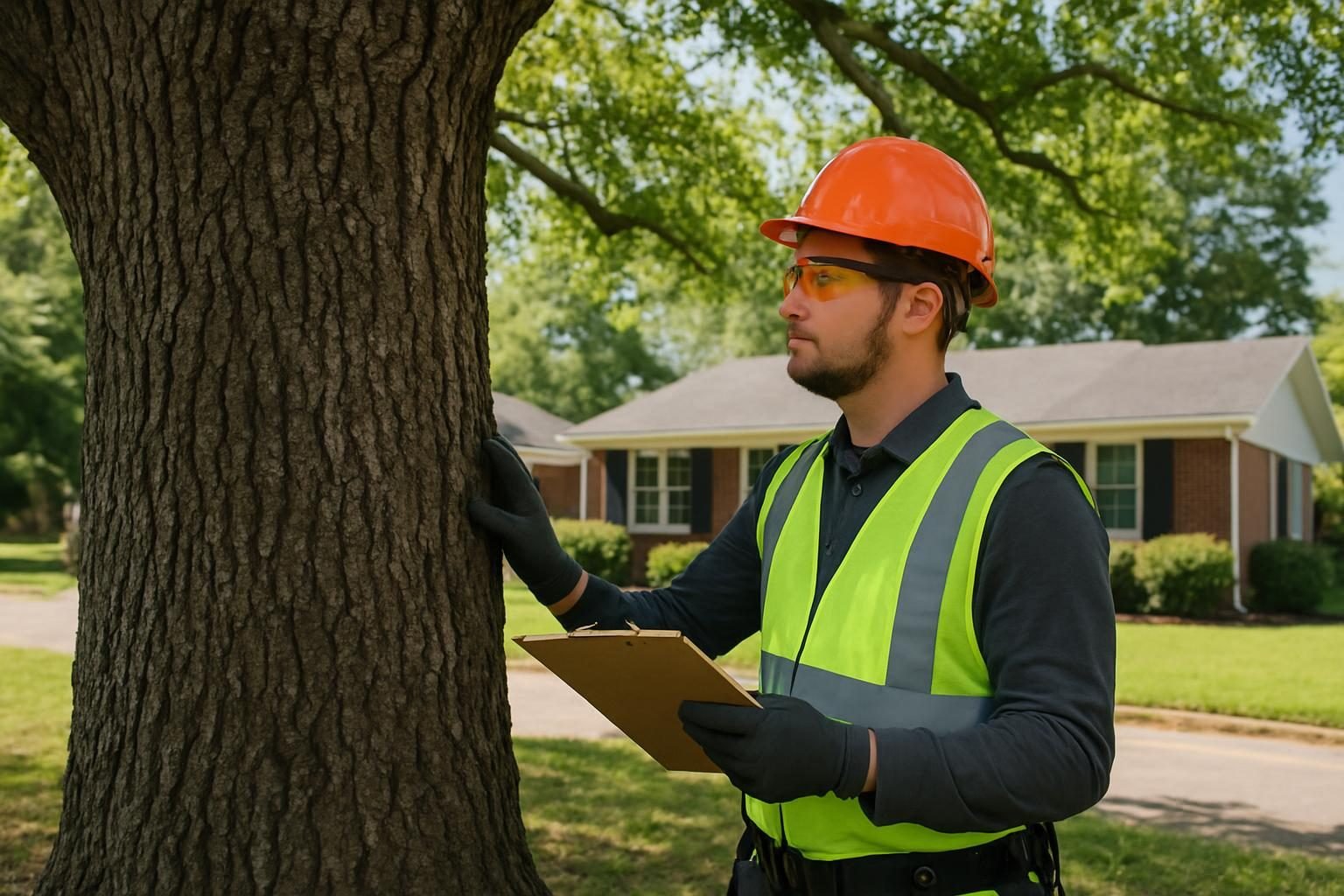
- Ask for proof of insurance, and confirm it. You want both general liability and workers’ compensation. Ask for a certificate of insurance and call the insurer or agent listed to confirm the policy is active and covers tree work.
- Look up the business. Search the company name, check for a physical local address, a working website, and a track record that predates the storm. The North Carolina Secretary of State business search can confirm whether a company is registered.
- Read reviews critically. Look for detailed, older reviews rather than a burst of brand-new ones.
- Check credentials when relevant. For complex work, ask whether a certified arborist is on staff or consulted. Our guide to an arborist tree assessment explains when that matters.
- Get at least two written estimates. Compare scope, not just price.
- Ask for references from recent local jobs, and actually call one.
You can also contact the North Carolina Attorney General’s consumer protection office to report suspected scams or ask about a company, as listed on the NC Department of Justice consumer protection page.

What a Real Written Estimate Should Include
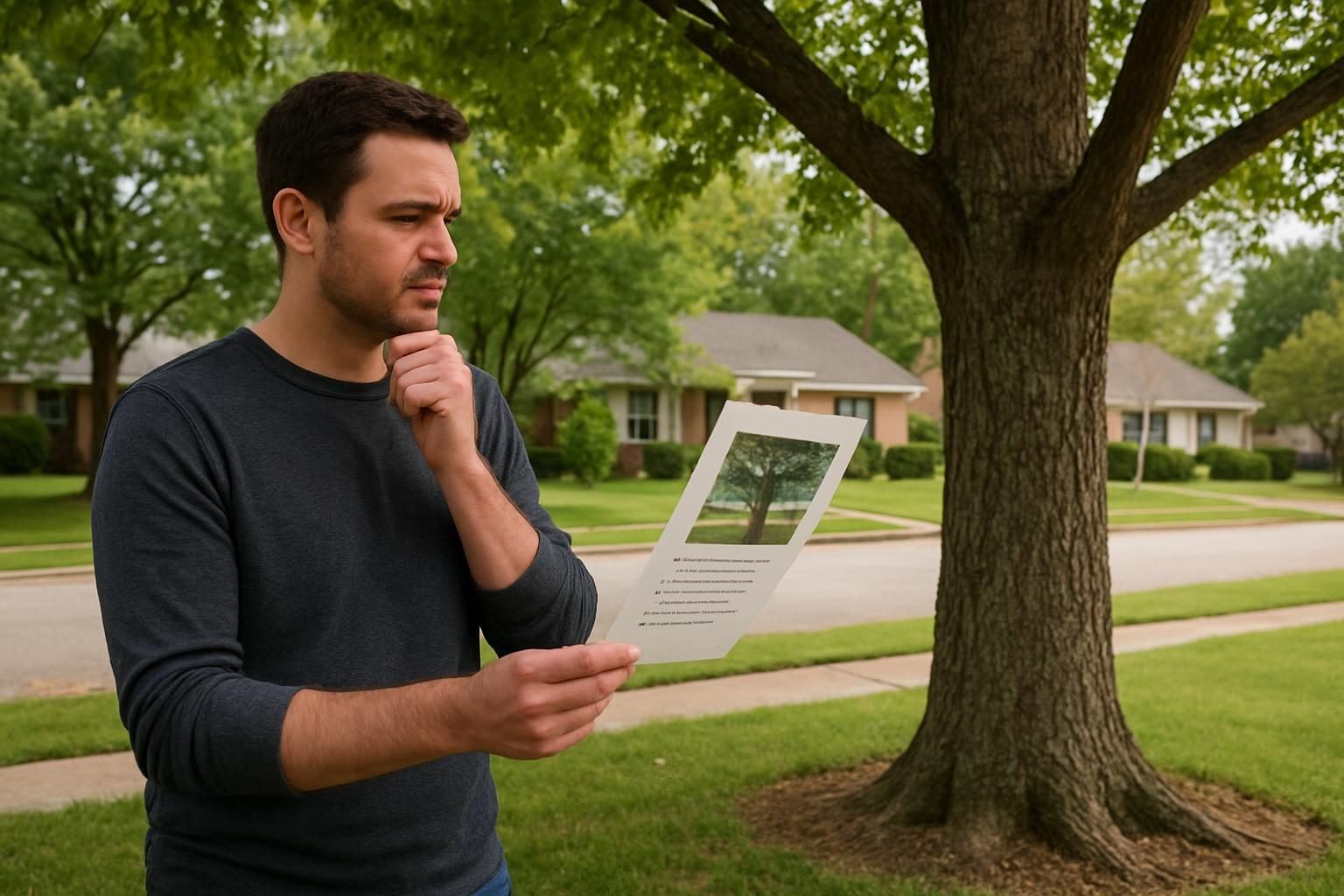
A written estimate is your contract in miniature. Do not accept a number scribbled on a business card. A solid estimate spells out:
- Company name, address, and contact information
- Exactly which trees or limbs are covered
- Whether cleanup, hauling, and wood chips or logs are included
- Whether stump grinding is included or extra
- Total price and when payment is due
- Proof of insurance attached or referenced
- Start date and expected completion
Cost surprises are the reason people fall for scams, so know the range before you talk to anyone. Our breakdown of emergency tree removal cost after a storm in Fayetteville and the broader tree service cost guide give realistic estimates so a lowball or inflated quote stands out. Prices vary widely by tree size, access, and urgency, so treat any figure as a ballpark.
If a price feels too good to be true after a hurricane, it usually is.
Storm Chaser Checklist: 10 Questions Before You Say Yes
Keep this list handy and read it before you agree to anything:
- Did they come to me, or did I call them?
- Do they have a company name on the truck and a local address?
- Will they give me a written estimate before starting?
- Can they show a current certificate of insurance that I can verify?
- Do they carry workers’ compensation?
- Are they asking for cash only or a large deposit?
- Is the price in line with typical local rates?
- Are they pushing me to decide today?
- Do they have verifiable local references or reviews?
- Do they explain the scope clearly, including cleanup and debris hauling?
If you answer “no” to several of these, walk away politely and call an established company.
What to Do If Damage Is Urgent
A tree on your house or blocking an exit feels like it cannot wait, but you still have options. Make the area safe, stay away from downed power lines, and document damage with photos. Our guide on what to do when a tree falls on your house walks through the first 24 hours, and the page on emergency storm tree removal explains how legitimate urgent service works.
It is also smart to understand your coverage first. See whether homeowners insurance covers tree removal in North Carolina, since your insurer may require documentation or approved contractors. A temporary tarp from a verified company is often better than rushing a full removal with a stranger.
Prepare Before the Next Storm
The best defense is a relationship with a local company before you need one. Have a trusted contact lined up, and reduce risk by dealing with weak trees ahead of time. Our hurricane tree prep checklist for Fayetteville homeowners covers what to inspect and trim before storm season. For a broader look at local help across the county, see our page on tree service in Fayetteville, and if you are comparing credentials, the upcoming certified arborist vs tree service comparison will help.
Ready to skip the guesswork? You can request a free, no-obligation quote from local tree companies using the form on this page.
Frequently Asked Questions
Is it illegal for tree companies to go door to door after a storm?
Door-to-door solicitation is not automatically illegal, but local rules and licensing requirements can apply, and many scams use it. Even if it is allowed, treat an unsolicited offer as a red flag and verify the company before agreeing to anything.
How much deposit is reasonable for tree work?
Many reputable companies take little or no deposit for standard jobs and are paid on completion. If a deposit is requested, keep it small, pay by traceable means, and get it in writing. A demand for most of the payment up front is a major warning sign.
What if I already paid a storm chaser and they left?
Gather any receipts, photos, texts, and the vehicle or phone details. Report it to local law enforcement and the North Carolina Attorney General’s consumer protection office, and contact your bank or card issuer about a possible dispute. Consider talking to an attorney for advice on your specific situation.
Are all out-of-town tree crews scammers?
No. Some out-of-area crews are legitimate and help during large disasters. The difference is transparency: a real crew provides insurance proof you can verify, a written estimate, a business name, and does not pressure you or demand cash only.
Get a free quote from vetted local tree pros
A local, insured tree service company will contact you with a free, no-obligation written quote.