Quick answer: After a hurricane, walk your yard from a safe distance and look for cracked or hanging limbs, new leans, soil heaving at the base, and exposed or snapped roots. Anything hanging over a home, driveway or power line, or any trunk that has shifted since the storm, is an emergency. Smaller issues like minor cracks or torn bark can usually be scheduled for an arborist visit within days or weeks.
If you live in Fayetteville, Hope Mills, Spring Lake or Raeford, you know how a tropical system can leave a yard looking fine at first glance. The real trouble often shows up later, when saturated soil and the next round of wind finish what the hurricane started. This guide walks through exactly what to check, what it means, and how to sort emergencies from scheduled work. If you want a pro to look at something you found, you can request a free quote using the form on this page.
Key takeaways
- Inspect from a distance first; never walk under hanging limbs or near downed lines.
- A tree that has leaned or shifted since the storm is more urgent than one that has always leaned.
- Lifted soil or a mound on one side of the trunk can mean the root plate is failing.
- Saturated Cumberland County soil makes trees more likely to fall in the next moderate wind, not just the next hurricane.
- Document damage with photos before cleanup for insurance purposes.
Start With Safety Before You Inspect Anything
The most dangerous part of a post-storm yard check is the check itself. Damaged trees can drop limbs without warning, and wet wood is heavier and less predictable than dry wood.
- Assume every downed line is live. Stay at least 30 feet back and call your utility if a tree is tangled in wires.
- Stay out from under damaged canopies. Use binoculars or your phone camera zoom to look upward.
- Never climb or cut under tension. A bent or pinned limb can spring back with serious force.
- Wait for daylight and calm conditions. Gusty leftover wind is when weakened limbs let go.
If a tree has already landed on your home, skip the inspection and follow the steps in what to do first when a tree fell on your house.
Tree Damage After Hurricane: What to Check, Head to Toe
Work from the top of the tree to the ground. Walk a full circle around each tree, because damage is often visible from only one side.
1. The crown: hangers and broken tops
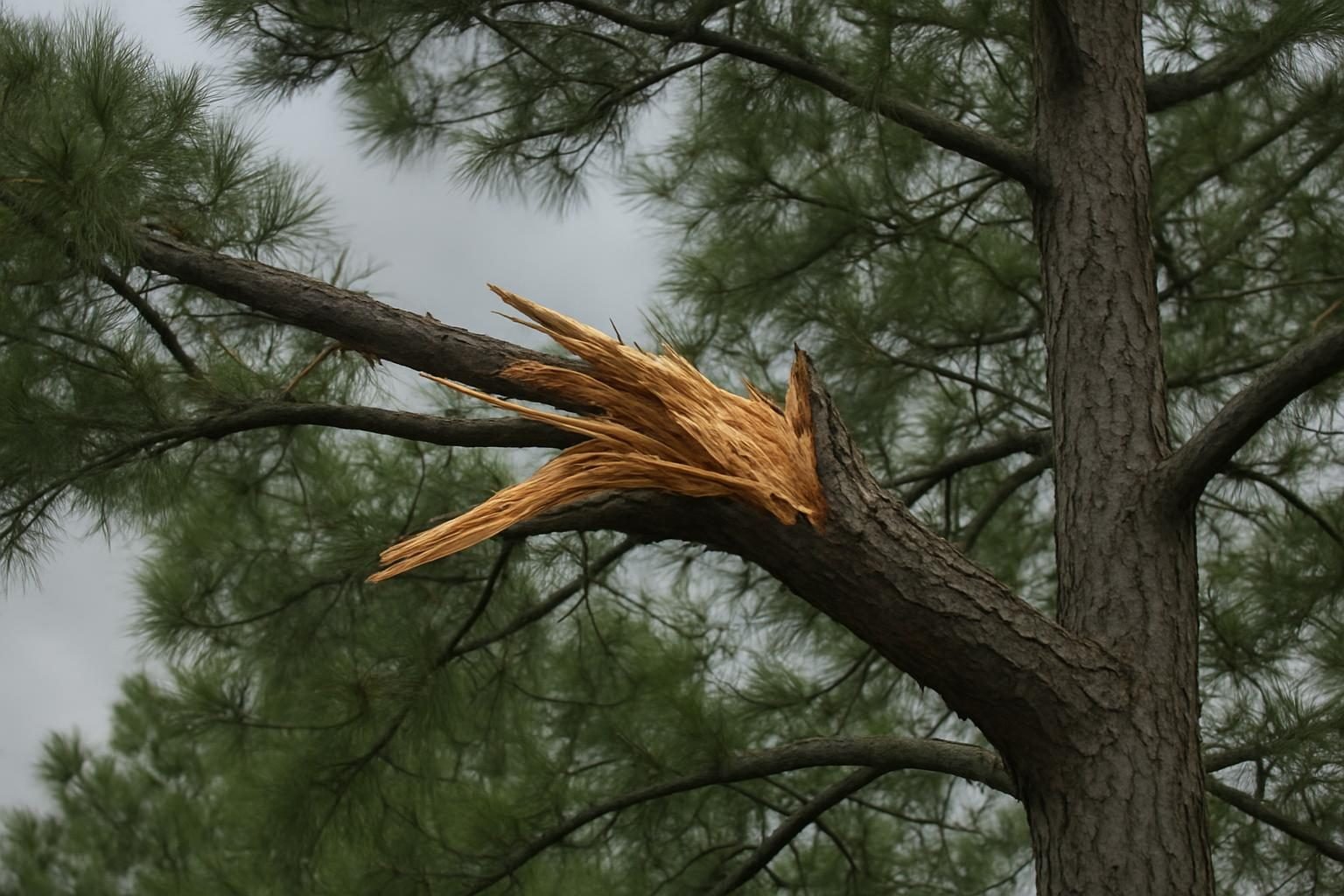
A “hanger” is a broken limb that is still caught in the canopy. These are among the most dangerous storm leftovers because they can fall at any time, often days after the storm. Look for brown, stripped or splintered wood in the canopy, and for any branch hanging at an unnatural angle.
2. Limbs and attachment points
Look for cracks where limbs join the trunk, splits running along a branch, and peeling bark with fresh, light-colored wood underneath. Included bark, where two stems squeeze together in a tight V, is especially prone to splitting under wind load. Bradford pears are notorious for this, as covered in our guide to why Bradford pears split.
3. The trunk: cracks, leans and wounds
Vertical cracks, bulges, or long seams in the trunk suggest structural failure inside. A trunk that now tilts when it stood straight before is a serious red flag. To judge whether a lean is old or new, compare against earlier photos, check for fresh soil cracks on the opposite side, and look at the fence, shed or house line behind the tree.
4. The base and root plate
Look for soil that has risen or cracked on one side, roots snapped or exposed, or a gap opening between trunk and soil. A tree can look healthy overhead while its root plate is partly lifted, and it may fall in the next breeze.
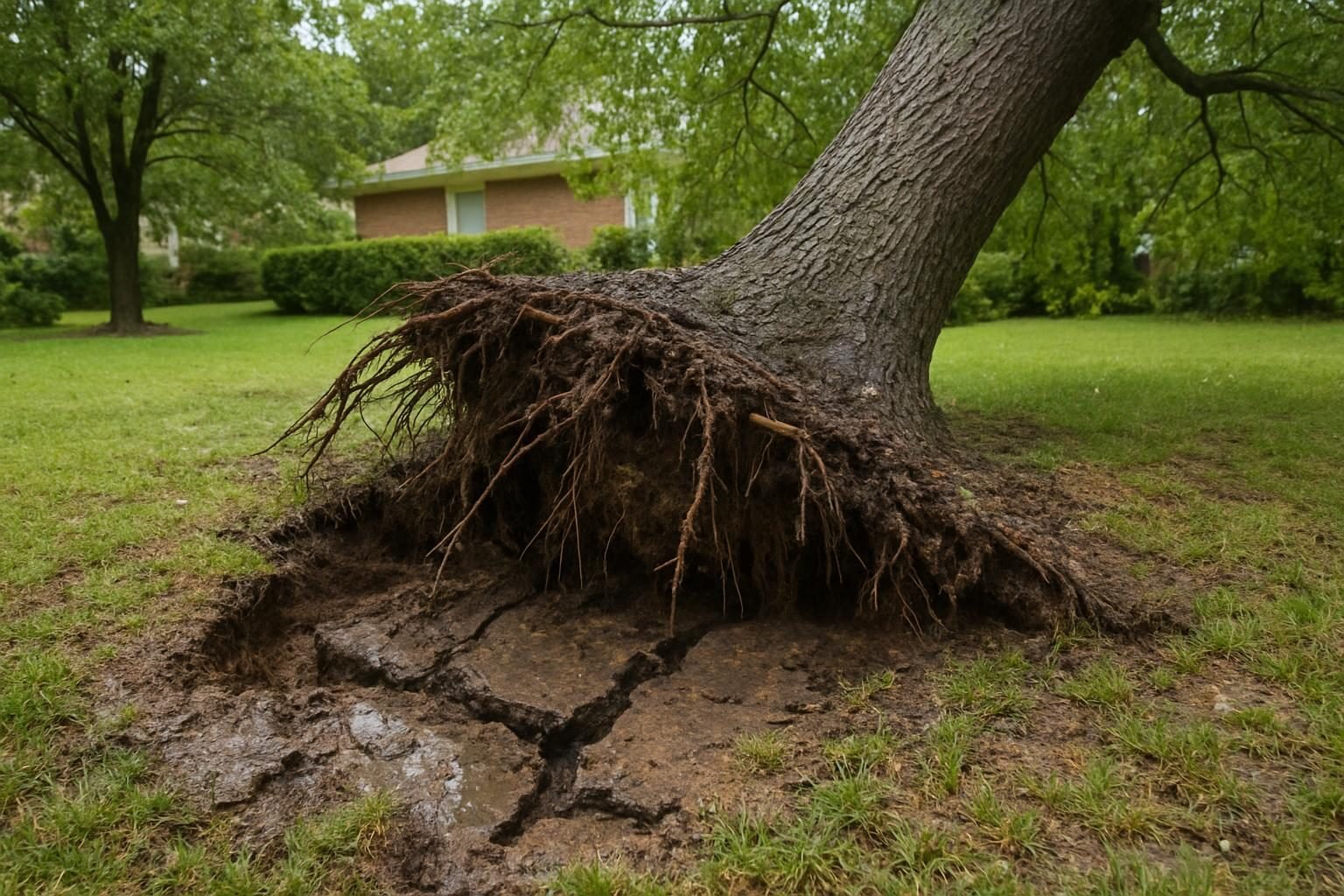
A tree that has moved since the storm is telling you its roots can no longer hold it.
Emergency or Can It Wait? A Simple Sorting Guide
Not every storm-damaged tree needs a midnight call. Use this to prioritize.
Treat as an emergency (call immediately):
- Any tree or limb touching a house, garage, vehicle or power line
- Hangers directly over living space, driveways, play areas or walkways
- A trunk that has visibly shifted or lifted soil at the base
- Large splits through the main trunk or a major fork
- Trees blocking the only access to your home
Schedule within days to a few weeks:
- Moderate cracks in secondary limbs not over any structure
- Partially torn limbs over open lawn
- Leaning trees that have clearly leaned for years, but with new soil movement worth a second opinion
- Broken branch stubs that need clean pruning cuts
Routine follow-up (monitor and book at your convenience):
- Minor leaf and twig loss
- Small bark scrapes
- Thinning canopy that may recover next season
For more on urgent situations and pricing, see our breakdown of emergency tree removal costs after a storm in Fayetteville and our overview of emergency storm tree removal.
Pro tip: Photograph every damaged tree from several angles before anyone touches it. Time-stamped photos help with insurance claims and let a pro assess the situation faster.
Why Saturated Soil Raises the Risk After the Storm Passes
Hurricane rainfall soaks Cumberland County’s sandy-loam and clay-mix soils, and wet ground grips roots poorly. That means a tree that survived the storm may still topple during a later thunderstorm or even a gusty afternoon.
- Shallow-rooted species are most vulnerable. Many yard trees here, including loblolly pines, sweetgums and Bradford pears, are prone to uprooting when ground is soft.
- Recent construction or grade changes add risk. Roots cut or buried during building work are often weaker.
- Pines can fail suddenly. Stressed or dead pines can snap or tip with little warning. See are dead pine trees dangerous for what to look for.
Give any tree you’re worried about extra distance for the first week or two, and avoid parking or setting up play areas beneath it until it has been checked.
Can a Damaged Tree Be Saved?
Often, yes, if the damage is limited to branches and the trunk and roots are sound. Many storm-damaged trees recover with proper pruning to remove broken limbs and make clean cuts.
- Usually salvageable: trees that lost some limbs but keep an intact trunk, stable roots and a reasonable portion of their canopy.
- Usually not salvageable: trees with split trunks, lifted root plates, major decay, or most of the crown gone.
A certified arborist can weigh these factors. Our guide on whether a storm-damaged tree can be saved walks through the decision, and a formal arborist tree assessment gives you a documented opinion. For a broader checklist of warning signs, read signs a tree is hazardous.
Pruning a salvageable tree costs far less than removing one that failed because nobody looked.
Hiring Help After a Hurricane Without Getting Burned
After a major storm, out-of-area crews often show up door to door. Some are legitimate; others are not. Before agreeing to any work:
- Ask for proof of liability and workers’ compensation insurance and verify it.
- Get a written scope that names what’s being cut, removed and hauled away.
- Be wary of large upfront cash demands or pressure to decide on the spot.
- Compare at least two local quotes when the situation is not an immediate hazard.
Our guide to spotting tree service storm chasers after a hurricane covers the red flags in detail. Costs vary widely by tree size, access and urgency, so check tree service cost in Fayetteville for typical ranges, and review how homeowners insurance treats storm-damaged trees before work begins.
If you found something worrying in your yard, request free, no-obligation quotes from local tree services and have a pro take a look before the next wind event.
FAQ
How soon after a hurricane should I inspect my trees?
Once winds are calm and it is safe to go outside, do a visual walk-around from a distance. Do a second, closer check a few days later, since some damage like slow-developing cracks and loosening roots becomes more obvious with time.
Is a leaning tree always an emergency?
No. Trees that have grown at an angle for years are often stable. A tree that began leaning after the storm, or one with lifted soil, cracked ground or exposed roots on the opposite side, should be treated as urgent. See our guide on leaning tree removal in Fayetteville for how to tell the difference.
Can I cut down hangers myself?
It is strongly discouraged. Hangers are unstable and can release unpredictably, and chainsaw work overhead is a leading cause of serious homeowner injuries. A trained crew with proper rigging is the safer choice.
What should I photograph for insurance?
Take wide shots showing the whole tree and its position relative to your home, plus close-ups of cracks, broken limbs and root damage. Capture any damage to structures, fences or vehicles too, and keep photos before cleanup starts. Coverage varies by policy, so confirm details with your insurer.
Get a free storm-damaged tree inspection quote
A local tree service will contact you with a free, no-obligation quote for assessing or removing your storm-damaged tree.