Quick answer: The most common hazardous tree signs are cracks or splits in the trunk, fungus or mushrooms at the base, a hollow or decayed trunk, a lean with lifted soil, dead or hanging limbs, and roots damaged by digging or construction. You can spot these from the ground, but only an in-person assessment can tell you how serious the risk is, so call a tree pro as soon as you notice one near your house, driveway or power lines.
Key takeaways
- Cracks, fungus at the base, hollow trunks, soil heave, dead limbs and root damage are the big warning signs.
- A tree can look green and healthy up top while it is structurally failing underneath.
- Sudden changes, especially after a storm, make a tree an urgent call rather than a wait-and-see.
- Trees near homes, cars, play areas and power lines deserve the fastest attention.
- Only a trained eye on site can judge whether a tree needs pruning, monitoring or removal.
Fayetteville and the rest of Cumberland County get hit with hurricane remnants, thunderstorm winds and the occasional ice storm. Add sandy, often saturated soil and plenty of tall pines and oaks, and a weak tree can go from a small worry to a big problem in a single storm. Knowing what to look for helps you act before something lands on your roof, fence or car.
If you already see one of the signs below, you can request a free consultation and get quotes from local tree service companies without any obligation.
The Main Hazardous Tree Signs to Look For
Walk around each large tree on your property a couple of times a year, and again after any major storm. Look at the trunk, the base, the canopy and the ground. These are the signs that matter most:
- Cracks and splits: deep vertical cracks, or a split where two main stems meet.
- Fungus or mushrooms: growth at the base or on the trunk or roots.
- Hollow or decayed trunk: cavities, soft wood, or large missing sections of bark.
- Leaning with soil heave: a tilt combined with raised or cracked ground.
- Dead or hanging limbs: bare branches, snapped limbs caught in the canopy.
- Root damage: cut, crushed or exposed roots, often after construction or trenching.
One sign alone is a reason to take a closer look. Two or three together on the same tree is a strong signal that it should be inspected soon.
Cracks and Splits in the Trunk or Branch Joints
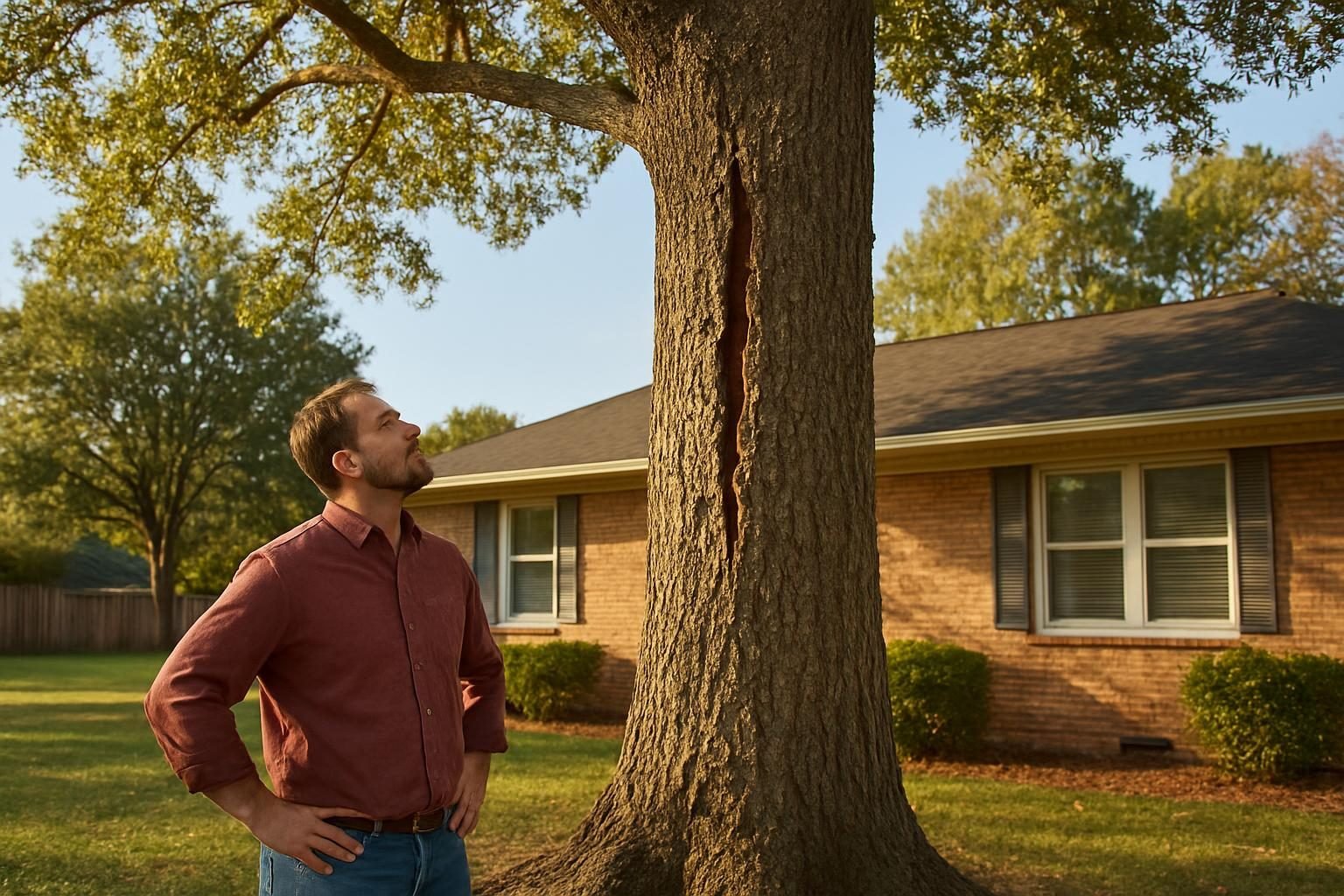
Wood is strong, but it has limits. A crack that runs deep into the trunk, or a split where two large stems join, means the tree is no longer holding together as one solid structure.
- Vertical cracks that open wider over time or run a long distance up the trunk.
- Included bark: a tight V-shaped fork with bark pinched between the stems, which is a weak joint that tends to split under wind load.
- Cracks with oozing sap or dark staining, which can point to decay inside.
- Cracks on the ground side of a leaning tree, where stress is concentrated.
Shallow bark cracks are often normal as a tree ages. What you worry about are cracks that go deep, line up with a lean, or appear suddenly after a storm.

Fungus, Mushrooms and Hollow Trunks
Mushrooms or shelf-like conks growing at the base or on the trunk are often a sign that wood-decaying fungi are feeding on the tree. The fungus you see is just the fruiting body. The decay can be much bigger inside, where you cannot see it.
What to watch for
- Mushrooms or brackets clustered around the root flare or up the trunk.
- Soft, crumbly or spongy wood when you gently probe a damaged area.
- Cavities or holes, especially large ones, or a trunk that sounds hollow when tapped.
- Missing bark patches that expose dark, rotted wood.
A hollow tree is not automatically doomed. Some trees live for years with cavities. The question is how much sound wood is left to carry the load, and that is something a trained professional has to evaluate, often with tools beyond a visual check. Our guide to signs a tree is dying covers related decline symptoms in more detail.
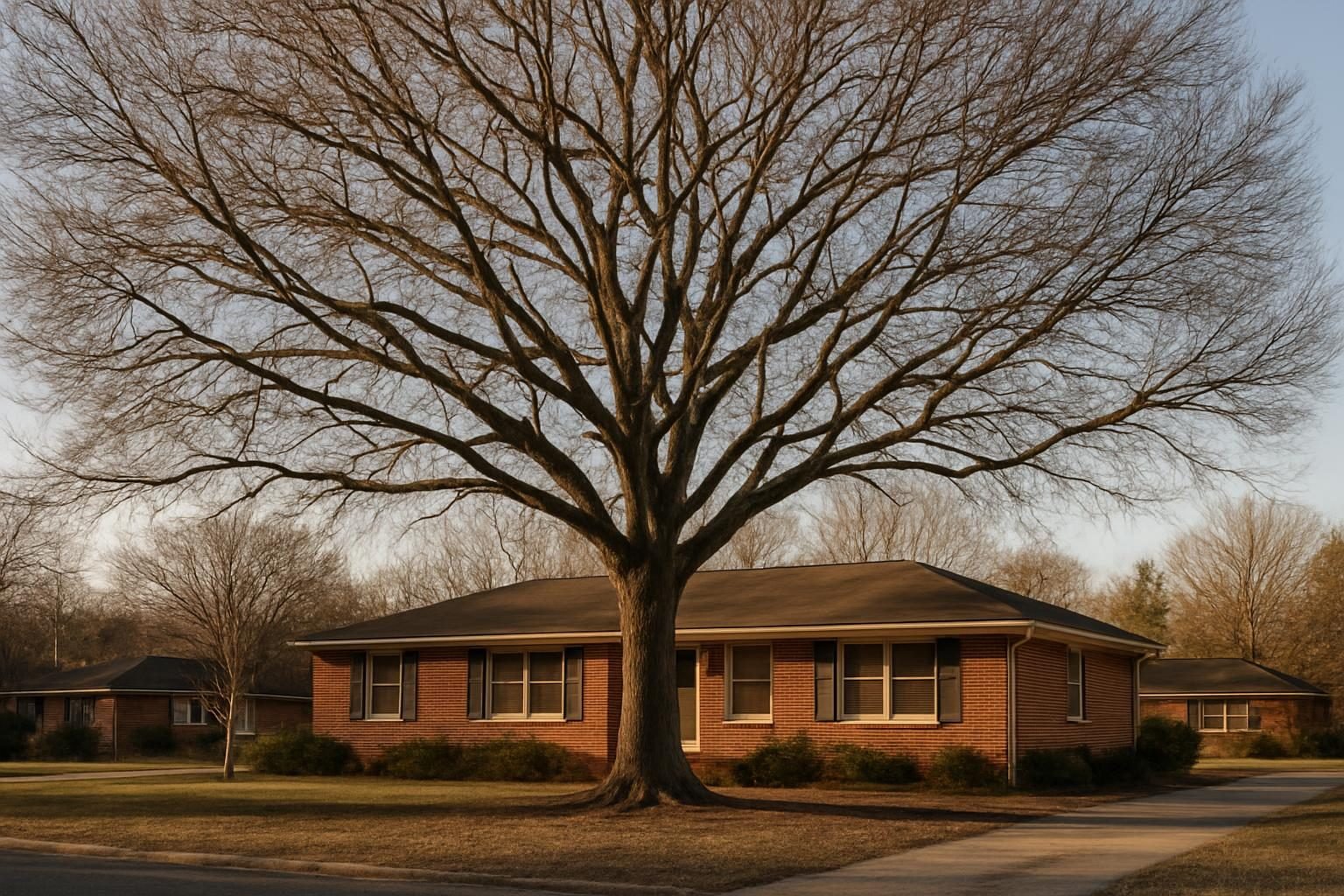
A tree can look full and green on top while decay quietly hollows out the trunk below.
Leaning Trees, Soil Heave and Root Problems
Plenty of trees grow at an angle and are perfectly stable. A tree that has recently started to lean, or leans more than it used to, is a different story.
- Soil heave: a mound of raised soil or cracked ground on the side opposite the lean.
- Exposed or lifted roots: roots pulling out of the ground, especially after rain or wind.
- New gaps around the base where soil has pulled away.
- Leaning toward a structure, driveway or power line.
Roots hold a tree up, so anything that damages them is a hazard even if the trunk looks fine. Common causes include trenching for utilities, driveway or patio work, grade changes, and heavy equipment compacting the soil near the tree. Damage may not show up for a year or more, then a storm exposes it.
For a deeper look at this one, see our guides on whether a leaning tree is an emergency or normal and how to tell when to worry about a leaning tree.

Pro tip: Take dated photos of any tree you are concerned about, from the same spot each time. Comparing pictures over weeks or months shows whether a lean, crack or cavity is changing.
Dead or Hanging Limbs and Canopy Warning Signs
Dead branches are sometimes called widowmakers for good reason. They can drop without warning, even on a calm day, and a large limb can do serious damage to a roof, vehicle or person.
- Dead limbs: bare branches with no leaves or needles during the growing season, brittle bark, or no buds.
- Hangers: broken limbs lodged in the canopy, still attached by a strip of wood.
- Thinning or off-color canopy: large sections that are sparse, yellow or brown.
- Heavy limbs over structures: long horizontal branches reaching above a roof, deck or play area.
Many dead or weak limbs can be handled with targeted tree trimming and pruning rather than removing the whole tree. If a large portion of the canopy is dead, especially on a pine, the tree may be beyond saving. Our article on how to tell if a pine tree is dead or dying is a good companion read for local homeowners.
Dead limbs fall without warning, and the damage depends on what is underneath when they do.
Why You Need an In-Person Hazardous Tree Assessment
Reading the signs from your yard is a useful first step, but it is only a screening. Whether a tree is truly hazardous depends on several factors you cannot judge from the curb:
- Species and age: some species are more prone to certain failures.
- Extent of internal decay: how much sound wood remains.
- Root health: what is going on below the surface.
- Targets: what would be hit if the tree or a limb fell, such as a house, a bedroom, a driveway or a neighbor’s yard.
- Site conditions: soil, drainage, wind exposure and nearby construction.
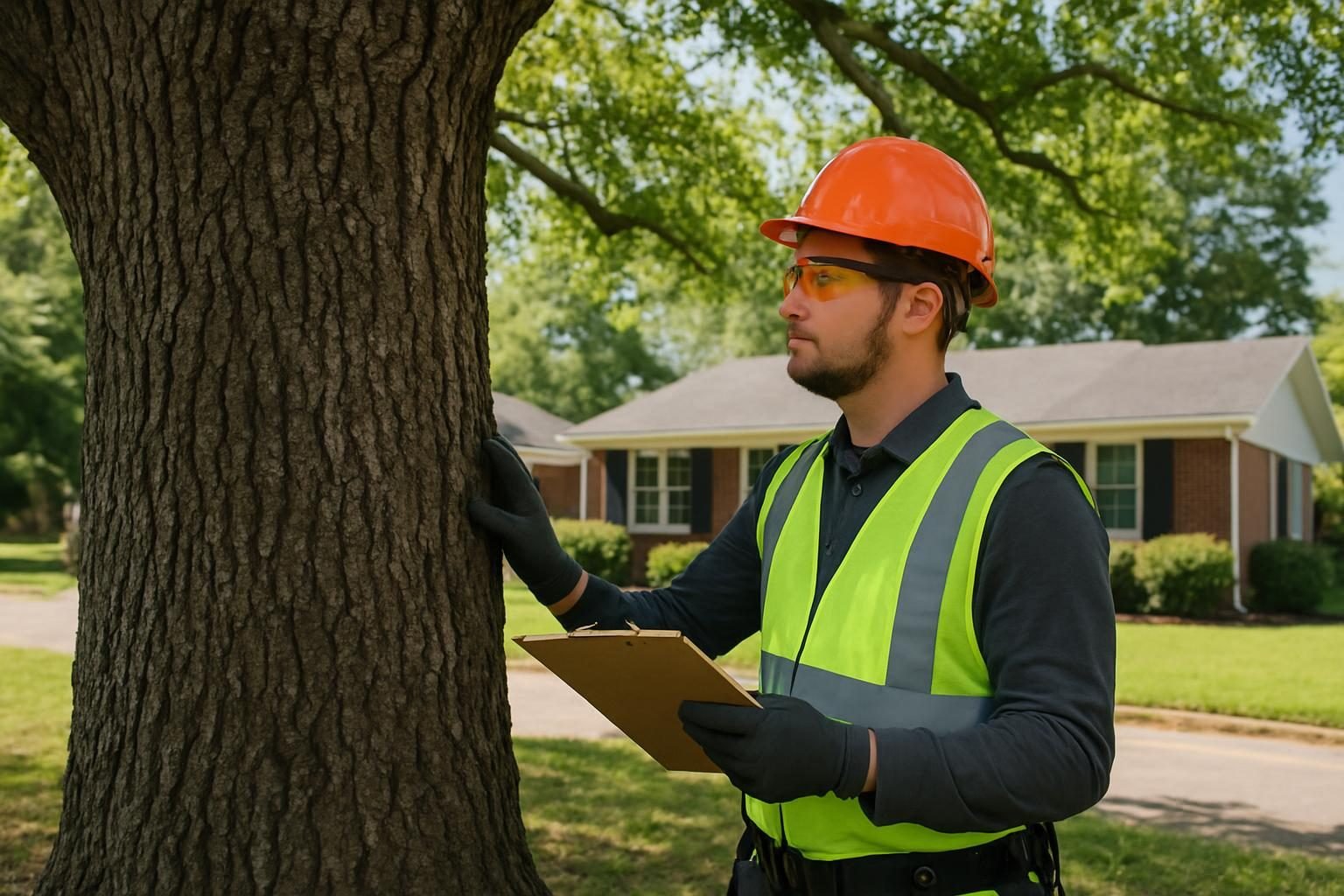
A qualified professional can walk the tree, probe suspect areas, check the roots and recommend options. Those options range from monitoring to pruning, cabling or bracing, or removal. Learn more about how this works on our arborist tree assessment page. If the answer is removal, see what to expect from tree removal in Fayetteville.
The International Society of Arboriculture also publishes homeowner guidance on tree risk and finding a certified arborist at treesaregood.org.
When Hazardous Tree Signs Become Urgent
Some situations should not wait for a convenient appointment. Treat it as urgent if:
- The tree has shifted suddenly, with fresh soil heave, new cracks or a lean that appeared after a storm.
- A large limb has split or is hanging over a house, driveway, play area or sidewalk.
- Roots are lifting or the tree is rocking in the wind.
- The tree is touching or near a power line. Stay far back and contact the utility rather than a tree crew.
- The tree has already fallen or partly fallen onto a structure or vehicle.
If anyone could be in danger, keep people and vehicles away from the area. For storm situations, see our pages on emergency storm tree removal and what to do if a tree is on a power line. If you smell gas, see downed lines or there is an immediate threat to life, call 911.
Local Factors: Pines, Storms and Saturated Ground
In Cumberland County, tall loblolly and longleaf pines are everywhere, from older Fayetteville neighborhoods to rural lots around Raeford and Stedman. Pines often shed limbs and can be vulnerable when stressed by drought, insects or saturated ground. Hurricane season adds wind and heavy rain, which loosens soil and tests every weak root system.
- After heavy rain or a tropical system, re-check trees for new leans, cracks and lifted soil.
- Before storm season, have questionable trees evaluated rather than waiting for a forecast.
- Near new construction or driveway work, ask about root protection and re-check trees a year later.
Our hurricane season tree prep checklist walks through what to do before the next storm. Local crews serve Fayetteville, Hope Mills, Spring Lake, Stedman and the Fort Bragg area, so help is usually close by.
What It Costs to Deal With a Hazardous Tree
Costs vary a lot by tree size, access, how close the tree is to structures and whether a crane is needed. As rough estimates only, removing a small tree might run a few hundred dollars, medium trees often land in the several-hundred to low-thousands range, and large or hard-to-reach trees can cost considerably more. Pruning a dead limb typically costs less than full removal. Our tree service cost guide and tree removal cost in Fayetteville breakdown give more detail. Always get written quotes, since every site is different.
Ready to find out what your tree needs? Request a free consultation using the form on this page and compare quotes from local tree service companies.
FAQ: Hazardous Tree Signs
How can I tell if a tree is about to fall?
There is rarely a guarantee, but warning signs include a sudden lean, lifted soil at the base, new deep cracks, rocking roots and large dead limbs. If you see any of these, especially after a storm, get a professional assessment quickly rather than waiting.
Is a tree with mushrooms at the base always dangerous?
Not always, but mushrooms or conks at the base are a good reason for a closer look. They can indicate internal decay or root rot, and only an on-site inspection can show how serious it is.
Can a hollow tree be saved?
Sometimes. It depends on how much solid wood remains, the tree’s species and what it could hit if it failed. A professional can recommend monitoring, pruning or support, or removal if the risk is too high.
Who should I call first about a hazardous tree?
For a tree that is not an emergency, request quotes and an assessment from a local, insured tree service. If a tree is on a power line or there is an immediate danger to people, call 911 or the utility first and keep everyone back. Our guide to verifying a tree service’s insurance explains what to check before you hire.
For more on choosing a company, read our 15 questions to ask a tree service before you sign anything, or see how our network serves tree service in Fayetteville. Planning ahead? Our upcoming guide on what to expect in a tree removal quote will help you compare bids.
Get a free hazardous tree assessment quote
A local tree service company will contact you with a free, no-obligation quote and can schedule an in-person assessment.