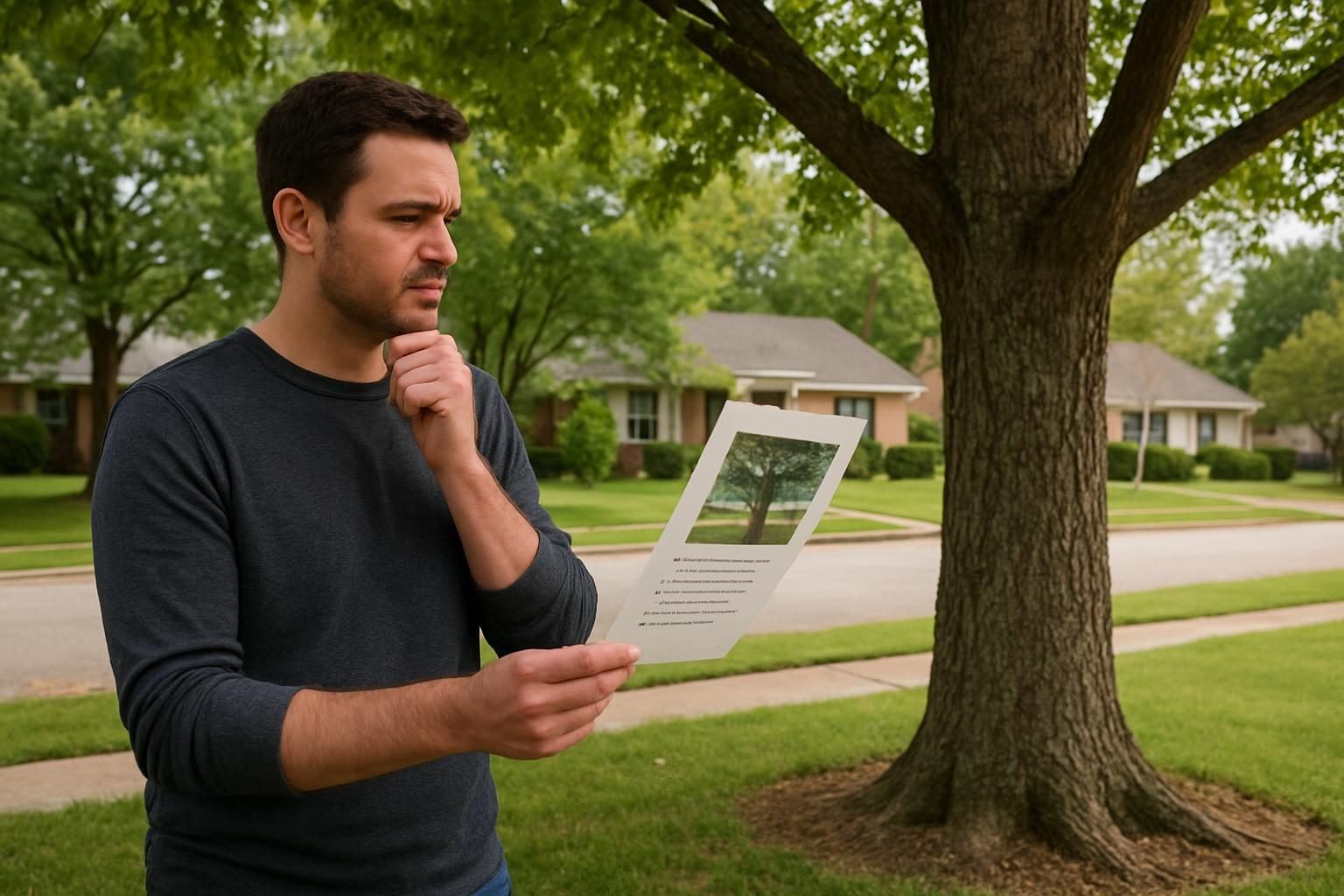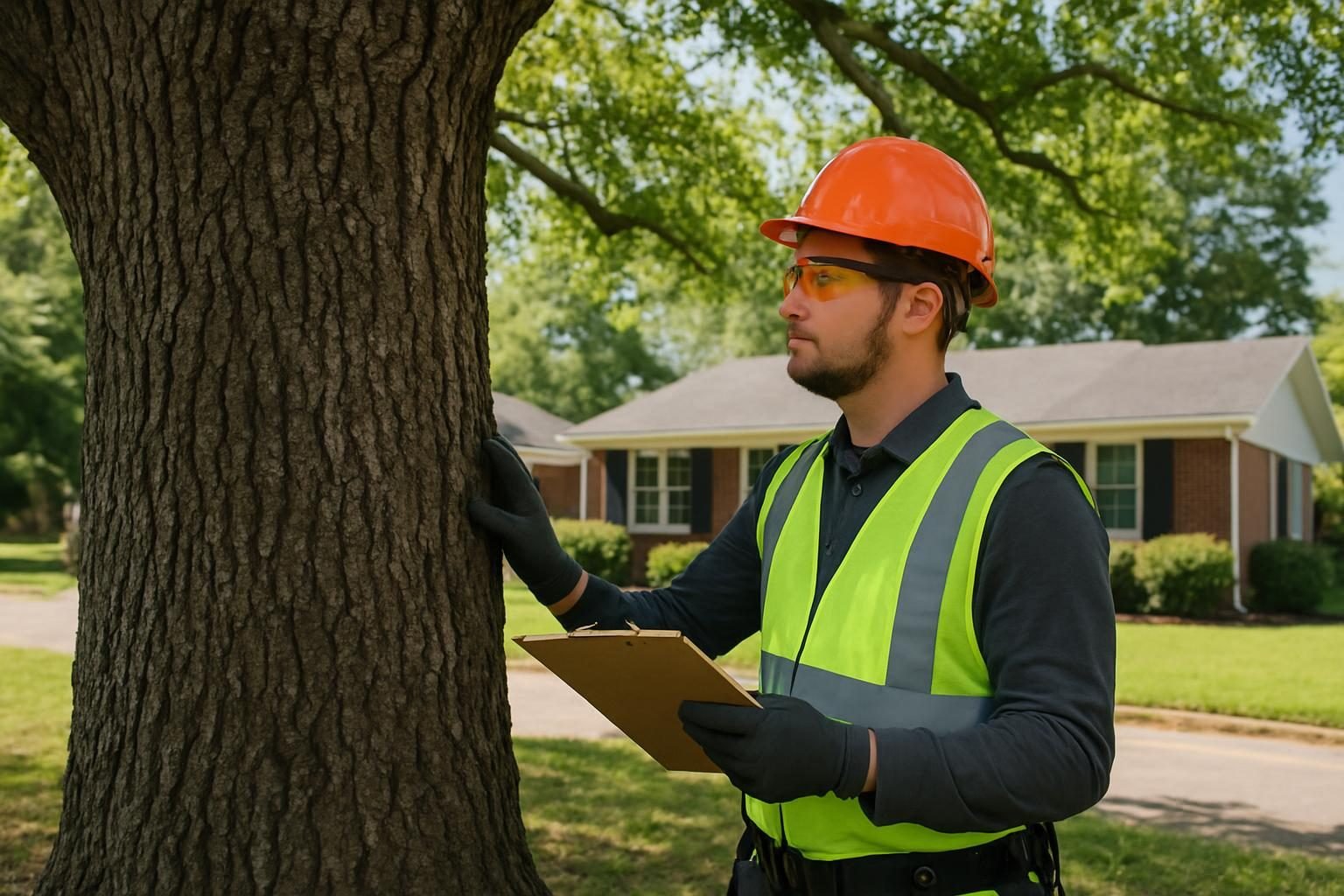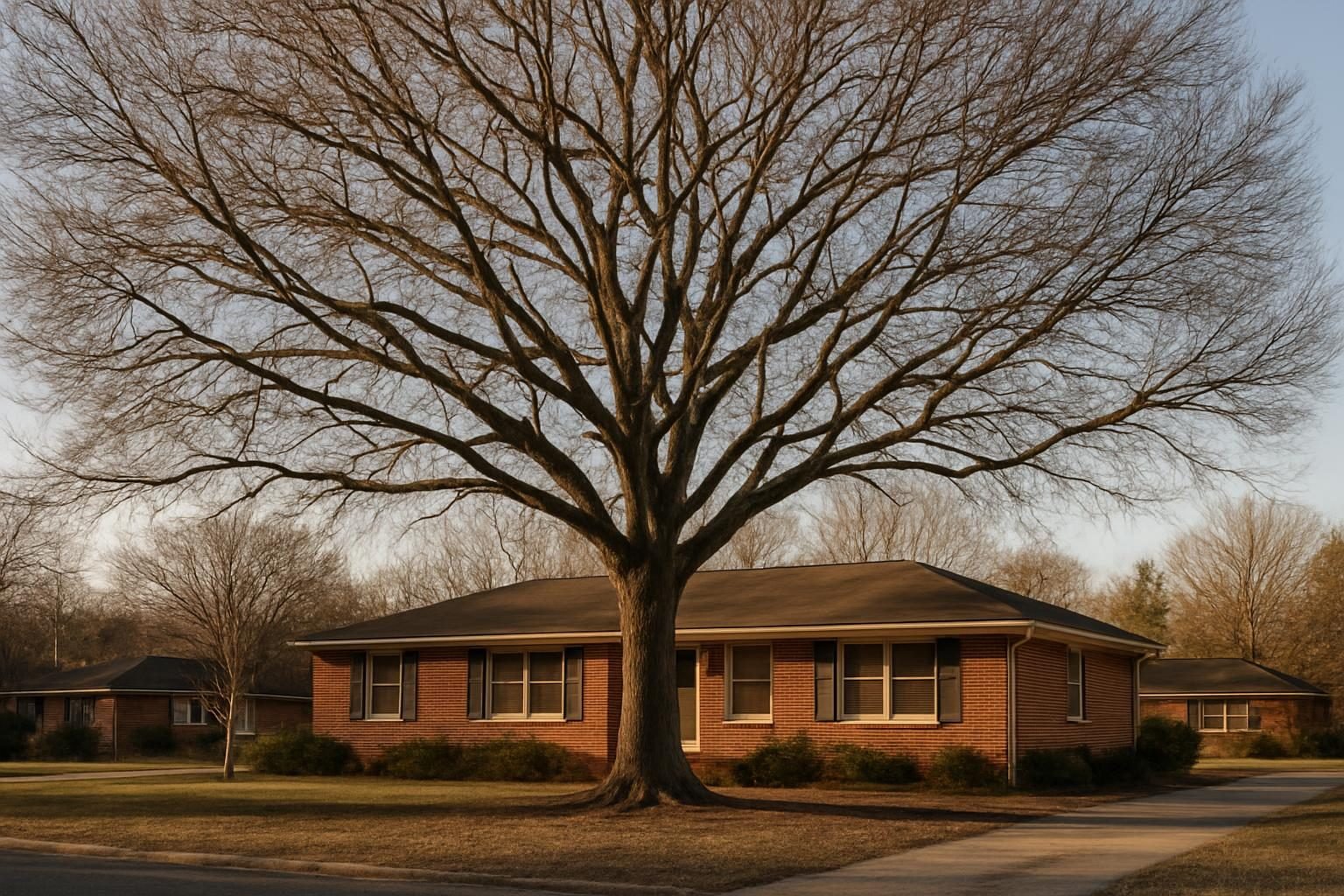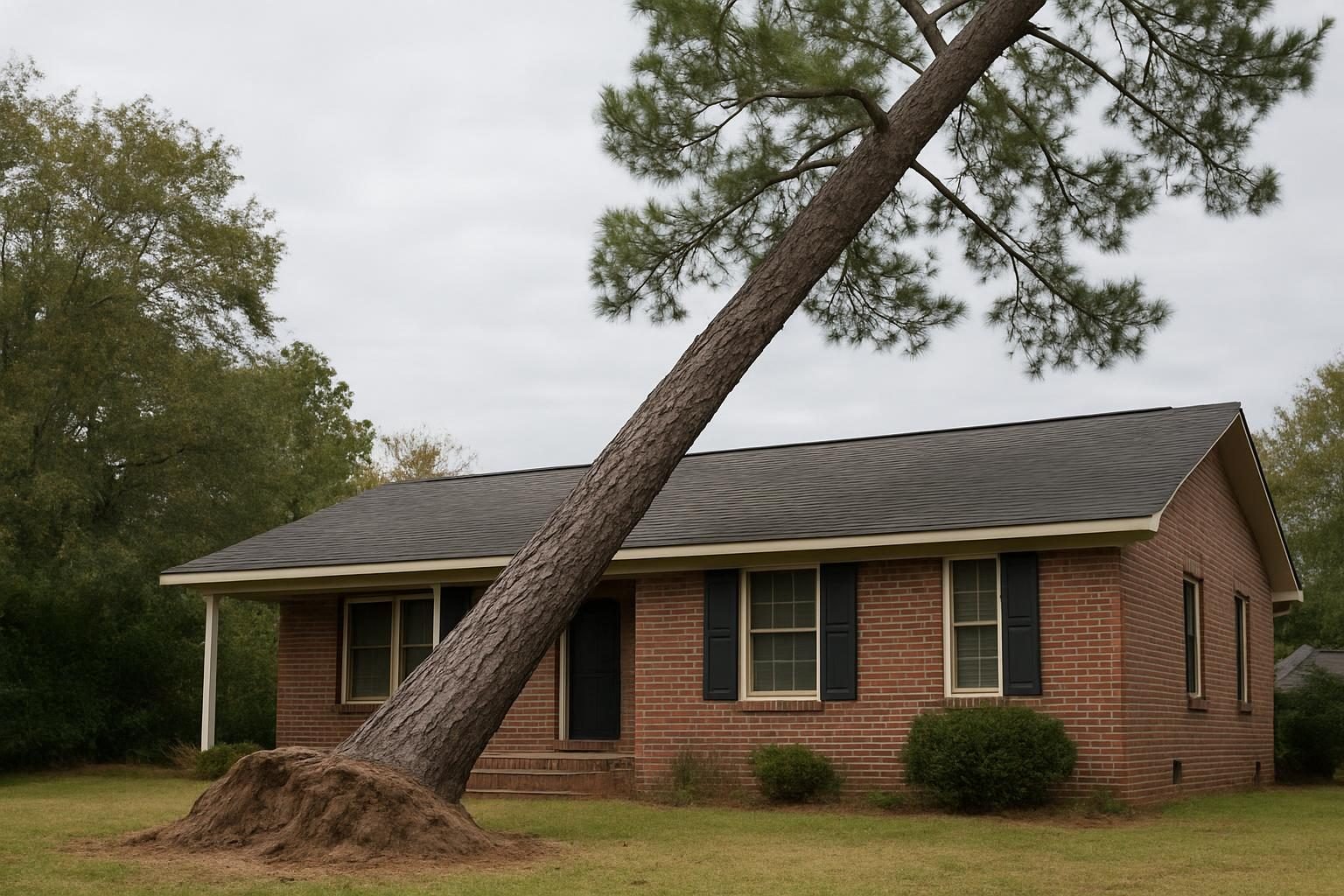
Quick answer: A leaning tree is dangerous when the lean is new, getting worse, or paired with soil heaving, root lifting, cracks or a target such as your house in its path. Trees that have grown at a slight angle for decades are usually stable, but a tree that shifts after a storm or heavy rain can fail without warning. If you are unsure, have a qualified arborist look at it before the next storm.
Key takeaways
- Age of the lean matters most: a long-standing curve is usually fine; a sudden or increasing tilt is an emergency signal.
- Look at the ground: raised soil, gaps or cracks near the base mean the root plate may be failing.
- Consider what is in the fall zone: a house, car, power line or play area raises the stakes.
- Saturated soil after storms makes Cumberland County trees much more likely to topple.
- When in doubt, get it assessed rather than guessing or trying to prop it up yourself.
Fayetteville homeowners deal with tall pines, water oaks and sweetgums on sandy, often waterlogged soil, so a leaning tree is a common worry after a hurricane remnant or a week of heavy rain. This guide explains how to judge whether a lean is harmless or a real hazard, what warning signs to check, and when to stop evaluating and call for help.
If you already see a worrying tilt, you can request a free consultation using the form on this page and compare quotes from local tree companies.
Natural lean vs. new lean: the first thing to figure out
Not every tilted tree is a problem. Trees grow toward light, so a trunk that curves up and away from a shaded side is often just adapting. The question is whether the lean has been there for years or is recent.
Signs of a natural, long-standing lean
- The trunk curves back upward, so the crown is roughly balanced over the base.
- Bark and ground around the base look undisturbed, with no gaps or raised soil.
- Neighbors, old photos or previous owners confirm it has looked this way for years.
- The tree has grown normally and holds healthy leaves or needles.
Signs of a new or worsening lean
- The trunk is straight but tilted from the ground up, like a leaning pole.
- The tilt appeared or increased after a storm, flood or wet stretch.
- A fence, wire, building edge or property marker now lines up differently against the trunk.
- Fresh cracks, torn roots or loose soil appear near the base.
Pro tip: Take a photo of the tree from the same spot, with a fixed reference like a fence post or door frame in view. Repeat it every week or after each storm so you can see whether the lean is changing.
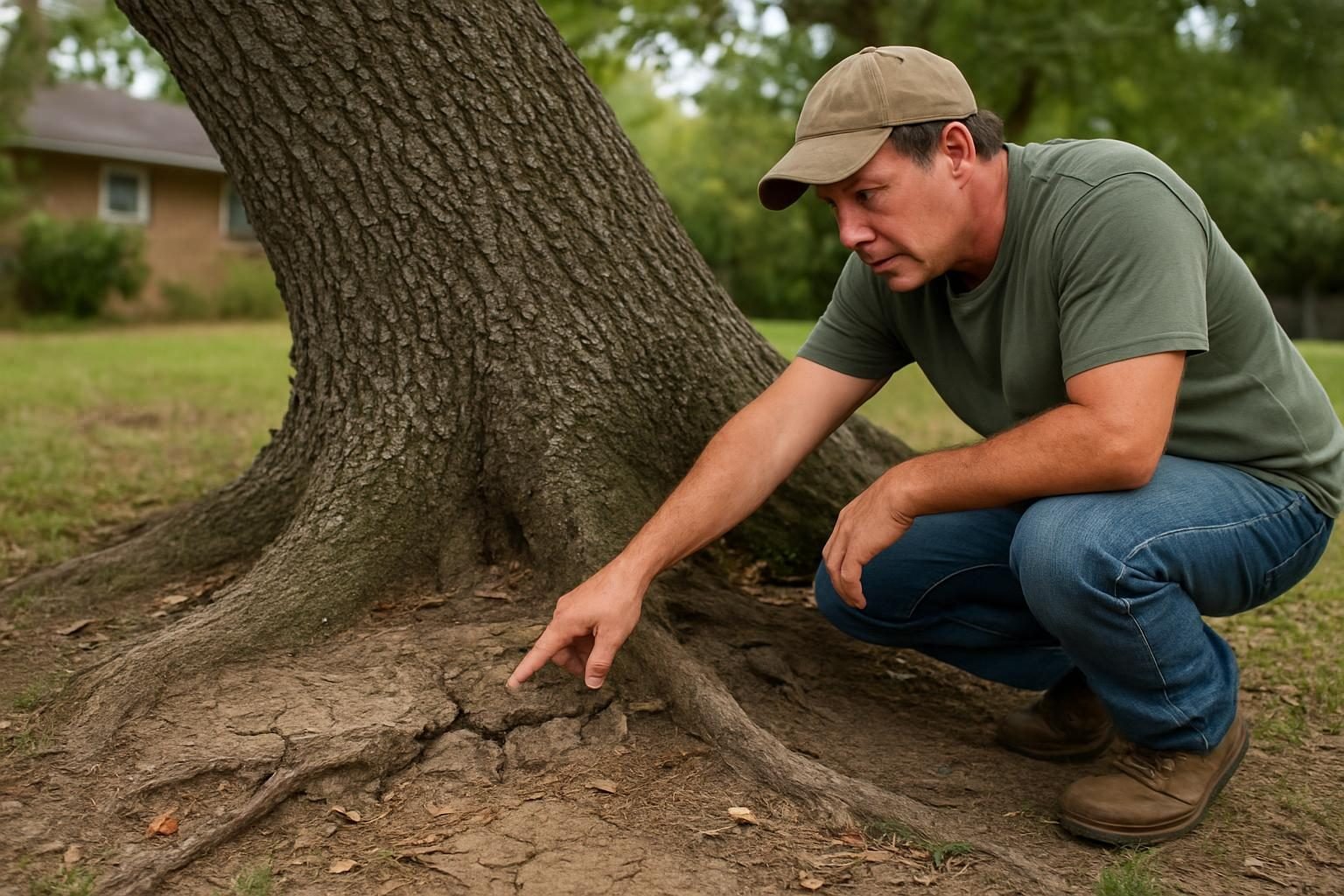
Ground clues: soil heaving and the root plate
The strongest evidence that a leaning tree is dangerous is on the ground, not in the branches. Most trees stay upright because of the root plate, the mass of roots and soil that spreads out from the base. When that plate shifts, the tree is losing its grip.
What to check at the base
- Soil heaving: a mound or bulge of soil on the side opposite the lean means the roots are being levered up.
- Gaps and cracks: a crescent-shaped opening in the soil or lawn on the side the tree is leaning toward is a red flag.
- Exposed or snapped roots: roots that have popped above the surface or torn can mean the anchor system is breaking.
- Pooling water or soggy ground: constantly wet soil weakens root hold, especially in Cumberland County’s sandy soils after heavy rain.
- Mushrooms or soft, crumbly wood at the base: these often point to decay in the roots or lower trunk.
Roots hold a lot of strength you cannot see. A tree can look fine from above while its root system is rotting below. That is one reason a professional arborist tree assessment is worth having when the signs are unclear.
If the soil on the opposite side of the lean is lifting, the tree is already moving.
Cracks, splits and other trunk warning signs
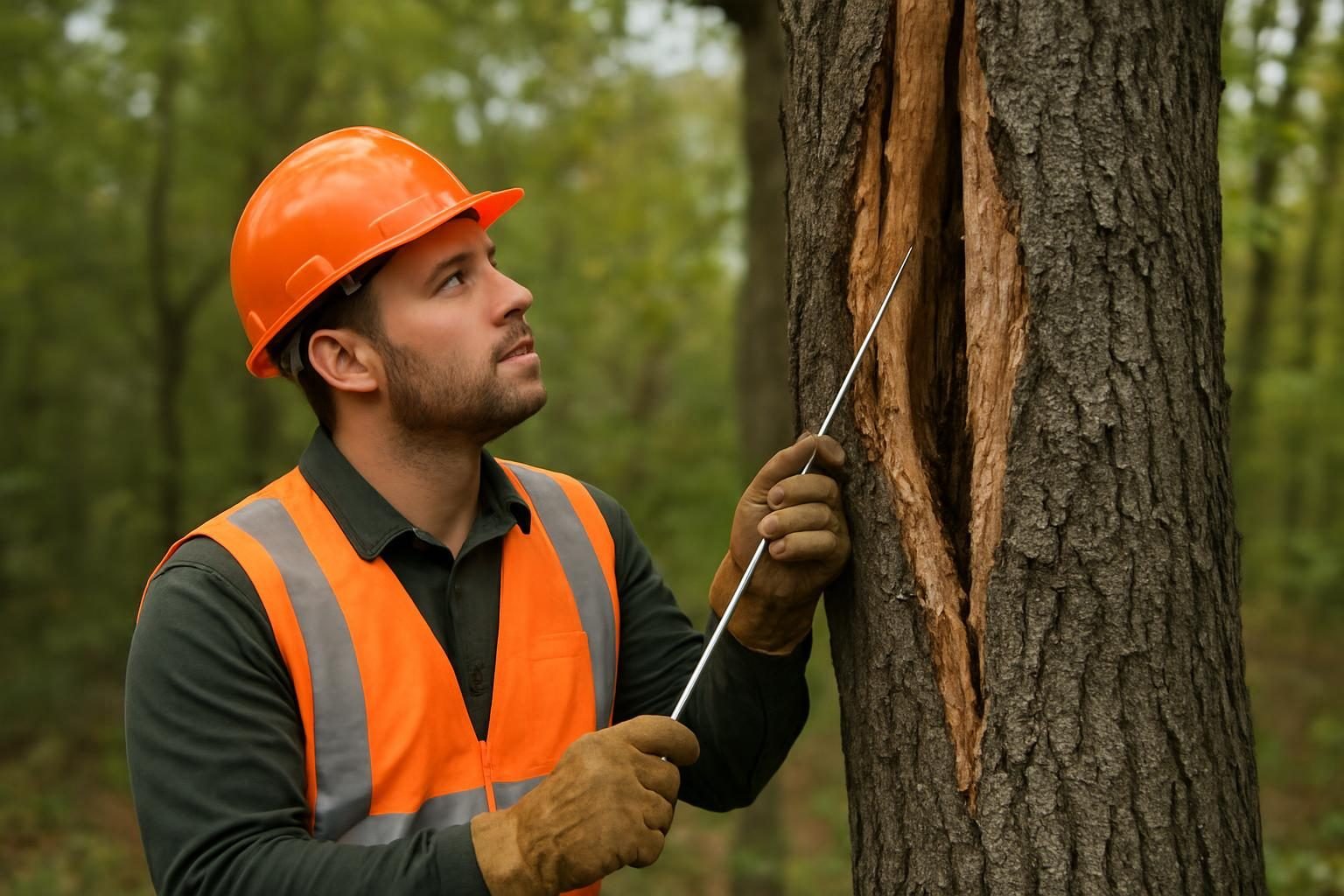
A leaning tree that also shows structural damage is a higher risk. Look up and around the trunk for defects that suggest it could split or snap.
- Vertical cracks or splits running along the trunk or at a fork.
- Cavities, hollow spots or conks (shelf-like fungal growths) on the trunk.
- Dead or hanging branches that could drop even if the whole tree stays up.
- Thin, sparse or discolored foliage compared to similar trees nearby.
- Co-dominant trunks with a tight V-shaped union, which tend to split under load.
Our guides on signs a tree is dying and how to tell if a pine tree is dead walk through these indicators in more detail. A declining tree that also leans is more likely to fail than a healthy one with the same tilt.
Direction matters: what is in the fall zone?
Two leaning trees with the same tilt can carry very different risk. What matters is what stands in the path if it falls. A good rule of thumb is to picture the tree falling and imagine a circle around it roughly as wide as the tree is tall.
Common targets to look for
- Your house, garage or a neighbor’s home, especially bedrooms.
- Driveways, parked cars and walkways you use daily.
- Power and utility lines.
- Play areas, patios, sheds and pools.
- Fences and property lines, which can raise questions about who is responsible.
A leaning pine toward the roof is a very different problem from a leaning oak aimed at an empty back lot. If a tree is near your home, see when to remove a pine tree near your house. If it sits near a boundary, property line tree rules in North Carolina can help you understand who is responsible.
If the tree is leaning toward or into a utility line, do not approach it. Stay clear and read what to do in our guide to a tree on a power line.
A tree’s lean matters less than what stands in its path if it goes down.
Leaning trees after storms and in saturated soil
In Fayetteville, Hope Mills, Spring Lake and Stedman, many leaning trees show up after a tropical system or several days of rain. Saturated soil loses its grip on roots, and wind then pushes the weakened tree over or tilts it further.
What to do after a storm
- Stay out from under it. Keep people, pets and vehicles away from the fall zone.
- Check the base from a safe distance. Look for heaving, cracks and exposed roots without walking right up to the trunk.
- Photograph everything for your own records and for any insurance conversation.
- Do not try to pull, prop or cut it yourself. A tree under tension can move suddenly.
- Get it assessed quickly, since wet ground and the next gust can finish the job.
A tree that is already down or on a structure is a separate emergency. See what to do when a tree falls on your house and our page on emergency storm tree removal. Be cautious after a hurricane, too, because storm chasers sometimes target homeowners with pushy offers.
When to call a pro immediately
Some situations are not worth waiting on. Call a professional right away if you see any of these:
- The tree has started leaning or tilted further since a recent storm or heavy rain.
- Soil is heaving, cracking or lifting near the base.
- Roots have snapped or lifted out of the ground.
- The tree is leaning toward your house, a power line or a spot where people gather.
- You hear creaking or see the trunk shifting in wind.
For a lean that has been there forever but still makes you nervous, a scheduled assessment is a calm, lower-cost way to get answers. An arborist may recommend options other than removal, such as selective pruning to reduce crown weight, depending on the tree’s health and roots. Often, though, a clearly failing tree needs tree removal, and a large one near a house may even require a crane. Our guide to crane tree removal explains when that applies.
What it may cost (estimates only)
Prices vary widely by tree size, access, proximity to structures and whether it is an emergency. As rough, non-binding estimates, a basic assessment may run from free to a few hundred dollars depending on who performs it, while removal of a large leaning tree can range from several hundred to a few thousand dollars. For a closer look, see our overview of tree service cost in Fayetteville and the breakdown by tree removal cost by tree size.
Also check local rules before cutting. Most single-family homeowners can remove trees on their own property, but it is worth reading whether you need a permit to remove a tree in Fayetteville, and following a 10-point checklist for hiring a tree service.
Worried about a specific tree? Request a free, no-obligation quote from local tree service companies using the form on this page.
Frequently asked questions
How much lean is too much?
There is no single safe angle. A gradual curve with a balanced crown can be fine, while even a modest new tilt with soil heaving can be dangerous. The change over time, the root condition and the targets in the fall zone matter more than the degrees.
Can a leaning tree be straightened or saved?
Young, newly planted trees can sometimes be staked and corrected. A large established tree with a failing root plate generally cannot be pulled upright safely, though an arborist may suggest cabling, pruning to reduce weight or monitoring in less severe cases. Do not attempt to winch or prop a big tree yourself.
Does homeowners insurance cover a leaning tree?
Coverage varies by policy. Many policies treat removal of a tree that has not fallen differently from damage caused by a fallen tree. Read our overview of homeowners insurance and tree removal and check with your insurer for your specific policy.
Should I remove a leaning tree before hurricane season?
If it is already showing warning signs, handling it before the next big storm is wise. Our hurricane tree prep checklist for Fayetteville homeowners covers what to inspect and when to act, and our upcoming guide on whether to remove or save a hazardous leaning tree goes deeper on that decision.
Get a free quote on your leaning tree
A local tree service company will contact you with a free, no-obligation quote and can assess the tree in person.