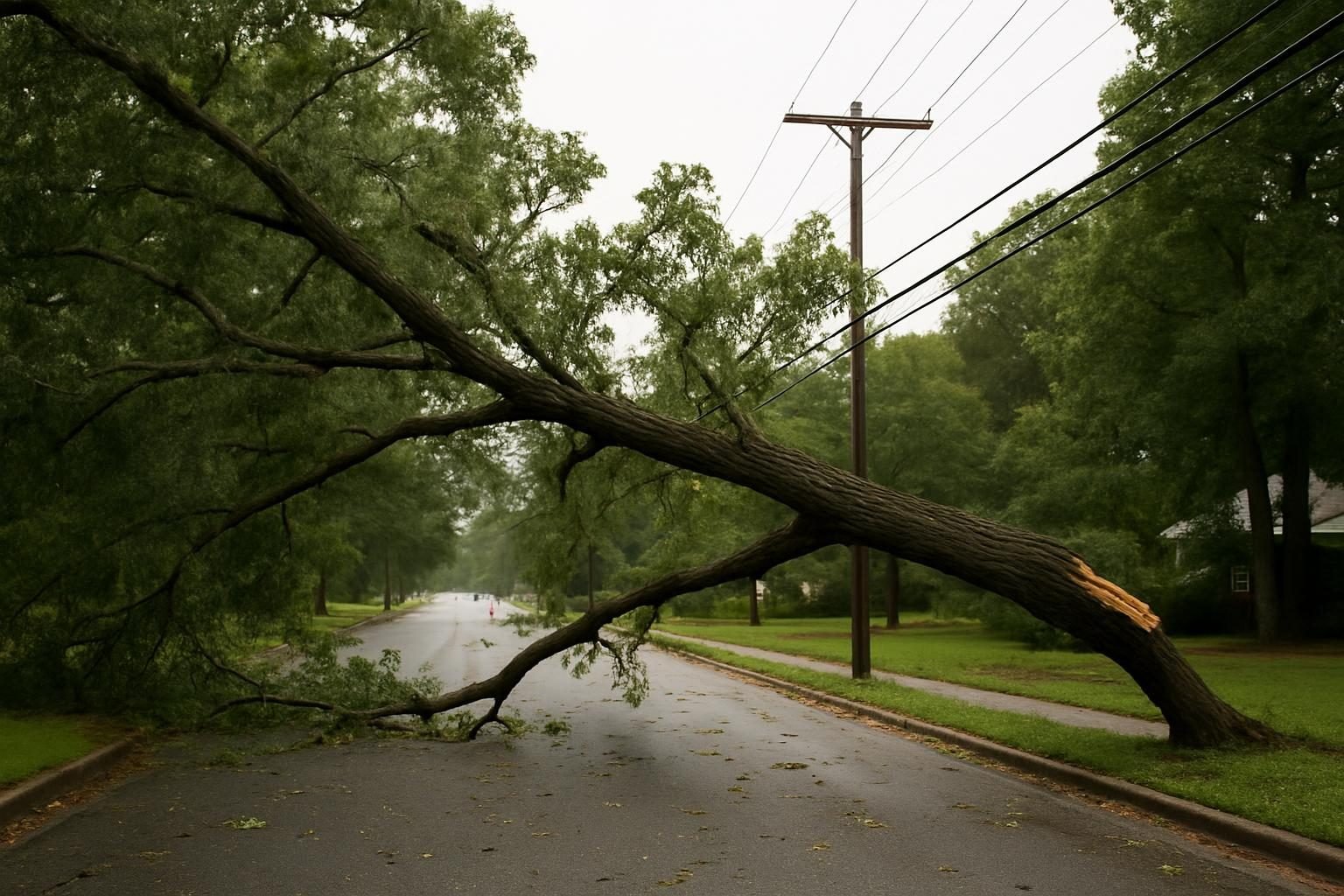
Quick answer: If a tree fell on a power line, stay at least 35 feet away, treat every wire and the tree itself as live, and call 911 and your electric utility right away. Do not touch the tree, the wires, or anything in contact with them. Once the utility makes the line safe, a professional tree service can handle the rest of the cleanup.
Key takeaways
- Stay 35+ feet back and assume every wire is energized, even if it looks dead or lights are out.
- Call 911 first, then your utility (PWC, Duke Energy, Lumbee River EMC or South River EMC).
- The utility clears the lines; you hire a tree company for the tree on your property.
- Never cut or move a tree that is touching a wire, and never drive over a downed line.
If you live in Fayetteville, Hope Mills, Spring Lake or anywhere else in Cumberland County, a tree on a power line is one of the most dangerous storm scenarios you can face. Our summer thunderstorms, tropical systems and ice events all bring trees down onto lines. This guide walks you through what to do in the first minutes, who to call, and who is responsible for what afterward.
Need the tree dealt with once the power company has cleared the line? You can request free quotes from local tree service companies using the form on this page.
Tree Fell on Power Line: What to Do Right Now
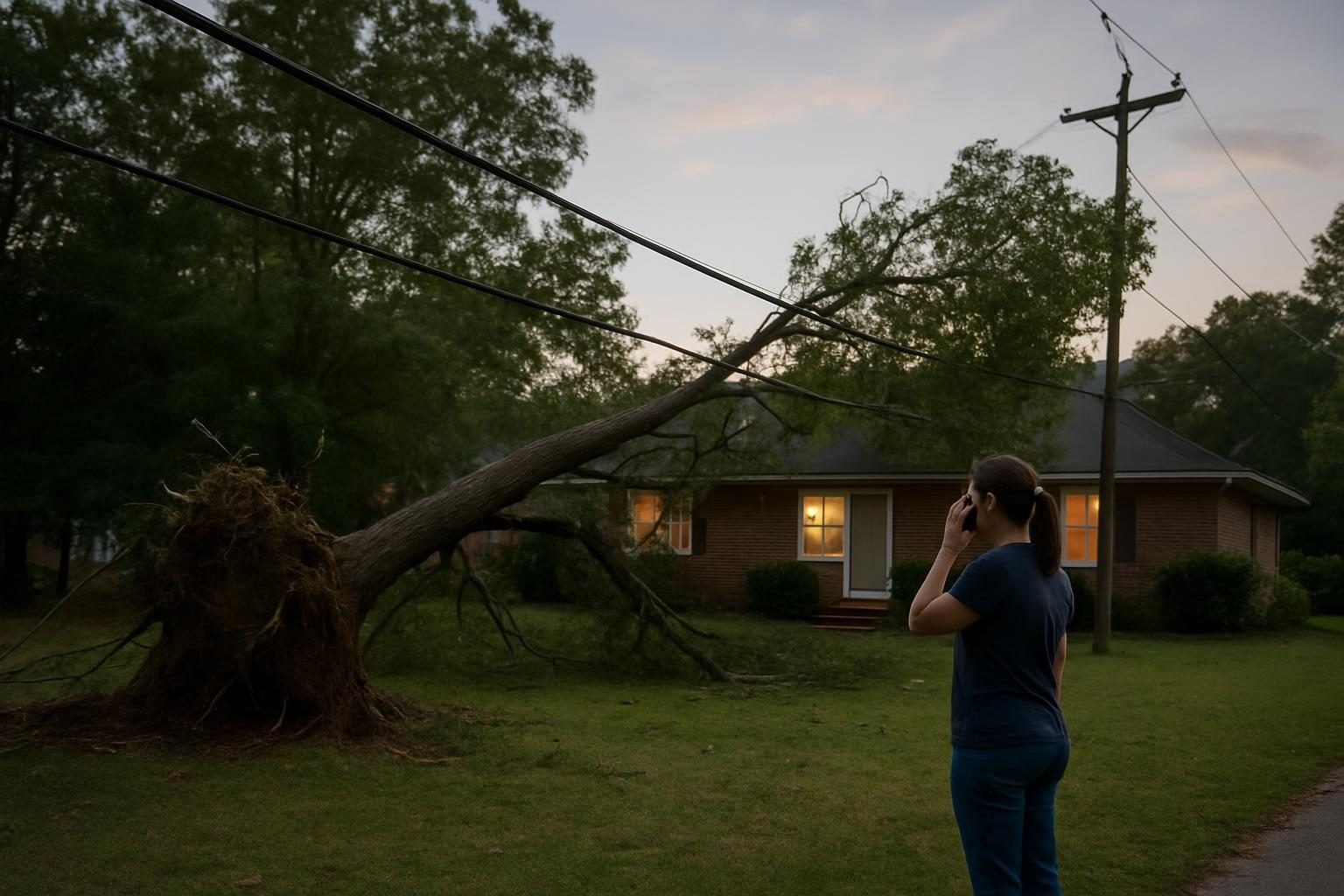
Treat this as an emergency. Electricity can travel through wet ground, tree limbs, fences, vehicles and even standing water. Follow these steps in order.
- Get everyone away. Move people and pets at least 35 feet from the tree and any wires, and farther if you can. Keep children inside or well back.
- Assume it is live. A wire that is not sparking, humming or lying flat can still be energized. Power can also come back on without warning when a utility tries to restore service.
- Call 911. Tell the dispatcher a tree is on a power line, and give the street address or nearest intersection.
- Call your electric utility. Report the downed line so a crew is dispatched (contact details below).
- Warn others. If neighbors or passersby are nearby, tell them to stay back. Do not leave your post if someone might walk or drive into the area, but stay at a safe distance.
- Wait for professionals. Do not try to move anything until the utility confirms the line is safe.
Pro tip: Take photos from a safe distance (35+ feet, zoomed in) before anything is moved. They help with insurance claims and show the tree company what they will be dealing with.
What never to do
- Do not touch the tree, the wire, or anything in contact with either, including fences, gutters and vehicles.
- Do not cut or drag branches, even if the tree “looks like” it is only leaning on a wire.
- Do not drive over a downed line or park near one.
- Do not use water to spray a spark or small fire near wires. Water conducts electricity.
- Do not try to rescue someone touching a wire. Call 911 and keep everyone back.
If a power line falls on your car while you are inside, stay in the vehicle and call 911. Only exit if the car catches fire, and if you must, jump clear with both feet together and shuffle away without touching the car and ground at the same time.
Who to Call in Fayetteville and Cumberland County
Which utility you call depends on who supplies your power. Several providers serve different parts of the county, and the line on a pole near your house may belong to any of them. Check your electric bill if you are not sure.
- PWC (Public Works Commission): serves Fayetteville and surrounding areas. Report downed lines and outages through PWC’s outage line or website.
- Duke Energy: serves parts of the county and nearby areas. Use the outage reporting number on your bill or the Duke Energy app.
- Lumbee River EMC: a cooperative serving rural areas including parts of the Hope Mills, Raeford and Fort Bragg-area communities.
- South River EMC: a cooperative serving parts of the county, including some areas toward Stedman and the eastern side.
If you cannot tell which company owns the line, call 911 first. Dispatchers can route the report, and any of these utilities will treat a downed line as a priority. Save your provider’s outage number in your phone now so you are not hunting for it in the dark.
The Ready.gov power outage guidance is a good federal reference for what to do before, during and after outages.
A downed wire that looks dead can still carry enough current to kill, so distance is your only protection.
Service Drop vs. Main Line: Why It Matters
Not every wire on a fallen tree is the same, and the type of line affects who handles the problem.
The service drop
The service drop is the wire running from the utility pole to your house. It usually connects at a weatherhead, the metal pipe or fitting near the roofline, and runs down to your electric meter. In most cases the utility owns the wire up to the point where it attaches to your home.
Responsibility often splits at that connection point. The meter base, the pipe or mast it runs through, and the wiring inside generally belong to you. If a falling tree rips the weatherhead or mast off your house, you may need a licensed electrician to repair it before the utility can reconnect power.
The main line
The main line (also called primary or distribution line) runs along the street or easement and carries much higher voltage. These lines serve many homes at once. Tree contact with a main line can cause a wider outage and is considerably more dangerous.
- Service drop: single line to your house; utility removes the tree contact from the wire, you handle the mast and meter base if damaged.
- Main line: utility crews handle it entirely; expect longer waits during widespread storms.
Either way, do not try to tell the difference by sight and then get closer. Report it and keep your distance.
Who Removes What: Utility vs. Homeowner
This is where many homeowners get confused. In general, the split looks like this:
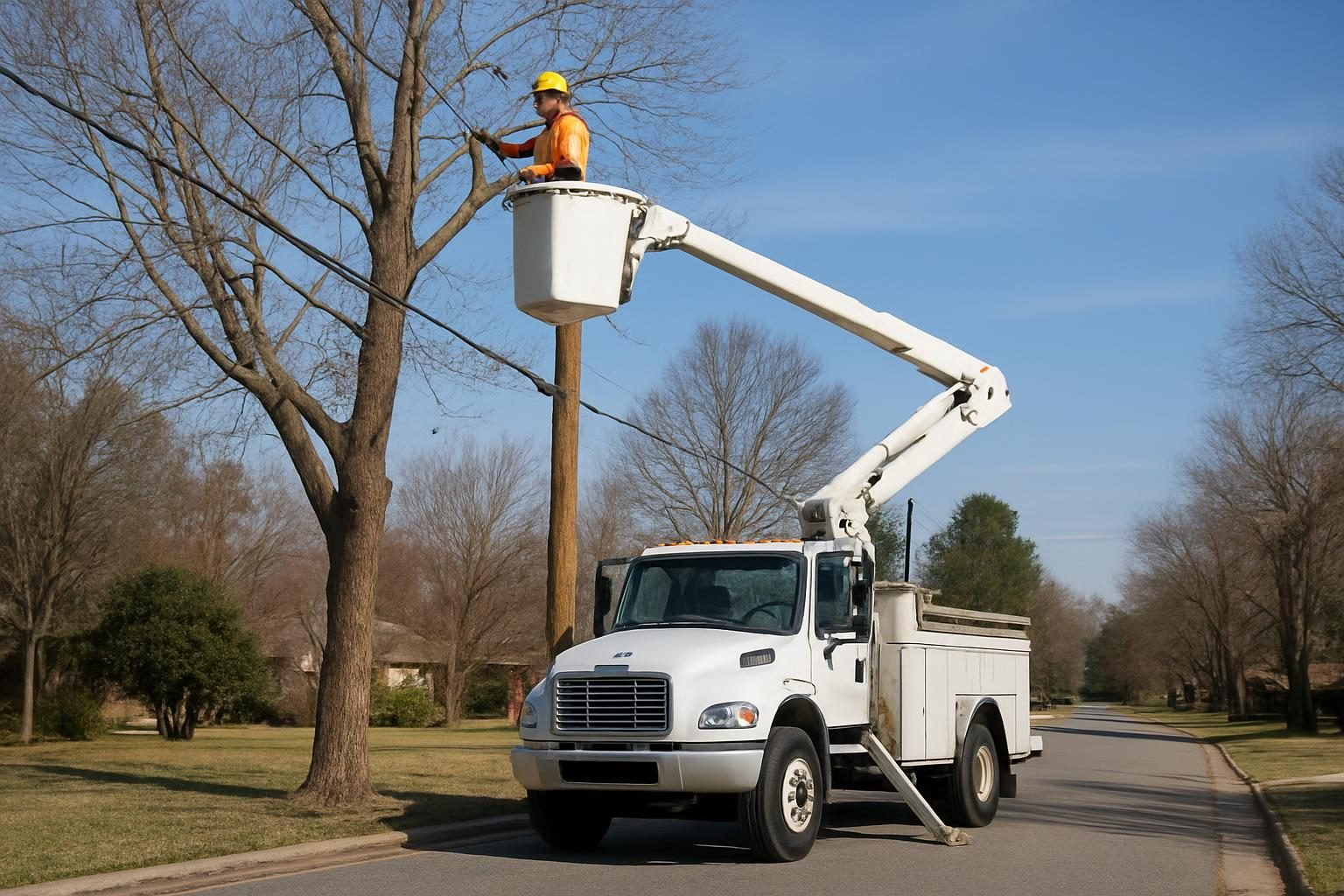
- The utility de-energizes, repairs and restores its own lines. Crews often cut only what they must to clear the wires and restore service.
- You are responsible for the rest of the tree on your property: the trunk, the remaining limbs, and the debris on your yard, roof, fence or driveway.
Utility crews typically do not haul away or fully remove a private tree. They may leave cut sections on your lawn. A utility’s tree trimming rules can vary by provider and by whether the tree is within an easement, so ask the crew or your utility what they will and will not do.
Why you should not hire a tree crew too early
A tree service will not (and should not) touch a tree in contact with an energized line. Work near live wires requires specially trained line-clearance personnel. Once the utility has made the area safe, a regular tree company can step in. Calling too early wastes time and may put workers at risk.
After the line is clear, a company can handle the removal, cleanup and any damage assessment. For storm situations, see our page on emergency storm tree removal, and our guide to what to do when a tree falls on your house if the tree also hit your roof or walls.
The utility makes the line safe; clearing the fallen tree from your property is usually on you.
After the Line Is Safe: Cleanup, Cost and Insurance
Once the utility has cleared the wires, you can start dealing with the tree itself. Expect demand to spike after a big storm, so a little patience and caution go a long way.
Hiring a tree service
- Get more than one quote when conditions allow, and ask for it in writing.
- Ask about insurance: request proof of liability and workers’ compensation coverage.
- Be wary of door-knockers who show up right after a storm demanding cash up front. See how to spot tree service storm chasers.
- Confirm the scope: removal, limb cutting, stump grinding and debris haul-off are often priced separately.
What it may cost
Prices vary widely by tree size, access and how much damage there is. As a rough, estimated range, storm cleanup of a single fallen tree in the Fayetteville area might run from a few hundred dollars for a small tree to several thousand for a large oak or pine, with emergency or after-hours work costing more. For realistic numbers, read our breakdown of emergency tree removal cost after a storm and the overall tree service cost in Fayetteville guide.
Insurance and damage
Homeowners insurance often covers storm damage to the structure and sometimes tree removal when the tree hits a covered structure. Coverage depends on your policy, so read it or ask your agent. Our article on whether homeowners insurance covers tree removal in North Carolina explains the common rules.
Many tree companies also clean up stumps and root balls afterward; see stump grinding if the tree is gone but a stump remains.
Preventing Power Line Tree Problems
You cannot stop every storm, but you can reduce the odds of a tree reaching a line.
- Trim early. Have branches near lines pruned by qualified line-clearance professionals, not by you with a ladder and a saw. Never prune within 10 feet of a power line yourself.
- Know your trees. Dead, leaning or cracked trees are the first to fail. See the signs a tree is dying.
- Get an assessment. A certified arborist can evaluate a tree you are worried about through an arborist tree assessment.
- Prep before hurricane season. Use our hurricane tree prep checklist for Fayetteville homeowners.
- Plant smart. Choose small, slow-growing species under lines; save tall trees for open areas.
A broken or leaning tree near a line is worth a call before the storm, not after. If you are unsure whether a tree is a risk, our guide to leaning trees will help, and the cost of removing a tree near power lines covers what to budget.
Ready to get the fallen tree off your property once the lines are clear? Request free, no-obligation quotes from local tree service companies serving Fayetteville, Hope Mills, Spring Lake and the rest of Cumberland County.
Frequently Asked Questions
How far away should I stay from a tree on a power line?
Stay at least 35 feet away, and farther if you can. Treat the tree, the ground around it and any metal objects touching it as energized until a utility confirms otherwise.
Do I call 911 or the power company first?
Call 911 first, then your electric utility. Dispatch can send emergency responders to keep people clear, and the utility sends a crew to make the line safe. Doing both is best.
Will the power company remove the tree from my yard?
Usually not the whole tree. Utility crews generally cut only what is needed to clear their lines and restore power. Removing the remaining trunk and debris from your property is typically the homeowner’s responsibility, so plan to hire a tree service afterward.
Can I cut the tree off the wire myself to speed things up?
No. Cutting or moving a tree in contact with a wire can cause electrocution, even if the power appears to be out. Wait for the utility to confirm the line is safe, then have a qualified tree service handle the removal.
Get free quotes for storm tree cleanup near power lines
A local tree service will contact you with a free, no-obligation quote once your utility has cleared the lines.