Quick answer: Ice storm tree damage in the Sandhills hits loblolly and other pines, Bradford pears, and trees with weak forks or dead wood hardest. After a storm, stay clear of hanging limbs and anything touching power lines, document damage, and call a insured tree pro for anything large or overhead. Prevention comes down to proper structural pruning and removing weak or hazardous trees before the next freeze.
Key takeaways
- Pines and Bradford pears are the most common ice storm casualties around Fayetteville.
- Hanging limbs (“widowmakers”) can drop without warning, even hours or days after the ice melts.
- Never cut limbs near power lines, and never work under a loaded or leaning tree.
- Prune cleanly after the storm, but don’t over-prune a tree trying to recover.
- Photograph everything before cleanup and check your homeowners policy for debris removal limits.
Cumberland County doesn’t get ice storms often, which is exactly why they hurt. Our trees are not built for heavy glaze: evergreen pines hold ice on thousands of needles, and many fast-growing yard trees have brittle wood. A single event can leave yards in Fayetteville, Hope Mills, Spring Lake and Stedman littered with broken limbs and split trunks.
If you’re already looking at damage, you can request a free tree service quote using the form on this page. The rest of this guide explains what breaks, what’s dangerous, and how to handle cleanup safely.
Why Ice Storm Tree Damage Is Different in the Sandhills
Our sandy soils and mix of pine and hardwood canopy create a specific pattern of failure. Freezing rain coats every twig, and a branch can end up carrying many times its normal weight. Add a little wind and the weakest wood gives way.
- Evergreens catch more ice. Needles give ice more surface to cling to than bare winter hardwoods.
- Weak wood fails first. Fast-growing, brittle species snap before dense oaks do.
- Previously stressed trees go down. Trees weakened by hurricanes, drought or root damage have less reserve.
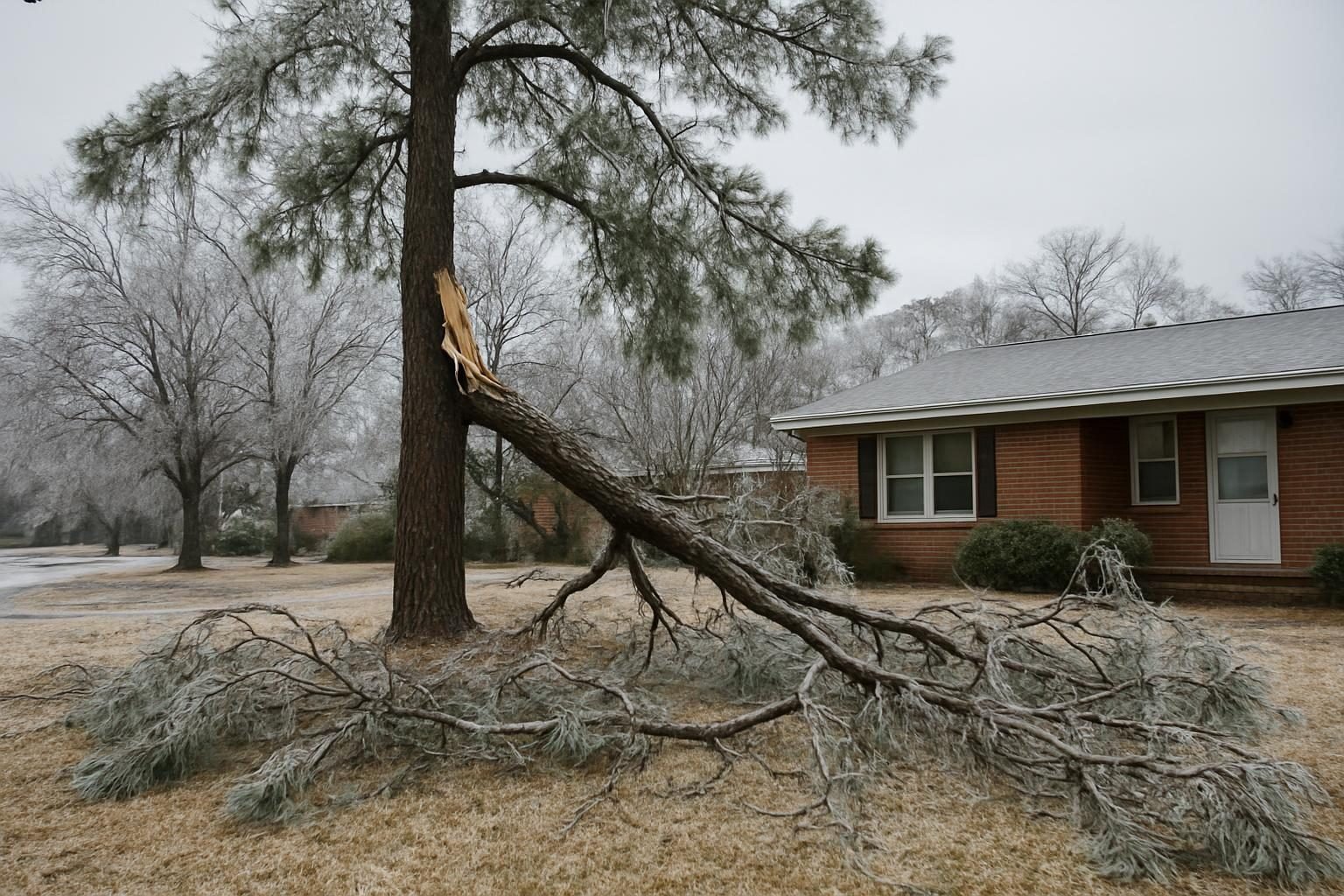
- Failures keep happening afterward. Cracked limbs may hold for days, then fall as ice melts and shifts weight.
Many Cumberland County lots, especially in rural areas like Raeford and Eastover, have tall pines close to homes and driveways. That raises the stakes when limbs let go.

Which Trees Break Most Often in an Ice Storm
Not every tree is equally at risk. Knowing your species helps you decide where to focus prevention.
Pines (loblolly, longleaf and others)
Loblolly pines are common across the region and are prone to top breakage and large limb loss under ice load. They tend to snap at the trunk or lose the upper crown rather than bend. Longleaf pines are generally tougher, but heavy ice can still damage them. If you’re weighing a removal, our guide on pine tree removal in Fayetteville covers when homeowners decide to take pines down.
Bradford (Callery) pears
Bradford pears are famous for splitting. Their branches form tight, V-shaped attachments with bark trapped inside, which makes a weak union. Ice and wind routinely peel half the tree apart. Older Bradford pears near houses are one of the most common removal calls after winter weather.
Other trees that struggle
- Silver maple and other soft maples: brittle limbs and frequent included bark.
- Sweetgum: heavy, spreading limbs that can shed under load.
- Crepe myrtles: small, but multi-stem trees can split or bow to the ground.
- Any tree with codominant stems: two trunks of similar size competing, with a weak joint between them.
- Dead or decaying trees: a hollow or rotting trunk has little strength to resist ice.
Pro tip: Look for V-shaped forks, dead branches, mushrooms at the base, and a lean that has changed. Our list of signs a tree is hazardous is a good checklist to run through before winter.
Ice doesn’t create most tree problems; it exposes weak forks and dead wood that were already there.
Hanging Limbs and Safe Ice Storm Cleanup
The most dangerous part of ice storm tree damage is often what hasn’t fallen yet. Partially broken limbs stay lodged in the canopy and can release suddenly. Our article on hanging limbs and broken branches after a storm explains why they’re so risky.
Do these first
- Look up before you walk in. Scan the canopy for hanging or cracked limbs before entering the yard.
- Assume every downed line is live. Stay far back and call the utility. Never touch limbs or trees contacting wires.
- Keep people and pets out. Mark off areas under damaged trees, driveways and play areas.
- Photograph before you move anything. Wide and close-up shots help with insurance later.
- Don’t park or walk under cracked trees. Even after the ice melts, they can fail.
What homeowners can handle
- Picking up small, fully fallen branches at ground level
- Clearing walkways with a hand tool while standing well clear of overhead damage
What to leave to a professional
- Anything hanging overhead or lodged in another tree
- Trees leaning on a house, vehicle or power line
- Large limbs or trunks under tension (they can spring or pinch a chainsaw)
- Any work from a ladder or climbing a damaged tree
Chainsaw injuries and falls spike after storms. If the job involves height, tension or wires, it’s not a weekend project. For the full process, see our guide to storm damage tree cleanup in Fayetteville and our page on emergency storm tree removal.

Hiring Help After an Ice Storm Without Getting Burned
Demand surges after any storm, and out-of-area crews often show up knocking on doors. Slow down before you agree to anything.
- Ask for proof of insurance. You want both liability and workers’ compensation. Read why in why tree service insurance matters.
- Get a written estimate. It should name the work, cleanup and debris hauling.
- Be wary of upfront cash demands and pressure to decide on the spot.
- Compare at least two quotes when the situation isn’t an immediate emergency.
Watch for the warning signs in our guide to storm chaser tree crews. Costs vary widely depending on size, access and urgency; our emergency tree removal cost breakdown explains what drives price. As a rough estimate only, emergency or after-storm work typically costs more than scheduled work, so a firm written quote matters.
A fair estimate in writing beats a fast handshake deal from a crew you can’t find next week.
Pruning and Recovery After Ice Damage
Once the immediate hazards are cleared, the question becomes what can be saved. Many ice-damaged trees recover if the structure is sound, but jagged breaks and torn bark need correction.
Pruning basics after a storm
- Cut broken limbs back to the branch collar or a healthy lateral branch. Leave no stubs.
- Clean up torn bark edges so wounds can seal over.
- Don’t remove more than necessary. Heavy pruning on a stressed tree adds more shock.
- Skip “topping.” It creates weak regrowth and invites decay.
- Wait on cosmetic shaping. Do structural and safety cuts first; refine later.
For trees missing a large part of their canopy, an arborist can judge whether the remaining structure is worth keeping. Our article can a storm-damaged tree be saved walks through that decision, and professional tree trimming and pruning is the usual next step.
When removal makes more sense
- The main trunk is split or cracked
- More than roughly half the crown is gone
- The tree now leans toward a house, driveway or line
- Large wounds expose rot or hollow wood
In those cases, tree removal is often safer than waiting. Compare options in tree trimming or tree removal: how to decide. You may also want stump grinding afterward.
Prevention: Getting Trees Ready Before the Next Freeze
You can’t stop ice, but you can reduce what it breaks. Most prevention is simple and done during the dormant season.
- Schedule structural pruning. Reduce weak forks, remove dead wood and thin overloaded limbs. Our planned guide on when to trim trees in North Carolina covers timing.
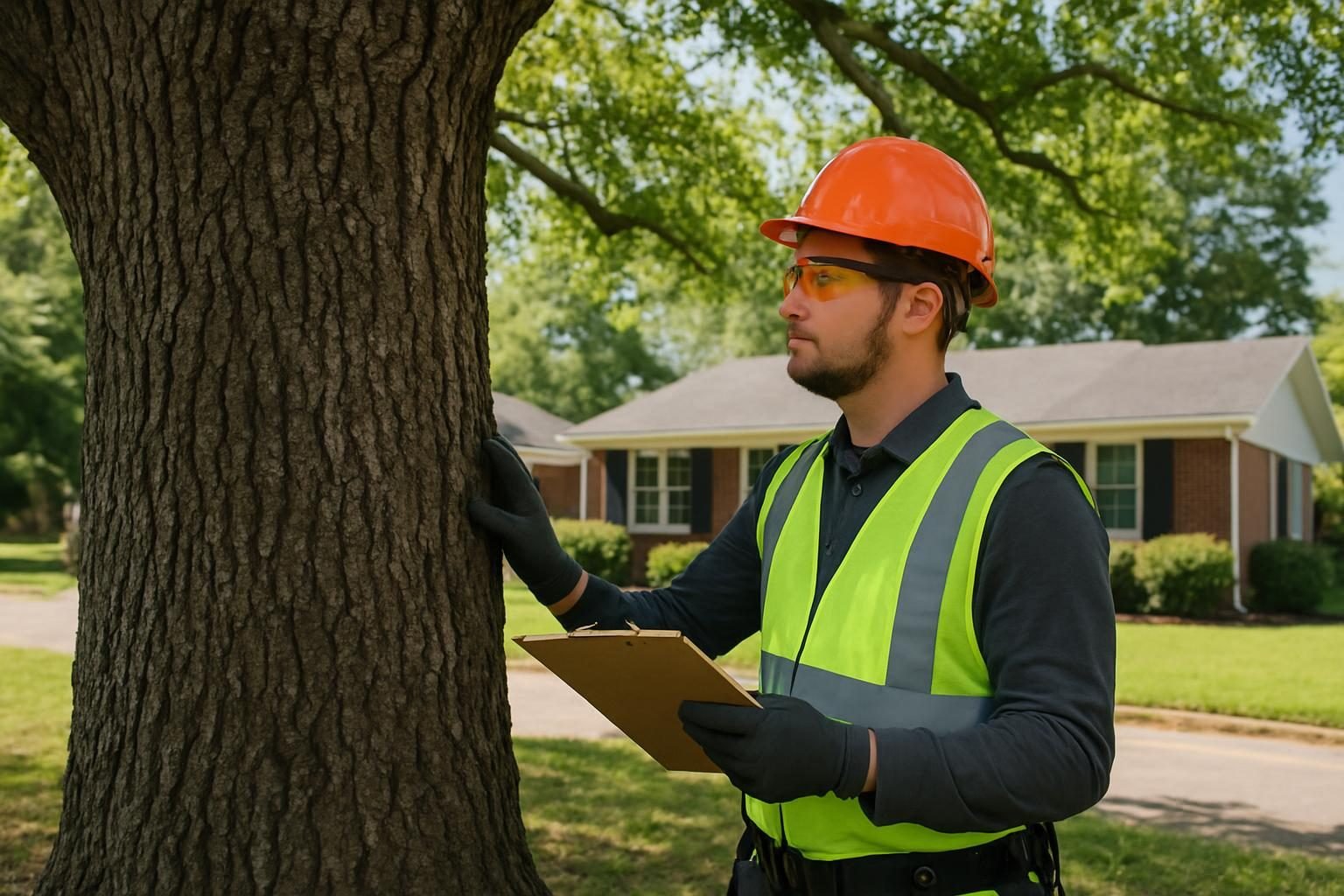
- Get an assessment of suspect trees. A certified arborist can evaluate trees near the house through an arborist tree assessment.
- Consider replacing Bradford pears. Swapping them for sturdier species is a long-term fix.
- Keep branches away from lines and roofs. Check clearance before winter.
- Ask about support systems for valuable multi-stem trees, such as tree cabling, where appropriate.
Insurance Basics for Ice Storm Tree Damage
Policies differ, so read yours or ask your agent. In general, coverage tends to depend on what the tree hit and what’s being removed.
- Trees that damage a covered structure (house, garage, fence in some policies) are more often covered, including some removal cost.
- Trees that fall without hitting anything may have limited or no coverage for removal.
- Debris removal limits often apply per tree or per claim.
- Deductibles can exceed the cost of a small job, so ask before filing.
Document everything with dated photos and keep written estimates and receipts. For details, see does homeowners insurance cover tree removal and documenting damage for your insurance claim. This is general information, not legal or insurance advice; confirm specifics with your insurer.
If you’d rather have a local pro look at the damage, you can request a free tree service quote through the form below and compare options for your Fayetteville-area property.
Frequently Asked Questions
Do pine trees really break more in ice storms?
Often, yes. Pines hold ice on their needles and can lose tops or large limbs, especially loblolly pines. Individual risk still depends on the tree’s health, height and surroundings.
How long can ice-damaged limbs stay dangerous?
Cracked or hanging limbs can fall hours or even days after the ice melts, as weight shifts. Treat them as hazards until a professional has cleared them.
Should I prune my ice-damaged tree right away?
Remove hazardous, broken limbs promptly, using a pro for anything overhead. Hold off on heavy or cosmetic pruning until the tree’s condition is clear.
Will insurance pay to remove a tree after an ice storm?
It depends on your policy and what the tree damaged. Coverage is more likely if it hit a covered structure. Check your policy and talk with your agent before work begins.
Get a free ice storm tree damage quote
A local tree service company will contact you with a free, no-obligation quote for your Fayetteville-area property.