Quick answer: For storm damage tree cleanup in Fayetteville, NC, stay clear of downed lines and leaning trees, photograph everything, and call a licensed, insured tree service for anything that is large, tangled in wires, or resting on a structure. Small debris you can handle yourself, but cleanup involving cutting under tension or climbing is a job for pros. Emergency work typically costs more than scheduled work, so know what to expect before the first truck arrives.
Key takeaways
- Safety before cleanup: assume every downed line is live and keep people and pets away from damaged trees.
- Document first: take photos and video before anything is moved, since insurers will ask for them.
- Call a pro for big jobs: trees on roofs, near power lines or under tension are not DIY work.
- Expect surge pricing: emergency rates run higher than routine work, and storm chasers show up fast.
After a hurricane remnant, a summer thunderstorm or an ice event, Cumberland County neighborhoods from Hope Mills to Spring Lake can be littered with broken limbs and uprooted pines. Our soft, sandy soils and tall loblolly pines make toppled trees especially common after saturated ground meets high wind. This guide walks through what to do, in what order, and what the work should cost.
If you already have a tree down and need help sorting it out, you can request free quotes from local tree services using the form on this page.
Step 1: Safety first after a storm
The cleanup is not the dangerous part until you start it carelessly. Most storm injuries happen after the wind stops, when people walk into hazards or grab a chainsaw without a plan.
- Treat downed lines as live. Stay at least 30 feet away and never touch a tree that is in contact with a wire. Our guide on what to do when a tree falls on a power line explains who to call.
- Look up. Hanging branches, called widowmakers, can drop without warning. Do not stand or work beneath them.
- Watch for leaners. A tree tilted at a new angle, with soil heaving at the base, can fall further.
- Avoid tension. Limbs and trunks bent under pressure can snap back violently when cut.
- Check for gas and water issues. If a tree hit your home, shut off utilities if it is safe to do so and leave if you smell gas.
If a tree has landed on your house, our walkthrough of the first 24 hours after a tree falls on your house covers the order of operations in detail.
Step 2: Document the damage before anything moves
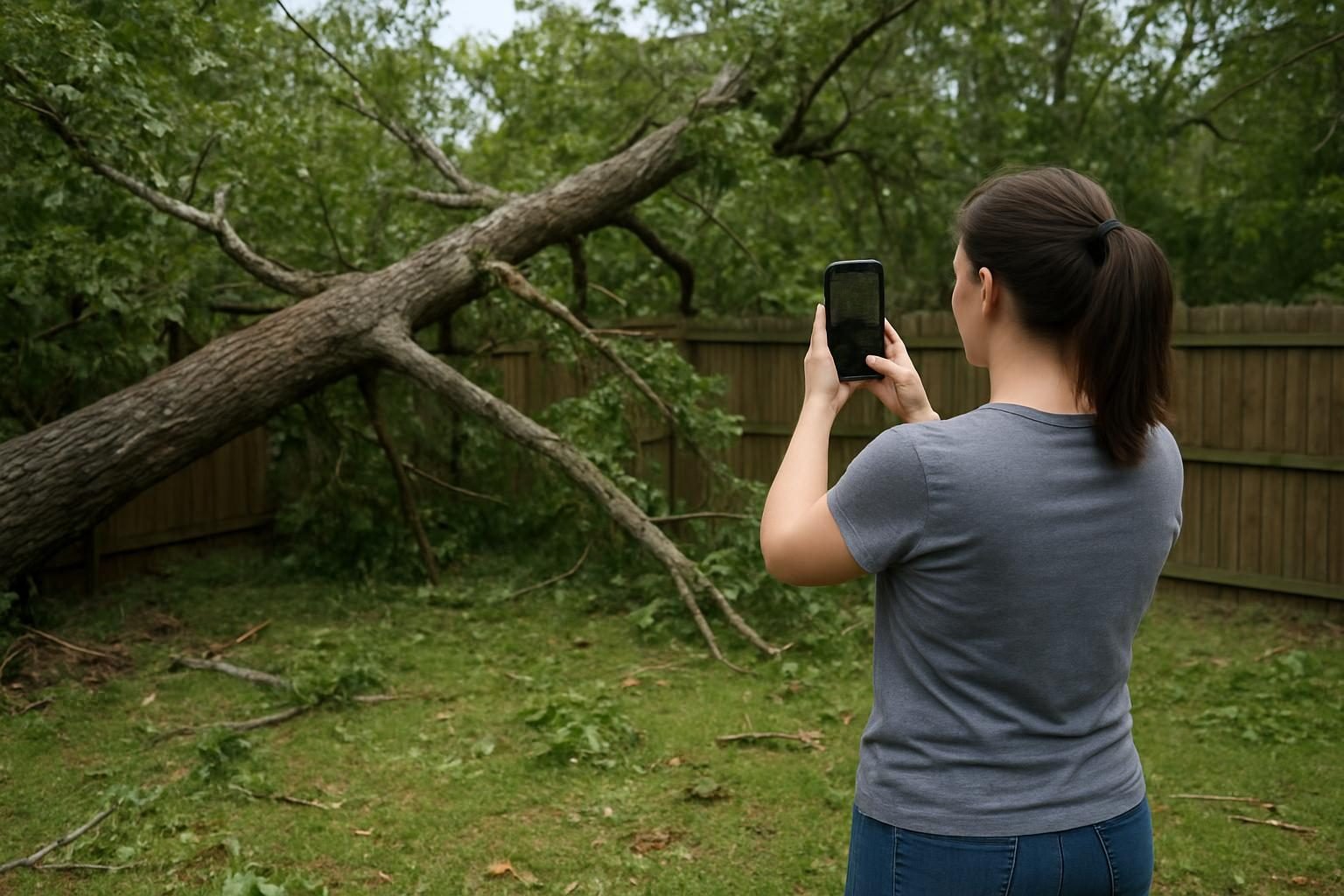
Photos taken before cleanup are the best evidence you will have. Insurance adjusters want to see the tree as it landed, not after it has been cut into rounds.
- Take wide shots showing the whole tree, the property and the damaged structure or fence.
- Take close-ups of the point of impact, any broken trunk or root plate, and damage to roofing, siding, vehicles or utilities.
- Record a short video walking the site, with a timestamp if your phone allows it.
- Note the date and time of the storm and when you discovered the damage.
- Keep every receipt for tarps, emergency repairs and removal.
Pro tip: Temporary protection such as tarping a roof is usually expected of you, and reasonable costs are often reimbursable. Save those receipts and confirm details with your insurer.
Coverage depends on your policy and on whether the tree hit a structure, so read up on how homeowners insurance treats tree removal and fallen trees before you call your agent.
Photograph the tree where it fell before anyone touches it; that evidence is hard to recreate later.
Step 3: When to call a pro and when you can DIY
Some cleanup is reasonable for a homeowner with the right gear. Much of it is not.
Usually fine to handle yourself
- Raking and bagging small twigs and leaves
- Dragging light, broken limbs off a lawn
- Cutting small limbs from the ground that are not under tension and not near lines
Call a professional for
- Any tree touching or near power lines
- Trees or large limbs resting on a roof, deck, car or fence
- Trunks too heavy to move or cut safely from the ground
- Uprooted trees with a lifted root plate
- Anything requiring a ladder, climbing or a chainsaw above shoulder height
- Partially fallen trees hung up in other trees
Not sure if a damaged tree is worth keeping? Read how to decide whether a storm-damaged tree can be saved, or ask for an arborist tree assessment if a standing tree looks compromised.
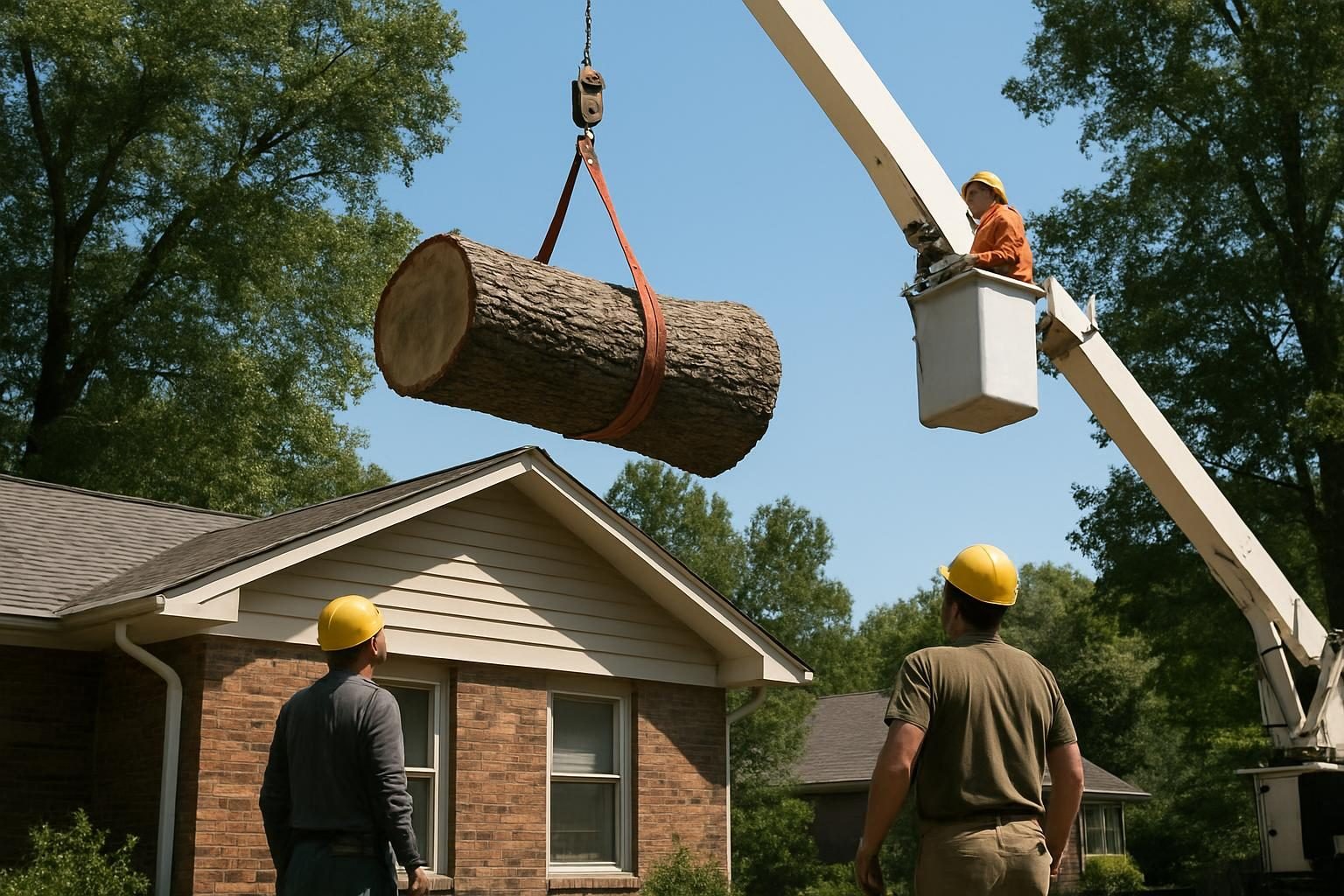
What storm damage tree cleanup in Fayetteville involves
A typical professional cleanup follows a clear sequence. Knowing it helps you compare quotes and spot what is missing from one.
- Site assessment. The crew checks for lines, structural damage, tension and access for equipment.
- Securing the hazard. Hanging limbs are removed and leaning trees are controlled before ground work begins.
- Sectioning and removal. The tree is cut into manageable pieces. Large trees on structures may need a crane. See when a crane is needed and what it costs.
- Debris haul-off. Brush and wood are chipped or hauled away. Confirm whether this is included.
- Stump and root plate. Uprooted trees leave a hole and a root mass. A stump may be left or handled with stump grinding as a separate line item.
For the full picture of urgent response, see our hub on emergency storm tree removal in Fayetteville. For standard jobs after the emergency has passed, tree removal covers the regular process.
The cheapest quote often leaves out haul-off, and you end up with a pile of logs in your yard.
Storm cleanup costs and how emergency pricing differs
Prices vary by tree size, access, hazards and demand. The ranges below are rough estimates only; actual quotes can differ widely.
- Small limb or debris cleanup: roughly a few hundred dollars
- Mid-size tree down in the yard, no structure hit: often several hundred to a couple thousand dollars
- Large tree on a house, near lines or needing a crane: commonly well into the thousands
Emergency and after-hours work usually carries a premium because crews are pulled off scheduled jobs and demand spikes after a major storm. That is normal. What is not normal is a price that doubles on the spot or an unwillingness to put it in writing.
Several things push cost up:
- Proximity to power lines or structures, which slows work and raises risk
- Limited access for trucks and chippers, common in older areas near Haymount and tight Hope Mills lots
- Tree size and species, with tall pines and heavy oaks costing more
- Volume of debris and whether haul-off is included
Our pages on emergency tree removal cost after a storm and the overall tree service cost guide break the numbers down further.
Avoiding storm chasers and hiring safely
After a major storm, out-of-area crews often canvass neighborhoods in Fayetteville, Stedman and Raeford offering immediate work. Some are legitimate. Many are underinsured or disappear after taking a deposit.
- Ask for proof of insurance covering liability and workers’ compensation, and verify it directly with the insurer.
- Get a written estimate that states the scope, haul-off and total price.
- Be wary of large upfront payments or pressure to decide on the spot.
- Check for a local presence and references you can actually contact.
Read more in our guides to storm chaser red flags, verifying a tree service’s insurance and our 10-point checklist for hiring a tree service.
Ready to compare options without the pressure? Request your free storm cleanup quote and local companies serving Cumberland County can get back to you.
Frequently asked questions
How soon should I call for storm tree cleanup?
Call right away if a tree is on a structure, near lines or blocking a driveway. Smaller cleanup can usually wait a few days, which also helps you avoid peak emergency pricing.
Will my insurance pay for storm damage tree cleanup?
It depends on your policy. Coverage is more common when a tree damages a covered structure than when it simply falls in the yard. Contact your insurer and keep photos and receipts.
Do I need a permit to remove a storm-damaged tree?
Rules vary, and emergency removals are often treated differently from planned ones. Check our guide on tree removal permits in Fayetteville and Cumberland County and confirm with your local office.
Does cleanup cost include stump removal?
Usually not. Stump grinding is typically quoted separately, so ask for it as its own line item if you want it done.
Get free storm damage tree cleanup quotes
A local tree service serving Fayetteville and Cumberland County will contact you with a free, no-obligation quote.