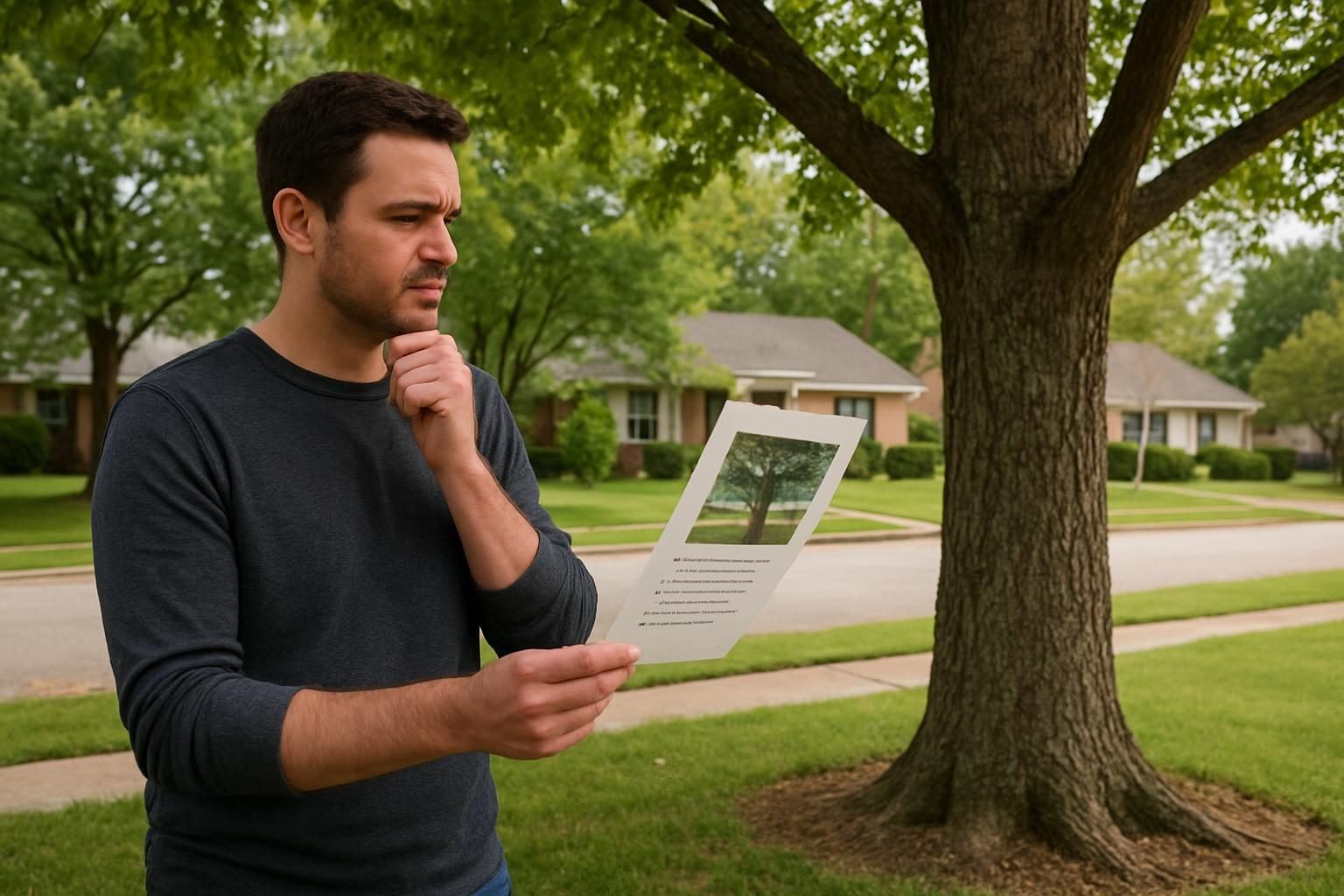
Quick answer: Yes, many storm-damaged trees can be saved, but only if the trunk, root system and main structural limbs are still sound. A tree that has lost less than about a third of its crown, has no split trunk and shows no lifting soil at the base is usually a good candidate for restoration pruning. Trees with a cracked trunk, a heaved root plate or heavy limbs hanging over a house should generally come down.
Key takeaways
- Crown loss matters, but structure matters more. Losing a few big limbs is survivable; a split trunk usually is not.
- Root plate lifting is a red flag. If soil has heaved or cracked on one side, the tree has lost its anchor.
- Species changes the odds. Live oaks and bald cypress bounce back better than pines or Bradford pears.
- Never top a damaged tree. Proper restoration pruning is gradual and selective.
- A certified arborist assessment is cheap compared with the cost of a wrong call.
After a hurricane or severe thunderstorm blows through Fayetteville, Hope Mills or Spring Lake, the first instinct is often to call for removal. Sometimes that is exactly right. But sometimes a tree that looks like a total loss has a decent chance of recovering, and removing it throws away decades of shade and property value.
This guide walks through how professionals evaluate storm damage so you can tell which trees deserve a second chance. If you would rather have someone look at yours, you can request a free quote from a local tree service using the form on this page.
First, make the area safe
Before you assess anything, think about safety. A damaged tree can drop limbs without warning, and wind-loosened trees can fail days after a storm.
- Stay out from under hanging limbs (arborists call them “widowmakers”).
- Keep clear of any tree touching or near a power line. Treat the line as live. See our guide on what to do when a tree falls on a power line.
- Do not climb or use a chainsaw on a tree under tension or one resting on a structure.
- Photograph everything before cleanup, which helps if you file a claim.
If a tree is on your house or blocking access, skip the DIY assessment and see emergency storm tree removal options instead.
Can a storm-damaged tree be saved? The five checks that decide it
Arborists run through a handful of questions. You can do a rough version yourself from the ground.
1. How much of the crown is gone?
The crown (the leafy canopy) is the tree’s food factory. Losing part of it is survivable; losing most of it is not.
- Under 25% lost: most healthy trees recover well.
- 25-50% lost: recovery is possible, especially for vigorous, resilient species, but it takes years and good care.
- Over 50% lost: survival odds drop sharply, and the tree often becomes a long-term liability.
These are general rules of thumb, not guarantees. A young, fast-growing tree tolerates more loss than an old one.
2. Is the trunk split or cracked?
A vertical crack running down the trunk, or a fork that has split apart, is one of the most serious defects. Even if the tree is still standing, the two halves can separate under the next wind load.
Narrow, shallow bark cracks are different from a deep split you can see light through or fit a hand into. Deep splits generally mean removal. Co-dominant stems with included bark (common in Bradford pears) are especially prone to this, which we cover in our piece on why Bradford pears split.
3. Is there torn or stripped bark?
Bark protects the living tissue just beneath it. When a limb tears away and strips bark down the trunk, it exposes the cambium layer.
- Small wounds (a few inches wide) often seal over in time.
- Wounds wrapping more than about a third of the trunk’s circumference can cut off nutrient flow and doom the tree.
- Ragged, torn edges can sometimes be trimmed cleanly by an arborist to help healing.

4. Is the root plate lifting?
This is the check people miss. In Cumberland County’s sandy soils, saturated ground after heavy rain makes trees especially likely to rock and uproot.
Look at the base for these signs:
- Soil heaved up or cracked on one side of the trunk
- A visible gap between the trunk and soil
- Exposed, snapped or torn roots
- A tree that has begun to lean that was straight before the storm
A lifted root plate means the tree has lost its anchor, and no amount of pruning fixes that. Our guide on whether a leaning tree is dangerous explains how to tell a storm-induced lean from a long-standing one.
5. Does it threaten something valuable?
A marginal tree in an open back corner is a different decision from one hanging over your bedroom. The more people or property in the target zone, the less risk is acceptable. A tree with a modest chance of surviving but a high chance of hitting a house is usually better removed.
A tree can survive losing half its limbs, but it rarely survives losing its grip on the ground.
How species affects your odds
Some trees shrug off storms; others are notoriously brittle. Species is one of the biggest predictors of recovery.
- Better odds: live oak, bald cypress, many hickories, and healthy mature oaks. They tend to have strong wood and regrow well.
- Mixed odds: red maple, sweetgum, crepe myrtle (which often resprouts from the base).
- Poorer odds: Bradford pear, silver maple, and many pines. Loblolly pines in particular often fail at the trunk, and a pine with heavy crown loss rarely re-grows a full canopy. See how to tell if a pine tree is dead or dying.
Pre-existing problems also count. A tree that was already stressed, hollow, or decayed before the storm has little reserve to recover.

Restoration pruning vs. removal
If a tree passes the checks above, the next step is restoration pruning. This is not the same as a regular trim, and it is definitely not topping.
What restoration pruning involves
- Remove broken and hanging limbs back to the branch collar or a healthy lateral branch.
- Clean up torn bark edges so wounds can close.
- Reduce weight on weakened limbs selectively rather than cutting everything back.
- Spread the work over time. Removing too much live canopy at once stresses an already-injured tree, so a second visit a year or so later is common.
- Consider cabling or bracing for a split that is minor and the tree is valuable.
Our overview of tree trimming and pruning explains the difference between proper cuts and harmful ones.
Pro tip: Be wary of anyone who offers to “top” a storm-damaged tree. Stub cuts and flush cuts invite decay and weak regrowth, and they often make the tree more dangerous in the next storm.
When removal is the better choice
- The trunk is split or cracked through
- The root plate has lifted or roots are severed on one side
- More than half the crown is gone
- Major limbs are hanging over a home, driveway or play area
- The tree was already declining or hollow
If removal is the answer, learn how the process works on our tree removal page, and plan for the leftover stump with stump grinding.
Saving a tree is worth it only if the finished result is safe, not just standing.
When an arborist assessment pays off
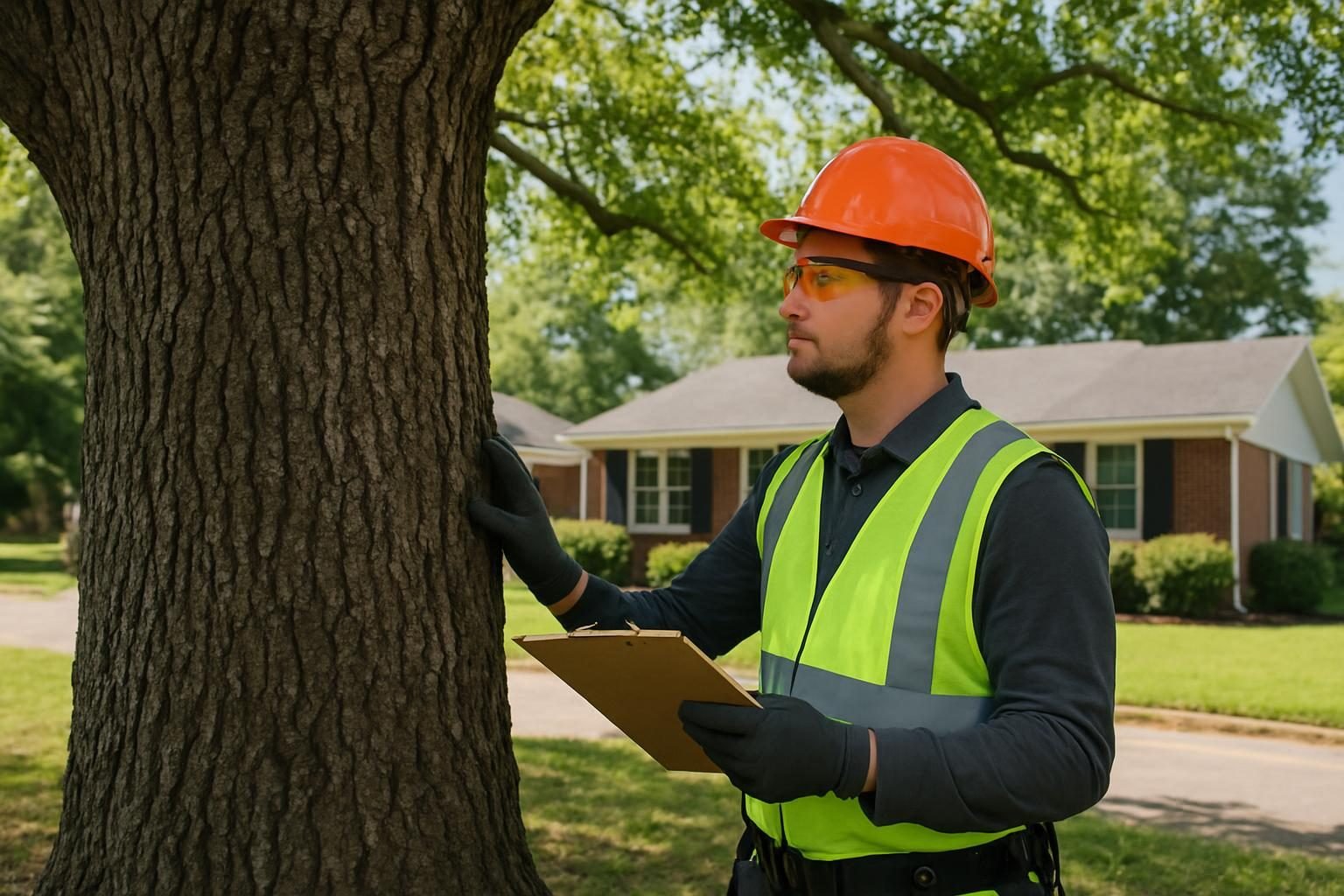
A professional assessment is most worthwhile when the call is genuinely close. That includes large, mature trees you value, trees near structures, and any case where you see one warning sign but not several.
A certified arborist can use tools and experience that you cannot:
- Check for internal decay with a mallet or resistograph
- Examine the root zone for hidden damage
- Estimate failure risk and recommend a specific plan
- Provide documentation that can be useful with an insurance adjuster
Assessment fees vary, and some companies include them with a removal or pruning quote. Treat any figure as an estimate and confirm in advance. Compared with the cost of removing a large tree (see tree service cost in Fayetteville) or repairing a roof, a modest assessment is often a bargain. Learn more about arborist tree assessments, and read certified arborist vs. tree service to decide who to call.
If damage was caused by a covered storm, check whether homeowners insurance covers tree removal before work begins. And after a hurricane, watch out for door-knockers pushing quick, cash-only work; our guide to spotting storm chasers can help.
For more on what to examine after a major storm, see our upcoming guide on what to check on trees after a hurricane.
Whether you are in Stedman, Raeford or near Fort Bragg, you can request a free, no-obligation quote and have a local pro look at your damaged tree.
Frequently asked questions
How long does it take to know if a damaged tree will survive?
Often a full growing season. If a tree leafs out normally the following spring and the wounds begin to seal, that is a good sign. Poor leaf-out, dieback in the crown, or fungal growth at the base suggests it is declining.
Is it safe to wait before deciding?
Only if the tree is not threatening anything. Hanging limbs and leaning trees near homes should be addressed promptly, even if the final decision about saving the tree comes later.
Can a split trunk be repaired?
Sometimes a minor split in a valuable tree can be stabilized with cables or bracing, but it requires ongoing monitoring. Deep or wide splits usually mean removal.
Will fertilizer help a storm-damaged tree recover?
Rarely right away. Proper pruning, watering during dry spells, and mulching (kept off the trunk) do more good than fertilizer. Ask an arborist before applying anything.
Get a free storm-damaged tree assessment quote
A local tree service will contact you with a free, no-obligation quote and an honest recommendation on saving or removing your tree.