Quick answer: Yes, dead pine trees are dangerous. As the wood dries out and the roots decay, a dead pine can shed heavy limbs, snap mid-trunk, or topple with little warning, especially in a thunderstorm or tropical system. In Fayetteville and the rest of Cumberland County, any dead pine within falling distance of a house, driveway, fence or power line should be assessed and usually removed soon.
Key takeaways
- Dead pines get brittle and can fail without any wind at all, and far more easily when a storm hits.
- Brown needles in summer don’t always mean death; check the bark, branches and base before deciding.
- A pine that could reach a house, car, driveway or utility line is a priority, even if it looks sturdy.
- Schedule removal before hurricane season rather than after the first storm warning.
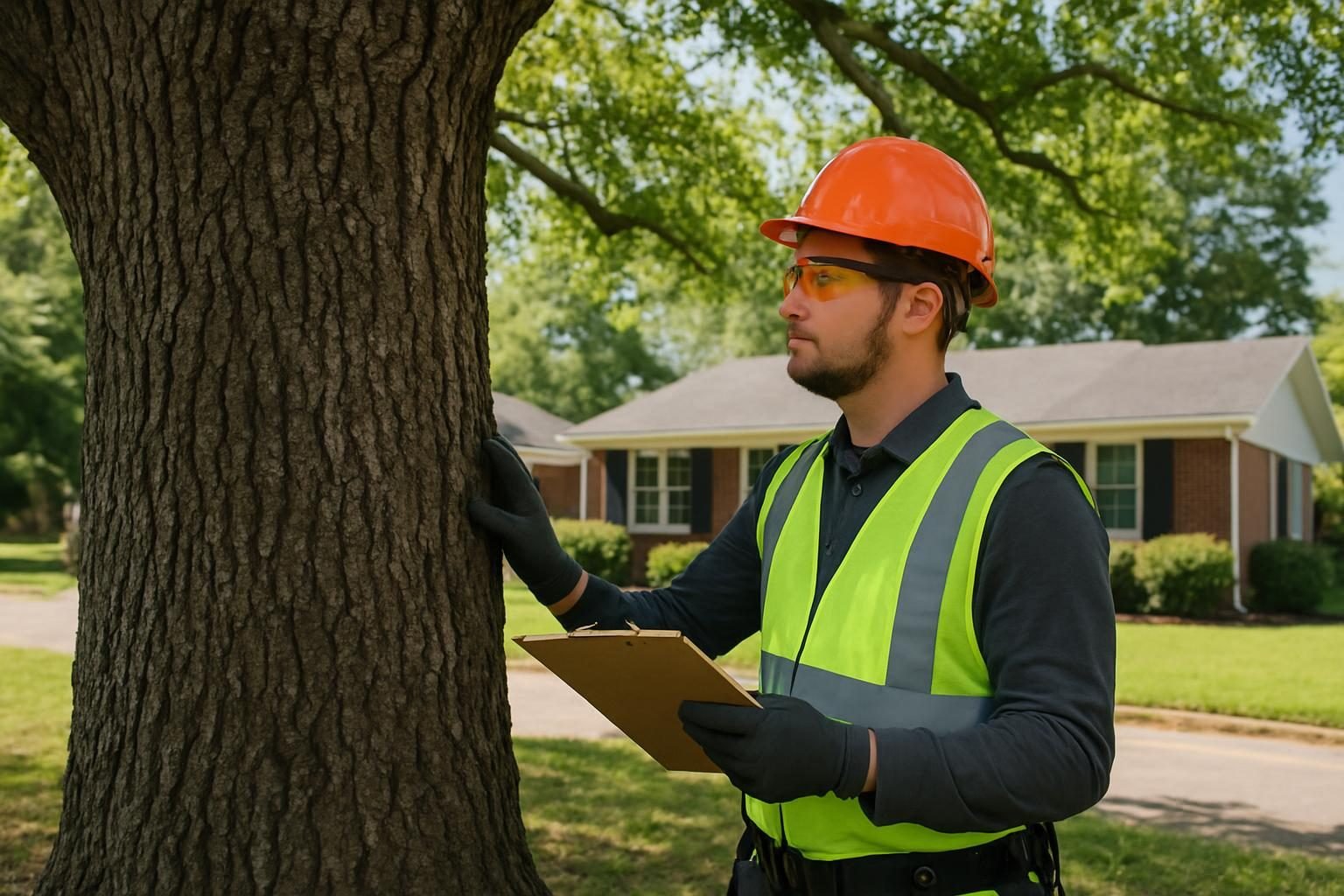
- A certified arborist can confirm whether a tree is dead, stressed or dormant.
Longleaf and loblolly pines are everywhere in the Sandhills, from older Haymount lots to newer subdivisions in Hope Mills and Spring Lake. They grow tall, and when one dies, a lot of weight sits high above the ground. If you have a pine you’re worried about, you can request a free consultation using the form on this page and compare quotes from local tree companies.
Are Dead Pine Trees Dangerous? Why They Drop Limbs and Fall
A living pine flexes in wind and sheds some of the stress through its needles, sap and flexible wood. A dead one can’t. Several things go wrong at once:
- Brittle wood. Once a pine dies, the trunk and branches dry out and lose strength. Limbs that bent in the wind last year can snap off now.
- Root decay. Dead trees stop feeding their roots, and fungi and insects move in. The tree may look solid above ground while its anchor is failing below.
- Bark and trunk damage. Bark sloughs off, woodpeckers and beetles tunnel in, and internal rot weakens the trunk.
- Storm loads. A dead pine has no flexibility to absorb gusts, and saturated Sandhills soil after heavy rain gives the roots even less grip.
- Height and weight. A tall pine can send a limb or the whole trunk well beyond its own drip line.
The key point is that failure is hard to predict. A dead pine might stand for years, or it might drop a limb on a calm day. You can’t count on warning.
How to Tell a Dead Pine From a Dormant or Stressed One
Not every browning pine is dead. Pines naturally drop older interior needles in fall, and drought or heat can cause temporary browning. Here’s how to separate normal from worrisome.
Signs a pine may be dead or dying
- Needles turn reddish-brown or gray across most of the crown, not just the inner ones.
- Needles cling to the tree but are dry and brittle, or have dropped entirely.
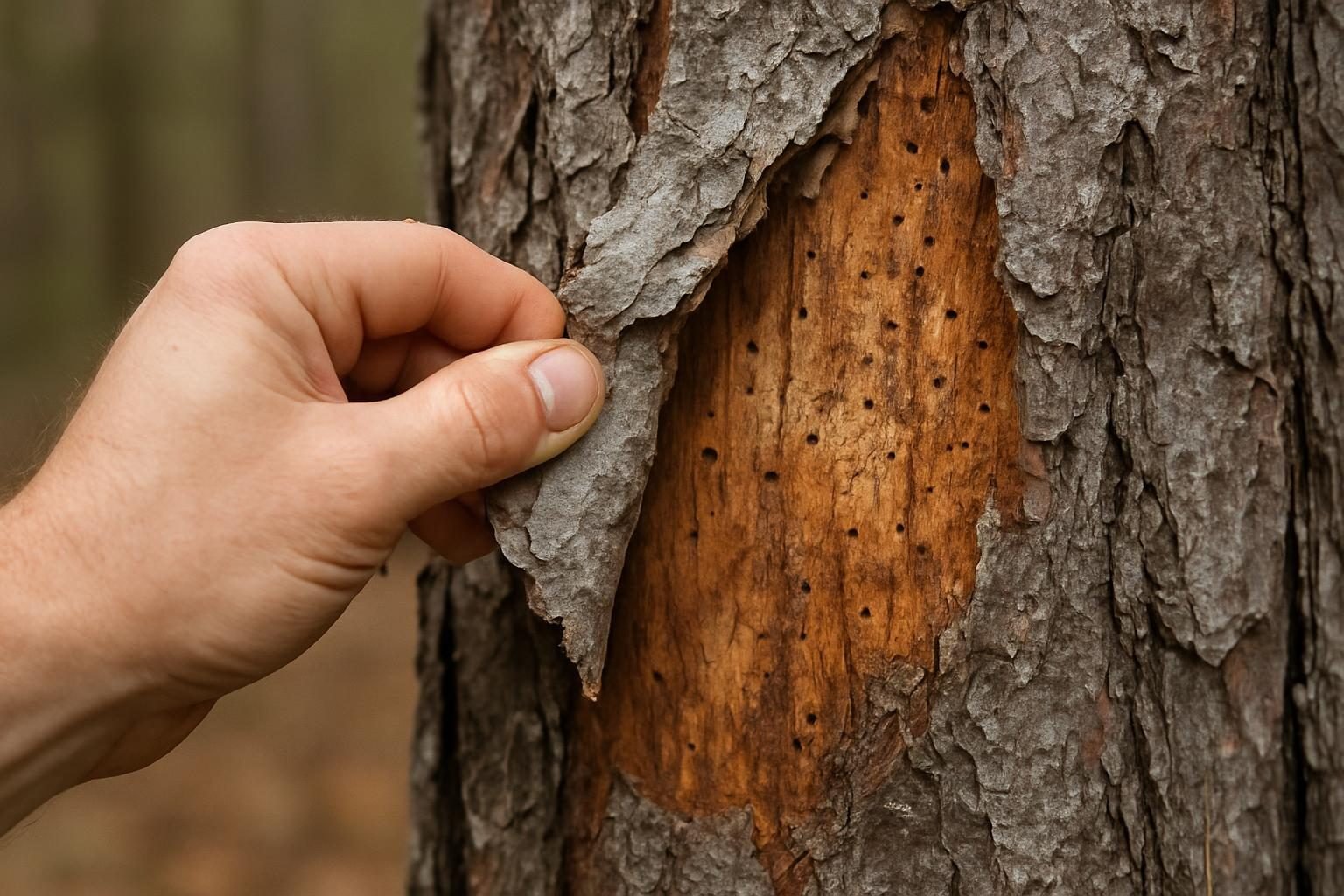
- Bark peels away in sheets, or you see small round exit holes or fine sawdust-like material.
- Pitch tubes (small popcorn-like blobs of resin) cover the trunk, which can point to bark beetle activity.
- Branches snap cleanly with no green wood or moisture inside.
- Mushrooms or conks grow at the base, or the trunk leans in a way it didn’t before.
Signs it may just be stressed
- Only the oldest, innermost needles are browning in fall.
- New growth or green needles still show at branch tips.
- Browning follows a dry spell or heat wave and the tree otherwise looks full.
Pro tip: Scratch a small patch of bark on a twig with your thumbnail. Green, moist tissue underneath means that part is alive. Dry and tan or brown means it isn’t. Check several branches, since one dead limb doesn’t mean a dead tree.
For a detailed walkthrough, see our guide on how to tell if a pine tree is dead or dying. If beetles may be involved, our upcoming article on southern pine beetle in North Carolina covers what to look for.
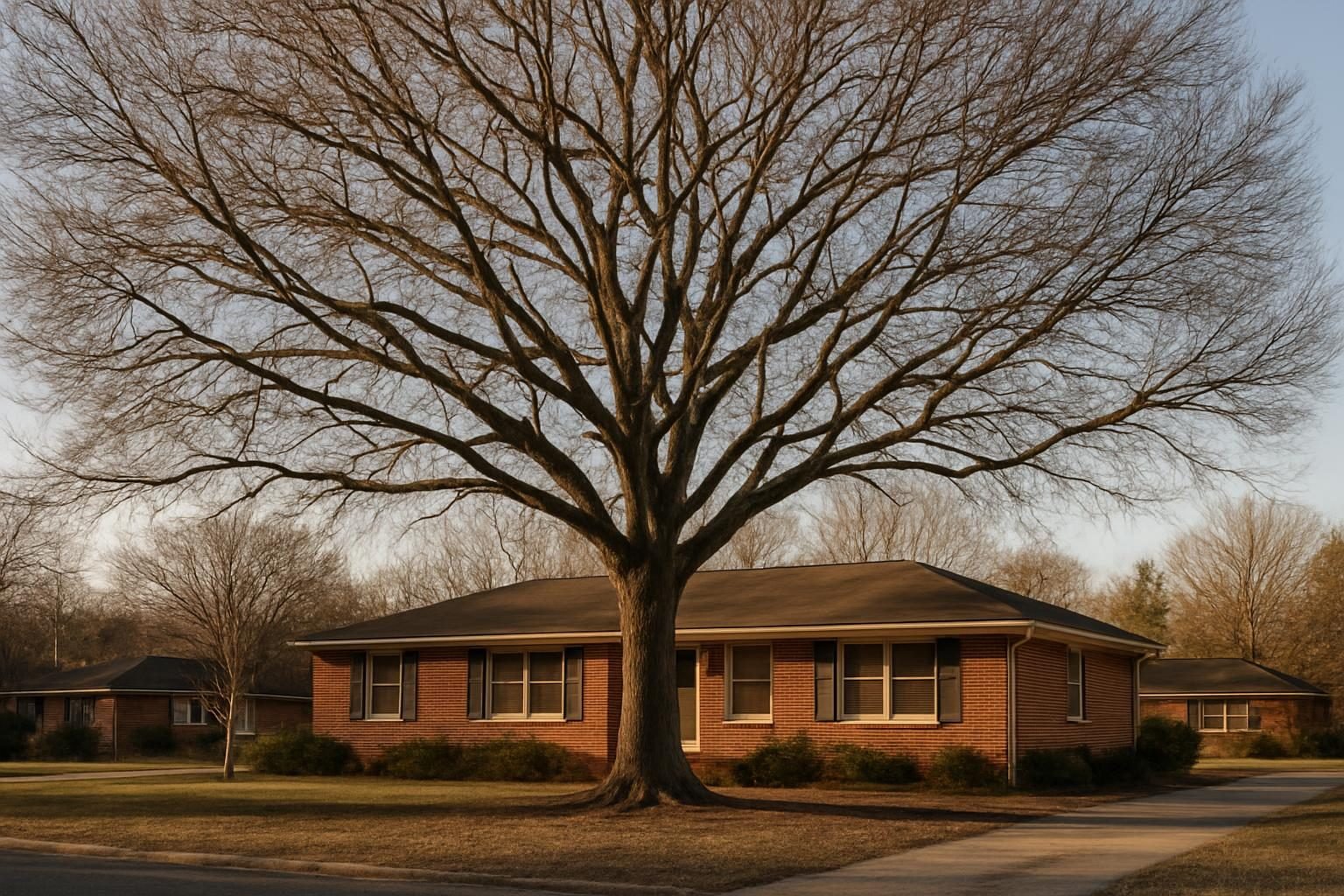
A dead pine can look solid from the street while its roots are already letting go.
Where a Dead Pine Is Most Dangerous on Your Property
The risk depends less on how bad the tree looks and more on what’s underneath it. Think about the “target”: anything or anyone the tree could hit.
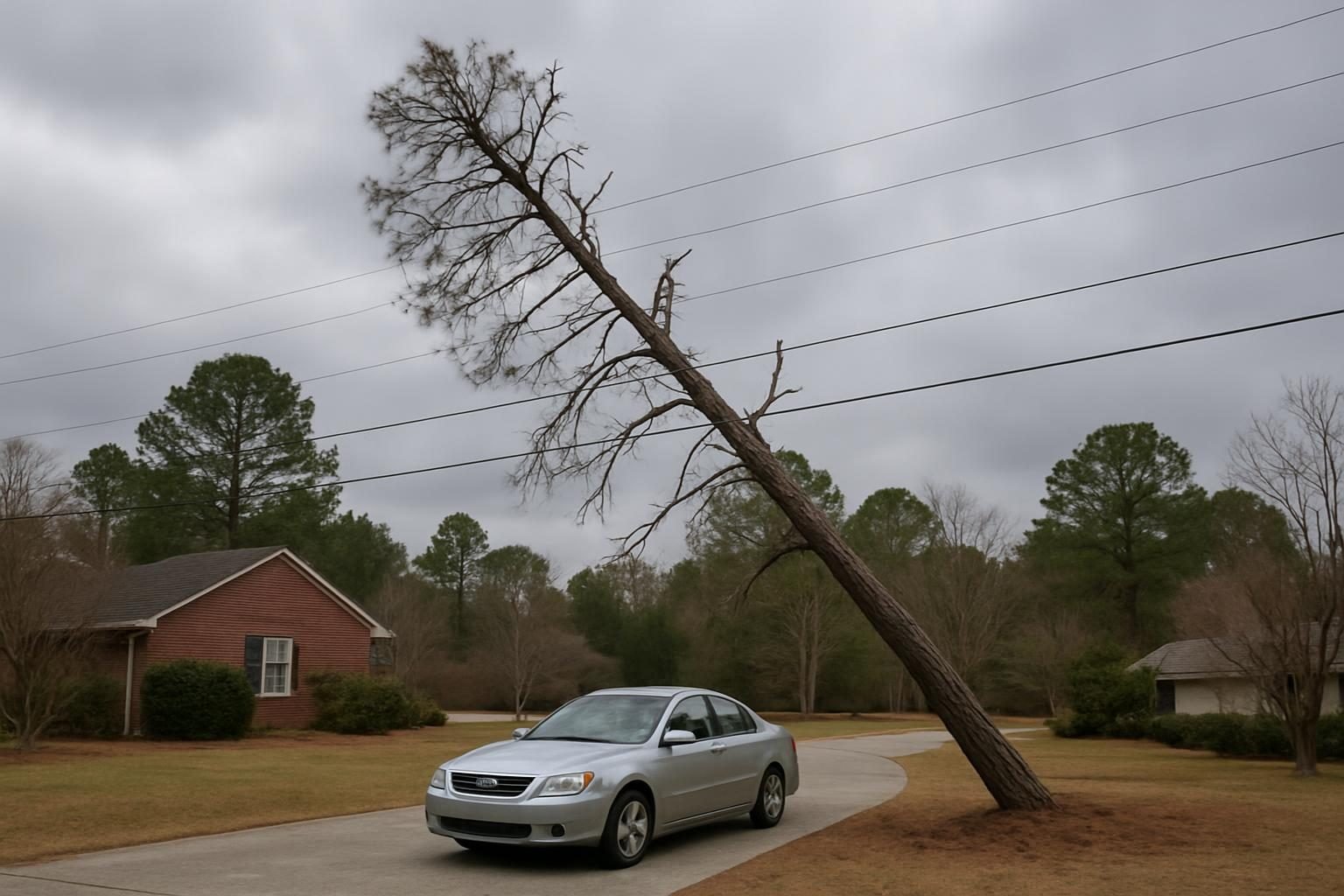
- Near the house. A pine that could reach a roof, bedroom or garage is the top priority. Heavy limbs can punch through roofing, and a trunk can do far worse.
- Over driveways and parking areas. Cars are easy to forget, but they’re a common casualty of dropped limbs.
- Along fences, sheds and play areas. Anywhere kids, pets or people spend time raises the stakes.
- Near power lines. A falling pine can bring down service lines, causing outages and serious hazards. If a tree is already touching or tangled in a line, keep clear and read our guide on what to do when a tree is on a power line.
- Along property lines. A dead pine that could land on a neighbor’s home creates a headache for everyone.
If your pine is close to a structure but still healthy, the question changes. Our article on when to remove a pine tree near your house explains how distance, lean and condition factor in.
When to Schedule Removal (and When It Can’t Wait)
Use this rough priority guide to decide how fast to act.
- Act right away: a dead pine that is leaning, cracked, uprooting, or hanging over a house, a road or utility lines. Treat anything already partly fallen as an emergency.
- Schedule within weeks: a confirmed dead pine within falling distance of a structure, driveway or play area.
- Schedule before storm season: a dead pine farther out on the lot with no target underneath, since it still adds debris and risk when a tropical system arrives.
- Get an opinion first: a pine you aren’t sure about. An arborist can tell you whether it’s dead, declining but savable, or just stressed.
Timing matters in Cumberland County because hurricane season runs June through November, and tree crews fill up fast after a major storm. Dead pines are among the first to fail when strong winds arrive. Our hurricane tree prep checklist for Fayetteville homeowners can help you decide what to handle ahead of time.
If a pine has already come down, see the services on our emergency storm tree removal page.
Removing a dead pine on your schedule almost always beats removing it after a storm on someone else’s.
What Dead Pine Removal Involves and What It Costs
Removal is rarely a simple drop-and-chop job when a house or lines are nearby. Crews often climb and take the tree down in sections, lowering heavy pieces with ropes. In tight spots, a crane may be used, which affects price. You can read more on crane tree removal costs.
Several factors drive the quote:
- Height and trunk diameter. Tall pines cost more than short ones.
- Access. Backyard trees behind fences or buildings take longer than front-yard trees.
- Hazards nearby. Roofs, wires and fences add rigging time.
- Condition. Dead wood can be unpredictable to cut, which affects crew safety and method.
- Cleanup and stump. Hauling debris and grinding the stump are often priced separately.
As a rough estimate only, removing a tall pine in the Fayetteville area often falls somewhere in the several-hundred to low-thousands of dollars range, depending on the factors above. Our pine tree removal cost guide breaks this down by size, and the broader tree service cost page covers general pricing. Always get written quotes, since actual prices vary by company and site.
Before hiring, confirm the crew carries liability and workers’ compensation coverage. Our article on verifying tree service insurance in North Carolina shows what to ask for. If you’d rather start by comparing a few local options, you can request a free dead pine removal quote through the form on this page.
Frequently Asked Questions
Can a dead pine tree fall on a calm day?
Yes. Wind makes failure more likely, but a dead pine with rotted roots or a weakened trunk can fall with no weather at all. Dead limbs can also drop without warning as the wood dries and weakens.
How long can a dead pine stand before it becomes unsafe?
There’s no reliable timeline. Some dead pines stand for years, others fail within a season. Because the risk grows as the wood and roots decay, it’s safer not to wait if the tree could hit anything valuable.
Is a pine with brown needles always dead?
No. Some browning is normal, such as seasonal needle drop in fall, and drought stress can cause temporary browning. Check for green tissue under the bark, new growth at the tips, and signs like beetle holes or pitch tubes. If you’re unsure, an arborist assessment can settle it.
Do I need a permit to remove a dead pine in Fayetteville?
Rules vary by location and situation, and they can differ inside city limits, in a neighborhood with covenants, or on certain protected sites. Check with your city or county and your HOA, if you have one, before work begins. A reputable tree company can often tell you what to look into.
Ready to take the guesswork out of it? Request a free consultation using the form on this page, or learn more about tree removal in Fayetteville and our arborist tree assessments.
Get a free dead pine tree removal quote
A local tree service company will contact you with a free, no-obligation quote.