Quick answer: The southern pine beetle is a tiny bark beetle that can kill a healthy-looking pine in a matter of weeks. Look for popcorn-sized resin pitch tubes on the trunk, S-shaped galleries under the bark, and needles that fade from green to yellow to red quickly. If you see these signs in Cumberland County, have an arborist or the NC Forest Service confirm the cause, because infested trees need to come down before the beetles spread.
Key takeaways
- Pitch tubes and S-shaped galleries under the bark are the clearest signs of southern pine beetle.
- Fast fading (green to red within weeks) points to beetles, not slow-moving drought or disease.
- Infested trees cannot be saved once the beetles have girdled the cambium, and removal protects nearby pines.
- Healthy, unstressed pines are your best defense, so water, protect roots and avoid wounding trees.
- When in doubt, get a professional diagnosis before you cut or treat anything.
Pines are the backbone of the Sandhills landscape, from longleaf and loblolly in Fayetteville yards to the shortleaf and pond pines around Raeford and Stedman. That also makes them a target. The southern pine beetle is one of the most destructive pests these trees face in North Carolina, and it moves fast. Here is what to look for and what to do.
If you think a pine on your property is under attack, you can request a free pine tree assessment and removal quote and compare local tree companies.
What Is the Southern Pine Beetle?
The southern pine beetle (Dendroctonus frontalis) is a reddish-brown to black beetle about the size of a grain of rice. Adults bore through the outer bark of pines and tunnel in the thin layer just beneath it, where the tree moves water and nutrients. Their larvae feed there too.
A single tree is rarely attacked in isolation. Beetles release chemical signals that draw in more beetles, so an infestation can grow from one tree to a whole cluster. Outbreaks tend to run in cycles across the Southeast, and populations can surge in some years and fade in others.
- Preferred hosts: loblolly, shortleaf, Virginia, pond and pitch pines. Longleaf pines are generally more resistant but are not immune.
- Active season: beetles can be active nearly year-round in the Southeast, with several generations per year in warm weather.
- Spread: infestations expand outward from the first infested trees, often through neighboring stands of stressed pines.
Signs of Southern Pine Beetle Infestation in North Carolina
No single sign is proof on its own, so look for a combination. These are the most reliable clues:
Pitch tubes on the trunk
When beetles bore in, the tree tries to flush them out with resin. The result is small, popcorn-shaped or worm-like blobs of resin on the bark, usually white, pink or reddish-brown. They are often scattered along the trunk, sometimes from just above the ground up into the upper bark.
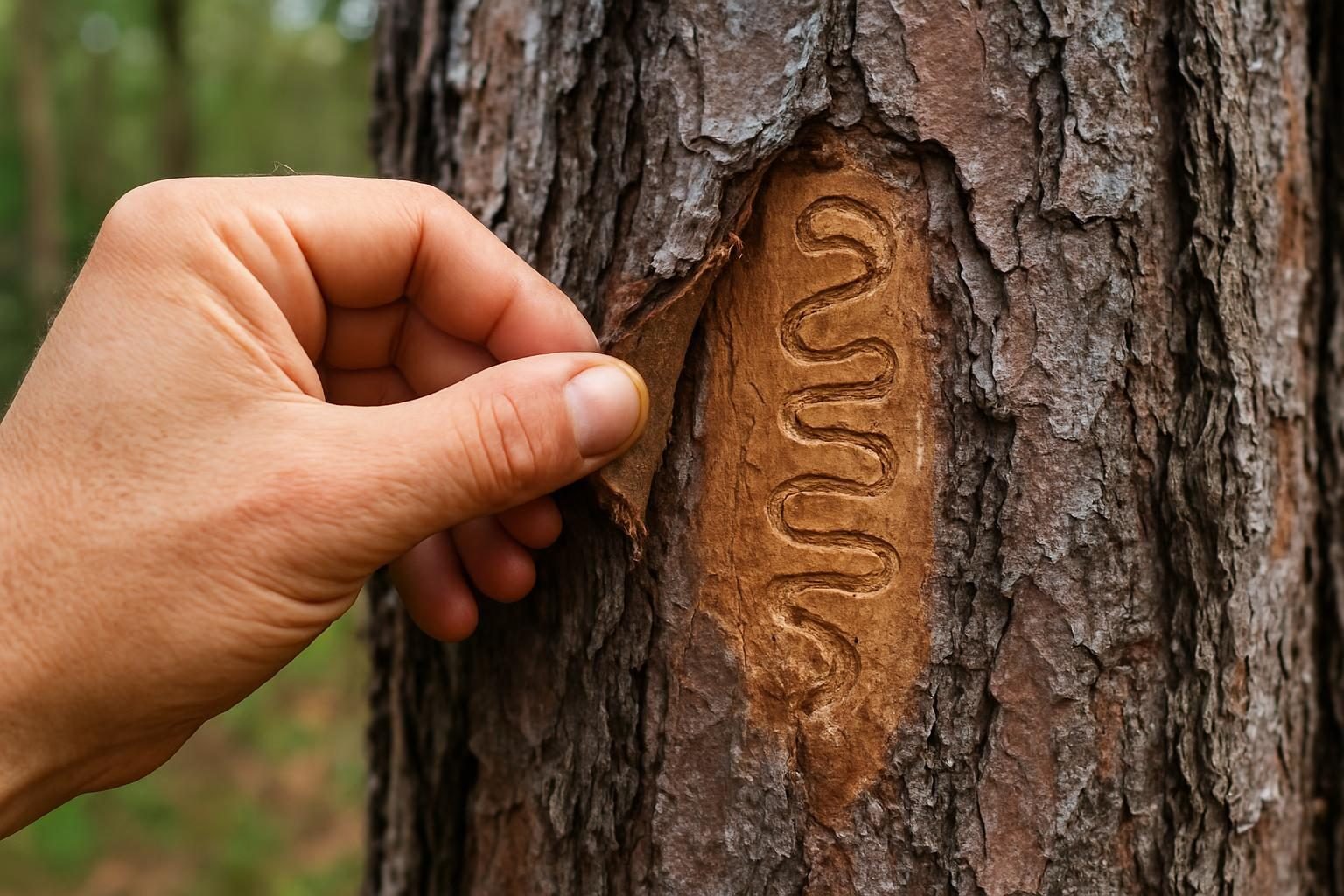
S-shaped galleries under the bark
Peel back a small piece of loose bark on a dying tree and you may see winding, S-shaped tunnels packed with sawdust-like material (frass), etched into the wood surface. This serpentine pattern is the hallmark of southern pine beetle. Straight, vertical galleries usually point to a different pest.
Rapid fading of the crown
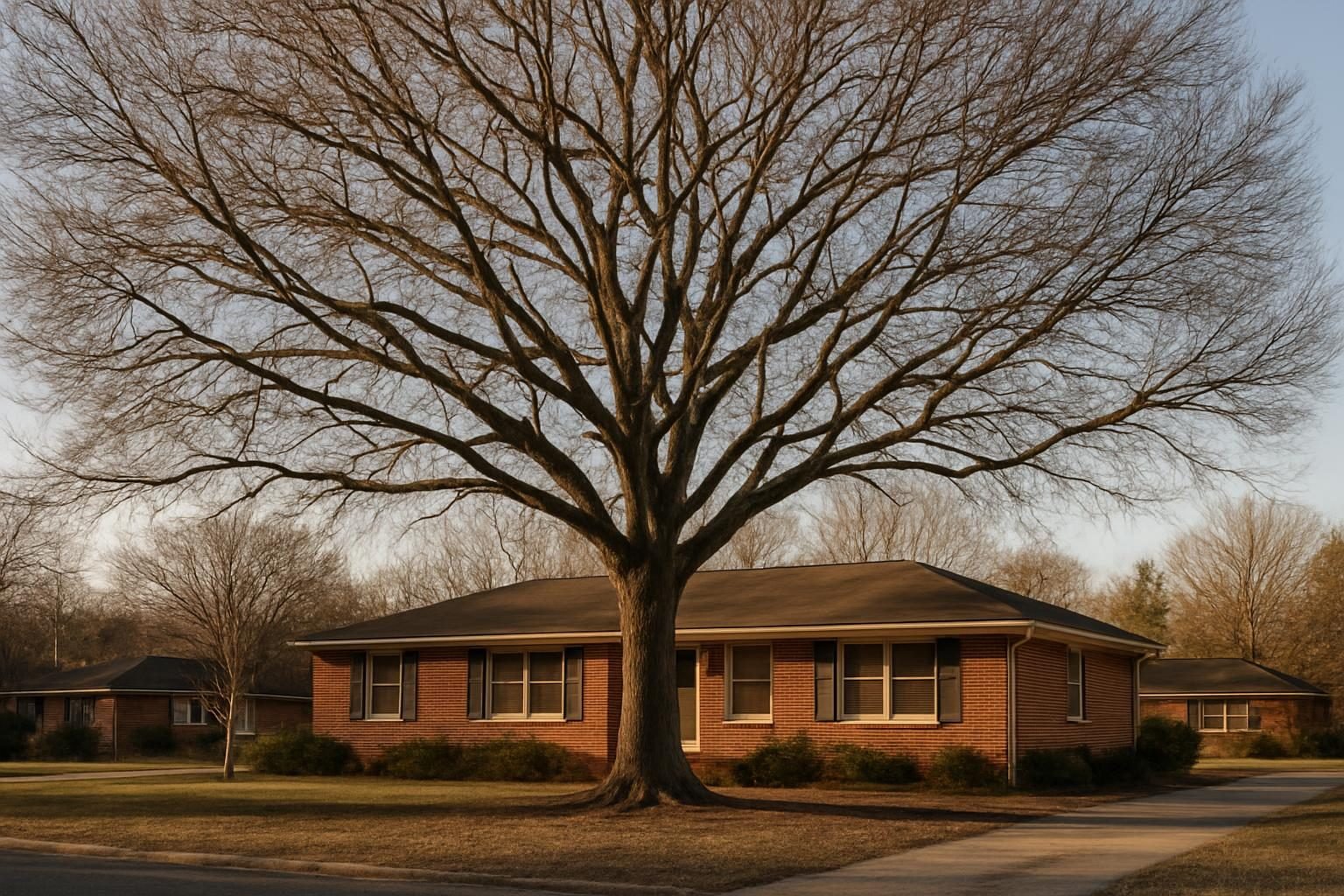
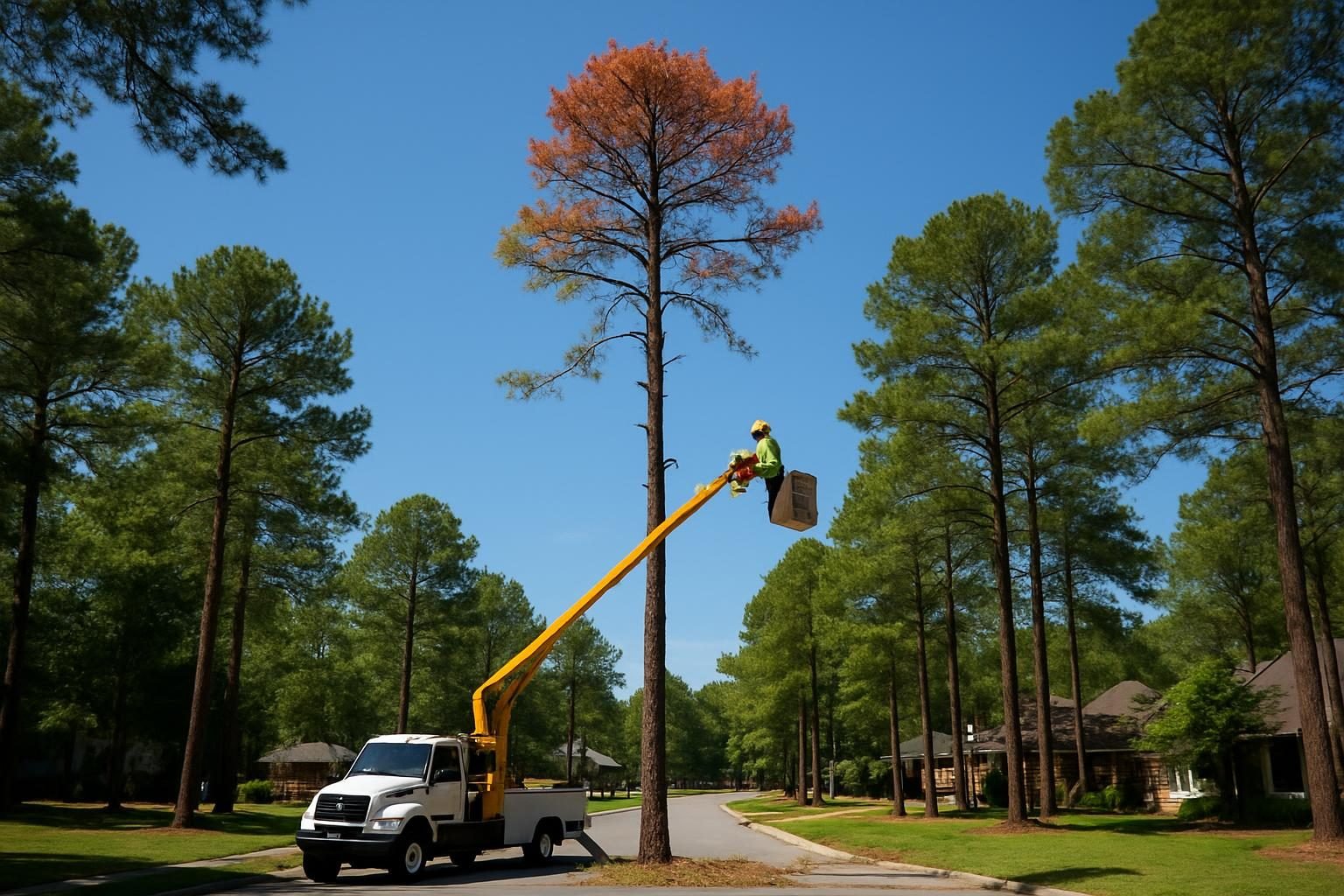
A pine that goes from green to yellow-green to red-brown over a few weeks is a classic beetle warning. Slower browning over months is more likely drought, root problems or disease. Fading often starts at the top of the tree and works down.
Other clues
- Tiny round exit holes in the bark, about the size of a pinhead
- Woodpecker activity and flaking bark on a tree that was otherwise fine
- Several dying pines grouped together instead of one random tree
Our guide to southern pine beetle and Ips beetle signs in Cumberland County pines goes deeper on telling the two beetles apart, and how to tell if a pine tree is dead or dying covers general decline.
A pine that turns from green to red in a few weeks is rarely a drought problem.
How Southern Pine Beetle Differs From Other Pine Problems
Not every dying pine has beetles. Misdiagnosis is common, and it matters because the right response differs.
- Ips beetles: often attack drought-stressed or storm-damaged pines and tend to kill tops or smaller trees first. Their galleries are Y- or H-shaped rather than S-shaped.
- Black turpentine beetles: create large, clumpy resin masses low on the trunk, usually within a few feet of the ground.
- Root rot and drought: cause gradual decline, thinning needles and branch dieback over months.
- Lightning or storm injury: can leave scarring and then invite beetles into a weakened tree.
Because these look alike to the untrained eye, an on-site arborist tree assessment is the quickest way to know what you are dealing with.
Prevention: Keep Pines Healthy and Unstressed
Healthy pines can fight off beetle attacks by flooding the entry wound with resin. Stressed trees cannot. There is no way to make a tree beetle-proof, but good care lowers the odds.
- Water during dry spells. Sandy Sandhills soils drain fast, so young or recently disturbed pines can suffer quickly in a dry summer.
- Protect the root zone. Avoid trenching, grade changes, heavy equipment and soil compaction under the canopy. Construction damage is a common trigger for pine decline.
- Avoid wounding the trunk. Mower and trimmer damage opens the door to pests and decay.
- Thin crowded stands. Overcrowded pines compete for water and light. Thinning on larger lots improves vigor, and a pro can advise on spacing.
- Prune at the right time. Fresh cuts and slash release scents that can attract beetles. See our month-by-month guide to the best time to trim trees in North Carolina.
- Clean up storm debris. Downed and broken pines are beetle magnets. Prompt cleanup after a storm helps, and our hurricane tree prep checklist for Cumberland County covers what to do before the season.
Pro tip: Take dated photos of any pine with pitch tubes or fast-fading needles. Showing a pro how quickly the change happened helps them diagnose beetles versus slower problems.
Why Removing Infested Pines Matters
Once beetles have girdled a tree, there is no treatment that brings it back. Spraying the trunk or injecting a tree that is already heavily infested is usually too late. The main goals become protecting neighboring pines and managing a hazard.
- Stops the spread. Beetles in an infested tree emerge and fly to nearby pines. Removing the tree promptly, with the bark handled properly, can reduce the pressure on your remaining trees.
- Reduces fall risk. Dead pines dry out, become brittle and can drop limbs or fall in wind. Read more in are dead pine trees dangerous.
- Protects structures. A dead pine near a house, driveway or power line is a liability in any storm.
Ask your tree crew how they will dispose of infested wood. Leaving cut, beetle-laden logs and slash sitting on the property can let adult beetles emerge and attack nearby pines. After removal, stump grinding tidies up the site.
You cannot cure a pine once beetles have girdled it, but you can protect the ones next to it.
When to Call an Arborist or the NC Forest Service
Reach out for help if you notice any of the following:
- Pitch tubes plus rapid needle fading on one or more pines
- A cluster of pines declining at the same time
- A pine that fell or lost its top in a storm and now shows beetle activity
- Dead pines near your home, driveway, or a neighbor’s property line
The NC Forest Service tracks southern pine beetle activity and offers forest health guidance, especially useful if you own larger wooded acreage. For a single yard tree or a few pines around the house, a certified arborist or experienced local crew is usually the faster route. If you are clearing a wooded lot, see our land clearing page.
What removal may cost
Pine removal in Fayetteville commonly ranges from a few hundred dollars for a small pine to well over a thousand for a tall tree near a house or power line, depending on size, access and cleanup. These are rough estimates only. Read tree removal cost in Fayetteville and pine tree removal in Fayetteville for what drives the price. Always confirm a crew carries proper coverage; our guide to verifying tree service insurance in North Carolina explains how.
Planning ahead for more than one tree? Our guide to preparing for tree removal walks through what to do before the crew arrives. You can also learn about tree removal in Fayetteville and our local coverage in Hope Mills.
Seeing pitch tubes or fading pines? Request free, no-obligation quotes for pine tree removal from local companies serving Fayetteville and Cumberland County.
Frequently Asked Questions
Can a pine tree infested with southern pine beetles be saved?
Usually not once the beetles have colonized the inner bark and the crown has started to fade. Preventive treatments exist for high-value trees that are not yet infested, but they need to be applied before attack. An arborist can tell you whether treatment makes sense.
How fast do southern pine beetles kill a tree?
Often within weeks. A tree can look fine, then fade to red in a matter of weeks after a heavy attack, which is why fast color change is such an important warning sign.
Are southern pine beetles dangerous to people or pets?
No. They do not sting or bite people. The risk comes from the dead, brittle trees they leave behind, which can drop limbs or fall.
Should I remove other pines near an infested tree?
Not automatically. Healthy neighbors may be fine, but they should be monitored and kept stress-free. An arborist can tell you which trees are at risk and which can stay.
Get a free pine tree removal or assessment quote
A local tree service company will contact you with a free, no-obligation quote for your Fayetteville-area pines.