Quick answer: The best time to trim trees in North Carolina is the dormant season, from late fall through late winter (roughly November to March). Flowering trees are the main exception and should be pruned right after they bloom. Storm-damaged or hazardous limbs can come off any month of the year.
Key takeaways
- Most trees: prune from late fall to late winter while they are dormant.
- Spring bloomers: trim right after the flowers fade, not before.
- Crepe myrtles: light shaping in late winter, never “topping.”
- Late summer heat: avoid heavy pruning, since trees are stressed and storm season is peaking.
- Dead, broken or dangerous limbs: remove anytime, no waiting for the calendar.
If you own a yard in Fayetteville, Hope Mills or Spring Lake, you already know our climate is long, hot and humid, with mild winters and a busy hurricane season. That shapes when pruning works best here. This guide walks through the best time to trim trees in North Carolina, month by month, with notes for the species you are most likely to have in Cumberland County.
Not sure what your tree needs? You can request a free trimming quote using the form on this page and compare local options.
Why Timing Matters for Tree Trimming
Every cut is a wound. When and how you make it affects how fast the tree seals it, how much stress it takes on, and whether pests or disease get a way in.
Pruning during dormancy works well for a few reasons:
- Less stress: the tree is not actively growing or spending energy on leaves.
- Better visibility: without leaves, a pro can see the branch structure and spot weak unions or deadwood.
- Fewer pest problems: many insects and fungal spores are inactive in cold weather.
- Faster recovery: the tree can push strong new growth in spring.
Our winters in Fayetteville are mild, so dormancy is shorter than in the mountains. That gives you a wide, forgiving window, but it still pays to plan ahead because tree crews book up quickly in late winter.
Month-by-Month Guide to Trimming Trees in North Carolina
Use this as a general calendar. Species and weather vary, so treat it as a starting point rather than a rule.
- November: Leaves are dropping and dormancy begins. A good time to start structural pruning of oaks, maples and other hardwoods.
- December and January: Prime pruning season. Trees are fully dormant, crews have more availability, and the ground is often firm.
- February: Ideal for crepe myrtles, fruit trees and most shade trees. Finish before buds swell.
- March: Still fine for many trees early in the month. Hold off on spring-flowering shrubs and trees like dogwood and redbud until they finish blooming.
- April and May: Prune flowering trees after the blooms drop. Light cleanup and deadwood removal are fine on other trees.
- June and July: Stick to light work such as removing dead or rubbing branches. Heat and drought stress make heavy cuts risky.
- August and September: Avoid major pruning. This is the heart of hurricane season, and fresh growth is vulnerable. Address only hazards.
- October: Wait until leaves start to turn and drop, then plan your winter pruning schedule.
Pro tip: Book your dormant-season trimming in the fall. Late winter is the busiest time for tree crews, and early booking often means better scheduling and fewer delays.
Best Time to Trim Trees in North Carolina by Type
The calendar above works for most hardwoods, but some trees follow different rules. Here are the common ones in the Fayetteville area.
Shade trees (oak, maple, sweetgum, hickory)
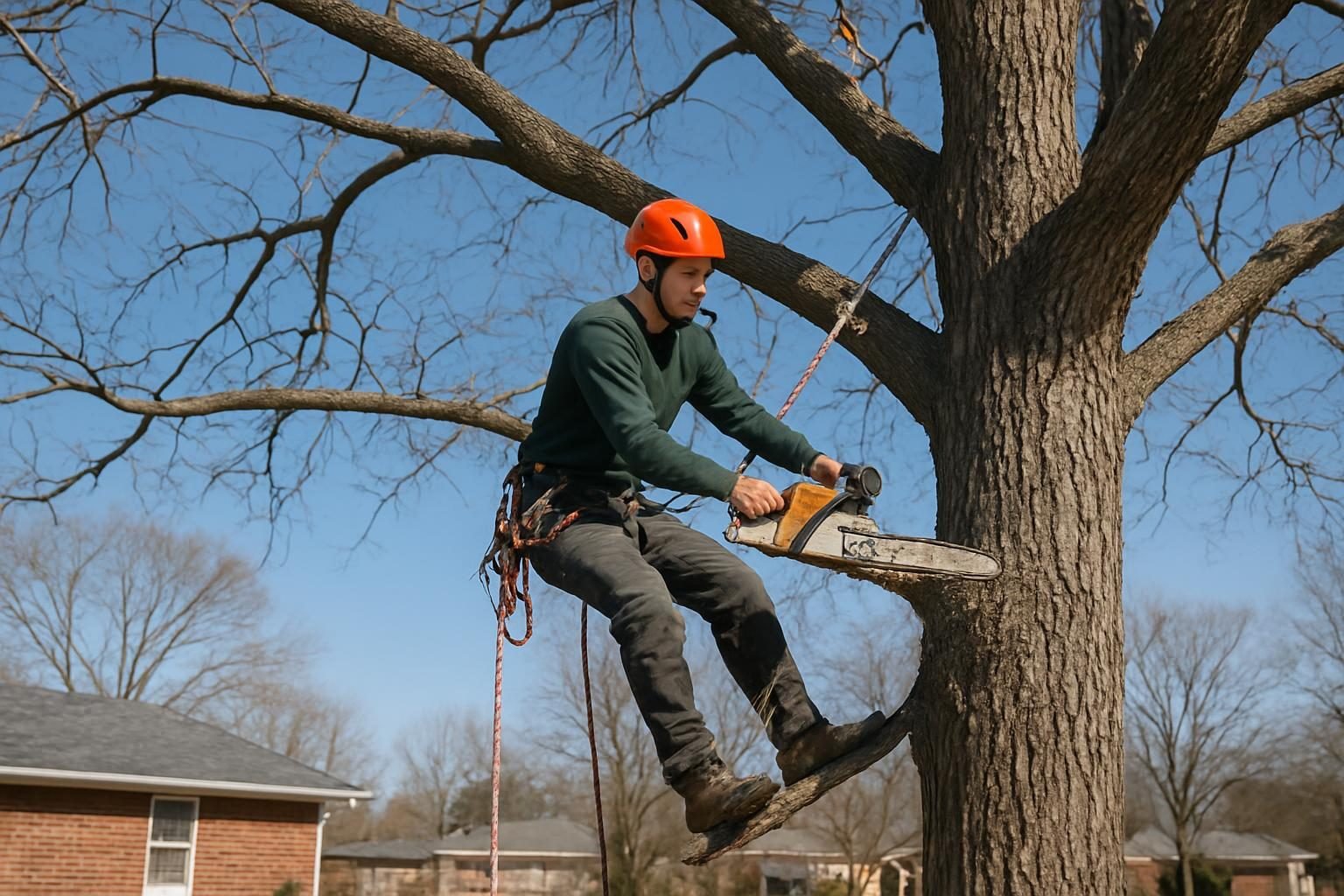
Prune in the dormant season, from late fall to late winter. This is when you can remove crossing branches, raise the canopy, and clear limbs away from roofs and power lines with the least stress to the tree.
Flowering trees (dogwood, redbud, cherry, magnolia)
These set next year’s flower buds shortly after blooming. Trim them right after the flowers fade in spring. Pruning in winter means cutting off the buds and losing the show.
Crepe myrtles
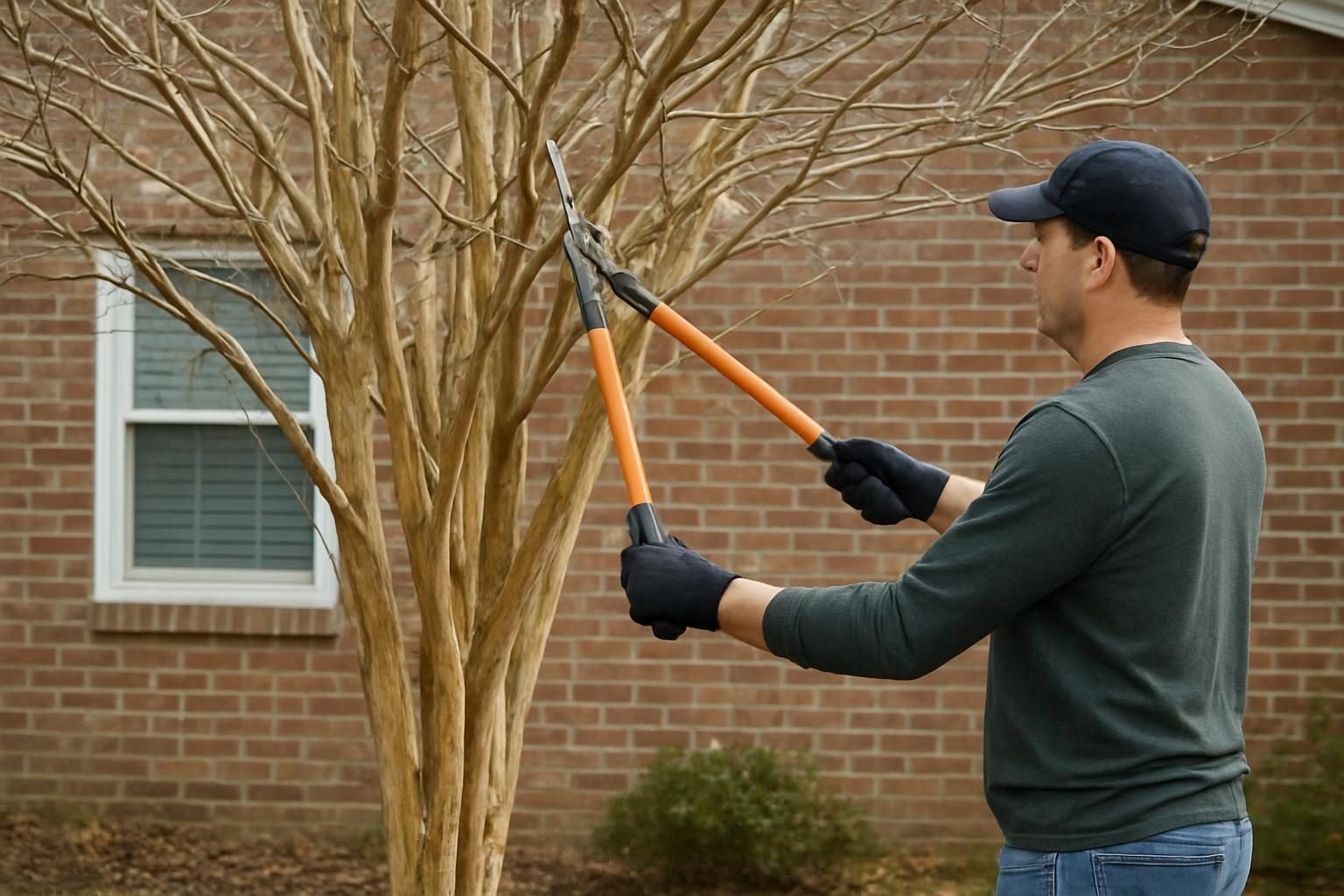
Crepe myrtles are everywhere in Cumberland County. Prune lightly in late winter to remove crossing branches, suckers and seed heads. Avoid “crape murder,” the practice of chopping the trunks back to stubs. It weakens the tree and produces spindly, drooping growth.
Fruit trees
Late winter, just before buds break, is the usual window. Pruning for shape and airflow helps fruit quality and cuts down on disease.
Pine trees
Loblolly and longleaf pines need very little pruning, and they respond differently than hardwoods. Keep these points in mind:
- Remove dead or broken limbs whenever you see them.
- Do not cut pines back hard. They generally do not regrow from bare wood the way hardwoods do.
- Avoid fresh cuts in warm months, which can attract bark beetles. Winter is the safer window for anything beyond deadwood.
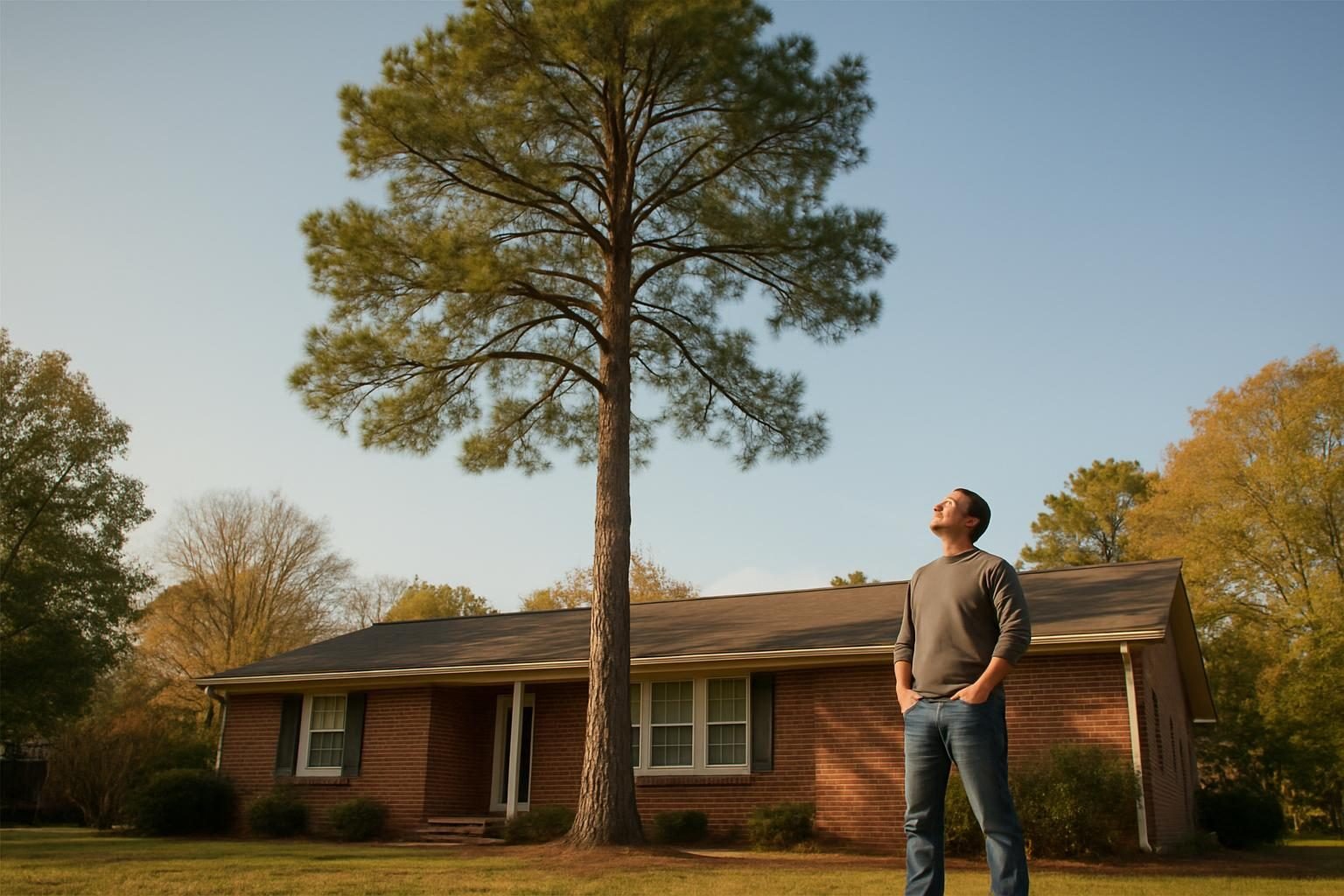
If a tall pine is leaning, shedding large limbs, or looming over your house, trimming may not be enough. See our guide to pine tree removal costs in Fayetteville to understand your options.
Pines rarely regrow from bare wood, so a heavy cut that works on an oak can permanently damage one.
When to Skip the Calendar and Trim Right Away
Some situations override the seasonal advice. Do not wait for winter if you see any of the following:
- Hanging or broken limbs after a storm, especially over a roof, driveway or play area.
- Dead branches that could fall at any time.
- Limbs touching power lines. Stay far away and call the utility, not a DIY crew.
- Branches rubbing the roof or siding and causing damage.
After a major storm, crews are often stretched thin, and prices can swing. Our breakdown of emergency tree removal costs after a storm explains what to expect, and the main emergency storm tree removal page covers how the process works.
Why Late Summer Is the Worst Time for Heavy Pruning
August and September in the Sandhills are hot, often dry, and right in the middle of hurricane season. Heavy cuts then cause several problems:
- Heat and drought stress: a tree already struggling to hold moisture loses leaf area it needs.
- Weak new growth: a pruning-triggered flush of tender shoots can be damaged by early cold or storms.
- Sunscald: suddenly exposed bark and branches can burn.
- Disease and pests: open wounds in humid weather invite fungi and insects.
The better strategy is to do your structural work in winter so the tree goes into storm season with a strong, balanced canopy. For a full checklist, see our hurricane tree prep checklist for Fayetteville homeowners.
How Much Can You Prune at Once?
A widely used guideline from arborists is to remove no more than about 25 percent of a tree’s living canopy in a single year. Mature trees tolerate less. Over-pruning, or “lion’s tailing,” strips the interior branches and leaves weight at the tips, which can make limbs more likely to break in wind.
For more on proper pruning practices, the NC State University extension resources and the International Society of Arboriculture offer homeowner guidance. Always check that any recommendation fits your specific tree.
Good pruning is mostly about what you leave behind: a balanced canopy with strong branch attachments.
Trimming vs. Removal: When a Cut Is Not Enough
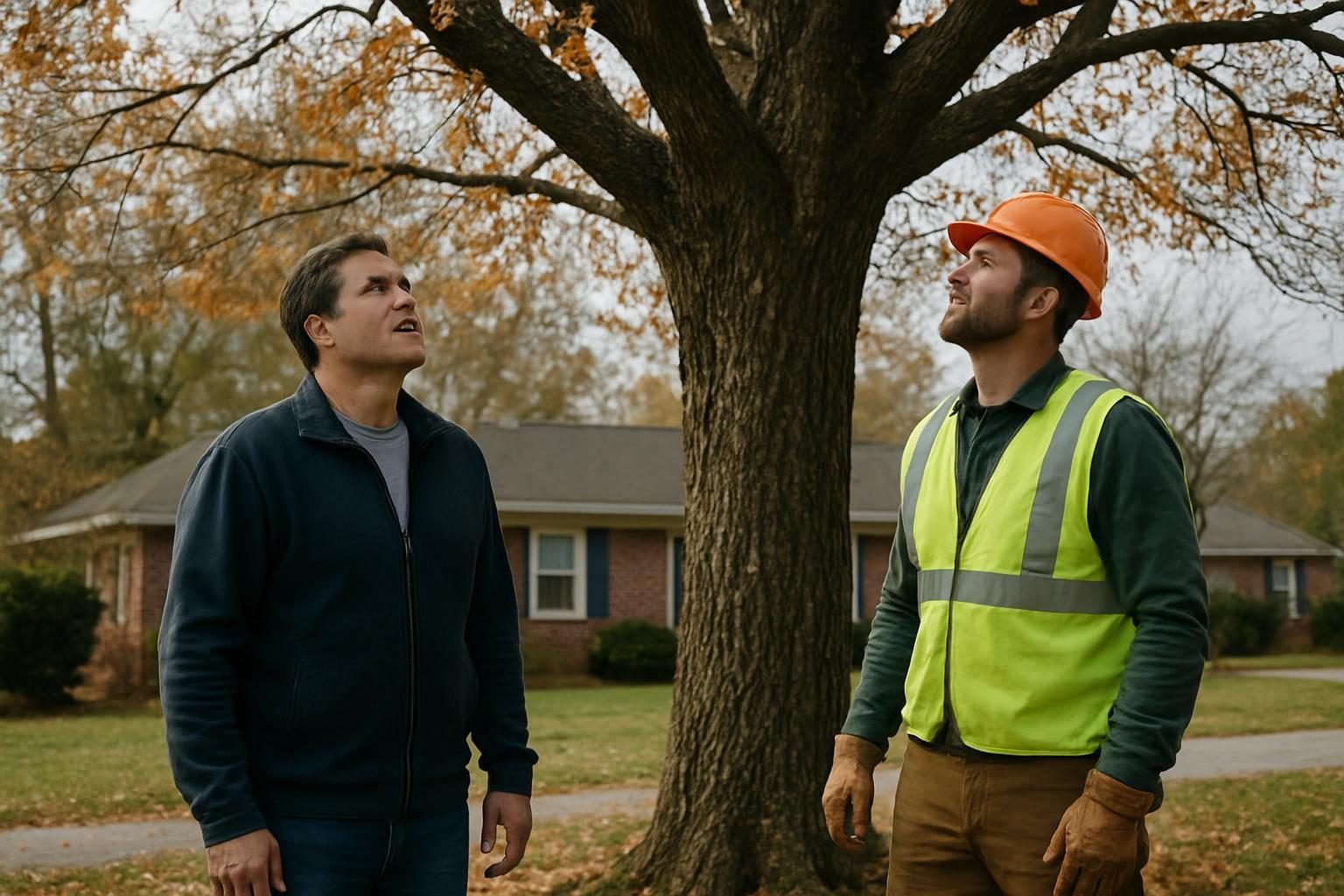
Sometimes the right answer is no trim at all. If a tree has major decay, a hollow trunk, a serious lean, or large dead sections, pruning will not make it safe. Check our list of 9 signs a tree is dying or schedule a professional arborist tree assessment to get a clear answer.
If removal is the better call, our tree removal service page explains the process, and you may also want to read about whether you need a permit to remove a tree in Fayetteville.
What Tree Trimming Costs and How to Hire
Costs depend on tree height, access, the amount of cutting, and cleanup. As a rough estimate only, many homeowners in this area see small ornamental tree trims in the low hundreds of dollars, while large mature trees can run higher, sometimes well over $1,000. Our tree service cost guide for Fayetteville gives more detail.
When hiring, look for:
- Proof of liability insurance and workers’ compensation. Ask for it in writing.
- Written estimates that spell out the work and cleanup.
- No topping. A reputable company will explain why topping harms trees.
- Certified arborist involvement, especially for valuable or large trees.
- No pressure tactics, particularly right after storms.
For a full overview of the service, visit our tree trimming and pruning page. Serving homeowners across Fayetteville, Raeford and Stedman, local crews know our soils, species and storm patterns.
Ready to plan your trimming? Request your free tree trimming quote with the form on this page and get matched with local companies.
FAQ: Trimming Trees in North Carolina
What is the best month to trim trees in North Carolina?
For most trees, January and February are ideal. Trees are fully dormant, and crews can see the structure clearly. Flowering trees are the exception and should be trimmed after they bloom.
Can I trim trees in the summer?
Light pruning, such as removing dead or damaged branches, is fine. Avoid heavy cuts in July through September because of heat stress and hurricane season risks.
When should I prune crepe myrtles in Fayetteville?
Late winter, before new growth starts. Remove only crossing branches, suckers and seed heads, and never chop the trunks back to stubs.
Is it okay to trim a tree after storm damage at any time of year?
Yes. Hazardous, broken or hanging limbs should be removed right away regardless of season. Safety comes before the pruning calendar, and a professional should handle anything near power lines or on your roof.
Get a free tree trimming quote in Cumberland County
A local tree service will contact you with a free, no-obligation quote for your trimming job.