Quick answer: Pine tree removal cost in Fayetteville typically runs from about $300 for a small, open-yard pine to $2,500 or more for a tall pine near a house, and $4,000 or more if a crane is needed. These are estimates only. Height, how close the tree is to structures, and access to your yard drive most of the price.
Key takeaways
- Most pines in Cumberland County yards fall in the 50-to-90-foot range, which puts many jobs between roughly $800 and $3,500.
- Pines leaning over a roof, fence, pool or power line cost more because crews must climb and rig the tree down in pieces.
- Stump grinding is usually a separate line item, often an estimated $100 to $400 per pine stump.
- Leaving the logs or chipping brush yourself can trim the bill, but always get the quote in writing.
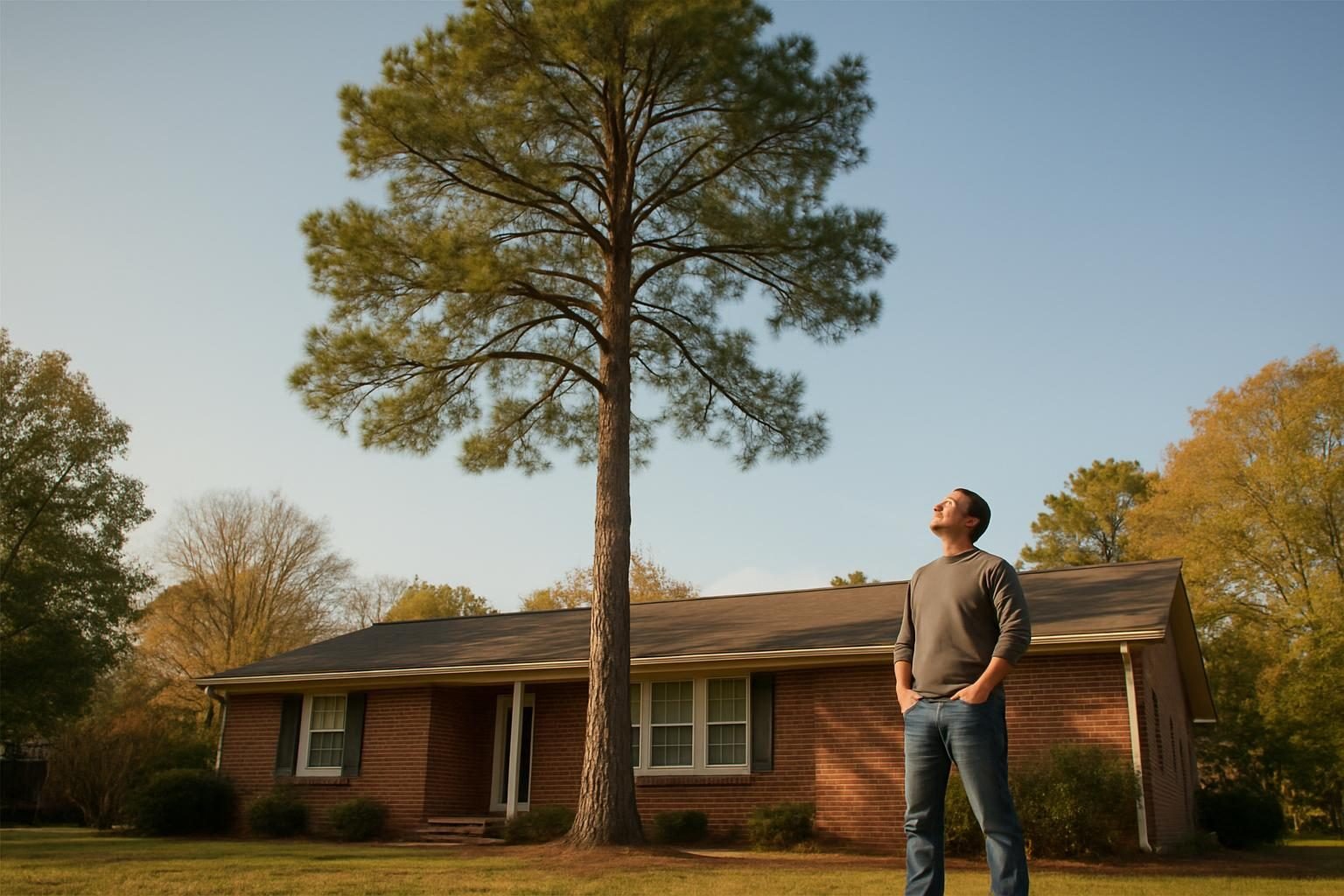
If you live in Fayetteville, Hope Mills or Spring Lake, you probably have a pine somewhere on your lot or just behind your fence line. Loblolly and longleaf pines grow fast and tall across the Sandhills. That height is a big reason pine tree removal cost varies so widely from one yard to the next.
This guide breaks down estimated prices by height, explains what changes the number, and shows where you can save. For a wider look at pricing, see our tree service cost guide for Fayetteville. When you are ready to compare bids, request free quotes for your pine tree removal using the form on this page.
Pine Tree Removal Cost by Height in Fayetteville
Height is the simplest way to estimate a price. The ranges below are rough estimates for the Fayetteville area. Your actual quote depends on the factors in the sections that follow.
- Under 40 feet: about $300 to $800. These are usually younger pines in open areas.
- 40 to 60 feet: about $600 to $1,500. Common for pines at the back of a lot with a clear drop zone.
- 60 to 80 feet: about $1,000 to $2,500. This is a typical mature loblolly.
- 80 feet and taller: about $1,800 to $4,500 or more. Large trunks and heavy limbs add time and risk.
- Tall pine over a house or near lines: about $2,500 to $6,000 or more, especially if a crane is involved.
A pine that can simply be felled in an open space is the cheapest scenario. Once a target such as a roof or fence sits within falling distance, the method changes and so does the price.
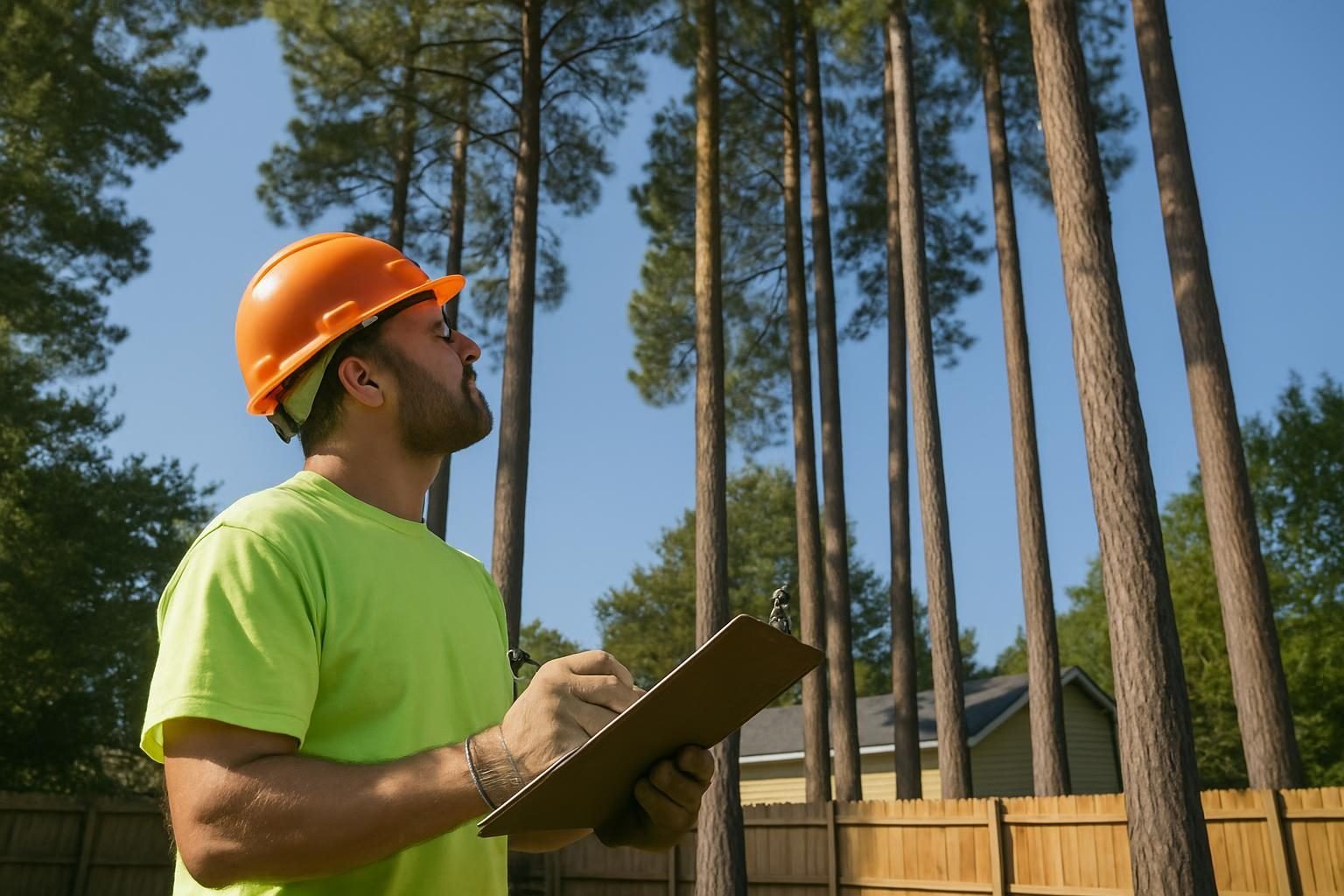
Why Tall Pines Over Houses Need Climbers, Rigging or Cranes
Pines have tall, straight trunks with most of their weight high in the crown. When one stands next to a house, a crew cannot just cut it and let it fall. A mistake could mean a damaged roof or an injured worker.
Climbers and rigging
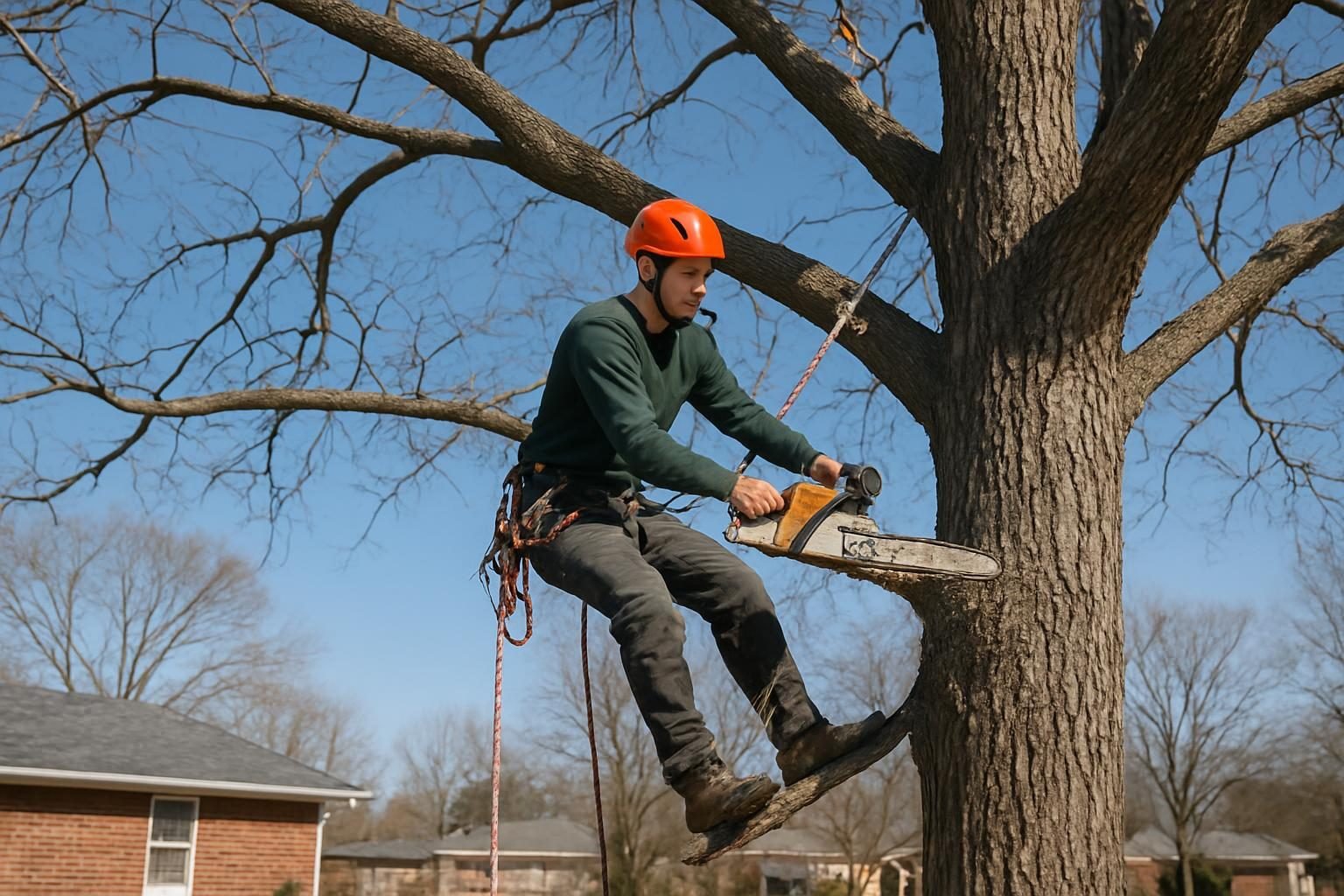
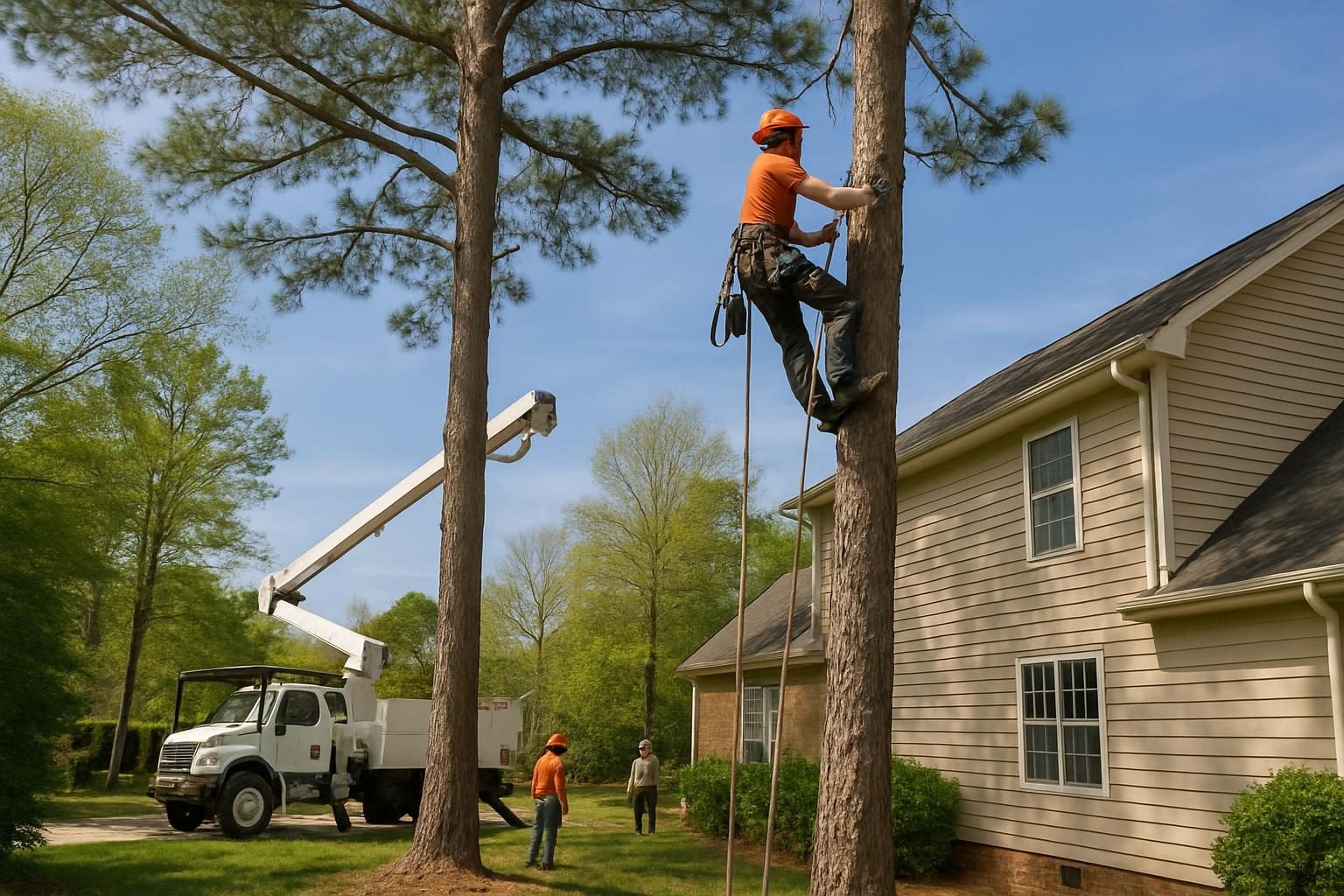
For most tight spots, a climber ascends the tree and removes it from the top down. Each section is lowered on ropes and pulleys, which is called rigging. It is slower and needs more crew members, so labor costs rise.
Bucket trucks and cranes
Some pines are too large or too unstable to climb safely. A bucket truck can help if the crew has access. A crane lifts heavy trunk sections straight up and over the house. Crane work often adds an estimated $500 to $2,000 or more, depending on the size of the crane and how long it is on site.
- Climbing and rigging: best for pines with limited access and no room to fell.
- Bucket truck: works when the truck can reach the base on firm, level ground.
- Crane: used for very tall, heavy or compromised pines over structures.
If you suspect you may need a crane, our upcoming guide on crane tree removal cost will go deeper on pricing.
The closer a pine is to your roof, the more the job becomes about rigging and risk, not just cutting.
Sandhills Factors That Change Pine Removal Prices
Our sandy Sandhills soil shapes how pines grow and how they fail. Loblolly pines tend to have shallower, spreading roots. In saturated sand during a hurricane or tropical storm, they can topple more easily. Longleaf pines develop a deeper taproot, but they can still be hazardous if they are dead, diseased or damaged.
Local conditions that affect your quote include:
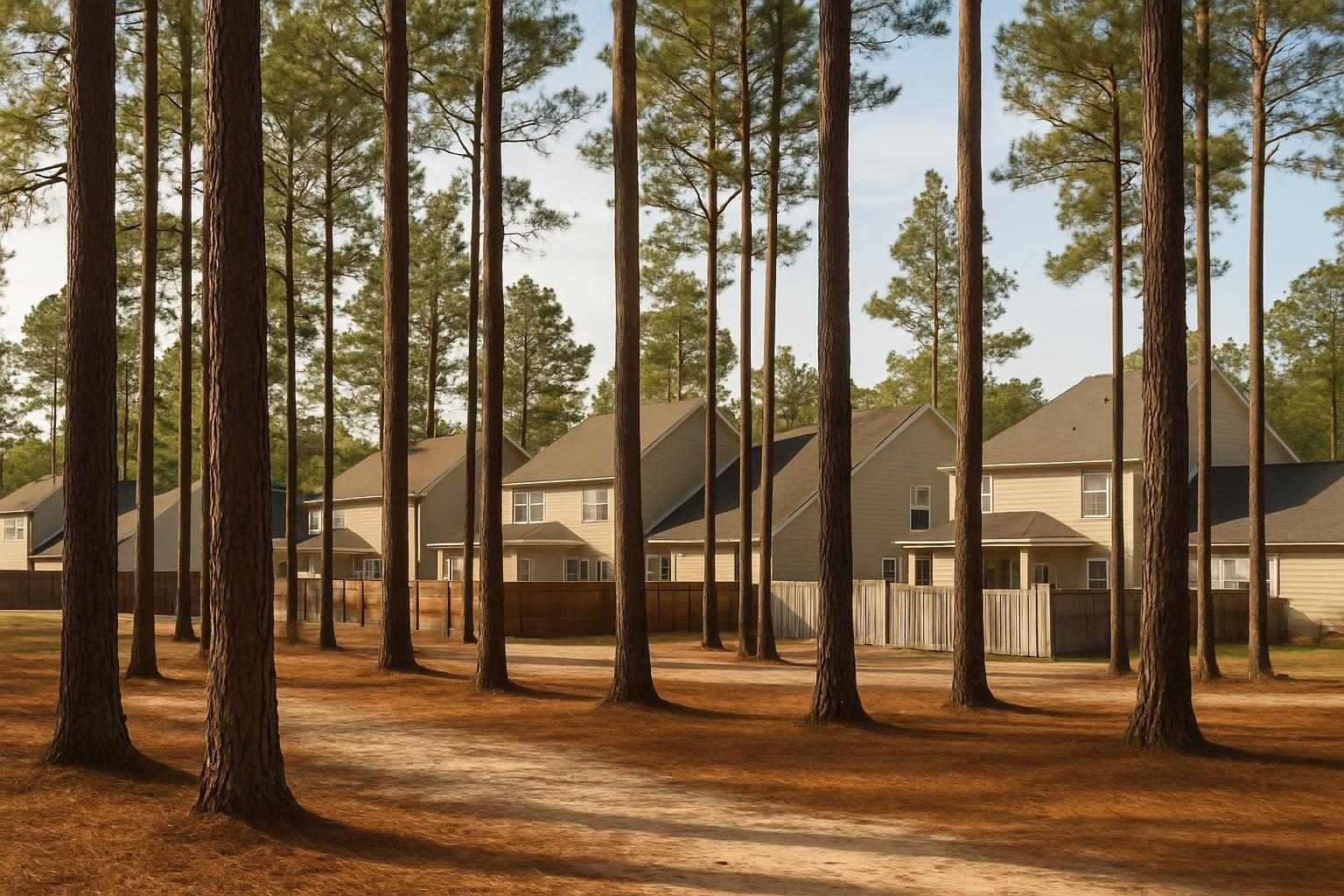
- Subdivision lots: pines behind homes in neighborhoods in Hope Mills, Stedman or the Fort Bragg area often grow close to fences, sheds and neighbors’ property.
- Soft, sandy ground: heavy trucks and cranes can sink or need ground protection, which adds time.
- Power lines: pines near service lines may require coordination or specialized crews. Never attempt this yourself.
- Backyard access: narrow gates and no side access mean crews must carry material out by hand.
- Tree condition: dead or beetle-damaged pines can be brittle and more dangerous, so crews may price them higher.
If you are not sure whether a pine is a real risk, an arborist tree assessment can tell you whether it needs to come down. Our planned article on when to remove a pine tree near your house will cover warning signs in more detail.
Stump Grinding, Haul-Away and Leaving the Logs
Always ask what your quote includes. A low number can leave out cleanup or the stump, and that is where surprises tend to appear.
Stump grinding add-on
Standard removal leaves a stump at ground level or a bit higher. Stump grinding typically adds an estimated $100 to $400 per pine stump, depending on diameter and root flare. Many companies discount grinding when it is bundled with removal. Pine stumps are generally softer than hardwood, but large roots in sandy soil can still take time.
Haul-away versus leaving logs
- Full haul-away: crew cuts, chips the brush and removes logs. This is the most convenient and usually costs the most.
- Chip brush, leave logs: logs are cut to manageable lengths and left on site. This can reduce the price by an estimated $100 to $400 or more.
- Leave everything: rarely recommended. It saves labor but leaves you with a big mess.
Pine firewood is not ideal for indoor burning because it is resinous and burns fast, so many homeowners choose haul-away. Ask about what the crew will do with the wood, and check local rules for yard debris disposal in your area.
A cheap quote that skips cleanup or the stump is often just a bigger bill arriving later.
Ways to Save on Pine Tree Removal
You cannot change the height of your pine, but you can control a few other things.
- Get at least three written quotes. Compare scope, not just price. Check that each bid lists cleanup, stump work and the removal method.
- Bundle trees. If you have two or three pines to remove, crews often give a better per-tree price since equipment is already on site.
- Clear the work area. Move vehicles, patio furniture and anything else out of the way. Make sure the gate is unlocked.
- Choose logs-left or chip-only options. Only if you have a plan for the wood.
- Schedule before a storm. Emergency removal after a hurricane or tropical storm costs more than planned work. For urgent damage, see our page on emergency storm tree removal.
- Ask about insurance. Coverage may apply if a pine has already hit your home or another covered structure. Read whether homeowners insurance covers tree removal in North Carolina and confirm details with your insurer.
Pro tip: Ask each company for proof of liability insurance and workers’ compensation coverage before work starts. Skipping this to save a few hundred dollars can leave you responsible if something goes wrong.
If a pine has already fallen on your home, follow the steps in what to do when a tree falls on your house first, then call for help. If you are clearing many trees at once, you may need land clearing rather than single-tree removal.
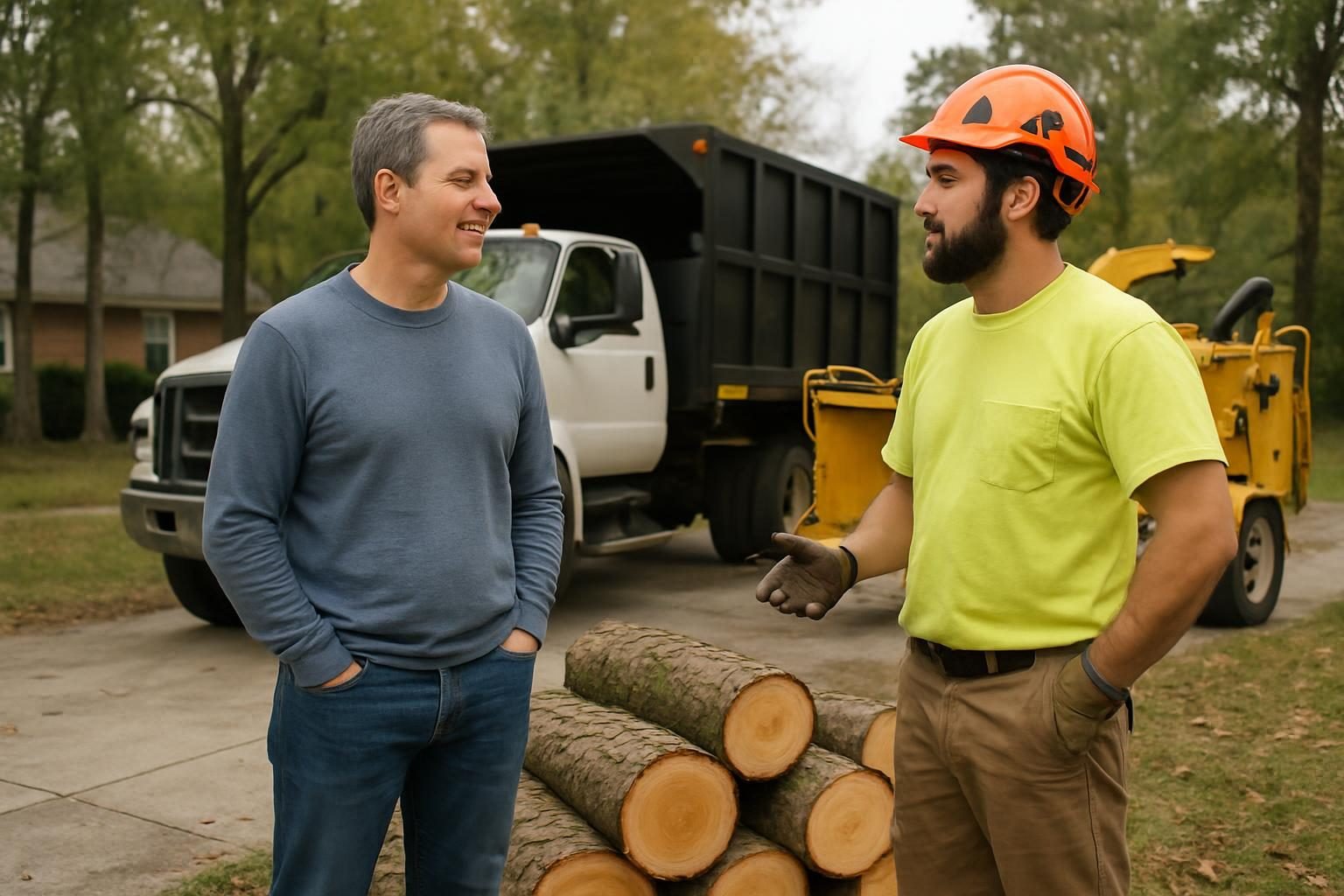
Ready to see real numbers for your yard? Request a free pine tree removal quote with the form on this page, and local companies serving Fayetteville and Cumberland County can respond with estimates. You can also read more about our tree removal services in Fayetteville.
Pine Tree Removal Cost FAQ
How much does it cost to remove a 70-foot pine tree?
As a rough estimate, a 70-foot pine in an open yard might cost $1,000 to $2,500. If it leans over a house or needs rigging, the price can climb well above that. Only an on-site estimate can give you a firm number.
Is it cheaper to remove a pine than an oak?
Often yes, because pines have lighter wood and simpler branching. But tall pines near structures can still be expensive because of their height and the rigging required.
Do I need to remove the stump?
No, but a leftover stump can be a trip hazard and may attract pests. Grinding is usually a separate add-on. You can also have the stump left in place if you plan to landscape around it. See our guide on stump grinding cost per stump for more detail.
How do I know if my pine is dangerous?
Warning signs include browning needles, a leaning trunk, cracked bark, pitch tubes, exposed roots and dead limbs. Our planned article on southern pine beetle signs will help you spot one common threat. When in doubt, ask a qualified arborist to inspect the tree.
Get a free pine tree removal quote in Fayetteville
A local tree service company will contact you with a free, no-obligation quote for your pine tree.