Quick answer: The best way to prune a crepe myrtle in Fayetteville is to thin it in late winter (roughly late January through early March), before new growth starts. Remove suckers, crossing branches and a few inner stems, and never chop the tops off at a fixed height. Topping, often called “crape murder,” weakens the tree, ruins its shape and leads to weak, whippy regrowth.
Key takeaways
- Don’t top. Cutting every branch to stubs causes weak sprouts, fewer blooms and a knobby, unnatural look.
- Prune in late winter. Dormant trees show their structure clearly, and cuts heal before spring growth.
- Thin, don’t shear. Remove whole branches back to a trunk or larger limb, not the tips.
- Pick the right size. If a tree keeps outgrowing its spot, the fix is usually replacement, not annual hacking.
- Hire out the big ones. Tall trees near roofs, fences or power lines are a job for insured crews.
Crepe myrtles are everywhere in Cumberland County, lining driveways in Hope Mills, shading yards in Stedman and brightening commercial lots along Raeford Road. They are tough, heat-loving trees that bloom all summer. They also happen to be the most commonly mis-pruned tree in the Carolinas.
This guide walks through what to do, what to avoid and when it makes sense to call a professional. If you’d rather hand it off, you can request a free consultation for crepe myrtle pruning using the form on this page.
Why Topping Crepe Myrtles Is a Mistake
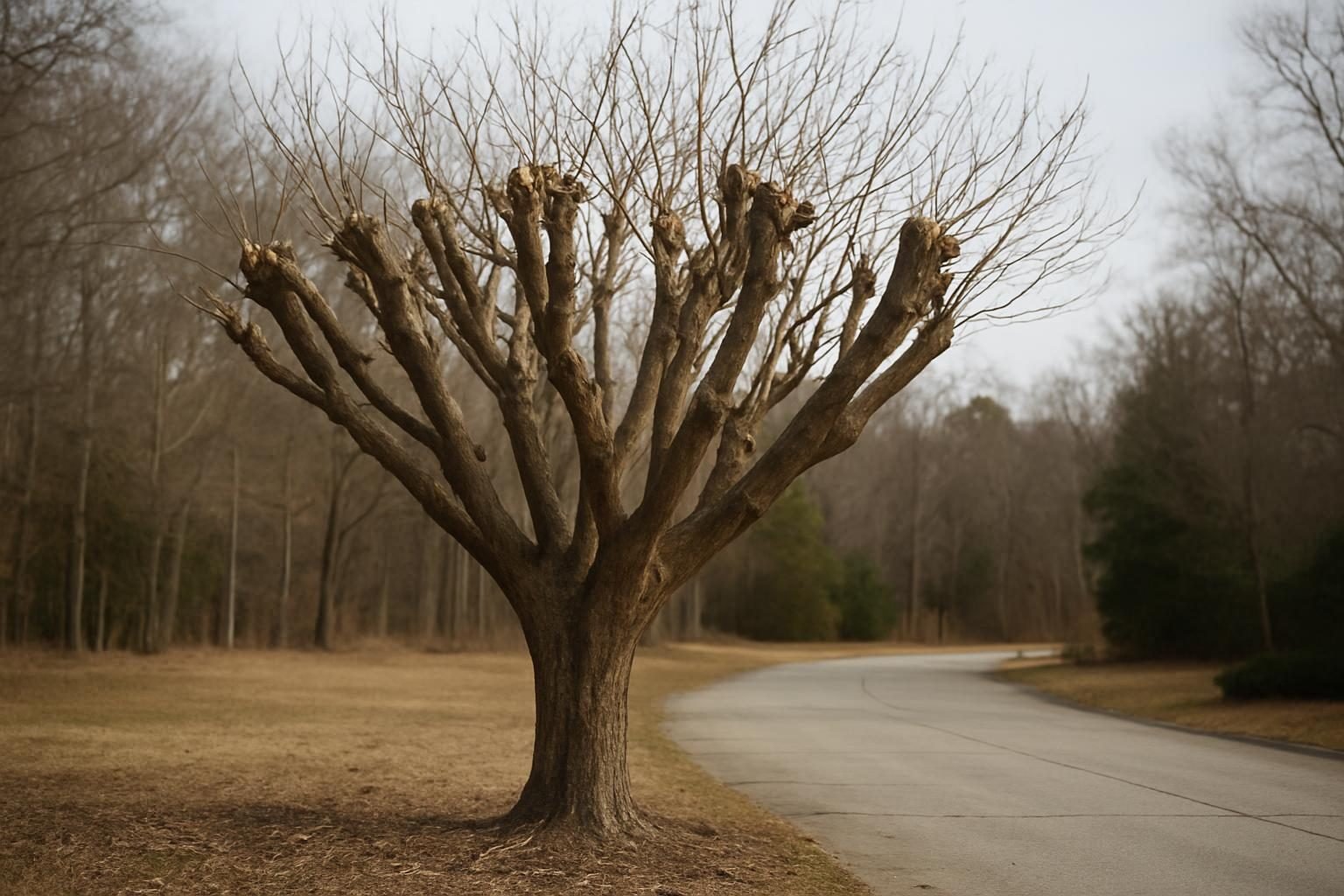
Topping means cutting all the main branches back to thick stubs, usually at a uniform height. It’s often done because a tree has gotten taller than expected, or because a neighbor’s tree has the same look. It’s a habit that spread through the South, but it does real harm.
What topping actually does:
- Triggers weak regrowth. Each stub sprouts a cluster of thin shoots that grow fast and attach poorly. They can snap in a summer thunderstorm or tropical system.
- Heavy flower clusters droop. Those thin shoots can’t always hold blooms upright, so branches bend and sag after rain.
- Delays flowering. The tree spends energy rebuilding wood instead of producing blooms, and flowering often arrives later in summer.
- Creates decay entry points. Big, flat cuts on thick limbs heal slowly and can invite rot over the years.
- Leaves permanent knuckles. The swollen stub ends stay visible every winter, long after the leaves drop.
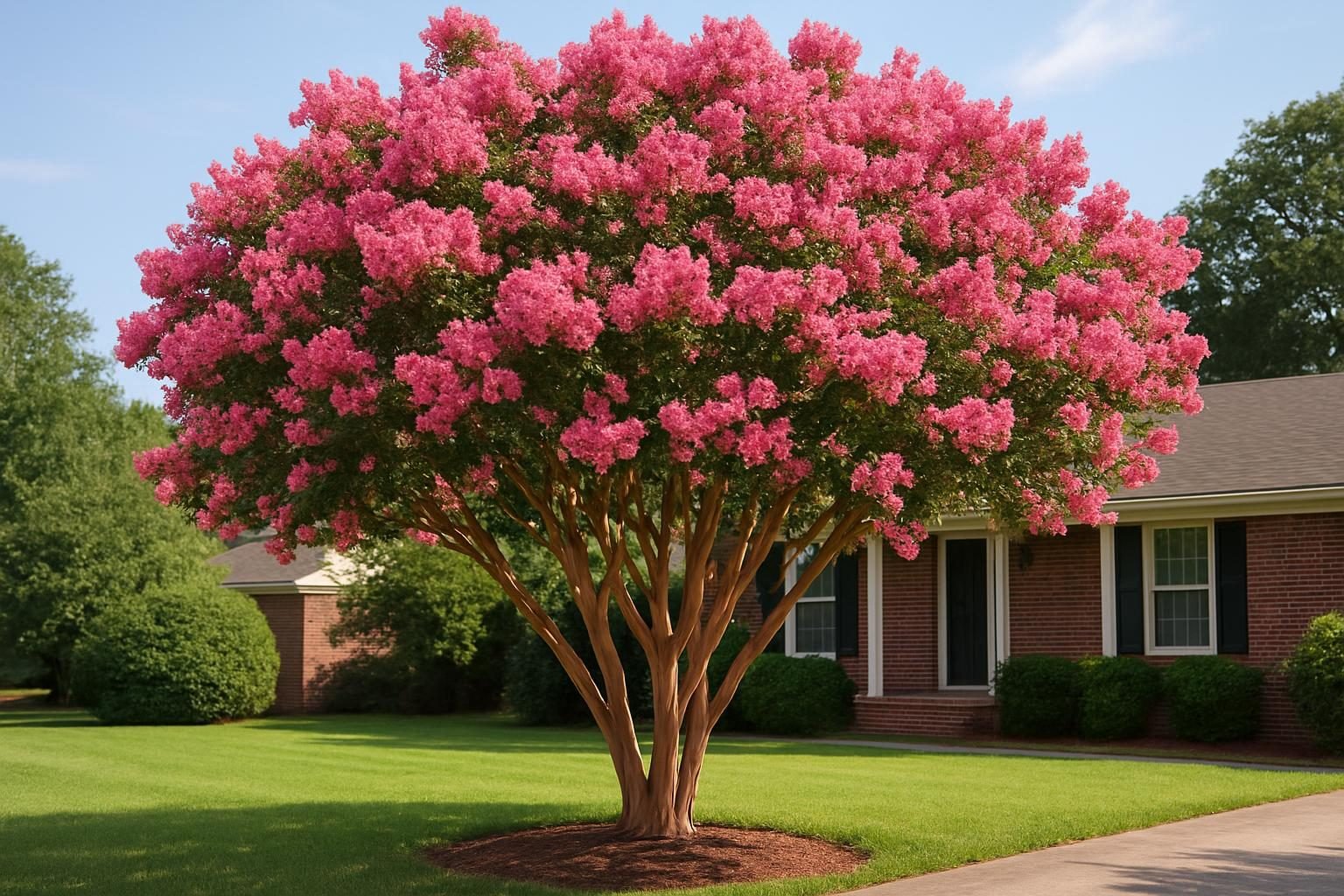
The graceful, vase-shaped form that makes a crepe myrtle worth planting is exactly what topping destroys. Once a tree has been topped for several years, the knobby ends are there to stay, though careful selective pruning can improve it over time.
When to Prune: Late Winter Timing in the Sandhills
In the Fayetteville area, the sweet spot is late winter, generally late January through early March. The tree is dormant, the leaves are gone and you can see every crossing branch and dead twig. Cuts have time to start sealing before the spring flush.
- Too early (fall or early winter): Pruning can stimulate growth that a hard freeze may damage.
- Too late (after buds swell): You waste stored energy and risk knocking off the new growth the tree just invested in.
- Summer: Light touch-ups, like removing spent flower clusters or a broken limb, are fine. Save structural cuts for winter.
Dead, damaged or storm-broken branches can come out any time of year. After a hurricane or a summer storm, clean up torn limbs promptly so the wound doesn’t tear further down the trunk.
Pro tip: Pick a dry day in the 40s or 50s. Wet cuts on a cold, soggy day heal slowly, and cleaning your pruners with rubbing alcohol between trees helps avoid spreading problems.
A crepe myrtle pruned well should look like it was never pruned at all.
How to Thin a Crepe Myrtle the Right Way
Proper pruning is about selection. You’re deciding which branches earn a spot on the tree, then removing the rest cleanly at their point of origin.
Step by step:
- Step back and look. Study the whole shape before you cut. Identify the 3 to 7 strongest trunks you want to keep.
- Remove the dead and broken. Cut dead wood back to healthy tissue or to the branch it came from.
- Take out crossing and rubbing branches. Where two limbs rub, remove the weaker or lower-quality one.
- Clear the center. Remove a few inward-growing branches so light and air reach the interior. Good airflow also helps reduce the powdery mildew that plagues crepe myrtles in humid summers.
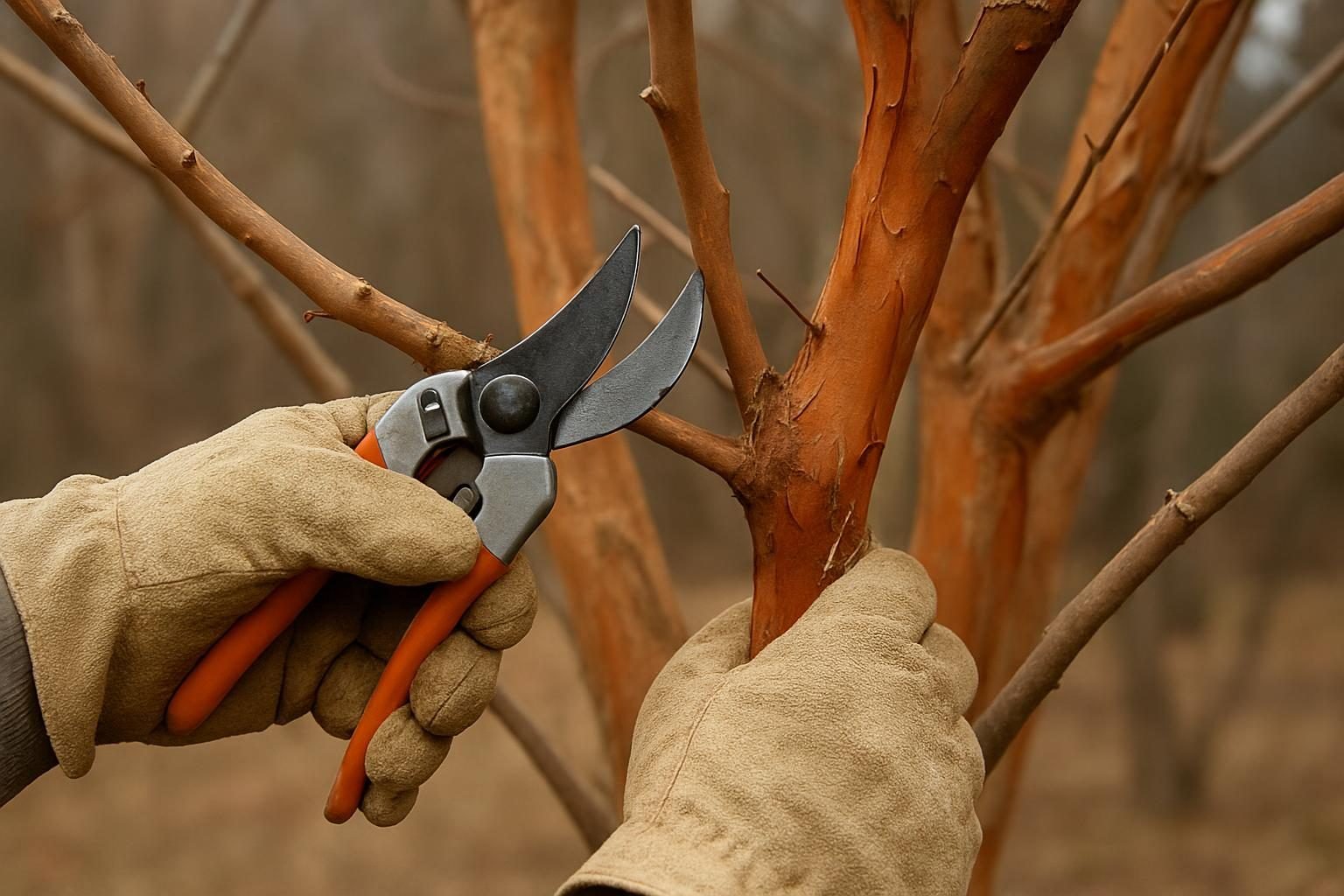
- Prune side branches back to the trunk. Cut just outside the branch collar, the slightly raised ring where a limb meets its parent. Don’t leave long stubs.
- Lift lower branches if desired. Removing a few low limbs shows off the bark, which is one of the tree’s best features.
- Leave the small tips alone. Twigs thinner than a pencil are where the flowers form. Trimming them away is what shears off blooms.
A good rule of thumb is to avoid cutting branches thicker than your thumb unless there’s a clear reason, such as damage or a rubbing limb. Thicker cuts call for a pruning saw and a steady hand. For more on how professionals approach shaping and thinning across species, see our overview of tree trimming and pruning.
Dealing With Suckers at the Base
Suckers are the thin shoots that sprout from the base of the trunk or from surface roots. They steal energy and make the tree look unkempt, and in a sandy Cumberland County yard they can appear all season long.
- Cut them flush. Remove suckers at the ground or where they join the trunk, with no stub left behind.
- Do it often. Check a few times a year. Small suckers snip off easily; woody ones need loppers or a saw.
- Watch the mower and trimmer. String trimmers and mower strikes wound the lower trunk and encourage more suckering.
- Keep mulch off the trunk. A 2 to 3 inch layer spread wide is good; a volcano piled against the bark is not.
Some varieties sucker more than others, and a stressed tree tends to sucker more. Persistent suckering is a sign to look at the bigger picture: drought stress, root damage or an overall poor fit for the site.
If you have to top a tree every year to keep it in bounds, it’s the wrong tree for that spot.
Managing Height Without Topping
The number one reason people top crepe myrtles is height. A tree planted too close to a house, fence or driveway grows into the space, and chopping it back feels like the only answer. It isn’t.
Better options:
- Choose the right variety from the start. Crepe myrtles come in dwarf, semi-dwarf, intermediate and large forms. Many standard varieties reach 20 to 30 feet or more. Check the mature size on the plant tag.
- Use proper reduction cuts. A professional can shorten a taller branch by cutting back to a side branch that’s at least one-third the diameter of the limb being removed. This keeps a natural shape and avoids stubs.
- Allow room at planting. Give a full-size tree space away from structures, septic lines and utility lines.
- Replace a badly mismatched tree. Sometimes the honest answer is removal and replanting with a smaller cultivar. Our guide to the best trees to plant in Fayetteville can help you choose.
If a tree is crowding a house or hanging over the roofline, it’s worth having someone look at it before storm season. Our hurricane tree prep checklist for Fayetteville homeowners covers what to check on trees near your home.
When to Hire a Pro for Crepe Myrtle Pruning
Many small to mid-size crepe myrtles are a reasonable DIY project with sharp bypass pruners, loppers and a hand saw. Some situations are better left to a crew.
Call a professional when:
- The tree is too tall to reach safely from the ground. Don’t climb a ladder with a saw.
- Branches overhang a roof, fence, pool or driveway.
- Limbs are near a service line. Stay well away and see what to do about a tree on a power line.
- The tree was topped for years and needs a corrective plan.
- You see large dead limbs, cracks, hollow areas or fungal growth on the trunk. An arborist tree assessment can tell you whether it’s a pruning job or a removal.
Cost estimate: Pruning a typical residential crepe myrtle often runs somewhere in the range of $150 to $500 per tree, depending on height, access and how much work is needed. Larger or multi-tree jobs may be quoted differently. Treat these as rough estimates and get written quotes; our tree trimming cost guide breaks down what drives price.
Before you hire, ask about proof of insurance and how they’ll prune. A crew that says “we’ll top it to keep it small” is a red flag. Our 10-point checklist for hiring a tree service walks through what to verify. Tree work is available throughout the area, including tree service in Fayetteville and nearby Hope Mills.
For related reading on keeping trees healthy before problems start, look out for our upcoming guide on how to tell if a tree is healthy.
Ready to have a local crew take a look? You can request free quotes for crepe myrtle pruning through the form on this page.
Frequently Asked Questions
Can I fix a crepe myrtle that was topped?
Often you can improve it, though you can’t fully undo it. Over a few winters, an arborist can select the best regrowth shoots, remove the weakest and gradually rebuild a more natural structure. Expect it to take a few seasons.
Will my crepe myrtle die if I prune it at the wrong time?
Rarely. Crepe myrtles are resilient, so a poorly timed cut usually costs you some blooms or growth rather than the tree. Hard topping done repeatedly is the bigger long-term problem.
How much should I prune each year?
Less than you think. Many healthy, well-sited trees need only a light cleanup of suckers, dead wood and crossing branches. Some years, they need almost nothing.
Is it okay to remove spent flower clusters?
Yes. Snipping off old seed heads or faded blooms in summer can encourage a bit more flowering on some varieties, but it’s optional and not required for the tree’s health.
Get a free crepe myrtle pruning quote in Fayetteville
A local tree service will contact you with a free, no-obligation quote.