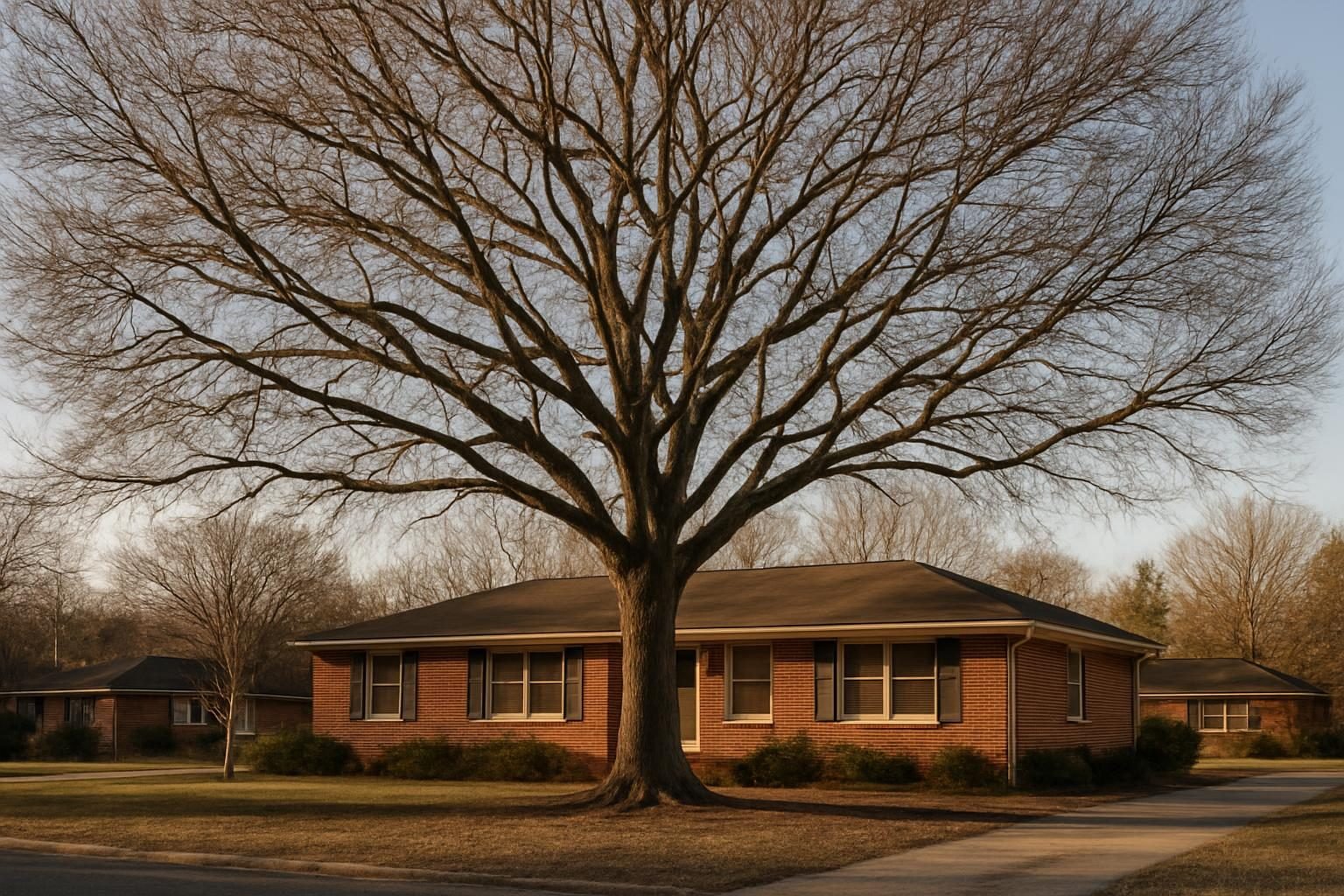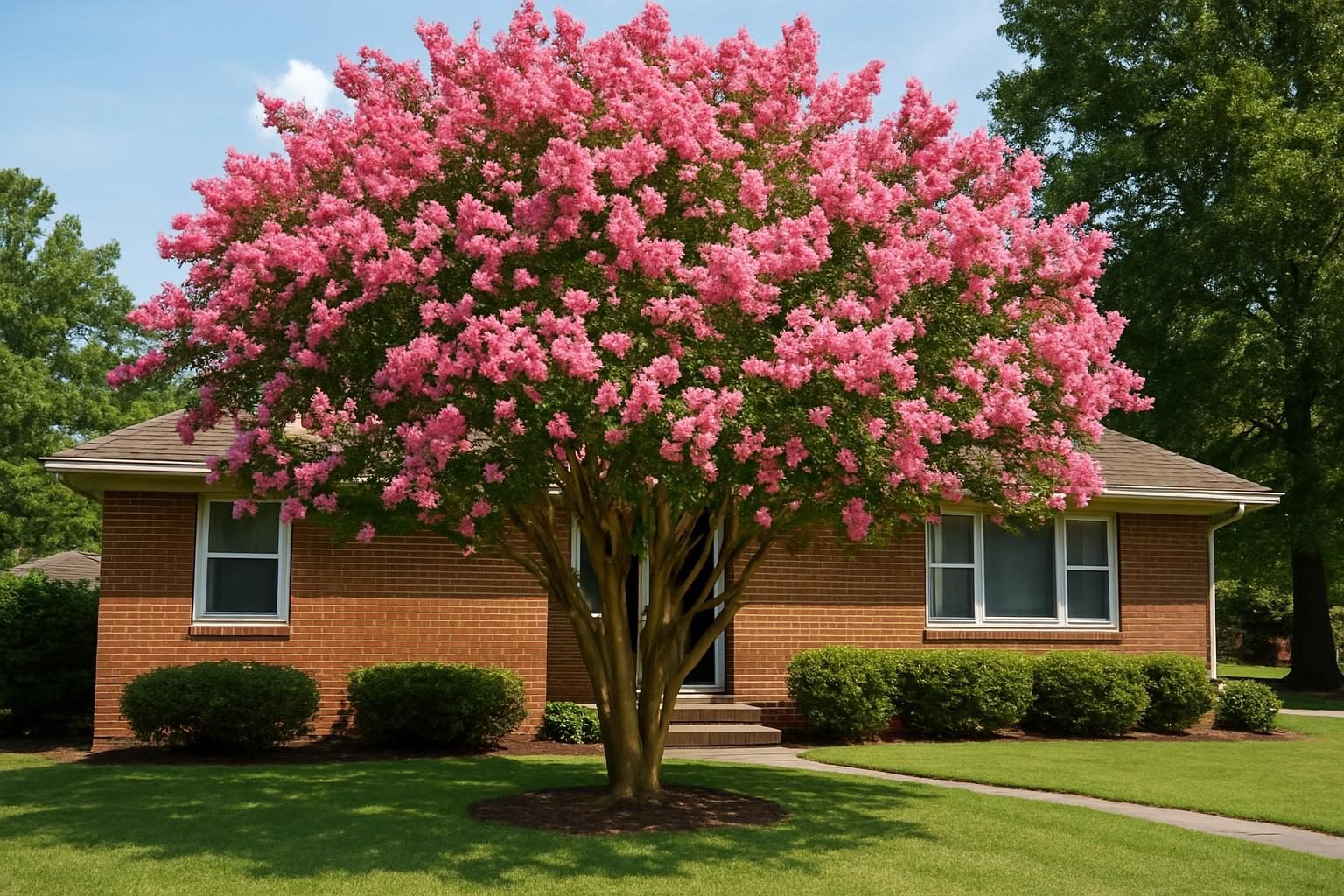
Quick answer: The care of crepe myrtle in Fayetteville comes down to six hours or more of direct sun, deep but infrequent watering, a thin layer of mulch, light feeding in spring and only minimal pruning in late winter. These trees are tough in Cumberland County’s heat and sandy soil, and most problems come from too much care, not too little.
Key takeaways
- Plant in full sun (6+ hours) for the best blooms and the fewest disease problems.
- Water new trees deeply for the first one to two growing seasons; established trees rarely need help.
- Keep mulch 2 to 3 inches deep and pulled back from the trunk.
- Go easy on fertilizer: too much nitrogen means leaves, not flowers.
- Prune lightly in late winter and never chop the tree back to stubs.
Crepe myrtles are everywhere in Fayetteville, from older streets in Haymount to newer subdivisions in Hope Mills and Spring Lake. They bloom through the long Sandhills summer when little else does. Here is how to keep yours healthy, and how to tell when a problem is bigger than a weekend project.
If a tree in your yard already looks questionable, you can request a free consultation from local tree pros using the form on this page.
Sun and Placement: Where Crepe Myrtles Thrive
Sun is the single biggest factor in how a crepe myrtle performs. Plant in a spot that gets at least six hours of direct sunlight a day. In shade, expect fewer flowers, leggy growth and more powdery mildew.
Before planting, check these basics:
- Mature size: Varieties range from 3-foot dwarfs to 30-foot-plus trees. Match the variety to the space, not to the size of the nursery pot.
- Distance from structures: Give larger varieties at least 8 to 10 feet from the house, driveway and fences.
- Overhead lines: Do not plant a tall variety under power lines.
- Drainage: Our sandy soils drain fast, but pockets of clay near Gray’s Creek and Stedman can hold water. Avoid spots where water stands after a rain.
Choosing the right variety up front prevents most of the pruning and removal headaches later. A tree that is too big for its spot gets cut back repeatedly, and that is where the damage starts.
Watering Crepe Myrtles: New Plants vs. Established Trees
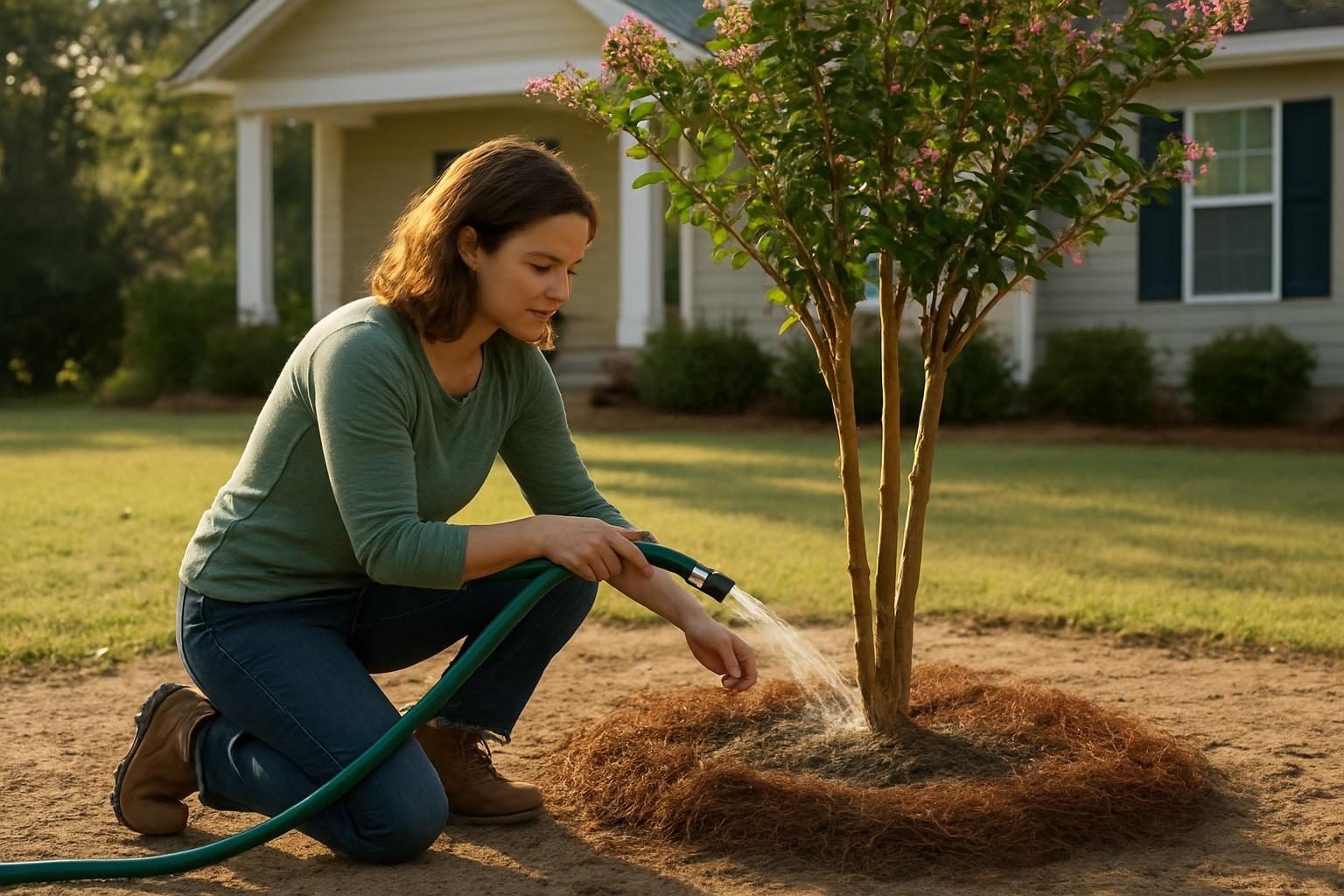
Watering needs change dramatically over the life of the tree. The goal is deep, infrequent soaking rather than a quick daily sprinkle.
New plantings (first one to two seasons)
- Water slowly at the base, soaking the whole root ball and surrounding soil.
- Aim for roughly once or twice a week during hot, dry weather, adjusting for rain.
- Check the soil 3 to 4 inches down. If it is dry, water; if it is damp, wait.
- Keep watering into fall if autumn is dry, since roots are still establishing.
Established trees
Once a crepe myrtle has a couple of years in the ground, it is quite drought tolerant. In a normal Fayetteville summer, most established trees need little or no supplemental water. During an extended dry spell, a long, slow soak every couple of weeks keeps blooms coming.
Pro tip: Water at the base with a soaker hose or slow trickle. Overhead sprinklers wet the leaves and encourage powdery mildew and leaf spot.
Mulching and Soil: Protecting Roots in Sandhills Conditions
Mulch holds moisture in our fast-draining sandy soil, moderates root temperature and cuts down on weeds. Pine straw is a natural fit here and is widely available locally. Shredded bark works too.
Apply mulch the right way:
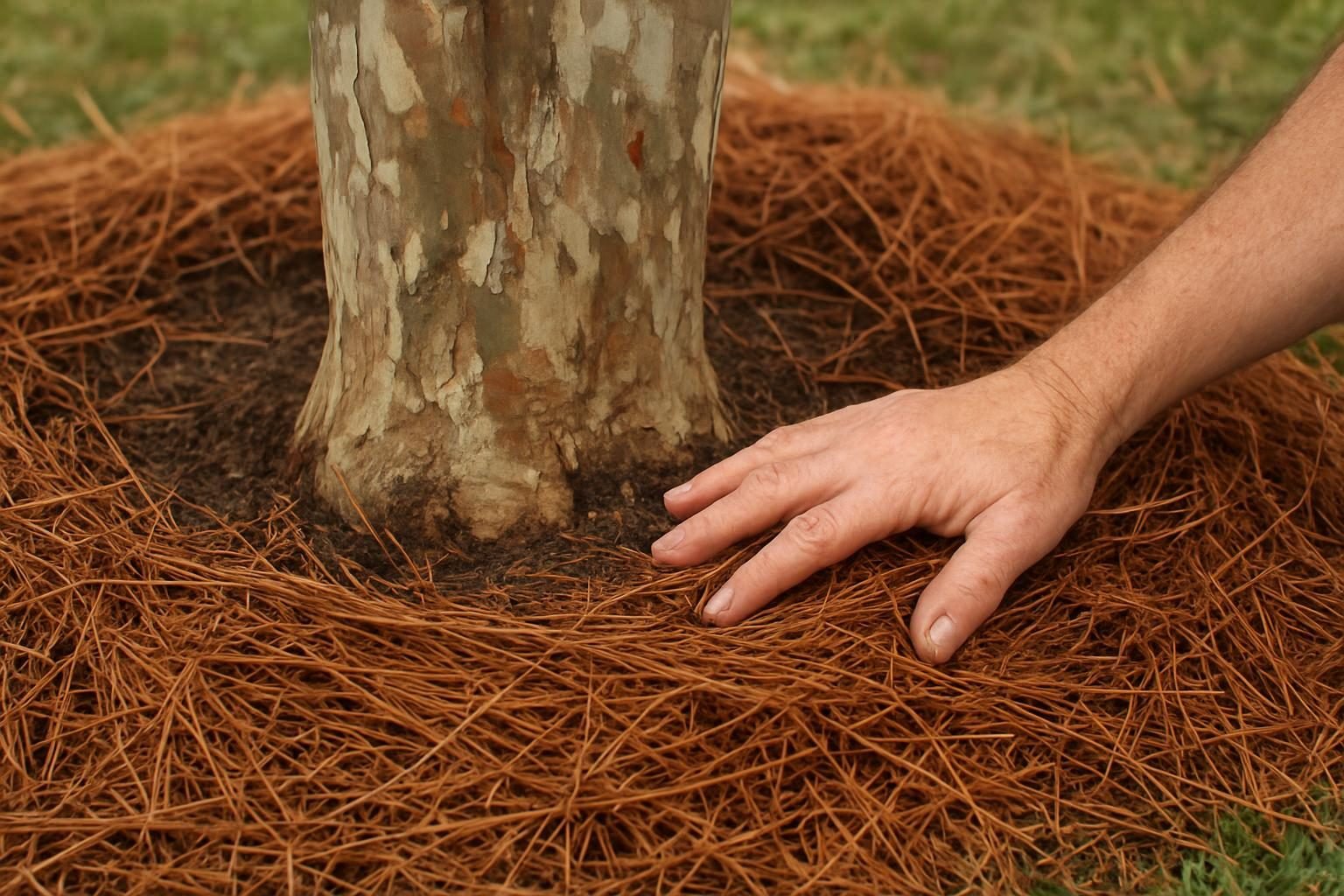
- Clear weeds and grass from a circle at least 3 feet wide around the trunk.
- Spread mulch 2 to 3 inches deep across that circle.
- Pull it back so it does not touch the trunk. A gap of a few inches prevents rot and pest problems.
- Refresh it once a year as it breaks down.
Avoid the “mulch volcano,” a cone piled against the trunk. It traps moisture against the bark and invites decay. For soil that is very poor or compacted, a soil test through your county Cooperative Extension office tells you exactly what, if anything, the tree needs. The NC State Extension Cumberland County Center is a good starting point for local gardening guidance.
Most crepe myrtle trouble in Fayetteville comes from too much attention: too much fertilizer, too much mulch and far too much cutting.
Feeding Your Crepe Myrtle: Light Is Right
Crepe myrtles do not need heavy feeding. Excess nitrogen pushes soft, leafy growth at the expense of flowers and can make trees more attractive to aphids.
- When: Once in early spring, as new growth begins.
- What: A balanced, slow-release fertilizer at the label rate, or a light topdressing of compost.
- How much: Follow the package directions for your tree’s size. More is not better.
- Skip it if: The tree is growing well and blooming. Healthy foliage is the best sign you are doing enough.
Do not fertilize late in summer. New growth late in the season can be damaged by the first cold snap.
Basic Pruning: Less Is More
Crepe myrtles bloom on new wood, so pruning in late winter, before spring growth starts, is the standard window. The goal is cleanup and shaping, not size reduction.
A simple, safe routine:
- Remove dead, broken or crossing branches.
- Cut out suckers growing from the base and any weak, spindly shoots.
- Snip off spent seed heads if you can reach them; it may encourage a lighter second flush.
- Cut back to a main branch or the trunk, never leaving ragged stubs.
The habit to avoid is topping, chopping every branch to blunt knuckles each winter. It weakens the tree, creates weak regrowth and ruins the natural vase shape. Our guide to crepe myrtle pruning in Fayetteville and why to skip “crape murder” explains the problem in detail.
For timing and technique, see when to prune crepe myrtles in North Carolina and our step-by-step crepe myrtle pruning walkthrough. If you are wondering about autumn, read whether you can prune crepe myrtles in the fall. For larger jobs, our tree trimming and pruning service page covers what professionals do.
Already have a tree that was topped? Our upcoming guide to a topped crepe myrtle covers recovery options.
A crepe myrtle that is too tall for its spot was planted in the wrong place, and pruning will not fix that.
Common Crepe Myrtle Problems and When to Call an Arborist
Many issues are cosmetic and manageable at home. Others point to a tree or structural problem worth a professional look.
Usually manageable at home
- Powdery mildew: White, dusty coating on leaves, often in shade or humid weather. Improve sun and airflow; choose resistant varieties when replanting.
- Aphids and sooty mold: Sticky leaves and black residue. A strong spray of water often helps; persistent infestations may need targeted treatment.
- Crape myrtle bark scale: A newer pest in the Southeast that leaves white, felt-like crust on bark and black mold on foliage. An arborist or Extension agent can confirm the diagnosis and suggest treatment.
- Suckers: Shoots from the base can be cut off at ground level.
Signs that call for an arborist
- Large dead limbs or a crown that is thinning year after year.
- Cracks, splits or hollow areas in the trunk, or fungal growth at the base.
- A noticeable lean, or soil heaving near the roots.
- Heavy limbs hanging over the house, driveway or power lines.
- Storm-damaged branches after a tropical system or severe thunderstorm.
Our guide to the signs a tree is hazardous can help you decide how urgent a concern is, and an arborist tree assessment gives you a clear answer. If a tree is beyond saving, see our overview of tree removal in Fayetteville, and ask about stump grinding so you can replant cleanly.
Not sure whether your crepe myrtle needs care or removal? Request free, no-obligation quotes from local tree service companies in Fayetteville, Hope Mills, Raeford and the rest of Cumberland County.
Frequently Asked Questions
How often should I water an established crepe myrtle in Fayetteville?
Most established trees need little supplemental water in a normal year. During a prolonged dry spell, a deep, slow soak every couple of weeks is usually enough. New plantings need more frequent watering for the first one to two seasons.
What is the best time to fertilize?
Early spring, as growth begins, with a light application of a balanced, slow-release product. Avoid heavy nitrogen and skip feeding in late summer.
Why is my crepe myrtle not blooming?
The most common causes are too much shade, too much nitrogen, or heavy topping that forces leafy regrowth. Check sun exposure first, then review your feeding and pruning habits.
Is it normal for the bark to peel?
Yes. Exfoliating bark is a signature feature of crepe myrtles and reveals the smooth, mottled trunk beneath. Peeling alone is not a problem. Crusty white patches or sticky black coating are different and worth having looked at.
Get a free crepe myrtle care or pruning quote
A local Fayetteville-area tree pro will contact you with a free, no-obligation quote.