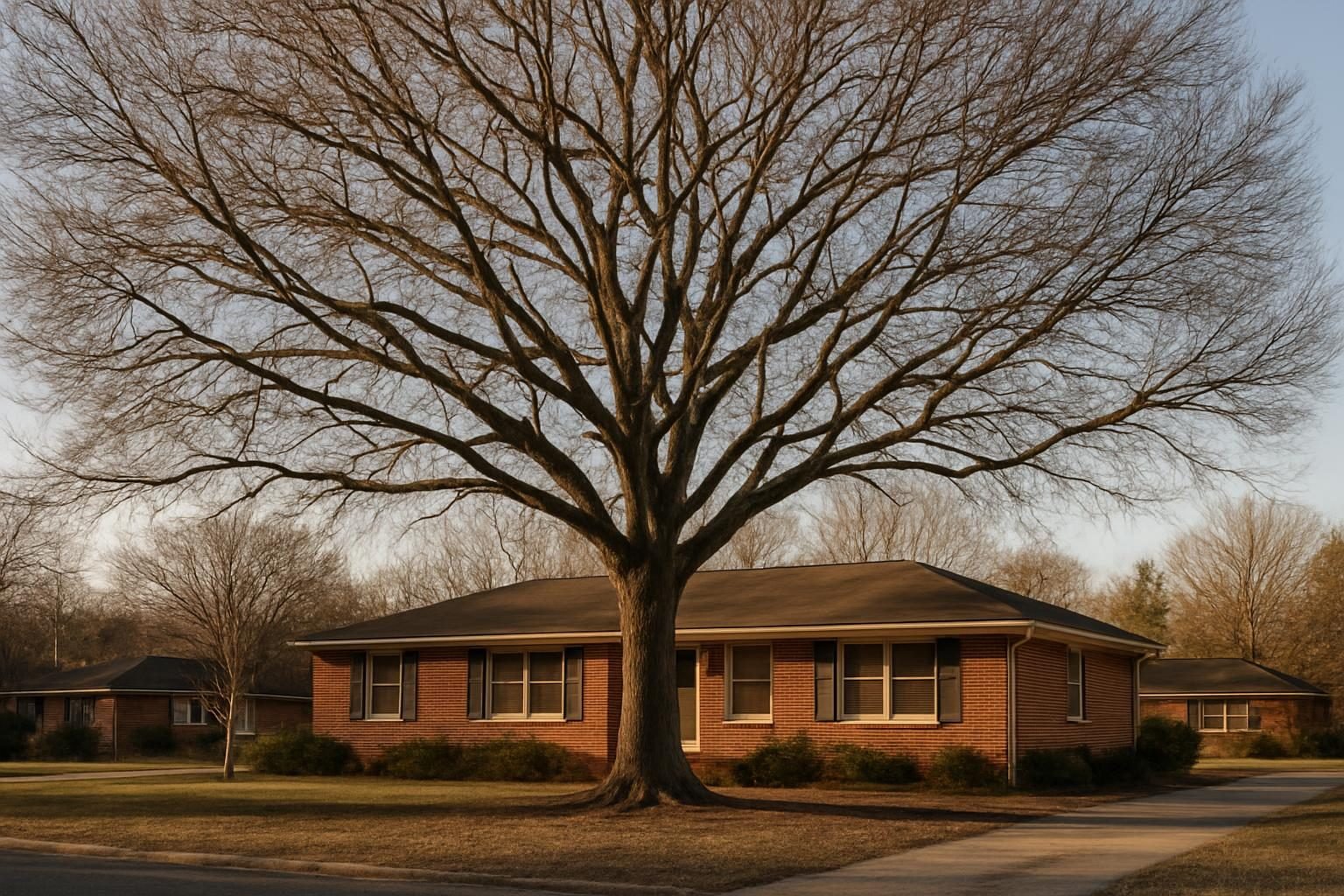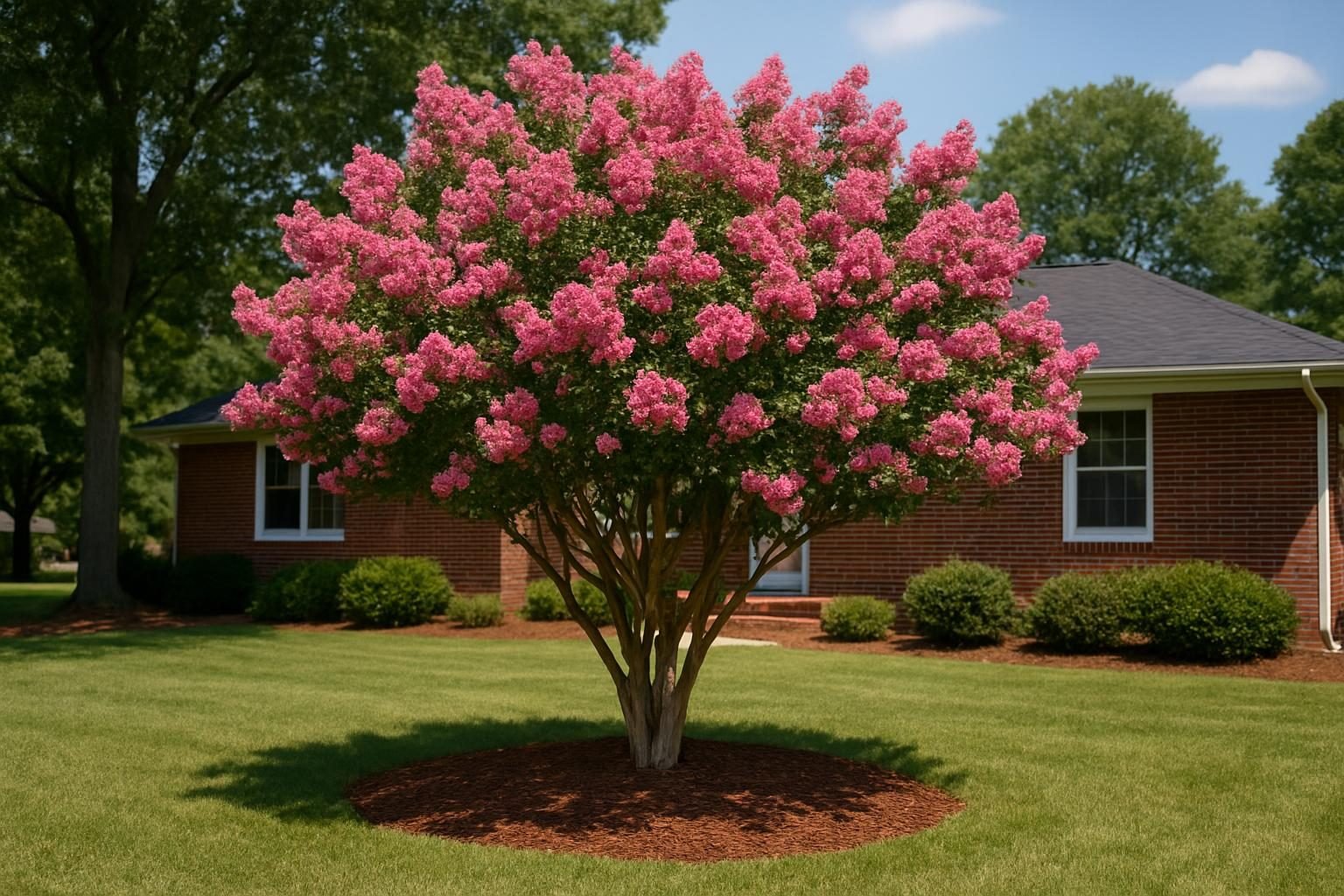
Quick answer: Crepe myrtle maintenance in North Carolina comes down to a few well-timed tasks: inspect in winter, prune lightly in late winter, mulch and water in spring and summer, and clean up in fall. Most healthy crepe myrtles need far less work than people think. The biggest mistake is cutting too much, too hard, at the wrong time.
Key takeaways
- Late winter (February to early March) is the best window for pruning crepe myrtles in the Fayetteville area.
- Mulch 2 to 3 inches deep, pulled back from the trunk, and never pile it into a “volcano.”
- Established trees rarely need more than occasional deep watering in dry summer spells.
- Fall is for cleanup and inspection, not heavy cutting.
- Dead, cracked or leaning trunks near a house or driveway are worth a professional look.
Whether you live in Fayetteville, Hope Mills or Spring Lake, crepe myrtles are one of the most common landscape trees in Cumberland County, and they reward a simple yearly routine. This calendar walks you through what to do and when. If you would rather hand off the work, you can request a free quote for crepe myrtle care using the form on this page.
Why a Crepe Myrtle Maintenance Calendar Helps
Crepe myrtles are forgiving, but they respond to timing. Pruning at the wrong moment can cost you blooms, and neglecting a problem in summer can turn a small issue into a removal job by fall.
A seasonal routine keeps the work small and predictable:
- Winter: inspect structure and prune lightly.
- Spring: mulch, feed if needed and watch for new growth problems.
- Summer: water during dry spells and watch for pests.
- Fall: clean up debris and check for storm vulnerability.
For a deeper look at the basics behind each task, see our guide to crepe myrtle care covering watering, sun, feeding and pruning.
Winter (December to February): Inspect and Plan
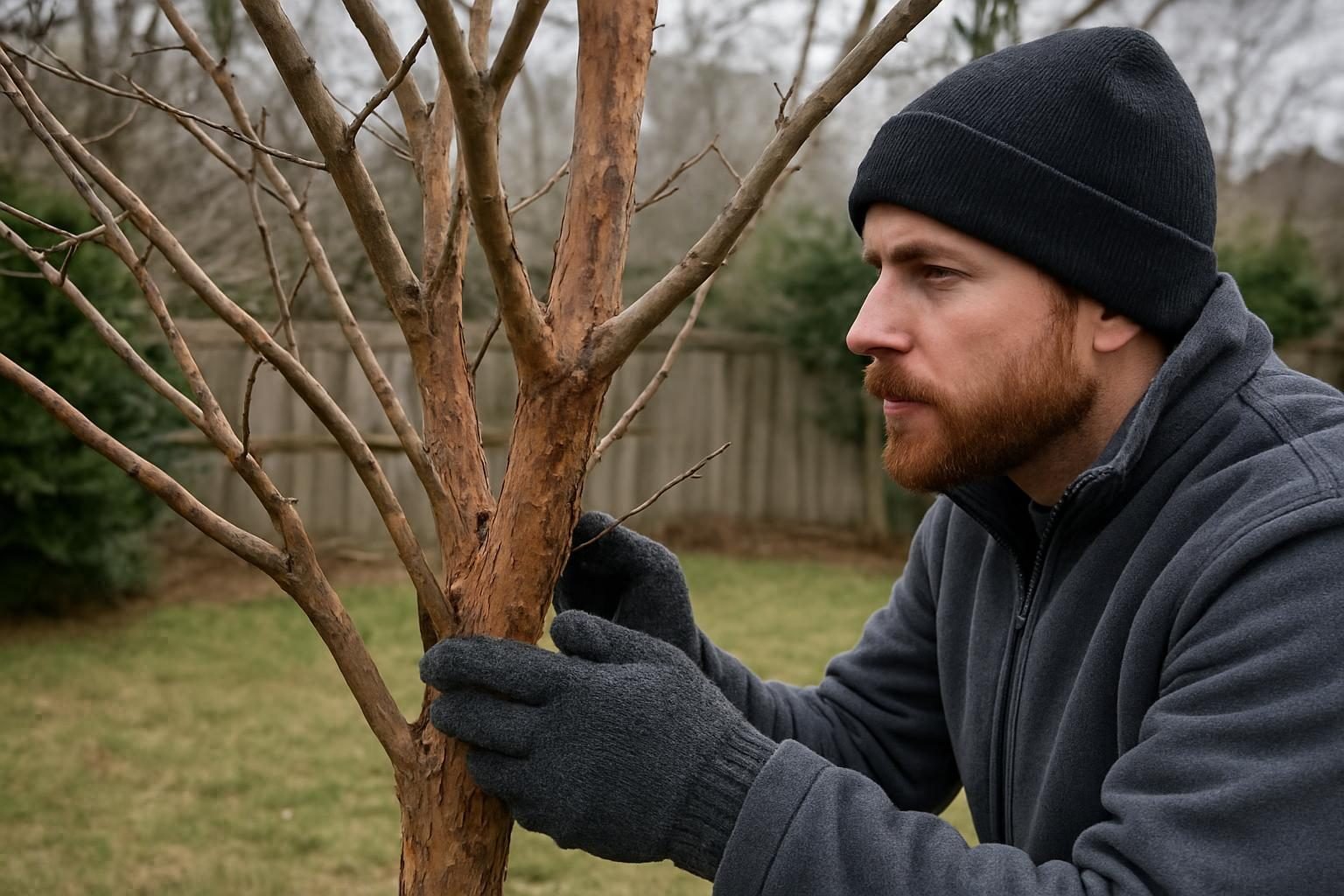
With the leaves gone, winter is the best time to see the structure of the tree. Walk around each crepe myrtle and look closely.
Winter inspection checklist
- Dead wood: brittle branches with no buds that snap cleanly.
- Crossing or rubbing limbs: branches that scrape each other and open wounds.
- Weak attachments: narrow V-shaped forks that are prone to splitting.
- Trunk damage: deep cracks, hollow spots or peeling that exposes dark, soft wood.
- Suckers: shoots rising from the base or roots.
- Lean: a trunk that has shifted since last year, especially after a storm.
Make a quick note of anything that needs attention. If a trunk is cracked or the tree leans toward a roof, fence or driveway, it may be worth a professional opinion. Our page on arborist tree assessments explains what a hazard evaluation involves.
Winter is when a crepe myrtle shows its true structure, so that is when problems are easiest to spot.
Late Winter (February to Early March): Prune Lightly
In the Fayetteville area, late winter before new growth begins is the sweet spot for pruning. The tree is dormant, wounds heal quickly, and you can still see the branch structure clearly.
Keep your goals modest:
- Remove dead, damaged and crossing branches first.
- Cut suckers flush at the base or root.
- Thin crowded interior growth to improve airflow.
- Trim spent seed heads and thin twigs if you like a tidier look.
- Stop there. Leave main branches at their natural height.
Resist the urge to chop every branch down to stubby knuckles. That practice, often called “crape murder,” weakens the tree, produces weak whippy growth and ruins the natural form. Read more in Crepe Myrtle Pruning in Fayetteville: Skip the ‘Crape Murder’, and follow the cuts in how to prune a crepe myrtle step by step.
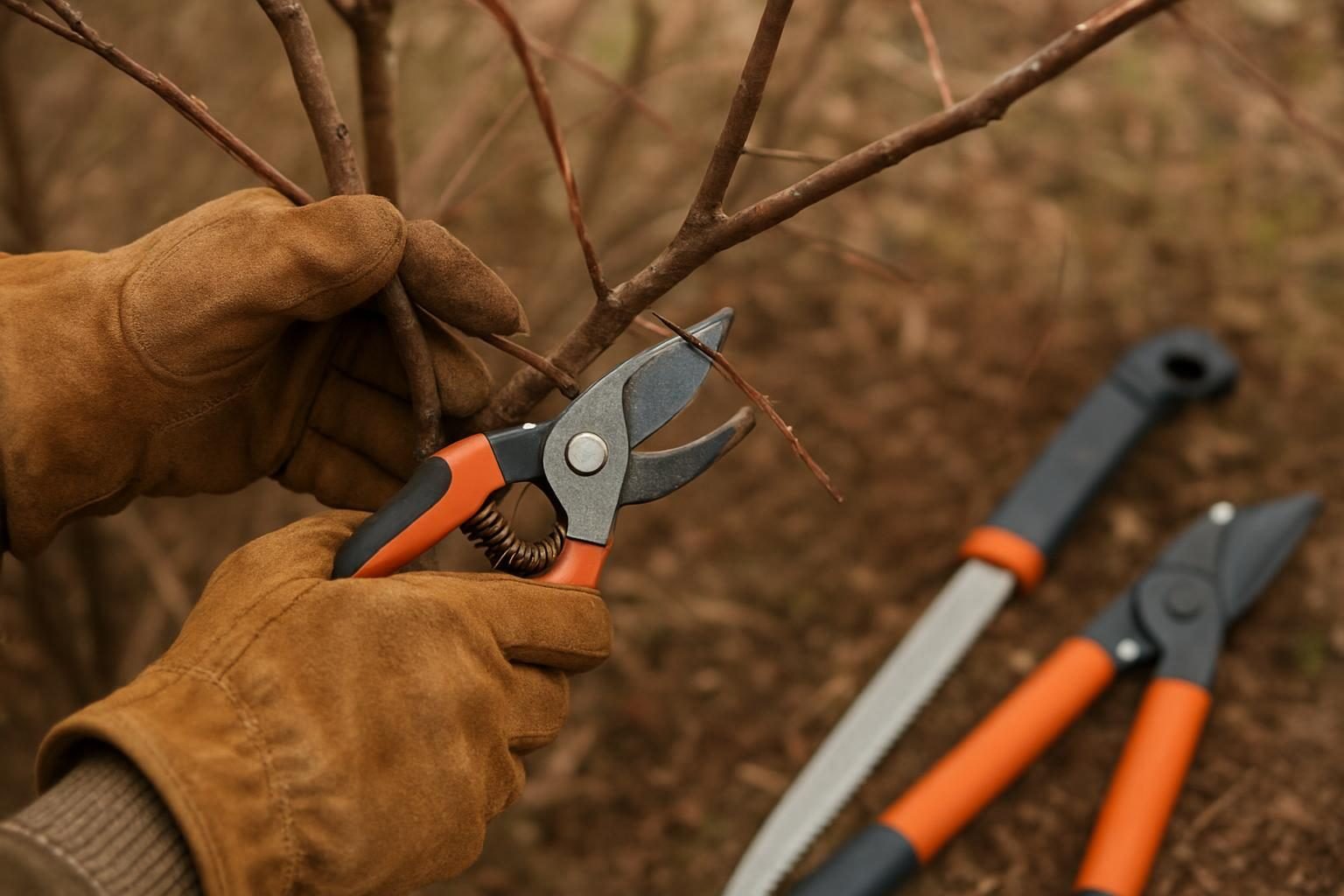
Pro tip: Use sharp bypass pruners or loppers for branches up to about an inch thick, and a pruning saw for larger limbs. Clean cuts heal faster than ragged ones.
If your tree is already too big for the space, topping is not the answer. A professional can reduce or reshape it properly. See our overview of tree trimming and pruning services, and for timing questions read when to prune crepe myrtles in North Carolina.
Spring (March to May): Mulch, Feed and Watch
As buds break, shift from cutting to supporting growth. Spring tasks are simple and quick.
- Refresh mulch: spread 2 to 3 inches of shredded hardwood or pine bark across the root zone, keeping it a few inches away from the trunk.
- Check soil moisture: Cumberland County’s sandy soils drain fast, so new plantings dry out sooner than you might expect.
- Feed only if needed: a light application of balanced slow-release fertilizer is plenty. Too much nitrogen gives you leaves instead of flowers.
- Watch new growth: look for sticky residue, sooty black film or curled leaves that suggest pests.
Late leaf-out is normal. Crepe myrtles often leaf out later than other trees, so do not assume a tree is dead in early April. If it is mid-spring and you are unsure whether you missed the pruning window, check Is It Too Late to Prune Crepe Myrtles? Spring and Summer Rules.
Two to three inches of mulch, kept off the trunk, does more for a crepe myrtle than any fertilizer.
Summer (June to August): Water and Watch for Pests
Established crepe myrtles handle heat well, which is why they thrive across Fayetteville, Raeford and Stedman. Summer maintenance is mostly about smart watering and light monitoring.
Watering guidelines
- New trees (first one to two years): water deeply once or twice a week during dry weather rather than a daily sprinkle.
- Established trees: water deeply every couple of weeks only during extended dry spells.
- Method: soak the root zone slowly with a hose or soaker line and avoid wetting the foliage late in the day.
What to watch for
- Powdery mildew: white film on leaves in humid, shady conditions.
- Aphids and sooty mold: sticky leaves with a black coating. A strong spray of water often helps, and extension office guidance can help you choose a treatment.
- Deadheading: trimming faded flower clusters may encourage a second, lighter flush of blooms on some varieties.
Heavy pruning in summer is not recommended. Stick to removing dead or hazardous limbs. If a branch breaks in a thunderstorm, clean up the wound with a proper cut.
Fall (September to November): Cleanup and Storm Readiness
Fall is the time to tidy up and prepare for hurricane-season leftovers and winter winds. It is not the time for hard pruning, since cuts made now can stimulate tender growth that frost may damage. See Can You Prune Crepe Myrtles in the Fall? What’s Safe to Cut for details.
A good fall routine:
- Rake and dispose of fallen leaves to reduce disease carryover.
- Remove dead or broken branches from storm and summer stress.
- Top off mulch if it has thinned or washed out.
- Check the base and trunk for new cracks, fungal growth or soft spots.
- Pull or cut suckers before they establish.
After any major wind event, give your trees a second look. Our guide on how to check trees for hidden damage after a storm shows what to look for.
When Maintenance Turns Into a Bigger Job
Most crepe myrtles stay manageable for decades. Some situations call for professional help rather than a weekend of DIY:
- A tree that has been topped repeatedly and has weak, clustered regrowth.
- A large trunk with deep cracks, decay or a growing lean.
- Branches over a roof, power line or driveway.
- A dead or declining tree that needs removal and stump grinding.
Costs vary by size, access and cleanup. As a rough estimate, small crepe myrtle trimming jobs often run in the low hundreds of dollars, while larger removals can cost more depending on the site. Our tree service cost guide explains what drives pricing in the Fayetteville area. For a removal, see tree removal in Fayetteville.
If you are ready to compare options, request a free crepe myrtle maintenance quote from local tree service companies using the form below.
Frequently Asked Questions
When is the best time to do crepe myrtle maintenance in North Carolina?
Late winter, roughly February to early March, is the best time for pruning. Mulching and feeding fit best in spring, watering in summer dry spells, and cleanup in fall.
How often should I prune a crepe myrtle?
Most need only light pruning once a year, mainly to remove dead wood, crossing branches and suckers. Heavy cutting every year is unnecessary and harms the tree’s shape.
Do crepe myrtles need fertilizer?
Often not. In average soil, a layer of mulch and occasional watering is enough. If growth is weak or leaves are pale, a light application of balanced slow-release fertilizer in spring may help. A soil test through your local extension office can guide you.
Should I hire someone for crepe myrtle care?
Small trees are manageable for most homeowners. For tall trees, ladder work, damaged trunks or branches near structures, hiring an insured professional is safer. Compare written estimates before you decide.
Get a free crepe myrtle care or pruning quote
A local tree service company will contact you with a free, no-obligation quote for your Cumberland County property.