Quick answer: Prune shrub-form and dwarf crepe myrtles in late winter, before new growth starts, by thinning crowded stems at the base and trimming back tips to keep a rounded shape. Unlike tree-form crepe myrtles, you are managing a multi-stemmed mound rather than building a few clean trunks. In the Fayetteville area, late February through mid-March is the sweet spot.
Key takeaways
- Shrub and dwarf crepe myrtles are pruned for shape and density, not for trunk structure.
- Late winter (before bud break) is the best window; avoid hard cuts in fall.
- Thin old, crossing and weak stems at ground level instead of shearing the whole plant flat.
- Choosing a true dwarf cultivar saves years of size-control pruning.
- Oversized plants that have outgrown their spot may need a pro, not more shearing.
Plenty of homeowners in Fayetteville, Hope Mills and Spring Lake plant a crepe myrtle expecting a small flowering bush, then watch it climb past the foundation plantings. Others inherit a compact variety and aren’t sure whether to prune it like its taller cousins. The rules overlap, but crepe myrtle bush pruning has its own goals and techniques.
If you’d rather have someone experienced handle an overgrown planting, you can request a free pruning consultation using the form on this page.
How Shrub and Dwarf Crepe Myrtles Differ From Tree Forms
Tree-form crepe myrtles are typically grown with three to seven clean, upright trunks and a lifted canopy. Shrub-form and dwarf varieties are different plants with a different job in the landscape.
- Growth habit: Dwarf types branch low and densely, forming a mound or vase from the ground up.
- Mature size: Dwarf cultivars often stay in the 2 to 6 foot range, while semi-dwarf types may reach 6 to 12 feet. Standard tree forms can exceed 20 feet.
- Pruning goal: Shape, flower production and size control rather than trunk selection and canopy lifting.
- Common mistake: Shearing the whole plant like a hedge, which creates a dense outer shell and weak, twiggy growth.
Size depends on the specific cultivar, so check the plant tag or ask the nursery if you can. If you don’t know what you have, observe how tall it gets in one full season before deciding how hard to cut.

When to Prune Crepe Myrtle Shrubs in Fayetteville
Crepe myrtles bloom on new wood, which means growth that emerges this spring produces this summer’s flowers. That makes late winter the ideal time to prune, while the plant is dormant and its structure is easy to see.
- Late February to mid-March: Your main pruning window for thinning and shaping in Cumberland County.
- Early spring, as buds swell: Fine for light corrections, but avoid cutting after heavy new growth has started.
- Summer: Only light deadheading or trimming errant shoots if needed.
- Fall: Avoid hard pruning, since it can push tender growth that frosts then damage.
For a deeper breakdown by season, see our guide to when to prune crepe myrtles in North Carolina, and our notes on whether you can prune crepe myrtles in the fall.
Pro tip: Wait until you’ve seen a few warm days and swelling buds before cutting. In a mild winter, plants wake early; in a cold snap, waiting a couple of weeks costs you nothing.
A shrub crepe myrtle should look like a healthy mound, not a gumdrop or a stump.
Crepe Myrtle Bush Pruning Step by Step
The approach is thinning first, shaping second. You are opening up the plant so light and air reach the center, then lightly refining the outline.
- Remove dead and damaged wood. Cut back to healthy tissue or to the base. Dead stems are usually gray, brittle and bud-free.
- Take out crossing and rubbing stems. Pick the weaker one and remove it at its origin.
- Thin old, thick stems at the ground. On an overgrown shrub, removing about a quarter to a third of the oldest stems each year renews the plant gradually.
- Cut suckers and weak inner shoots. Thin, spindly growth crowding the center should go.
- Shape the outline. Trim tips just above an outward-facing bud to keep a natural, slightly vase-like or rounded form.
- Step back and check. Look for balance from several angles before making more cuts.
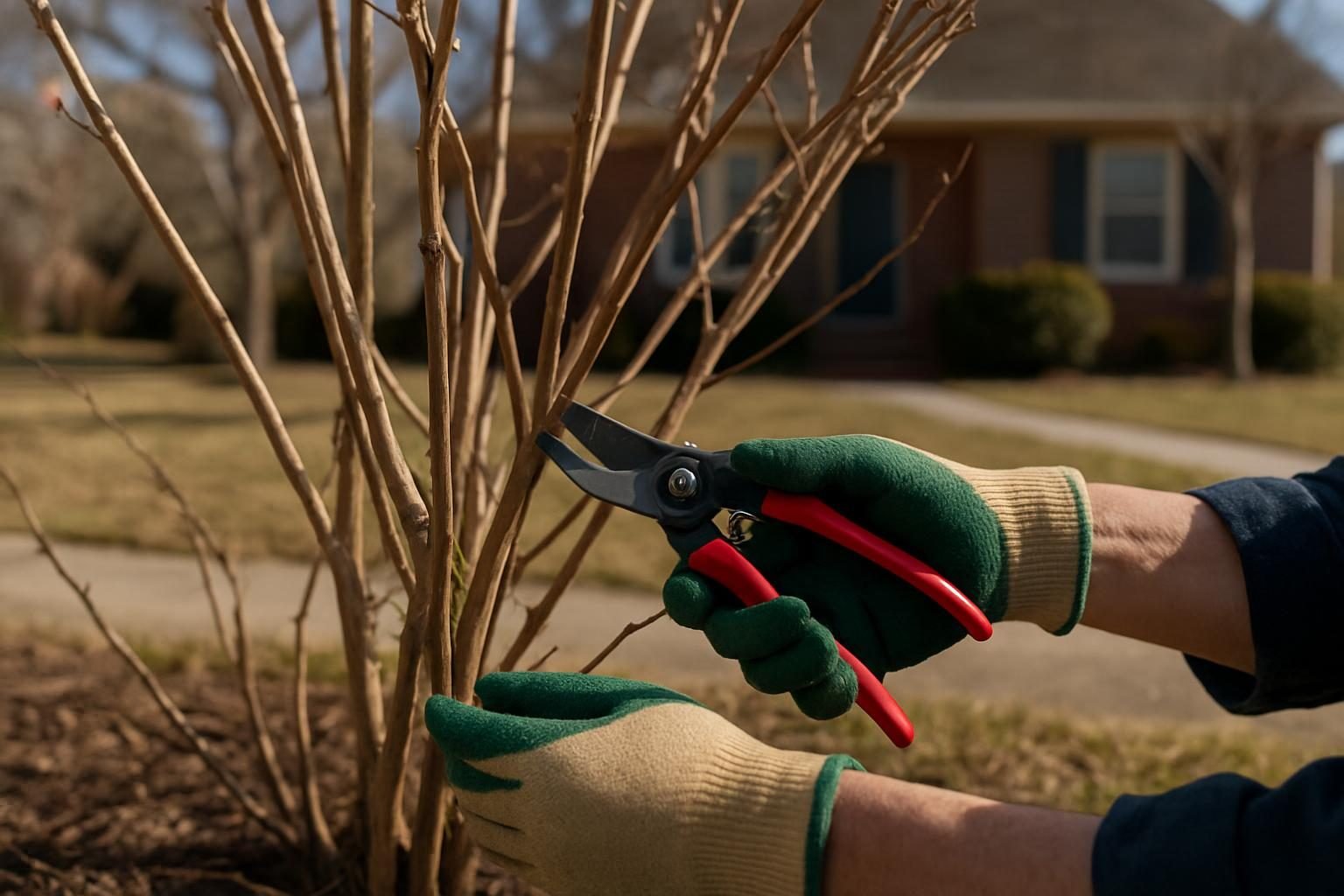
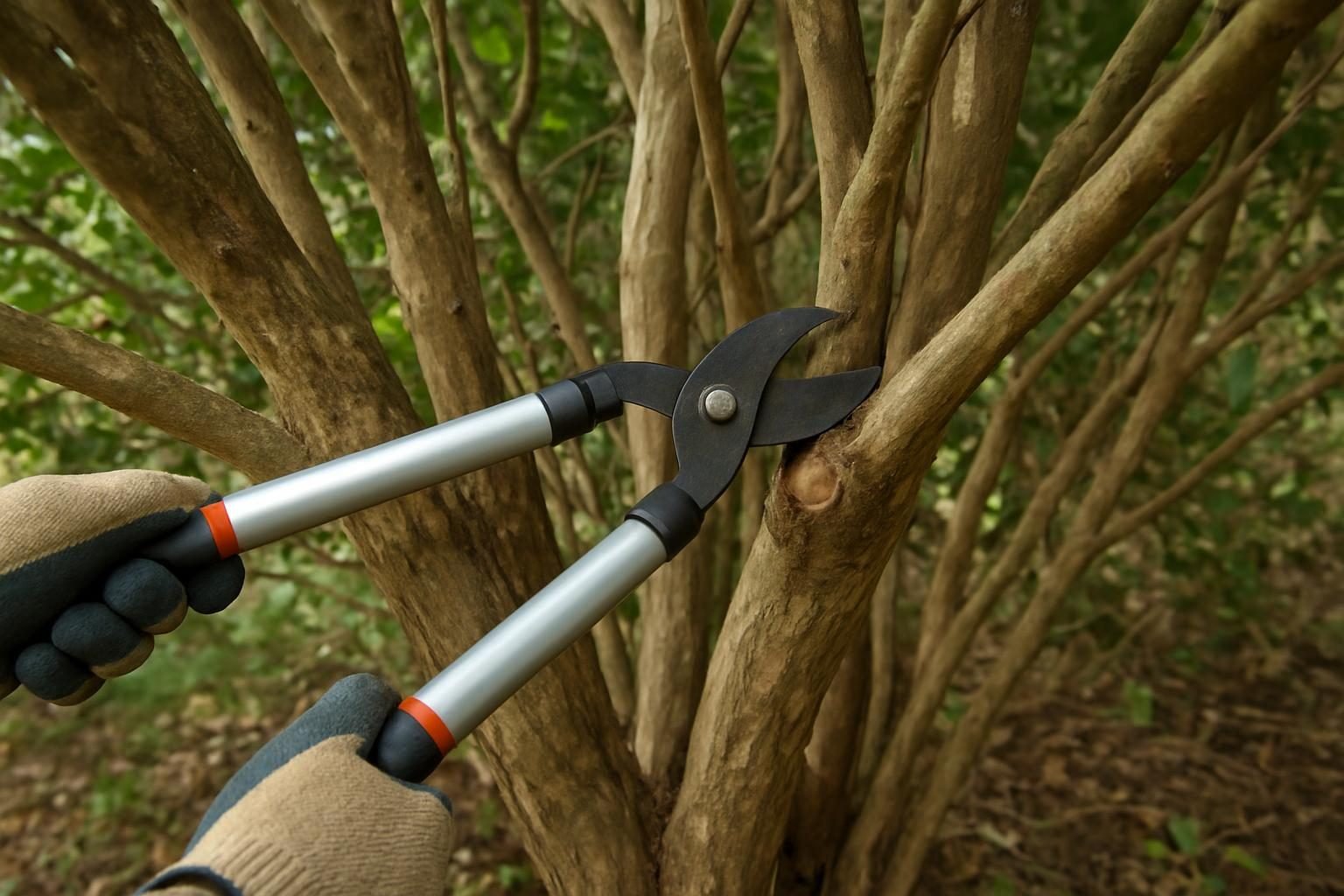
Use clean, sharp bypass pruners for stems up to about three-quarters of an inch, loppers for thicker ones and a pruning saw for the largest. Our broader walkthrough on how to prune a crepe myrtle step by step covers tool handling and cut placement in more detail.
Thinning vs. Shearing: Why It Matters
Shearing is fast, which is why so many landscapes rely on it. But on a crepe myrtle, it tends to backfire.
- Thinning cuts remove whole stems or branches at their base or at a junction. They keep the plant’s natural form and allow light inside.
- Heading or shearing cuts chop tips across the plant. They stimulate dense, twiggy regrowth at the cut line and shade the interior.
- The result of heavy shearing: Smaller flower clusters, more disease pressure from poor airflow, and a plant that needs constant trimming to look tidy.
Powdery mildew is a common issue on crepe myrtles in humid Southeast summers, and crowded growth makes it worse. Opening up the plant is one of the simplest ways to reduce that pressure. For general growing needs, our crepe myrtle care guide covers watering, sun and feeding.
Thinning keeps the plant’s natural shape; shearing trades it for a dense shell and weaker blooms.
Controlling Size Without Wrecking the Plant
Size control is where dwarf and shrub forms need the most thought. The goal is to hold the plant at a manageable height without ruining its structure.
- Start with the right plant. A true dwarf cultivar needs far less size management than a standard variety squeezed into a small bed.
- Reduce gradually. Cut stems back to a side branch or outward-facing bud rather than flat across.
- Limit how much you remove at once. Taking more than about a third of the plant in one season can stress it and trigger weak sprouts.
- Plan ahead. If a shrub is outgrowing a window or walkway, annual light reduction beats a drastic reset every few years.
Avoid the temptation to cut everything to stubs. That style, often called “crape murder,” leaves ugly knuckles and weak regrowth. We explain it in our post on crepe myrtle pruning in Fayetteville, and the same logic applies to shrub forms.
A plant that has grown far beyond its intended size might not be a pruning problem at all. In some cases, removal and replacement with a truly compact cultivar is the more sensible choice.
When to Call a Tree Pro for Crepe Myrtle Shrubs
Most small shrub crepe myrtles are easy DIY work. A few situations call for professional help, especially around Raeford, Stedman and the rural edges of Cumberland County where overgrown plantings are common.
- Overgrown plants: Dense multi-stem clumps taller than you can reach safely from the ground.
- Heavy dieback or disease: Blackened or peeling bark, sticky residue from aphids and sooty mold, or large sections of dead wood.
- Near structures or power lines: Tall plants growing close to roofs, fences or service lines.
- Restoration jobs: Plants previously topped that now have crowded, weak regrowth.
For costs, see our guide to tree trimming and pruning cost in Fayetteville, and learn more about professional tree trimming and pruning options. As a rough estimate, small shrub-sized pruning visits often fall in the low hundreds of dollars, with larger or more complex jobs costing more, but quotes vary by company and site conditions.
If you want a local pro to look at your planting, you can request free, no-obligation quotes using the form on this page.
Frequently Asked Questions
Can I prune a dwarf crepe myrtle the same way as a tree-form one?
Not quite. Both are pruned in late winter, but tree forms are shaped around a few main trunks, while dwarf and shrub types are thinned from the base and kept as a mound.
How much can I cut off a crepe myrtle shrub at one time?
As a general guideline, keep total removal to about a third of the plant or less in a single season. Spreading renewal over two or three years is easier on the plant.
Do I need to deadhead spent blooms?
It isn’t required. Light deadheading may encourage a bit more bloom on some varieties, but it’s optional and not worth heavy effort on a larger planting.
My dwarf crepe myrtle is blooming poorly. Is pruning the cause?
It can be. Heavy shearing, too much shade, or crowded growth can all reduce flowers. Most crepe myrtles need at least six hours of direct sun for good bloom.
Get a free crepe myrtle pruning quote in Fayetteville
A local tree service will contact you with a free, no-obligation quote for your crepe myrtle pruning.