Quick answer: The best trees to plant in Fayetteville, NC are tough natives that handle zone 8a heat, sandy Sandhills soil and summer thunderstorms: longleaf pine, willow oak, red maple, river birch, eastern redbud, flowering dogwood, southern magnolia and bald cypress. Match the tree’s mature size to the spot, and skip Bradford pear entirely.
Key takeaways
- Fayetteville sits in USDA zone 8a, with hot summers, mild winters and often sandy, fast-draining soil.
- Native trees like longleaf pine and willow oak cope with the Sandhills far better than fussy ornamentals.
- Plant large trees well away from the house, driveway and overhead lines; small trees can sit much closer.
- Avoid Bradford pear: it splits in storms and spreads aggressively.
- Fall through early spring is the best planting window for root establishment.
Picking the right tree is the cheapest tree care you will ever do. A well-matched tree grows for decades with minimal fuss, while a poor match becomes a removal bill. If you are planting around Fayetteville, Hope Mills or Spring Lake, the notes below will help you choose and place it correctly.
Already have a tree that was the wrong pick? You can request a free tree service quote to have local companies look at it.
What Fayetteville’s Climate and Soil Mean for Tree Choice
Cumberland County straddles the line between the Coastal Plain and the Sandhills. Many yards, especially toward Spring Lake, Raeford and the Fort Bragg area, have sandy, acidic, fast-draining soil. Closer to the Cape Fear River and in low spots, you may find heavier, wetter ground.
That variation matters more than any list. Before you buy, check these three things:
- Drainage: Dig a foot-deep hole, fill it with water and see how long it takes to drain. Under an hour is fast and sandy; more than a few hours means wet feet.
- Sun: Count the hours of direct sun. Full sun is six or more hours.
- Space: Measure the overhead and side clearance to the house, fence, pool and utility lines.
Sandy soil dries out quickly, so any new tree needs consistent watering for its first two growing seasons. Mulch helps a lot, and the guide to mulching around trees covers how to do it without piling it against the trunk.
The Best Trees to Plant in Fayetteville, NC by Type
Large shade and canopy trees
- Willow oak: A fast-growing, clean-looking native with narrow leaves that break down quickly. It makes an excellent street or yard shade tree and handles both wet and average soils. It gets big, so give it room.
- Red maple: Adaptable and quick, with good fall color. It tolerates wetter spots better than most, though it can struggle in very dry, sandy sites without watering.
- Bald cypress: Known for swamps but surprisingly adaptable to ordinary yards. It loves moisture and works well near ponds, ditches and low areas.
Evergreens
- Longleaf pine: The signature tree of the Sandhills. It thrives in sandy, dry, acidic soil and is more resistant to wind and fire than many other pines. Young trees stay in a grass-like stage for a few years before shooting up, so be patient.
- Southern magnolia: Glossy evergreen leaves and big white blooms. It is a large tree with heavy leaf drop, so plant it where you can tolerate the litter and where it has plenty of space.
Small ornamental trees
- Eastern redbud: Early spring pink blooms and a modest size. It does well in full sun to part shade.
- Flowering dogwood: Beautiful but a bit fussy. It prefers part shade, rich, well-drained soil and consistent moisture, so it often struggles in hot, dry, sandy full sun.
- River birch: Peeling, cinnamon-colored bark and a graceful form. It likes moist soil and is a good fit for damper spots, though it may need extra water in dry sandy areas.
Pro tip: Buy from a local nursery that sells trees grown for the Carolinas. They stock varieties suited to our climate and can tell you which ones are doing well locally.
The right tree in the right spot saves you thousands in future removal and repair costs.
How Far to Plant Trees From Your House, Driveway and Power Lines
Most problems come from planting a big tree too close to something. Mature size, not nursery size, should drive the decision. These are general guidelines; check the specific tree’s mature spread and talk with a certified arborist if you are unsure.
- Large trees (willow oak, red maple, bald cypress, longleaf pine): Often 20 to 30 feet or more from the house, and well clear of the driveway, septic system and underground lines.
- Medium trees (river birch, southern magnolia): Roughly 15 to 25 feet from structures, depending on variety.
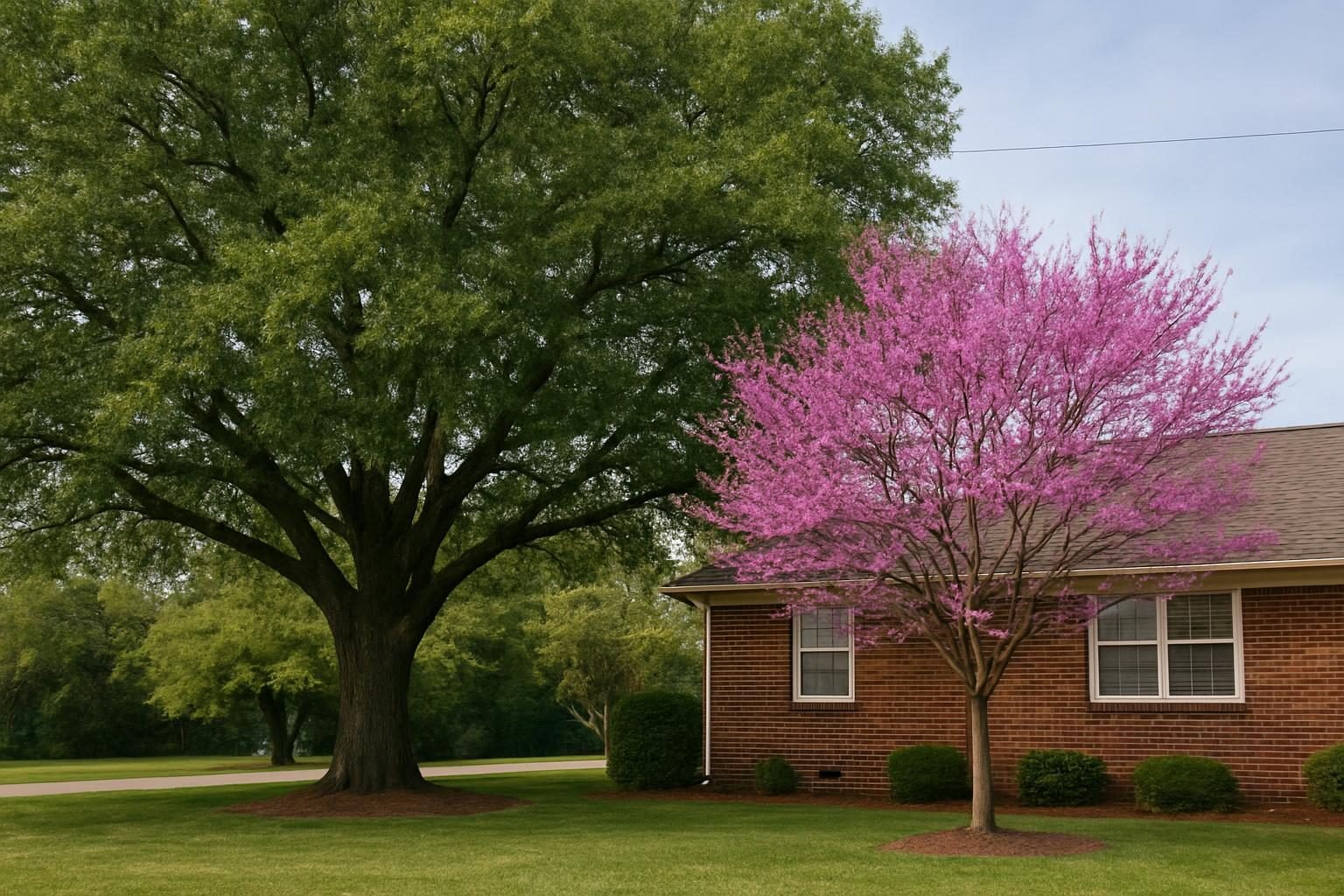
- Small trees (redbud, dogwood): Around 10 to 15 feet from the house is usually workable.
Staying clear of overhead lines
Never plant a tree that will grow into overhead power lines. Choose only small ornamentals, such as redbud or dogwood, beneath or near lines, and keep tall species well away. If roots or limbs are already creeping toward utilities, our guide on removing a tree near power lines explains who pays and what it costs.
Before you dig, call 811, the free national call-before-you-dig service, so buried utilities get marked. It takes a couple of days, so plan ahead.
Roofs and structures
Branches overhanging the roof drop debris and give storms something to throw at your shingles. If an existing tree is already too close, see how far trees should be trimmed back from your roof.
Trees to Avoid in Fayetteville Yards
Some popular trees cause more trouble than they are worth in our area.
- Bradford pear: Weak branch structure means it splits in wind and ice, and it spreads into natural areas. See why homeowners remove them in our Bradford pear guide. Native alternatives like redbud or dogwood give you spring flowers without the problems.
- Water oak near the house: Fast-growing and short-lived, with a tendency toward hollow trunks and dropped limbs. Read more in our water oak problems guide before planting one close to buildings.
- Sweetgum: Spiky seed balls and shallow roots make it a nuisance in lawns and near walkways.
Bradford pears bloom beautifully, but they are notorious for splitting apart in the first serious storm.
Planting Tips for Sandy Fayetteville Soil
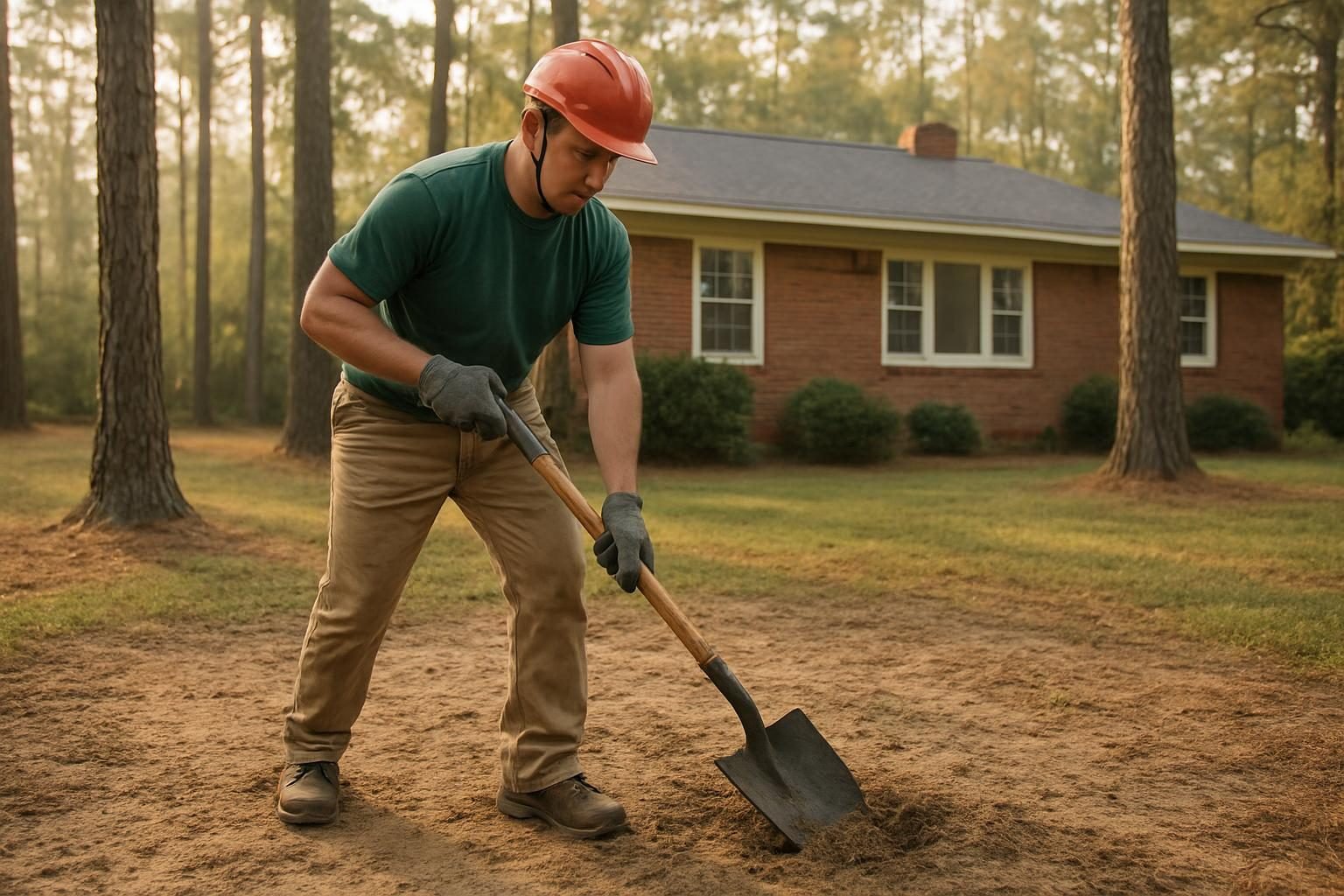
Getting the tree in the ground correctly matters as much as choosing it. Follow these steps:
- Time it right. Plant from fall through early spring so roots establish before summer heat.
- Dig wide, not deep. The hole should be two to three times the width of the root ball but only as deep as the root ball itself.
- Set the root flare at ground level. The point where the trunk widens should sit at or slightly above the soil line.
- Backfill with native soil. Skip heavy amendments; roots need to grow into the surrounding ground.
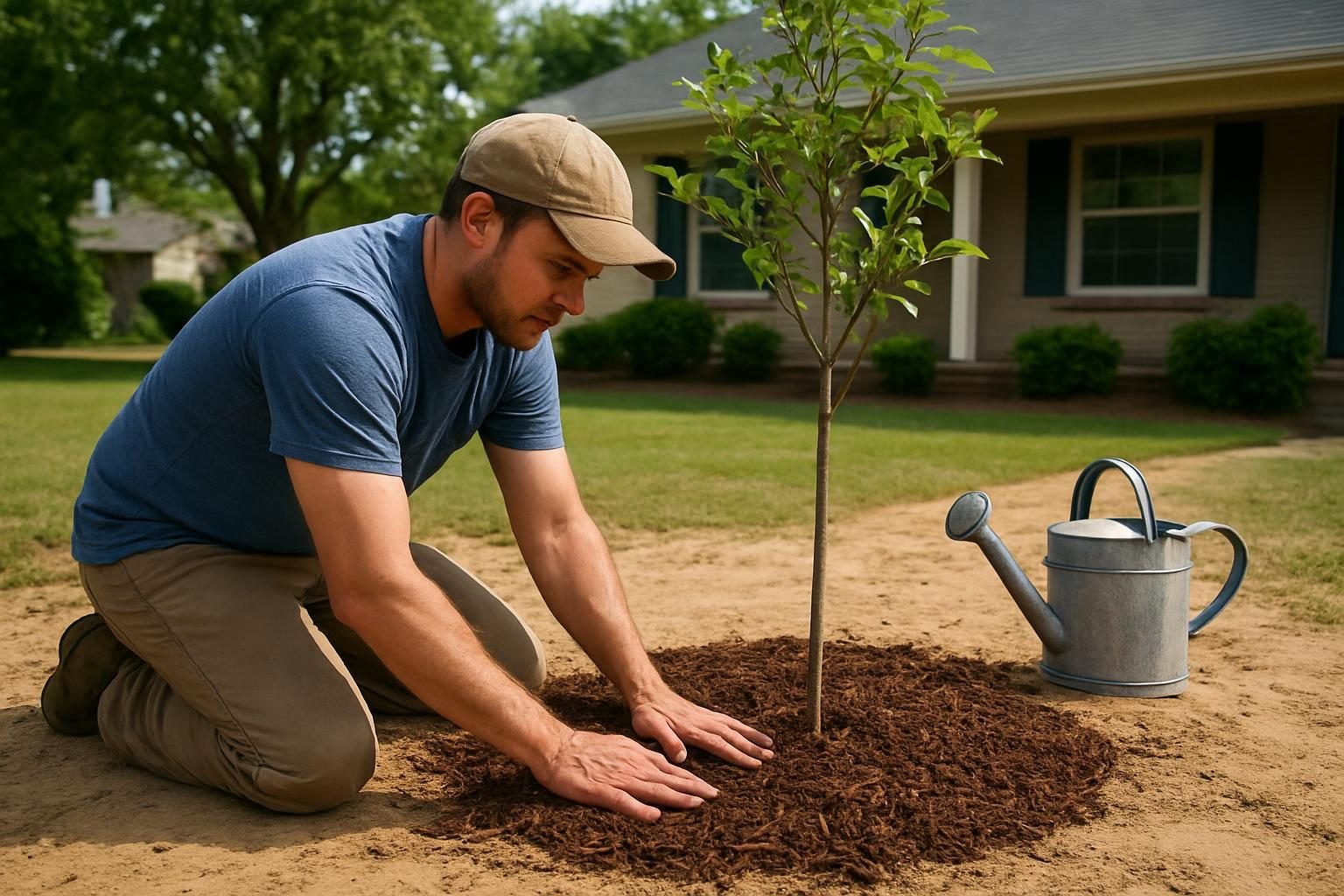
- Mulch 2 to 3 inches deep. Keep mulch a few inches back from the trunk.
- Water deeply and regularly. Slow, deep soaks once or twice a week through the first two summers beat daily sprinkles.
Planting With Storms in Mind
Hurricane season is a fact of life in Cumberland County. Tree choice and placement both affect how your yard fares. Longleaf pine and live-oak-type hardwoods generally hold up better than weak-wooded, fast-growing species, and well-spaced trees with good structure take wind better than crowded ones.
Young trees benefit from early structural pruning. Our guide on the best time to trim trees in North Carolina lays out a month-by-month schedule, and our hurricane tree prep checklist covers what to do before storm season. For ongoing pruning help, see our tree trimming and pruning service page.
If an older tree on your property is already a concern, a professional arborist assessment can tell you whether to keep, prune or remove it. When you are ready to compare options, request a free tree service quote from local companies serving Fayetteville, Hope Mills, Stedman and the rest of Cumberland County.
Frequently Asked Questions
What is the fastest-growing good tree for Fayetteville?
Willow oak and red maple are among the faster native options with solid long-term performance. Avoid extremely fast growers like Bradford pear, which trade speed for weak wood.
When is the best time to plant trees in Fayetteville, NC?
Fall through early spring is ideal. Cooler weather and winter rains let roots settle in before the heat arrives. You can plant in summer, but expect to water much more.
What tree grows well in dry, sandy soil?
Longleaf pine is the classic choice. It evolved in Sandhills soil and tolerates dry, acidic ground that frustrates many other species.
How far from my house should I plant a tree?
It depends on mature size. As a rough guide, large shade trees belong 20 to 30 feet or more from the house, while small ornamentals like redbud and dogwood can sit closer. Always check the specific variety’s mature spread.
Get a free tree planting and tree care quote
A local Fayetteville-area tree service will contact you with a free, no-obligation quote.