Quick answer: A healthy tree leafs out fully on schedule, shows fresh twig growth each year, has intact bark, a visible root flare and no large dead limbs. Warning signs include bare branches in summer, peeling or cracked bark, mushrooms at the base, and heavy woodpecker activity. If you spot several of these at once, have a certified arborist take a look.
Key takeaways
- Check your trees at least once each season; different problems show up at different times of year.
- Full leaf out, strong twig growth and sound bark are the best everyday signs of health.
- Mushrooms at the base, a buried or damaged root flare and dead branches in the canopy deserve a closer look.
- One odd sign is not a death sentence, but a cluster of problems is a reason to call an arborist.
Knowing how to tell if a tree is healthy saves money and prevents damage, especially in Fayetteville and Cumberland County where summer thunderstorms, hurricane remnants and the occasional ice storm test every tree in the yard. A ten-minute walk-around each season will catch most problems early, when they are cheaper to fix.
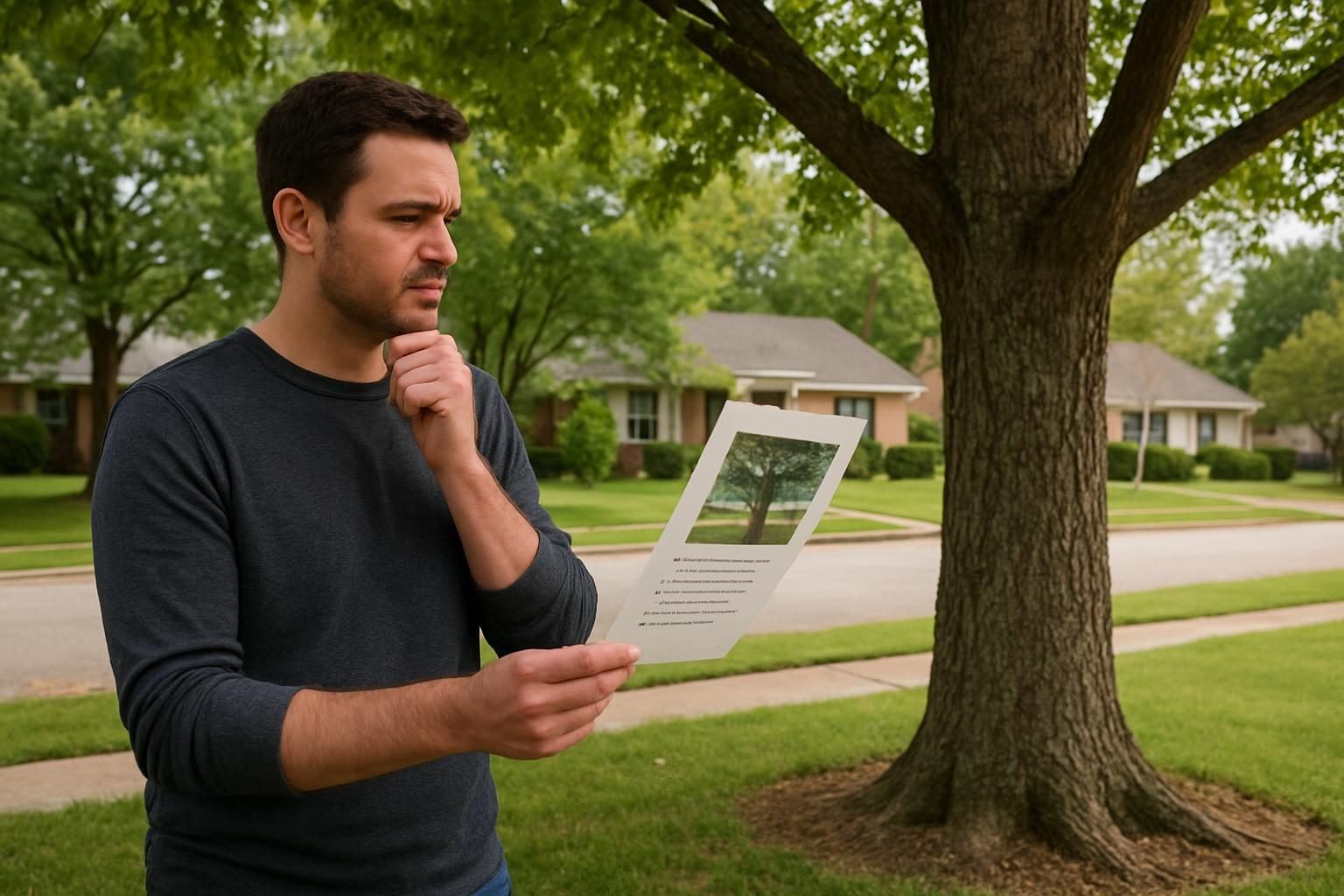
If you would rather have a professional eye on a tree you are worried about, you can request a free consultation using the form on this page.
The Basics: What a Healthy Tree Looks Like
Before you start hunting for problems, know what normal looks like. A healthy tree generally has:
- A full, balanced canopy with leaves (or needles) spread fairly evenly on all sides.
- Leaves of normal size and color for the species and time of year.
- Steady annual growth at the branch tips.
- Firm, intact bark without large cracks, open wounds or oozing.
- A visible root flare, where the trunk widens as it meets the ground.
- One dominant leader and branches attached at sturdy angles.
Take a few photos each year from the same spots. Comparing pictures is the easiest way to notice slow changes you would otherwise miss.
Spring Checks: Leaf Out and Twig Growth
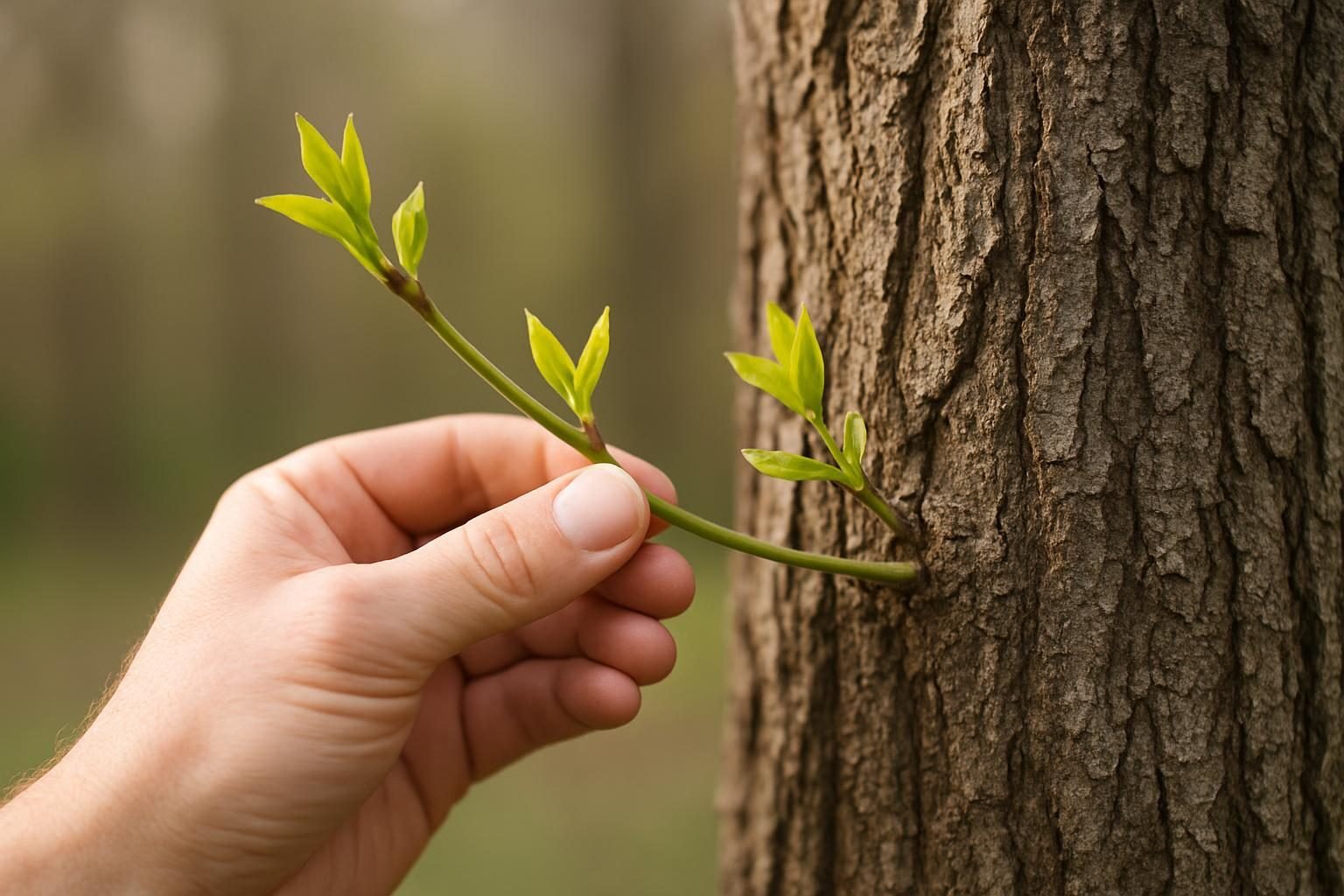
Spring is the best season to judge whether a tree is alive and vigorous. In the Fayetteville area, most hardwoods like oaks, maples and sweetgums leaf out from late March into April. Pecans and some others come out later, so give them time before worrying.
What to look for
- Delayed or patchy leaf out: If neighboring trees of the same species are green and yours is bare or only partly leafed, something is wrong.
- Small, pale or sparse leaves: This can point to root stress, compacted soil or nutrient problems.
- Twig growth: Healthy twigs are flexible and show new growth each year. Scratch a small twig with a fingernail. Green and moist underneath means alive; brown and dry means dead.
Pro tip: Do the scratch test on several twigs from different parts of the tree. A single dead branch is common; dead twigs across a whole side of the canopy are not.
Last year’s new growth, usually a few inches to a foot or more depending on species, should be easy to spot as a slightly different color or texture at the branch tips. If growth has shrunk to almost nothing for two or three years running, the tree is under stress.
A tree that leafs out late, thin or lopsided is telling you something is wrong below the surface.
Summer Checks: Leaf Color, Wilting and Pests
Summer heat and humidity expose weak trees fast. Walk the yard in June and again in August, ideally after a dry spell.
- Leaf color: Yellowing, browning at the edges, or spots can signal disease, drought stress or nutrient issues. Early fall color in July or August is a distress signal, not a bonus.
- Wilting or scorched leaves: If leaves stay limp in the morning after a good night’s rest, the roots may not be delivering water.
- Leaves clinging dead on branches: Brown leaves that never drop mean those branches died recently.
- Insect signs: Sawdust-like frass, small exit holes, sticky honeydew or webbing deserve a closer look.
- Pines: Needles turning red or brown from the top or all at once can mean beetles or root problems. See our guide on how to tell if a pine tree is dead or dying for pine-specific signs.
Sandy soils common around Spring Lake, Hope Mills and Raeford drain fast, so trees there can show drought stress sooner than trees on heavier soils. A slow, deep watering during dry stretches helps young and recently stressed trees.
Bark and Trunk: Reading the Structure
Bark is a tree’s protective skin, and damage there often points to trouble inside. Check the trunk all the way around, not just the side facing the house.
Signs of trouble
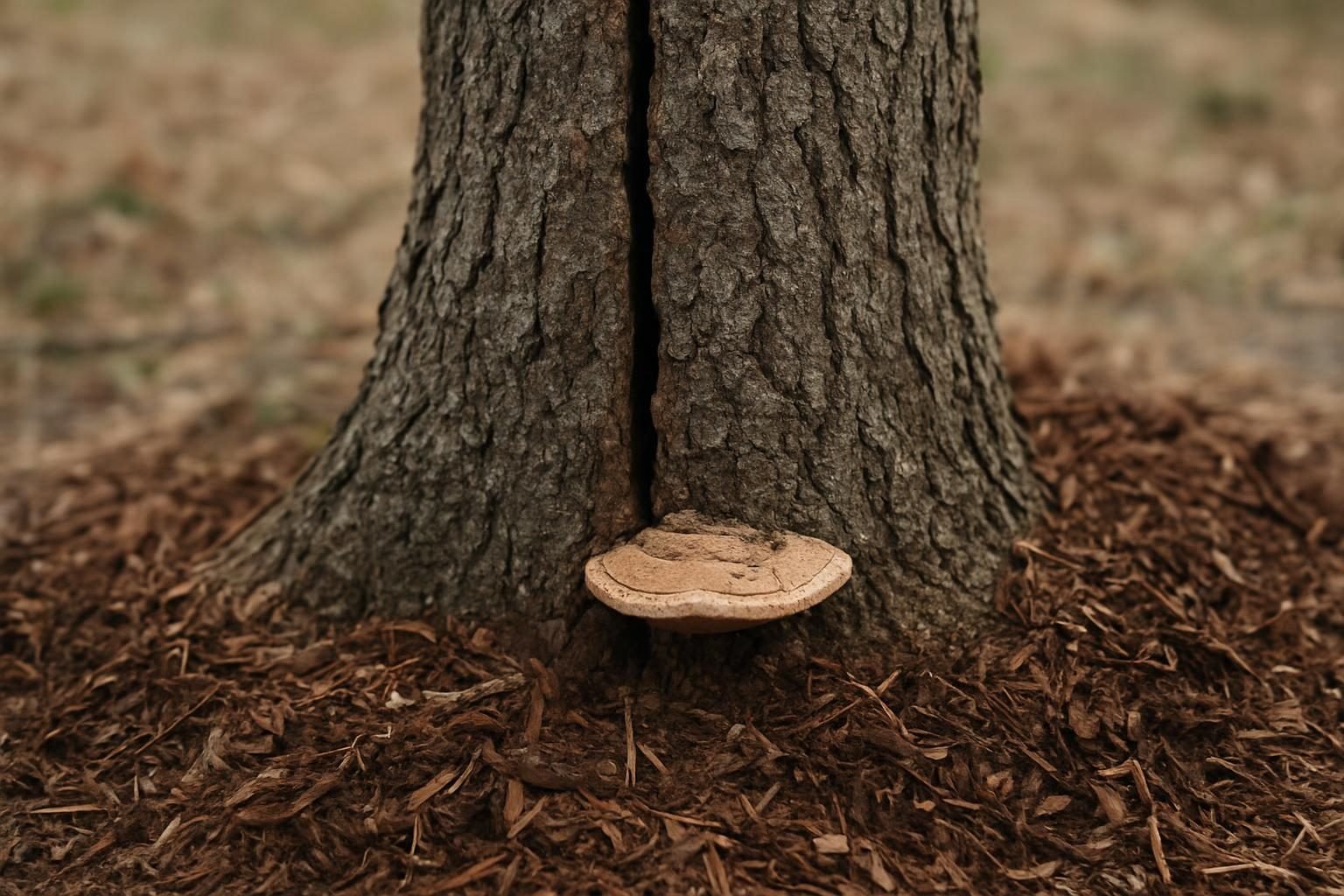
- Vertical cracks or splits that are wide, deep or growing.
- Peeling or missing bark in large patches, especially with exposed, discolored wood.
- Oozing or weeping sap with a sour smell.
- Cavities or hollow spots you can see into or that sound hollow when tapped.
- Included bark, where two trunks or limbs form a tight V with bark pinched between them. These unions tend to split. Bradford pears are notorious for this; see why Bradford pears split and get removed.
- Lean: A tree that has always leaned is often fine. A tree that has recently started leaning, or has heaved soil on one side, is not. Read more in is a leaning tree dangerous.
Lawn mowers and string trimmers are a leading cause of bark wounds on young trees. A ring of damaged bark at the base can slowly strangle a tree even if the rest of it looks fine.
Damage you can see on the bark is often just the visible edge of decay that has been spreading inside for years.
Root Flare, Mushrooms and Woodpeckers
Many serious problems start at or below ground level, which is why this section matters even though it is easy to overlook.
Root flare
Look at the base of the trunk. It should widen gradually where it meets the soil. If the trunk goes straight into the ground like a telephone pole, the flare may be buried under mulch or soil, which invites rot. Pull mulch back so it is a thin layer, never piled against the trunk.
Also look for:
- Soil heaving or cracking on one side, which can mean roots are failing.
- Roots cut by trenching, driveway work or utility lines.
- Surface roots with rot, soft spots or fungal growth. If roots are also lifting pavement or pipes, see tree roots damaging your foundation, driveway or sewer line.
Mushrooms and conks
Mushrooms growing from the trunk base, roots or lawn right around the tree can indicate decay fungi feeding on wood. Shelf-like or bracket fungi (conks) on the trunk are a stronger warning. Mushrooms in the lawn a few feet away are often harmless, but mushrooms directly on the tree are worth having checked.
Woodpecker activity
A woodpecker pecking a few holes is normal. Heavy, widespread drilling can mean the bird is feeding on insects living in dead or dying wood. Rows of small, evenly spaced holes are usually sapsucker feeding and may be less serious, but large cavities in a trunk suggest hollow or decayed wood.
Fall and Winter Checks: Structure and Storm Readiness
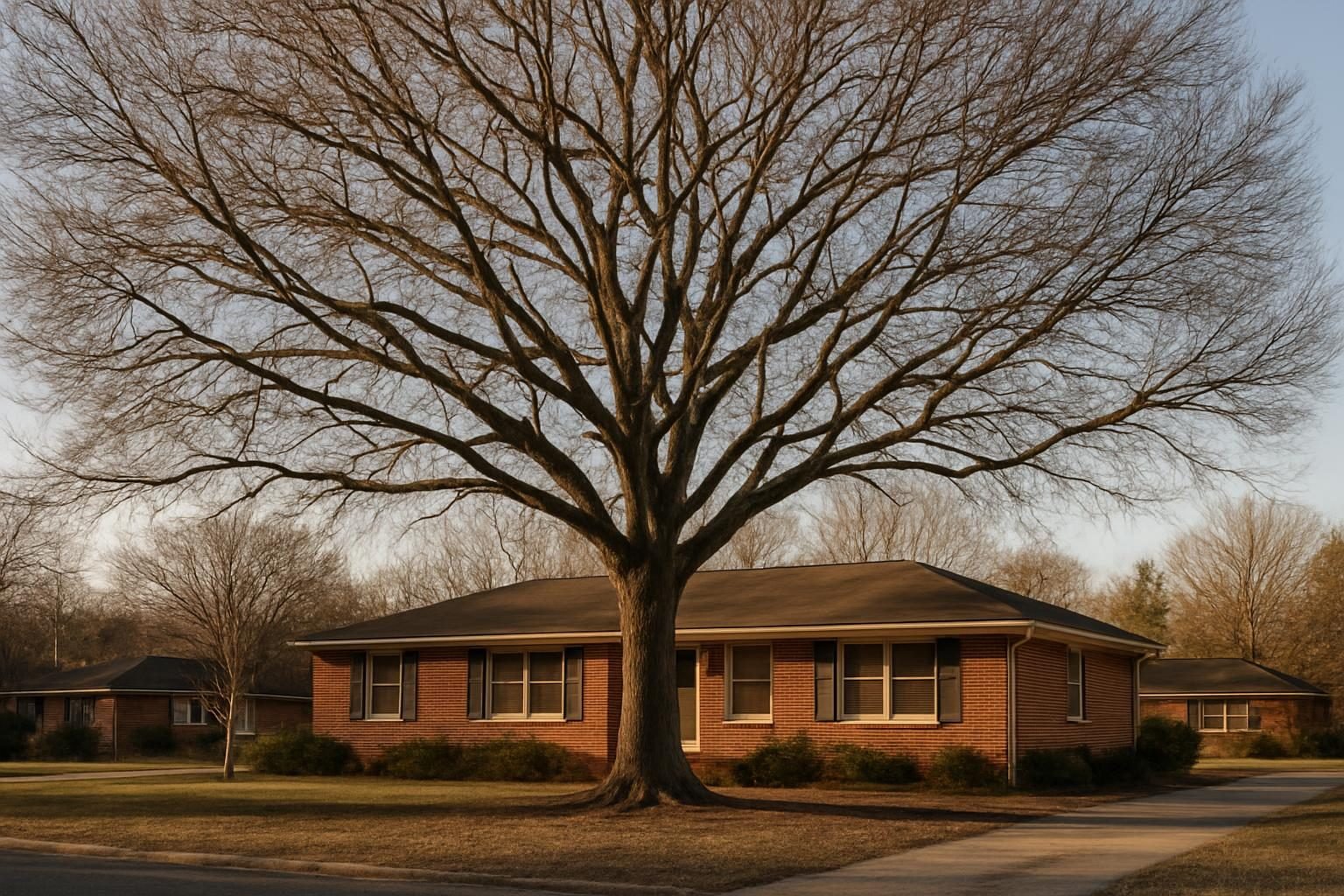
Once leaves drop, you can see the framework of the tree clearly, and winter is a good time to check for hidden problems.
- Dead branches: Without leaves, deadwood stands out. Dead limbs over the house, driveway or play areas should come down.
- Crossing or rubbing branches that wear wounds into each other.
- Broken or hanging limbs left from storms.
- Heavy, overextended limbs on one side, a common sight on older oaks and pines.
- Branches near power lines or roofs.
Fall is also the time to prepare for hurricane and storm season, since a weak tree rarely survives a strong wind event. Our hurricane tree prep checklist for Cumberland County homeowners walks through what to do before the next storm. Proper tree trimming and pruning in the dormant season removes deadwood and reduces wind load.
When to Call an Arborist
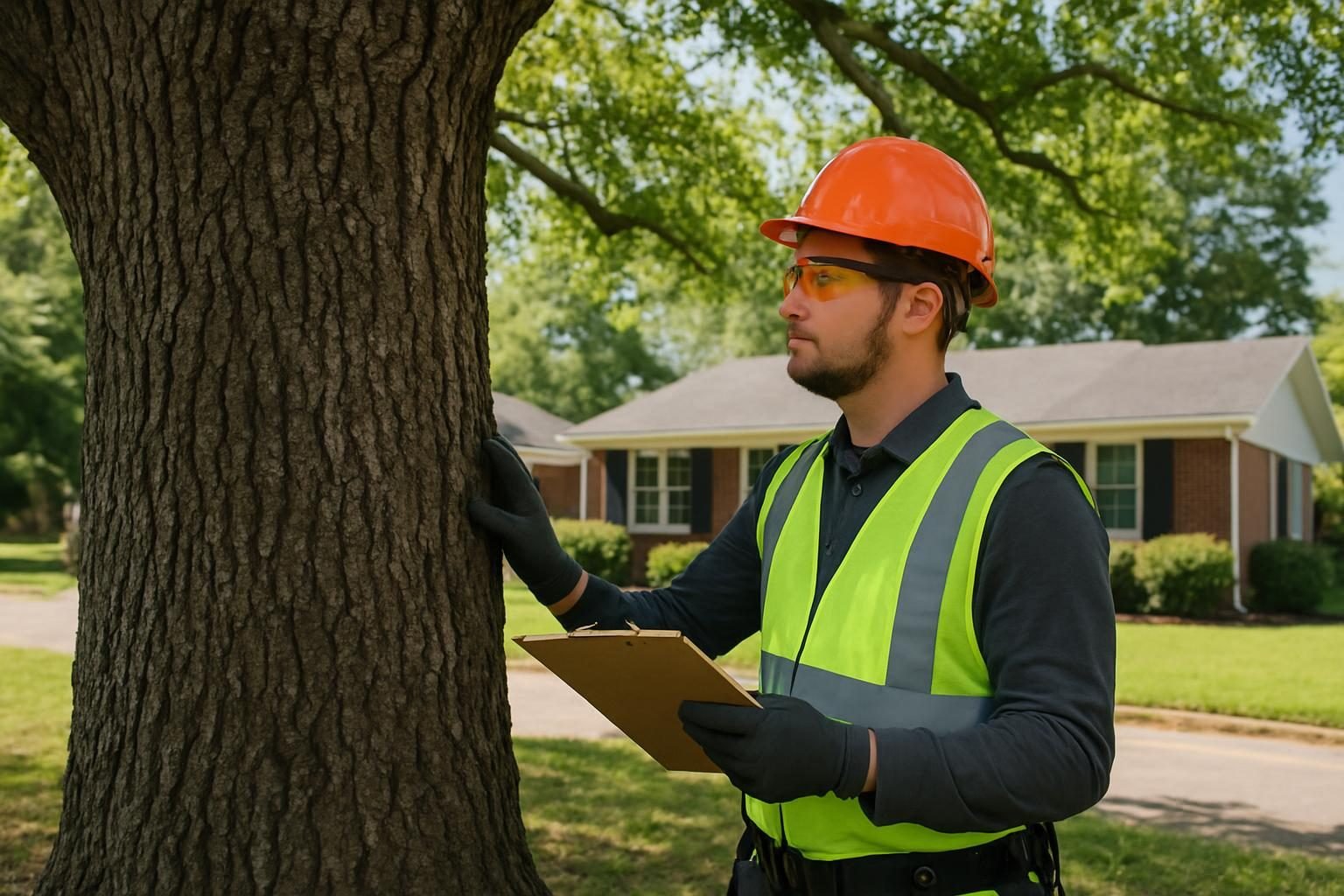
You do not need to panic over a single yellow leaf. But call a certified arborist when you see:
- Several warning signs at once, such as dead limbs plus fungi plus bark damage.
- A recent lean, soil heave or exposed roots.
- Large dead branches, cavities or cracks near your home, vehicles or play areas.
- Sudden canopy thinning or early leaf drop.
- Storm damage, even if the tree still looks standing.
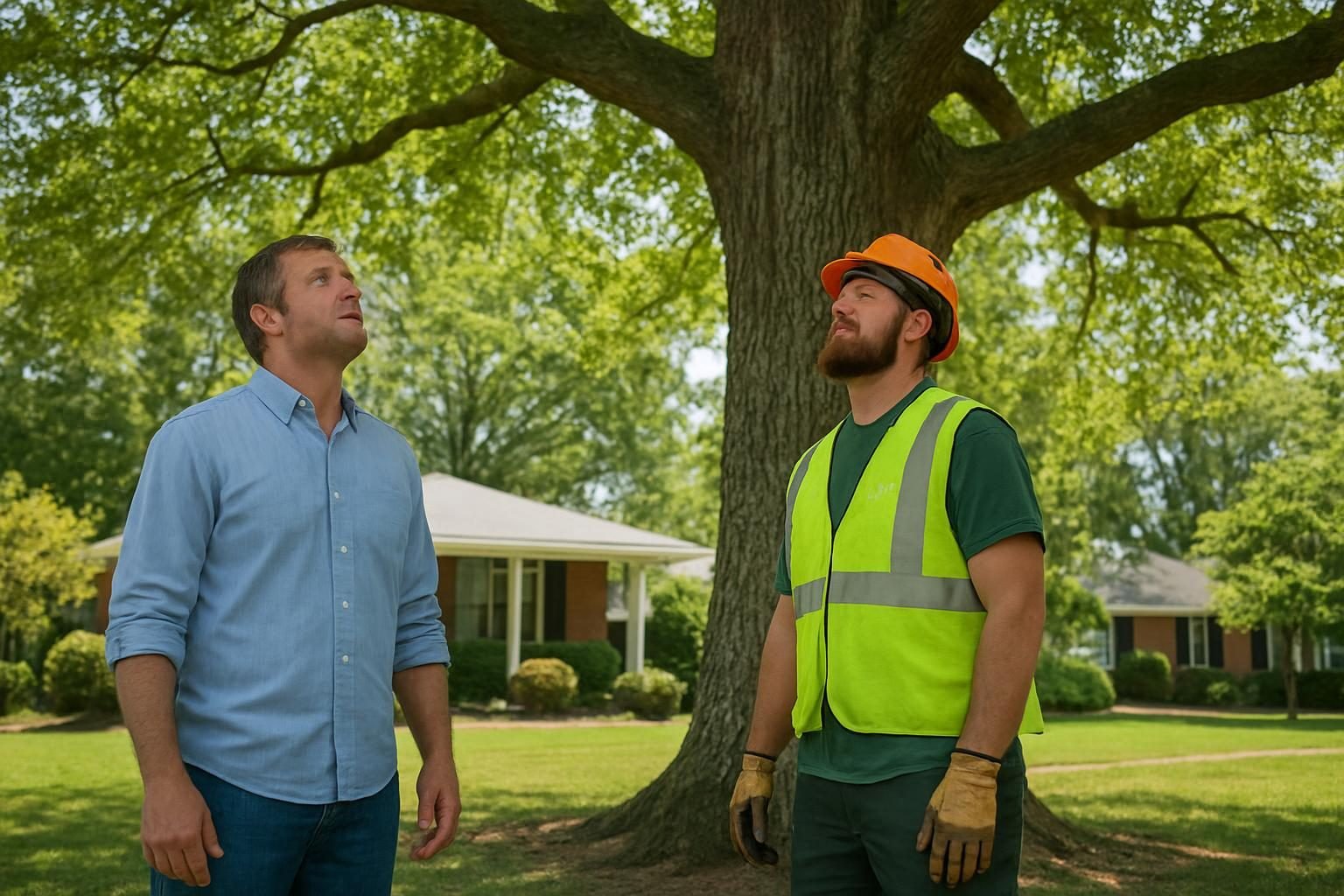
An arborist tree assessment can tell you whether a tree can be saved with pruning, cabling or care, or whether it should come down. Assessment fees vary; our guide to what an arborist costs in Fayetteville gives typical ranges, which are estimates and will vary by property. If removal turns out to be the answer, see tree removal in Fayetteville for what to expect.
For trees you already suspect are failing, the certified arborist vs. tree service comparison helps you decide who to hire. For general tree care background, the Penn State Extension and NC State Extension publish free homeowner resources.
Ready to get a professional opinion? Request a free tree health assessment quote using the form on this page, and a local company serving Fayetteville, Hope Mills, Stedman and the rest of Cumberland County will follow up.
Frequently Asked Questions
How can I tell if a tree is dead or just dormant?
Scratch a small twig with a fingernail. Green, moist tissue underneath means it is alive; brown and brittle means dead. Check several twigs across the canopy, and wait until a few weeks after neighboring trees have leafed out before deciding.
Are mushrooms at the base of a tree always bad?
Not always, but mushrooms or conks growing directly from the trunk or major roots often point to decay. Mushrooms scattered in the nearby lawn are usually less concerning. Have an arborist look if you are unsure, especially for large trees near structures.
How often should I inspect my trees?
A quick check each season works well, plus an extra look after any major storm. Mature trees near your house or driveway are worth a professional inspection every few years.
Can an unhealthy tree recover?
Often, yes, if the problem is caught early. Proper pruning, watering, mulching and fixing soil or root issues can restore vigor. Trees with serious structural decay or root failure may not be savable, and an arborist can help you decide.
Get a free tree health assessment quote
A local tree care company will contact you with a free, no-obligation quote for your Cumberland County property.