Quick answer: A tree stump usually takes anywhere from 3 to 10 years to rot on its own, and large hardwood stumps like oak can take 10 to 20 years or more. Softer woods such as pine often break down faster, though timing depends heavily on stump size, moisture, and soil contact. In Cumberland County’s warm, humid climate, decay tends to move faster than in drier regions, but a big stump can still hang around for years.
Key takeaways
- Rough estimates: pine stumps often take about 3 to 7 years; oak and other dense hardwoods commonly take 10 to 20+ years.
- Rotting stumps attract termites, carpenter ants, and fungus, which can be a problem near a house.
- Many stumps sprout new shoots for months or even years after the tree comes down.
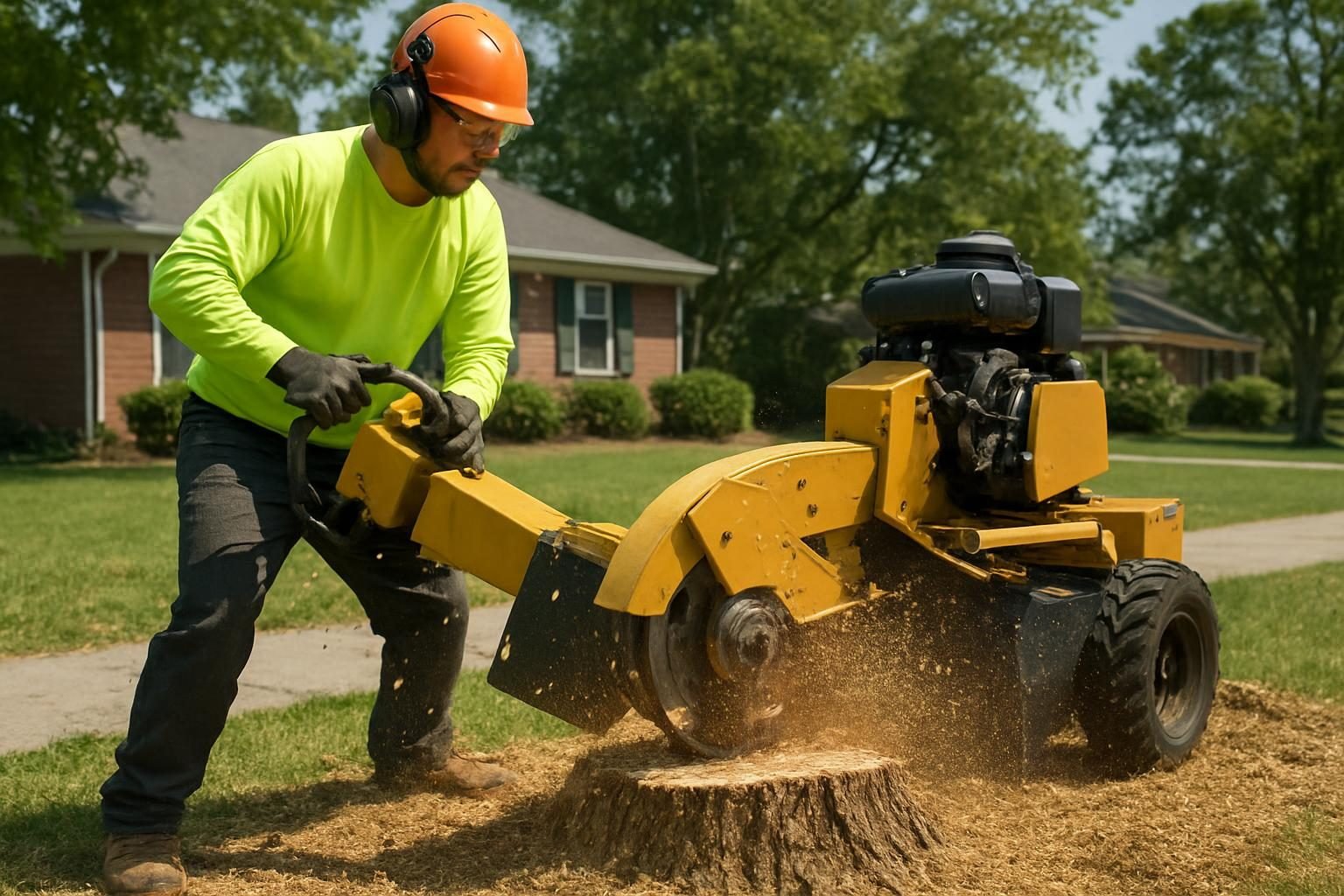
- Stump grinding clears the spot in an hour or two instead of waiting a decade.
If you are staring at a stump in your Fayetteville yard and wondering whether to wait it out, this guide covers realistic timelines, what speeds decay, and when it makes more sense to remove it. If you would rather skip the wait, you can request a free stump removal quote using the form on this page.
How Long Does a Stump Take to Rot? The Short Version
There is no single answer, because rot is a biological process driven by fungi and bacteria. A stump rots when those organisms have enough moisture, air, and wood they can digest. Take away any of those and decay slows way down.
These are general estimates, not guarantees:
- Small, soft-wood stumps (under 8 inches): roughly 2 to 5 years
- Medium stumps (8 to 18 inches): roughly 4 to 10 years
- Large stumps (18 inches and up): roughly 8 to 20+ years
The stump itself is only part of the story. The root system underneath keeps decomposing for years after the stump is gone, which can leave soft spots or settling in your lawn.
Pine vs. Oak: Why Species Changes the Timeline
Around Fayetteville, Hope Mills, and Raeford, the stumps most homeowners deal with are loblolly and longleaf pines, plus water oaks, red oaks, and sweetgums. Each behaves differently.
Pine stumps
Pine is a softwood with lower density, so fungi and insects break it down relatively quickly. A typical pine stump may be mostly decayed in about 3 to 7 years. The catch is resin: older, resin-heavy heartwood, especially in longleaf pine, can resist decay for a surprisingly long time.
Oak stumps
Oak is dense, tannin-rich hardwood that resists rot. A mature oak stump can sit for 10 to 20 years or longer, and the root flare often stays solid well after the top softens. Live oak and white oak are especially slow.
Other factors that change the clock
- Stump diameter: more wood means more years
- Moisture: damp stumps in shaded, low spots rot faster than dry, sunny ones
- Soil contact: a stump cut low to the ground decays faster than a tall one
- Tree health: trees removed because of disease or decay may already be partly rotted
- Treatment: some trees were treated or are naturally decay-resistant
Sandy soils common in the Sandhills region drain quickly, which can slow rot in dry stretches. Heavier, wetter soils closer to the Cape Fear River corridor tend to hold moisture, which fungi love.
A big oak stump can outlast the fence, the shed, and sometimes the homeowner’s patience.
How to Speed Up Stump Decay
You can nudge the process along, but none of these methods are instant. Expect months to years, not weeks.
- Cut it as low as possible. Less exposed wood means more contact with moist soil.
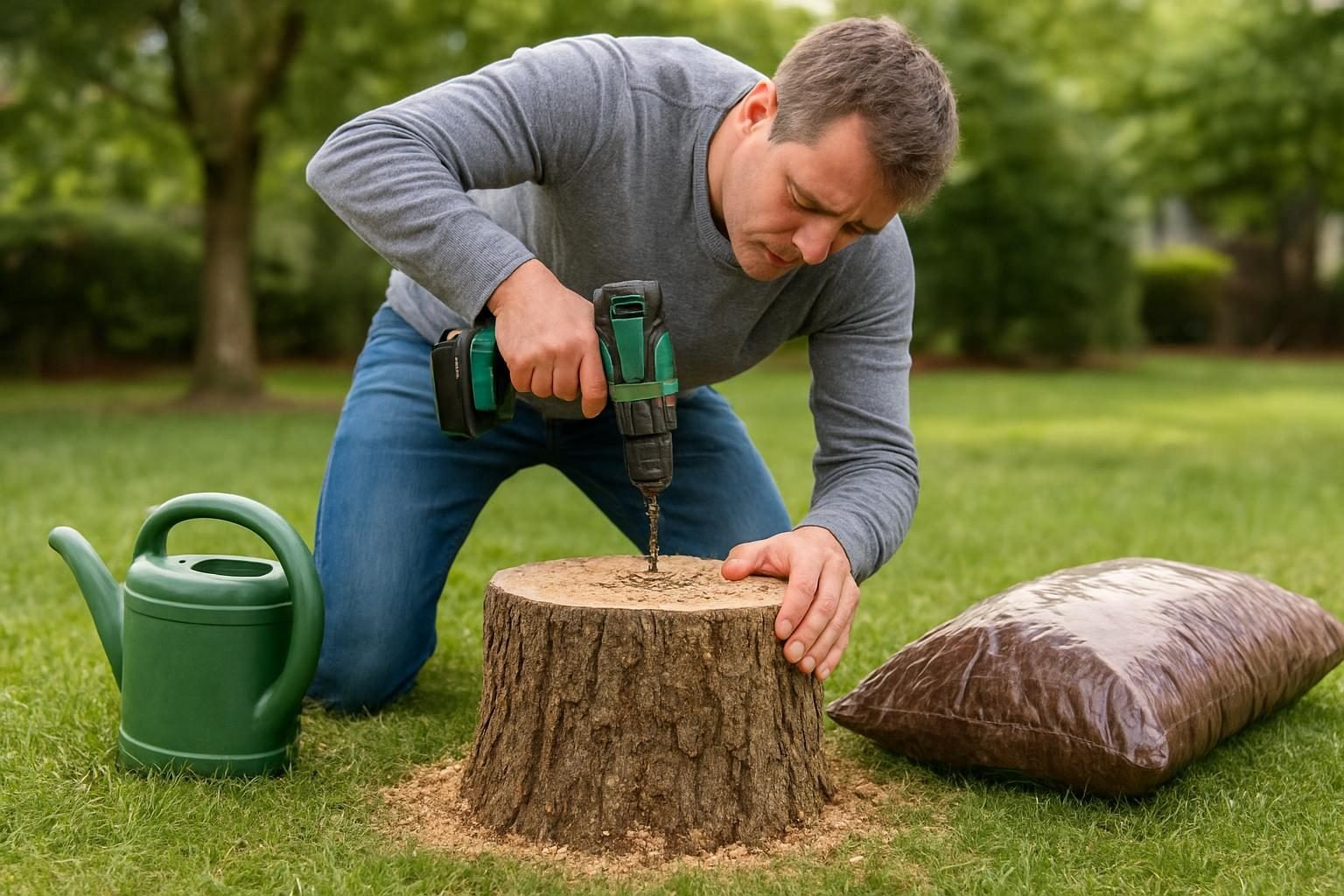
- Drill holes. Drill several holes 8 to 10 inches deep across the top and sides to let moisture and fungi in.
- Keep it wet. Water the stump regularly during dry spells and cover it with a tarp or mulch to hold moisture.
- Add nitrogen. Sprinkling a high-nitrogen fertilizer feeds the fungi that digest wood. Follow label directions and keep it away from storm drains and waterways.
- Cover and wait. A layer of mulch or compost helps keep the stump damp and shaded.
Potassium nitrate stump removers are sold at hardware stores. They soften wood so it can be broken up or burned out, but follow the label carefully, and note that burning a stump may be restricted by local rules or burn bans. Check current Cumberland County and North Carolina Forest Service guidance before lighting anything. We will cover chemical options in more depth in our guide to DIY tree stump killers.
Pro tip: Avoid pouring gasoline, diesel, or kerosene on a stump. It is a fire hazard, it contaminates soil and groundwater, and it does not actually speed up decay.
Termites, Carpenter Ants, and Other Pests in Rotting Stumps
Decaying wood is a buffet. In Cumberland County’s warm climate, stumps are a common home for:
- Subterranean termites: these live in soil and feed on wood, and a stump close to your foundation can serve as a staging ground
- Carpenter ants: they nest in moist, softened wood
- Beetles, grubs, and wasps: they move in as the wood softens
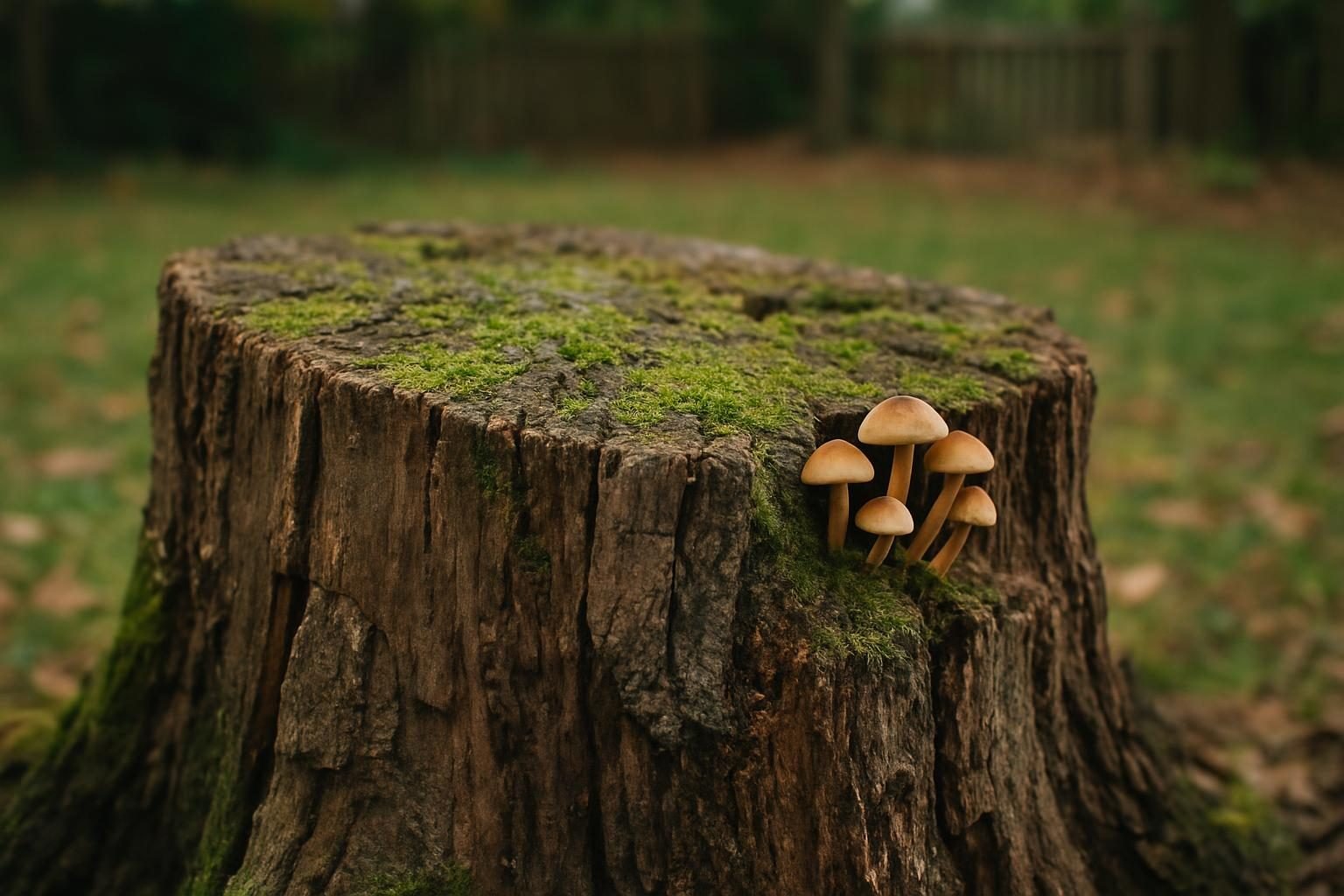
- Fungi and mushrooms: these are a normal sign of active decay and are not dangerous to the lawn, but they can be toxic if eaten by pets or kids
A rotting stump is not guaranteed to cause a termite problem, but one within a few feet of your house, deck, or fence is worth taking seriously. If the stump is near the home, ask a licensed pest control professional to inspect, and consider having it ground out. Fungal growth around trees is something we plan to cover in a separate guide on mushrooms growing at the base of a tree.
Roots are a related concern. Old root systems can leave voids and settling, and we cover how living roots can affect structures in tree roots and your foundation, driveway or pipes.
A rotting stump near your foundation is a free invitation for termites and carpenter ants.
Will the Stump Keep Sprouting?
Possibly. Many hardwoods, including oak, sweetgum, and crepe myrtle, send up suckers and shoots from stumps and roots, sometimes for years. This happens because the root system is still alive and storing energy.
Pines are different: most pines do not resprout from a cut stump, so pine stumps are less likely to produce new growth.
If your stump keeps sending up shoots:
- Cut shoots back repeatedly, which gradually starves the roots
- Have the stump ground, which removes the living wood where shoots emerge
- Talk to a certified arborist before applying any herbicide, since it can harm neighboring plants
Sprouting is the main reason waiting for a hardwood stump to rot is frustrating. You get decay on top and new growth around the edges at the same time.
Why Stump Grinding Is Often the Better Choice
Waiting is free, but it has real costs: a trip hazard, mowing headaches, pest habitat, and a yard that never looks finished. For most homeowners in Fayetteville, Spring Lake, and Stedman, grinding is the practical fix.
- Fast: most residential stumps are ground in an hour or two
- Clean: grinders chew the stump several inches below grade, and you can fill the hole and replant or re-sod
- Pest-reducing: removing the wood removes the habitat
- Stops sprouting: removing the stump removes most of the sprout source
- Less damage than digging: grinding avoids tearing up your lawn the way full stump extraction can
Grinding does leave a pile of wood chips. You can use them as mulch or have them hauled away, and we plan to cover what to do with wood chips after stump grinding in a future guide.
What does it cost?
Pricing varies by diameter, access, and number of stumps. As a rough estimate only, many companies price by the inch and apply a minimum charge, and a single average stump often falls somewhere in the low hundreds of dollars. See our breakdowns of how much stump grinding costs and how stump grinding is priced, and compare options in stump removal vs. stump grinding.
If you are having the tree itself taken down, ask whether grinding can be bundled into the same visit. That is often cheaper than scheduling it separately, and our stump grinding service page and tree removal page explain what is typically included. For general pricing context, see our tree service cost guide.
Ready to compare options? Request free stump grinding quotes from local tree service companies using the form on this page.
Frequently Asked Questions
How long does a pine stump take to rot?
As a rough estimate, a pine stump often takes about 3 to 7 years to break down, depending on size and moisture. Resin-rich heartwood can last longer.
How long does an oak stump take to rot?
Oak stumps commonly take 10 to 20 years or more because the wood is dense and naturally decay-resistant. Large mature oaks can take even longer.
Do rotting stumps attract termites?
They can. Moist, decaying wood attracts termites, carpenter ants, and other insects, especially in warm, humid areas like Cumberland County. If a stump is near your home, consider a pest inspection and removal.
Is it better to grind a stump or let it rot?
For most homeowners, grinding is better, especially for hardwoods or stumps near the house, patio, or play areas. It is faster, reduces pests, and prevents sprouting. Letting a small, out-of-the-way stump rot naturally can work if you do not mind the wait.
Not sure which route fits your yard? A local pro can look at the stump, access, and nearby structures and give you an estimate. Not sure whether a tree near your property needs attention first? Our guide on signs a tree is hazardous can help.
Get a free stump grinding quote in Fayetteville
A local tree service company will contact you with a free, no-obligation quote for your stump.