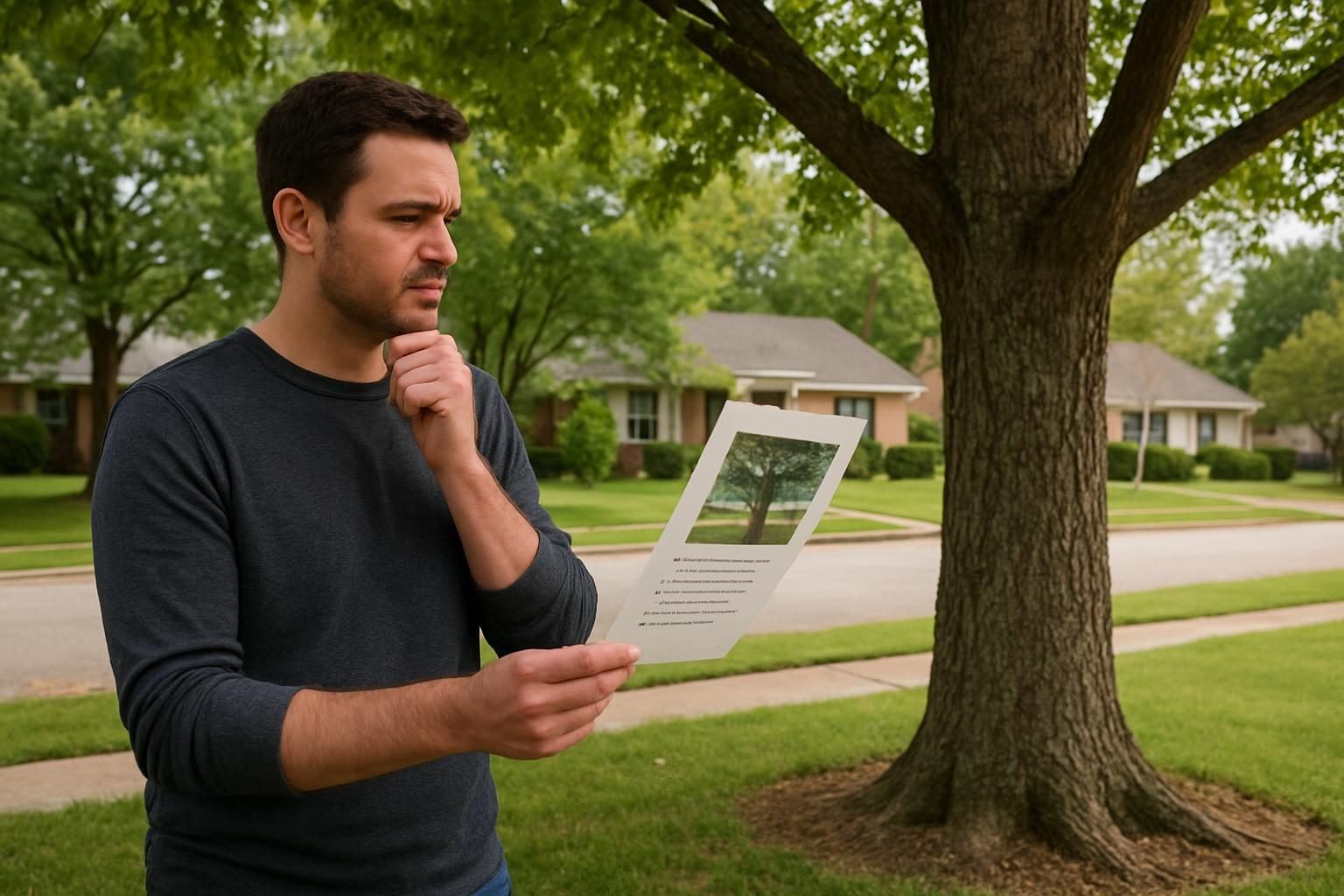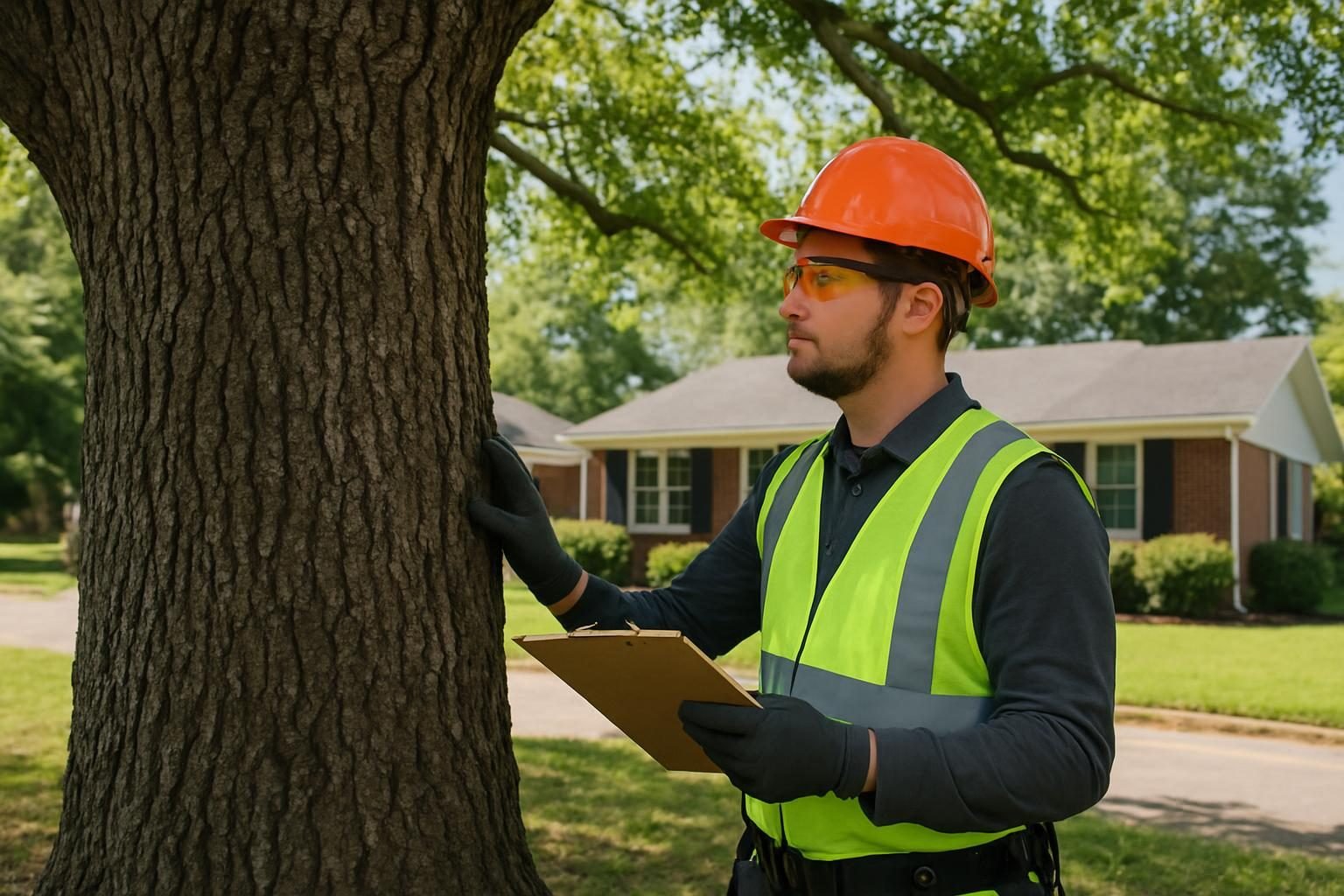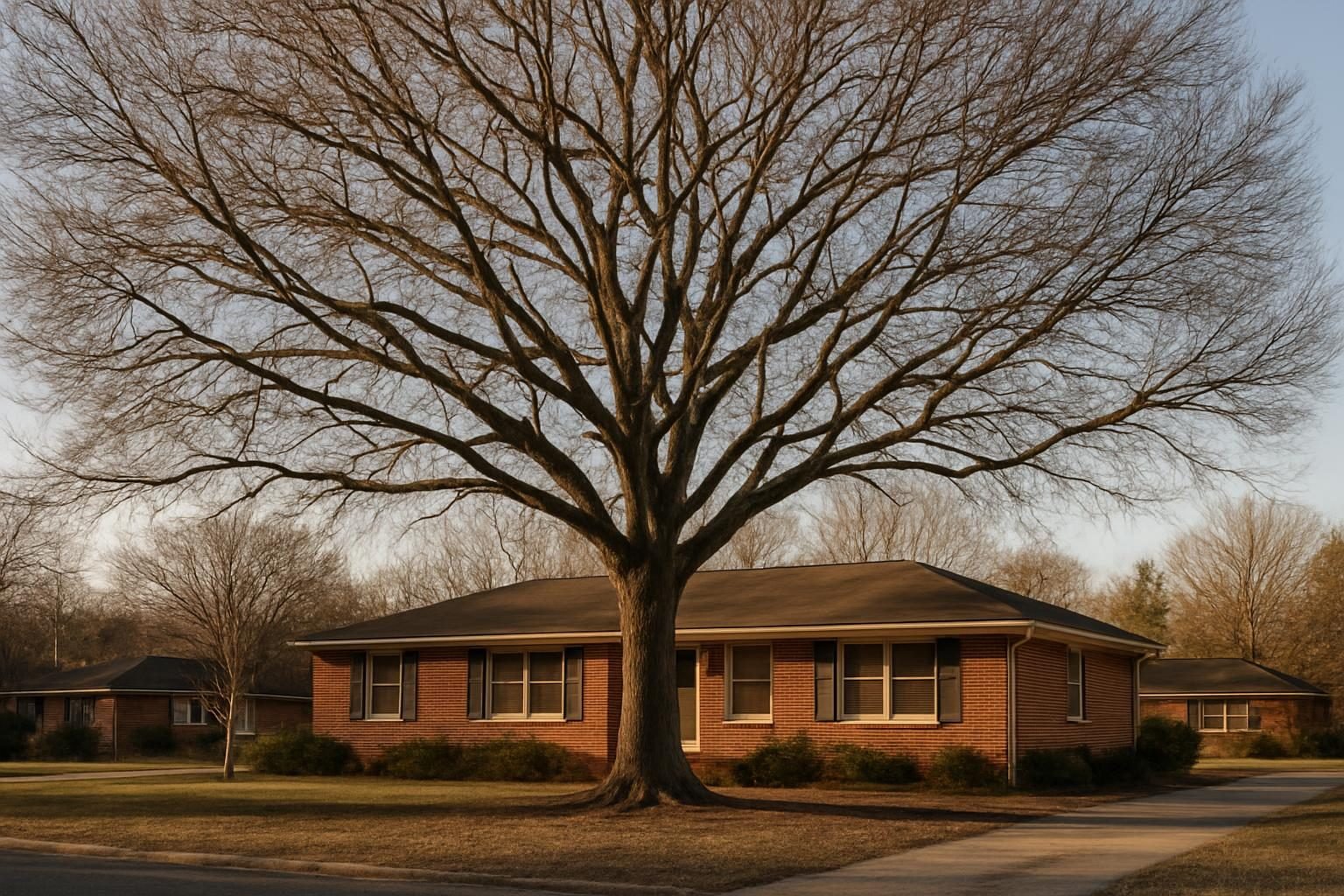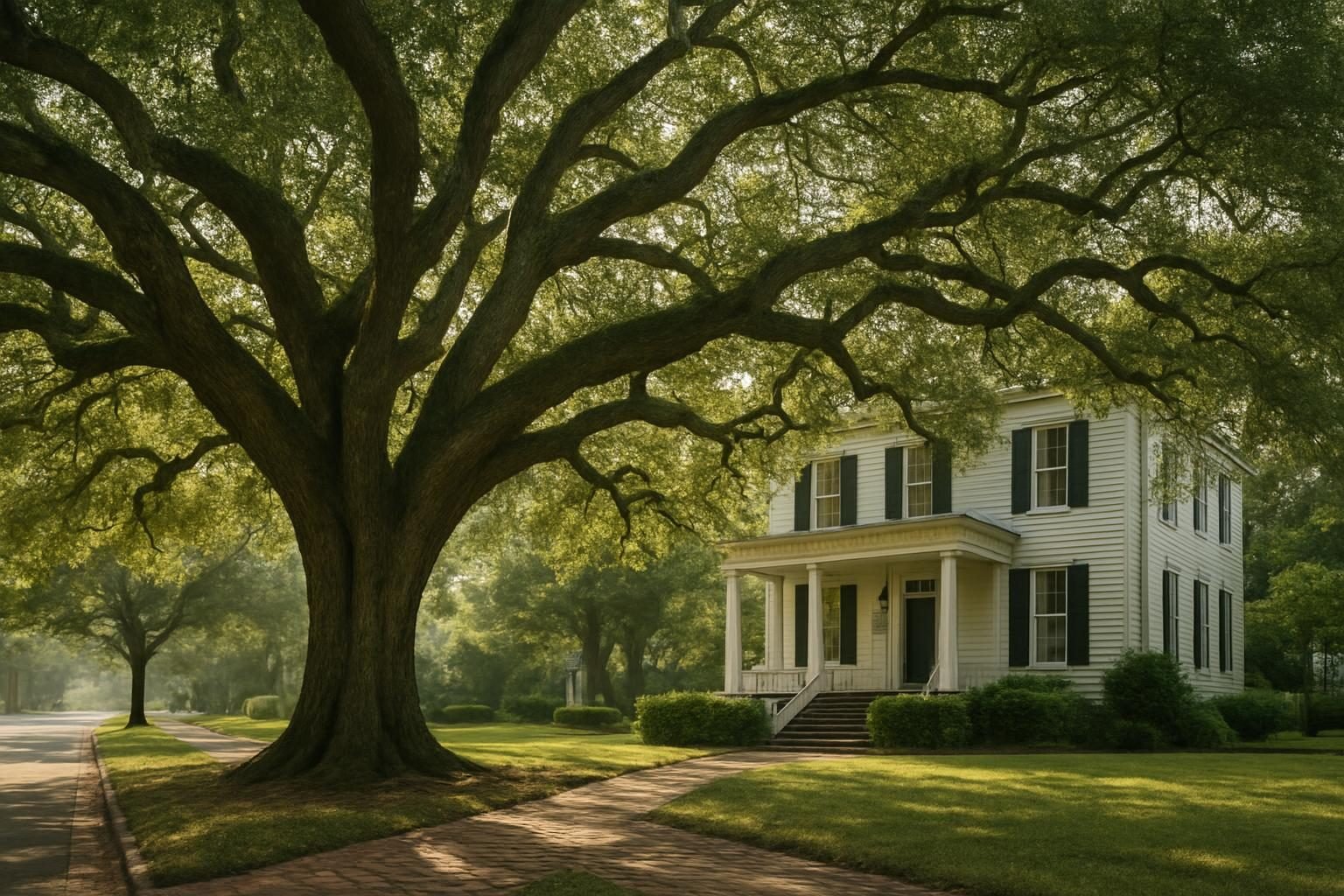
Quick answer: Tree care in Haymount, Fayetteville comes down to regular inspections, a sensible pruning cycle, and early attention to roots, decay and structural defects. Most big old oaks and magnolias can be preserved with professional pruning and, in some cases, cabling. Removal makes sense when a tree is structurally failing, dead, or threatening a home, and in a historic area you should check local requirements first.
Key takeaways
- Mature trees in older neighborhoods are assets, but they need a documented inspection every 1-3 years.
- Root conflicts with sidewalks and sewer lines are often fixable without cutting down the whole tree.
- Check city and historic district rules before removing or heavily cutting any large tree.
- Cabling and structural pruning can extend the life of a tree with weak unions or heavy limbs.
- Hire an insured, qualified crew and ask for a written scope of work.
Walk the streets around Haymount and you will see why people here care so much about their trees. Willow oaks, live oaks, water oaks and southern magnolias arch over yards that have been settled for generations. Those same trees are now old enough that they bring real maintenance demands, from heavy limbs over roofs to roots under century-old sidewalks and clay sewer lines.
If you have a large tree you are unsure about, you can request a free consultation and compare options from local tree companies serving Fayetteville and Cumberland County.
Why Older Fayetteville Neighborhoods Need a Different Approach
Trees in Haymount and nearby older areas are often 60 to 100 years old or more. They were planted close to houses, streets and utility lines, long before anyone pictured how big they would get. That tight spacing is the root of most of the problems homeowners face.
Common issues we see in mature neighborhood trees:
- Overextended limbs that reach over roofs, driveways and neighboring yards.
- Internal decay from old pruning wounds or storm breaks that were never treated well.
- Compacted or disturbed soil from trenching, paving, and construction near the root zone.
- Crowded canopies that trap moisture and invite fungal problems.
Fayetteville also sits in hurricane and severe thunderstorm territory, so a tree that looked fine for decades can fail in one storm if it has hidden defects. Regular professional eyes on the tree are the best protection. For a broader look at warning signs you can check yourself, see our seasonal tree health checklist.
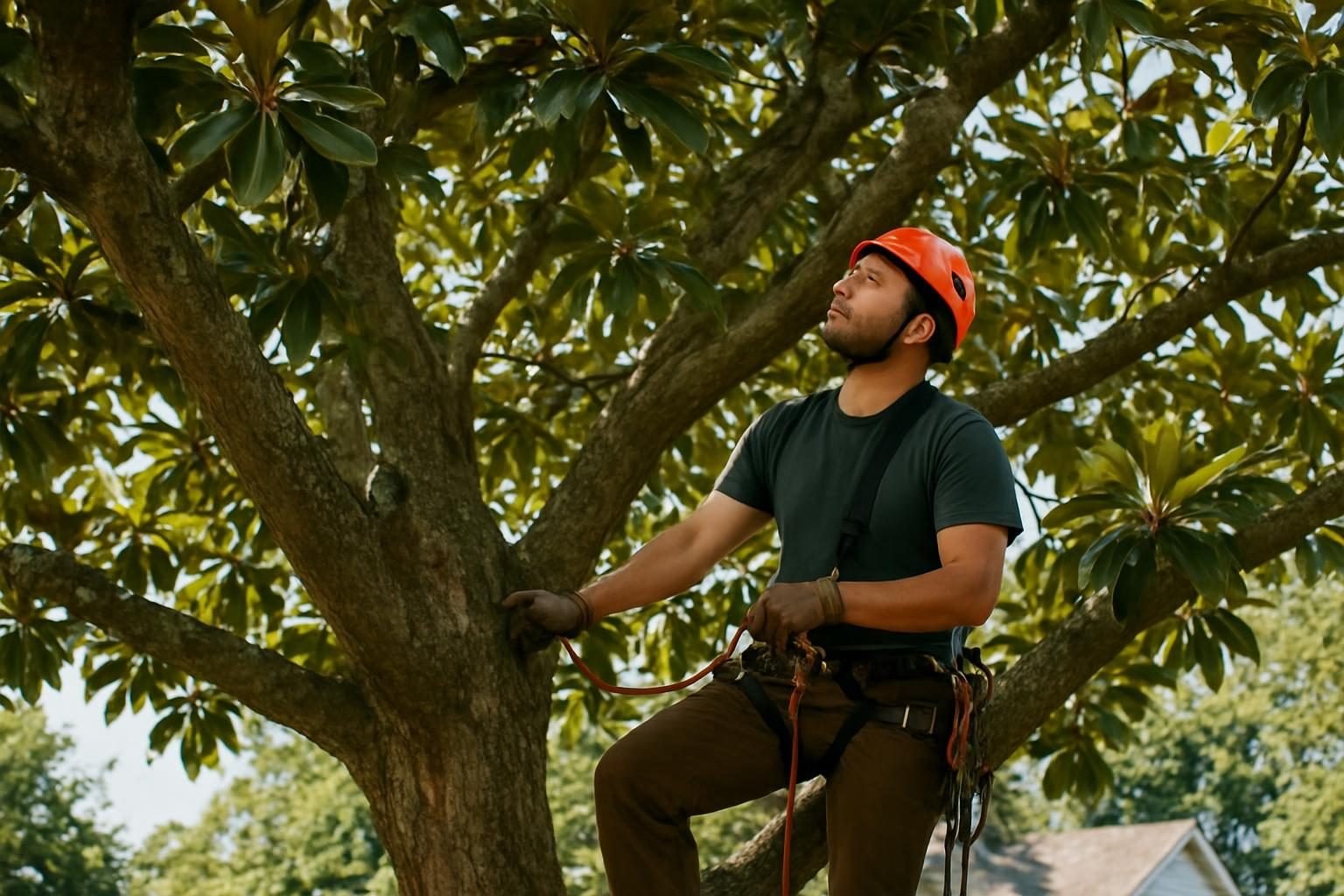
Tree Care in Haymount, Fayetteville: Oaks and Magnolias
Oaks and magnolias dominate older yards, and each has its own needs. Treating them the same way is a common mistake.
Oaks (willow, water, live and others)
- Prune for structure, not shape. Remove deadwood, crossing branches and weak attachments rather than shearing the outline.
- Avoid heavy pruning in the warm months when possible. Fresh cuts can attract beetles that spread oak diseases in some regions, so many arborists prefer dormant-season work for non-urgent cuts.
- Watch for decay. Water oaks in particular are relatively short-lived and can develop hollow trunks and brittle limbs as they age.
- Protect the root zone. Keep heavy equipment, soil piles and new paving away from the area under the canopy.
Southern magnolias
- Let them keep their lower limbs if there is room. Magnolias are naturally low-branching and look best that way.
- Thin selectively to reduce wind resistance and weight on long limbs.
- Manage the leaf litter, not the tree. Heavy leaf and seed drop is normal and not a sign of disease.
- Watch for scale insects. Sticky leaves and sooty black mold are a clue to check with an arborist.
Pro tip: Take dated photos of your big trees each spring and fall. A visual record makes it much easier to spot new cracks, leaning, fungus or dieback, and helps an arborist see what has changed.
The best time to deal with a big old tree is before the storm, not after it lands on the roof.
Sidewalk Heave and Sewer Roots: Fix the Conflict, Not Always the Tree
Raised sidewalks and slow drains are two of the most common reasons homeowners in older Fayetteville neighborhoods start thinking about removal. Before you decide, understand what is really happening.
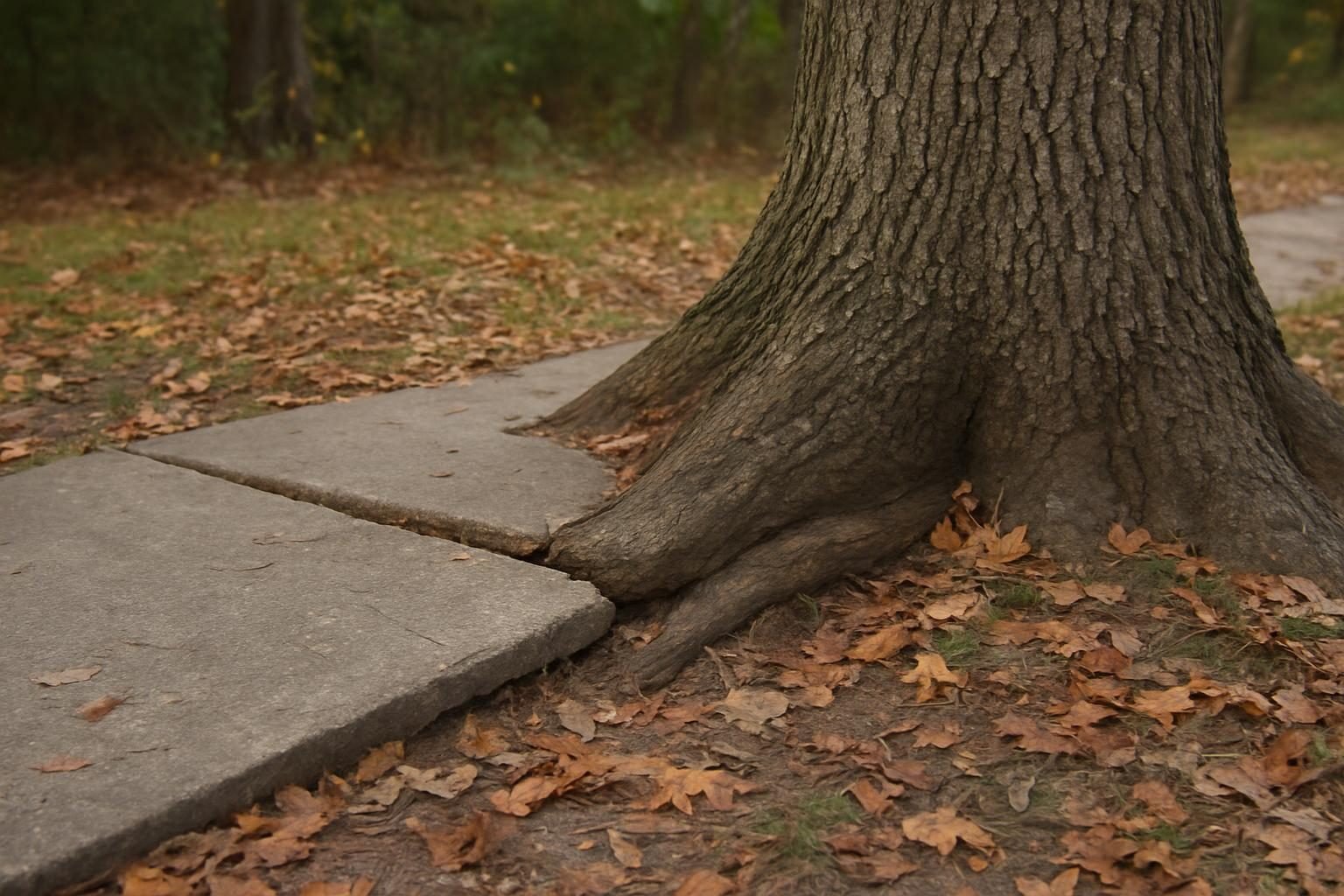
Sidewalk and driveway lifting. Surface roots push up concrete over time. Options to discuss with an arborist and a contractor:
- Grinding or reshaping the concrete slab edge so it is no longer a trip hazard.
- Rerouting or bridging the sidewalk over the root rather than cutting through it.
- Careful, selective root pruning when the roots involved are small and the tree is otherwise healthy.
Cutting large structural roots can destabilize a tree, so this is not a DIY job. A good rule: avoid cutting roots larger than a few inches in diameter close to the trunk without professional guidance.
Sewer line roots. Older clay and cast-iron lines have joints that roots can enter looking for moisture. Signs include repeated slow drains, gurgling, and backups. A camera inspection from a plumber will show whether roots are the cause and where the line is failing. In many cases, replacing a bad section of pipe with a modern, sealed material solves the problem for good and lets the tree stay.
If a tree has been damaging a foundation or driveway, our upcoming guide on tree roots damaging foundations and driveways goes deeper.
Preserve or Remove? How to Decide
Removal is a big decision, especially for a tree that defines the look of your street. A certified arborist can help you weigh the facts. These are the main factors:
- Structural health. Large cavities, fungal conks on the trunk, deep cracks, or a heavy lean that has recently changed all raise concern.
- Targets. A defective tree over an open lawn is a different risk than the same tree over a bedroom or a play area.
- Vigor. Thinning canopy, early leaf drop and dead tips can signal decline, though some causes are treatable.
- Fixability. Many problems can be reduced with pruning, cabling or soil care. Others cannot.
- Cost of keeping vs. removing. Ongoing care is often cheaper than a large removal, but not always if the tree is failing.
For a formal opinion, an arborist tree assessment gives you a written evaluation of risk and options. You can also read what assessments typically cost in our arborist fee guide.
If a tree is clearly dead, split, or at risk of falling, professional tree removal may be the safest path. Large oaks near houses often need crane or rigging work, and our crane tree removal cost guide explains what to expect. Removing the stump afterward is handled by stump grinding.
Removal is the last option for a healthy heritage tree, but it is the right one for a structurally failing tree over a house.
Historic District and Permit Checks Before You Cut
Haymount and parts of downtown Fayetteville include historic areas, and older neighborhoods may have additional design or tree rules. Before cutting a large tree or making major changes to a streetscape, confirm what applies to your address.
A quick pre-work checklist:
- Contact the City of Fayetteville planning or development services staff to ask whether your property is in a historic overlay or has tree-related requirements.
- Check for street trees or right-of-way trees. Trees growing between the sidewalk and the street may be the city’s responsibility, not yours.
- Ask about HOA or neighborhood covenants if your street has them.
- Get utility approval if branches are near power lines. Do not trim near energized lines yourself.
Rules vary and can change, so verify with the city rather than relying on general guidance. Our article on tree removal permits in Fayetteville covers the basics, and the City of Fayetteville website is the place to confirm current requirements.
Cabling, Bracing and Pruning Cycles
For a valuable tree with a structural weakness, cabling and bracing can add years of safe life. Cables are installed high in the canopy to limit movement between two weak stems or heavy limbs, while braces (rods) can reinforce splits lower down.
Cabling is a good fit when:
- A tree has co-dominant stems with a tight V-shaped union that tends to split.
- A large limb is overextended but otherwise healthy.
- You want to reduce the chance of storm failure without removing the tree.
It is not a cure for rot or a dying tree, and installed hardware needs periodic inspection. Learn more in our guide to tree cabling and bracing.
A realistic pruning schedule
- Mature oaks and magnolias: structural inspection and pruning roughly every 3 to 5 years, with an annual visual check.
- Trees with known defects or cabling: inspect every 1 to 2 years.
- After major storms: a prompt look at any tree that lost limbs or shifted.
These are general guidelines, not rules. Species, age and site conditions change the right interval. For what to expect on price, see tree trimming cost in Fayetteville, and for the work itself, our tree trimming and pruning page. Big mature-tree jobs often run into the several-hundred to several-thousand-dollar range depending on size and access; treat any figure as an estimate until you have a written quote.
When you are ready to compare options, request free quotes from local tree companies using the form on this page.
FAQ: Tree Care in Haymount and Older Fayetteville Neighborhoods
How often should a large old oak be inspected?
An annual walk-around by the homeowner and a professional inspection every 1 to 3 years is a sensible baseline for mature trees near homes. Inspect sooner after storms or if you notice cracks, mushrooms at the base, or sudden dieback.
Can tree roots really damage my sewer line?
Roots typically enter pipes that are already cracked or have loose joints, especially older clay lines. A plumber’s camera inspection will confirm the cause. Repairing the pipe often solves the problem without removing the tree.
Do I need permission to prune or remove a tree in a historic district?
It depends on your property and the type of work. Check with the City of Fayetteville before major cutting, and confirm whether the tree is on private land or in the public right-of-way.
Is cabling worth the cost compared to removal?
For a healthy tree with a fixable structural weakness, cabling is often more affordable than removal and keeps the shade and value in place. For a decayed or dying tree, it usually is not the right answer. An arborist can tell you which situation you have.
Get a free quote for mature tree care in Fayetteville
A local tree care company will contact you with a free, no-obligation quote.