Quick answer: Water oaks are fast-growing, relatively short-lived trees, and many in Fayetteville yards start to decline between 50 and 80 years old. Hollow trunks, dead limbs, fungal conks and heavy limb drops in storms are the main warning signs, and a tree with significant internal decay near a house, driveway or power line is usually a removal candidate. An on-site assessment is the only reliable way to know how much sound wood is left.
Key takeaways
- Water oaks grow quickly and decay early, so a big, healthy-looking crown can hide a hollow trunk.
- Mushrooms or conks at the base, cavities, and repeated dead limbs are the red flags to act on.
- Storms in Cumberland County expose weak water oaks first, often dropping limbs or splitting at the trunk.
- Assessment is cheap compared with the cost of a tree landing on a roof.
- Removal of a large water oak commonly runs from the high hundreds to a few thousand dollars, depending on access and risk.
If you have a mature water oak shading your yard in Fayetteville, Hope Mills or Spring Lake, water oak problems are worth understanding before the next big storm. This guide explains why these trees fail, what to look for, and how to decide between keeping, pruning and removing. When you want a professional opinion, you can request a free consultation using the form on this page.
Why water oaks decline at 50 to 80 years
Water oak (Quercus nigra) is a common native in Cumberland County, and it was planted heavily in neighborhoods because it grows fast and gives shade quickly. That speed comes with a trade-off: the wood is softer and less resistant to decay than slow-growing oaks like live oak or white oak.
Several factors push water oaks toward decline in the 50 to 80 year range:
- Short natural lifespan. Many water oaks begin failing at an age when other oaks are just maturing.
- Wound entry points. Old pruning cuts, storm breaks and lawn equipment damage let decay fungi into the trunk.
- Compacted or altered soil. Construction, driveways and sandy, drought-prone ground stress roots over decades.
- Hurricane and thunderstorm history. Each storm can crack or strain wood, even if the tree looks fine afterward.
The result is a tree that can look full and green in summer while the inside of the trunk is losing strength.
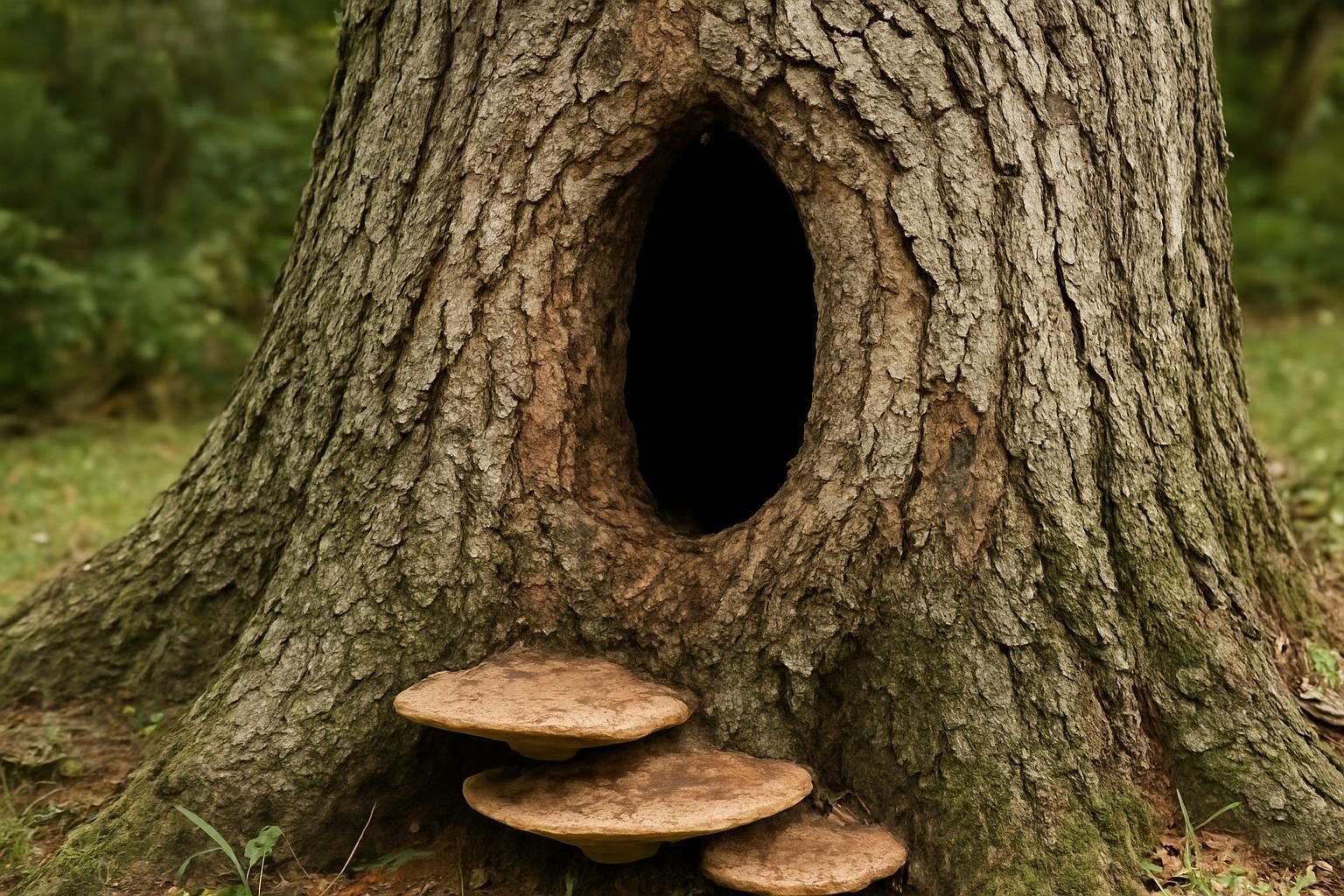
Signs of internal decay and a hollow trunk
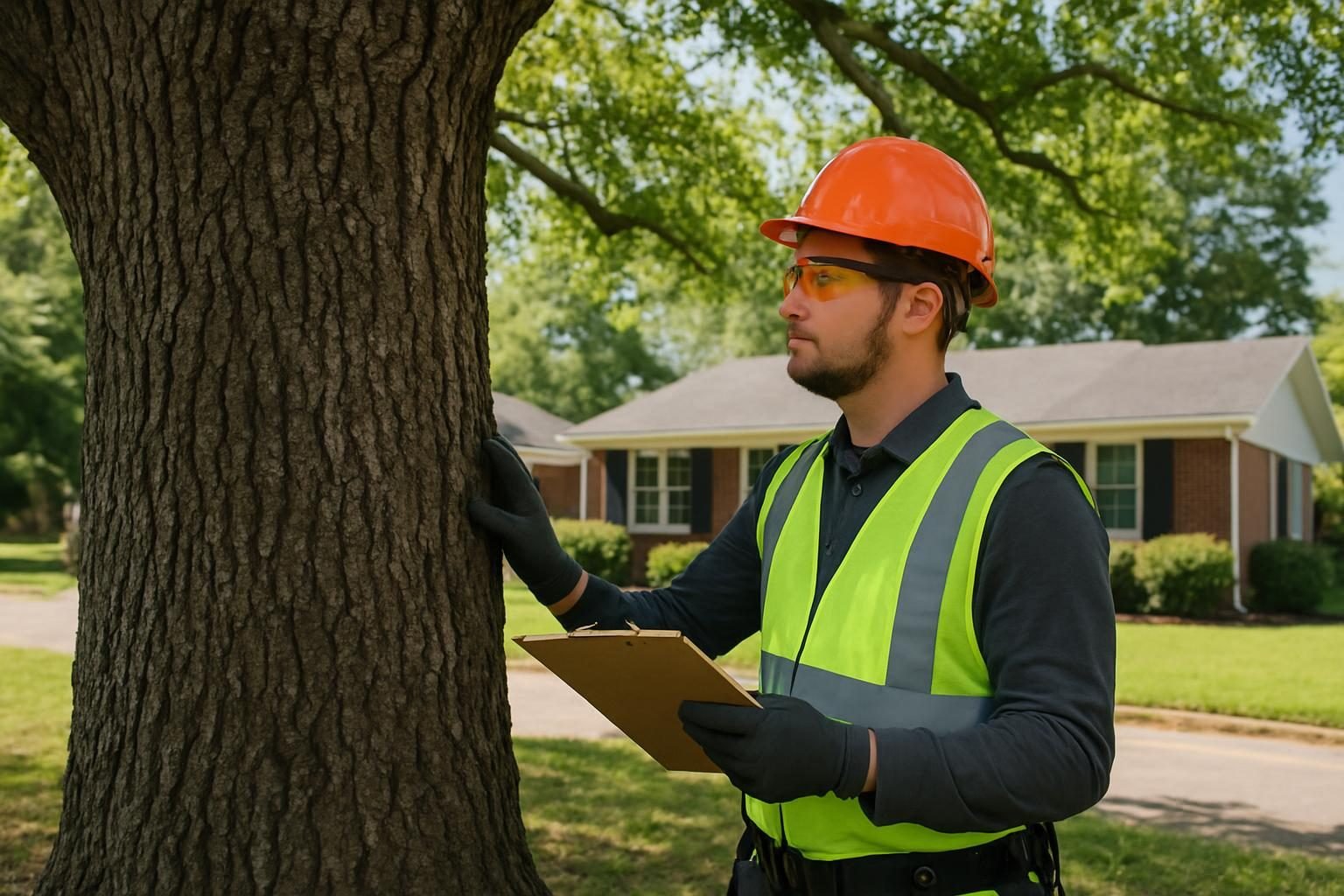
Because the worst water oak problems are hidden, you have to read the outside of the tree carefully. Walk around it and look from the roots to the crown.
Warning signs at the base and trunk
- Mushrooms or shelf-like conks growing on the trunk or root flare, which indicate active decay.
- Cavities, holes or soft spots where you can see or feel hollow wood. A woodpecker or squirrel hole is sometimes the entrance to a larger cavity.
- Vertical cracks or seams running up the trunk, especially if they open and close as the tree moves.
- Bark that is loose, missing or oozing dark fluid.
- Heaving soil or exposed, rotting roots on one side.
Warning signs in the crown
- Thinning leaves, dead tips or large dead branches, especially in the upper canopy.
- Sprouts growing along the trunk or main limbs as the tree tries to compensate.
- Included bark in tight forks, where two stems grow together and form a weak joint.
- One-sided crown growth or a lean that has changed. See our guide on how to tell if a leaning tree is dangerous.
Pro tip: Take dated photos of the trunk, base and crown every spring. Comparing pictures year over year makes slow changes in a water oak much easier to spot.
For a broader checklist, our article on signs a tree is dying covers symptoms that apply to most species.
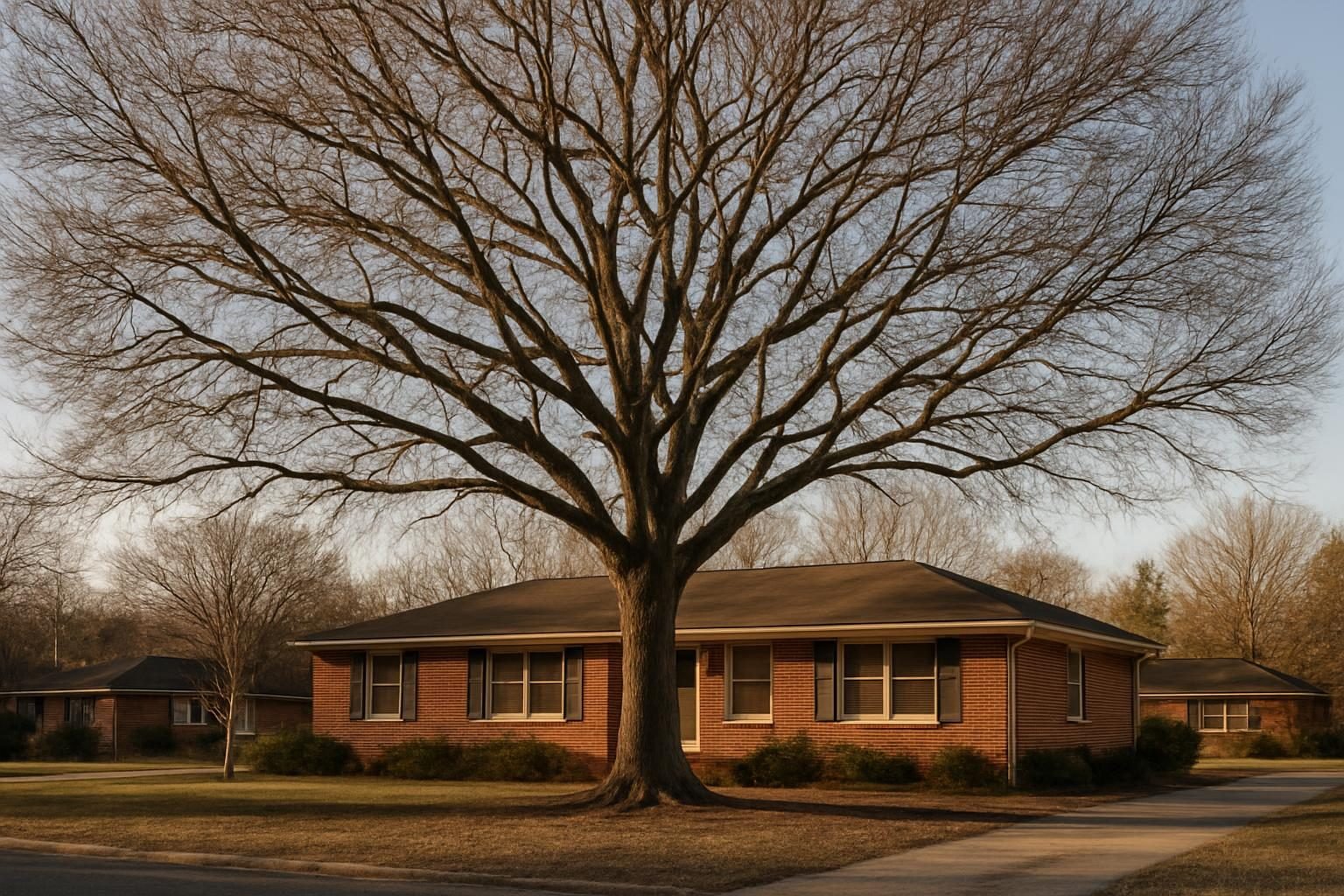
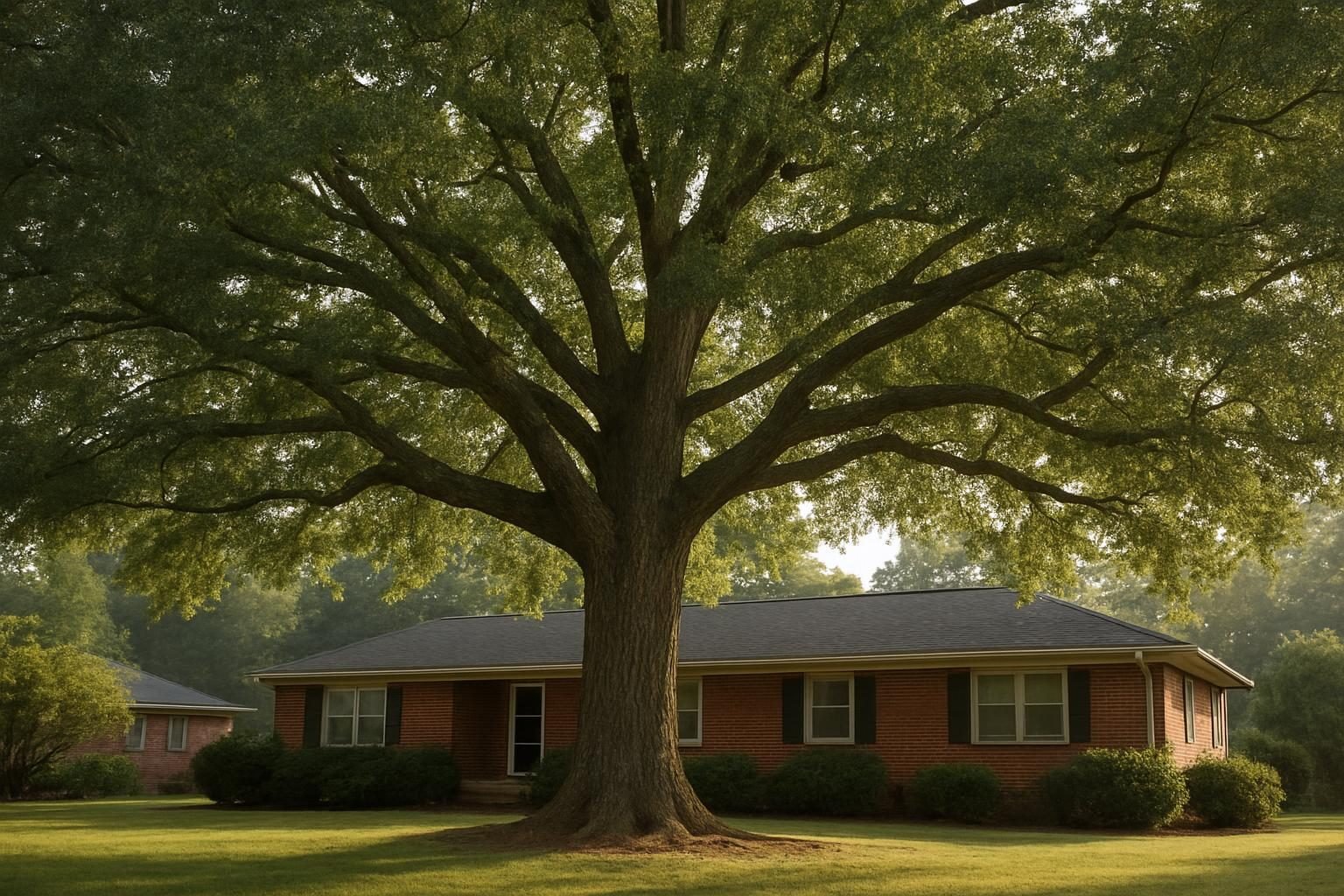
A water oak can wear a full green crown while its trunk is mostly hollow.
Dropped limbs and storm failure in Cumberland County
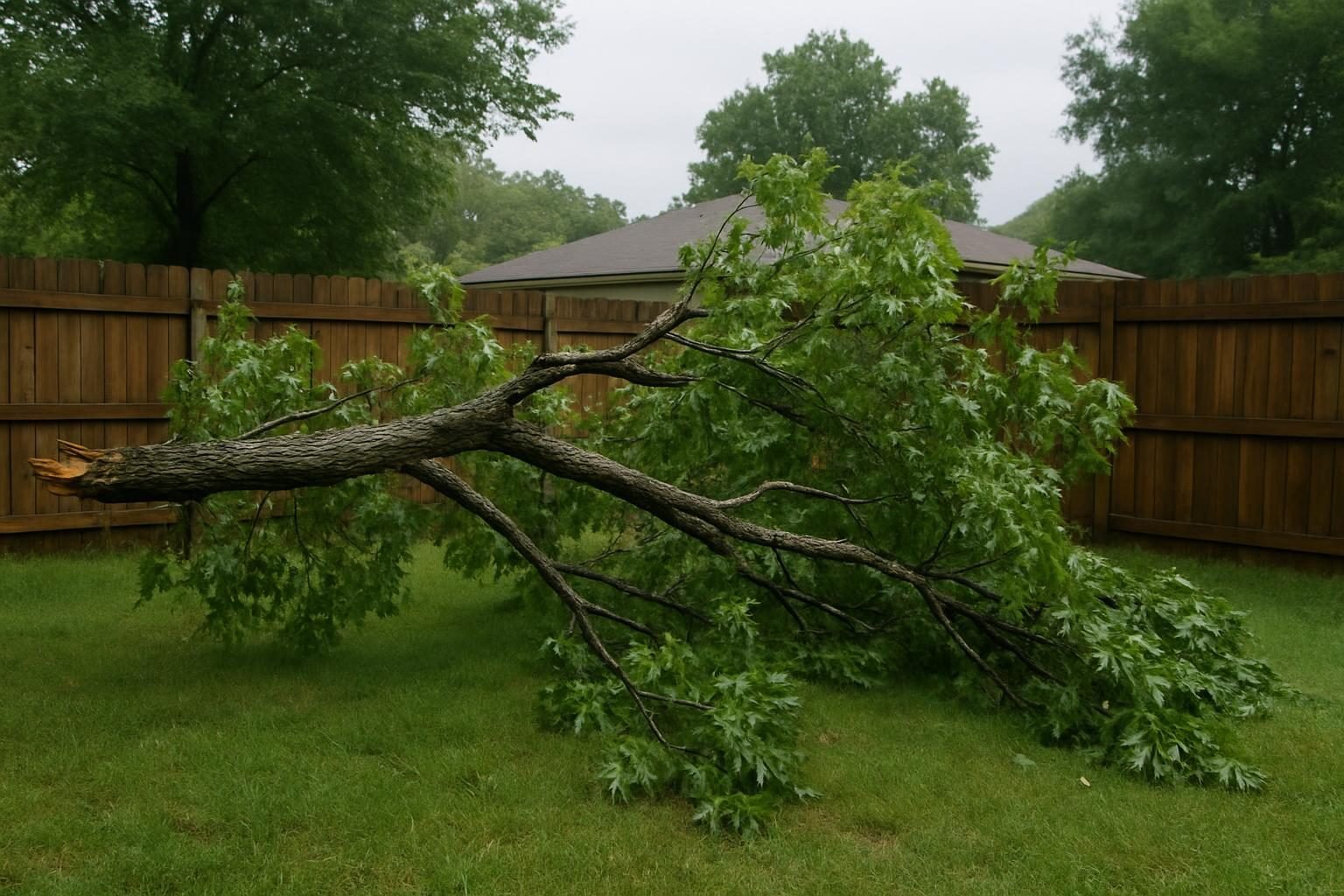
Fayetteville sits in the path of tropical systems and summer thunderstorms, and water oaks are often among the first trees to lose limbs or topple. Weak wood, heavy crowns and shallow, spreading roots in sandy soil all contribute.
Common failure patterns include:
- Large limb drops in calm weather after a period of rain or heat, a pattern that often follows internal decay in the limb attachment.
- Trunk snap at a decayed section, usually a few feet to ten feet off the ground.
- Root plate failure, where the whole tree tips over in saturated ground during a hurricane.
- Split forks where co-dominant stems pull apart under wind load.
Where the tree stands matters as much as its condition. A weak water oak in an open back lot is a nuisance; the same tree over a bedroom in Hope Mills or beside a power line in Stedman is a serious hazard.
Assessment vs removal: how to decide
Not every aging water oak has to come down. The decision depends on how much sound wood remains, how the tree is built, and what it could hit if it fails.
Questions an assessment should answer
- How extensive is the decay? A small cavity in a thick trunk is very different from a hollow with thin walls.
- Is there structural defect? Cracks, weak unions and root problems matter independent of decay.
- What is the target? Homes, vehicles, play areas, fences and utility lines raise the stakes.
- Can the risk be reduced? Selective pruning to cut weight, removing dead limbs, or cabling may extend the life of some trees.
A professional arborist tree assessment can include visual inspection, sounding the trunk, and in some cases tools that measure internal decay. If you are unsure who to call, our comparison of a certified arborist versus a tree service helps you choose.
When removal is usually the safer call
- A hollow or severely decayed trunk within striking distance of a structure.
- Fungal conks at the base combined with a lean, root lift or crown dieback.
- Large dead limbs over a driveway, play area or roofline that keep recurring.
- Storm damage that split the trunk or tore a large portion of the crown.
When a tree is borderline, regular tree trimming and pruning to remove dead wood and reduce weight can buy time, but it does not reverse internal rot.
The deciding question is rarely how the tree looks, but what it would hit if it failed.
Water oak removal cost estimates in Fayetteville
Cost depends on size, access, proximity to structures and lines, and whether the tree is already damaged. The figures below are general estimates only; actual quotes vary by company and site.
- Smaller water oak (under about 40 feet): roughly $400 to $1,200.
- Medium to large water oak (40 to 70 feet): roughly $1,000 to $2,500.
- Very large or hazardous water oak near structures: roughly $2,000 to $4,500 or more, especially if rigging or a crane is needed.
- Stump grinding: often a separate charge, commonly priced per inch of stump diameter with a minimum.
Factors that push a quote up include tight access, power lines, decay that makes climbing unsafe, and debris haul-away. Our pages on large oak tree removal cost and tree service cost in Fayetteville break these down further. If the job needs lifting equipment, see crane tree removal cost.
Before you schedule removal
A few practical steps can save money and trouble:
- Check local rules. Review whether you need a permit to remove a tree in Fayetteville, particularly for trees in rights-of-way or on certain properties.
- Get more than one quote and compare scope, cleanup and stump grinding line by line.
- Verify insurance and credentials using our 10-point checklist for hiring a tree service.
- Plan the stump. Decide up front whether you want stump grinding included.
- Read your policy. Coverage for removal is limited and depends on the cause of damage; see whether homeowners insurance covers tree removal in North Carolina.
If you simply need the tree gone safely, our tree removal in Fayetteville page explains what the process involves. For storm damage that cannot wait, see emergency storm tree removal. If you are also wondering about other oak health issues, our upcoming guide on oak tree diseases in North Carolina is a good next read.
Ready to find out whether your water oak can stay or has to go? Request free quotes from local tree service companies using the form on this page.
FAQ
How long do water oaks live?
Water oaks are generally considered short-lived oaks, and many begin to decline in the 50 to 80 year range, sometimes sooner in stressed urban or sandy sites. Individual trees vary with soil, storm history and care.
Can a hollow water oak be saved?
Sometimes. If the walls of sound wood are thick and the tree is not near anything it could damage, an arborist may recommend pruning and monitoring. A large hollow near a house usually points toward removal.
Are water oaks more dangerous than other oaks?
They tend to have weaker wood and decay earlier than species like live oak or white oak, so they often fail sooner. Risk still depends on the individual tree and what stands beneath it.
Should I remove a water oak before hurricane season?
If an assessment shows serious decay, a split trunk or large dead limbs near a structure, removing it before storm season is generally safer and often cheaper than emergency work after damage occurs.
Get a free water oak assessment or removal quote
A local tree service company will contact you with a free, no-obligation quote for your water oak.