Quick answer: Tree removal typically follows a set sequence: an on-site estimate, scheduling, a utility locate if digging is involved, crew setup, then either straight felling or sectional removal with ropes and rigging, followed by chipping, optional stump work and cleanup. Most residential jobs in Fayetteville and Cumberland County take a few hours to a full day, depending on the tree’s size, species and what is around it.
Key takeaways
- How tree removal works depends mostly on space: open yards allow felling, tight lots require climbing and rigging.
- Most single-tree jobs finish in 2 to 8 hours; large or hazardous trees can take a full day or more.
- Stump grinding, hauling and cleanup are often separate line items, so confirm them in writing.
- A few minutes of prep, like moving cars and clearing access, can save time and money on job day.
If you have never had a tree taken down, the process can look chaotic from the driveway. It is actually a methodical routine, and knowing the steps helps you compare quotes and spot a crew that cuts corners. This guide walks through each stage, from the first estimate to the last rake pass. When you are ready to line up a crew, you can request free tree removal quotes from local companies using the form on this page.
Step 1: The Estimate and Scheduling
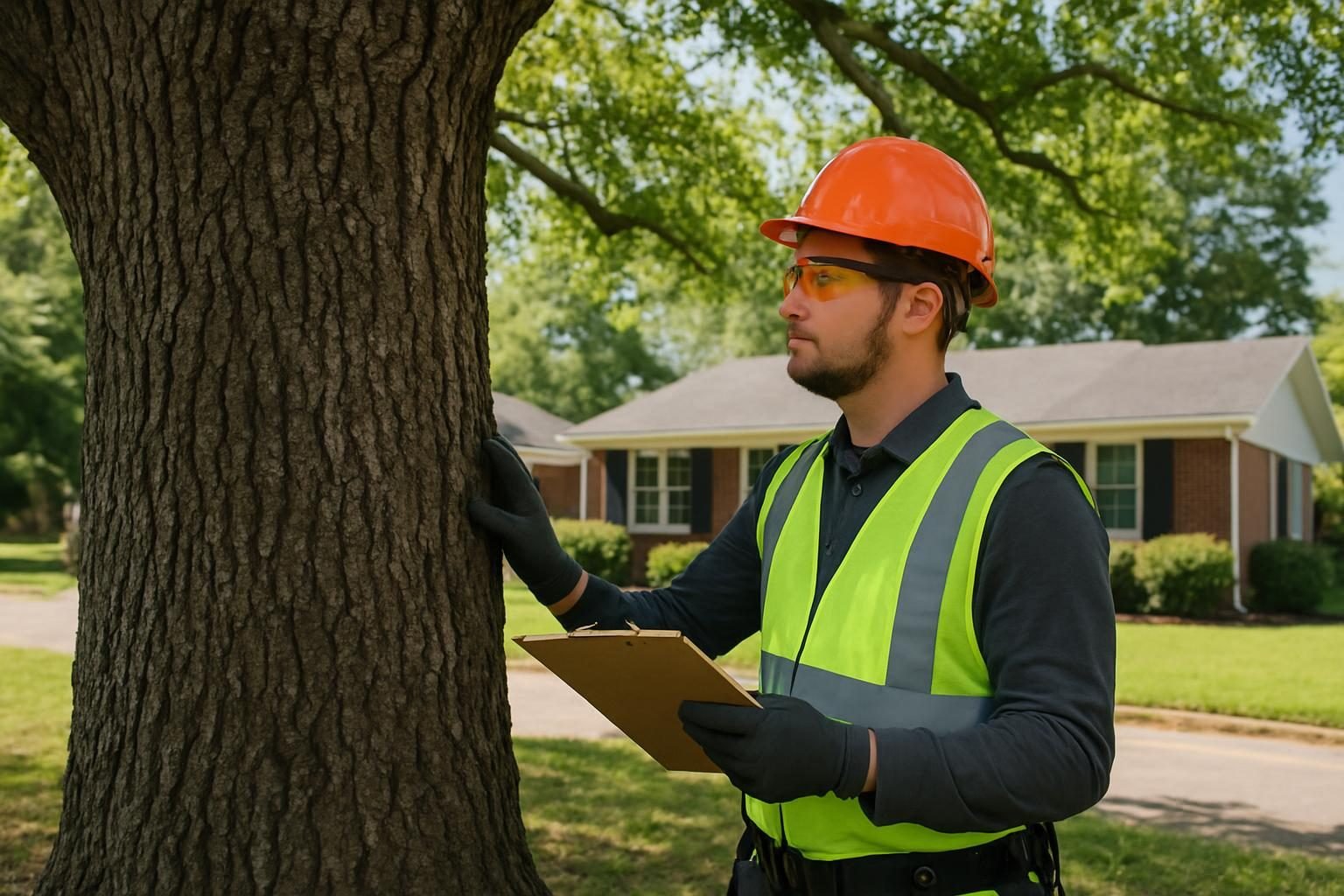
Nearly every reputable company starts with an on-site look. Photos can give a ballpark, but the crew needs to see the tree, the ground, the structures and any overhead lines before committing to a price.
During the estimate, expect the estimator to evaluate:
- Tree size and species: height, trunk diameter, and wood density. Water oaks and live oaks are heavier and slower to take apart than a loblolly pine of similar height.
- Condition: dead, leaning, split or decayed trees are riskier and may need a different approach.
- Targets: houses, fences, pools, sheds, septic areas and power lines within the fall zone.
- Access: whether a bucket truck, chipper truck or crane can reach the tree, or whether everything must be carried out by hand.
- Scope: stump grinding, wood hauling, and whether you want logs left for firewood.
Get the scope in writing: what is included, what is not, and who handles debris. For a sense of what drives pricing, see our breakdown of tree removal cost by tree size in Fayetteville and the broader tree service cost guide. Prices vary widely by job, so treat any range you see online as an estimate only.
Scheduling usually takes days to a couple of weeks for planned work. After a storm, expect longer waits because crews prioritize emergencies. If a tree is already on your home or lines, skip ahead to our guide on emergency tree removal in Fayetteville.
Also check whether your property needs a permit. Rules differ by situation, and our article on tree removal permits in Cumberland County covers the common questions. If you live in an HOA or rent, get approval before any work is scheduled.

Step 2: Utility Locates and Pre-Job Planning
Tree removal itself rarely involves digging, but stump grinding and some site work do. In North Carolina, you can call 811 before any excavation so underground utilities are marked for free. Grinding is shallow, yet many companies still confirm lines or irrigation before they start, especially near meters and service lines.
Overhead lines are a different story. A tree touching or near a power line is not a normal job. Crews generally cannot work within a set distance of energized lines unless they are qualified line-clearance personnel or the utility has de-energized or shielded the line. Read our guide to removing a tree near power lines if that describes your situation.
Pro tip: Never try to move a branch that is touching a line, and stay well away from any tree that has brought wires down. Call the utility first.
Before the first cut, a good crew leader will walk the site and make a plan. That plan covers:
- Where the tree will land or where pieces will be lowered.
- Which direction the tree naturally leans and where any decay is hiding.
- Where to stage the truck, chipper and trailer.
- What needs protection, such as lawns, fences, plantings or septic lids.
- Escape routes and where bystanders must stay.
The most important part of tree removal happens before the saw starts: the plan for where every piece will go.
Step 3: Crew Setup and Safety Zones
On arrival, the crew sets up before anyone climbs. Expect cones or caution tape around the work zone, trucks positioned for fast loading, and protective gear on every worker: helmets, eye and ear protection, gloves and chaps for saw operators.
Ground protection often goes down too. Plywood mats or boards protect lawns and driveways from equipment and heavy logs. If a bucket truck is used, the crew levels and stabilizes it on outriggers.
A typical crew has a mix of roles:
- Climber or bucket operator: works in the tree and makes the cuts.
- Ground crew: manages ropes, drags brush and feeds the chipper.
- Crew leader: directs the job and keeps everyone clear of the drop zone.
This is also the time to ask about credentials. Ask for proof of liability insurance and workers’ compensation before work starts. Our planned article on why tree service insurance and workers’ comp matter explains the risk if you skip this check.

Step 4: Felling vs. Sectional Removal
This is the heart of how tree removal works, and it determines most of the time and cost.
Straight felling
If the tree has plenty of open space around it, the crew can cut a notch and a back cut and let it fall in a planned direction. It is the fastest method. It only works when the fall zone is clear of structures, lines, fences and anything valuable, and when the tree is sound enough to fall predictably. Open lots in Raeford or Stedman more often allow this approach than tight neighborhood yards.
Sectional removal
When there is a house, pool or fence below, the crew takes the tree down in pieces from the top. A climber ascends, ties in, and removes limbs first, then cuts the trunk into manageable sections from the top down.
Rigging
Heavy limbs and trunk sections are controlled with ropes, pulleys and friction devices so they are lowered gently instead of dropped. Rigging is skilled, slower work, which is why tight-access removals cost more than open-yard felling.
Crane-assisted removal
For very large trees, trees over structures, or spots where nothing can be lowered safely, a crane lifts sections away. It adds cost but can be the safest choice. See our guides on when you need a crane and what it costs and what crane-assisted jobs typically run.
The same tree can cost twice as much to remove when the crew has no safe place to drop it.
Step 5: Chipping, Stump Work and Cleanup
Once the tree is down, the crew processes everything. Branches go through the chipper, and trunk sections are cut into logs. Whether logs are hauled away, left in lengths for firewood or stacked is something to settle at the estimate stage.
Here is how the typical finish unfolds:
- Chipping: brush is fed into a chipper and the chips are hauled off or, if you ask, left on site for mulch.
- Log removal: large rounds are loaded onto a truck or trailer. Very big rounds from oaks can be heavy enough to need equipment.
- Stump: removal of the tree leaves a stump unless grinding is included. A stump grinder chews it below grade, and the crew fills the hole with the grindings. Read more about stump grinding, or weigh it against doing it yourself in our DIY stump removal vs. hiring a pro article.
- Cleanup: crews rake, blow off driveways and roofs, and pick up debris. Ask whether cleanup includes a magnet sweep for nails or hardware.
Do a walk-through with the crew leader before they leave. Check the lawn, fences, gutters and anything near the work zone, and confirm what was and was not included.
How Long Does Tree Removal Take?
Durations vary with the tree and the site. These are general estimates, not guarantees:
- Small tree (under about 30 feet), open access: roughly 1 to 3 hours.
- Medium tree, some obstacles: roughly 3 to 6 hours.
- Large tree, tight access or rigging: a full day.
- Multiple large trees or crane work: one to several days.
- Stump grinding: often 30 minutes to a couple of hours per stump, depending on diameter and roots.
Weather matters. Crews may postpone for high winds, lightning or saturated ground that cannot support heavy trucks, which is common during Fayetteville’s summer thunderstorms and hurricane season. For the full overview, see our tree removal in Fayetteville page.
Homeowner Prep List for Job Day
A little prep makes the crew faster and protects your property. Before they arrive:
- Move vehicles: clear the driveway and the street in front of the work area.
- Clear the drop zone: remove patio furniture, grills, planters, kids’ toys and yard décor.
- Open access: unlock gates and trim back anything blocking truck or chipper access.
- Mark hazards: point out irrigation heads, septic lids, buried dog fences and invisible lines.
- Secure pets and kids: keep them inside and away from windows facing the work.
- Tell neighbors: if the tree is near a shared fence or line, give them a heads-up about noise and activity.
- Protect the interior: take wall hangings off shared walls, since vibration can shift things.
- Confirm the paperwork: have the written scope, price and insurance information handy.
If you are weighing whether removal is even necessary, a second opinion helps. Our arborist tree assessment page explains how a professional evaluates risk. Ready to compare crews? Request your free tree removal quotes through the form on this page.
FAQ: How Tree Removal Works
Do I need to be home during tree removal?
Not always, but it helps to be available at the start to confirm which tree is coming down and again at the end for the walk-through. If you cannot be there, make sure the crew has clear written instructions and access.
Is stump grinding included in tree removal?
Often it is not. Many companies quote removal and stump grinding separately, so ask for each as its own line item. Grinding the stump at the same visit is usually more convenient than scheduling it later.
Will the crew haul away all the wood and debris?
Most full-service quotes include hauling brush and logs, but some leave wood on site or charge extra for it. Confirm in writing whether logs, chips and cleanup are included.
How do I know the crew is safe and legitimate?
Ask for current liability insurance and workers’ compensation certificates, and be cautious of anyone who pressures you for cash upfront or has no written estimate. Our guide to cheap tree removal and red flags in Fayetteville covers what to watch for.
Get free tree removal quotes in Fayetteville
A local, insured tree service will contact you with a free, no-obligation quote for your removal job.