Quick answer: Yes, you can limb up a pine tree, but only moderately and only for a real reason like clearance, visibility, or removing dead branches. Take off no more than about a quarter of the live crown, and never strip the lower two-thirds of the trunk bare. In Fayetteville and Cumberland County, the safest window for most pine pruning is late fall through winter, when bark beetles are least active.
Key takeaways
- Limb up for a reason: clearance over a driveway, roof, or mowing area is a good reason; “it looks tidier” usually is not.
- Keep the live crown: removing more than roughly 25% of live foliage stresses the tree and weakens it in wind.
- Avoid lion-tailing: a bare trunk with foliage only at the top is more likely to snap or topple in a hurricane.
- Time it right: prune pines in cooler months to avoid attracting engraver (Ips) and southern pine beetles.
- Some pines should be left alone: sick, leaning, or dying pines need an assessment, not a trim.
Pines are the backbone of many yards in Fayetteville, Hope Mills, and Spring Lake, and homeowners often wonder whether those long, bare trunks and low branches need attention. Sometimes they do. Often, though, the wrong kind of pruning does more harm than good. This guide walks through when limbing up a pine makes sense, how much is too much, and when to call a professional.
If you would rather have someone look at your trees in person, you can request a free pine pruning quote using the form on this page.
What Does It Mean to Limb Up a Pine Tree?
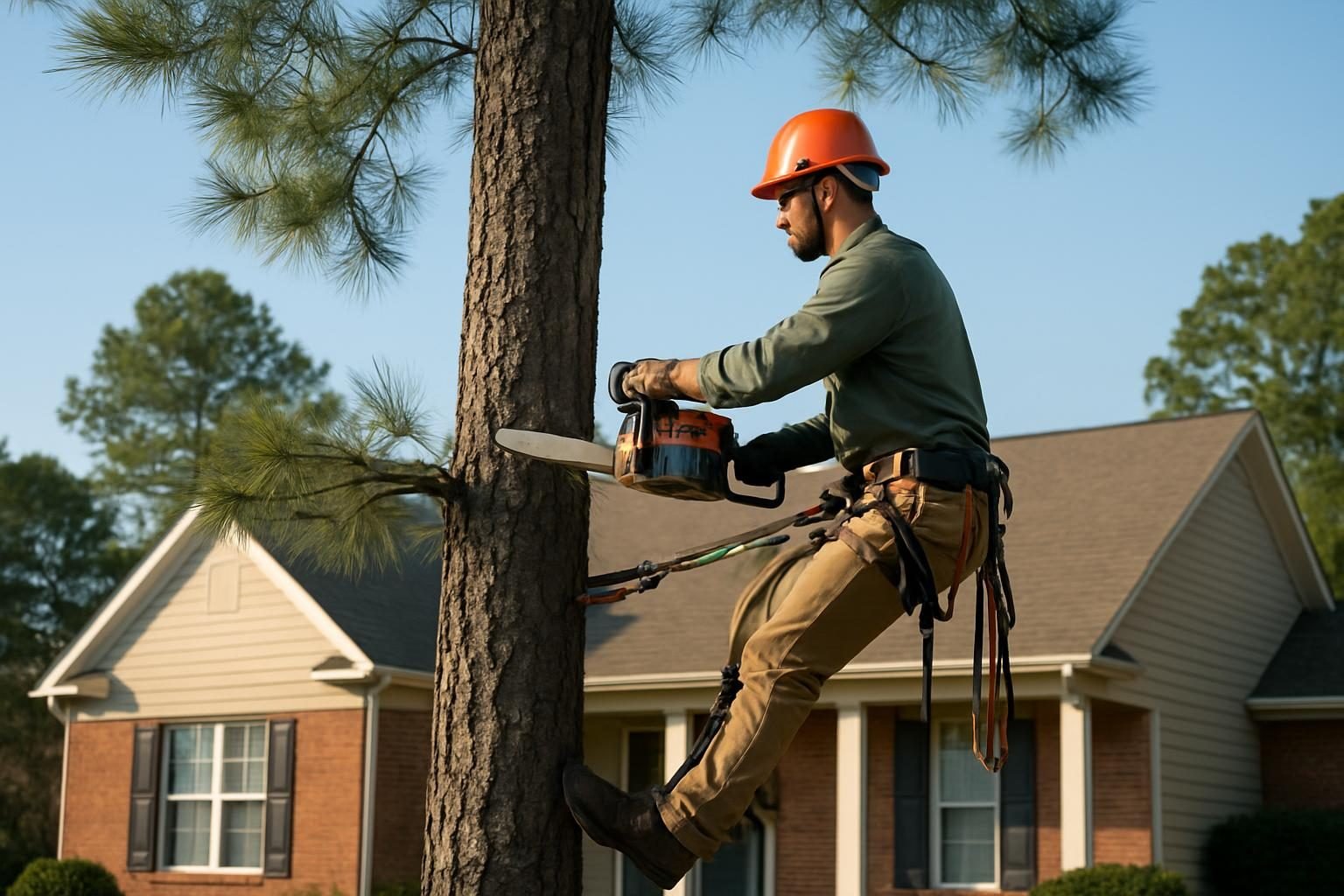
“Limbing up” (also called raising the canopy or crown raising) means removing the lowest branches so the tree’s foliage starts higher off the ground. It is one of the most common pruning requests for loblolly and longleaf pines in Cumberland County.
Pines naturally shed their lower branches as they grow. Shade from the upper crown starves the bottom limbs of light, and they die off over time. Limbing up speeds that process along for branches that are already weak, dead, or in the way.
Good reasons to raise the canopy include:
- Clearance for vehicles and people: driveways, walkways, and mowing lanes.
- Visibility: sight lines at a driveway entrance or along a rural road in Raeford or Stedman.
- Roof and structure clearance: low limbs hanging over a roofline or against a fence. Our guide on how far trees should be trimmed back from your roof covers the distances to aim for.
- Dead or dying lower branches: removing them reduces fall hazards and cleans up the tree.
Should You Limb Up Pine Trees? The 25% Rule
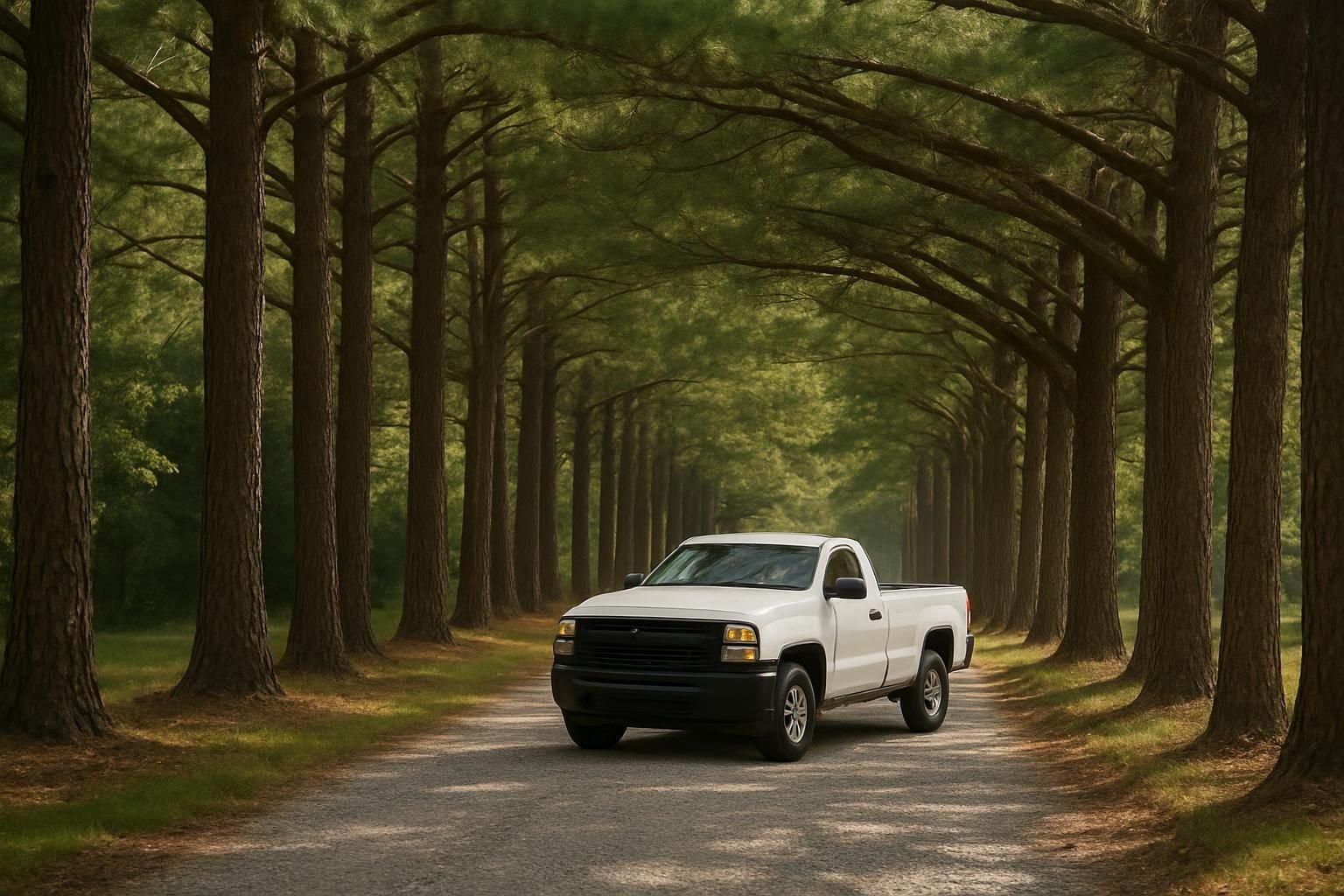
The short answer is yes, in moderation. A widely used arborist guideline is to remove no more than about 25% of the live crown in a single pruning, and to keep live branches on at least the upper two-thirds of the tree’s height.
Pine foliage is the tree’s food factory. Cut too much and the tree has less ability to feed itself, recover from stress, and defend against pests. Unlike many hardwoods, pines generally do not re-sprout from bare wood, so branches you remove are gone for good.
A simple way to judge how much to remove
- Estimate total tree height. A 60-foot pine should keep live branches on the upper 40 feet or more.
- Count only live branches. Dead limbs do not count against the 25% limit, so removing them is always fair game.
- Take the lowest, weakest branches first. Work upward only as far as your clearance goal requires.
- Stop when you reach your goal, not when the trunk looks “clean.”
Pro tip: If you need clearance and the tree is already thin on live branches, the answer may be to leave the tree alone and move the object (a parked boat, a shed) instead of the branches.
The Danger of Over-Limbing: Lion-Tailing
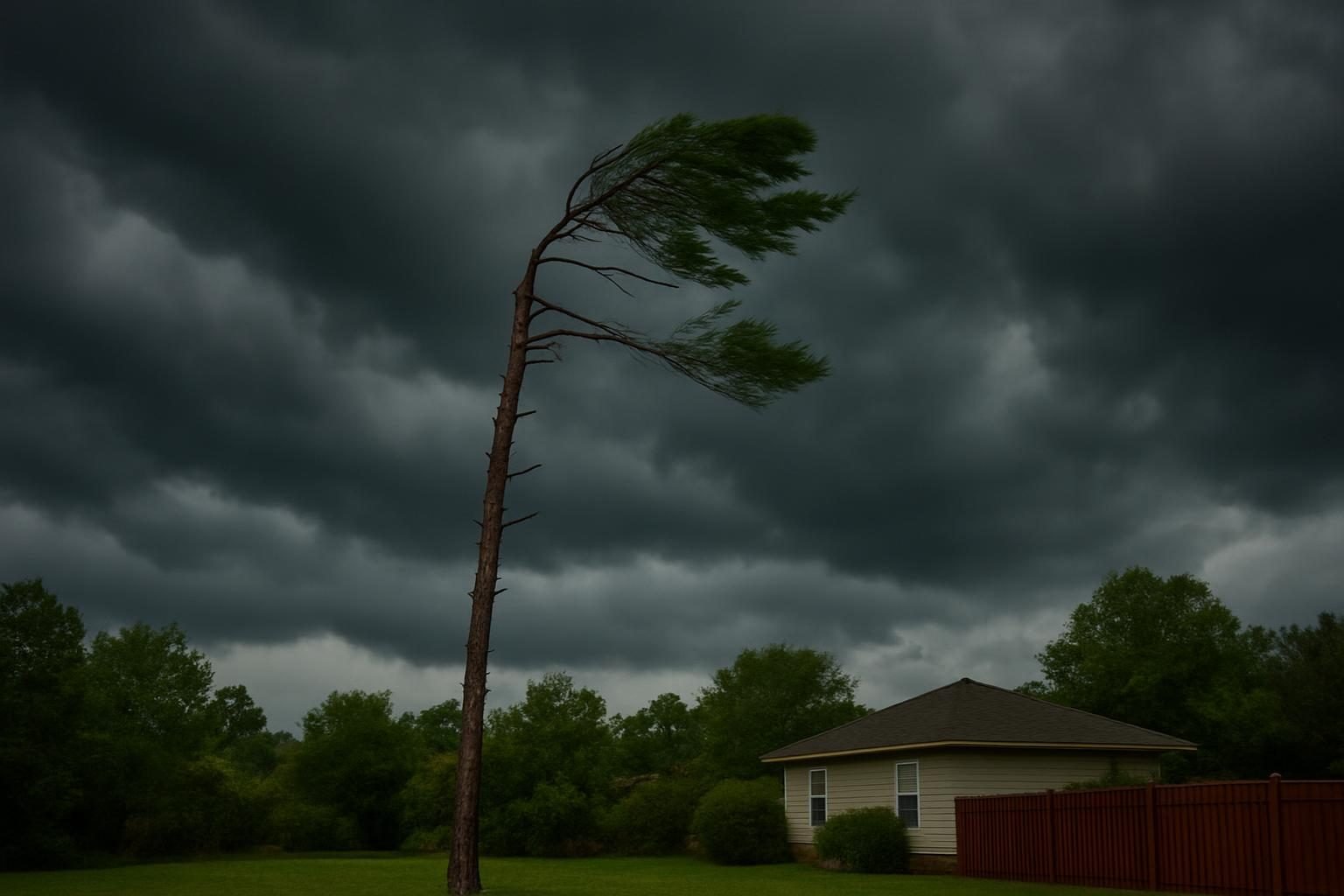
Lion-tailing is the practice of stripping nearly all the lower and interior branches, leaving a bare trunk with a tuft of foliage at the very top. It is one of the most common pruning mistakes, and it is especially risky in coastal-plain North Carolina where hurricane remnants and thunderstorm microbursts are a fact of life.
Here is why it backfires:
- Higher wind leverage: all the sail area sits at the top, so wind acts like a long lever on the trunk.
- Less trunk taper strength: lower branches help the tree build thicker, sturdier wood at the base. Remove them and the tree adapts poorly.
- More stress and pest risk: a tree short on foliage is a weaker tree, and weak pines attract beetles.
- Bigger wounds: large, repeated cuts give decay a path into the trunk.
A pine stripped down to a tuft of needles at the top is built to fail in the next big wind.
If a crew suggests removing every branch below 20 or 30 feet on a mature pine “to make it safer,” get a second opinion. Proper pine care leaves the tree with a strong, balanced crown.
Removing Dead Branches From Pines
Deadwood removal is the least controversial pine pruning job. Dead branches can drop without warning, especially after a windy afternoon or a tropical storm, and they are a real hazard over play areas, parking spots, and rooftops.
What to know about dead branch removal:
- Dead limbs are brittle and gray or brown, with no green needles and bark that may be peeling.
- Cut at the branch collar, the slightly swollen area where the branch meets the trunk, rather than flush with the trunk or leaving a long stub.
- Large dead limbs over structures are a job for a trained crew with proper rigging, not a ladder and a homeowner saw.
- A lot of dead branches at once can signal a tree in decline. See our guide to how to tell if a pine tree is dead or dying before you spend money trimming a tree that is past saving.
The Best Time to Prune Pines in Cumberland County
Timing matters more for pines than for most trees. Fresh cuts release resin and a pine scent that can attract bark beetles, including southern pine beetles and Ips engraver beetles, which are active in our warm climate for much of the year.
General timing guidance for the Fayetteville area:
- Best window: late fall through winter (roughly November through February), when beetle activity is lowest.
- Use extra caution: from spring through summer, especially during drought, when pines are already stressed and beetles are flying.
- Emergency exceptions: a hanging or broken limb that threatens people or property should come down right away regardless of season. Cut surfaces and slash can be handled to reduce beetle attraction.
- Clean up debris promptly: fresh pine slash left in piles can host beetles. Chip it or haul it off.
For a broader calendar, see our month-by-month guide to the best time to trim trees in North Carolina. If you suspect beetles are already at work, read about southern pine beetle and Ips beetle signs in Cumberland County pines.
When Pines Should Be Left Alone or Removed
Not every pine benefits from pruning. In some cases, trimming wastes money or even masks a bigger problem.
Skip the limbing and get an assessment when you see:
- Widespread yellowing or red needles in the crown, which can point to beetle attack or root trouble.
- Pitch tubes, sawdust-like frass, or tiny exit holes on the trunk.
- A noticeable lean, heaved soil at the base, or exposed roots. Our article on whether a leaning tree is dangerous explains the warning signs.
- A pine very close to the house that is tall, crowded, or declining. Read when you should remove a pine tree near your house to weigh pruning against removal.
A professional arborist tree assessment can tell you whether a pine is worth keeping and pruning, or whether tree removal is the safer call. Healthy pines in a managed stand, such as a longleaf planting, often do best with minimal pruning. You can look forward to our upcoming longleaf pine care guide for species-specific advice.
The right amount of pine pruning is often less than you think, and sometimes none at all.
What Pine Pruning Typically Costs
Pricing depends on tree height, how many branches come off, access, and whether a bucket truck or climbing is needed. As rough estimates only, light limbing on a medium pine may run from about $200 to $500, while tall pines or multi-tree jobs can run $500 to $1,200 or more. Actual quotes vary by company and site conditions.
For more detail, see our breakdown of tree trimming cost in Fayetteville by tree size and type, plus the main tree service cost guide. Pruning work is handled under our tree trimming and pruning service.
How to hire the right crew for pine work
- Ask how they prune pines specifically and how much live crown they plan to remove.
- Be wary of any crew that proposes topping or lion-tailing.
- Confirm insurance and get a written, itemized quote.
- Compare at least two bids. Our 10-point checklist for hiring a tree service makes it easy.
If you want local crews to look at your pines and give honest advice on how much to take off, request your free tree service quote with the form below.
Frequently Asked Questions
How high should I limb up a pine tree?
Only as high as your clearance goal requires, while keeping live branches on at least the upper two-thirds of the tree. For most yards, that means removing the lowest dead or drooping branches rather than a set number of feet.
Can pruning kill a pine tree?
Heavy pruning can. Removing too much live foliage weakens a pine, and because pines rarely re-sprout from bare wood, the lost branches do not grow back. Stressed pines are also more vulnerable to bark beetles.
Is it okay to prune pines in summer?
It is best avoided if you can wait. Warm-season cuts can attract beetles, especially during drought. Late fall through winter is the safer window in Cumberland County, with exceptions for urgent hazard removal.
Does limbing up make a pine safer in hurricanes?
Not by itself. Removing dead and weak branches helps, but over-limbing can make a pine more likely to fail in high wind. A balanced crown on a healthy tree is generally the better storm defense.
Get a free pine tree pruning quote in Fayetteville
A local tree service will contact you with a free, no-obligation quote for your pine trees.