Quick answer: The most reliable signs a tree is dying are a thinning or bare canopy, bark peeling off in sheets, fungus at the base, deep cracks, hollow cavities, a lean that has changed, damaged roots, and pine needles turning red or brown. One sign may be treatable. Several together, or any sign on a tree close to your house, usually mean it is time to have a certified arborist look at it.
Key takeaways
- One warning sign can be a stressed tree. Three or more usually point to real decline.
- Red or brown needles on a loblolly or longleaf pine can mean bark beetles, and infested pines can spread them to neighbors.
- A tree that has started leaning, or has lifted soil at the base, is a hazard. Keep people and cars away from it.
- The closer the tree is to your roof, driveway or power line, the sooner you should act.
Trees in Fayetteville and across Cumberland County take a beating from hot summers, summer droughts, sandy soils and the occasional hurricane. A tree can look fine from the street and still be failing inside. This checklist covers what to look for in your yard, whether you live in Hope Mills, Spring Lake, Stedman or near Fort Bragg.
If you already see trouble, you can request a free tree assessment or removal quote using the form on this page.
9 Signs a Tree Is Dying: Your Inspection Checklist
Walk all the way around the tree, then look up into the crown. Do this in the growing season if you can, because leaf-out makes dead sections easier to spot.
- Bare or thinning canopy. Large sections with no leaves while the rest of the neighborhood is green is a red flag. In winter, scratch a small twig with your thumbnail. Green underneath means alive, and dry brown means dead.
- Bark falling off. Bark that peels away in sheets, leaving smooth or discolored wood, often means the tissue underneath has died. Normal exfoliation, as on a crape myrtle or sycamore, leaves healthy-looking wood behind.
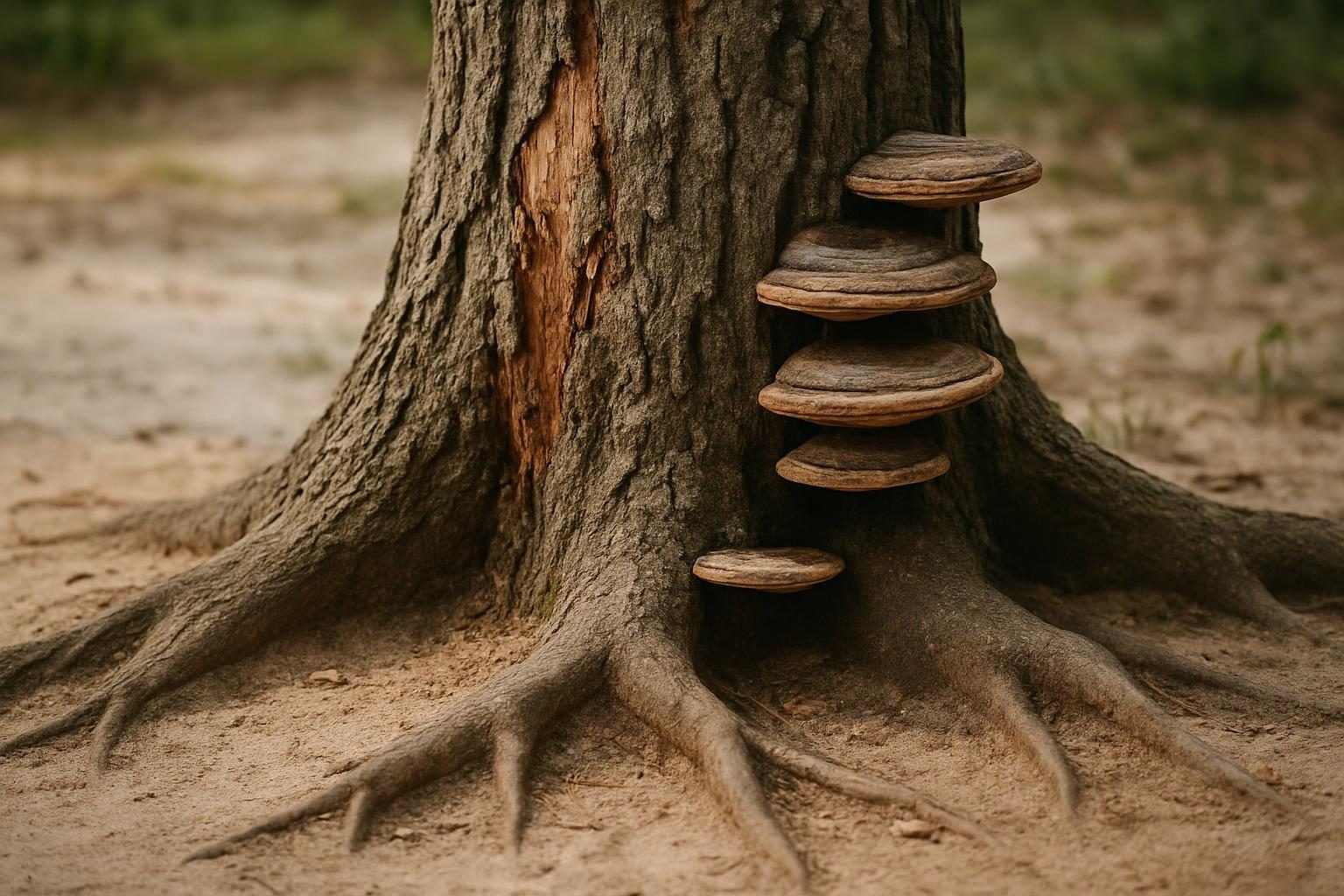
- Fungus at the base or on the trunk. Mushrooms, shelf-like conks or soft, crumbly wood near the root flare often signal internal decay. The fungus is a symptom, and the wood may already be weak.
- Deep cracks or splits. Long vertical cracks, or a split where two trunks join, mean the tree may not hold together in high wind. Bradford pears are notorious for this.
- Cavities and hollow spots. Knock on the trunk. A hollow sound, large holes or dark, wet-looking wood point to decay. A small cavity is not always fatal, but a large one weakens the tree.
- A lean that has changed. Many trees lean slightly and are fine. A tree that was upright last year and now tilts, especially with cracked or raised soil on one side, is failing at the roots.
- Root damage. Look for roots cut by trenching, driveway paving or new construction, exposed or rotting roots, and soil mounded up on one side. Compacted soil, flooding and fill dirt piled around the trunk also kill roots slowly.
- Pine needles turning yellow, red or brown. This is a common warning on local pines. The next section covers it in more detail.
- Dead branches and trunk sprouts. A growing number of dead limbs, or clusters of thin shoots sprouting from the trunk or base, shows the tree is under stress and trying to survive.
Pro tip: Take a dated photo of the tree from the same spot every few months. Comparing photos makes it much easier to see a thinning crown or a changing lean.
Pine Needles Turning Red or Brown: Beetles and Local Pines
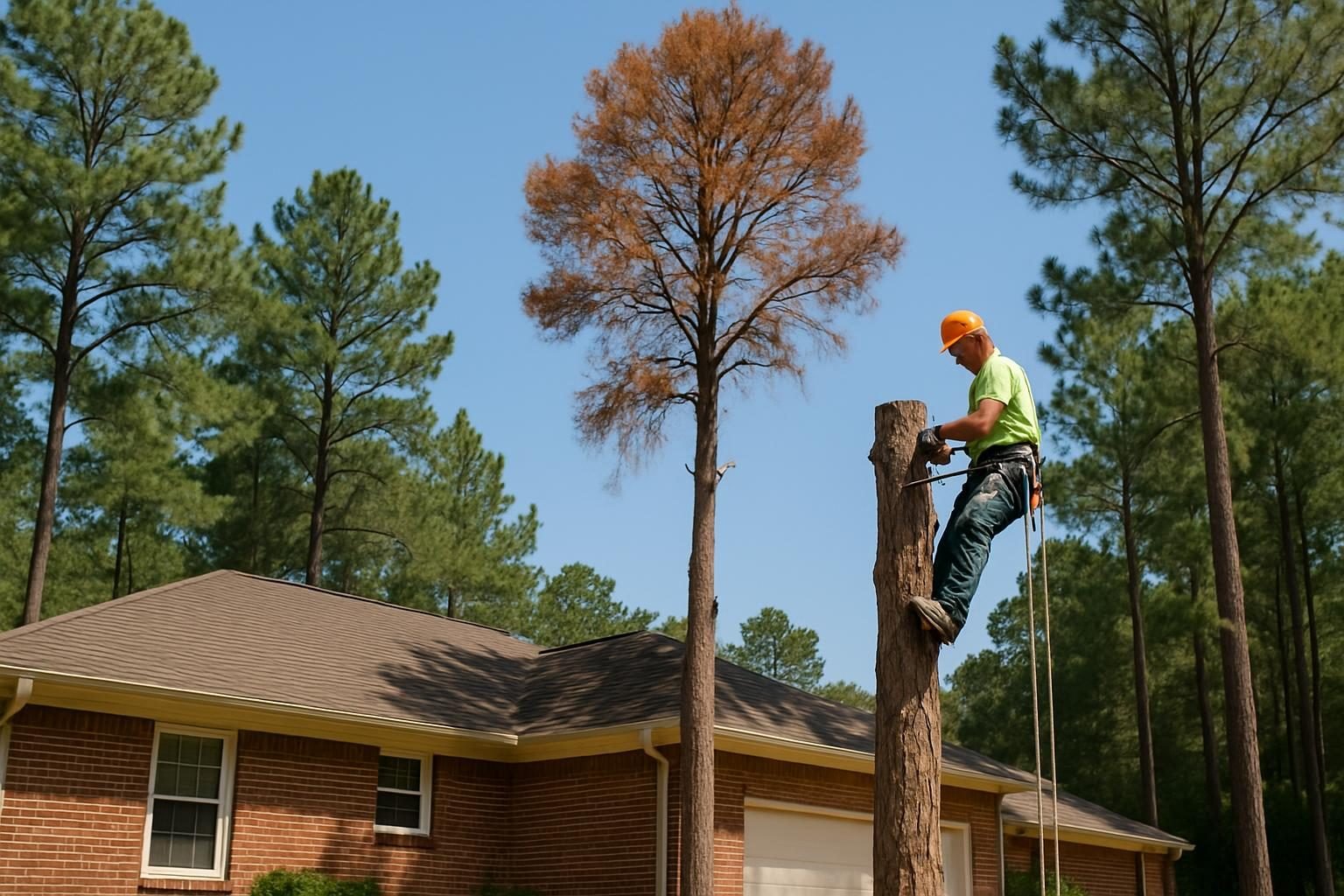
Loblolly and longleaf pines are everywhere in Cumberland County, and they are the trees most likely to be hit by bark beetles. Beetles tend to attack pines already weakened by drought, storm damage, root disturbance or crowding. A pine can go from green to rust-colored fairly quickly once they take hold.
Signs that point to beetles rather than normal needle drop:
- The whole crown, or a large top section, turns yellow-green, then red-brown.
- Small pitch tubes (popcorn-sized blobs of resin) show on the trunk.
- Tiny round exit holes appear in the bark, or bark flakes off easily.
- Winding S-shaped tunnels show under loose bark.
Do not confuse this with seasonal needle shed. Pines normally drop some older, inner needles in fall, turning them yellow or brown. That happens evenly across the tree and is not a problem.
An infested pine rarely recovers, and removing it promptly can protect nearby pines. Read more in our upcoming guide on southern pine beetle signs. For budgeting, see our breakdown of pine tree removal cost in Fayetteville.
A pine with a fully red crown is usually beyond saving, and the beetles inside may already be moving to the next tree.
Dying, Dead or Dangerous: Which One Is Your Tree?
Not every sick tree needs a chainsaw. What matters is how far the decline has gone and what the tree could hit if it fell.
- Stressed: a few dead twigs, light leaf scorch, or a thin canopy after a dry summer. Water deeply, mulch, and watch it. It may bounce back.
- Declining: several signs from the checklist, or a crown that is noticeably worse each season. Get an assessment, since some trees can be saved with pruning or care.
- Dead: no leaves in season, brittle twigs, loose bark. Dead trees get brittle and drop limbs unpredictably, so they should come down.
- Hazardous: structurally unsound, regardless of whether it is alive. Large cracks, major decay, or a new lean are the usual causes.
Local species matter here. Water oaks and laurel oaks are common in Fayetteville yards and are relatively short-lived, so decay in older ones is common. Sweetgums drop heavy limbs, and Bradford pears split in storms.
Targets matter just as much. A dead tree at the back of a large lot is a lower risk than a hollow oak hanging over a bedroom. Our guide to when a leaning tree is dangerous goes deeper on the lean question.
When to Call an Arborist and When to Just Remove the Tree
Call an arborist first if:
- You see one or two warning signs and the tree is valuable or mature.
- You are not sure whether a lean, crack or cavity is serious.
- Construction, drought or flooding may have stressed the tree.
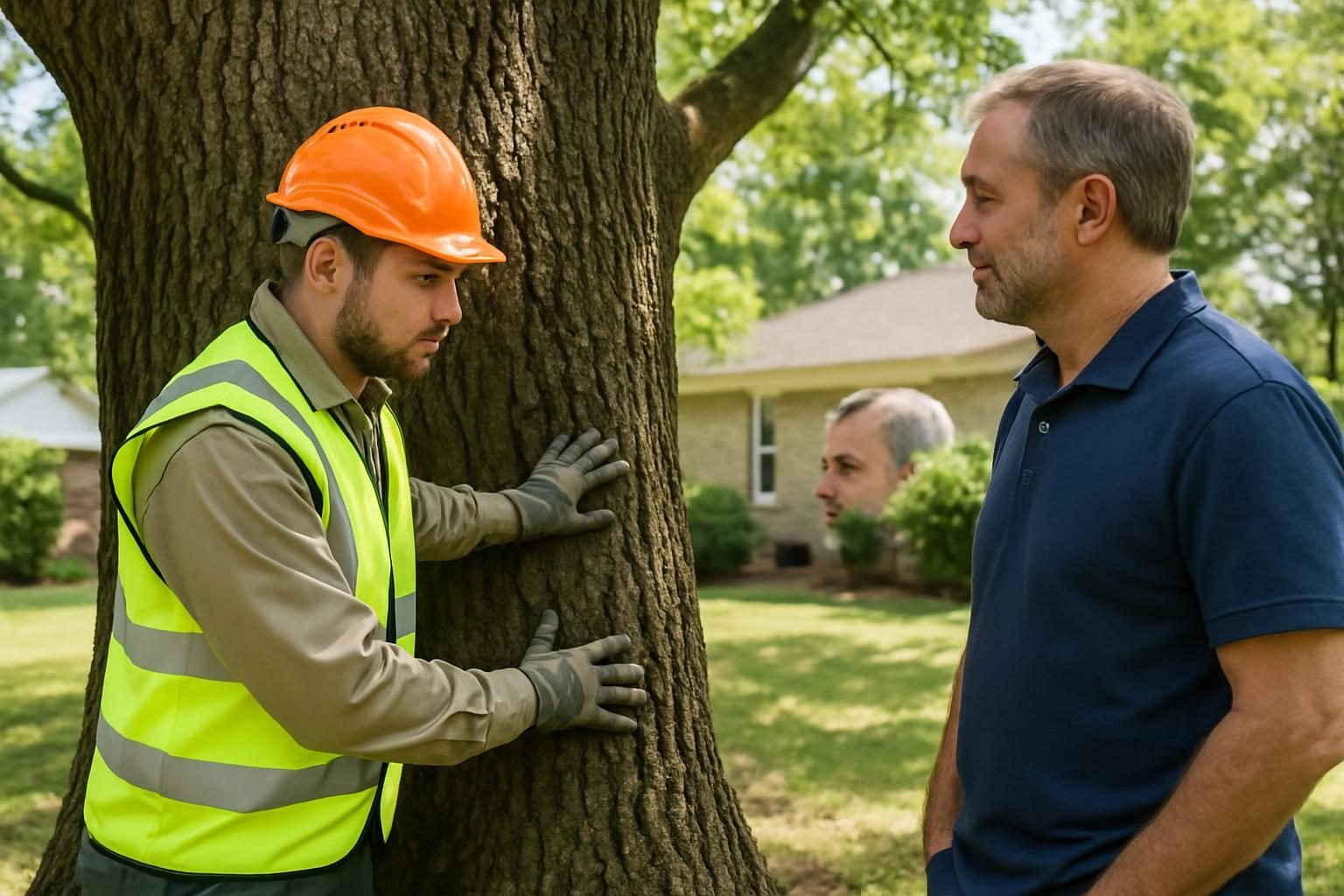
A certified arborist can check for internal decay, evaluate the risk and tell you whether treatment or trimming and pruning could help. Our arborist tree assessment page explains what an inspection involves. The International Society of Arboriculture also offers a consumer site, Trees Are Good, with tree-care basics.
Remove it if:
- More than about half the crown is dead.
- The trunk has large cracks, a big cavity or heavy fungal decay at the base.
- It has begun leaning and the soil near the base is cracked or heaving.
- It is a beetle-killed pine.
- It could hit a house, car, fence or power line.
If a tree has already come down, or a big limb is hanging, treat it as an emergency. Our guide on what to do when a tree falls on your house covers the first 24 hours, and emergency storm tree removal is available when time matters. Coverage varies, so it is worth reading whether homeowners insurance covers tree removal in North Carolina before you pay out of pocket.
Waiting on a dying tree rarely makes it cheaper, because a tree that falls on a roof turns a removal job into a repair claim.
What Removal Costs and How to Hire Locally
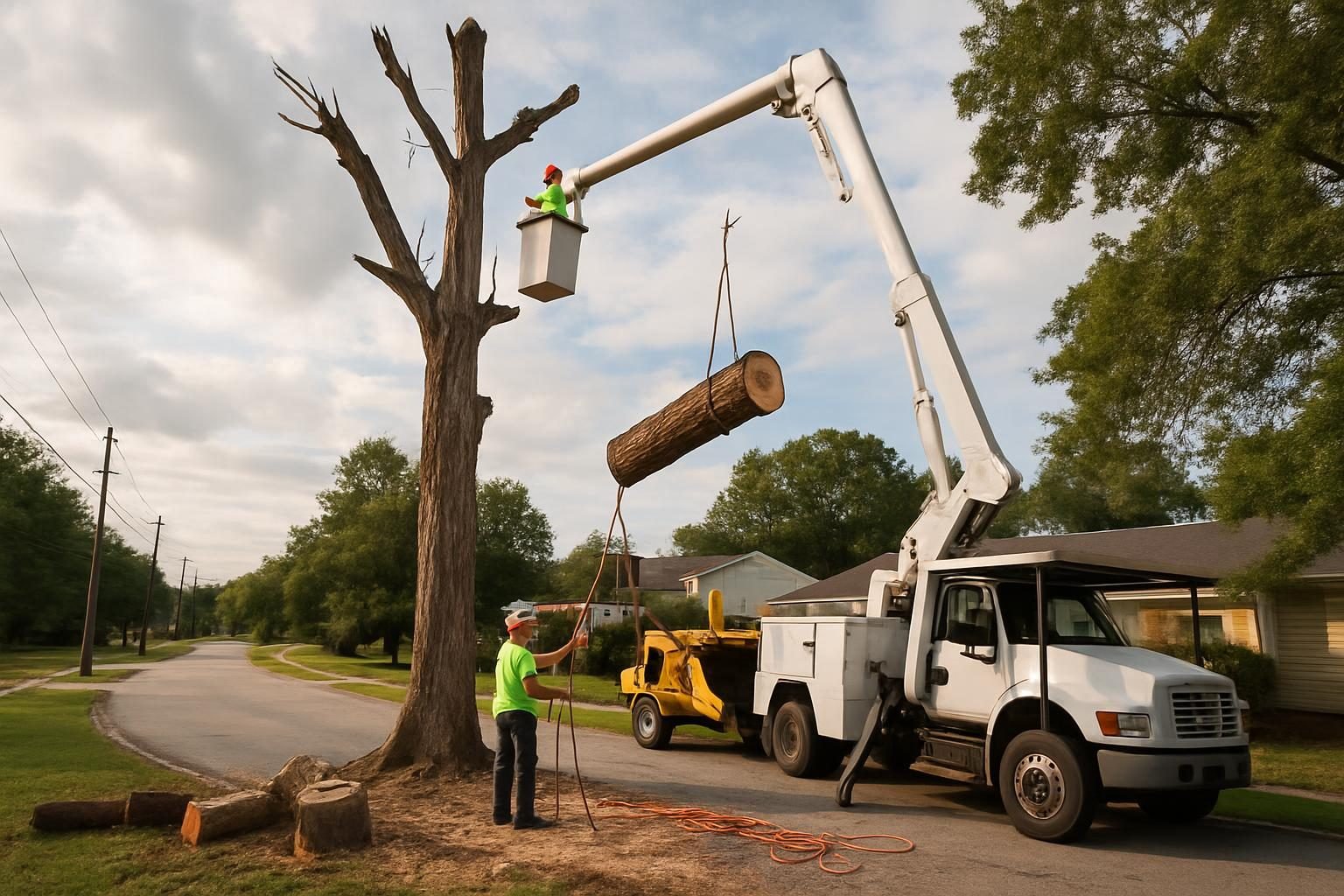
Prices depend on height, trunk size, access, how close the tree is to structures and whether a crane is needed. As rough estimates only, small trees often run a few hundred dollars, mid-size trees roughly $500 to $1,500, and large or hard-to-reach trees can reach $2,000 or more. Dead trees can cost more, since the wood is brittle and riskier to climb. See our page on tree service cost in Fayetteville for more detail, and budget for stump grinding if you want the stump gone too.
How to hire a tree company:
- Ask for proof of liability and workers’ compensation insurance, and verify it.
- Look for an ISA certified arborist on staff for assessments. Our upcoming article on certified arborists versus tree services explains the difference.
- Get at least two written estimates that spell out cleanup, hauling and stump work.
- Be wary of door-knockers after storms and anyone asking for full payment upfront.
- Avoid anyone who suggests “topping” a tree, which harms its health.
Local crews serve Fayetteville and surrounding communities, including Hope Mills, Spring Lake and Raeford. For a full-tree job, our tree removal page lays out what to expect.
Think your tree is on the list? Request a free, no-obligation quote from local tree service companies using the form on this page.
FAQ: Signs a Tree Is Dying
How can I tell if a tree is dead or just dormant in winter?
Scratch a small twig with a fingernail. Green and moist underneath means it is alive. Brown and dry means that branch is dead, so check several branches around the tree. You can also wait until spring to see whether buds and leaves appear.
Can a dying tree be saved?
Sometimes. Stress from drought, soil compaction or minor pest problems can often be corrected if caught early. Trees with advanced decay, major root loss or a full beetle infestation usually cannot be saved. An arborist can tell you which case you have.
Is a tree with a hollow trunk always dangerous?
No, but it needs checking. What matters is how much sound wood remains around the cavity. An arborist can measure this and advise whether to monitor, prune or remove it.
Who is responsible if my dying tree falls on a neighbor’s property?
It depends on the circumstances, and in general an owner who knew a tree was in poor condition may face more responsibility. Talk to your insurance agent or an attorney about your situation, and document the tree’s condition with photos and an arborist’s report.
Get a free tree assessment or removal quote
A local tree service company will contact you with a free, no-obligation quote for your tree.