Quick answer: A tree that has leaned slowly for years is often stable, but a lean that appears or worsens suddenly, especially with heaved soil or exposed roots after rain, can mean the root system is failing. If a leaning tree could hit your home, a driveway or a power line, have a professional assess it before the next storm. Leaning tree removal is usually the safest answer when roots are lifting or the lean is getting worse.
Key takeaways
- How fast the lean developed matters more than how steep it looks.
- Cracked or heaved soil on the side opposite the lean is a serious warning sign.
- Saturated Cumberland County soil after heavy rain makes leaning trees much more likely to fail.
- What the tree can hit (house, car, power line) decides how urgent the problem is.
- A professional assessment is the only reliable way to tell a stable lean from a failing one.
If you’re staring at a tree that doesn’t look as straight as it used to, you’re right to pay attention. Across Fayetteville, Hope Mills and Spring Lake, saturated clay and sandy soils plus tropical storm winds put leaning trees to the test every season. This article focuses on how to read the lean itself. If you want the broader checklist of warning signs, see our guide on signs a tree is hazardous.
Not sure which category your tree falls into? You can request a free consultation using the form on this page and local companies can take a look.
Sudden vs. Gradual Lean: The Most Important Distinction
Trees naturally grow toward light, and many pines and hardwoods in our area develop a lean over decades. That kind of slow lean is usually the tree adapting, and it often builds extra root and trunk wood on the stressed side.
A sudden lean is different. It means something underground changed, usually because roots snapped, rotted or lost their grip on wet soil.
Signs of a gradual, likely stable lean
- Long history: The tree has looked this way for as long as you can remember, or neighbors confirm it.
- Curved trunk: The trunk bends upward and the crown has corrected toward vertical.
- Undisturbed soil: No cracks, mounds or gaps around the base.
- Healthy canopy: Full, normally colored foliage with no large dead limbs.
Signs of a sudden, likely dangerous lean
- Recent change: The tree looked straight last month or before the last storm.
- Straight-line tilt: The whole trunk leans from the ground up, with no upward correction.
- Movement: The trunk or root plate shifts when wind gusts.
- Ongoing change: The angle keeps increasing over days or weeks.
Quick test: Take a photo from the same spot each week and compare the angle against a fixed reference like a fence post or house corner. If the lean is changing, treat it as urgent.
Soil Heaving and Root Exposure After Rain
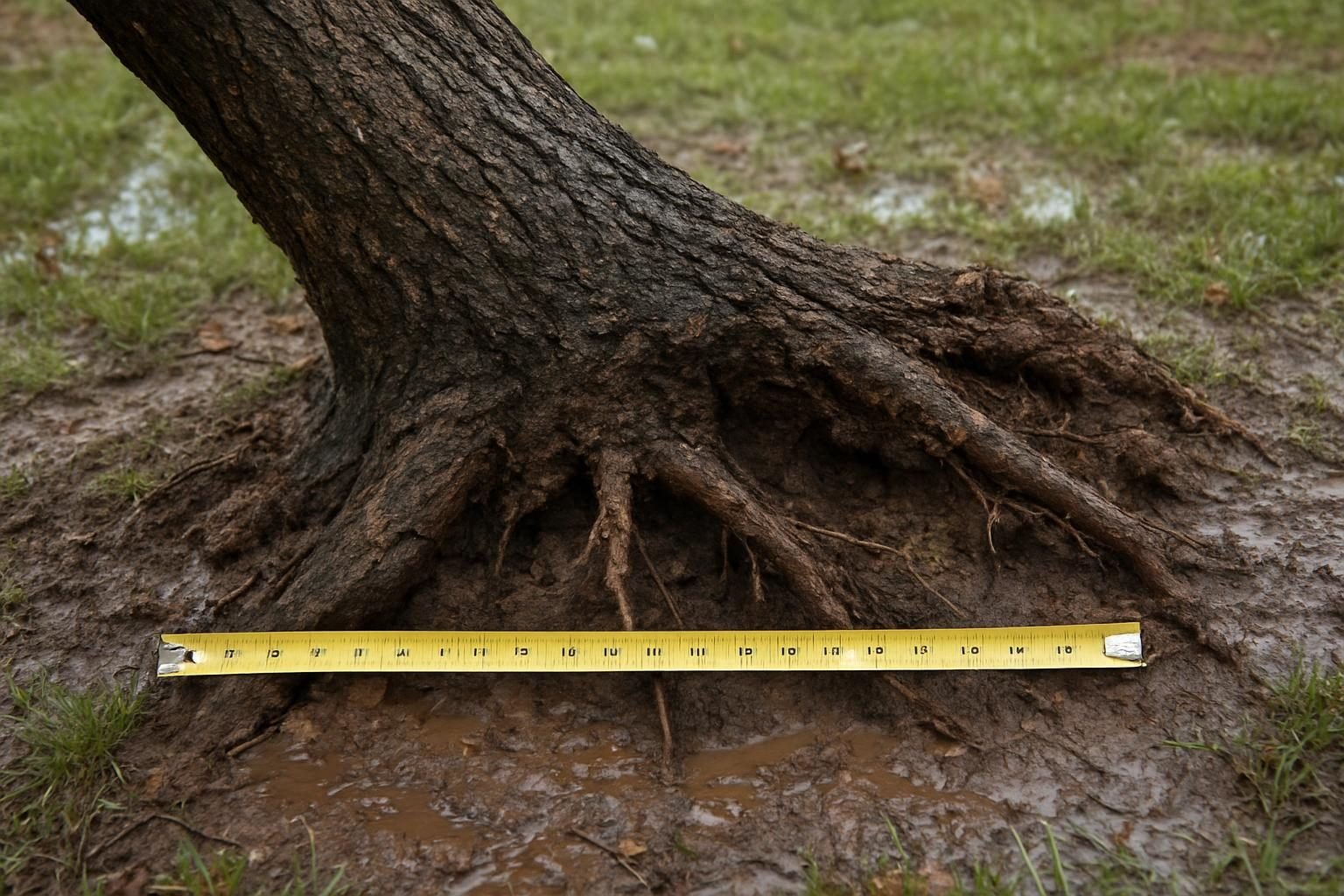
The ground tells you more than the trunk does. A tree’s stability depends on its root plate, the wide, shallow mat of roots that anchors it. When that plate starts to lift, the soil shows it.
After the heavy rains that follow tropical systems, check the ground around any leaning tree for these signals:
- Raised soil or a mound on the side opposite the lean, where roots are levering upward.
- Crescent-shaped cracks in the ground or lawn near the base.
- A gap between the trunk and the soil on the leaning side.
- Newly exposed roots that were buried before, or roots that look torn or snapped.
- Pooled water or soft, mushy ground around the base that doesn’t drain.
Wet ground is the key risk factor. A tree with a modest lean in dry soil can become a real hazard when the soil is saturated, because water reduces the soil’s grip on roots. Pines, which are common across Cumberland County and tend to have shallow root systems, are especially vulnerable. Our article on dead pine trees covers another common pine problem.
Pro tip: Don’t dig around the roots or try to push the tree upright yourself. Disturbing a partially failed root plate can bring the tree down without warning.
Soil that has cracked or lifted on the side opposite the lean is the tree telling you its roots are letting go.
What the Tree Can Hit Decides How Urgent It Is
Two identical leaning trees can carry very different risk depending on where they stand. Professionals think in terms of the tree’s condition and what lies in its fall path, often called the target.
Highest urgency
- The lean points toward your house, a bedroom or a garage.
- The tree overhangs a driveway, play area, patio or parked vehicles.
- Branches or the trunk are near power lines. Stay well away and call your utility before anyone works near the lines.
Moderate urgency
- The tree leans toward a fence, shed or a neighbor’s yard.
- It overhangs a road or shared property line.
Lower urgency
- The tree has a long-standing lean and can fall only into open lawn or woods.
Also remember that a falling tree rarely drops straight. A large oak or pine can reach well past its own height as it comes down, and the crown often swings. If a tree falls on a fence or across property lines, questions of responsibility get complicated, which we cover in who pays when a tree falls on a neighbor’s property.
When to Request a Professional Assessment
You don’t need to be sure a tree is failing before you call. Get it looked at promptly if any of the following apply:
- The lean is new, or it has increased since you last checked.
- You see heaved soil, cracks, a gap at the base or exposed, broken roots.
- The tree leans toward a structure, vehicle or power line.
- There are other defects too, such as dead limbs, fungus at the base, cavities, or a split trunk.
- A recent storm, flooding or construction work near the roots preceded the change.
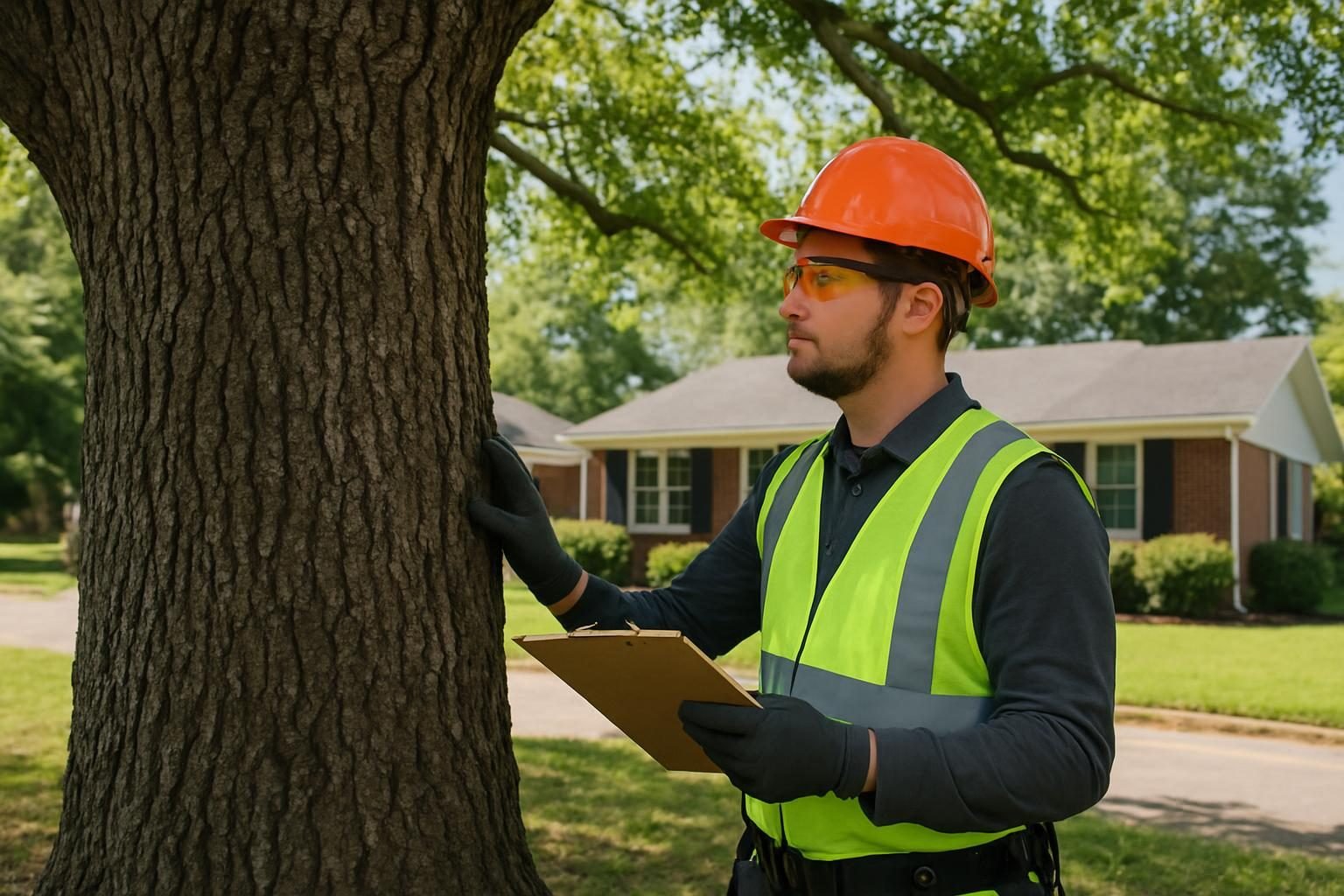
An arborist tree assessment looks at the trunk, canopy, roots and soil, and weighs them against what the tree could hit. The result is usually one of three recommendations: leave it and monitor, reduce risk with pruning or support, or remove it. For overlap with symptoms beyond lean, our piece on whether a leaning tree is dangerous and the related emergency-or-normal guide can help you sort the broader picture.
A tree that’s tilting toward your house is a problem to solve before the storm, not after it.
Leaning Tree Removal: Options, Process and Cost
Once a tree is judged unsafe, leaning tree removal is the most dependable fix. A tree with failing roots generally can’t be straightened or reliably corrected, and cabling or bracing helps only in limited cases involving structural weak points in the crown, not a failing root plate.
How crews handle a leaning tree
- Directional felling: If there’s open space in the direction of fall, a tree can sometimes be felled whole. A lean toward a house usually rules this out.
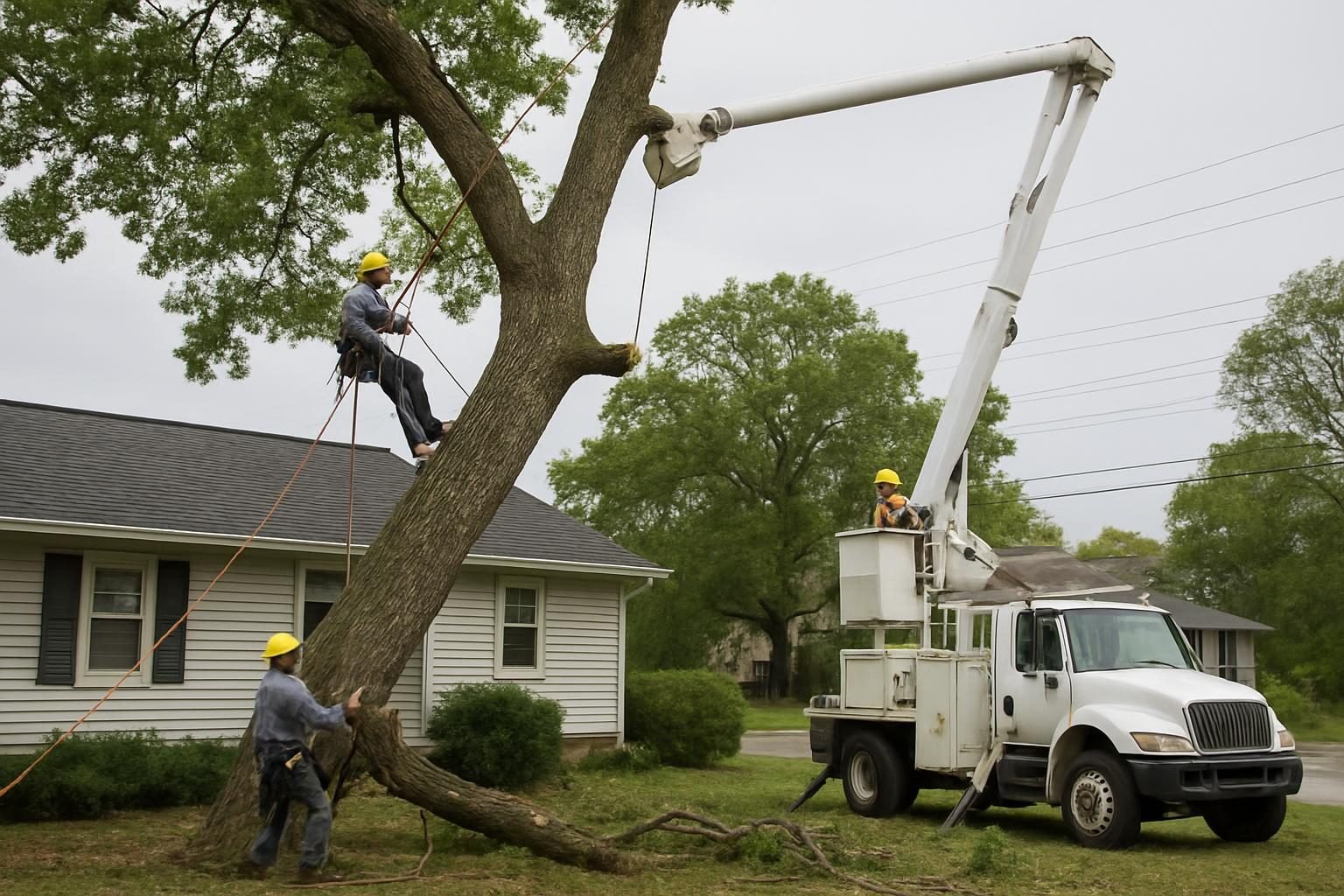
- Sectional removal: Climbers or a bucket truck take the tree down in pieces, lowered with ropes, which is common near homes and wires.
- Crane-assisted removal: For large, unstable trees over structures, a crane can hold sections as they’re cut. See what crane jobs typically run.
A leaning tree with a compromised root plate is riskier to climb and cut, which is why this is work for insured professionals rather than a weekend project. Before hiring, verify the company’s insurance.
What it may cost (estimates only)
Prices vary widely with tree size, species, access and what’s underneath. As a rough, informal estimate, many Fayetteville-area removals fall somewhere from a few hundred dollars for a small tree to well over a couple thousand for a large tree near a structure or requiring a crane. Stump grinding is often priced separately. Get written quotes to compare, and see our breakdown of local tree removal costs for what drives the number up or down.
If you’re planning the project, our core page on tree removal in Fayetteville explains what’s included, and you may want stump grinding afterward to finish the job. If a tree has already fallen or is actively coming down, treat it as an emergency storm tree removal situation.
Permits and property lines
Rules vary by location and lot, so check requirements before removal. We cover this in whether you need a permit to remove a tree in Fayetteville. If the tree sits on a shared boundary, talk with your neighbor first.
Before the Crew Arrives: Safe Steps
- Keep people and pets away from the tree’s fall zone, and move vehicles out of its path.
- Stay off the lawn near the roots and avoid parking or driving there.
- Don’t try to prop, pull or cut the tree yourself.
- Take dated photos of the tree and soil, which help crews and any insurance conversation.
- Treat any tree touching or near power lines as dangerous and call your utility rather than a tree crew first.
If the tree is leaning toward your home, you can request a free quote for leaning tree removal and compare local options before the next round of storms.
Frequently Asked Questions
How much lean is too much?
There’s no single angle that makes a tree unsafe. A slight lean that has existed for years may be fine, while a small new lean with lifted soil can be urgent. Change over time and root condition matter more than degrees.
Can a leaning tree be saved?
Sometimes. If the lean is long-standing and roots are sound, monitoring or targeted pruning may be enough. If the root plate is lifting or the lean is progressing, removal is usually the dependable choice.
Will homeowners insurance cover a leaning tree?
Coverage generally depends on your policy and whether damage has occurred. Policies often respond to damage from a fallen tree, but may not cover removing a tree that hasn’t hit anything. Check with your insurer or agent for specifics.
Should I wait until after hurricane season?
If the tree is leaning toward a structure or the lean is changing, waiting adds risk. Saturated soil and high winds are when leaning trees tend to fail, so earlier assessment is safer.
Get a free leaning tree removal quote
A local Fayetteville-area tree service will review your request and contact you with a free, no-obligation quote.