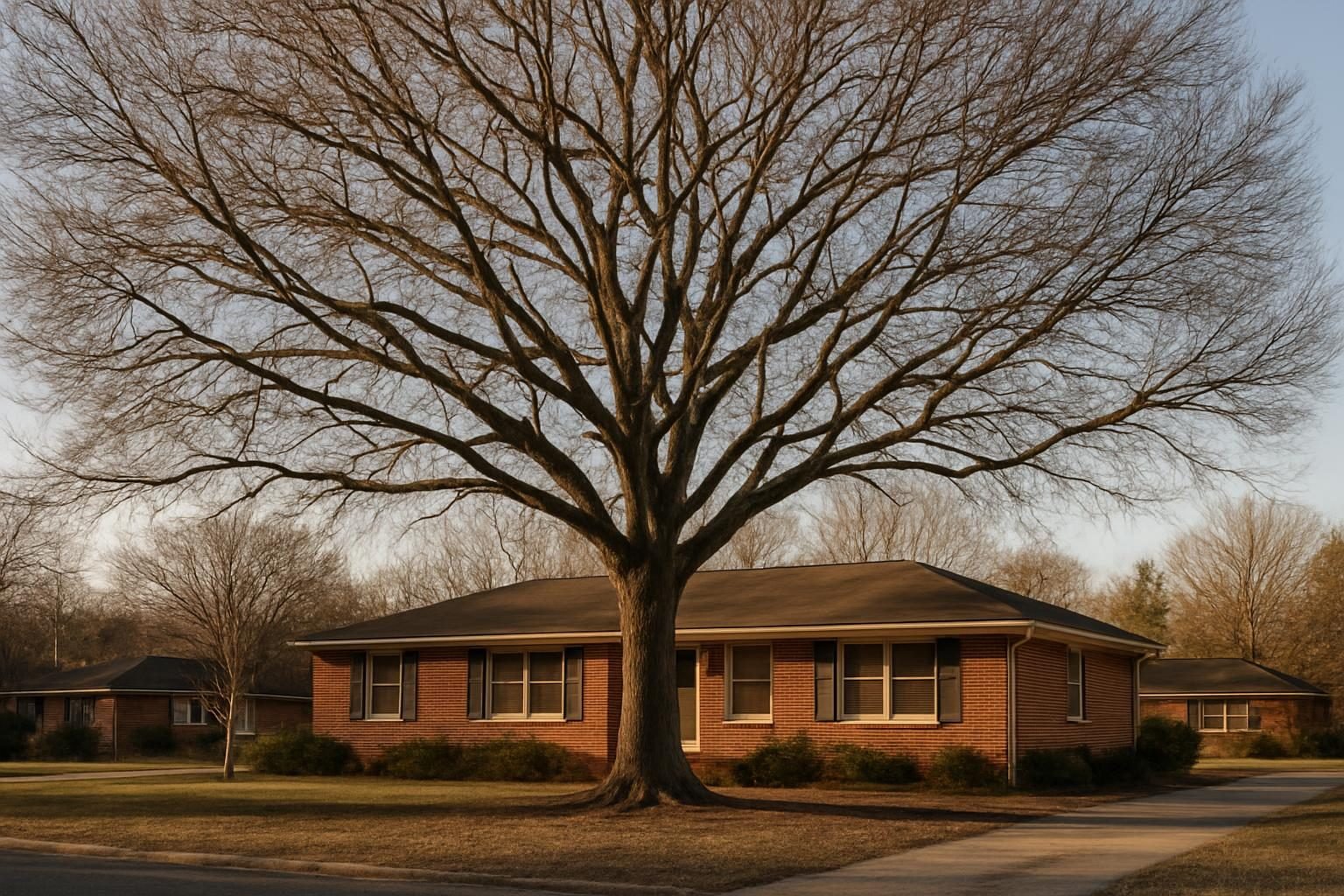
Quick answer: Trim a tree when it is structurally sound and the problem is limited to dead limbs, crowding, or branches that are too close to the house. Remove it when it is dead, badly decayed, leaning because of root failure, or too close to a structure to be made safe with pruning. When you are unsure, a certified arborist assessment settles the question before you spend money on either option.
Key takeaways
- Pruning fixes branch problems; removal is usually the answer for trunk and root problems.
- A dead tree, major trunk cavity, or root-plate lift is rarely a trimming job.
- Location matters as much as health: a sound tree can still be wrong for its spot.
- Repeated trimming of a failing tree can cost more over time than removing it once.
- Free quotes from several local companies make it easy to compare both options.
Homeowners in Fayetteville, Hope Mills, and Spring Lake often ask this question after a storm, or when a big oak or pine starts to feel like a liability. The tree removal vs tree trimming decision comes down to five things: health, structure, location, risk, and long-term cost. This guide walks through each one so you can make a calm, informed call. If you would rather have someone look at your tree, you can request a free consultation using the form on this page.
Start With the Tree’s Health
Health is the first filter. A healthy tree can tolerate pruning and will usually respond with new growth. A declining tree often cannot, and cutting it back may only stress it further.
Signs pruning can help
- Isolated dead branches in an otherwise full, leafy canopy.
- Minor storm damage such as broken limbs or torn bark on a single branch.
- Dense growth that blocks light or airflow and could be thinned.
- Crossing or rubbing branches that can be corrected early.
Signs removal is likely the better call
- The whole canopy is thin, bare, or brown out of season.
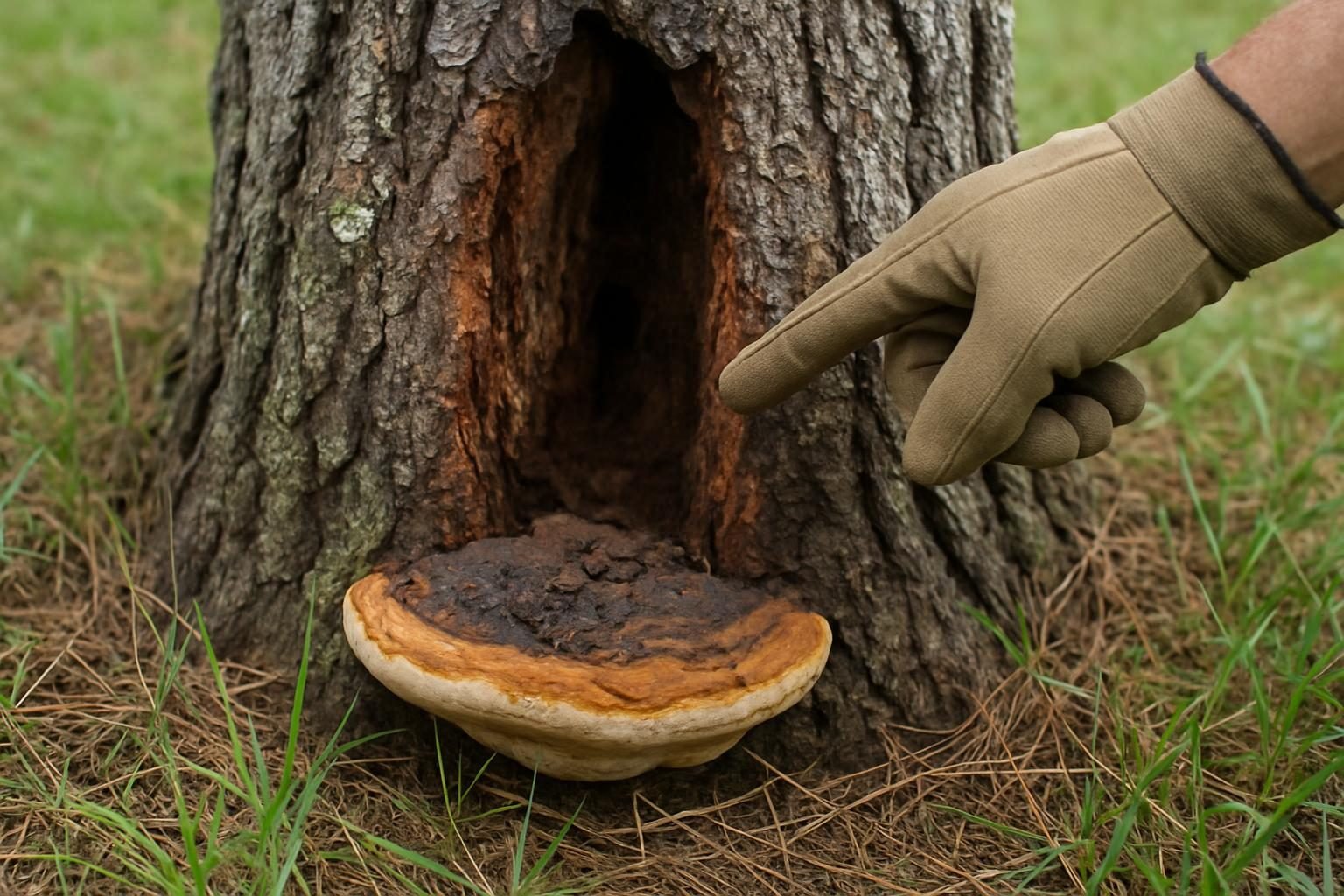
- Fungus or mushrooms on the trunk or at the base, which can signal internal decay.
- Large dead sections across more than a third of the crown.
- Peeling, cracking, or missing bark over big areas of the trunk.
Pines in our area are a common example. Once a pine has been attacked by beetles or disease, trimming rarely brings it back. Our guide to pine tree removal in Fayetteville explains why homeowners usually take them down, and dead tree removal covers what the process looks like.
Check the Structure: Trunk, Roots, and Branch Attachment
Structure is where the decision gets real. Branches can be cut away, but a failing trunk or root system cannot be repaired by pruning.
- Trunk cavities and cracks: A large hollow or a vertical split weakens the whole tree. Small wounds that have callused over are less concerning.
- Co-dominant stems: Two trunks of similar size joined in a tight V often trap bark between them and split under load. Early on, pruning or cabling can reduce the risk. Once the union is cracked, removal is safer.
- Root problems: Soil heaving on one side, exposed or cut roots, or a trunk that has started to tilt after rain are red flags. In our sandy-to-clay Cumberland County soils, saturated ground after a hurricane can loosen roots quickly.
- Weak species: Some trees are simply prone to breaking. Our article on why Bradford pears split shows a classic case where trimming only delays the failure.
Pruning can fix a branch problem, but it cannot repair a trunk or root problem.
What about a leaning tree?
Not every lean is dangerous. A tree that has leaned gently for decades and grown a curved trunk to compensate is often stable. A tree that has recently shifted, or that has soil cracking or lifting at its base, is a different story. See our guide to leaning tree removal in Fayetteville for how to tell the two apart.
Pro tip: Take photos of the base and trunk from several angles today. Comparing them in a few weeks makes it much easier to spot new lean, cracking, or soil movement.
Consider Location and What the Tree Could Hit
The same tree can be fine in a wide yard and a serious problem beside a house. Location sets the stakes for any failure.
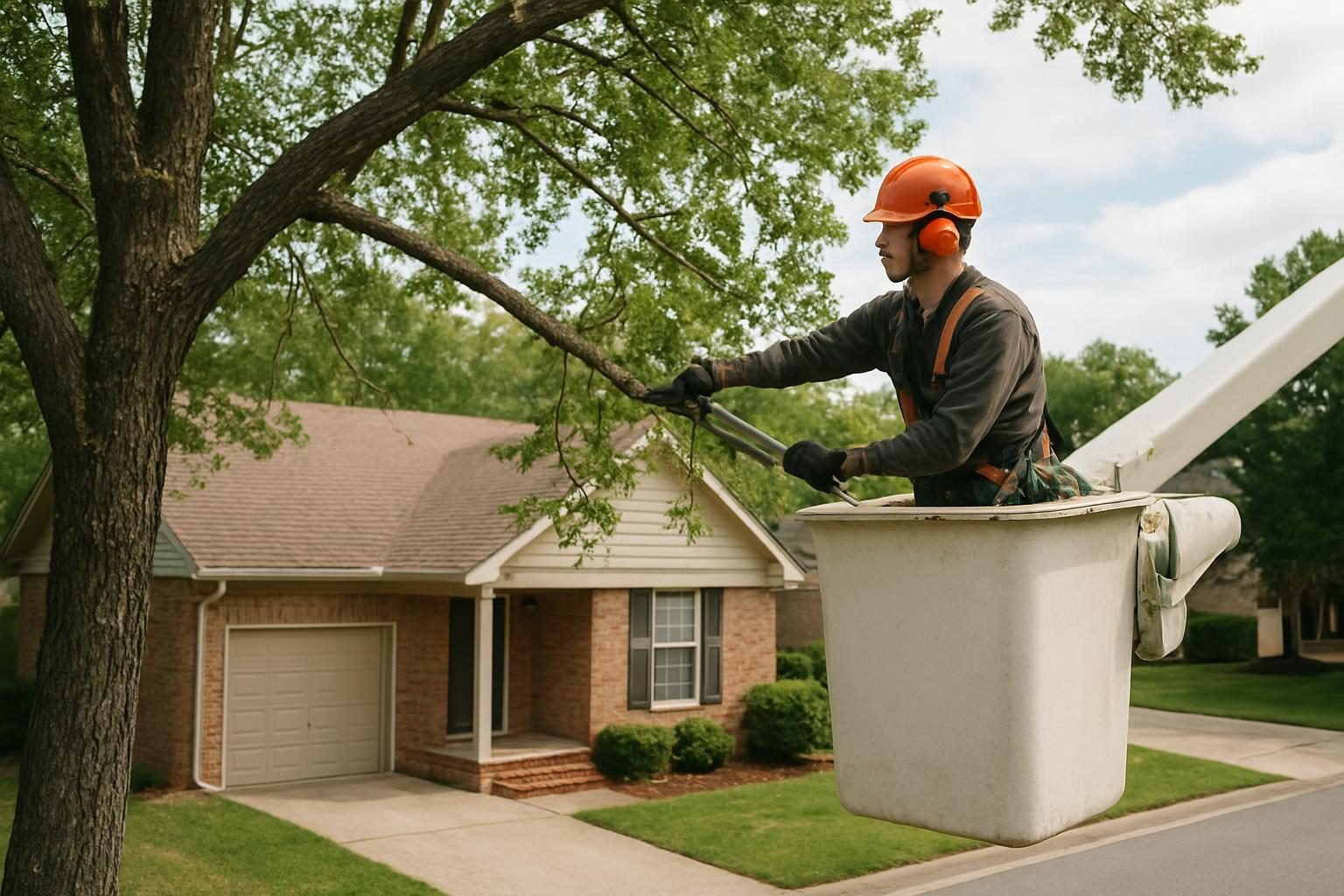
- Distance to the house: Branches overhanging the roof can often be trimmed back. A trunk growing against a foundation or wall usually cannot be fixed with pruning.
- Driveways, fences, and sidewalks: Roots lifting pavement are hard to manage once they are large. Cutting major roots can destabilize the tree.
- Utility lines: Work near power lines is a job for qualified professionals, not homeowners.
- Targets beneath the canopy: A play area, parking space, or patio under a questionable limb raises the urgency.
- Access: Tight backyards can change the method and the price, but not whether the tree is safe.
If you have a large tree close to a structure, it is worth reading about crane-assisted removals, which are sometimes the safest way to take down a tree that cannot be dropped in one piece.
Weigh the Risk: A Simple Way to Score It
Arborists think about risk as a combination of how likely a tree is to fail and what would be damaged if it did. You can use a rough version of that at home.
- Likelihood of failure: Is the tree dead, decayed, cracked, or leaning? More red flags means higher likelihood.
- Size of the failing part: A small branch is a nuisance. A whole trunk is a catastrophe.
- What is underneath: Empty lawn is low consequence. A bedroom roof or a parked car is high.
If a tree scores high on all three, removal is generally the safer path. If only the branches are an issue, trimming is often enough. For anything borderline, an arborist tree assessment gives you a professional opinion rather than a guess.
After a storm
Hurricane and thunderstorm season changes the picture. A tree that looks fine may have hidden cracks or loosened roots. Our article on whether a storm-damaged tree can be saved lays out which damage is repairable. If a tree is down or hanging over your home, that is a job for emergency storm tree removal, not a DIY fix.
A tree that scores high on likelihood, size, and what is underneath deserves a professional look before the next storm.
Compare Cost Over Time, Not Just Today
Trimming usually costs less per visit than removal, so it is tempting to choose it every time. But the real comparison is over several years.
- Healthy tree: Periodic pruning is typically the cheaper long-term choice, and it keeps the shade and value of a mature tree.
- Declining tree: Paying for repeated trimming while the tree keeps dropping limbs can add up to more than a single removal.
- Delayed removal: A tree that fails on its own can add damage to a roof, fence, or vehicle on top of the removal cost.
- Stump: Removal usually leaves a stump. Stump grinding is a separate line item on many quotes.
As a rough estimate only, trimming jobs on typical residential trees often fall in the low hundreds to the low thousands of dollars depending on size and access, while removals commonly run from several hundred dollars for small trees to a few thousand for large, hard-to-reach ones. Your price will vary. Our local pricing guides cover the details: tree trimming and pruning cost and tree removal cost in Fayetteville, plus the broader tree service cost overview.
Pro tip: Ask each company to quote both options when you are on the fence. Seeing trimming and removal side by side makes the long-term math much clearer.
A Quick Decision Checklist
Use this as a starting point, not a final verdict.
Lean toward trimming if
- The tree is leafy, vigorous, and has a solid trunk.
- Problems are limited to dead wood, crowding, or clearance over the roof.
- The tree is a safe distance from structures and lines.
Lean toward removal if
- The tree is dead or most of the crown is declining.
- There is a major trunk cavity, split, or sign of root failure.
- It is a high-risk species or a recent lean is visible.
- It sits close enough to a home that failure would be serious.
Also check rules before you cut anything large. Some properties, such as those in an HOA or with protected trees, may have requirements. Our guide on tree removal permits in Cumberland County is a good place to start.
Ready to compare options for your own yard in Fayetteville, Hope Mills, Raeford, or Stedman? Request free tree service quotes through the form on this page and ask for trimming and removal pricing side by side.
Frequently Asked Questions
Can trimming save a tree that looks sick?
Sometimes. If the issue is limited to a few dead or diseased branches, pruning can help. If the trunk, roots, or most of the canopy is affected, trimming usually will not reverse the decline.
How do I know if a tree is dead?
Look for no leaves in the growing season, brittle twigs that snap instead of bending, and bark that is peeling away. A certified arborist can confirm, since some trees drop leaves for other reasons.
Is trimming always cheaper than removal?
Per visit, usually yes. Over several years, repeated trimming on a failing tree can cost more than removing it once, especially if a failure causes damage.
Do I need a permit to remove a tree on my property?
It depends on where you live and the tree. Many residential removals do not require one, but some situations do. Check our guide to tree removal permits in Fayetteville and confirm with local officials.
For a broader overview of what to expect, see our main page on tree removal in Fayetteville and our page on tree trimming and pruning. If you want to read next about a related topic, try the difference between tree trimming and tree pruning.
Get free tree trimming or removal quotes
A local tree service company will contact you with a free, no-obligation quote for trimming, removal, or both.