Quick answer: Dead tree removal in Fayetteville, NC typically runs from a few hundred dollars for a small tree to several thousand for a large one near a house, and dead trees often cost more than healthy ones because the wood is brittle and crews can’t rely on climbing or rigging the usual way. The closer a dead tree is to your home, driveway or power lines, the sooner it should come down.
Key takeaways
- Dead wood loses strength and can snap without warning, so crews use different, slower methods than on live trees.
- Price depends on size, access, how close the tree is to structures, and whether a crane or bucket truck is needed (all figures here are estimates).
- Trees within falling distance of a house, fence or road are the highest priority.
- Storms and hurricane season make dead trees far riskier in Cumberland County.
- Always confirm insurance before anyone climbs a dead tree on your property.
If you have a dead tree in your yard in Fayetteville, Hope Mills or Spring Lake, you are probably wondering two things: how worried should you be, and what will it cost to deal with it? This guide walks through how crews take dead trees down safely, why the job is different from removing a healthy tree, and what moves the price. If you already know you need someone out to look at it, you can request a free dead tree removal quote using the form on this page.
Why Dead Trees Are More Dangerous to Take Down
A living tree bends, flexes and holds together under stress. A dead tree does not. As wood dries out and decays, it becomes brittle, and limbs that look solid can break the moment weight is put on them.
That changes how a crew works. Here is what makes dead trees harder:
- Brittle limbs: A climber’s weight, or the pull of a rope, can snap a branch that would hold on a live tree.
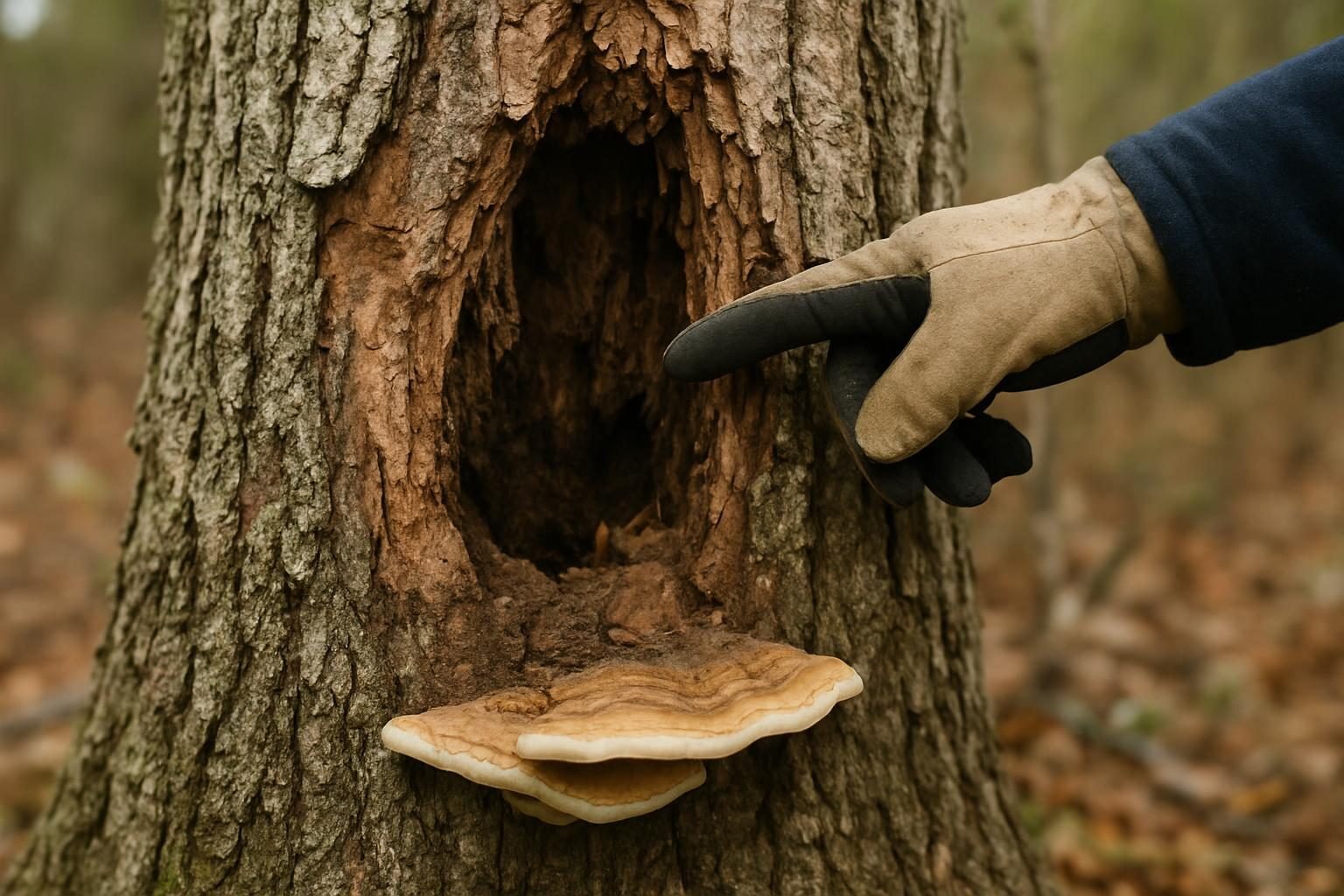
- Hidden rot: A trunk can look intact outside while being hollow or soft inside, especially near the base.
- Unpredictable falls: Dead branches can drop during cutting, and the trunk may split or shatter instead of falling cleanly.
- Weakened anchor points: Rigging that normally attaches high in the canopy may not be safe to use.
This is why a good crew inspects the whole tree before anyone leaves the ground. If you want a deeper look at one common local example, our guide on whether dead pine trees are dangerous covers the pine-specific risks.
How Dead Tree Removal Works, Step by Step
The process varies by tree and location, but a professional dead tree removal in Cumberland County usually follows this order:
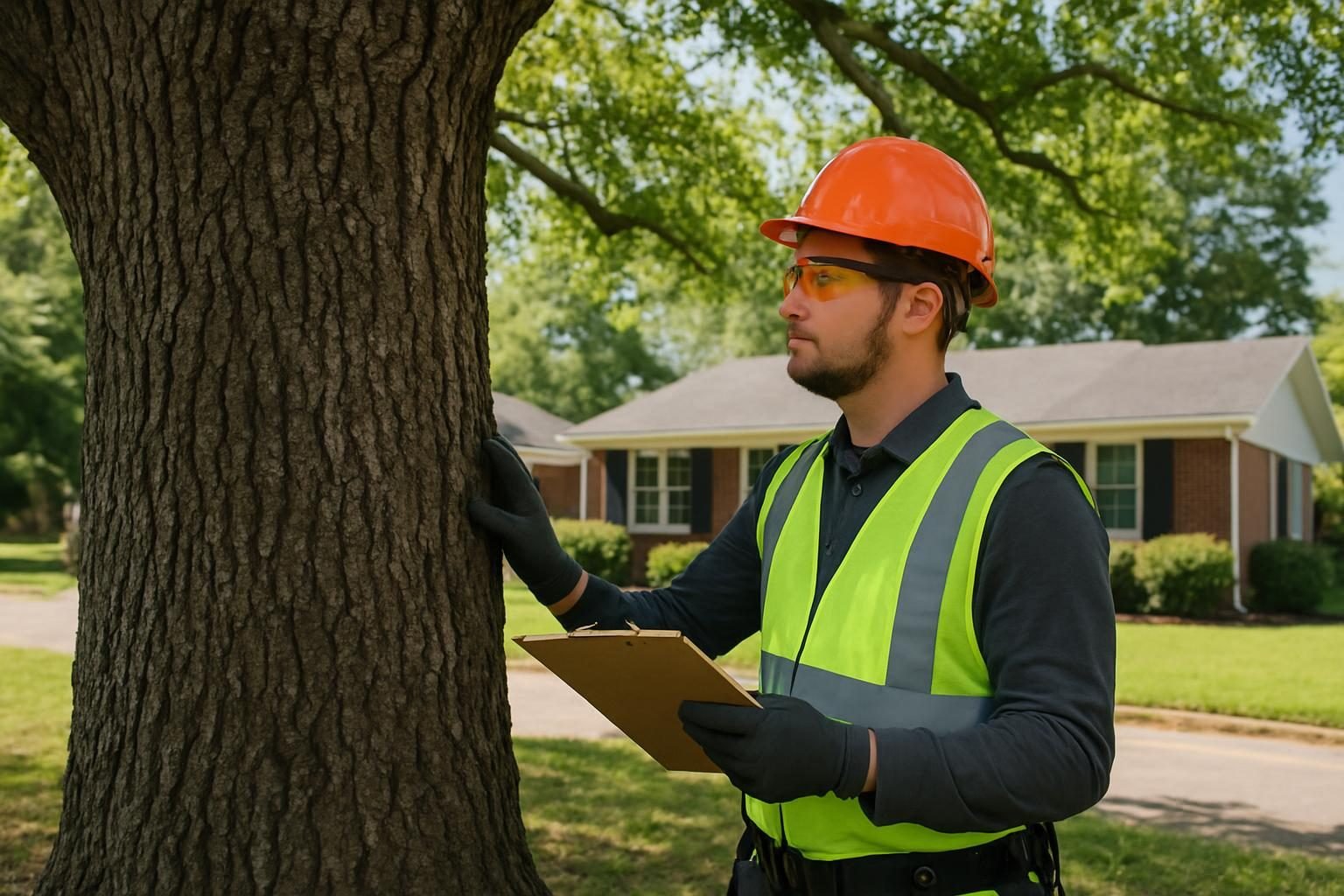
- Assessment. The crew walks the site, checks the trunk base, looks for hollow spots, fungus, loose bark and dead limbs, and decides whether the tree is safe to climb at all.
- Planning the drop zone. They identify what is in the way: roofs, fences, sheds, utility lines, neighbors’ property. This decides whether the tree can be felled whole or must come down in sections.
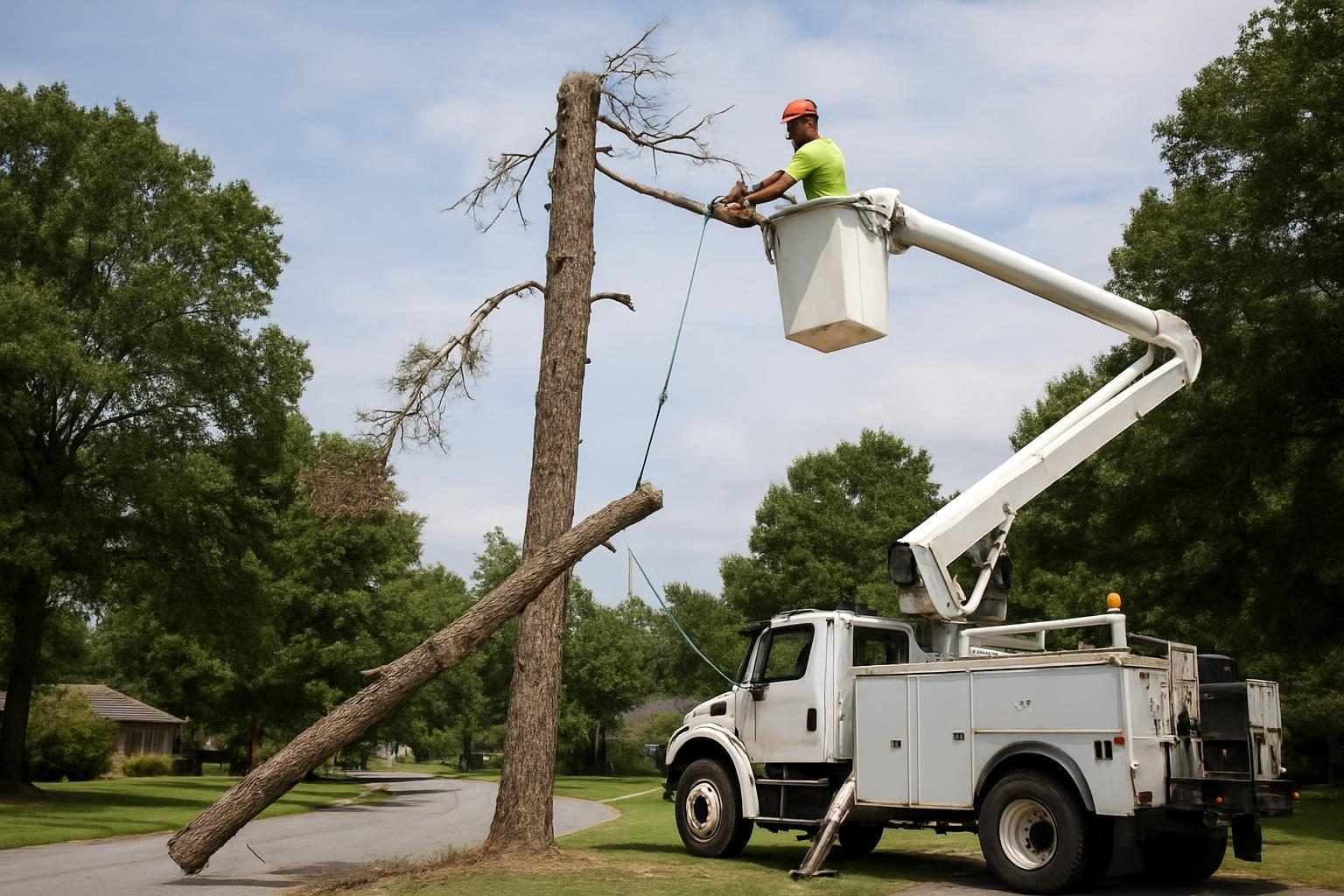
- Choosing equipment. If climbing is unsafe, a bucket truck or crane takes the place of a climber. Cranes lift sections away so no one has to stand on a weak tree.
- Controlled dismantling. Limbs and trunk sections are cut and lowered with ropes or lifted out, rather than dropped near structures.
- Cleanup. Logs and brush are hauled away or left as firewood if you prefer. Ask up front what is included.
- Stump decision. Most removals leave a stump. You can leave it, or have it ground out afterward.
Pro tip: Ask any company how they plan to handle the tree if it is too brittle to climb. A clear answer (bucket truck, crane, or sectional rigging from a lift) is a good sign. A shrug is not.
What Affects Dead Tree Removal Cost in Fayetteville
There is no single price, because no two dead trees are alike. As a rough estimate, small dead trees may run a few hundred dollars, medium trees often land in the mid-hundreds to low thousands, and large or hard-to-reach trees can run into the thousands. Treat those as ballpark figures, not quotes.
The main cost drivers:
- Height and trunk diameter: Bigger trees mean more time, more cutting and more debris.
- Proximity to the house or lines: A tree beside a roof or power line needs careful sectional removal, which costs more than a clean drop in an open yard.
- Access: Backyards with locked gates, fences or narrow side yards can rule out trucks and slow the job.
- Crane or lift needs: If a climber can’t safely go up, equipment rental raises the price. See our breakdown of crane tree removal cost for when it’s worth it.
- Condition: A severely decayed tree is riskier and slower, which can raise the quote.
- Cleanup and haul-away: Some quotes include debris removal; others charge extra.
For a full picture of local pricing, see what tree removal typically costs in Fayetteville and the guide to tree removal cost by tree size.
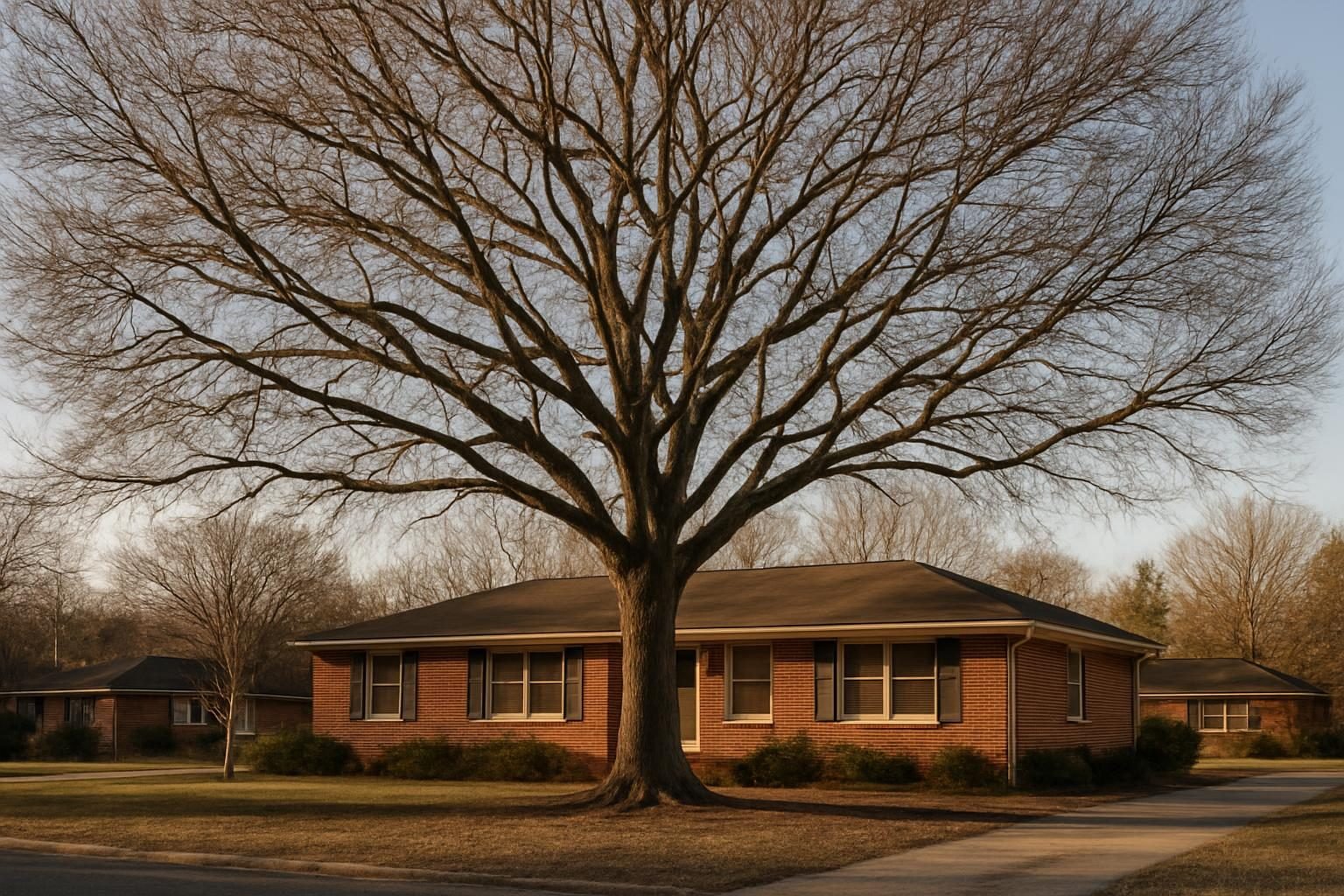
A dead tree that looks sturdy can fail without warning, which is why proximity to your home matters more than size.
How Urgent Is It? Dead Trees Near Your Home
Not every dead tree is an emergency, but location sets the priority. Use this as a rough guide:
- Act soon: The tree is within falling distance of your house, garage, driveway, play area, or a neighbor’s property.
- Act soon: Large dead limbs hang over a roof, sidewalk or parked cars.
- Act soon: The tree leans, has cracked bark, or shows a hollow or mushrooms at the base.
- Lower urgency: A small dead tree far from anything of value, in an open part of a larger lot.
Waiting can also raise the cost. A tree that falls onto a structure turns a removal job into a damage repair and emergency cleanup. If a tree has already come down, see our guide to emergency tree removal and what to do first.
Dead Trees, Storms and Hurricane Season
Cumberland County gets its share of tropical storms and thunderstorm winds, and dead trees are usually the first to fail. Saturated soil and gusty wind can bring down a weakened tree that stood fine in calm weather.
Before storm season, it helps to:
- Walk your property and note any dead or leaning trees near structures.
- Have questionable trees looked at by a qualified arborist.
- Schedule removal before a storm is in the forecast, when crews are not swamped.
Our hurricane season tree prep checklist walks through what to look for. If the tree is already down after a storm, the emergency storm tree removal page explains how that service works.
The cheapest time to remove a dead tree is before a storm turns it into an emergency.
Hiring a Crew for Dead Tree Removal
Because dead trees carry extra risk, hiring carefully matters more than usual. Before you agree to a job:
- Verify insurance: Ask for proof of liability and workers’ compensation coverage. See what to verify before you hire.
- Get a written, itemized quote: It should say what is included, including cleanup and stump work.
- Ask about their plan: How will they handle brittle wood, and will they use a lift or crane if needed?
- Compare more than one bid: Be wary of a price that is far below the rest. Our guide to cheap tree removal red flags explains why.
- Check permit rules: Most residential removals are straightforward, but see whether you need a permit to be sure.
For a broader overview of the service, visit our tree removal in Fayetteville page, or read about tree service in Fayetteville if you’re comparing local options. If you’re not sure whether a tree is truly dead or just stressed, an arborist tree assessment can settle it before you commit to removal.
Next up for many homeowners: how to spot the warning signs of a hazardous tree, and stump removal versus stump grinding once the tree is down.
Ready to find out what your dead tree will cost? You can request a free dead tree removal quote using the form on this page and compare local options.
Frequently Asked Questions
How do I know if my tree is actually dead?
Common signs include no leaves during the growing season, brittle twigs that snap instead of bending, peeling or falling bark, and fungus at the base. Some trees look dead in winter but are just dormant, so a professional assessment helps before you remove anything.
Can a dead tree be removed in any season?
Yes. Dead trees can come down year-round. Dry ground makes access easier, and scheduling before storm season often means shorter waits than after a hurricane when crews are in high demand.
Does homeowners insurance cover dead tree removal?
Coverage varies by policy. Insurance often helps when a tree falls on a covered structure, but removing a dead tree that hasn’t fallen is usually the homeowner’s expense. Check your policy or ask your insurer.
Do I need to remove the stump too?
Not necessarily. Many homeowners leave the stump or have it ground down afterward. See our stump grinding cost guide for typical pricing.
Get a free dead tree removal quote in Fayetteville
A local, insured tree service will contact you with a free, no-obligation quote.