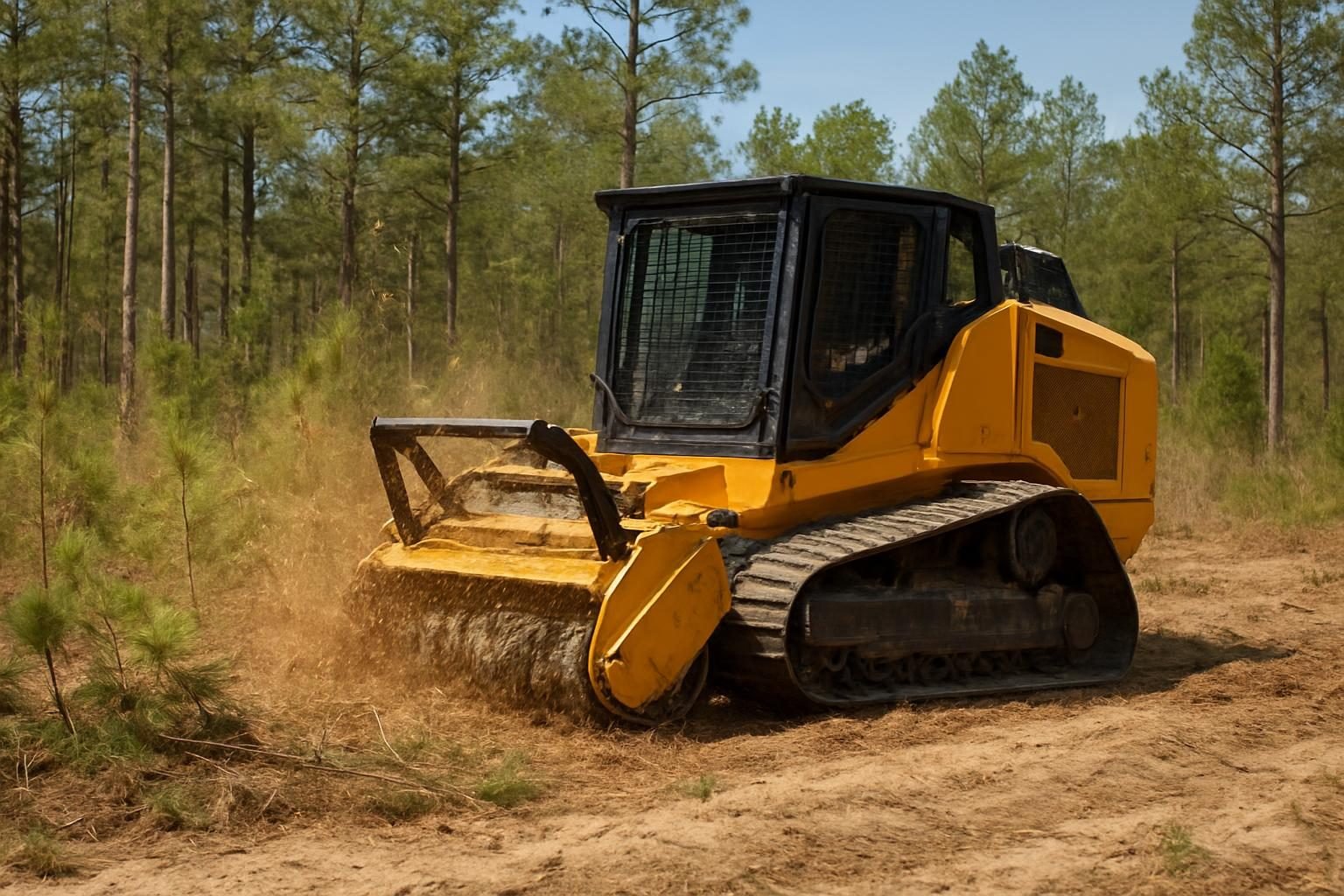
Quick answer: Forestry mulching grinds trees and brush into mulch right where they stand, leaving the topsoil and roots in place. It is usually faster, cheaper and gentler on Sandhills soil than traditional clearing. Traditional clearing (cutting, grubbing and hauling) is the better choice when you need bare, graded ground for a building pad, driveway, septic system or pond.
If you own acreage in Cumberland or Hoke County, you will hear both terms from contractors, and they are not interchangeable. The method you pick affects your budget, your erosion risk and what you can build next. This guide compares forestry mulching vs land clearing so you can match the method to your goal.
Ready to compare options for your property? Request a free land clearing consultation using the form on this page.
Key takeaways
- Mulching leaves a layer of wood chips and intact roots; traditional clearing removes stumps, roots and debris.
- Mulching is typically faster and often cheaper per acre for light-to-moderate vegetation, but heavy timber and large stumps can narrow the gap.
- Building pads, foundations and septic fields generally need grubbing and grading, not mulch.
- Mulching protects sandy Sandhills soil from erosion better than bare-dirt clearing.
- Prices below are rough estimates; site access, tree size and density drive the real number.
How Forestry Mulching Works
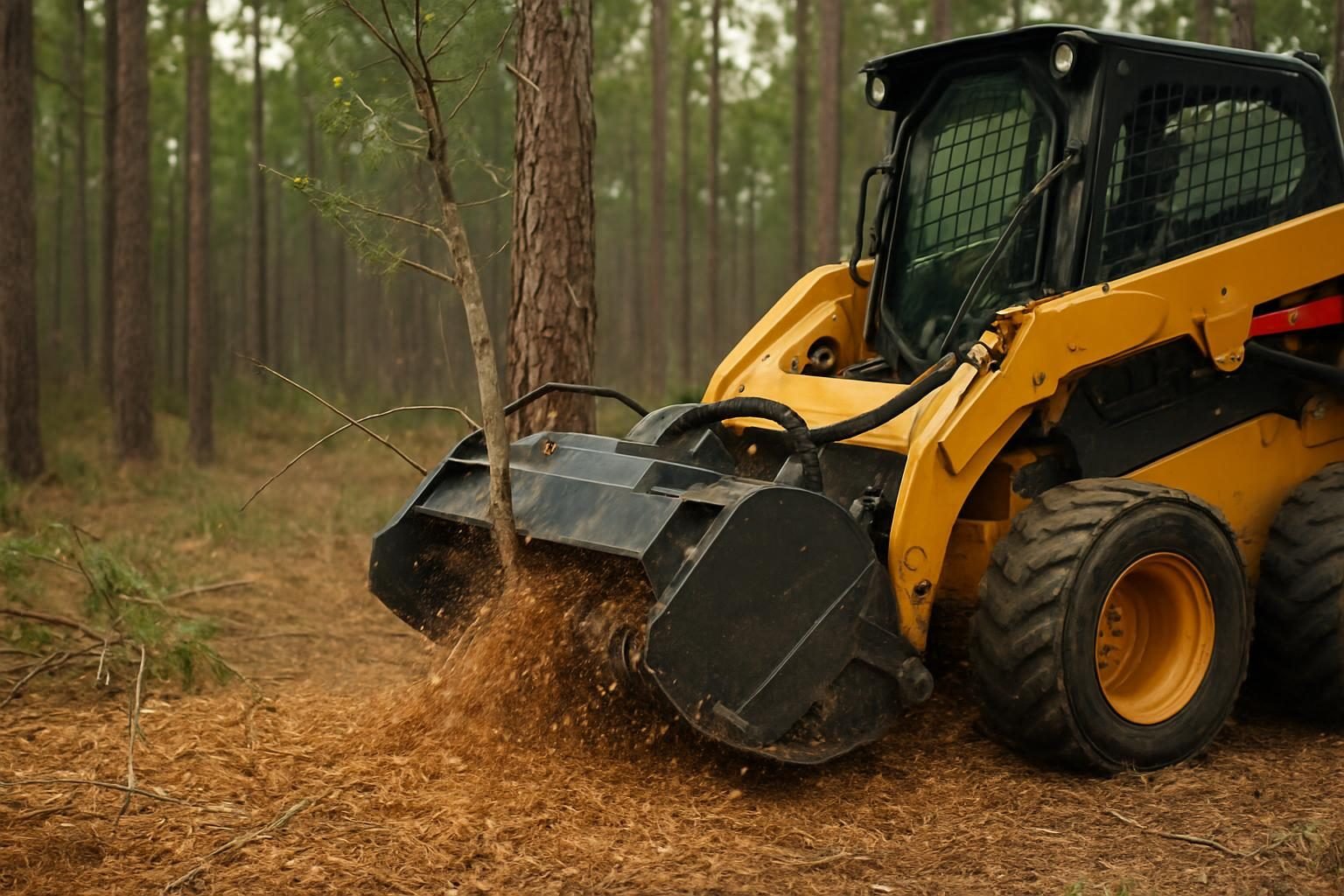
A forestry mulcher is a heavy-duty machine, usually a tracked skid steer or excavator carrying a rotating drum or disc fitted with carbide teeth. The operator drives into the stand and shreds trees, brush and vines in a single pass. Everything becomes a mat of wood chips spread across the ground.
The process looks like this:
- Walk the site and flag trees you want to keep, property lines and any wet areas or utilities.
- Mulch the target vegetation, typically up to roughly 8 to 12 inches in trunk diameter for standard machines; larger trees may need to be felled first.
- Leave the mulch in place as a 2 to 6 inch layer, or rake and spread it as needed.
Nothing is hauled off, burned or piled. That is a big part of why mulching is quick and tidy. Stumps are cut low but not removed, so if you want them gone completely, plan on stump grinding or excavation afterward.
Pro tip: Flag the trees you want to keep with bright ribbon before the crew arrives. A mulcher works fast, and it cannot undo a cut.
How Traditional Land Clearing Works
Traditional clearing is a multi-step process aimed at producing bare, workable ground. Crews fell the trees, cut them up, then use a dozer, excavator or grapple to pull stumps and roots (called grubbing). Debris is stacked, hauled away, chipped or burned where local rules allow.
Typical steps include:
- Felling and bucking trees with chainsaws or a feller buncher.
- Grubbing stumps and major roots out of the soil.
- Hauling or processing logs, stumps and brush.
- Rough grading so the ground is smooth and drains properly.
Because it removes the root mass and stirs the soil, this method is what builders usually mean when they say a lot is “cleared.” For a deeper look at the home-building scenario, see our guide to land clearing for a new home in Cumberland County, and our overview of land clearing services.
Mulching clears what you see; grubbing clears what you plan to build on. Know which one your project actually needs.
Soil Protection and Erosion: Why It Matters in the Sandhills
Much of Cumberland County sits on sandy, fast-draining Sandhills soil. It is easy to disturb and slow to recover once the protective cover is gone. Heavy summer thunderstorms and tropical rain can then wash exposed sand into ditches and onto neighbors’ property.
Mulching advantages:
- Roots stay in the ground and keep holding the soil.
- The wood-chip layer slows rainfall, reduces runoff and suppresses weeds.
- Soil is compacted less than with repeated dozer passes.
Traditional clearing drawbacks:
- Bare ground is exposed until you seed, sod or build.
- You may need silt fence, seeding or other erosion controls.
- Topsoil can be scraped away along with the stumps.
Disturbing land can trigger stormwater and erosion-control rules. In North Carolina, land-disturbing activity over a certain size generally requires an erosion and sedimentation control plan, so check thresholds with the NC Department of Environmental Quality and your local planning office before you start.
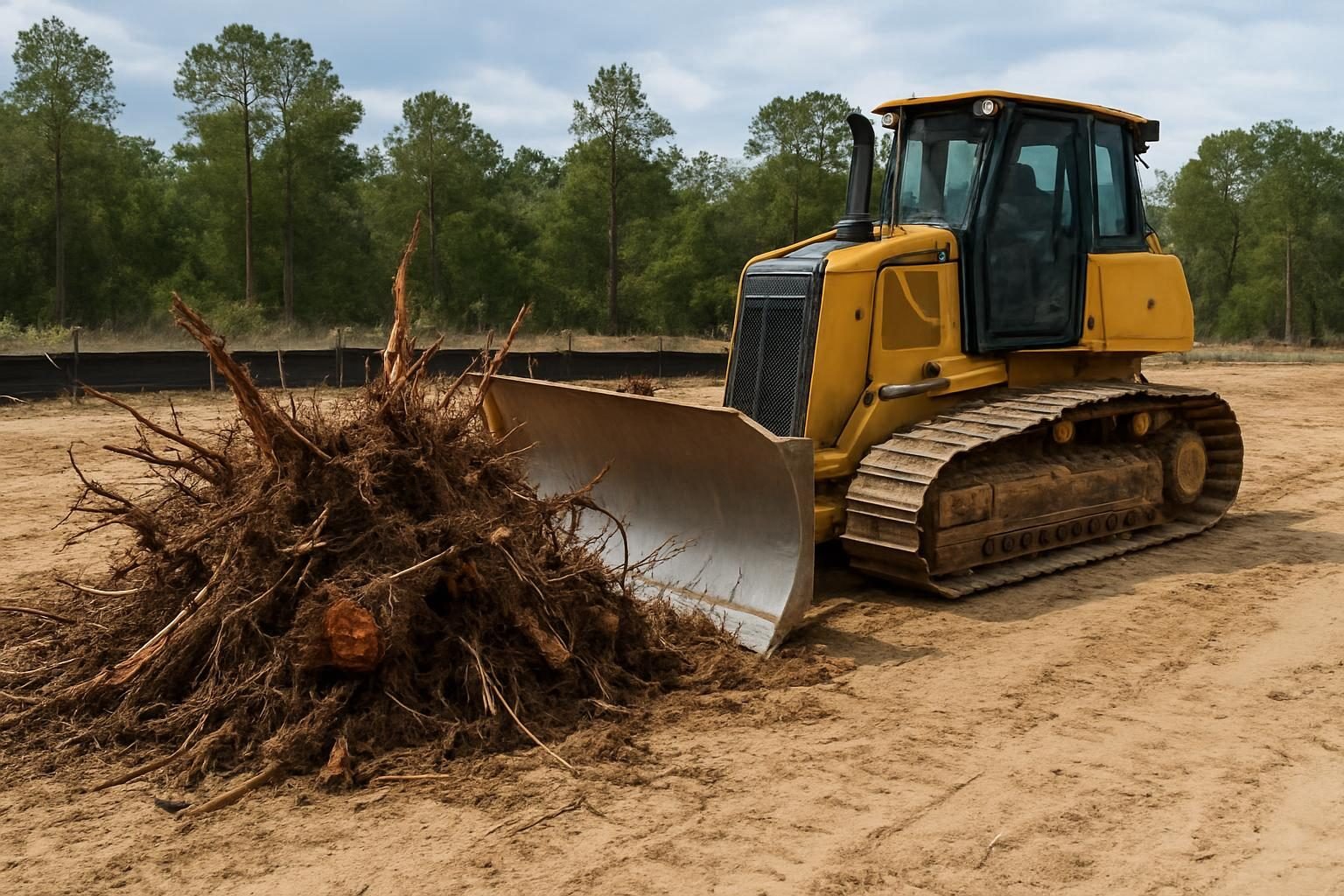
Speed, Debris and Site Impact Compared
- Speed: A mulcher can often clear an acre of brush and small trees in a fraction of the time that cutting, grubbing and hauling takes. Dense, mature timber narrows that advantage.
- Debris: Mulching leaves chips on site. Traditional clearing generates piles of logs, stumps and brush that must be hauled, chipped or burned.
- Access: Mulchers can work on slopes and between trees you want to keep. Dozers need more room and tend to leave rutted paths.
- Leftover stumps: Mulching leaves low stumps; grubbing removes them.
- Appearance: A mulched lot looks like a tidy wooded park. A grubbed lot looks like bare dirt.
One caution: thick mulch can smother grass if you plan to seed. If you want a lawn or pasture, ask the crew to leave a thin layer or remove the excess.
Mulch chips are not free of consequences: a deep layer can smother seed, so tell your contractor what you plan to grow.
When You Need Bulldozing or Grubbing Instead of Mulching
Mulching is not a fit for every job. Choose traditional clearing when you need:
- A building pad or foundation. Roots and stumps rot and settle, so they must come out before grading and compaction.
- A septic system or drain field. Roots can interfere with lines, and the site needs to be graded and tested properly.
- A driveway, road or parking area. These need a stable, compacted subgrade.
- A pond or major earthwork. Excavation requires bare soil and removal of organic material.
- Large timber. Big pines or hardwoods are often better felled, with logs sold or hauled, before any mulching of the rest.
Many projects use both: mulch the brush and small trees, then grub only the footprint where you will build. If your goal is a house lot, our guide to clearing a lot before building in Fayetteville walks through the sequence. And if a few large trees stand in the way, tree removal crews can take them down first.
Cost Estimates Per Acre in the Sandhills
Prices vary by contractor, vegetation density, tree size, terrain and access. The ranges below are rough planning estimates only, not quotes. Always get written, itemized bids.
- Forestry mulching: roughly $1,500 to $4,000 per acre for light-to-moderate brush and small trees; dense or larger growth can run higher.
- Traditional clearing with grubbing and hauling: roughly $3,000 to $8,000 or more per acre, depending on timber, stumps and disposal.
- Add-ons: stump grinding, burning (where permitted), hauling, rough grading, erosion control and seeding are often separate line items.
What pushes the price up or down:
- Tree diameter and how thick the stand is.
- Wet, low-lying ground that limits equipment.
- Distance for hauling and dump or chipping fees.
- Minimum charges and mobilization fees on small parcels.
- Whether merchantable timber offsets some cost.
For a wider look at pricing across services, see our page on tree service cost in Fayetteville. A deeper breakdown is coming in our land clearing cost per acre in North Carolina guide.
How to Choose the Right Method for Your Property
- Define the end goal. Pasture, hunting trails, a yard, a firebreak and a house site call for different methods.
- Walk the land with the contractor. Point out keepers, property lines, wet spots and utilities.
- Ask about equipment size and the maximum trunk diameter they can mulch.
- Get everything in writing: scope, per-acre or flat price, debris handling, cleanup and insurance proof.
- Confirm permits. Land clearing near Fayetteville, Hope Mills, Raeford or Stedman may involve county or town rules, so check before work begins. A guide to tree removal permits in Cumberland County is on the way.
Our 10-point checklist for hiring a tree service applies just as well to clearing contractors.
Want pricing for your specific acreage? Request free quotes for mulching or land clearing from local crews using the form on this page.
Frequently Asked Questions
Is forestry mulching cheaper than land clearing?
Often, yes, especially for brush and small-to-medium trees, because there is no hauling or burning. For large timber or when stumps must be removed, the cost difference can shrink or reverse.
Can I build on land that has been mulched?
Not directly on the stumps and roots. Mulching is fine for clearing the general property, but the building footprint, driveway and septic area typically need grubbing, grading and compaction first.
Will mulch chips hurt the soil?
A layer of wood chips generally protects soil and slowly adds organic matter. An overly thick layer can smother new grass, so ask the crew to spread it thinly if you plan to seed.
How long does clearing an acre take?
It depends on density and equipment. Mulching an acre of moderate growth can take part of a day, while full clearing with grubbing and hauling usually takes longer. Your contractor can give a realistic timeline after seeing the site.
Get free forestry mulching and land clearing quotes
A local tree and land clearing company will contact you with a free, no-obligation quote.