Quick answer: Lot clearing in Fayetteville before building follows a set order: confirm boundaries and permits, mark the trees you want to keep, remove trees and brush, deal with stumps and roots, haul or process the debris, then rough-grade the site. Check city or county rules and any erosion control requirements before the first saw starts, because mistakes are costly to undo.
Key takeaways
- Do the paperwork first: survey, permits and erosion control come before any cutting.
- Decide which trees stay, then protect them with fencing before heavy equipment arrives.
- Stumps and roots must be fully dealt with under building footprints, driveways and septic areas.
- Plan your debris strategy (haul, chip, burn rules, mulch) early, since it drives much of the cost.
- Get several written quotes that spell out exactly what is and is not included.
Whether you are building on a wooded acre in Gray’s Creek, a flat lot in Hope Mills or a larger parcel out toward Raeford, the same basic sequence applies. Getting the order right saves money, protects the trees you want to keep and keeps inspectors happy. If you are ready to price the work, you can request free lot clearing quotes from local companies using the form on this page.
Start With Paperwork Before You Touch a Tree
The most expensive clearing mistakes happen on day one. Cutting before you know your lines, easements and rules can mean fines, stop-work orders or removing trees that should have stayed.
Before any crew shows up, gather the basics:
- A current survey. Know exactly where your property lines, setbacks, easements and any utility corridors sit. Mark corners clearly so a crew does not guess.
- Your site plan. Locate the house footprint, driveway, septic or sewer connection, well and any outbuildings. Clearing should follow this plan, not exceed it by much.
- Utility locations. Call 811, the free North Carolina utility locating service, before digging or grinding stumps near buried lines.
- Your builder’s schedule. If a builder or general contractor is involved, ask whether they expect to coordinate clearing or want you to hire it separately.
Many people picture clearing as one job, but it is really a series of small decisions. A quick conversation with your builder about which areas actually need to be cleared can trim a lot of unnecessary cost.

Tree Protection Rules and Permits to Check in Cumberland County
Rules vary depending on whether your lot is inside the City of Fayetteville, in another municipality such as Hope Mills or Spring Lake, or in unincorporated Cumberland County. This is the step where people most often assume instead of ask.
Here is what to verify with the local planning or inspections office:
- Tree protection or preservation requirements. Some jurisdictions require that certain trees or a percentage of canopy be preserved on a development site, especially for subdivisions or commercial projects.
- Land disturbance and erosion control permits. In North Carolina, disturbing a larger area of ground can trigger sedimentation and erosion control requirements. The state’s Department of Environmental Quality sets the framework, and local offices administer it.
- Stormwater and buffer rules. Lots near creeks, wetlands or floodplains can have setbacks where clearing is limited or prohibited.
- Grading and building permits. Your building permit process often ties into when and how much clearing is allowed.
- HOA or deed restrictions. Private covenants can limit tree removal even where the city does not.
Our guide on whether you need a permit to remove a tree in Fayetteville walks through the basics for individual trees. For a full building site, always confirm directly with the local office, since requirements depend on your exact address and acreage.
Pro tip: Ask the inspections office what triggers an erosion control plan by acreage disturbed. A lot just under the threshold can be handled very differently from one just over it.
Checking the rules before cutting costs a phone call; ignoring them can cost a stop-work order.
The Right Sequence for Lot Clearing in Fayetteville Before Building
Once permits and plans are settled, clearing generally flows in this order. Skipping steps or doing them out of sequence is how crews end up redoing work.
- Mark the clearing limits. Use flagging tape or stakes to show the building pad, driveway, utility paths and a working buffer around them.
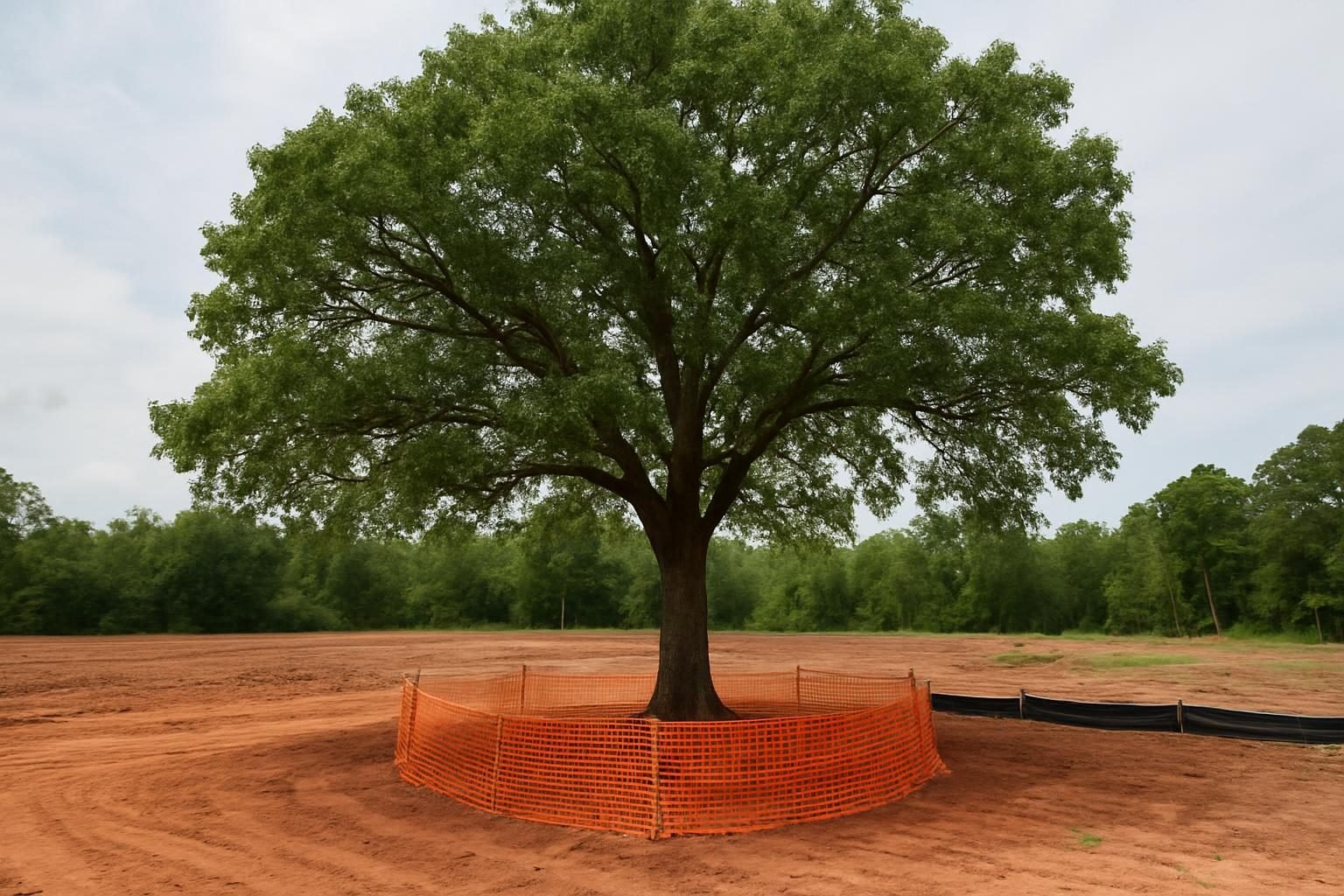
- Tag and protect keeper trees. Choose healthy trees worth keeping, such as mature oaks or hardwoods, and fence off their root zones before equipment arrives.
- Install erosion control. Silt fence and other measures go in before soil is disturbed, if your permit requires them.
- Remove trees and large brush. Larger trees come down first, including any that need rigging or a crane near structures or utilities.
- Clear undergrowth and small trees. Brush, saplings, vines and fallen timber are processed or hauled.
- Handle stumps and roots. Grind or pull stumps depending on what is going on top of that ground.
- Process or remove debris. Chip, haul, or stage material according to your plan.
- Rough grade. Level and shape the site so the builder can begin.
For a deeper look at budgeting each phase, see our breakdown of land clearing for a new home in Cumberland County, and our overview of land clearing services.
Choosing Which Trees to Keep and How to Protect Them
Mature shade trees add real value to a new home, but they are also the easiest to damage during construction. Most tree deaths on building sites happen slowly, from compacted soil, cut roots or grade changes, and show up a year or two later.
Practical steps for protecting keepers:
- Keep construction at a distance. A common rule of thumb is to protect the area under the canopy drip line, or farther for large trees.
- Fence the root zone. Sturdy temporary fencing keeps trucks, soil piles and material storage away.
- Avoid grade changes. Adding or removing even a foot of soil near a trunk can stress or kill a tree.
- Do not cut roots casually. If trenching for utilities is unavoidable, route it away from the trunk or ask an arborist about tunneling.
- Be cautious near pines. Tall loblolly and longleaf pines are common here, but they can be vulnerable to stress and storm damage once surrounding trees are removed.
If you are unsure whether a tree is worth saving, an arborist tree assessment can identify disease, decay or structural problems before you build near it. Trees that look fine at the edge of a cleared lot sometimes turn out to be hazards once they lose the protection of their neighbors.
Trees rarely die during construction; they die a year later from the damage done to their roots.
Stump Removal and Root Clearing for Building Sites
Stumps are where lot clearing gets technical. What you do depends on what will sit on top of that spot.
Under the house, driveway and septic area
Stumps and major roots must be fully removed, not just ground down. Decaying wood under a slab or fill can cause settling, and your builder or inspector will likely require clean, stable soil. Excavators typically pull stumps and roots in these zones.
In yards, lawns and landscape areas
Stump grinding is usually enough. It is faster and cheaper than pulling, and it leaves the soil mostly undisturbed. The ground-up material can be mixed in or hauled off. Our stump grinding service page explains how this works, and you can estimate budget with our guide to stump grinding cost per stump in Fayetteville.
Quick rules of thumb:
- Grind where you plan grass, gardens or fill dirt later and nothing structural will sit on top.
- Pull and haul where concrete, footings, septic fields or compacted fill are going.
- Ask about depth. Grinding depth varies by company, and the sandy, root-heavy soils around Cumberland County can hide large lateral roots.
Debris Options: Haul, Chip, Burn or Mulch
Clearing a wooded lot produces a surprising amount of material, and how you handle it often drives the final price. Discuss this up front so quotes are comparable.
- Haul-off. The crew loads and removes everything. It is the simplest option but can be the priciest, especially with large logs and stumps.
- On-site chipping. Brush and small limbs are chipped into mulch you can spread on the lot or keep for landscaping.
- Log and firewood retention. Some owners keep usable hardwood for firewood or milling. Ask whether the crew will stack or stage it.
- Burning. Open burning is regulated and often restricted by season, location and permits. Always confirm local rules and burn bans before assuming it is an option.
- Disposal sites. Some material must go to an approved facility. See our guide to yard waste and tree debris disposal in Cumberland County for the options available.
Another approach is forestry-style mulching, which grinds trees and brush in place into a layer of mulch. It suits some lots well and others poorly, so compare it with traditional clearing before you decide.
What Lot Clearing Costs and How to Get Useful Quotes
Costs vary widely based on tree density, tree size, access, stump handling, debris method and how much grading is included. Treat any numbers as rough estimates until a company walks your site. Small, lightly wooded lots may run a few thousand dollars, while dense, heavily wooded acreage can climb well beyond that.
Factors that move the price most:
- Tree count and size. Large hardwoods and tall pines near structures cost more than scrub and saplings. See our guide to tree removal cost by tree size.
- Access. Narrow driveways, wet ground and steep or low spots slow equipment.
- Stump strategy. Pulling and hauling stumps costs more than grinding.
- Debris plan. Hauling everything costs more than chipping or leaving mulch on site.
- Time of year. Wet seasons and post-storm demand can affect scheduling and pricing.
When comparing bids, ask each company to state in writing what is included: stump handling, grading, debris removal and cleanup. Our 10-point checklist for hiring a tree service covers insurance, references and contract details. You can also read about tree service costs in Fayetteville for broader pricing context.
For related reading, our upcoming guide on land clearing cost per acre in North Carolina goes deeper on acreage pricing, and forestry mulching versus traditional land clearing compares the two methods.
Ready to compare prices for your lot? Request a free lot clearing quote using the form on this page and local companies can walk your site and provide written estimates.
FAQ
Do I need a permit to clear my lot in Fayetteville?
It depends on where the lot sits and how much ground you disturb. Larger land-disturbing projects can require erosion control approval, and some areas have tree protection or buffer rules. Contact the city or county planning and inspections office before cutting.
Should I clear the whole lot or just the building area?
Usually just the house pad, driveway, utility paths and a working buffer. Keeping healthy trees elsewhere protects shade, privacy and property value, and can reduce clearing costs.
Do stumps have to be removed before building?
Stumps and major roots must be fully removed anywhere a foundation, driveway, septic system or compacted fill will go. In lawn and landscape areas, grinding is often enough.
What happens to the trees and brush after clearing?
Options include hauling, chipping into mulch, keeping logs for firewood or, where permitted, burning. Agree on the debris plan in writing so quotes can be compared fairly.
Get free lot clearing quotes in Fayetteville
A local tree and land clearing company will contact you with a free, no-obligation quote for your lot.