Quick answer: Land clearing for a new home in Cumberland County usually runs from roughly $1,500 to $7,000+ per acre for typical sandy-soil wooded lots, with heavy timber, stumps and hauling pushing it higher. The process runs in order: survey and stake the building area, confirm permits and erosion control, clear selectively, remove stumps in the foundation zone, then grade. Most home sites take a few days to a few weeks, depending on acreage and weather.
Key takeaways
- Get a survey and a staked building footprint before any machine touches the lot.
- Clear only what you need; healthy hardwoods near the house site add value and shade.
- Forestry mulching leaves the soil in place; pushing and burning is faster for heavy brush but has more rules.
- Stumps under the foundation, driveway and septic area must be fully removed, not just cut low.
- All cost figures here are estimates; site conditions change the price more than acreage alone.
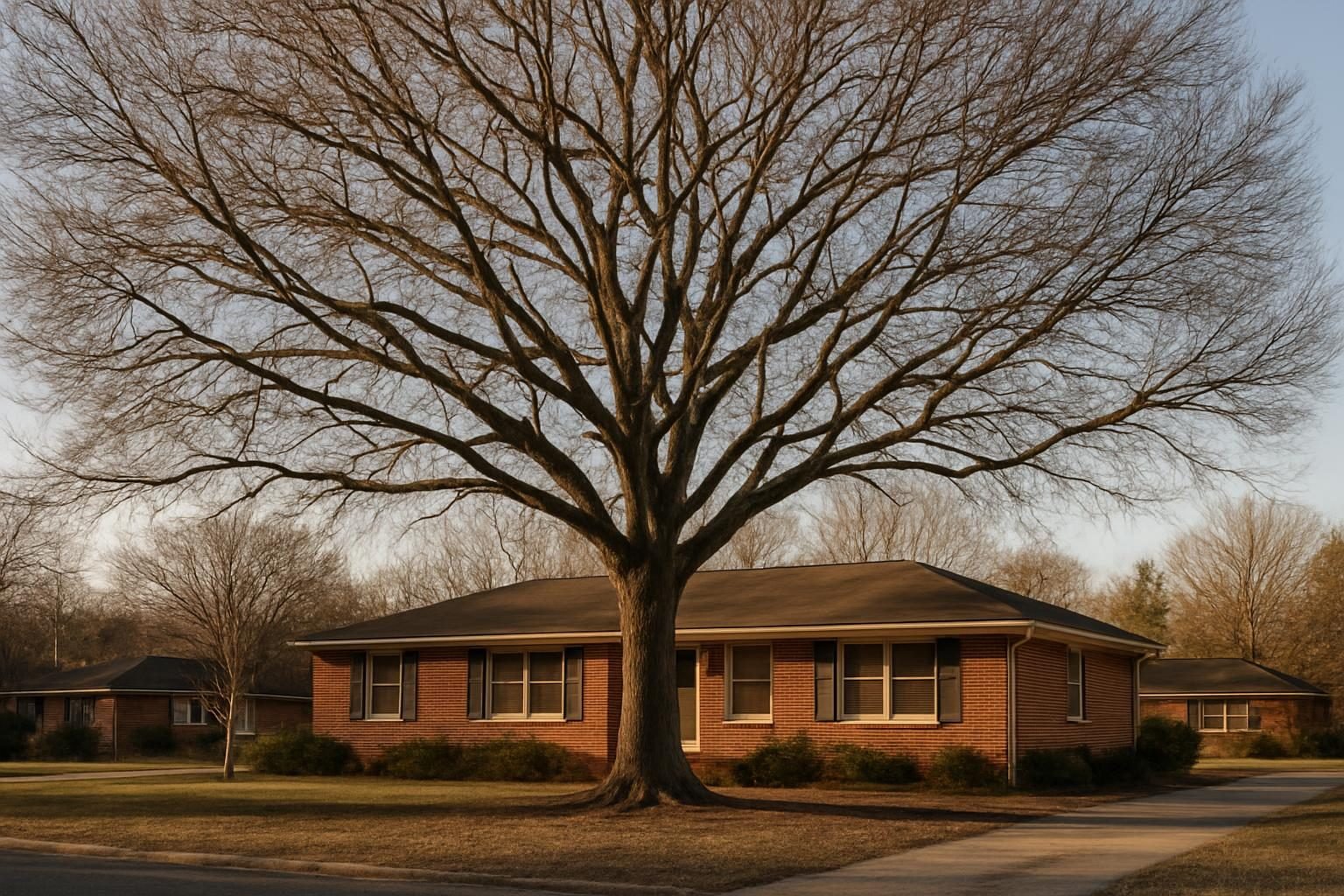
Buying a wooded lot around Hope Mills, Stedman, Raeford or Gray’s Creek is the first step toward building. The second is turning that tangle of loblolly pine, scrub oak and undergrowth into a buildable home site. Doing it in the right order saves money and avoids stop-work headaches.
Ready to compare options? You can request free land clearing quotes from local crews using the form on this page.
Step 1: Start With a Survey and a Plan
Before anyone cuts, you need to know exactly where the property lines, easements and building envelope sit. Clearing past your boundary onto a neighbor’s land is a costly and avoidable mistake.
- Boundary survey: Have corners marked with stakes or flagging so the crew can see them.
- Building footprint: Stake the house, driveway, septic and drain field, and any well location.
- Setbacks and easements: Note utility easements and road setbacks that limit where you can build.
- Soil and drainage: Low, wet areas common in parts of Cumberland County may need drainage planning before grading.
Walk the lot with your builder or site contractor and flag trees you want to keep. That map becomes the clearing contractor’s instructions. For a broader overview of what these crews do, see our land clearing services page.

Step 2: Check Permits and Erosion Control
Clearing a lot for a new home is not just a matter of hiring a machine. Rules depend on where the property sits, how much ground you disturb and whether the lot is inside city limits or in the county.
- Building and site permits: Your builder typically pulls these, but confirm clearing is covered.
- Erosion and sediment control: In North Carolina, land disturbance over a certain size (generally one acre) triggers a state-level erosion and sedimentation control plan. Local rules may be stricter, so verify with the county or city before you start.
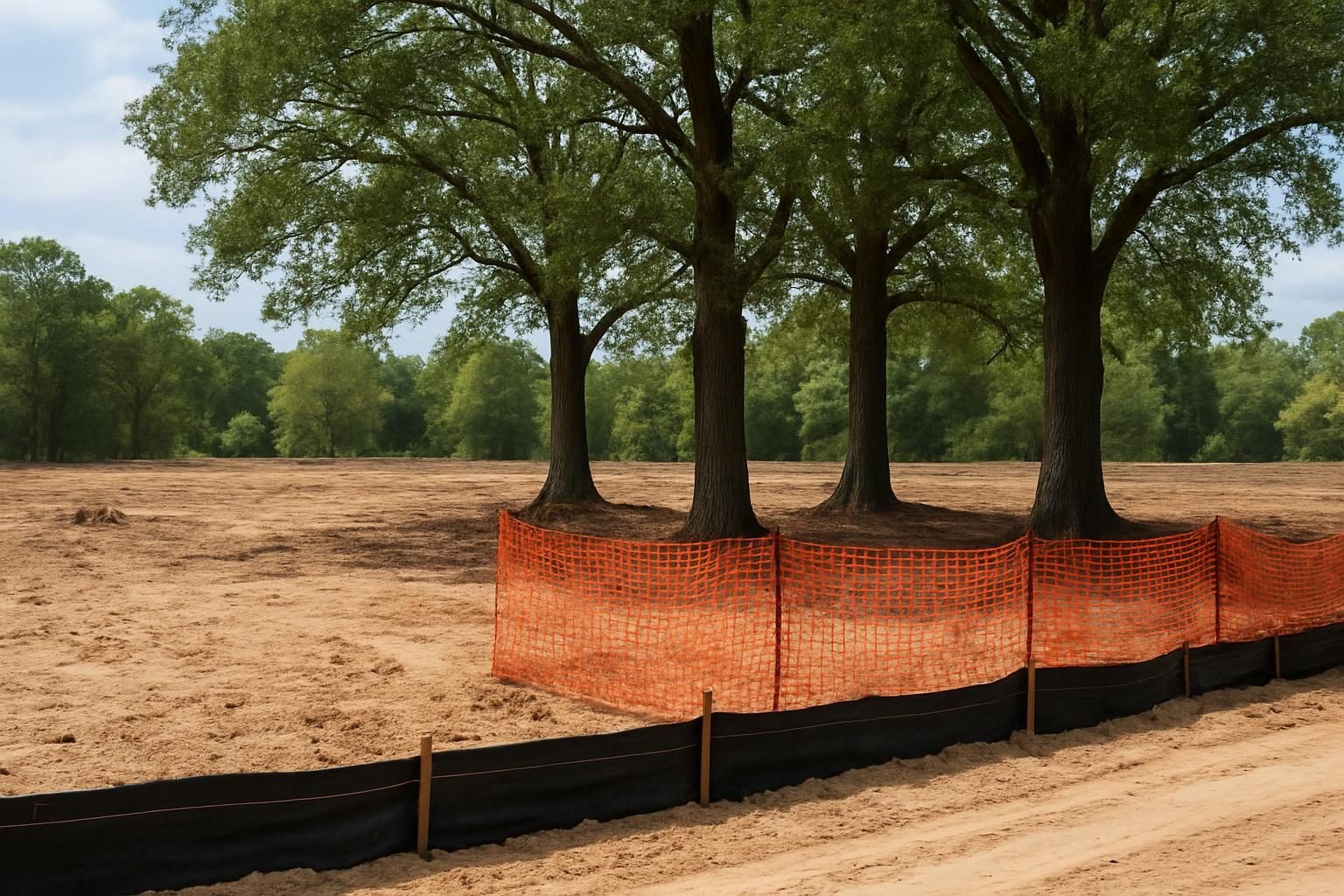
- Silt fence and stabilization: Expect to install silt fence downslope and stabilize bare soil promptly after grading.
- Wetlands and floodplains: Lots near creeks or low ground may have restrictions. Ask before clearing near water.
Rules change and vary by jurisdiction, so call the appropriate planning or inspections office and ask what applies to your parcel. The NC DEQ erosion and sediment control program explains the state requirements. If you’re also removing individual trees inside town limits, read our guide on whether you need a permit to remove a tree in Fayetteville.
Skipping the erosion control check is the fastest way to turn a cheap clearing job into an expensive one.
Step 3: Selective Clearing to Save the Good Trees
You don’t need to strip the whole lot. Mature shade trees close to the house can lower summer cooling costs and make a new build feel established from day one. The trick is knowing which trees are worth saving and which are liabilities.
Trees worth keeping
- Healthy oaks and hickories with full, balanced canopies
- Longleaf pines, a signature local tree, set well back from the house
- Trees outside the construction zone and away from the driveway and utilities
Trees to take out
- Dead, leaning or storm-damaged trees (see our list of signs a tree is dying)
- Tall pines within falling distance of the house; our guide on when to remove a pine near your house explains the thinking
- Trees weakened by beetles, which spread fast in stressed stands
Pro tip: Machines and fill dirt kill trees slowly. Roots within the drip line of a keeper tree can be crushed or buried during grading. Ask your crew to fence off a protection zone, and consider an arborist tree assessment before you commit to saving a large tree near the build site.
Keepers near the house may also need thinning or pruning once construction wraps up. Our tree trimming and pruning page covers that.
Step 4: Forestry Mulching vs. Pushing and Burning
The two main clearing methods work very differently. Which one fits depends on your lot, your timeline and local burn rules.
Forestry mulching
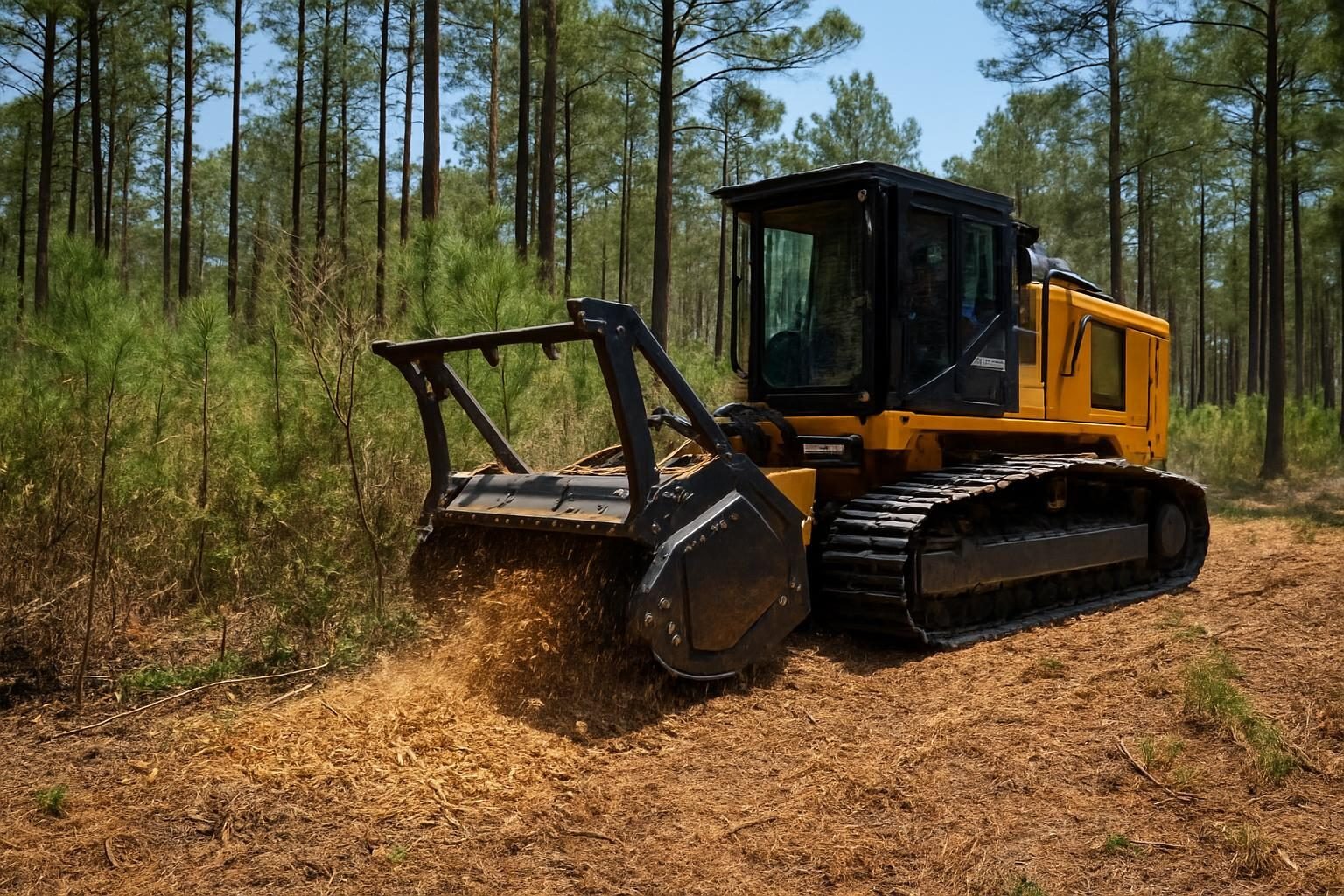
- How it works: A mulching head grinds trees and brush into chips left on the ground.
- Pros: Less soil disturbance, no hauling, no burn pile, and a natural mulch layer that helps control erosion.
- Cons: Works best on smaller trees and brush; large timber is often cut and removed separately. Stumps are ground low but roots remain.
Pushing and burning (or hauling)
- How it works: Dozers or excavators push trees and stumps out, then the debris is burned on site or hauled away.
- Pros: Removes stumps and roots completely, which suits foundation and driveway areas.
- Cons: More soil disturbance and erosion risk. Open burning is regulated, and burn permits and weather limits apply. Hauling adds cost; see our guide to yard waste and tree debris disposal in Cumberland County.
Many home sites use a mix: mulch the general lot, then fully remove stumps in the building footprint. A comparison article on forestry mulching vs. traditional land clearing is coming soon.
Mulching is gentler on the lot, but nothing replaces full root removal under a foundation.
Step 5: Stump Removal for Foundations and Driveways
Stumps and roots rot over time, leaving voids that cause settling. That’s why the building pad, driveway, septic area and any slab need full stump and root removal, not just grinding to a few inches below grade.
- Foundation zone: Remove stumps and major roots, then backfill with compacted, approved fill.
- Driveway and parking: Same approach to prevent sinking spots.
- Yard areas: Grinding is usually fine where no structures will sit.
Not sure which method suits which part of your lot? Compare options in stump grinding vs. stump removal, and see typical pricing in our stump grinding cost guide.
Land Clearing Cost Per Acre Near Fayetteville
Prices below are rough planning estimates only. Real quotes depend on tree size and density, stump count, access, terrain, wet ground and what happens to the debris.
- Light brush and small trees, mulched: roughly $1,500 to $3,500 per acre
- Moderately wooded lot (mixed pine and hardwood): roughly $3,000 to $6,000 per acre
- Heavily wooded, large timber, full stump removal and hauling: roughly $5,000 to $7,000+ per acre
- Single house pad (a fraction of an acre): often priced as a flat job rather than per acre, and may carry a minimum charge
What raises the price:
- Large trees that must be felled and removed rather than mulched
- Hauling debris instead of burning or mulching on site
- Poor access, steep or wet ground, or a long driveway to clear
- Salvageable timber, which can sometimes offset costs if a logger buys it
For broader pricing context, see our tree service cost guide. A dedicated land clearing cost per acre in North Carolina article is also on the way.
A Realistic Timeline for Clearing a Home Site
- Survey and staking: 1 to 3 weeks, depending on surveyor availability.
- Permits and erosion plan: days to several weeks, depending on the jurisdiction.
- Quotes and scheduling: 1 to 2 weeks to compare bids and book a crew.
- Clearing: often 1 to 5 days for a typical home site; longer for multiple acres.
- Stump removal and rough grading: a few days to a week.
- Erosion control and stabilization: same time as grading, with seeding or mulch afterward.
Heavy rain can stall equipment on sandy-loam and wetter ground, so build in some buffer. Remember that hurricane season can disrupt schedules and crew availability in late summer and fall.
When you’re ready to compare bids for your lot, request a free land clearing quote using the form on this page.
FAQ
Do I need a permit to clear land for a new house in Cumberland County?
Often yes, in some form. Your building permit process usually covers site work, and land disturbance above roughly an acre generally requires an erosion and sediment control plan. Requirements differ between the city of Fayetteville, other towns and unincorporated areas, so confirm with local officials before work starts.
Is forestry mulching cheaper than traditional clearing?
It can be, especially on lots with smaller trees and brush, since there’s less hauling and no burning. For large timber or areas needing full stump removal, a hybrid approach is common and costs vary by site.
Can I burn the brush on my lot?
Sometimes, but open burning is regulated by state and local rules, requires permits in many cases and depends on weather and fire-danger conditions. Your contractor should know current requirements; verify them before planning a burn.
How many trees should I keep on a new-home lot?
Keep healthy, well-placed trees outside the construction zone and far enough from the house to be safe in a storm. Dead, leaning or beetle-damaged trees should come out. An arborist can help you decide which keepers are worth protecting.
Get free land clearing quotes for your new home site
A local land clearing crew will contact you with a free, no-obligation quote for your Cumberland County lot.