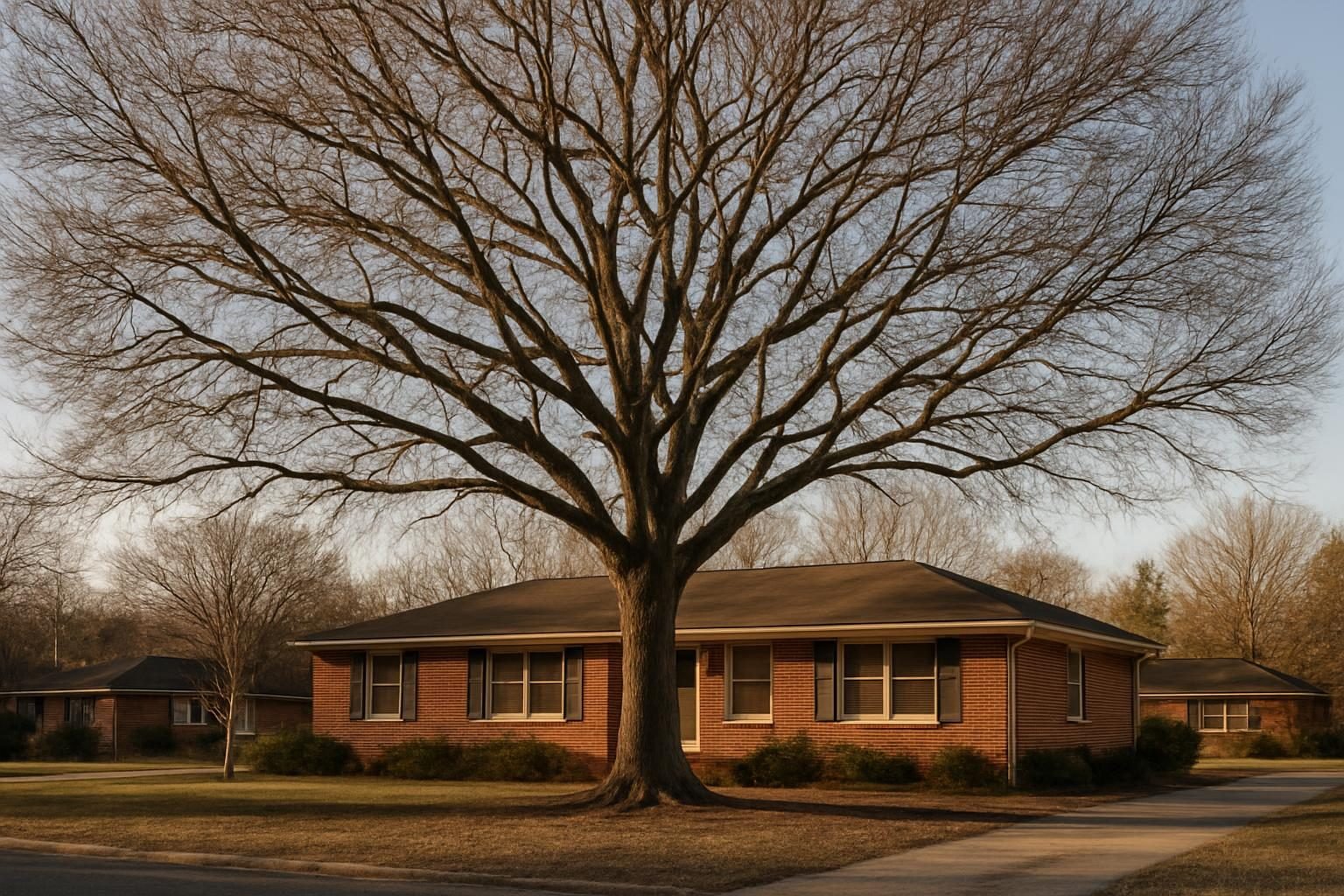
Quick answer: Land clearing in Raeford, NC usually means one of two approaches: forestry mulching, which grinds trees and brush in place, or excavator-based clearing, which pulls stumps and hauls or burns debris. The right choice depends on what you plan to build or farm, how much you want left behind, and what the soil and slope allow. Get at least two written quotes that spell out stump handling and debris disposal.
Key takeaways
- Mulching is often faster and gentler on soil; excavator clearing is better when stumps must come out for a foundation or septic area.
- Stump handling and debris disposal are the biggest line items that vary between quotes.
- Larger sites may trigger county or state rules, so check before any ground is disturbed.
- Always confirm insurance and exactly what “cleared” means in writing.
Raeford sits in Hoke County, where many properties are wooded lots, former pasture and long-neglected fence rows full of longleaf and loblolly pine, oak, sweetgum and thick understory. Whether you are prepping a homesite near Raeford, opening up a driveway, or pushing back a pasture edge, the approach you choose shapes your cost and your results. This guide walks through the methods, the cost drivers and the questions worth asking.
Ready to compare options? You can request free land clearing quotes using the form on this page.
Common Land Clearing Jobs Around Raeford
Most clearing projects in the Raeford area fall into a handful of categories. Knowing which one fits yours helps you describe the job accurately to contractors.
- Homesites: Clearing a building pad, driveway access, septic and well areas, and a buffer for the yard.
- Driveways and access roads: A narrow corridor, often 12 to 20 feet wide, with room for turning and drainage.
- Fence lines: Removing brush, saplings and overhanging limbs so posts can go in straight.
- Pasture edges: Pushing back encroaching woods and brush to reclaim usable grazing or hay ground.
- Overgrown lots: Reclaiming neglected acreage that has filled in with vines and small trees.
If your property is a smaller overgrown lot rather than true woods, our guide on how to clear an overgrown lot covers the brush, vine and small-tree side of the work.

Land Clearing Methods: Mulching vs. Excavator
There are two main ways to clear land in the Sandhills, and many jobs use a mix of both.
Forestry mulching
A mulching machine grinds standing trees, brush and stumps into wood chips that stay on the ground. There is no hauling, little soil disturbance and a quick finish. The mulch layer helps control erosion on sandy ground, which is common around Raeford.
- Best for: pasture edges, fence lines, trails, overgrown lots and driveway corridors.
- Watch for: a thick mulch layer left on a building pad may need to be removed before construction.
Excavator or dozer clearing
Here the crew fells trees, pulls stumps and roots, and piles debris for hauling, chipping or burning where permitted. It leaves bare ground, which is what you want under a foundation, septic field or pond.
- Best for: homesite pads, areas that will be graded, and spots where roots must come out.
- Watch for: more disturbed soil, more debris to deal with and typically a longer job.
For a deeper side-by-side, see forestry mulching vs. traditional land clearing. For an overview of the service itself, visit our land clearing page.
The cheapest quote isn’t always the cheapest job once stumps and debris disposal are accounted for.
What Happens to Stumps and Debris
Stump and debris handling is where quotes diverge most, so it deserves a clear conversation before work starts.
- Ground in place: Mulching grinds stumps below or near grade. Fast and economical, but roots remain underground and will slowly decay.
- Pulled and piled: An excavator removes stumps whole. The pile is then hauled off, chipped or burned if local rules and conditions allow.
- Stumps left in place: Sometimes trees are cut at ground level and stumps are addressed later with a grinder.
If you only need select stumps handled after clearing, our stump grinding service page explains the process, and stump removal cost: grinding vs. full removal breaks down the tradeoffs.
Pro tip: If you plan to pour a slab or install a septic system, tell the contractor up front. Ground-in-place stumps and buried roots can cause settling problems later.

Land Clearing in Raeford, NC: Cost Drivers
No two lots price the same. Clearing is typically quoted per acre or as a flat project price, and the following factors move the number most. Any dollar figures you hear should be treated as rough estimates until a contractor sees the site.
- Tree size and density: A thin stand of pines costs less than a thick mix of mature hardwoods.
- Method: Mulching is often priced differently from full excavator clearing with hauling.
- Stump handling: Grinding, pulling and hauling each add time and equipment.
- Debris disposal: Hauling and dump fees can add significantly; burning and chipping on site may reduce cost where allowed.
- Access and terrain: Narrow entries, wet ground, slopes and distance from the road affect machine time.
- Acreage and finish level: Rough clearing is cheaper than a graded, seed-ready surface.
For ballpark ranges, read land clearing cost per acre in North Carolina (Sandhills edition) and land clearing cost in Fayetteville and Cumberland County. Neighboring Cumberland County pricing is a useful reference point even for Hoke County projects. Our general tree service cost guide covers related work.
Clearing price is driven less by acreage alone than by what’s standing on it and where the debris goes.
Rules to Check Before You Clear
Small jobs on your own residential lot often need little paperwork, but larger sites can involve rules at the county and state level. These can change, so confirm current requirements directly rather than relying on a contractor’s assumption.
- County permits: Contact Hoke County planning or permitting offices about grading, driveway or building permits tied to your project.
- Erosion and sedimentation control: North Carolina requires a plan for land-disturbing activity above a certain size. Check the thresholds with the NC Department of Environmental Quality.
- Wetlands and streams: Low, wet areas and stream buffers may be protected. Ask before clearing near them.
- Open burning: Burn rules and permits vary by season and conditions, and may be restricted. Confirm with the NC Forest Service or local fire officials.
- Property lines: Know exactly where your boundary is. See trees on the property line in North Carolina if shared trees are involved.
For a typical sequence on a new build, see land clearing for a new home in Cumberland County and clearing a lot before building. You may also want to understand tree-related rules; our planned guide on tree removal permits in the Fayetteville area will cover that in more detail.
What to Ask Before Hiring a Clearing Contractor
A clear written scope prevents most disputes. Before you sign, ask each contractor the following:
- What method will you use, and why? A good answer ties the method to your end use.
- What exactly happens to stumps and roots? Ask for depth and whether roots stay in the ground.
- Where does the debris go? Hauled, chipped, mulched in place or burned, and who pays any fees.
- Is the quote per acre or fixed? Ask what triggers a change order.
- Do you carry liability and workers’ comp insurance? Request proof. See what to verify about tree service insurance in NC.
- What is the timeline and how weather affects it? Sandy soils drain well, but heavy rain can still stall equipment.
- Will you protect trees I want to keep? Mark them clearly before work begins.
Our upcoming guide on how to hire a tree service company goes deeper on vetting contractors. If your project also involves taking down specific large trees, see our tree removal in Raeford guide, and for the broader local picture visit tree service in Raeford.
Clearing near Hope Mills, Stedman or Fort Bragg-area homesites follows the same logic, though lot sizes and rules can differ. When you are ready, request your free land clearing quotes and compare scopes side by side.
Frequently Asked Questions
How long does land clearing take?
A small fence line or driveway corridor can take a day or less. A multi-acre wooded homesite may take several days to a week or more, depending on density, stump removal and debris handling.
Is forestry mulching or excavator clearing better for a building pad?
Excavator clearing is usually better for a pad because roots and stumps are removed and the ground can be graded. Mulching works well for surrounding areas, trails and pasture edges.
Do I need a permit to clear land in Raeford?
It depends on the size of the site, what you plan to build and whether grading or wetlands are involved. Check with Hoke County and the state’s erosion control program before starting a larger project.
Can I keep some trees during clearing?
Yes. Mark the trees you want to preserve before work begins and confirm in writing that the crew will avoid them, including their root zones where possible.
Get free land clearing quotes in Raeford, NC
A local tree and land clearing company will contact you with a free, no-obligation quote.