Quick answer: In North Carolina, who is responsible for a tree on the property line usually depends on where the trunk stands. If the trunk sits entirely on one lot, that owner generally owns the tree and is responsible for it; if it straddles the line, it is typically treated as jointly owned. Liability when a tree falls often turns on whether the tree was healthy or visibly neglected, so this is general information, not legal advice.
Key takeaways
- Trunk location matters most: a trunk fully on your side is generally yours, even if branches cross the line.
- Boundary trees are shared: neither neighbor should cut down or hurt a tree on the line without the other’s agreement.
- Neglect changes liability: an owner who ignored obvious warning signs may carry more responsibility if the tree falls.
- Talk first, document everything: a friendly conversation and a few photos solve most disputes.
- Get a lawyer for real disputes: this guide is educational only.
If you own a home in Fayetteville, Hope Mills, Spring Lake or Stedman, you probably share a fence line with someone who has a big loblolly pine or water oak. Those trees raise real questions about who pays for trimming, who is on the hook when limbs come down, and what you can do on your own side. This guide walks through the general principles homeowners in Cumberland County run into most often.
If you already know a tree needs attention, you can request free quotes from local tree service companies using the form on this page.
Who Is Responsible for a Tree on the Property Line in North Carolina?
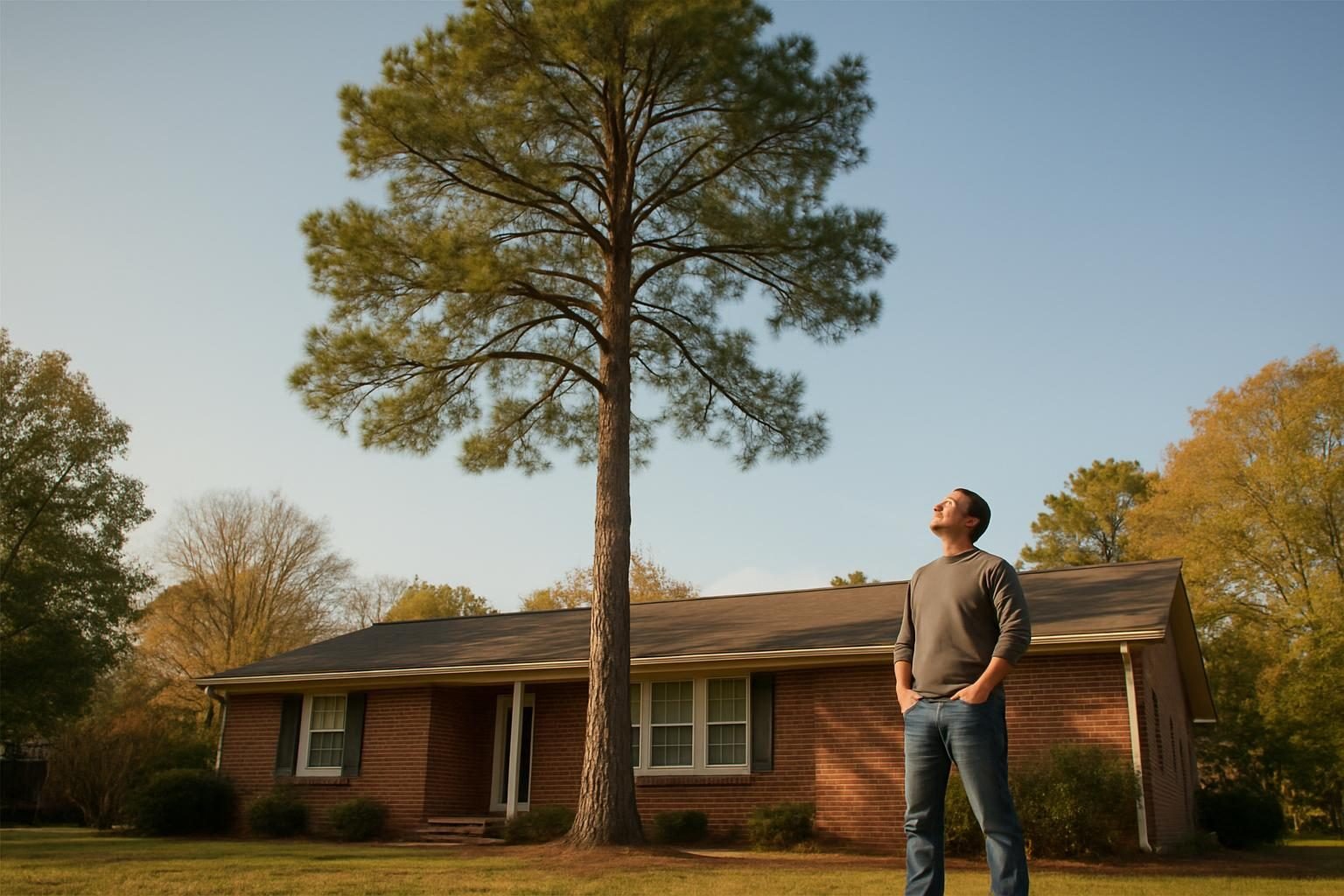
The starting point is simple: look at where the trunk meets the ground. That spot, more than the canopy or the roots, is what most people and courts look at first when deciding ownership.
- Trunk entirely on your lot: the tree is generally yours, along with the cost of maintaining it, even if half the canopy hangs over the neighbor’s yard.
- Trunk entirely on the neighbor’s lot: it belongs to them, even if the shade and leaves land on your side.
- Trunk straddling the boundary: it is commonly treated as a shared or “boundary” tree. Generally, neither owner can remove it or seriously damage it without the other’s consent.
The catch is knowing where the line actually is. Fences, hedges and old landscaping often sit a few feet off the true boundary. If the tree is close, check your recorded plat or deed, or hire a licensed surveyor to mark the line before anyone cuts anything.
Pro tip: Before you disagree with a neighbor about a boundary tree, find your property survey or plat. Many Cumberland County lots have one on file with the county register of deeds, and it settles a lot of arguments quickly.
Can You Trim Branches That Hang Over Your Property?
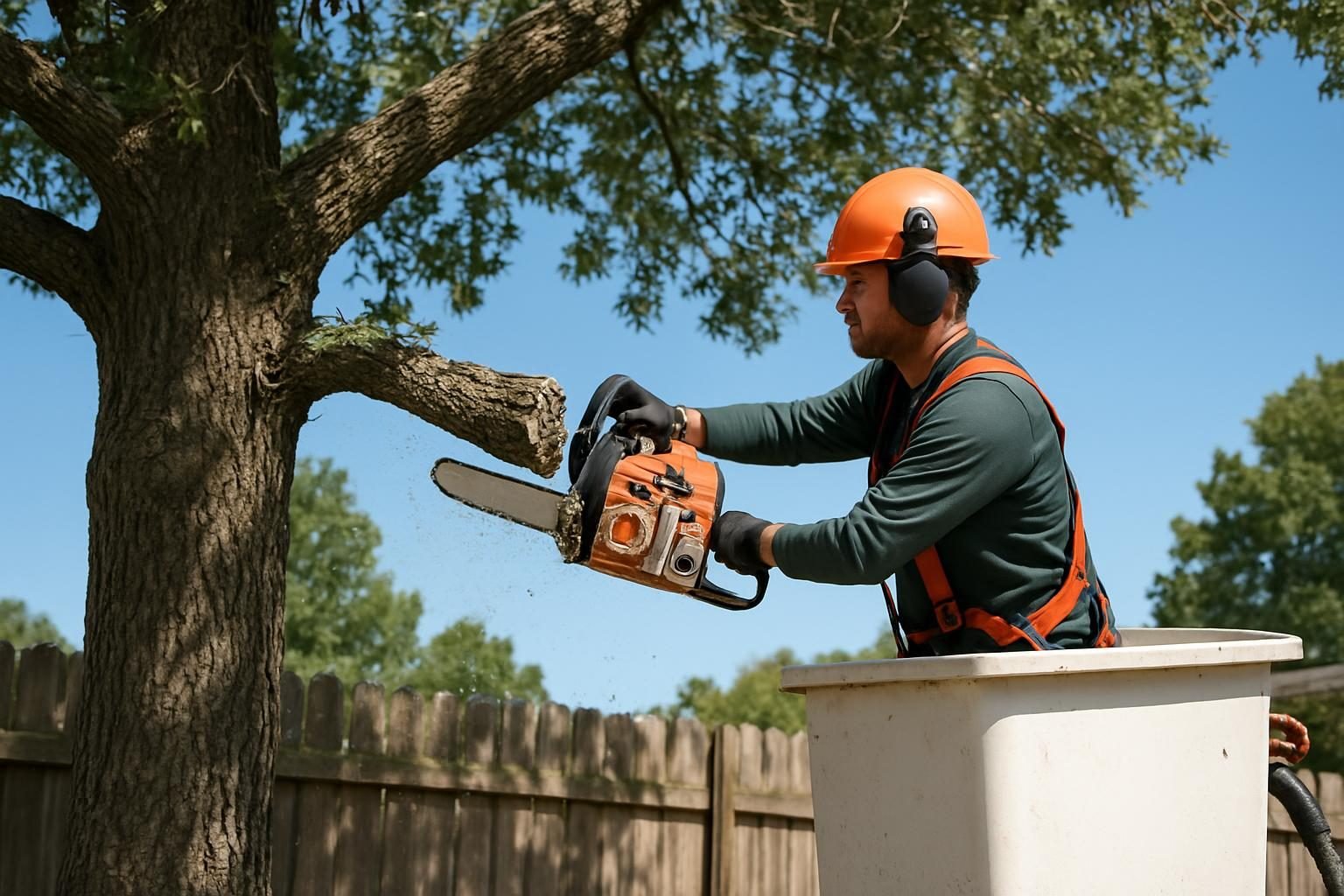
In general, North Carolina property owners may trim branches and roots that cross onto their land, up to the property line. You usually cannot go onto the neighbor’s property to do it without permission, and you should not cut in a way that kills or destabilizes the tree.
Here is how to handle it sensibly:
- Confirm the line. Cutting past it can create a claim against you.
- Limit cuts to what overhangs. Do not take more than needed.
- Avoid harming the tree. Heavy cuts or root damage that causes the tree to die or fall can shift liability onto you.
- Tell your neighbor first. It costs nothing and prevents surprises.
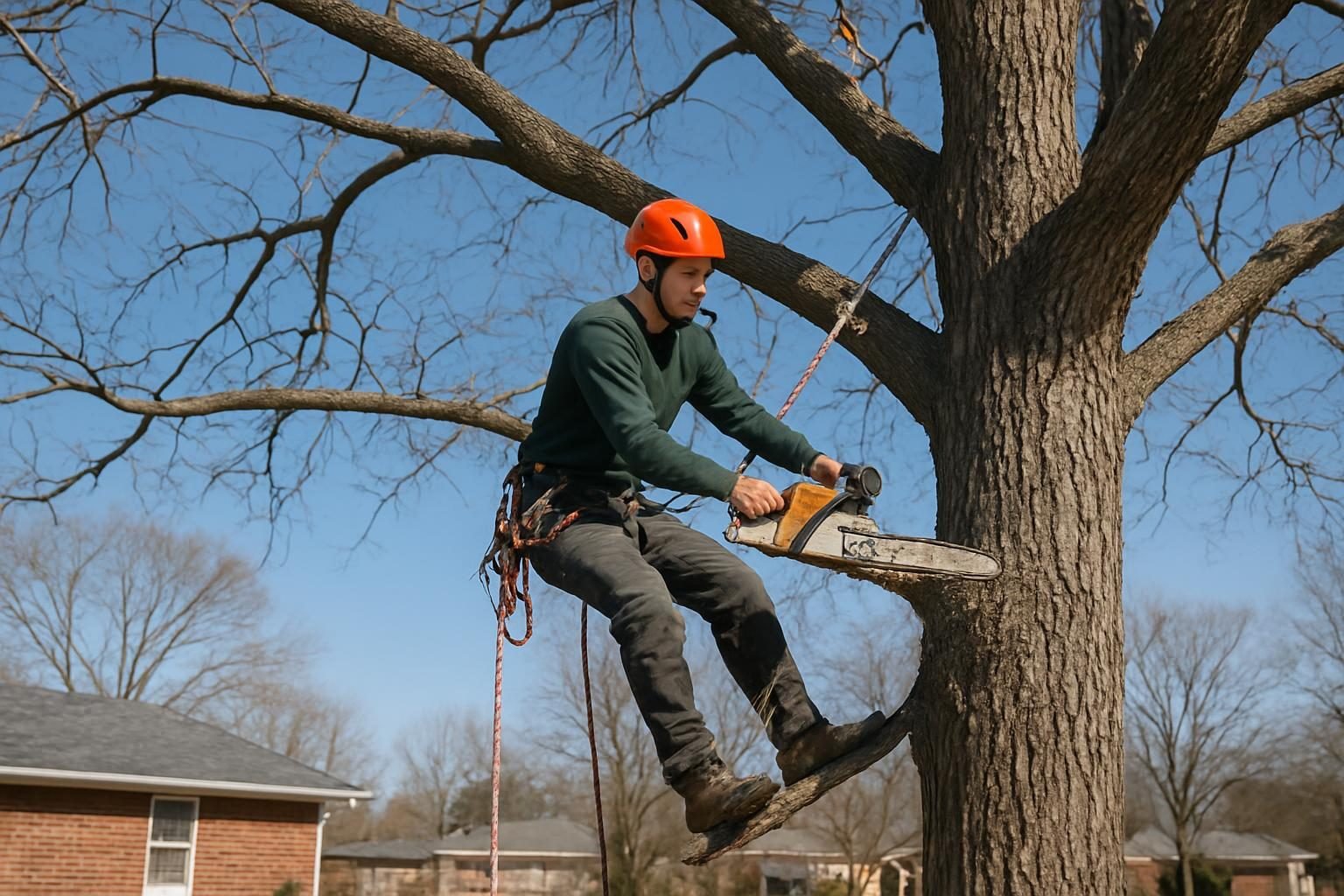
- Use a professional for big limbs. Anything near a roof, power line or fence is better left to a crew with the right equipment.
Proper pruning cuts matter for the tree’s health, and timing helps too. Our guide to the best time to trim trees in North Carolina breaks it down by month, and our tree trimming and pruning page explains what a professional job involves.
You can usually trim what crosses your line, but you generally cannot cut the tree in a way that kills it.
Who Pays When a Tree Falls: Healthy vs. Neglected
This is the question that worries people most, especially in hurricane season. As a general principle, liability often depends on whether the owner knew, or reasonably should have known, that the tree was hazardous.
When a healthy tree falls
If a sound tree comes down in a severe storm, that is typically treated as an act of nature. The tree’s owner is often not at fault, and damage to a neighbor’s property is usually a matter for the neighbor’s own homeowners insurance. Our article on whether homeowners insurance covers tree removal in North Carolina explains what coverage commonly applies.
When a neglected or dying tree falls
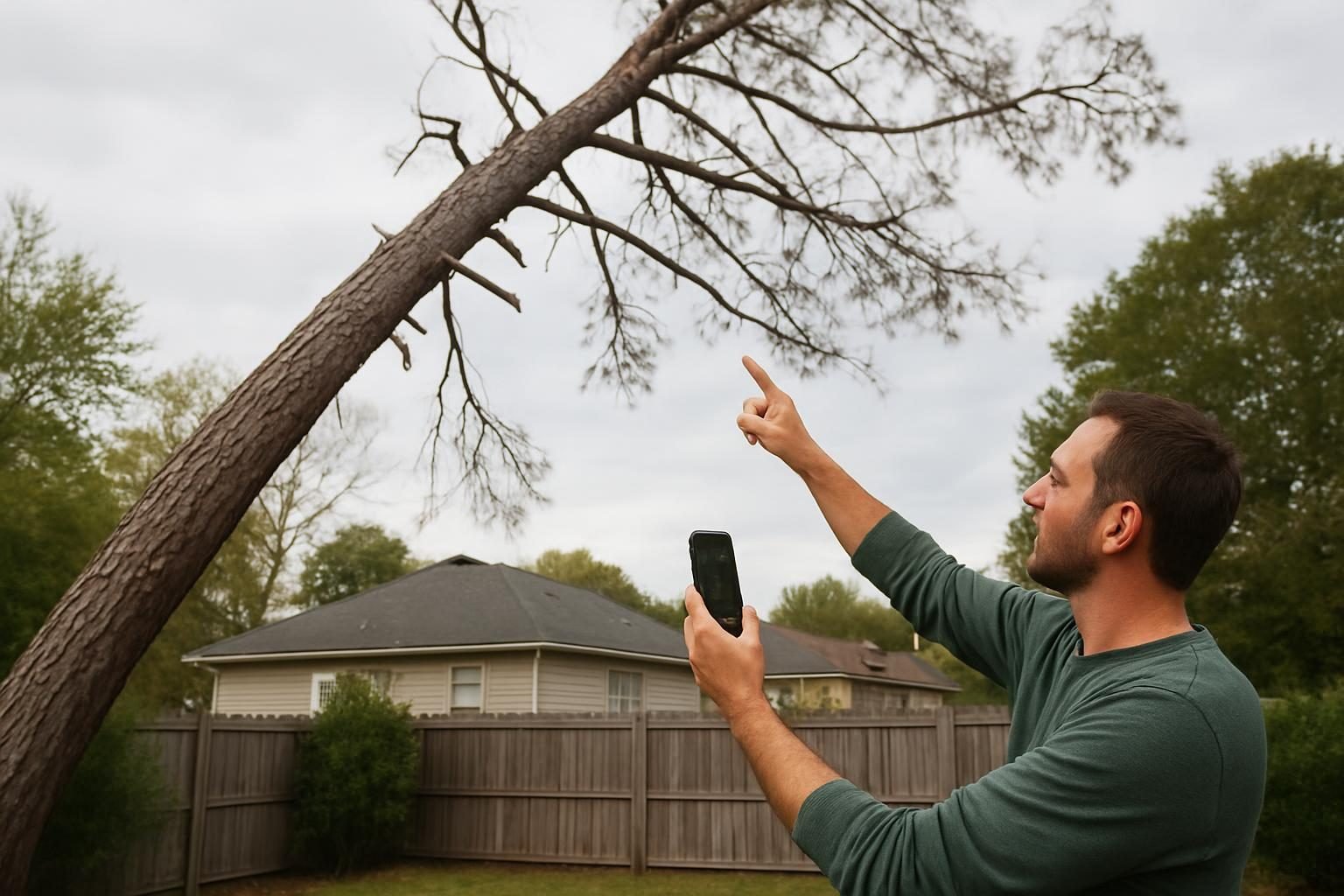
If an owner ignored obvious warning signs, such as dead limbs, a heavy lean, fungus at the base or hollow trunk sections, they may bear more responsibility for resulting damage. Notice matters. A written warning from a neighbor, or an arborist’s report, can be evidence that the owner was aware of the problem.
- Warning signs to watch: dead branches, cracks in the trunk, mushrooms at the base, leaning that has changed, and roots lifting soil.
- Good practice: photograph the tree, keep dates, and put concerns in writing.
- If it’s your neighbor’s tree: share your concern politely and suggest an inspection.
Not sure what you are looking at? Read our list of 9 signs a tree is dying, or consider an arborist tree assessment to get a professional opinion on file.
How to Talk to Your Neighbor About a Boundary Tree
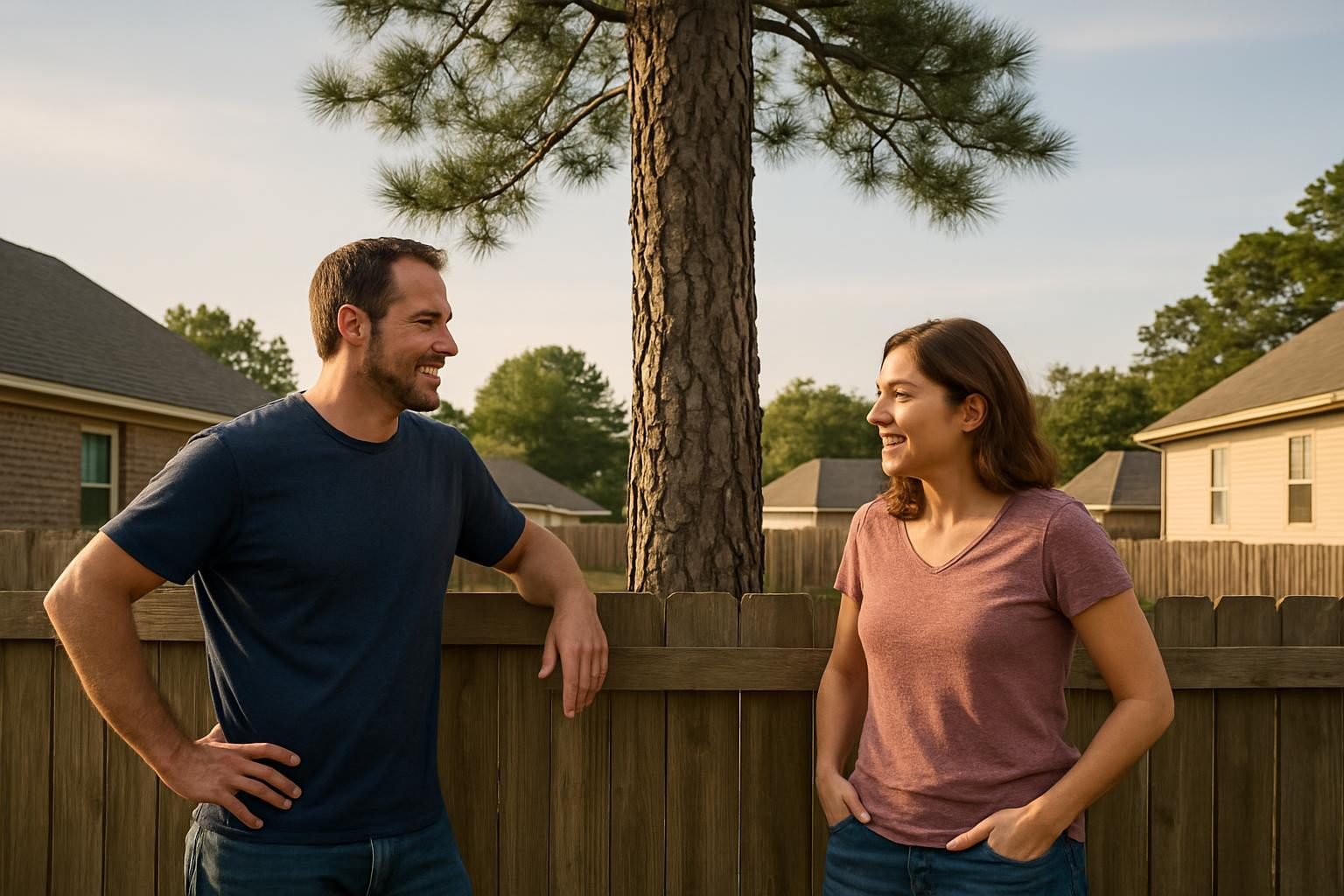
Most tree disputes start small and get worse because nobody talks. A calm, early conversation is the cheapest legal strategy there is.
- Start friendly. Mention the specific concern, like a limb over the roof, not blame.
- Bring facts. Photos, a survey and an arborist opinion carry more weight than opinions.
- Offer to share costs. For a boundary tree, splitting a removal or trimming bill is common and fair.
- Agree in writing. A short email or note summarizing who will do what and who pays avoids confusion later.
- Get multiple quotes. Looking at two or three estimates together keeps things transparent.
For a sense of what a shared job may run, see our tree service cost in Fayetteville guide. As a rough estimate only, removing a mid-size tree often costs several hundred dollars, while large pines and oaks near structures can run well into the thousands depending on access, height and hazards.
A friendly conversation and a few dated photos prevent more tree disputes than any lawsuit ever settles.
HOAs, Permits and Local Rules
Even when ownership is clear, other rules may limit what you can do. Many neighborhoods around Fayetteville and Fort Bragg have homeowners associations with their own landscaping covenants.
- HOA covenants: some require approval before you remove or heavily prune trees, even on your own lot.
- Common areas: trees in shared spaces are usually the association’s responsibility, not an individual owner’s.
- Local ordinances: city and county rules can apply in certain cases. Check our guide on whether you need a permit to remove a tree in Fayetteville, NC.
- Utility easements: trees near power lines may be trimmed by the utility, and you should not attempt that work yourself.
Review your HOA documents before hiring anyone, and ask the association in writing if the rules are unclear.
When to Call a Professional and When to Call a Lawyer
A tree crew can handle the physical risk. An attorney handles the legal one. Knowing which you need saves time and money.
- Call a tree pro when: a tree is leaning, limbs hang over a roof, or you need a hazard assessed. See our page on tree removal in Fayetteville for what to expect.
- Call an attorney when: a neighbor refuses to act on a documented hazard, someone cut or poisoned a tree you own, damage has already occurred and fault is disputed, or ownership of a boundary tree is contested.
- Call your insurer when: a tree has damaged your home. Our guide on what to do when a tree falls on your house covers the first 24 hours.
If a neighbor’s tree has already come down on your property, our upcoming guide on what to do when a neighbor’s tree falls on your house will walk through next steps. And for roots causing trouble, watch for our piece on tree roots damaging a foundation.
Because rules and facts vary case by case, treat this article as general education and consult a North Carolina attorney about your specific situation.
If a tree near your property line is worrying you, you can request free, no-obligation tree service quotes from local companies serving Fayetteville, Hope Mills, Spring Lake and Raeford.
Frequently Asked Questions
If a neighbor’s branches hang over my yard, can I cut them?
Generally yes, up to your property line, as long as you do not trespass or cut in a way that seriously harms or kills the tree. Letting your neighbor know first is the safest approach, and a professional should handle large limbs.
Who pays if my neighbor’s healthy tree falls on my house?
Typically, when a healthy tree falls in a storm it is treated as an act of nature, and your own homeowners insurance is usually the first place to turn. If the tree was visibly dead or neglected, the owner may share responsibility. Speak with your insurer and an attorney about your situation.
Can I remove a tree growing on the property line without my neighbor’s permission?
Usually not. A tree whose trunk straddles the line is commonly considered jointly owned, so removing it alone could expose you to a claim. Get written agreement from your neighbor first, and check any HOA or local rules.
Do I have to pay to remove a tree that is clearly on my neighbor’s side?
Generally no. The owner of the lot where the trunk stands is responsible for maintaining it. You can still trim what overhangs your land, and you can share concerns in writing if the tree looks hazardous.
Get free quotes for your property-line tree
A local tree service company will contact you with a free, no-obligation quote.