Quick answer: Most arborists and tree services recommend keeping branches at least 6 to 10 feet away from your roofline, with larger, faster-growing species like water oaks and loblolly pines toward the high end. That gap protects shingles and gutters, keeps squirrels from using limbs as a highway to your attic, and leaves room for wind-driven sway during Cumberland County storms. Anything thicker than your wrist, or anything near a power line, is a job for a professional.
Key takeaways
- Aim for 6-10 feet of clearance between branches and your roof; 10+ feet for large, brittle species.
- Branches that touch the roof scrape shingles, clog gutters and give squirrels easy access.
- Proper cuts are made at the branch collar. Topping a tree is harmful and creates weak regrowth.
- Never trim near a service drop (the wire from the pole to your house). Call your utility first.
- Large limbs over a roof are a high-risk job and are usually worth hiring out.
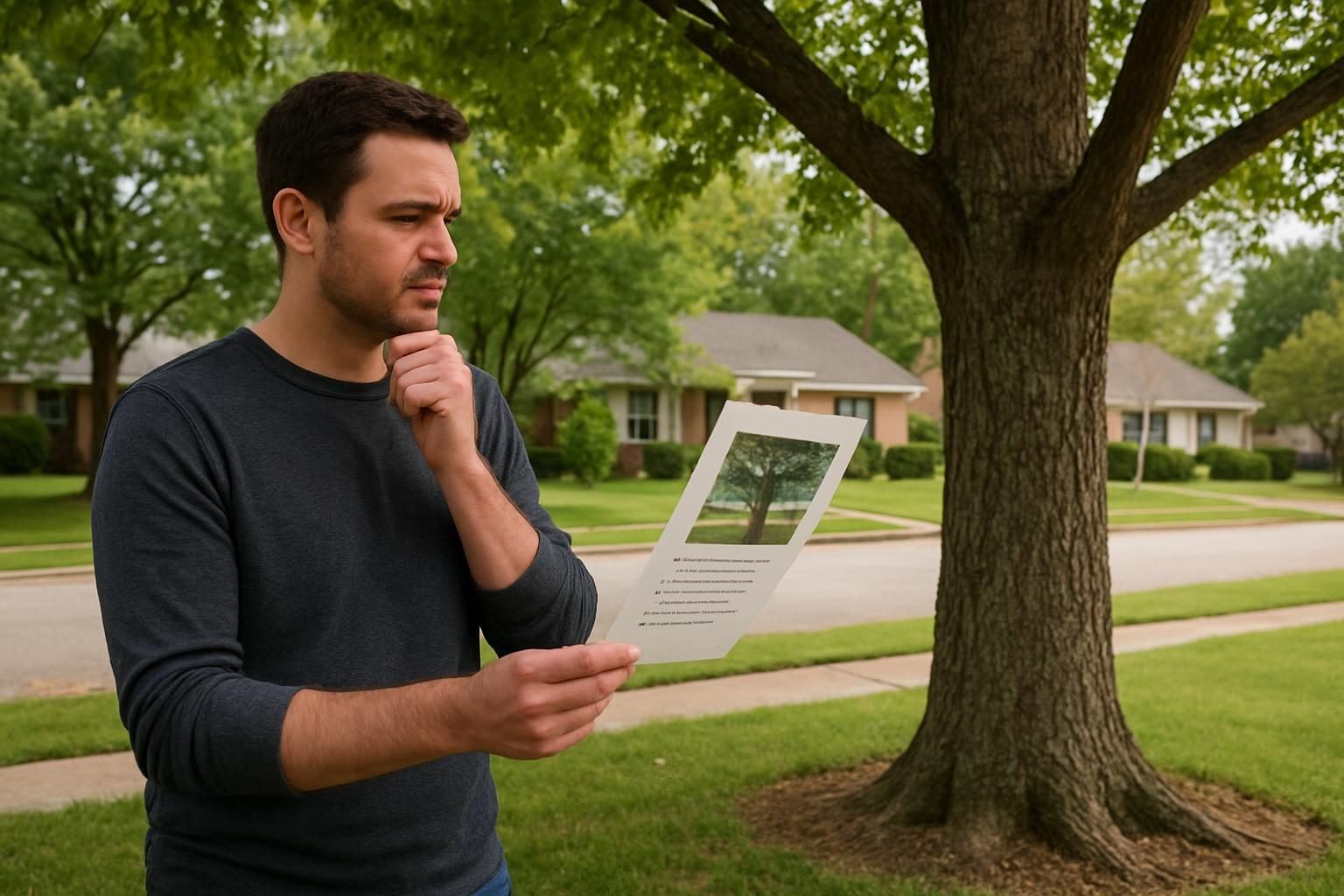
If you live in Fayetteville, Hope Mills or Spring Lake, you have probably looked up at a limb hanging over your shingles and wondered whether it is a problem yet. Tree trimming near a roof is one of the most common reasons homeowners in the area call for help, and the answer depends on the tree, the limb size and how close it sits. This guide walks through the clearance numbers, what happens when you ignore them, and how to tell when a job is beyond a ladder and a pole saw.
Want someone to look at the trees over your house? You can request a free tree trimming quote using the form on this page.
How Much Clearance Do You Need Between Trees and Your Roof?
There is no single legal number for homeowners, but a widely used rule of thumb is 6 to 10 feet of clearance from the roof surface and the sides of the house. The right figure within that range depends on a few things.
- 6 feet: A reasonable minimum for slow-growing, smaller trees such as dogwoods or crape myrtles.
- 8-10 feet: Better for oaks, sweetgums and maples, which put on a lot of growth each season.
- 10+ feet: Smart for pines and any tree with brittle wood, since limbs can snap and fall well beyond where they hang.
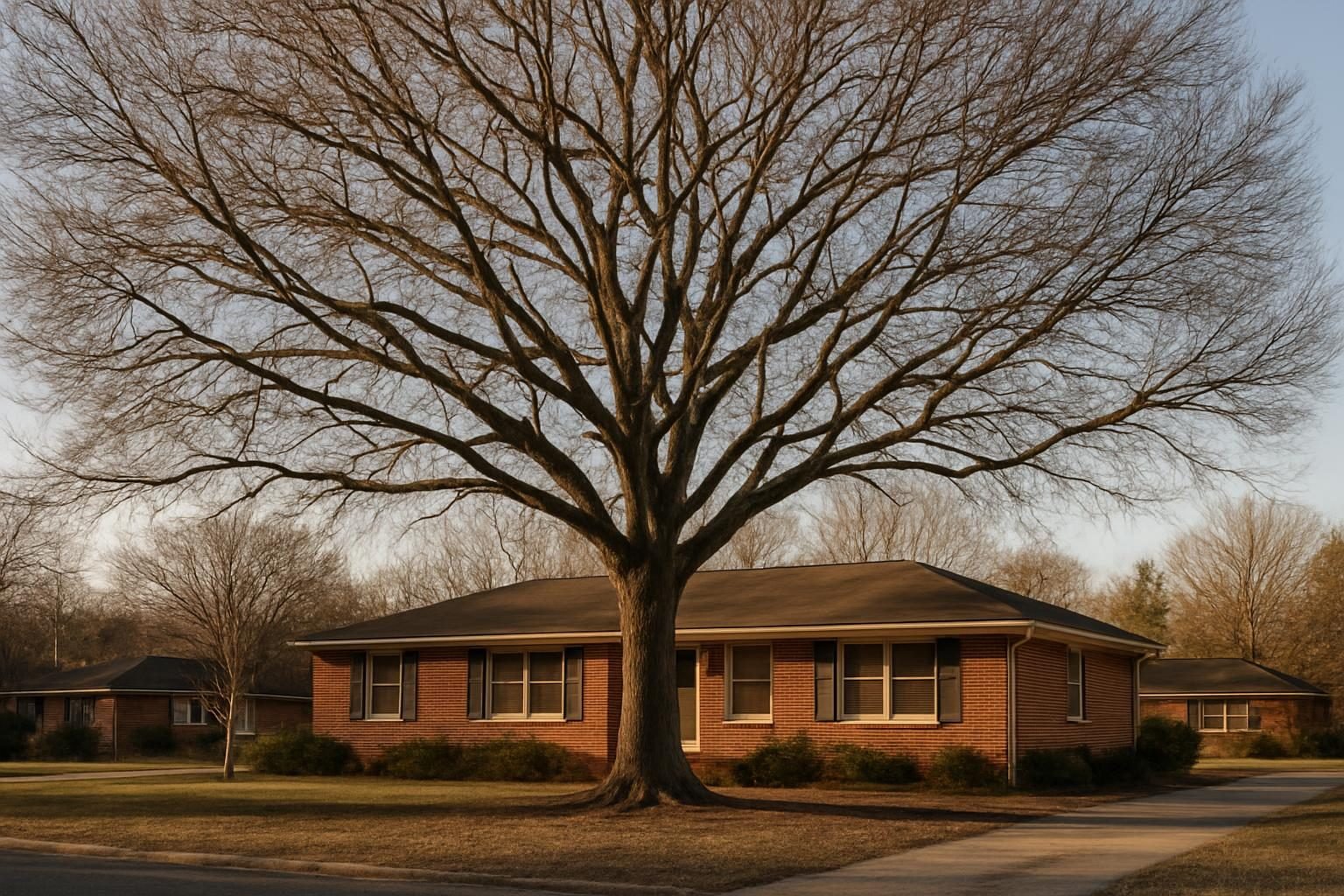
Clearance should be measured to where the limb will be after it grows and after it bends in the wind, not just where it sits on a calm day. A branch that is 3 feet above the shingles in July can be sweeping them during a tropical storm.
Think about the trunk, too. A large tree growing within 10 to 15 feet of the house will keep pushing limbs toward the roof no matter how often you trim, and sometimes removal is the more practical long-term answer. Our guide on when to remove a pine tree near your house covers how to make that call.
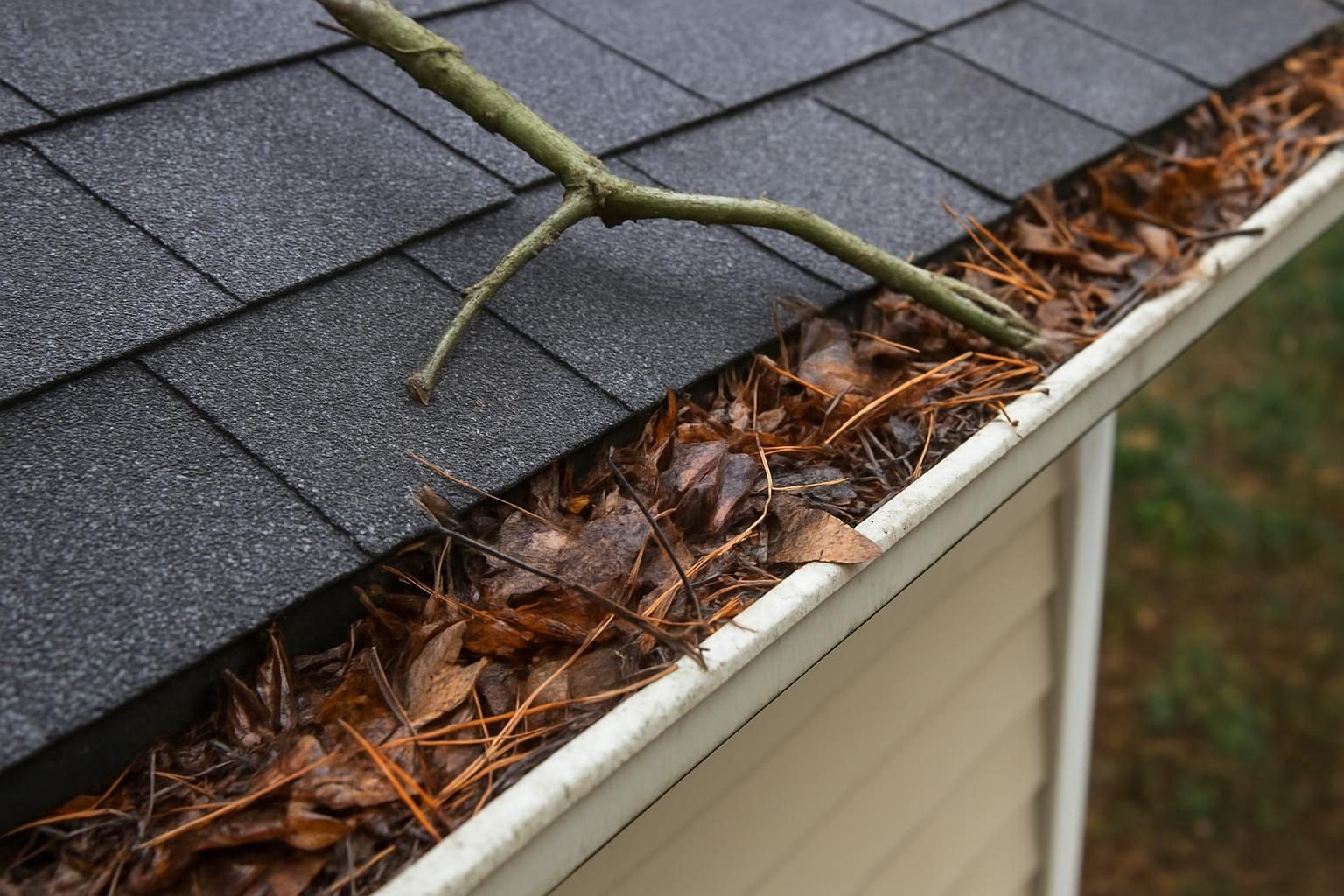
What Overhanging Branches Do to Shingles, Gutters and Your Attic
Branches touching or hovering over the roof cause slow, steady damage that most people notice only after a repair bill.
Shingle wear
Wind moves limbs back and forth, and each pass rubs granules off asphalt shingles. Once the protective granule layer is worn away, the shingles age faster and leak sooner. Branches also hold moisture against the roof, which encourages moss and algae.
Gutter clogs
Leaves, pine needles, sweetgum balls and twigs wash into gutters and downspouts. Clogged gutters overflow, soak the fascia and can send water behind the roofline. Homes under loblolly and longleaf pines in Cumberland County often need gutter cleaning several times a year.
Pests and rot
- Squirrels: A limb within a few feet of the roof is an easy bridge. Squirrels chew through fascia, soffits and vents to nest in attics.
- Rodents and insects: Branches that touch the house give ants, wasps and rats a direct route inside.
- Constant shade and damp: Roofs that never dry out grow moss and deteriorate faster.
Limb failure
Dead or weak limbs over a roof can drop during a thunderstorm or hurricane. If you notice bare, brittle branches, peeling bark or fungus, read our guide to the signs a tree is dying before the next storm season.
A limb that looks harmless on a calm day can scrape your shingles raw in a single windy season.
Proper Cuts vs. Topping: Trimming Near a Roof the Right Way
When a tree is crowding the roof, the temptation is to chop it back hard. That usually makes things worse. Good tree trimming near a roof follows a few principles.
Do this:
- Cut at the branch collar, the slightly swollen ring where a branch meets the trunk or a larger limb. Do not leave a long stub, and do not cut flush into the trunk.
- Remove whole limbs back to a main branch rather than shearing the ends.
- Use the three-cut method on heavier branches: an undercut, a top cut farther out, then the final collar cut. This prevents bark from tearing down the trunk.
- Spread the work out. Taking off no more than about a quarter of the live canopy at once keeps the tree healthy.
Avoid this:
- Topping, which means cutting main branches back to stubs. It starves the tree, invites decay and triggers weak, fast-growing sprouts that attach poorly and break easily.
- Cutting from the top of the roof with no fall protection.
- Pruning during a storm cleanup when you are rushed and the wood is under tension.
Pro tip: Ask any tree company you are considering whether they top trees. A trustworthy crew will tell you they use proper reduction and collar cuts instead. For timing, see our month-by-month guide to the best time to trim trees in North Carolina.
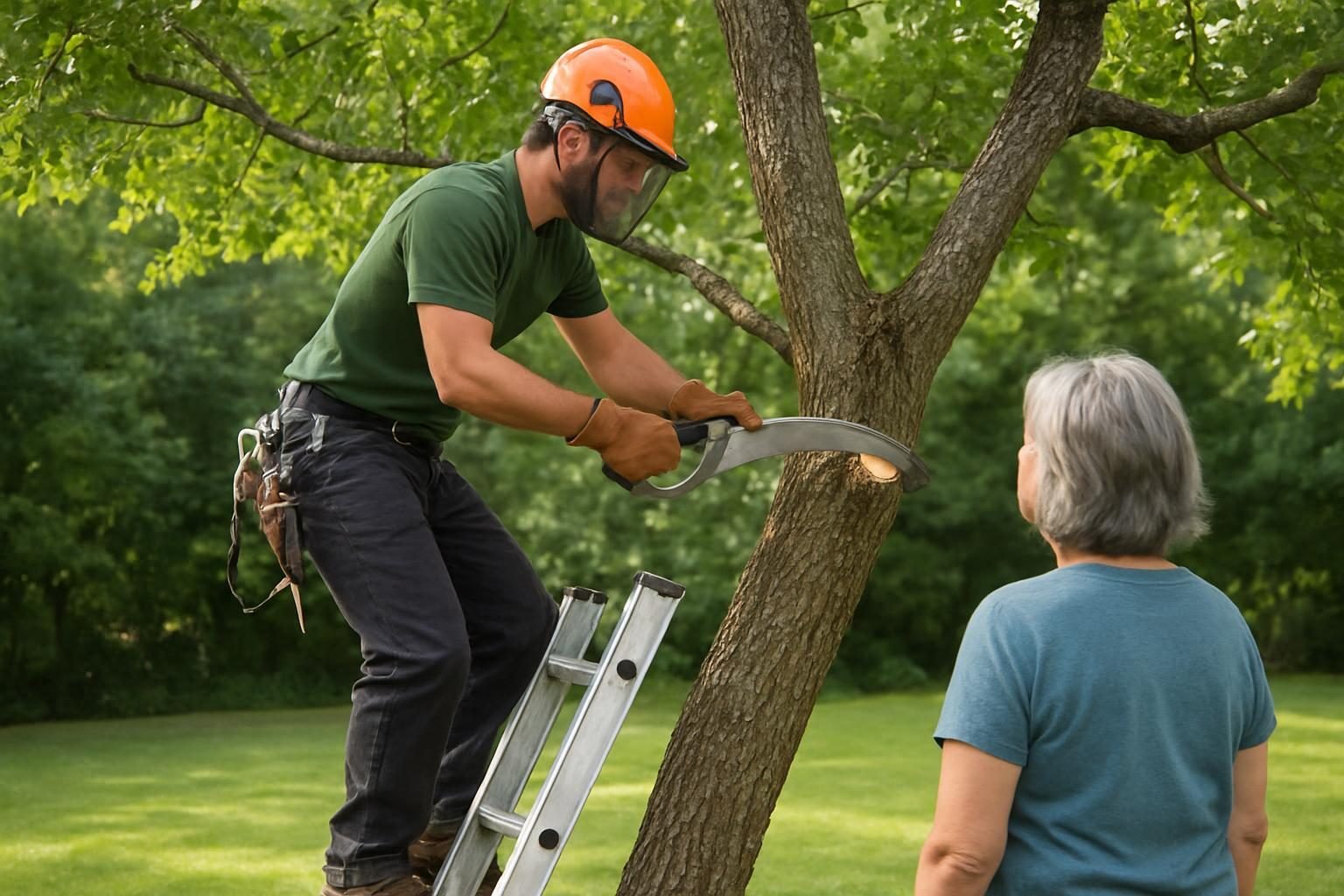
When Branches Are Too Big for DIY
Plenty of homeowners can handle a small twig-sized branch with a hand pruner or a pole saw from the ground. Beyond that, the risk climbs quickly. Hire a professional when any of the following apply.
- The branch is thicker than your wrist or longer than you can safely control.
- You would need a ladder on the roof or on uneven ground. Falls from ladders are a leading cause of tree-trimming injuries.
- The limb hangs directly over the roof, windows or a driveway. A dropped branch can punch through shingles or hit a car.
- You need a chainsaw while off the ground. That is chainsaw work at height, which is dangerous even for experienced people.
- The tree is large, leaning or partly dead. It may need an assessment, not just a trim.
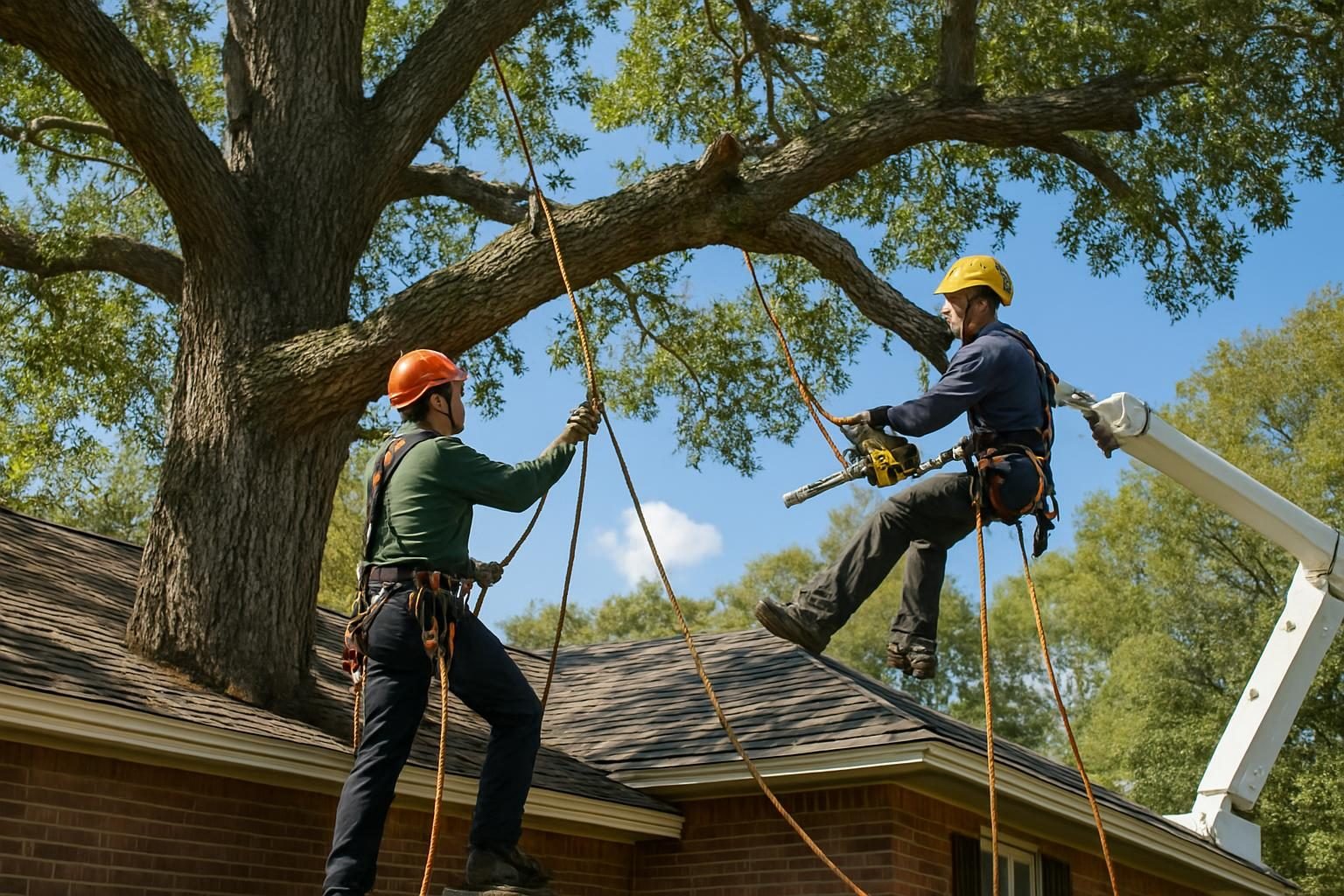
A professional crew uses climbing gear or a bucket truck, rigging ropes to lower heavy limbs without damaging the roof, and chippers for cleanup. For a deeper look at what these services include, see our page on tree trimming and pruning.
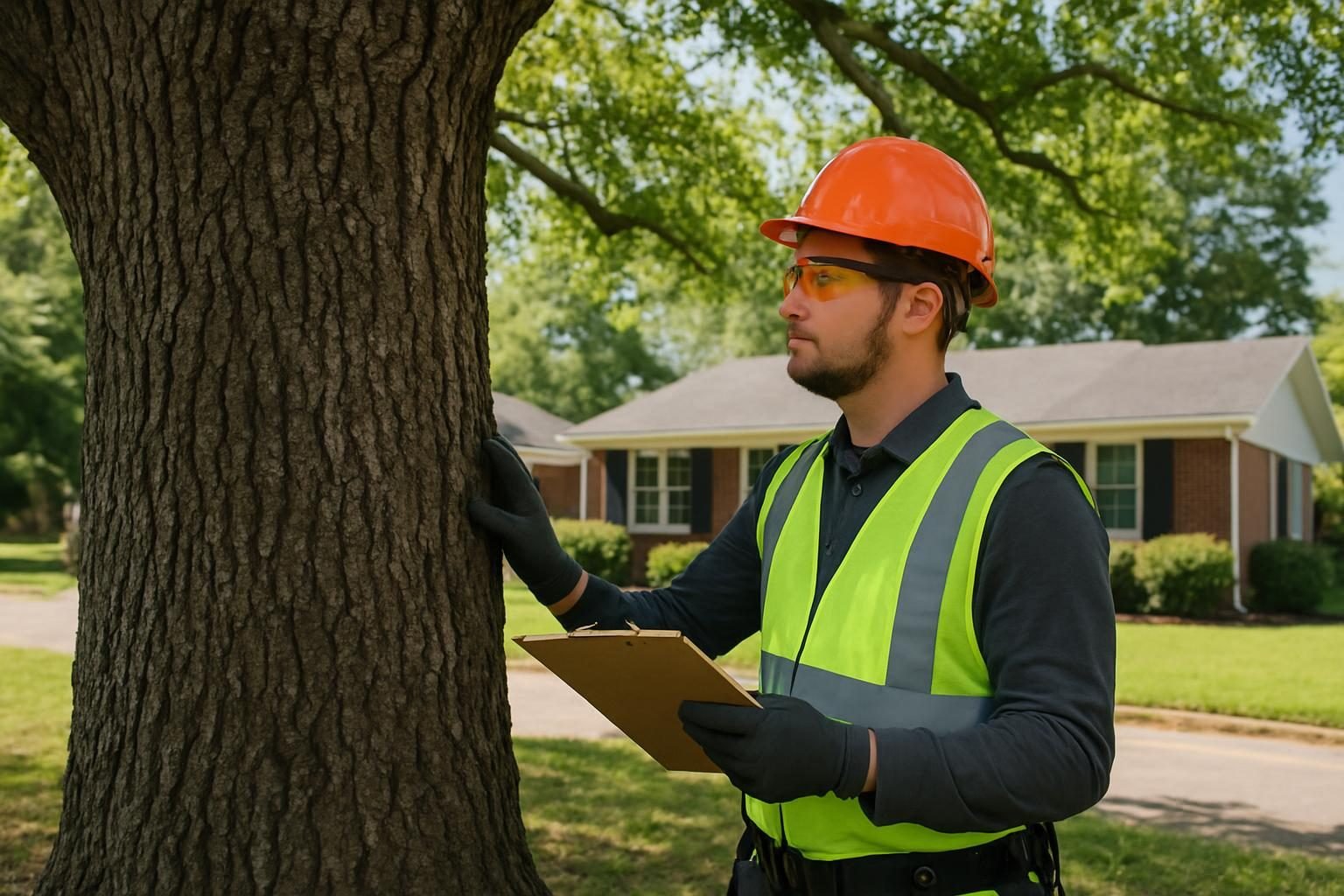
If you are unsure whether a tree is sound, a tree assessment by an arborist can tell you whether trimming will solve the problem or the tree is a hazard.
The cheapest trim is the one that does not end with a ladder fall or a hole in your roof.
Stay Away From Service Drops and Power Lines
This is the one rule with no exceptions. The service drop is the line running from the utility pole to your house, and it often passes through or near tree branches.
- Assume every wire is live. Insulation on a service drop is not a safe barrier, and wet branches can conduct electricity.
- Keep yourself and your tools at least 10 feet away from power lines, and never use a metal ladder or a pole saw near them.
- Call your electric utility if branches are touching or close to the wires. They can trim or handle limbs that pose a risk, and in some cases will disconnect or cover the line.
- Do not hire just anyone for line-clearance work. Pruning close to energized lines requires specially trained, qualified crews.
For general guidance on staying safe around downed or overhead lines, the OSHA overview on working near power lines is a helpful reference. If a storm drops a limb across a wire, stay back and treat it as an emergency; our guide on what to do when a tree falls on your house walks through the first 24 hours.
Planning more reading? We are also preparing a guide on the cost to remove a tree near power lines and another on what tree trimming costs.
What It Costs and How to Hire Help in Fayetteville
Pricing varies by tree size, access and how much debris there is. As a rough estimate, many homeowners in the Fayetteville area see trimming jobs for a single medium tree land somewhere between a few hundred dollars and well over a thousand for tall trees or difficult access. Jobs over a roof, near lines or requiring a bucket truck sit at the higher end. These are estimates, not quotes. See our tree service cost guide for Fayetteville for a fuller breakdown.
When comparing companies, ask for the following:
- Proof of liability insurance and workers’ compensation, so you are not responsible if someone is injured or your roof is damaged.
- A written, itemized estimate that states what will be cut, what will be hauled away and how the cleanup is handled.
- Their cutting approach. Avoid anyone who proposes topping.
- References or recent local work in neighborhoods like Hope Mills, Stedman or around Fort Bragg.
After a storm, be wary of door-to-door crews asking for cash up front. Our guide on how to spot tree service storm chasers explains the red flags. If you want local pros to review your trees, see our overview of tree service in Fayetteville or request a free consultation on this page to get quotes from local companies.
Frequently Asked Questions
Is it okay if a branch just touches my roof?
It is better not to let it. Even light contact can wear shingles, trap moisture and give squirrels a path. If the limb is small, trimming it back to the collar is a simple fix. If it is large, hire a pro.
How often should I trim trees near my roof?
Fast growers like water oaks, sweetgums and pines may need a check every one to two years. Slower trees can go longer. Inspect after storms and each spring for new growth or damaged limbs.
Can I trim my neighbor’s branches that hang over my roof?
In general, North Carolina property owners may trim branches that cross onto their land, but only up to the property line, and without harming or killing the tree. Rules and liability can get complicated, so read our guide on property line and neighbor tree rules in North Carolina and consider talking to a qualified attorney for disputes.
Does homeowners insurance cover damage from overhanging limbs?
It depends on your policy and the cause. Sudden damage from a fallen tree is often covered, while gradual wear from neglected trimming usually is not. See our article on homeowners insurance and tree removal in North Carolina, and check with your insurer for your specific coverage.
Get a free tree trimming quote for branches near your roof
A local tree service will contact you with a free, no-obligation quote for trimming trees near your roof.