Quick answer: Hire a certified arborist when the question is about a tree’s health, safety or value, such as a diagnosis, a risk assessment or care for a prized tree. Hire a reputable tree service crew when the job is straightforward work, like removing a dead pine or trimming limbs off a roof. Many Fayetteville companies employ both, and in North Carolina the credential is voluntary, so you have to check it yourself.
If you are weighing the certified arborist vs tree service decision for a yard in Fayetteville, Hope Mills or Spring Lake, the choice mostly comes down to what you need answered. This guide explains what the credential means, when it matters and how to verify anyone you hire. If you already know what you need, you can request free quotes from local tree companies using the form on this page.
Key takeaways
- Arborists diagnose; crews execute. Certification signals knowledge of tree biology and risk, while a crew supplies equipment and labor.
- Certification is voluntary in NC. Anyone can call themselves an arborist, so ask for an ISA certification number.
- Insurance matters more than a title. Verify liability and workers’ comp for any company that climbs or cuts on your property.
- Simple jobs rarely need a consultant. Dead tree removal and routine trimming are usually fine with an insured crew.
What a Certified Arborist Actually Is
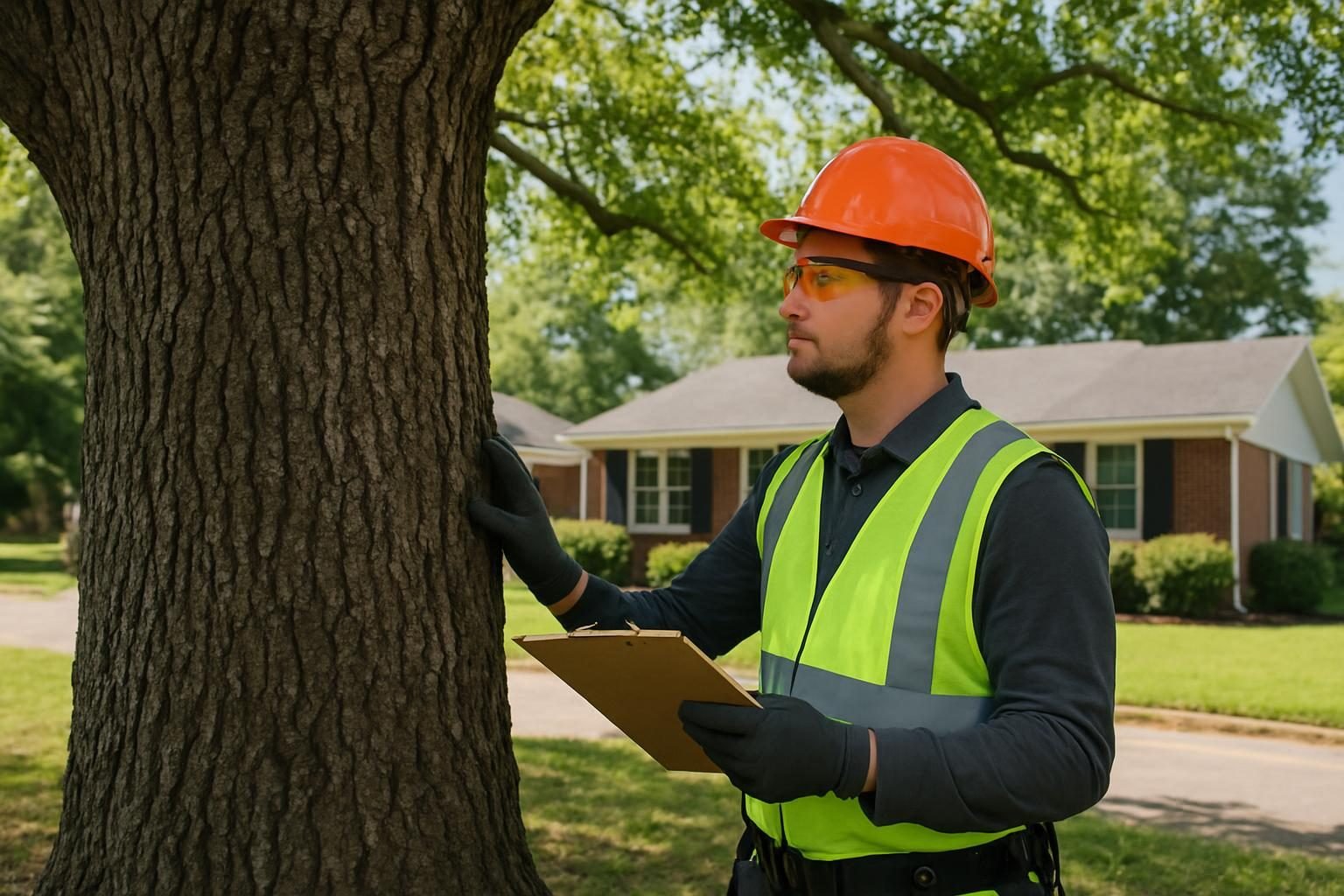
A certified arborist has earned a credential from the International Society of Arboriculture (ISA). To qualify, a person generally needs several years of practical tree care experience (or a combination of education and experience), then must pass an exam covering tree biology, soil, pruning, diagnosis, safety and risk. The credential must be renewed through continuing education.
Higher credentials exist too. Here is how they differ:
- ISA Certified Arborist: the standard credential for tree care professionals.
- ISA Board Certified Master Arborist: a higher tier requiring more experience and a tougher exam.
- Tree Risk Assessment Qualification (TRAQ): a separate ISA credential for evaluating how likely a tree is to fail.
- Consulting arborist: an arborist who sells advice and reports rather than cutting.
The ISA lists its credentials and offers a public search tool at isa-arbor.com, so you can confirm a name and certification number yourself.
Is ISA Certification Required in North Carolina?
No. Certification is voluntary here. North Carolina does not require a state license to trim or remove trees, so a company can operate with no credentialed staff at all. That is why checking matters.
The absence of a license requirement also means the usual protections come from elsewhere:
- Business insurance: general liability and workers’ compensation protect you if something goes wrong.
- Local rules: some tree removals can involve city or county requirements. See our guide on whether you need a permit to remove a tree in Fayetteville, NC.
- Voluntary credentials: ISA certification is the clearest signal of trained judgment, not a legal requirement.

In North Carolina, anyone can say they are an arborist, so the credential only helps if you verify it.
When You Need a Certified Arborist
Bring in an arborist when the problem is a judgment call, not just a job. A crew is paid to cut; an arborist is paid to decide whether cutting is the right answer.
Situations where an arborist is worth it
- Health questions: thinning crowns, fungus at the base, dead branches in an otherwise green tree, or sudden leaf drop. Our guide on signs a tree is dying covers what to look for first.
- Risk assessment: a tree that leans, has a cracked trunk or hangs over a bedroom. See how to tell if a leaning tree is dangerous.
- Valuable or mature trees: a large live oak or heritage tree where removal would change the property’s character and value.
- Disputes and documentation: insurance claims, neighbor disagreements or construction near roots, where a written report helps.
- Second opinions: when one company says “remove it” and you are not sure.
For this kind of work, look at our page on arborist tree assessment. A good assessment tells you what is wrong, how urgent it is and what your options are, including options that keep the tree.
Pro tip: If you want a truly independent opinion, ask whether the arborist charges for a report only. A consultant who does not sell removal has no financial reason to recommend it.

When a Tree Service Crew Is Enough
Plenty of jobs do not need a credentialed consultant. If you already know what needs to happen, a competent, insured crew is the practical choice and usually the faster, cheaper one.
- Dead or obviously failed trees: a dead pine or a trunk already split by a storm. See tree removal in Fayetteville.
- Routine trimming: clearing limbs off a roof or raising a canopy over a driveway. Our page on tree trimming and pruning explains what is typical, and how far trees should be trimmed back from your roof covers clearance.
- Stump grinding: pure equipment work. See stump grinding.
- Storm cleanup: fallen limbs and downed trees after a hurricane or thunderstorm.
- Land clearing: brush and tree removal on a lot or acreage.
Many local companies have an ISA arborist on staff who handles estimates, then a crew that does the work. That combination often gives you both the judgment and the equipment in one visit.
A certification can’t replace insurance: an uninsured climber with a chainsaw is your liability, whatever credentials he holds.
How to Verify Credentials and Insurance
Whether you hire an arborist or a crew, do these checks before any work starts:
- Ask for the ISA certification number and look the person up on the ISA website. Confirm the name matches and the credential is current.
- Request a certificate of insurance showing general liability and workers’ compensation. Ask the insurer or agent to send it directly rather than relying on a photocopy.
- Check that the person certified is the person on site. A company may employ an arborist who never visits your property.
- Get a written estimate listing the scope: which trees, what work, cleanup, stump handling and debris removal.
- Look at local reputation through neighbors, reviews you can verify and how long the business has been in the area.
Our 10-point checklist for hiring a tree service in Fayetteville, NC walks through each of these in more detail. After a hurricane, also read how to spot tree service storm chasers, since out-of-area crews often arrive with no verifiable credentials or insurance.
For a deeper look at what to ask, see our upcoming guide on questions to ask a tree service before hiring and the explainer on why tree service insurance and workers’ comp matter.
What It Costs: Arborist vs Crew
Prices vary widely by tree size, access and site conditions, so treat these as rough estimates and rely on written quotes.
- Consulting arborist assessment or report: often a flat fee or hourly rate, commonly in the low-to-mid hundreds of dollars for a single-property visit, with more for detailed risk reports.
- Crew-based removal and trimming: priced per job based on size, hazards and access, from a few hundred dollars for small work to well over a thousand for large trees.
- Free estimates: many tree companies quote removal and trimming at no charge, and some will give a basic opinion on whether a tree needs to come down.
For local ranges, see tree service cost in Fayetteville. Paying an arborist for a diagnosis can save money if it prevents an unnecessary removal, or flags a real hazard before it costs you a roof.
Ready to compare? Request free quotes from local tree service companies serving Fayetteville, Stedman, Eastover and the rest of Cumberland County.
Frequently Asked Questions
Is a certified arborist better than a regular tree service?
Not always. An arborist is better for diagnosis, risk and care decisions. A good insured crew is often the right choice for straightforward cutting. The best outcome is often a company that offers both.
Does a tree company have to be licensed in North Carolina?
North Carolina does not require a state license for tree trimming or removal, and ISA certification is voluntary. Because of that, verify insurance and credentials yourself, and check local rules for your city or town.
How do I check if someone is really a certified arborist?
Ask for their ISA certification number and search for it on the ISA website. Confirm the name, the credential type and that it is current.
Do I need an arborist for a storm-damaged tree?
Not usually for emergency cleanup, where an insured crew can clear a downed tree. An arborist can help if you want to know whether a damaged tree can be saved or is still safe to leave standing. See our page on emergency storm tree removal for urgent situations.
Get free quotes from local tree pros in Fayetteville
A local tree service company will contact you with a free, no-obligation quote.