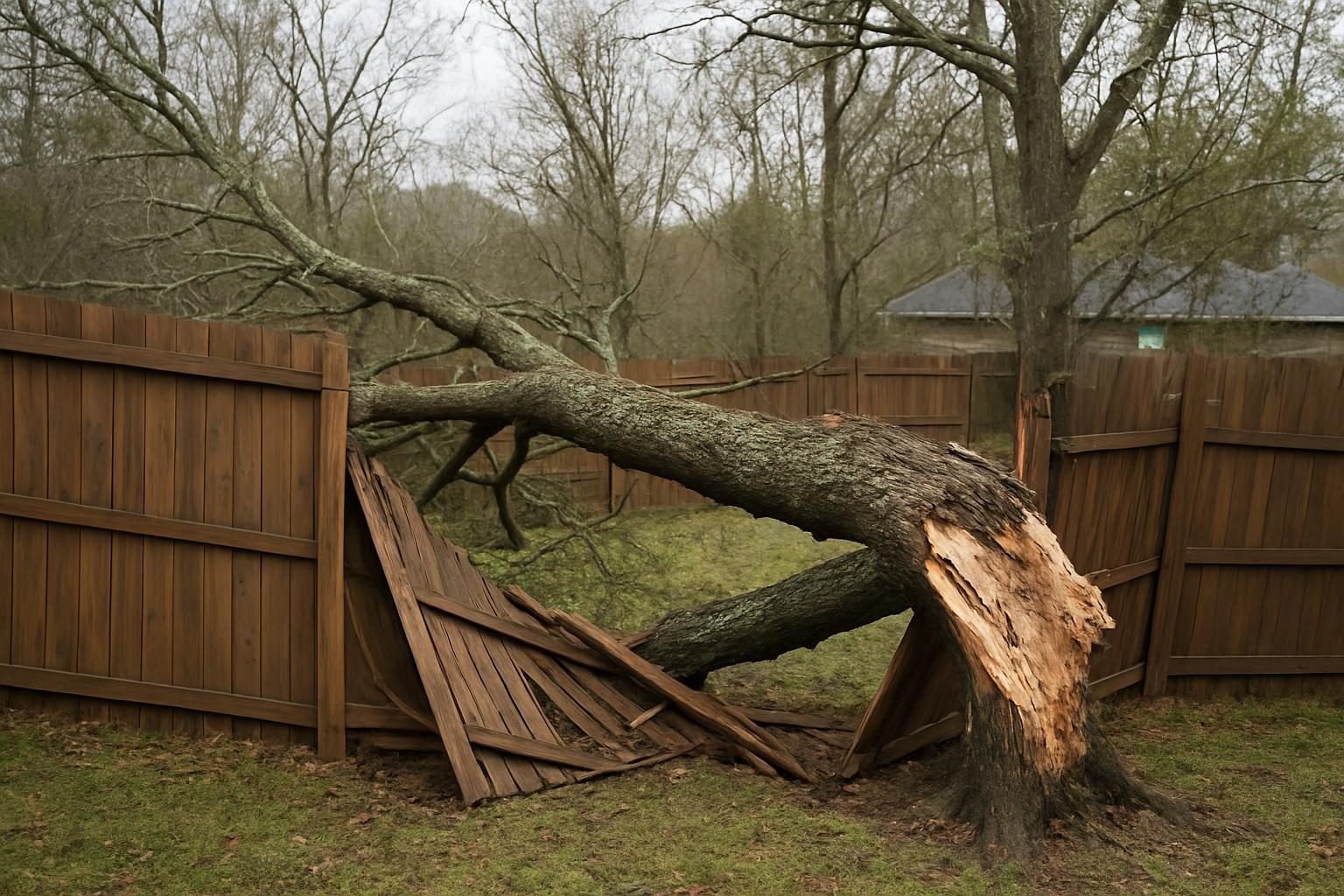
Quick answer: If a tree has fallen on your fence, stay clear of it, check for power lines, photograph everything, and call a tree service before anyone starts cutting. The tree should come off first, then the fence gets assessed and repaired. Whether insurance helps depends on your policy and what caused the damage, so read your coverage and talk to your agent early.
Key takeaways
- Safety first: a fallen tree on a fence can hide tension, broken limbs and live wires.
- Document before cleanup: photos and notes taken before anything moves make any claim or neighbor conversation easier.
- Order matters: remove the tree, inspect the fence, then repair; reversing it risks more damage.
- Insurance varies: fence coverage, deductibles and tree debris limits differ from policy to policy.
- Neighbor trees add complexity: who pays often depends on the tree’s condition and cause of the fall.
Whether it was a thunderstorm roll through Fayetteville, a gusty day in Hope Mills or a saturated-soil failure out in Spring Lake, a tree down on a fence is stressful. The good news is that most of these jobs are manageable when you handle them in the right sequence. This guide walks through safety, documentation, insurance norms, removal order and repair.
Need the tree taken off your fence safely? Request free quotes from local tree service companies using the form on this page.
First Steps When a Tree Falls on Your Fence
Your first job is to keep people and pets away. A fence under a fallen tree can be loaded like a spring, and cutting the wrong limb can send fence sections or branches snapping back.
- Stay back and keep others back. Keep kids and pets out of the yard until you know what you’re dealing with.
- Look up and around for power lines. If any wire is touching the tree or fence, treat everything as energized and see our guide on what to do when a tree is on a power line.
- Check gates and utilities. Note whether the fall blocks a gate, a gas meter, an AC unit or a water line.
- Don’t cut it yourself. A chainsaw on a tree under tension is one of the most common ways homeowners get hurt.
- Call 911 only for emergencies such as downed wires, injuries or a tree blocking a road.
Pro tip: Shut off any electric fence charger, gate opener or landscape lighting connected to the damaged section before anyone gets close.
Document the Fallen Tree on Your Fence Before Cleanup
Once it’s safe, take photos before anything is moved. This record helps with insurance, with a neighbor if the tree came from next door, and with comparing quotes later.
- Wide shots showing the whole tree, the fence and the surrounding yard.
- Close-ups of broken posts, bent panels, snapped rails and damaged gates.
- The tree’s base, including the stump, roots and any rot, hollow areas or fungus.
- Property line context, such as which side the trunk stood on.
- Date and time notes about the storm or weather that preceded the fall.
Keep any receipts for emergency costs like tarps or temporary barriers. If you’re not sure how this fits into a broader claim, our guide to what to do first when a tree falls on your property covers the general claim process.
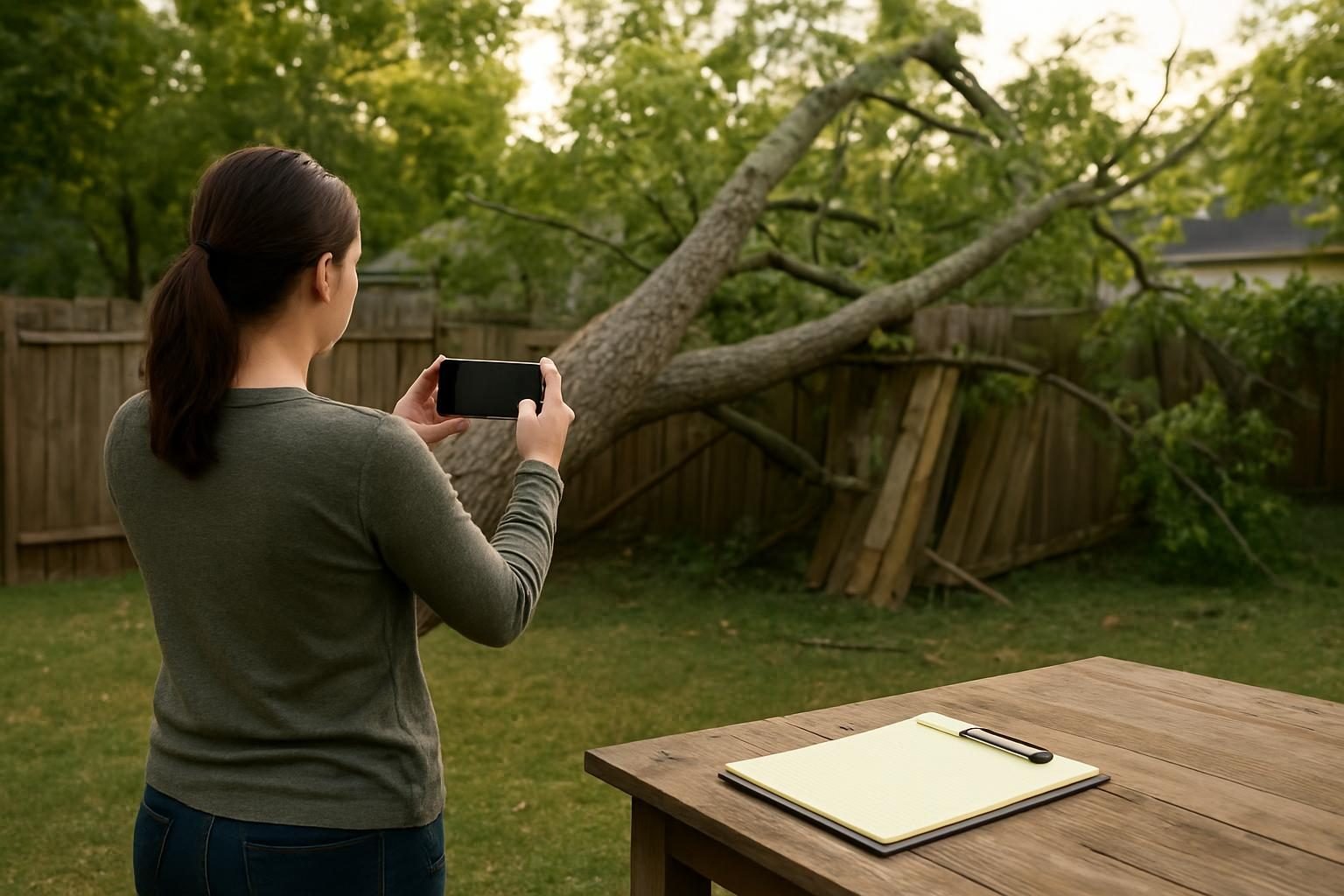
Photos taken before the first cut are often the most valuable record you’ll have.
How Insurance Usually Treats a Tree on a Fence
This section is general education, not advice on your specific policy. Coverage varies by insurer, so confirm details with your agent or carrier.
Common norms homeowners run into
- Fences are often covered as “other structures.” That coverage is usually a percentage of your dwelling limit, and it typically applies to named perils like wind.
- Cause matters. Storm and wind damage are commonly covered, while a tree that fell from long-term decay or neglect may be treated differently.
- Deductibles can swallow small claims. A basic panel or two of fence repair may cost less than your deductible.
- Debris removal limits. Many policies cap how much they pay to remove a tree, and some only pay when the tree damaged a covered structure.
- Hurricane and wind deductibles in coastal and nearby areas of North Carolina can be separate and higher than standard ones.
For a deeper look, see whether homeowners insurance covers tree removal in North Carolina and our overview of common rules for storm damage and fallen trees.
Call your insurer before major work begins. Ask what they need, whether they want an adjuster to see the damage first, and whether they require written estimates.
Tree Removal Comes Before Fence Repair
It’s tempting to start fixing the fence right away, but the removal order matters. Repairing around a tree that’s still in place wastes money and can put workers at risk.
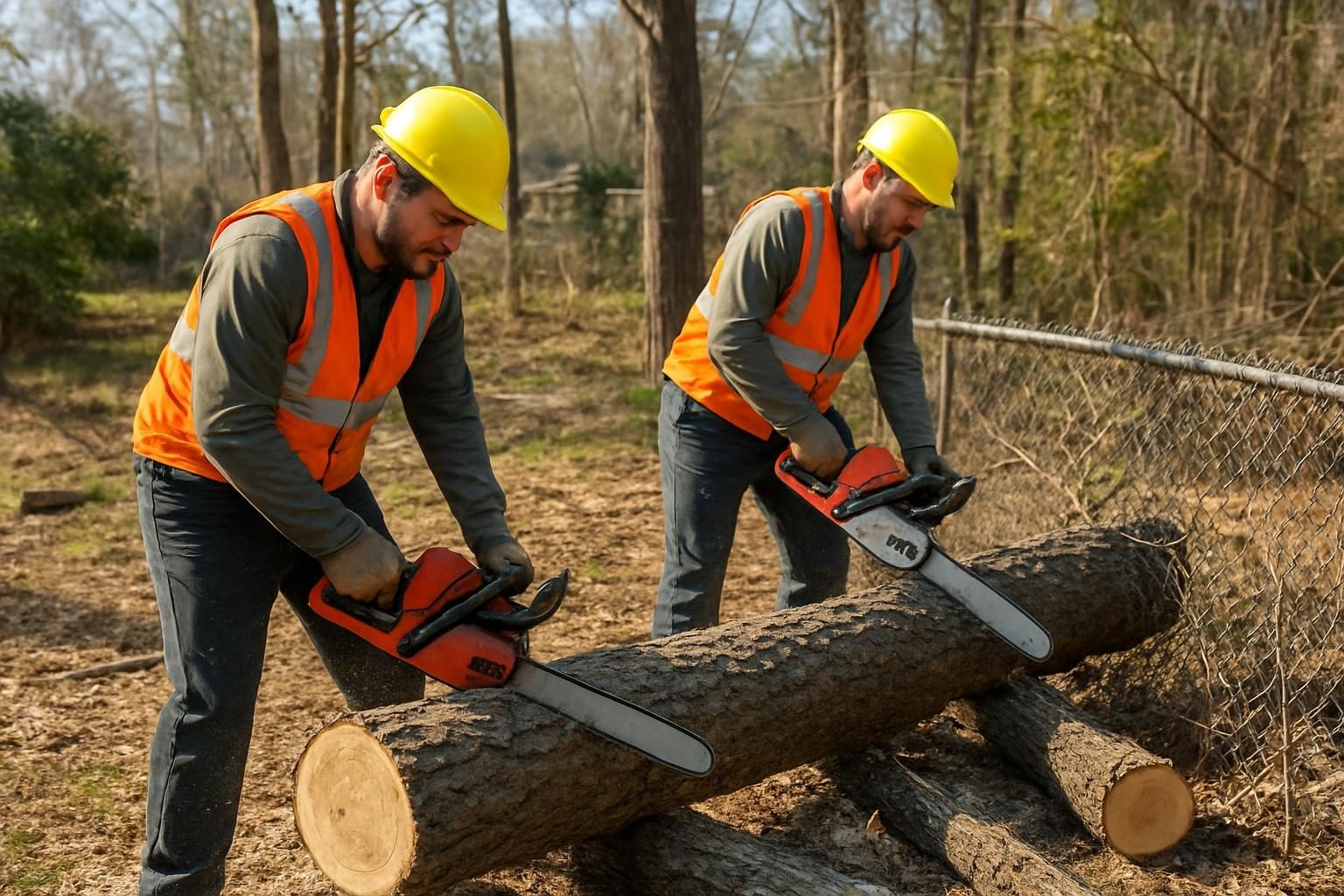
- Remove the tree and debris. A crew cuts the trunk and limbs in controlled sections, working around the fence to limit further damage.
- Assess the fence. Once the load is off, you can see what’s actually broken versus merely bent.
- Deal with the stump. If the tree uprooted, the root plate and hole may need attention; if it snapped, the remaining stump may need stump grinding.
- Repair or replace the fence. Posts, rails, panels and gates are fixed or rebuilt.
Good tree crews will often take care to protect remaining fence sections, though a tree resting on a fence may mean some damage during removal is unavoidable. Ask about this up front. For a sense of what a visit looks like, read how tree removal works on job day, and for pricing context see our tree service cost guide.
Costs and Quotes: What to Expect
Prices vary by tree size, access and how much the fence complicates the cut. These are rough estimates only, and your actual quotes may differ.
- Small to medium tree on a fence: often a few hundred dollars to roughly $1,000 or more.
- Large tree or tight access: can run well over $1,000, and crane work costs more (see crane tree removal costs).
- Emergency or after-hours storm work: typically priced higher than scheduled jobs.
- Fence repair: varies widely by material, from a few posts and panels to full sections.
Get at least two or three written quotes, and be wary of anyone who demands full payment up front or shows up unsolicited after a storm. Our guide to avoiding red flags with cheap tree removal is worth a read before you hire.
The cheapest quote is rarely the cheapest result when a fence and a falling trunk are involved.
Fence Repair After the Tree Is Gone
Once the tree is off, you can see what really needs fixing. Check these in order.
- Posts: leaning or cracked posts usually mean replacement, since a weakened post won’t hold new panels well.
- Rails and panels: individual sections can often be swapped without rebuilding the whole run.
- Gates: sagging, racked or misaligned gates are common after impact and may need rehanging or replacement.
- Materials: wood, chain link, vinyl and aluminum each repair differently; matching older wood or vinyl can be tricky.
Many homeowners hire a fence contractor separately from the tree crew. Ask whether your tree service will stack usable lumber and leave posts accessible to make repair easier. Also confirm how debris will leave your property, and see our notes on yard waste and tree debris disposal in Cumberland County.
When the Tree or Fence Belongs to a Neighbor
A shared fence or a tree from next door adds questions. General principles apply, though specifics depend on facts and law, so consult an attorney or your insurer for your situation.
- Whose tree was it? The tree’s location, not just where it landed, usually matters most.
- Was it healthy? Trees that fall in a storm are often treated differently from trees that were visibly dead or hazardous and ignored.
- Whose fence is it? Boundary fences may be shared or owned by one side.
- Talk early and calmly. Share your photos and ask about their insurance; many cases resolve through each owner’s own policy.
Our guide on who pays when a neighbor’s tree falls goes deeper, and our planned article on who pays when a tree falls on a fence or neighbor’s property will expand on this.
Prevent the Next One
If one tree came down, others nearby may share the problem. Soggy ground after heavy rain, shallow roots and storm exposure around Stedman, Raeford and the Fort Bragg area all raise risk.
- Look for leaning trunks, dead limbs, mushrooms at the base and cracked or heaved soil.
- Schedule an arborist tree assessment for trees near fences, homes and driveways.
- Learn the warning signs in our guide to leaning trees and hazardous tree signs.
- Consider tree trimming and pruning to reduce wind load on healthy trees.
Ready to get the tree off your fence? Request your free, no-obligation quotes using the form on this page, and a local tree service in the Fayetteville area can reach out.
FAQ: Fallen Tree on a Fence
Should I move the tree off my fence myself?
Generally no. Trees on fences can be under tension, and cutting them can cause sudden movement or injury. A trained crew has the equipment and experience to do it more safely.
Will insurance pay to remove a tree that fell on my fence?
It depends on your policy, the cause of the fall and your deductible. Many policies cover some fence damage from wind or storms but limit debris removal, so check with your agent before work begins.
How soon should I call a tree service?
As soon as the area is safe and you’ve taken photos. If the tree is blocking a gate, a road or utilities, treat it as more urgent, and see our emergency storm tree removal page for storm situations.
Do I need a permit to remove a fallen tree?
Removing a tree that has already fallen is usually straightforward, but rules for living trees and special areas vary. Review our guide on permits for tree removal in Fayetteville and Cumberland County and check with local officials if you’re unsure.
Get free quotes to remove a tree from your fence
A local Fayetteville-area tree service will contact you with a free, no-obligation quote.