Quick answer: You can do light cleanup on a crepe myrtle in the fall, such as snipping spent seed heads, removing dead twigs and pulling suckers. Heavy cutting should wait until late winter, roughly February into early March in Cumberland County, before the buds swell. Cutting hard in November can trigger tender new growth that a hard freeze may damage.
Key takeaways
- Light cleanup is fine in fall: seed heads, dead twigs, crossing wisps and suckers at the base.
- Save structural cuts for late winter: that is the best window for shaping, thinning and removing larger branches.
- Never top the tree: chopping every branch to stubs hurts the form and the blooms, in any season.
- Dead or hazardous limbs are the exception: a cracked or hanging branch should come out whenever you spot it.
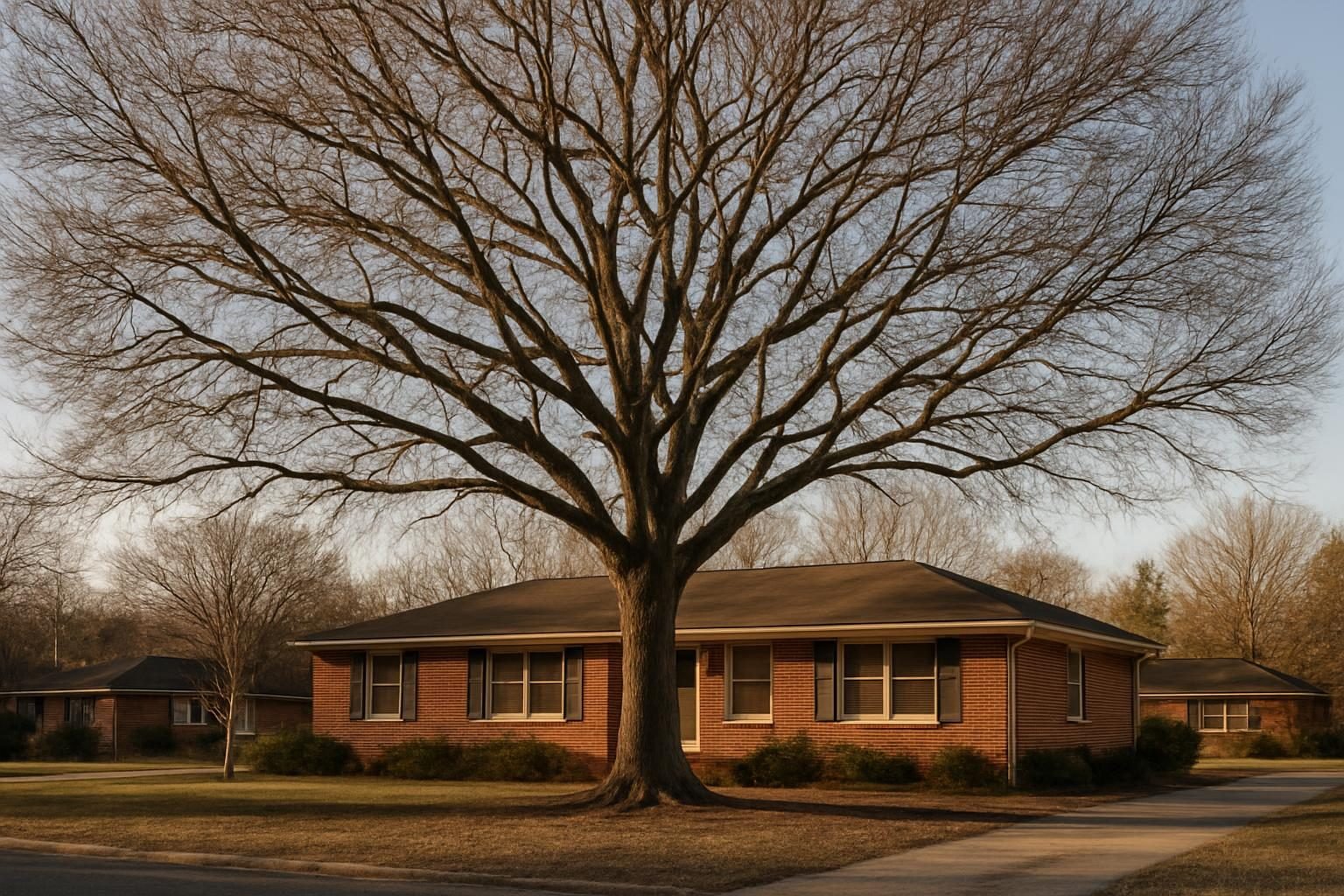
If you live in Fayetteville, Hope Mills or Spring Lake, you have probably watched your crepe myrtle drop its leaves in a blaze of orange and red and wondered whether now is the time to tidy up. The honest answer is “a little, yes; a lot, no.” This guide covers what is safe to cut in November and what is better left alone until winter.
Not sure what your tree needs? You can request a free consultation from a local tree service using the form on this page.
Is fall pruning of crepe myrtle a good idea?
Fall pruning of crepe myrtle is fine only in its lightest form. In November, the tree is heading into dormancy, but our weather is unpredictable. A warm spell followed by a cold snap is common in the Sandhills, and fresh cuts can push out soft new shoots right before a freeze.
Here is how the season breaks down for most crepe myrtles in our area:
- Early to mid fall (September to October): the tree is still finishing growth. Avoid anything beyond deadheading and cleanup.
- November: leaves are dropping and the branch structure becomes visible. This is a good time to look and plan, and to do light cleanup.
- December to January: deep dormancy. Pruning is possible, but many homeowners and crews wait for the final weeks of winter.
- Late winter (February to early March): the preferred window for real shaping, just before spring growth begins.
For a deeper look at timing across the year, see our guide on when to prune crepe myrtles in North Carolina (and when not to).
What light cleanup is safe in the fall
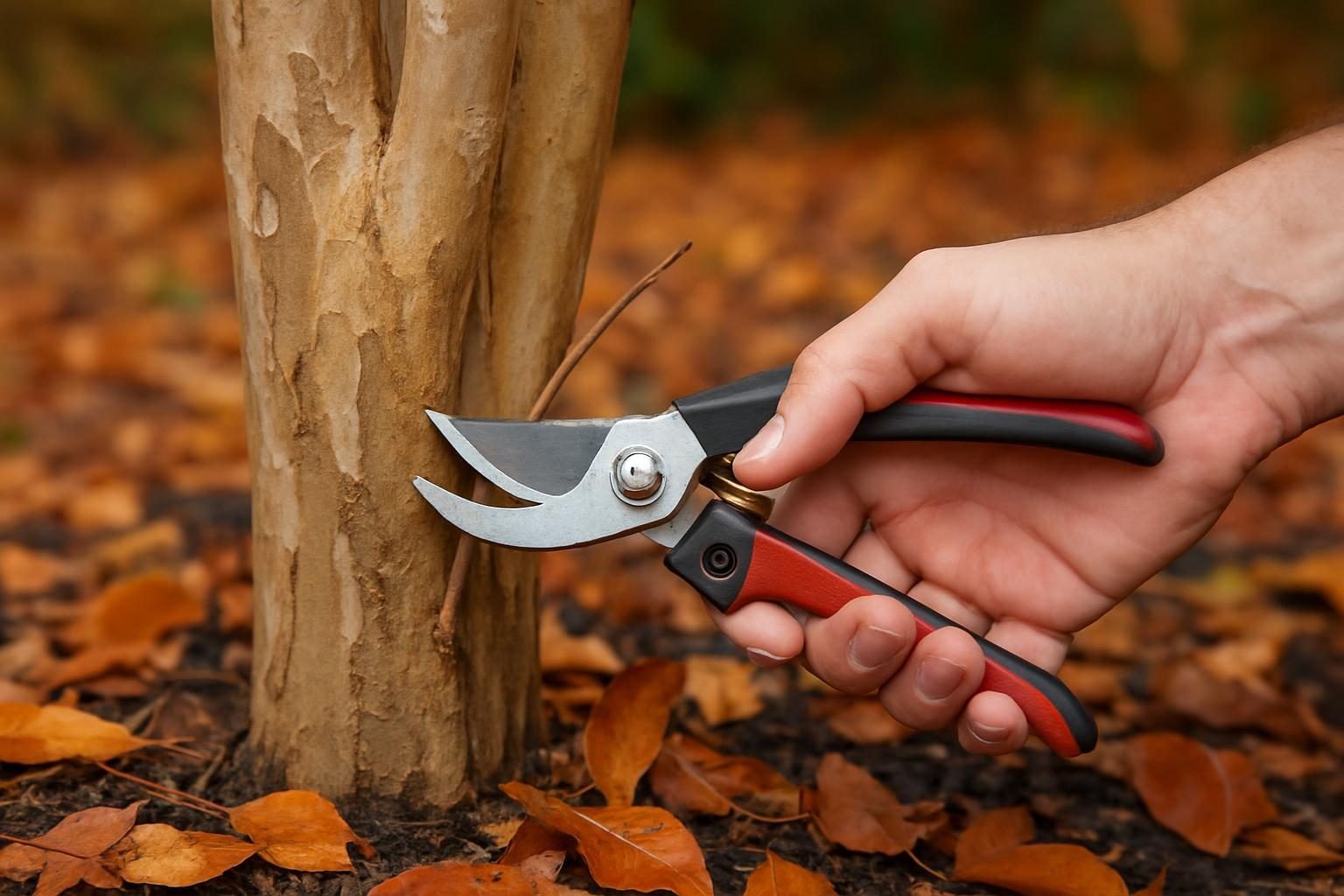
Think of fall work as housekeeping, not surgery. These cuts are small, cause little stress and are safe to do now:
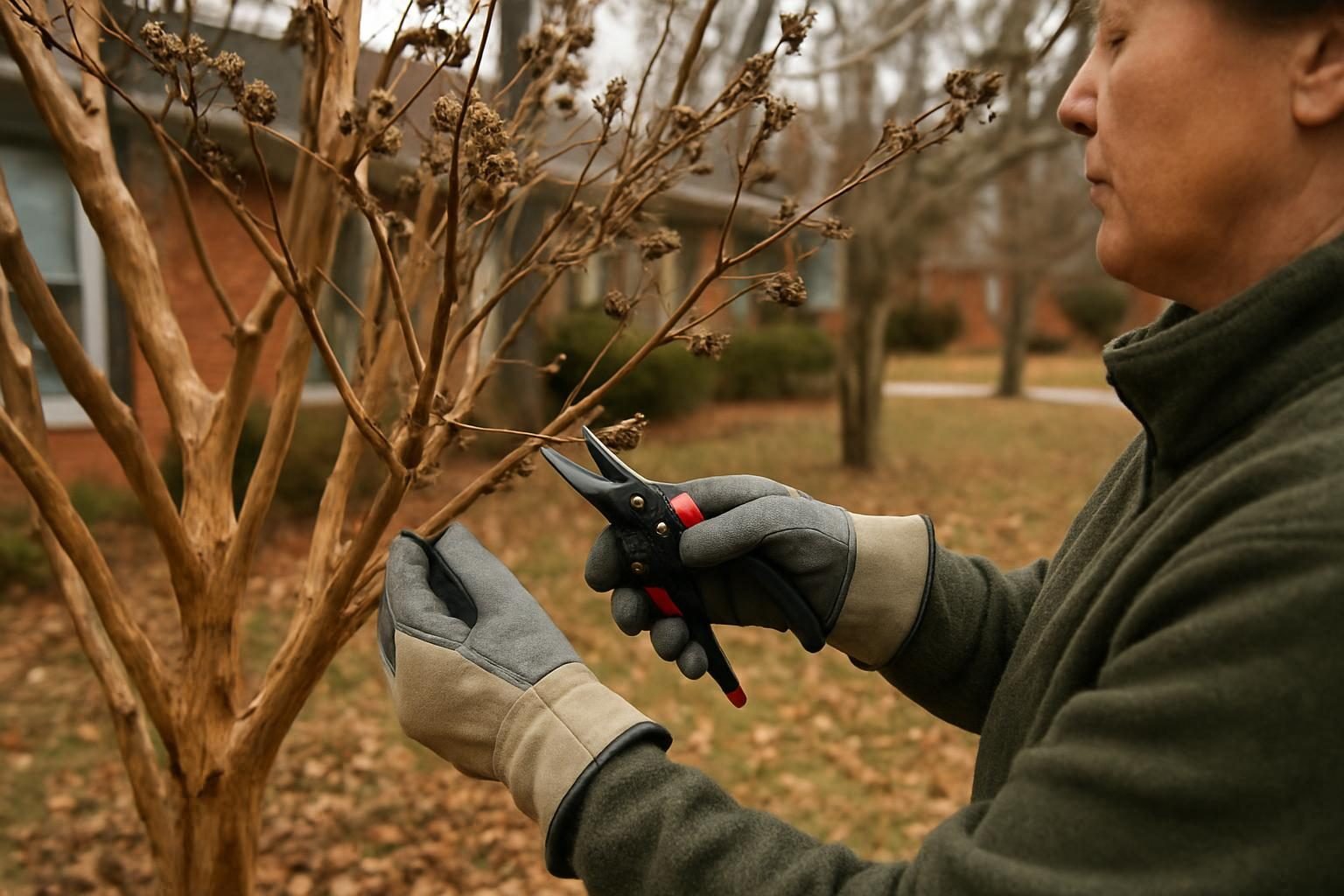
- Snip spent seed heads. The brown clusters left after flowering can come off with hand pruners. Removing them is mostly cosmetic, and it is optional.
- Remove dead twigs and brittle wood. Dead wood is easy to spot once the leaves are gone. Cut back to a healthy branch or the trunk.
- Pull or cut basal suckers. The thin shoots rising from the base or roots steal energy from the main trunks. Cut them as close to the source as you can.
- Clip tiny crossing or rubbing twigs. Wispy growth inside the canopy that rubs against a bigger branch can go now.
- Clear fallen leaves and debris. Raking up leaf litter around the base helps reduce overwintering problems like leaf spot.
Pro tip: Use clean, sharp bypass pruners and wipe the blades with rubbing alcohol between trees. Clean cuts heal faster than ragged ones.
If you want a walkthrough of the actual cuts, our step-by-step crepe myrtle pruning guide shows where to cut and where to stop.
In November, clean up the small stuff and save the big cuts for the end of winter.
Why heavy cutting is better saved for late winter
There are practical reasons to wait for February or early March before doing any serious crepe myrtle pruning:
- Less freeze risk. Cuts made late in winter are followed quickly by spring growth, so there is little time for a cold snap to hurt new shoots.
- Better visibility. With the leaves gone, you can see the full branch structure and decide which stems to keep.
- Faster healing. Wounds seal as the tree wakes up, not weeks before it does.
- Time for a second look. Waiting gives you winter to notice any limbs damaged by ice, wind or a stray storm.
Late winter is also when professional crews are less busy than in storm season, so scheduling can be easier. Heavy cuts still do not mean topping, which is covered next.
Skip the “crape murder” in every season
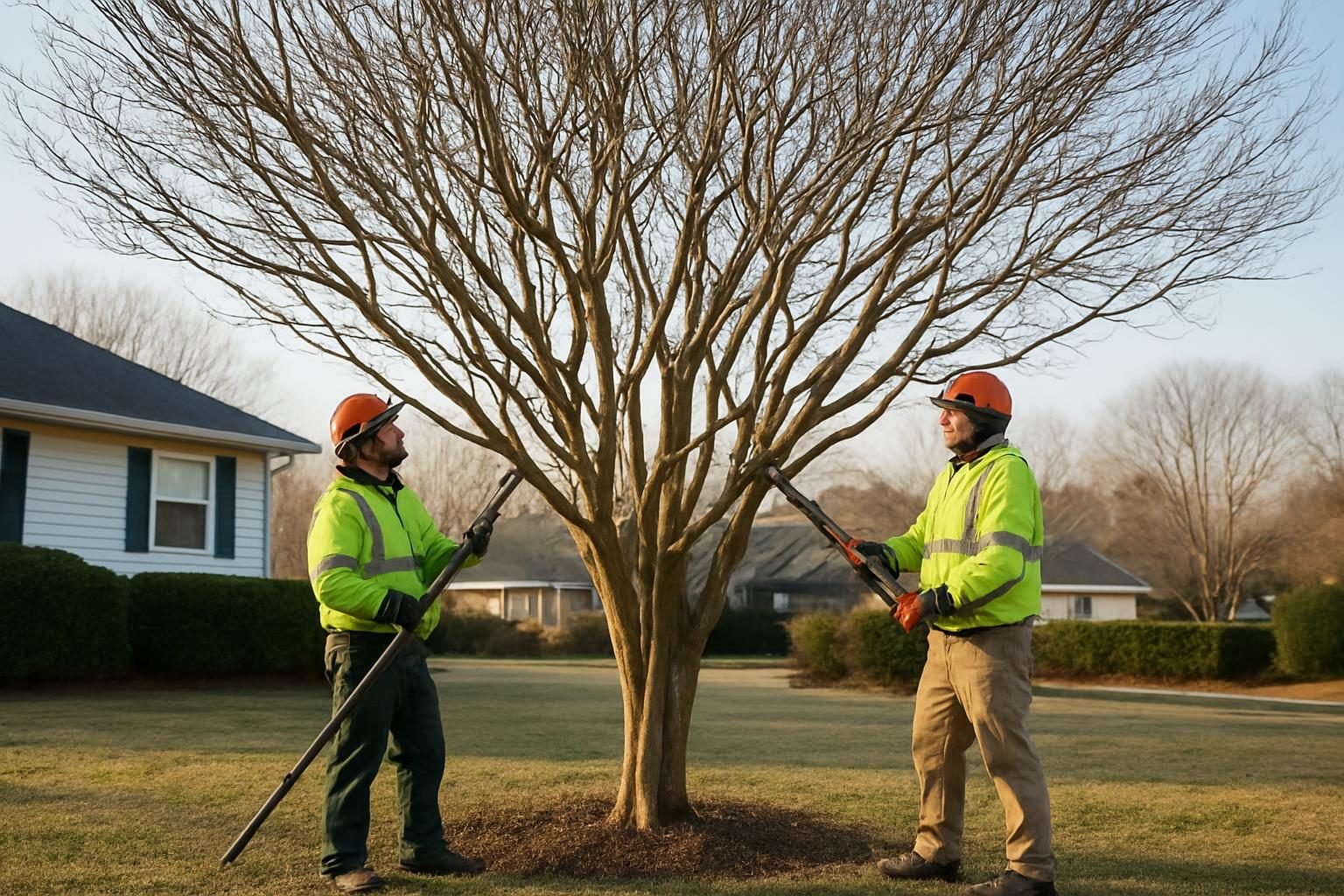
Topping, the practice of cutting every branch back to thick stubs, is common in Fayetteville yards. It is often called “crape murder,” and it is bad for the tree in any season, not just fall.
Here is what topping tends to cause:
- Weak, crowded regrowth. Dozens of thin shoots sprout from each stub and are prone to breaking under the weight of blooms or in storms.
- Knobby, unnatural knuckles at the top of each trunk that never go away.
- Delayed or reduced flowering in the following season.
- Wound sites that can invite decay over time.
If your crepe myrtle is too big for its spot, the better fix is to thin selectively and remove whole stems at the base, or replace the tree with a smaller variety. Our article on crepe myrtle pruning in Fayetteville and how to skip the “crape murder” explains the right approach in more detail.
Already inherited a topped tree? Learn what to do with a topped crepe myrtle before you make any more cuts.
Topping does not make a crepe myrtle smaller for long; it makes it weaker and harder to manage.
When fall cutting is the right call anyway
There are situations where waiting until late winter is the wrong move, and fall (or any time) is better:
- Cracked, split or hanging branches. These can fall without warning, especially after a wind event.
- Limbs over a roof, driveway or fence. If a branch is damaged and in reach of something valuable, do not wait.
- Storm damage. After a hurricane remnant or summer thunderstorm, remove broken wood promptly. See our guide to emergency storm tree removal if the damage is serious.
- Visible disease or pest damage. A trunk with oozing, heavy dieback or peeling that looks wrong is worth a professional look.
A large, multi-trunk crepe myrtle near a house or power line can also be a job for a trained crew rather than a homeowner on a ladder. Our tree trimming and pruning service page explains what professional pruning involves.
A simple November plan for your crepe myrtle
- Walk around the tree after the leaves drop and look for dead, broken or crossing wood.
- Do light cleanup: seed heads, twigs, suckers.
- Mark the bigger issues with a bit of tape or a note on your phone for late winter.
- Book help early if the tree is tall, close to the house or tangled in lines.
- Do the structural pruning in February or early March, selecting which trunks stay.
Costs vary with tree size, access and how much cleanup is included. As a rough estimate only, many Fayetteville-area homeowners pay somewhere around $150 to $500 to have an average residential crepe myrtle professionally pruned, with larger or hard-to-reach trees costing more. For a fuller breakdown, see tree trimming and pruning cost in Fayetteville, NC. Always get more than one quote.
Want local crews to look at your tree and give you a price? Use the form on this page to get a free, no-obligation quote.
FAQ: Fall pruning crepe myrtle
Can I prune my crepe myrtle in November in North Carolina?
Yes, but only lightly. Seed heads, dead twigs and suckers are fine to remove. Hold off on cutting larger branches until late winter, before spring growth starts.
Will pruning in fall kill my crepe myrtle?
Unlikely, since crepe myrtles are tough. But heavy fall cuts can push tender growth that a freeze may injure, and they leave wounds open longer. Late winter is the safer, more reliable time.
Should I remove the seed pods from my crepe myrtle?
You can, and some people like the tidier look, but it is optional. Removing them does not hurt the tree and can slightly encourage the next season’s blooms on some varieties.
My crepe myrtle has a broken branch after a storm. Should I wait until winter?
No. Broken or hanging limbs should be removed promptly, regardless of season, especially if they hang over a roof, car or walkway. If it is high or large, call a professional rather than climbing yourself.
Ready to get your crepe myrtle looked at? Request a free consultation from a local tree service serving Fayetteville, Hope Mills, Spring Lake and the rest of Cumberland County.
Get a free crepe myrtle pruning quote in Fayetteville
A local tree service will contact you with a free, no-obligation quote for your crepe myrtle.