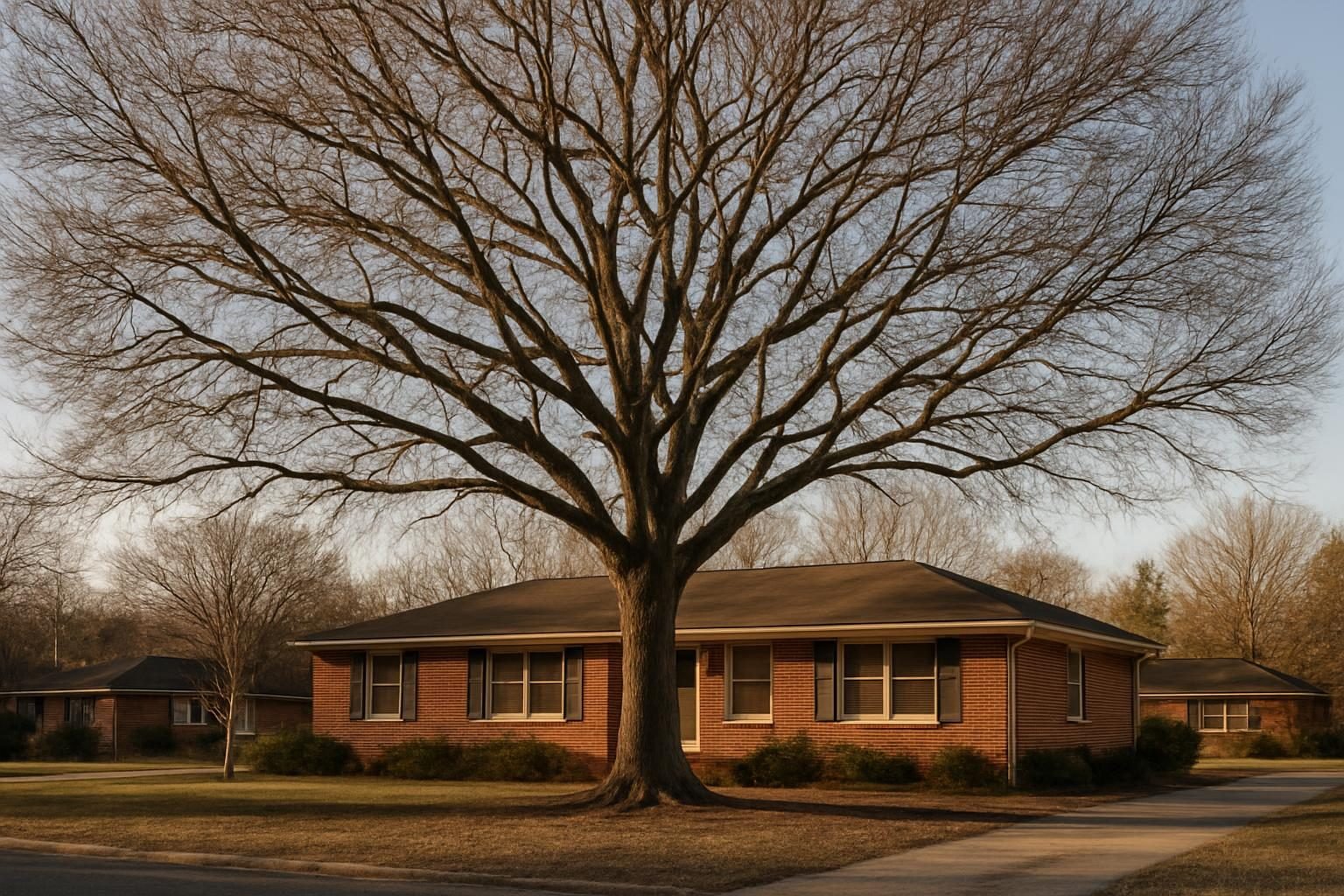
Quick answer: A tree that has leaned the same way for decades and shows no other trouble is often fine. A tree that has started leaning recently, especially with raised soil, cracks or fungus at the base, is a hazardous tree and should be treated as urgent. When in doubt, have an arborist look at it before the next storm decides for you.
Key takeaways
- New lean is the big red flag. A tree that shifted in the last days or months is far more dangerous than one that has always leaned.
- Soil heaving on the side opposite the lean means roots are lifting. Treat it as an emergency.
- Cracks, fungi and hollow spots point to structural decay that can make even a straight tree fail.
- Check what the tree could hit. A leaning tree over a house or driveway is more urgent than one over open lawn.
- Remove or save is an arborist’s call, based on the cause of the lean, not the angle alone.
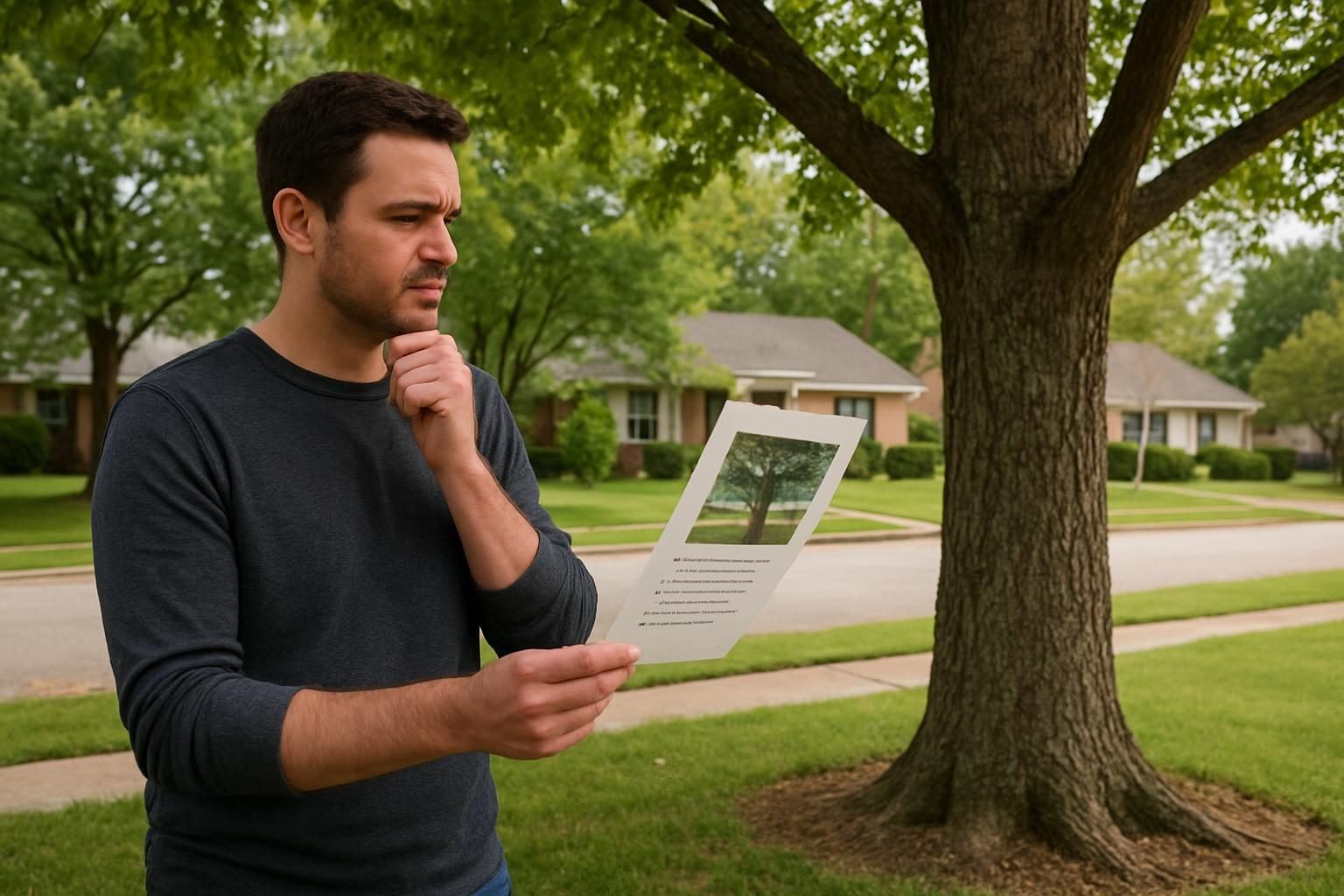
If you are standing in your Fayetteville yard staring at a tilted oak or pine and wondering whether to worry, you are asking the right question. Many leaning trees are stable, and some are one gust from failing. This guide shows you how to tell the difference, with a simple urgency rubric you can use today. If you would rather have a pro look, you can request a free quote for a hazardous tree assessment using the form on this page.
Leaning Tree: Remove or Save? Start With How Long It Has Leaned
The single most useful question is simple: has this lean changed? Trees respond to light, wind and slope as they grow, so many develop a lean early in life and then grow upward from the tilt. That kind of lean is usually stable.
Long-standing lean (usually lower concern)
- The trunk curves back toward vertical higher up, like a gentle “J” or banana shape.
- Neighbors, old photos or your own memory show it has looked this way for years.
- The soil at the base is flat, firm and undisturbed.
- Foliage looks full and normal for the season.
New lean (higher concern)
- The trunk is a straight line tilted from the ground up, with no curve back.
- The tree looked upright a season ago, or after the last storm.
- The lean is getting worse, which you can check by holding a plumb line or taking a photo from the same spot each week.
- Fences, ground fissures or nearby objects show the tree has moved.
A new lean means the root system or trunk has been compromised. Saturated ground after a hurricane or tropical storm is a common trigger in Cumberland County, where heavy rain on sandy soil can loosen a tree’s grip.
Soil Heaving and Root Warning Signs
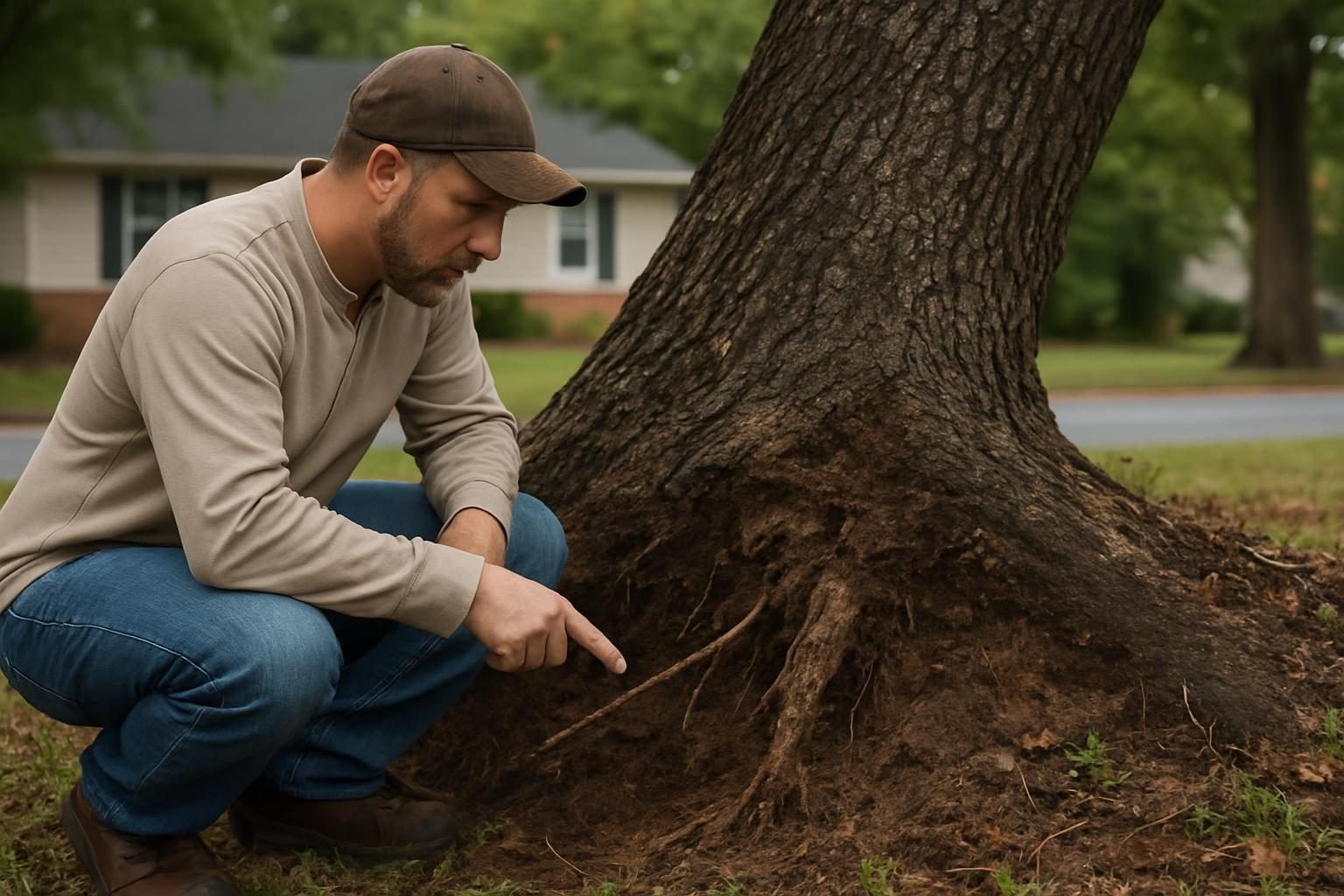
Roots are the anchor. Look at the ground around the base, especially on the side opposite the lean, where roots are pulled upward as the tree tips.
- Raised or cracked soil forming a mound or crescent near the trunk.
- Exposed roots that were buried before, or roots that look snapped or torn.
- Gaps around the trunk where soil has pulled away.
- A soft, spongy feel underfoot, which can mean the root plate is shifting.
Fresh soil heaving on a tree that has leaned recently is among the clearest hazardous tree signs. Keep people, cars and pets out from under it, and do not try to push, prop or tie it back yourself.
Pro tip: Take dated photos of the trunk and base from two angles. If you call an arborist, those photos help show whether the lean is progressing.
A tree that has started leaning recently is telling you something has already gone wrong underground.
Cracks, Fungi and Decay at the Base
A lean is not the only problem. Structural defects can make a tree dangerous whether it tilts or not.
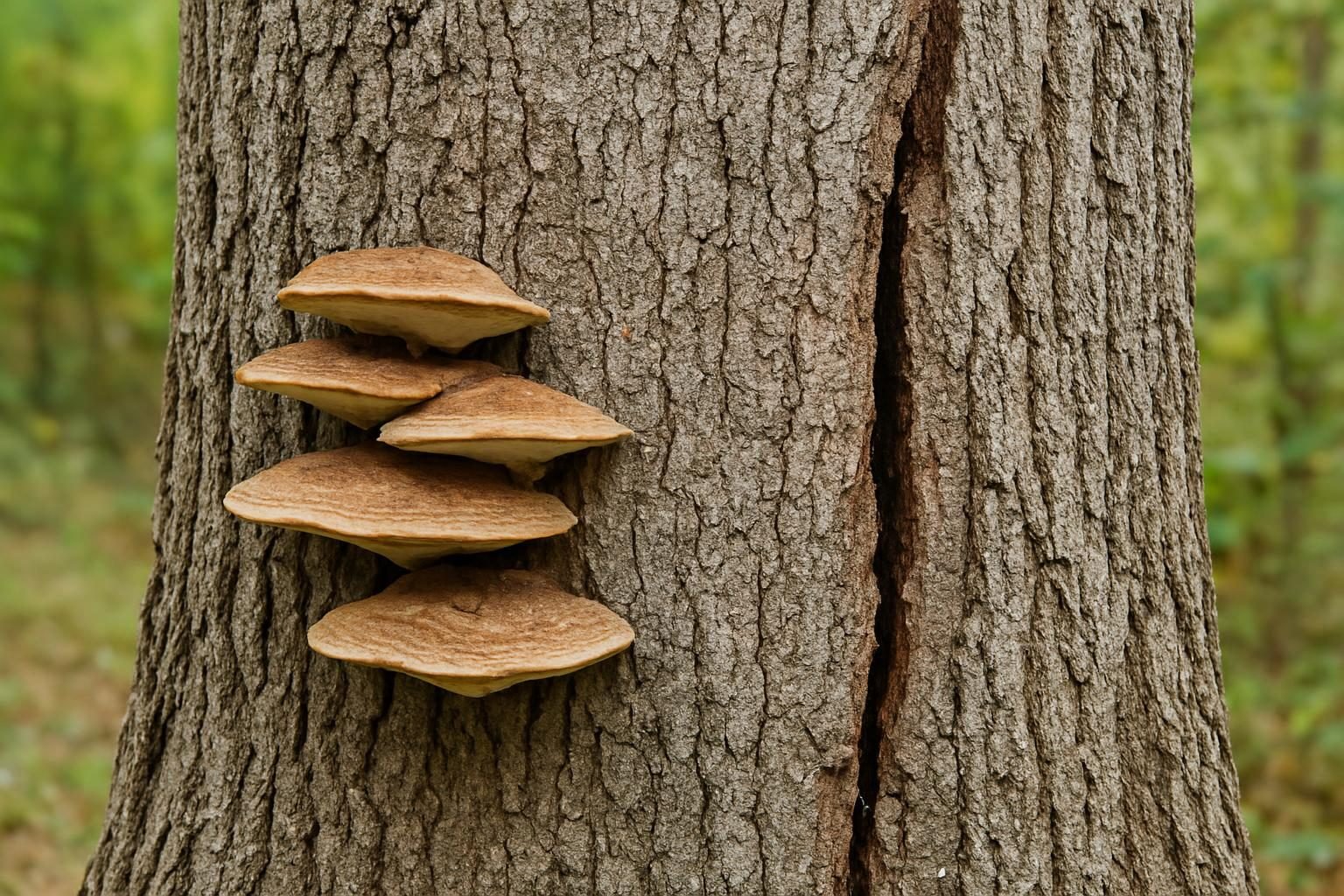
What to look for on the trunk and root flare
- Vertical cracks or splits in the trunk, especially where two trunks join.
- Mushrooms or shelf-like conks growing from the base or roots. These often signal internal decay.
- Hollow areas or cavities you can see into or hear when you tap the trunk.
- Oozing sap, peeling bark or dead patches that suggest the tree is in decline.
- Dead branches in the crown, which can mean the roots are failing.
Water oaks, common around Fayetteville, Hope Mills and Stedman, are known for hidden decay, so our guide to water oak problems and when to remove them is worth a read if that is your tree. For broader decline signs, see 9 signs a tree is dying.
The Urgency Rubric: How Worried Should You Be?
Use this rubric to sort your situation. It is a general guide, not a diagnosis, and an arborist should confirm anything in the top two tiers.
Tier 1: Emergency (act now)
- New lean plus soil heaving, cracking ground or exposed torn roots.
- The tree is leaning toward a house, driveway, play area or power line.
- The tree has shifted noticeably after a storm.
What to do: Keep everyone away from the fall zone, and do not park under it. If it is touching a power line, stay back and contact the utility. Then call for urgent help. Our page on emergency storm tree removal explains what to expect.
Tier 2: Urgent (within days to a couple of weeks)
- A lean that seems recent, with cracks, fungi or decay but no obvious ground movement.
- A leaning tree with a large dead limb overhead.
What to do: Schedule an arborist assessment promptly, before the next storm or tropical system.
Tier 3: Monitor and inspect
- A long-standing lean that curves back to vertical, with firm soil and healthy foliage.
- No fungi, cracks or dead wood, and nothing valuable in the fall zone.
What to do: Re-check seasonally and after storms, and book a routine assessment if anything changes.
The angle of the lean matters less than whether it is new, still moving, or paired with root and trunk damage.
Can a Leaning Tree Be Saved?
Sometimes, yes. Saving a tree depends on why it leans and how much root and trunk damage exists.
- Often saveable: A stable, long-standing lean that just needs careful pruning to reduce weight on the heavy side, or a healthy tree with a minor defect that an arborist can manage.
- Sometimes saveable: Trees with a codominant split or weak union may benefit from support systems, though results vary.
- Usually not saveable: Trees with a recent lean and uplifted root plate, extensive decay, or major cracks. Pushing them upright rarely restores the roots, and a failing tree over a structure is a safety risk.
Staking or cabling a large tree back into place is generally not a reliable fix when the root plate has lifted. For storm-related cases, see can a storm-damaged tree be saved. For a deeper look at risk, read is a leaning tree dangerous.
If removal is the answer, our tree removal page explains how jobs work, and the tree service cost guide covers typical pricing. As a rough estimate only, removing a leaning tree often costs more than a standard removal, because crews may need rigging or a crane to work safely around the structure. Local costs vary widely by size, access and risk, so get written quotes.
Who to Call and What to Ask
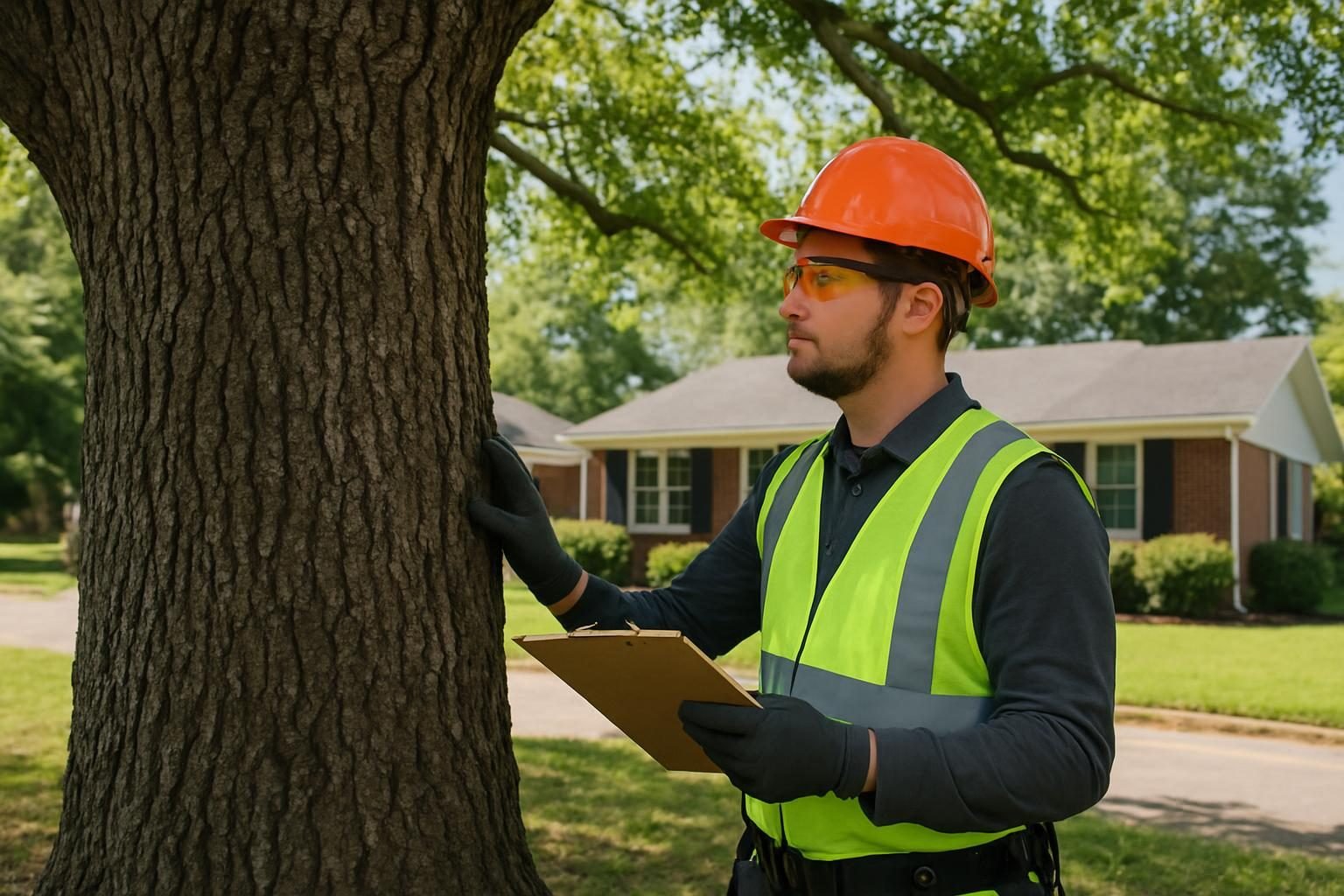
A professional arborist tree assessment is the right first step for any Tier 1 or Tier 2 tree. Not every tree company has a certified arborist on staff, so read certified arborist vs tree service before you decide, and use these questions to ask before you sign.
- Ask for proof of liability insurance and workers’ compensation.
- Ask what is causing the lean and whether the tree can be saved.
- Get the scope, cleanup and stump grinding in writing.
- Be cautious of door-to-door crews after storms. See our guide on storm chaser red flags.
Permits can apply in some situations, so check whether you need a permit to remove a tree in Cumberland County. If the tree falls and damages your home, insurance may or may not respond, so review whether homeowners insurance covers tree removal in North Carolina. You can also learn more about proper tree risk assessment from the International Society of Arboriculture.
Not sure which tier your tree falls into? Use the form on this page to request free quotes from local tree service companies serving Fayetteville, Hope Mills, Spring Lake, Raeford and the rest of Cumberland County.
FAQ
Is a leaning tree always dangerous?
No. Trees that have grown at an angle for years and show firm soil and healthy growth are often stable. The danger rises when the lean is new, is changing, or comes with soil heaving, cracks or fungi.
How can I tell if a lean is new?
Look for a straight tilt with no curve back toward vertical, fresh soil cracks or mounds, and ask neighbors or check old photos. Taking dated photos each week can show whether it is moving.
Should I wait until after a storm to call someone?
If you see new lean or ground movement, do not wait. Storm winds and saturated soil are exactly what bring weakened trees down, so have it assessed before the next system arrives.
Can a leaning tree be pushed or pulled back upright?
Generally not safely. If the root plate has lifted, pulling a tree upright does not repair the roots and can put people at risk. Leave it to a qualified arborist.
How much does it cost to remove a leaning tree in Fayetteville?
Costs vary by tree size, location and risk, and leaning trees near structures often cost more. Treat any figure as an estimate and compare written quotes from local companies.
Get a free hazardous tree assessment quote
A local tree service company will contact you with a free, no-obligation quote for your leaning tree.