Quick answer: Raeford NC tree removal usually runs from a few hundred dollars for a small yard tree to several thousand for large pines near a house, and lot clearing is priced by the acre or by the day. The biggest cost drivers are tree size, how close the trees are to structures and power lines, and whether the debris is hauled away or left on site. Get at least two written estimates and confirm any county or subdivision rules before work starts.
Key takeaways
- Tall loblolly and longleaf pines are the most common removal job around Raeford, and height plus nearby structures set the price.
- Lot clearing for rural acreage is quoted differently than single-tree removal, so know which service you actually need.
- Check with Hoke County, your HOA and any utility easements before cutting, especially on new-subdivision lots.
- Compare written estimates that spell out cleanup, stump work and debris hauling.
Hoke County is growing fast. New subdivisions around Raeford are going up beside old pine stands, and rural parcels toward Antioch, Rockfish and the Cumberland County line are being cleared for homes, barns and driveways. Whether you have one leaning pine over a roof or five acres to open up, this guide walks through what to expect. If you want local help now, you can request a free tree removal quote using the form on this page.
Raeford NC Tree Removal: What Makes Hoke County Different
The sandy soil and pine-heavy landscape shape almost every job here. Many properties have tall, thin pines that grow close together, which means a tree that looks easy from the ground may have a house, fence or power line within its fall zone.
- Pines dominate. Loblolly and longleaf pines can top 80 feet. Their shallow roots in sandy soil make them prone to toppling in saturated ground.
- Hardwoods mix in. Water oaks, sweetgums and some larger oaks near older homes often need rigging rather than a simple drop.
- Dead and dying pines are common. Pine beetle damage and drought stress leave standing dead trees that become hazards. Our guide on how to tell if a pine tree is dead or dying covers the warning signs.
- Access varies. Rural lots may have long driveways or soft ground, while subdivision lots are tight and fenced.
For a broader look at how local crews handle service in this area, see our page on tree service in Raeford and the detailed Raeford tree service guide for Hoke County properties.
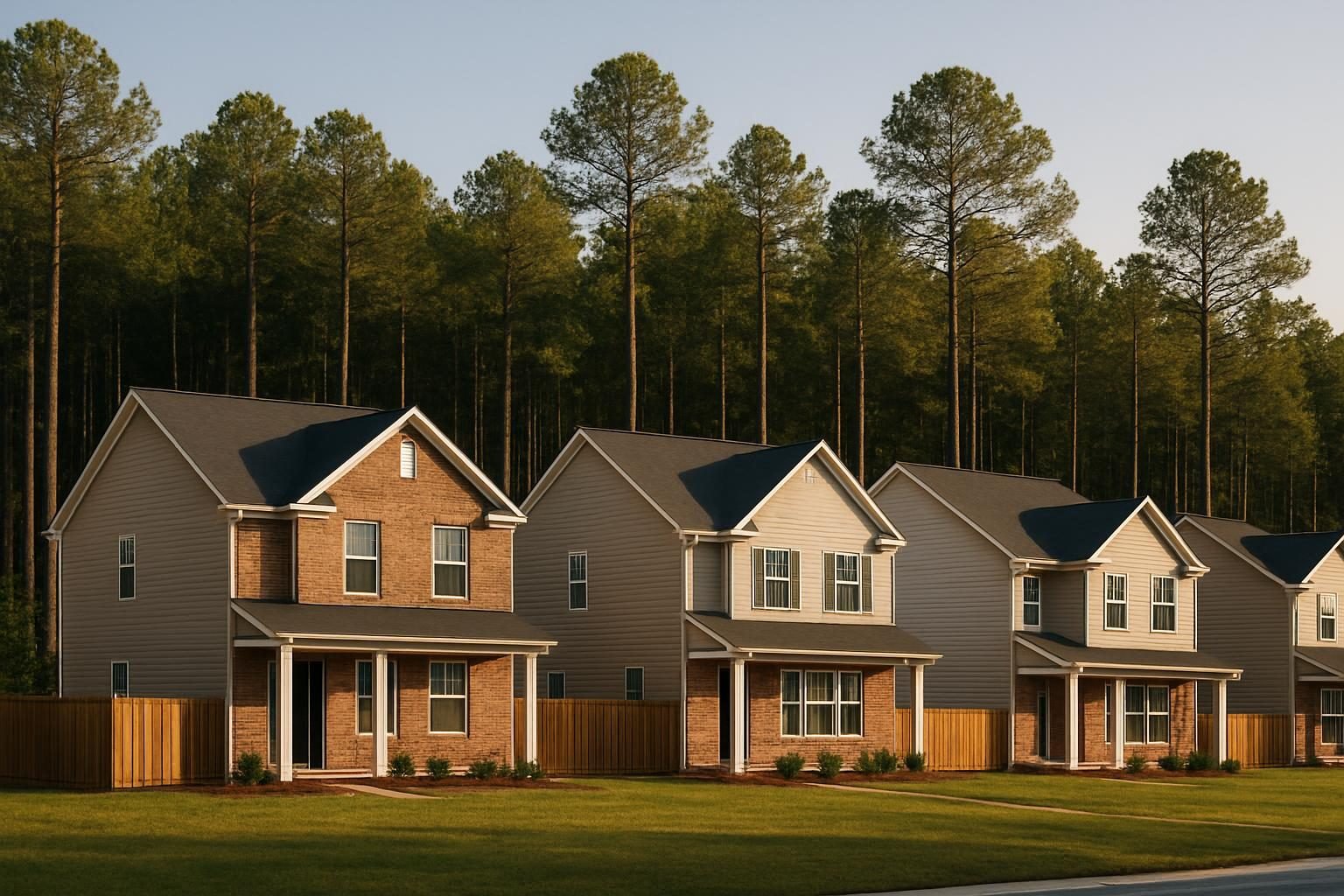
New Subdivisions Backed by Pine Stands
Builders often clear the building pad and leave a buffer of pines behind the lot. That buffer looks nice, but it creates a specific set of risks once homeowners move in.
Why leftover pines become a problem
- Root disturbance. Grading and trenching cut or compact roots, which can weaken trees that were stable for decades.
- New wind exposure. Trees that were once sheltered by the surrounding forest suddenly face full wind loads.
- Fall zones over new homes. A 70-foot pine at the property line can reach the roof, deck or pool.
What to do if you just bought
- Walk the back line and look for leaning trunks, brown needles, peeling bark or exposed roots.
- Photograph anything questionable so you have a record.
- Ask a tree professional or arborist for a tree assessment before deciding what to remove.
- Check HOA covenants before cutting trees near the property line or in a common buffer.
If a tree is already leaning, this guide to whether a leaning tree is dangerous can help you judge urgency.
A pine that stood safely in a forest can become a risk once grading and new wind exposure change its surroundings.
Lot Clearing and Rural Acreage in Hoke County
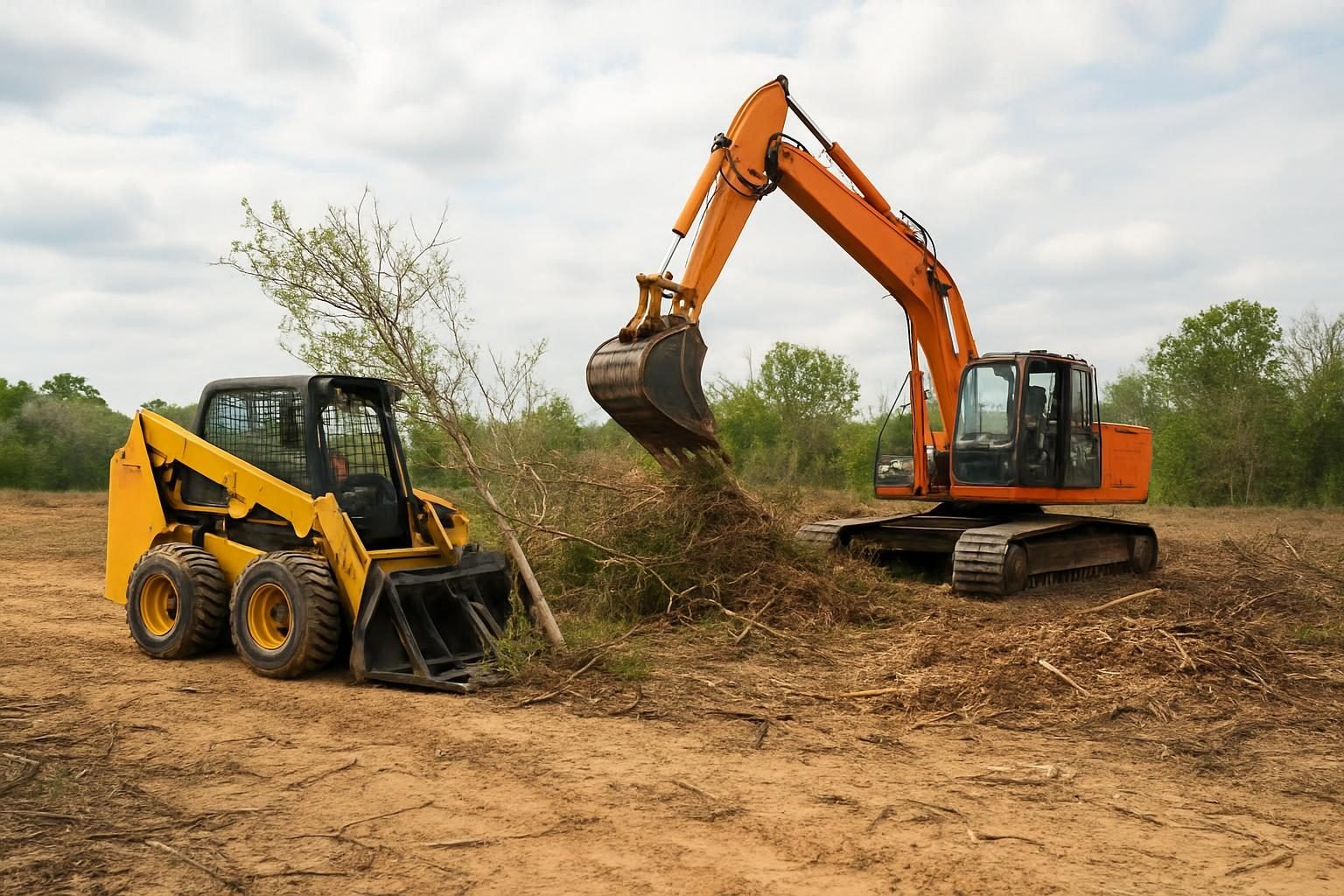
Clearing land is a different job than removing a single tree. Crews may use skid steers, excavators, mulchers or chippers depending on what you want left behind.
- Selective clearing: Remove specific trees and brush while keeping shade trees and a natural look.
- Full clearing: Take down everything in a footprint for a home site, driveway, pasture or septic area.
- Debris handling: Options include chipping on site, piling and burning where legally allowed, or hauling away.
- Stump decisions: Stumps can be ground, pulled or left. Building areas usually need them gone, which is where stump grinding or excavation comes in.
Our land clearing service page explains the process, and the guide to land clearing for a new home in Cumberland County applies closely to Hoke County parcels too. If you are comparing methods, our upcoming piece on forestry mulching versus traditional land clearing will break down the tradeoffs.
Pro tip: Before clearing, mark property corners, septic and well locations, and any buried lines. Have utilities located so crews do not strike them.
Storm Risk Around Raeford
Hurricanes, tropical storms and summer thunderstorms all test pines in sandy soil. Saturated ground plus gusty wind is the classic recipe for uprooted trees.
- Before storm season: Remove dead or leaning trees within falling distance of the house and have overhanging limbs trimmed.
- After a storm: Stay clear of downed lines, and do not climb on a tree resting on a structure.
- Insurance: Coverage for removal often depends on whether the tree damaged a covered structure. Read whether homeowners insurance covers tree removal in North Carolina and talk with your insurer about your specific policy.
For urgent situations, see emergency storm tree removal. Planning ahead is cheaper than paying emergency rates, and our upcoming hurricane tree prep guide for North Carolina will cover what to do before the season.
Removing a risky tree on your schedule costs far less than paying emergency rates after it falls.
Check County and Local Rules Before You Cut
Rules vary by parcel, so verify instead of assuming. Generally, a homeowner can remove trees on their own residential lot, but several things can add requirements.
- HOA or subdivision covenants: Many new neighborhoods restrict removing trees in buffers or front yards.
- Building and grading permits: Clearing tied to construction may require a land-disturbance or building permit.
- Stormwater and erosion control: Clearing larger areas can trigger sediment control requirements.
- Utility easements: Trees near power lines should be handled by qualified line-clearance workers or the utility itself.
- Outdoor burning: Burning brush is regulated, so confirm current rules before planning it.
Call Hoke County planning or permitting staff, or the Raeford town office if you are inside town limits, to confirm what applies. The North Carolina Forest Service also publishes burning and wildfire guidance at ncforestservice.gov. For the Cumberland County side of the line, our upcoming tree removal permit guide for Cumberland County will help.
Estimates: What Raeford Jobs Typically Cost
These are rough estimates only. Actual quotes depend on the site, and a crew must see the job in person.
- Small tree (under 30 ft): roughly $200 to $600.
- Medium tree (30 to 60 ft): roughly $500 to $1,500.
- Large or tall pine near structures (60 ft and up): roughly $1,200 to $3,500 or more.
- Stump grinding: often priced per stump, commonly in the low hundreds.
- Land clearing: priced per acre or per day, and the range is wide depending on tree density, terrain and debris handling.
Several factors push a quote up: tight access, trees over a house or fence, nearby power lines, dead or unstable wood, and hauling debris. Crane work can add a lot but sometimes saves risk, as explained in when you need crane tree removal and what it costs. For benchmarks, see pine tree removal cost and the broader tree service cost guide. Our upcoming land clearing cost per acre in North Carolina article will go deeper on acreage.
How to Get Good Quotes
- Get 2 to 3 written estimates for the same scope of work.
- Ask for proof of insurance covering liability and workers’ compensation.
- Confirm what is included: cleanup, wood removal, stump grinding and debris hauling.
- Be cautious of door-to-door offers after storms and anyone demanding full payment upfront.
- Ask who will actually do the work and how they will protect your property.
Our 10-point checklist for hiring a tree service walks through each step. When you are ready, request free quotes from local tree service companies through the form on this page and compare what comes back.
Frequently Asked Questions
Do I need a permit to remove a tree in Raeford?
Often not for a single tree on your own residential lot, but HOA covenants, building or grading permits, and easements can change that. Check with Hoke County or the town before work, especially if clearing is tied to construction.
How much does it cost to clear an acre in Hoke County?
It varies widely based on tree density, terrain, stump handling and debris disposal. The only reliable answer is an on-site estimate from a contractor who has walked the property.
Should I remove pines behind my new-construction home?
If they are dead, leaning, or tall enough to reach the house, removal is often wise. Have a professional assess them first, since construction disturbance can weaken roots.
Who handles trees near power lines?
Work close to energized lines should be done by qualified line-clearance workers or the utility. Do not attempt it yourself or hire someone who is not trained for it.
Get a free Raeford tree removal or lot clearing quote
A local tree service company will contact you with a free, no-obligation quote for your Hoke County property.