Quick answer: The most reliable southern pine beetle signs are small popcorn-sized pitch tubes on the bark, reddish-brown boring dust in bark crevices and at the base of the trunk, needles fading from green to yellow to red, and winding S-shaped tunnels under the bark. If you see these on a pine in Fayetteville or elsewhere in Cumberland County, act quickly, because the beetles spread to neighboring pines fast.
Pines are everywhere in our area, from loblollies in Hope Mills subdivisions to longleafs around Spring Lake and Raeford. That makes bark beetle awareness part of being a homeowner here. This guide covers what southern pine beetle (SPB) and Ips beetle damage looks like, how to tell it apart from ordinary tree stress, and what to do next.
If you already suspect an infested pine, you can request a free quote from local tree service companies using the form on this page.
Key takeaways
- Pitch tubes, boring dust, fading needles, and S-shaped galleries are the four classic signs.
- Infested pines usually cannot be saved once the crown starts changing color.
- Beetles move to nearby healthy pines, so speed matters.
- Thinning crowded stands and protecting roots reduces risk over time.
- The NC Forest Service can help confirm a diagnosis, especially for larger wooded properties.
Southern pine beetle signs to look for on your trees
Southern pine beetles are tiny, roughly the size of a grain of rice, so you will rarely spot the insect itself. You find them by the damage they leave. Check the trunk first, then the crown.
Pitch tubes on the bark
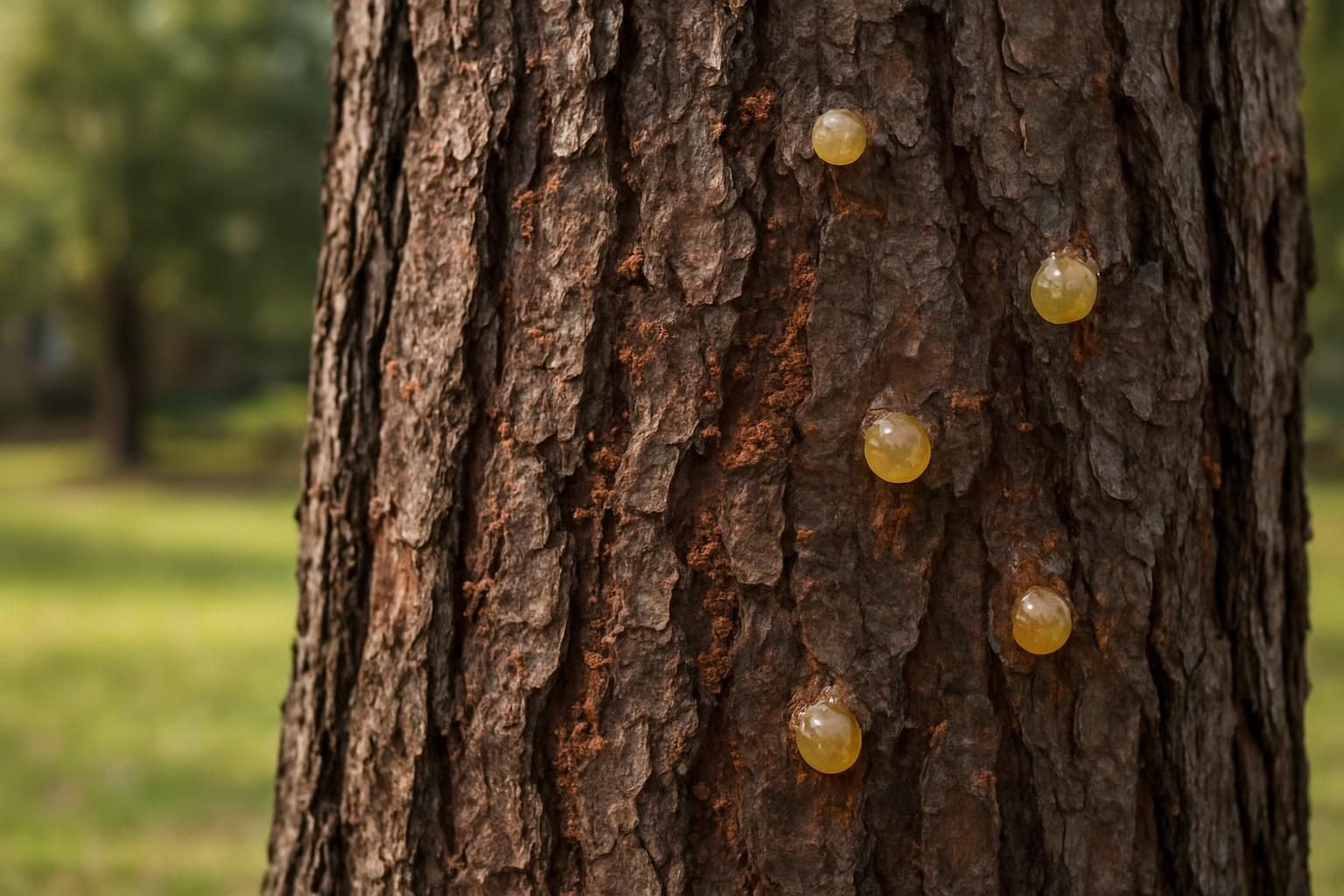
When beetles bore in, the tree tries to flush them out with resin. The result is small, lumpy resin masses on the trunk, often described as looking like bits of popcorn or clumps of chewed gum. On SPB-attacked trees they may be white, pinkish, or yellowish and are scattered along the trunk.
- Where to look: From the base up to the first big limbs, especially on the shaded side.
- Healthy tree comparison: A pine that was simply wounded may ooze sap in one spot, but heavy pitch tubes scattered across the trunk point to beetles.
Boring dust (frass)
Look for fine, reddish-brown to orange sawdust-like powder in bark crevices, in spider webs on the trunk, and in a ring at the base of the tree. Check after a dry spell, since rain can wash it away.
Needle color change
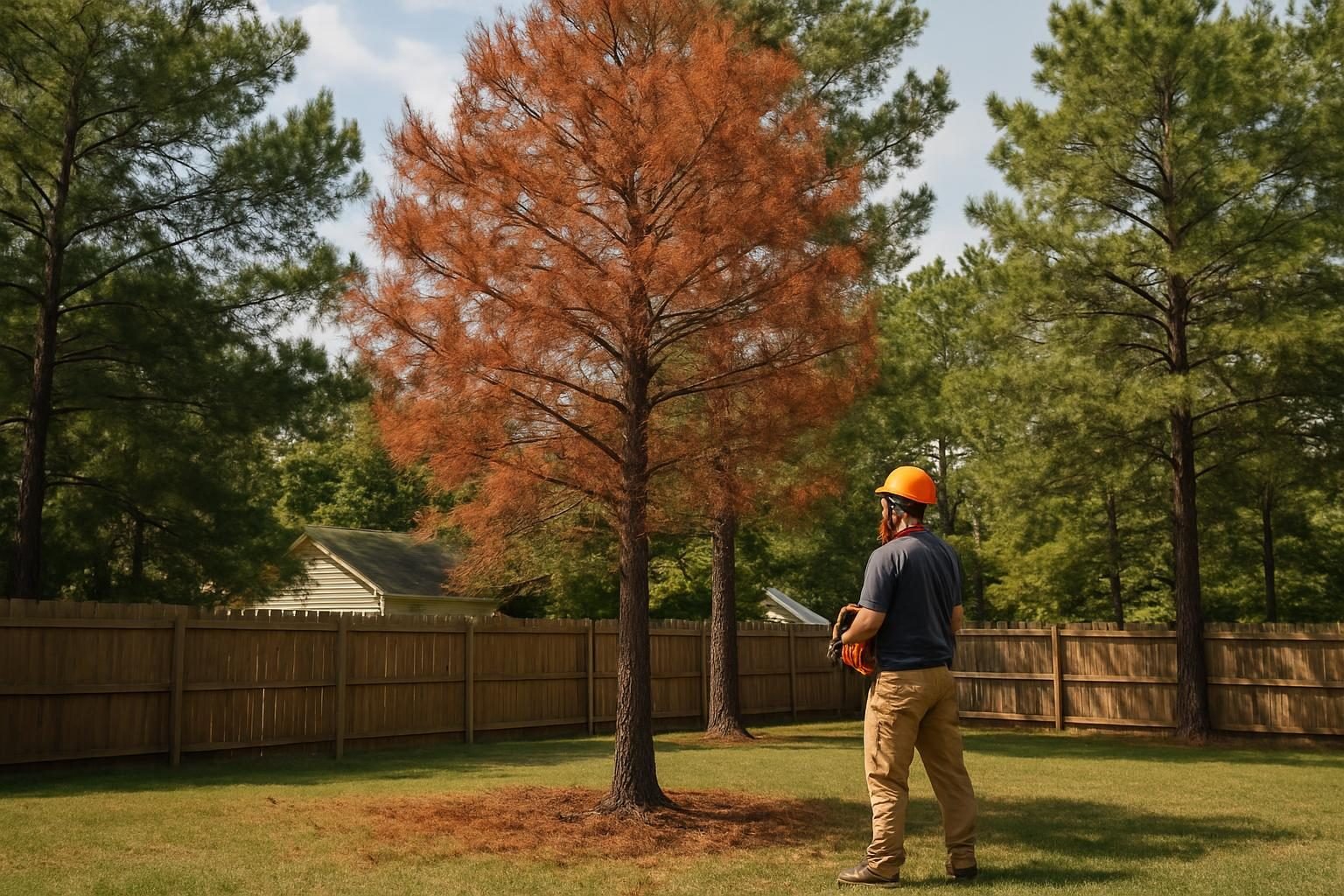
This is usually the sign homeowners notice first, and unfortunately it comes late. Needles go from green to yellow-green, then to red or reddish-brown, and eventually fall. By the time the whole crown is red, the tree is dead and the beetles have often already left for neighboring pines.
S-shaped galleries under the bark
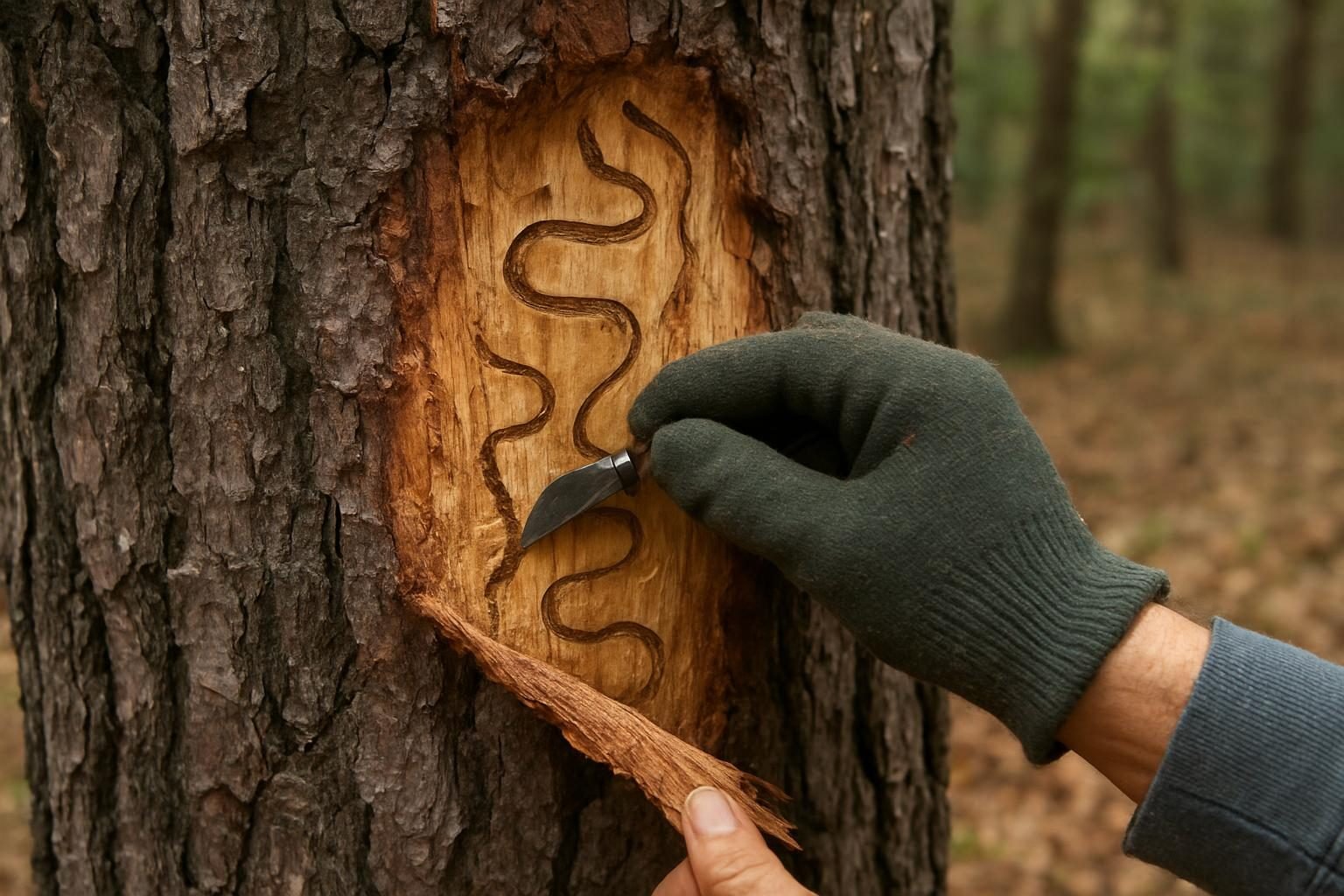
Peel back a small piece of bark from a suspect tree and look at the inner surface. Southern pine beetle larvae carve winding, S-shaped or serpentine tunnels through the cambium layer, packed with fine frass. This tunneling cuts off the tree’s ability to move water and nutrients, which is what kills it. Peeling bark is also the clearest way to confirm an SPB problem.
Ips beetle vs. southern pine beetle: what’s the difference?
Ips beetles, sometimes called engraver beetles, attack pines in a similar way but tend to behave a little differently. They often target trees that are already stressed, such as pines hit by drought, lightning, storm damage, or construction work.
- Gallery pattern: SPB galleries are winding and S-shaped. Ips galleries are typically Y- or H-shaped with a central chamber.
- Where they attack: Ips beetles often start in the upper trunk or in storm-broken tops and slash, while SPB commonly attacks the mid-trunk.
- Scale: Ips often kill individual trees or small groups. SPB can build into growing spots that move through a stand.
- Pitch tubes: Ips beetles usually produce fewer or less obvious pitch tubes.
You do not need to identify the species yourself. Either way, the action is the same: a pine with active beetle damage should come down promptly.
Pro tip: After hurricanes and big thunderstorms, broken pine tops and fresh debris attract Ips beetles. Clearing storm-damaged pine quickly helps protect the healthy pines around it. Our hurricane tree prep checklist covers what to do before and after storm season.
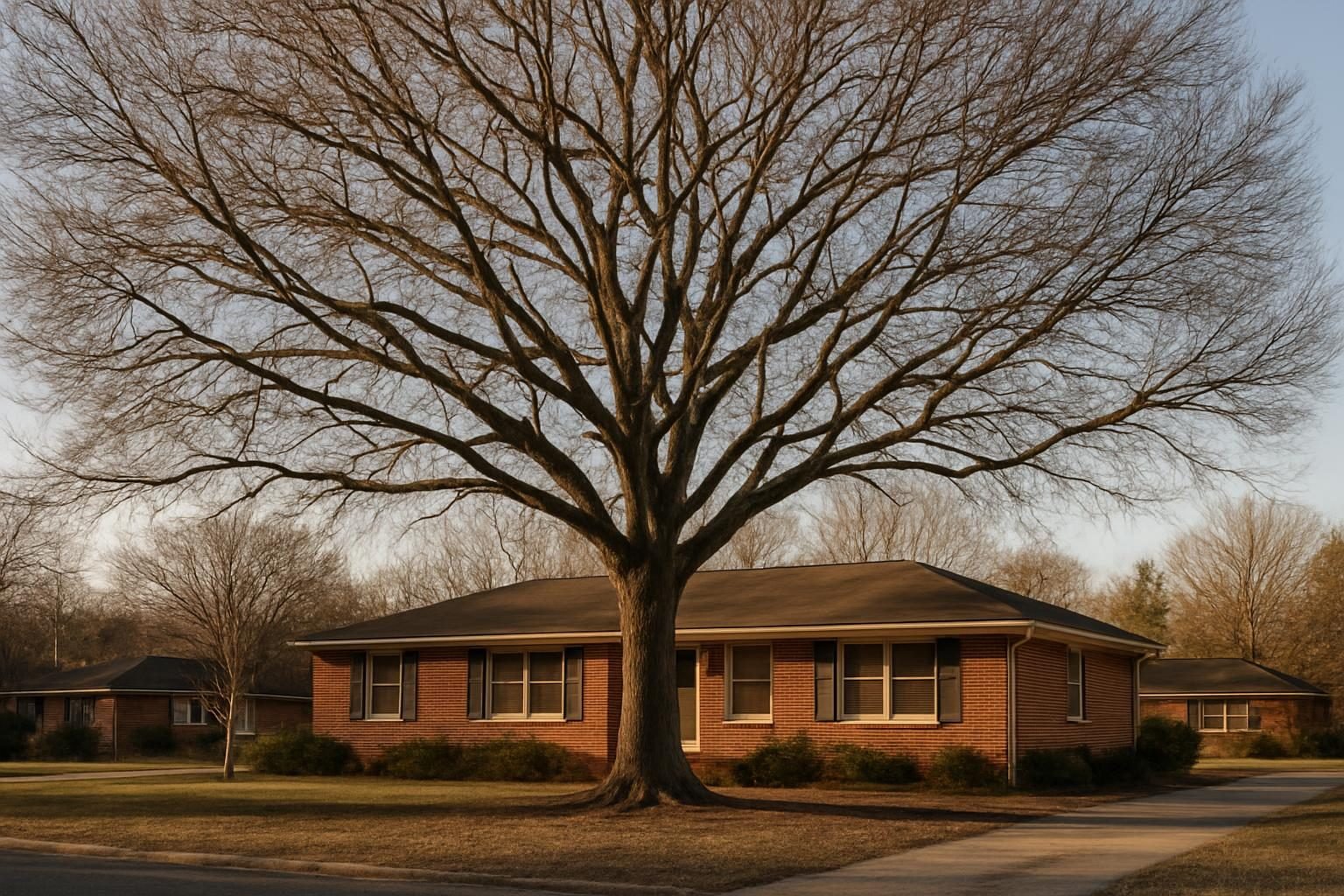
By the time a pine’s whole crown turns red, the beetles have usually already moved on to the next tree.
Why fast removal of infested pines matters
Many homeowners hope an infested pine will recover. In most cases it will not. Once beetles have colonized the trunk and the crown starts to fade, the tree is not salvageable, and waiting only puts your other trees at risk.
- Spread: Beetles emerge from infested trees and fly to nearby pines, often within the same yard or the neighboring lot. One infested tree can become several.
- Safety: Dead pines become brittle. Limbs and tops drop, and whole trees can fall in a storm, which is a real concern near houses, driveways, and fences around Stedman and Eastover.
- Cost: A single dead pine is easier and cheaper to remove than several, and far cheaper than repairing a roof. See our guide to pine tree removal costs in Fayetteville for typical estimates.
- Neighbors: Beetles do not respect property lines. If a dead pine is close to a fence line, our article on property line tree rules in North Carolina explains who is responsible.
What removal usually involves
- Confirm the problem. A tree service or arborist inspects the trunk and, if needed, peels bark to check for galleries.
- Remove the tree promptly. Fresh beetle-infested wood can still hold developing beetles, so timing matters.
- Handle the wood properly. Ask the crew how they will dispose of or process the logs and brush so beetles do not simply move on from stacked wood in your yard.
- Deal with the stump. Grinding is optional for beetle control but useful for replanting. See stump grinding for how that works.
For the removal itself, see our overview of tree removal in Fayetteville. Costs vary with height, access, and how close the pine is to structures, so get more than one quote.
How to confirm what you’re seeing
Not every brown pine has beetles. Drought, root damage, disease, and old age can all cause similar symptoms. Our guide to the signs a tree is dying can help you sort out the cause.
- Pitch tubes plus boring dust plus fading needles together strongly suggest beetles.
- Needles browning from the tips with no pitch tubes may point to drought stress or root problems.
- Sudden browning after construction often signals root damage, which can invite Ips beetles.
If you are unsure, a hazardous tree assessment by an arborist is a sensible next step. The NC Forest Service also provides information and technical help on bark beetles, and its county foresters can advise landowners with larger stands of pines. You can find them through the NC Forest Service website.
Pines stressed by drought, storms, or root damage are the easiest targets for bark beetles.
Prevention: thinning and protecting roots
You cannot make pines beetle-proof, but you can make them much less attractive to attack. Healthy, well-spaced pines resist beetles far better than crowded, stressed ones.
Thin crowded stands
- Dense pines compete for water and light and are more vulnerable. Thinning gives the remaining trees room to grow strong.
- On larger wooded lots near Raeford or Gray’s Creek, a forester or the NC Forest Service can advise on spacing. For clearing bigger areas, see land clearing.
Avoid root damage
- Keep heavy equipment, trenching, and grading away from the root zone, which extends well beyond the drip line.
- Do not pile soil against pine trunks or pave over roots.
- Avoid excess fertilizer and be careful with herbicides near roots.
Reduce stress and debris
- Water mature pines during long droughts if they are in landscaped areas.
- Clean up fresh storm-broken pine limbs and tops promptly. Emergency storm tree removal is worth it when pines are down or damaged.
- Prune pines only when needed. Fresh cuts release scent that can attract beetles, so pay attention to timing; our guide to the best time to trim trees in North Carolina explains the seasonal approach.
Worried about a pine near your home? Our guide on limbing up pines is a helpful next read, and if the pine is close to your roof, it is smart to ask about removal sooner rather than later.
If you have a pine showing these warning signs, you can request free, no-obligation quotes for infested pine removal from local companies serving Fayetteville, Hope Mills, and the rest of Cumberland County.
Frequently asked questions
Can a pine tree with beetles be saved?
Rarely. Once beetles have colonized the trunk and the needles are changing color, the tree generally cannot recover. Early on, when only a few pitch tubes are present on an otherwise healthy tree, an arborist may discuss options, but in most cases removal is the safest way to protect nearby pines.
Does homeowners insurance cover removal of a beetle-killed pine?
Usually not, since insect damage is typically treated as a maintenance issue rather than a covered event. Coverage may apply if a dead tree falls on your home. Read does homeowners insurance cover tree removal in North Carolina and confirm details with your insurer.
Do I need a permit to remove an infested pine?
For most residential trees you do not, but rules can vary by location and situation. Check our article on tree removal permits in Fayetteville before you schedule work.
How much does it cost to remove a dead or infested pine?
As a rough estimate, residential pine removals commonly fall somewhere between a few hundred dollars and well over a thousand, depending on height, access, and proximity to structures. Tall pines near houses or power lines cost more. Our tree service cost guide breaks down what drives pricing.
Get a free quote to remove an infested pine
A local tree service will contact you with a free, no-obligation quote for your pine tree.