Quick answer: When a tree falls on your house, get everyone out, stay away from anything that could be a power line, and call 911 if anyone is hurt or lines are down. Then call your electric provider, photograph the damage, notify your insurer, and hire a insured local crew to tarp the roof and remove the tree safely. Do not climb on the roof or cut the tree yourself.
Key takeaways
- People first: leave the house if it feels unstable, and treat every wire as live.
- Call in order: 911 for injuries or downed lines, then your utility, then your insurance company.
- Document before anything moves: photos and video support your claim.
- Use crane and rigging pros: a tree resting on a roof is under tension and can shift.
- Be wary of door-knockers: storm chasers show up fast after every Cumberland County storm.
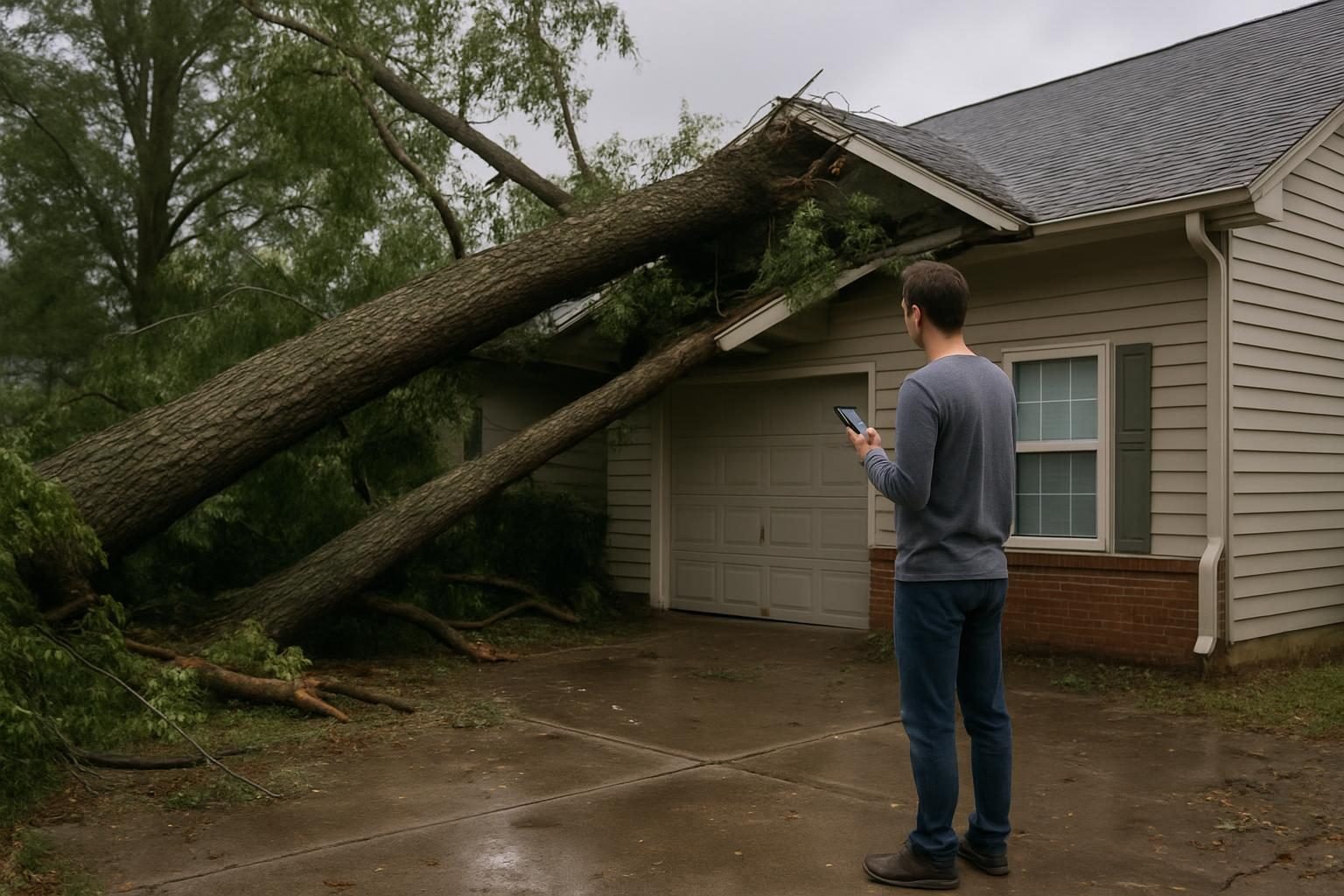
If you are standing in your yard in Fayetteville, Hope Mills or Spring Lake looking at an oak or pine on your roof, the first hour matters most. The steps below tell you what to do when a tree falls on your house, in the order that protects your family, your claim and your wallet.
Need a crew to assess and remove it? You can request free quotes from local tree service companies using the form on this page.
What to Do When a Tree Falls on Your House: The First 15 Minutes
Your only job right now is safety. The house, the tree and the cleanup can all wait.
- Get everyone out. Move family and pets outside, away from the tree and the damaged part of the structure. If you cannot get out safely, shelter in a room far from the impact.
- Stay back from the tree. Branches and trunks resting on a roof can slide or roll with little warning, especially if the ground is soaked.
- Assume wires are live. A line touching the tree, the roof, a fence or the ground can energize all of them. Stay at least 30 feet back and keep kids and pets away.
- Check for gas. If you smell gas or hear hissing, leave right away and call from outside or from a neighbor’s home. Do not flip switches or use a lighter.
- Shut off power only if it is safe. If the panel is in a dry area you can reach without crossing debris or water, turn off the main breaker. If not, leave it alone.
- Skip the chainsaw. Cutting a tree that is loaded against a structure is one of the most common ways homeowners get hurt.
Pro tip: After a hurricane or tropical storm, treat the whole yard with caution. Saturated soil can let a second tree or large limb come down hours after the first.
Who to Call: 911, Your Utility, Then Your Insurer
Make these calls from a safe spot outside. Keep them in this order.
1. 911, if anyone is hurt or lines are down
Call for injuries, fire, a gas leak, or any downed or sparking power line. Tell the dispatcher if lines are touching the tree or the house. Do not approach to check.
2. Your electric provider
Who serves you depends on where you live in the county:
- PWC (Fayetteville Public Works Commission): serves much of Fayetteville and nearby areas.
- Duke Energy: serves parts of the county outside PWC territory.
- Your electric co-op: rural areas such as parts of Raeford, Stedman and Eastover may be served by a cooperative. Check your bill if you are unsure.
Report the tree and any damaged service line or meter. If the service drop was ripped from your house, you may need a licensed electrician to repair the weatherhead or meter base before power can be restored. Tree crews should not touch lines. Utility crews handle those.
3. Your insurance company
Report the claim as soon as you can, even before the full damage is known. Ask what your policy says about emergency repairs and tree removal, and keep every receipt. Some policies carry a separate wind or named-storm deductible, so read yours.
Treat every wire near a fallen tree as live until the utility tells you otherwise.
Document the Damage and Protect the Home
Once everyone is safe and the utility knows about any lines, collect evidence. Adjusters rely on it, and it protects you if there is a dispute later.
- Photos and video: shoot the whole tree, the point of impact, the roof, ceilings and any interior water damage.
- Wide and close shots: show the tree’s size, species if you know it, and the trunk base, including roots and any rot.
- Date and time: note when it fell and the weather conditions.
- Damaged belongings: photograph them and make a list. Do not throw anything away until the adjuster has seen it.
Stop further damage with a tarp
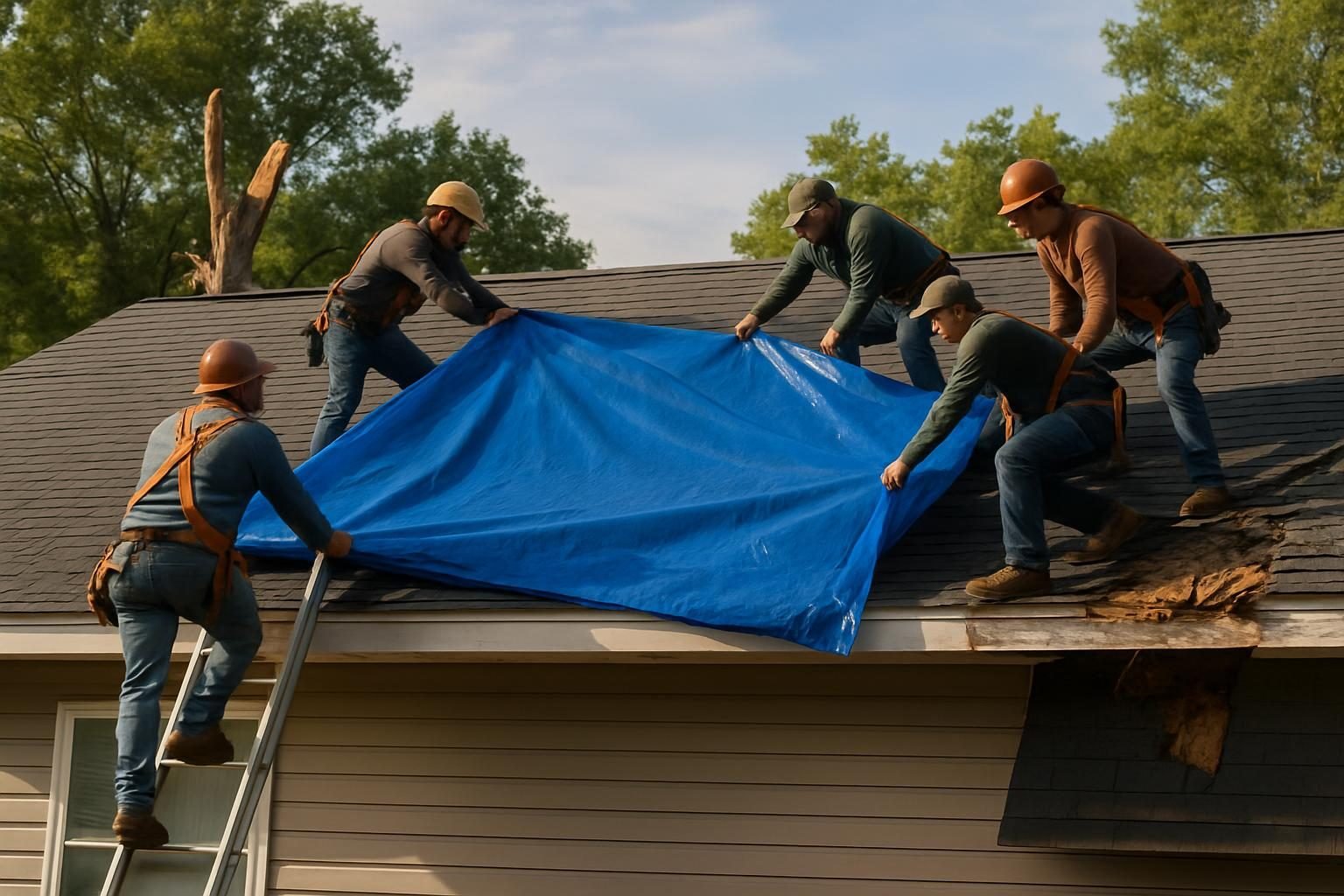
Most policies expect you to take reasonable steps to prevent more damage, and the cost is typically part of the claim. A roofer or tree crew with roof experience can tarp the opening. Do not go on a damaged roof yourself. If the tree is still on the structure, the tarp usually has to wait until it is removed or secured.
As a rough estimate, emergency tarping often runs from a few hundred dollars to over $1,500 depending on roof size and access. Prices vary widely after major storms.
Emergency Tree Removal: Why Cranes and Rigging Matter
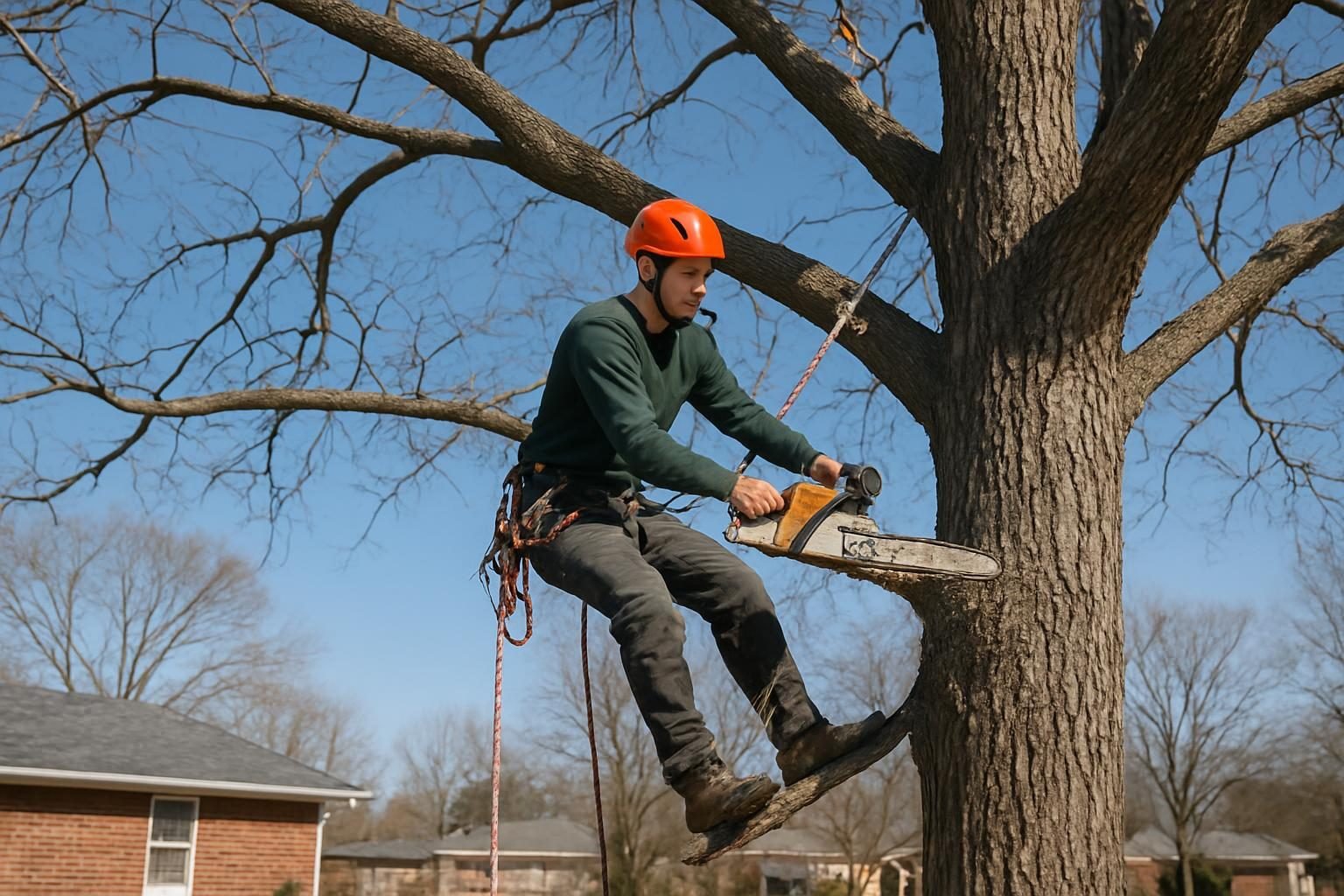
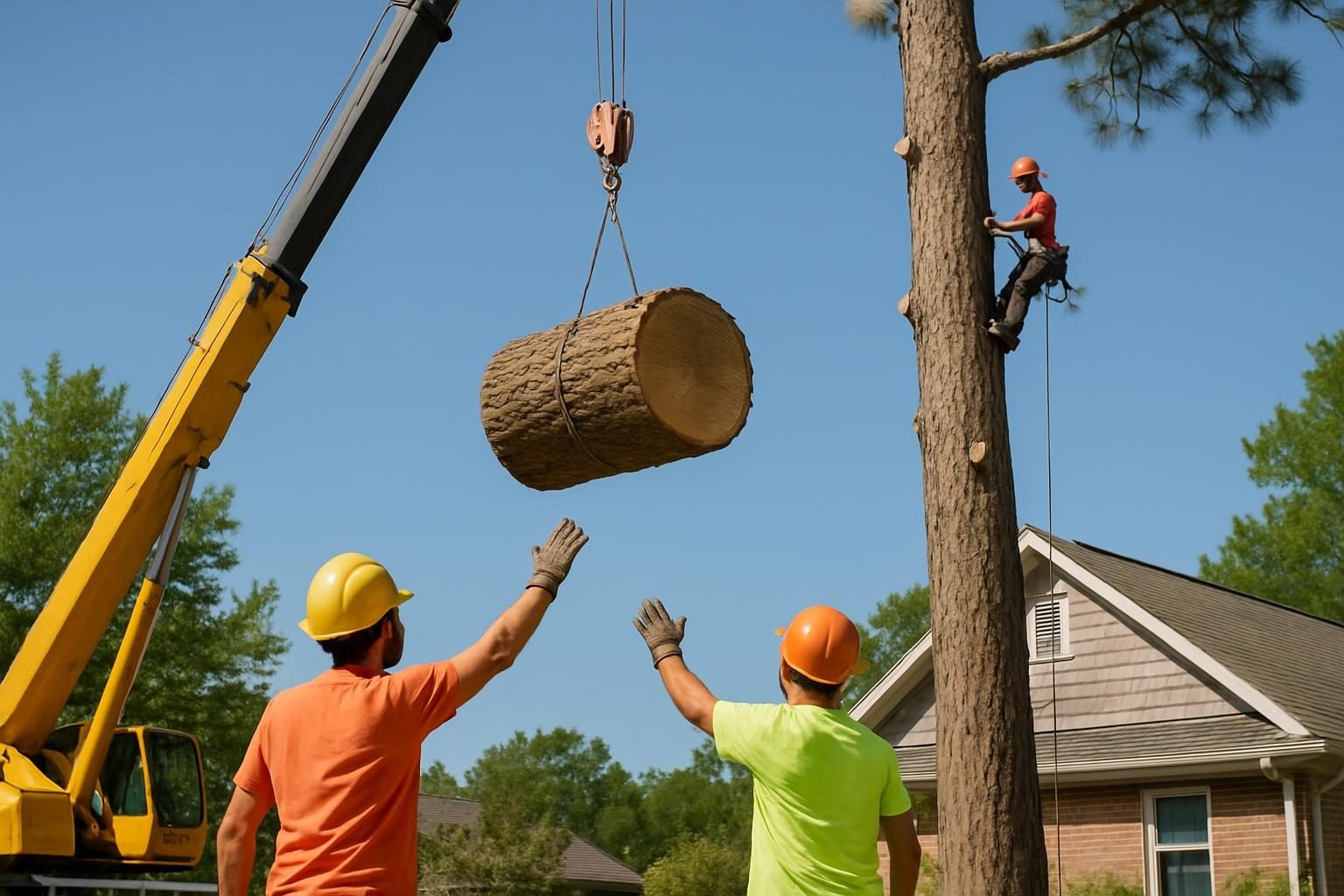
A tree on a house is not an ordinary removal. The trunk may be bearing on rafters, and cutting the wrong piece can cause it to spring, drop or punch through the roof. Professionals plan the cuts, often using a crane or heavy rigging, so each section is lifted off instead of dropped.
What a good crew does:
- Walks the site and identifies lines, gas meters, and weak points in the structure.
- Decides whether the tree can be lifted with a crane or lowered in sections with ropes.
- Protects the roof, yard and driveway where possible.
- Removes the tree and debris, and offers stump grinding once the area is stable.
Our page on emergency storm tree removal explains how same-day and next-day response typically works. For standard jobs, see tree removal in Fayetteville.
What it may cost (estimates only)
- Smaller tree or limb on a shed or fence: often several hundred to a couple thousand dollars.
- Large oak or pine on a roof, no crane: commonly $1,500 to $4,000.
- Crane-assisted removal over a house: often $2,500 to $6,000 or more, depending on size, access and time.
These are ballpark figures, and storm demand can push them higher. Our tree service cost guide for Fayetteville breaks down what drives the price. Many homeowner policies cover removal when a tree damages a covered structure, often with a per-tree cap, so ask your insurer what applies.
A tree loaded against your roof can shift without warning, which is why cutting it yourself is never worth the risk.
Avoid Storm Chasers and Hire the Right Crew
After every big wind event in the Sandhills, out-of-town crews and door-knockers appear. Some are legitimate. Many are not insured, ask for large cash deposits, or disappear after starting the work.
Red flags:
- Pressure to sign today or pay all the cost upfront.
- No proof of liability insurance and workers’ compensation.
- Unmarked trucks, no business name, or no local address.
- Offers to “work directly with your insurance” or to waive your deductible. Both can be problems.
What to ask every company:
- Can you send a certificate of insurance directly from your insurer?
- Do you have experience with crane or rigging work over structures?
- Is the quote written, and does it include cleanup and hauling?
- Can you provide local references?
If you cannot verify a company, keep looking. The North Carolina Department of Insurance has consumer resources on insurance claims if you have questions about your coverage.
Cumberland County Storm Context and Preventing a Repeat
Hurricanes like Matthew and Florence soaked Cumberland County, and saturated ground is what topples shallow-rooted pines and large oaks. Thunderstorms and the occasional tornado can do the same any time of year. Homes in Fayetteville, Hope Mills, Stedman and Gray’s Creek with mature trees close to the roofline are most exposed.
- Get an inspection: an arborist tree assessment can flag leaning, decayed or storm-damaged trees before they fail.
- Prune smart: routine tree trimming and pruning removes dead limbs and reduces wind load.
- Act on warning signs: a new lean, mushrooms at the base, or heaved soil all deserve attention.
Further reading will include our hurricane tree prep checklist and a guide to what happens when a neighbor’s tree falls on your house. If you need local help now, see our page on tree service in Fayetteville.
Ready to get the tree off your roof? Request a free, no-obligation quote from local crews using the form on this page.
FAQ
Should I move out if a tree hits my house?
Leave if you see sagging ceilings, cracked framing, a gas smell or exposed wires. A contractor or inspector should confirm the structure is safe before you go back in. Your policy may cover temporary housing, so ask your insurer.
Does homeowners insurance cover a tree that fell on my house?
Often yes, when wind or a storm brings a tree down onto a covered structure. Coverage for removal can be limited, and details vary by policy. Confirm with your agent or adjuster.
Who pays if my neighbor’s tree falls on my house?
Generally your own homeowners insurance handles damage from a storm-felled tree, regardless of whose yard it came from. Liability can come into play if the owner knew the tree was dead or hazardous. Talk with your insurer, and an attorney if the situation is disputed.
How fast can an emergency crew get here?
It depends on storm volume. After a major event, expect delays, and crews usually prioritize homes with active danger or open roofs. Tarping the opening first can help prevent further damage while you wait.
Get a free emergency tree removal quote
A local tree service company will contact you with a free, no-obligation quote for your Cumberland County property.